South Australia · Holiday-Home Marketing

Airbnb Marketing
in Barossa Valley

For anyone who owns or manages a holiday house near Tanunda, Nuriootpa, Angaston, Marananga, Seppeltsfield or Eden Valley, with the state and council rules explained in plain words.

Start here Work with Cavmir in Barossa Valley
Get a Quote
A$421
Avg. nightly rate
44%
Avg. occupancy
A$4,970
Avg. monthly revenue
7.0%
Est. gross yield
MODERATE
Seasonality
MODERATE
Rules to follow

* Market averages in Australian dollars from AirROI data for Tanunda, South Australia (94 active listings), October 2025 to September 2026 (monthly table September 2025 to August 2026), in Australian dollars as AirROI shows them; Nuriootpa and Angaston figures come from their own AirROI markets and are labelled as such. The yield is Cavmir's estimate. A single home's numbers depend on its size, its location and how it is marketed.

The market

Holiday Rentals in the Barossa Valley

Cavmir is an Airbnb marketing agency for Australian holiday homes. This page is for owners and managers of short-stay homes in Barossa Valley.

The Barossa Valley is South Australia's best-known wine and food region, and Adelaide is its main source of weekend guests. The region's tourism site describes the valley as just an hour from the city, and AirROI lists its Adelaide market 63 km from Tanunda. This page covers six places: the three main towns of Tanunda, Nuriootpa and Angaston, the vineyard settlements of Marananga and Seppeltsfield, and the hill country of Eden Valley.

The figures below were gathered by AirROI, which tracks short-term rental listings, and they describe the twelve months ending September 2026, with prices in A$ exactly as AirROI displays them. Its Tanunda market, with 94 active listings, is the closest fit to this footprint. AirROI draws no boundary around that market, so take the numbers as a reading of Tanunda and the vineyards nearby. There, the average listing took in about A$59,700 for the year, 6.5% more than the year before, at A$421 a night and 43.5% occupancy. Guests booked about 80 days ahead and stayed 2.8 nights. Angaston and Nuriootpa have separate AirROI markets, and each time one of them is quoted below, the page names it.

Nearly everything on offer is a whole house. AirROI puts 98% of Tanunda's listings in the entire-home group (92 listings), with the other 2% private rooms. By building type, houses make up 79% (74 listings), apartments or condos 11% (10), hotel or boutique stays 2% and unique stays 1%. Three-bedroom homes are the largest slice of the entire homes at 45.1%, then two-bedroom homes at 19.8% and one-bedroom homes at 18.7%, with four-bedroom homes on 7.7%, five or more bedrooms on 5.5% and studios on 3.3%. Most of the stock suits a couple or a group of four to six friends, and the very large houses are a small group. About 88% of the guests are Australian, and Adelaide is the single biggest origin city at 9.1%, followed by Melbourne, Sydney and Perth.

Three reasons bring people here, and a strong listing picks one. Wine comes first: the region's tourism body says it has over 150 wineries, 550 grape growers and 170 wine brands. Food comes second, from a Saturday farmers market in Angaston to a farm shop and restaurants among the vines. History comes third, because German Lutheran settlers arrived in the 1840s and The Barossa Council says its townships date to 1840. The next big date is the Barossa Vintage Festival, which its own website lists for 21 to 25 April 2027. If a guest can tell from your first line which of the three trips they are booking, you have done most of the work.

What brings guests to Barossa Valley

  • Seppeltsfield, established in 1851, with its 1878 Centennial Cellar and a tawny from every vintage since 1878
  • Langmeil's Freedom 1843 vineyard in Tanunda, which the winery says is believed to date from 1843
  • The Barossa Farmers Market in Angaston, held on Saturday mornings
  • Barossa Sculpture Park at Mengler's Hill in Bethany, with 17 works and a lookout over the valley
  • Maggie Beer's Farm Shop and Farm Eatery, with the shop open seven days
  • Hentley Farm at Seppeltsfield, with a restaurant and a cellar door in a cottage from the 1840s
  • The Barossa Vintage Festival, listed for 21 to 25 April 2027
  • Eden Valley, on the eastern side of the region, for guests who want a quieter base
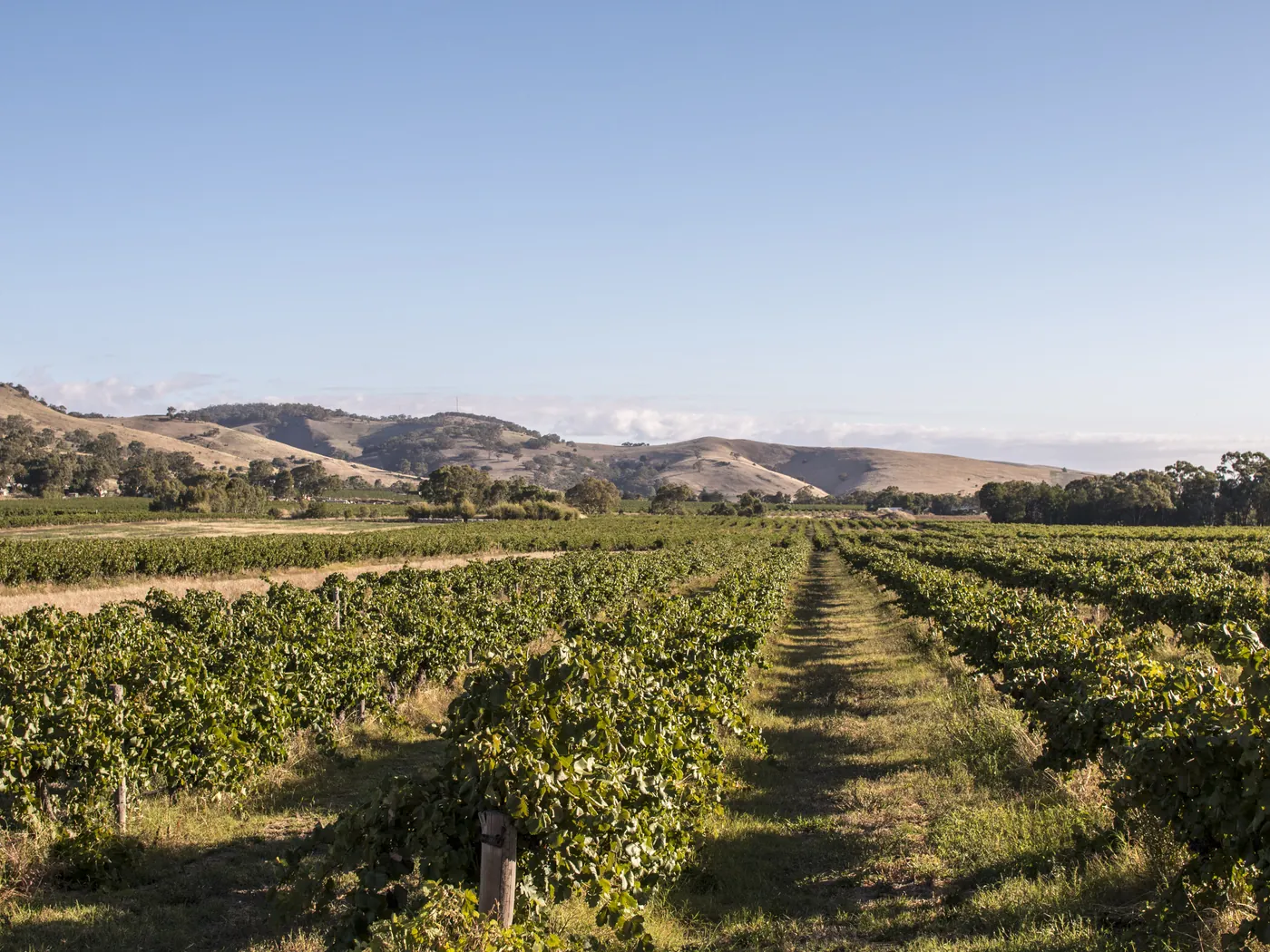
Rows of vines running towards the hills in the Barossa Valley

Photo: “Barossa Valley 10” by Olivier Lemoine (https://Photo-Terroir.fr), CC BY-SA 4.0, via Wikimedia Commons

Cavmir in Barossa Valley

What Cavmir Does for Barossa Valley Hosts

Cavmir treats a Barossa holiday home as a small hospitality business and markets it that way. For a cottage in Tanunda, that means a listing and a booking website built on the stroll to cellar doors and dinner. For a house among the vines at Marananga or Seppeltsfield, it means the view, the silence at dusk and a short drive to a table you have already booked. For a farm cottage at Eden Valley, it means the fire, the space and a reason to come midweek. Our work covers the website and the listing copy, instructions for whoever takes your photos, local search through a Google Business Profile, wording aimed at the AI assistants guests now consult, social posting and an email list that brings past guests back. We work with Australian owners from a distance, and your cleaner, your local manager and your paperwork stay exactly as they are.

Then and now

The Barossa Short-Stay Market, Then and Now

The South Australian History site says the valley was named in 1837 by Colonel William Light, the colony's first Surveyor-General, after Barrosa in Spain. The Europeans who shaped it came in the 1840s. The regional tourism site calls Bethany the first major European settlement, in 1842, and the history site says German Lutherans who had arrived with Pastor Kavel settled Langmeil, now part of Tanunda, in 1843. The tourism site adds that William Coulthard laid out Nuriootpa in 1850. The Barossa Council says the townships date to 1840 and are one of the main reasons people visit.

Wine followed the farmers. According to the South Australian History site, the first vines went in during 1847, and within three years Johann Gramp had produced his Carte Blanche. Seppeltsfield's own history page says Joseph Seppelt, who came from Silesia, bought land in the Hundred of Nuriootpa in 1851 and named the property Seppeltsfield, and that its Centennial Collection holds a tawny from every vintage between 1878 and the current year. Langmeil says its Freedom Shiraz is believed to have been planted in 1843 by the vigneron Christian Auricht, and the winery says the original vines survive.

Old vines are now something a host can sell. The Barossa tourism site says the region is free of phylloxera, a status the site links to the gnarled, sculpted shape of the older vines. It also records that a movement to modernise vineyards in the 1980s saw many old vines pulled out, until advocates saved key plantings of Shiraz and Grenache. The Barossa Old Vine Charter, launched in 2009, sorts vineyards into four tiers by age: Old Vine from 35 years, Survivor from 70, Centenarian from 100 and Ancestor from 125. A guest can ask a cellar door which tier its vines belong to, and a host who knows the answer has a story ready.

Short stays have grown on top of all that, and the market is mid-sized. AirROI counts 94 active listings in Tanunda, 51 in Angaston and 21 in Nuriootpa. It does not say whether the Tanunda count includes homes that also appear in the other two, so do not add the three together. Average yearly revenue per listing is A$59,658 in Tanunda, A$54,822 in Angaston and A$67,159 in Nuriootpa, at average nightly rates of A$421, A$447 and A$477. Those rates sit alongside occupancy of only 38.5% to 44.2%. Guests are paying well, and plenty of nights are going unsold, which is exactly where good marketing earns its fee. AirROI also records that none of the 94 Tanunda listings shows a permit or registration number, a gap that a state register would close.

Rates and seasons

Rates, Occupancy and Seasons in Barossa Valley

Rates and revenue

Bedroom count sets the rate card, but not in a straight line. For entire homes in Tanunda, AirROI shows one-bedroom places averaging A$278 a night at 29% occupancy and A$25,500 a year. Two-bedroom homes average A$403 a night at 48% and A$64,000 a year, and three-bedroom homes the same A$403 at 48% and A$62,600 a year. The median yearly figures are lower, at A$12,900 for one bedroom, A$52,700 for two and A$54,600 for three. AirROI prints nothing for studios, four-bedroom homes or the largest houses, so the owner of a big place has thinner evidence and should price from comparable listings. The A$59,658 headline is an average over every listing. The A$4,970 in the stats box is that figure split into twelve equal parts, so it describes a year spread evenly, not a typical month.

The gap between the best and the rest is wide. AirROI's monthly revenue per listing is A$2,690 or less for the bottom quarter, A$4,930 at the median, A$7,810 or more for the top quarter and A$11,100 or more for the top tenth. It puts the top quarter's gross for a year at about A$94,450. Rates tell the same story. The median nightly rate is about A$350, with A$470 and up for the top quarter and A$700 and up for the top tenth, while median occupancy is about 45% and the top quarter reaches 63% or more. None of that forecasts your house. It shows that a well-run home in the same town can out-earn the typical one by a large margin, and a house priced without a plan lands in the bottom group.

Lead times and stay lengths should guide your minimum-night rules. Tanunda guests booked about 80 days out and stayed 2.8 nights, which suits a Friday-to-Sunday trip, and AirROI shows 74% of Tanunda listings asking for a two-night minimum. Angaston guests booked about 81 days ahead for 3.4 nights, and Nuriootpa guests about 77 days ahead for 3.3 nights. Set your own minimum against what your own guests book. Rates also move against the usual pattern. Tanunda's average nightly rate was A$392 in February 2026, then A$452 in June, A$458 in July and A$460 in August, so winter guests paid more per night even though fewer arrived. A host who sells a fire, a long lunch and a slow tasting can hold that rate. One who discounts is giving away money the market has shown it will pay. On fees, AirROI reports that 62.8% of Tanunda listings add a cleaning charge, and the median charge is A$115.

The year in Barossa Valley

Summer here runs from December to February, yet it is not the valley's busiest stretch. AirROI's Tanunda table has February 2026 at 38.0% occupancy and A$4,246 a listing, the weakest revenue of the twelve months, while December 2025 and January 2026 sat at 46.0% and 45.8%. The Department for Education lists South Australian school Term 4 for 2026 as 12 October to 11 December, and the summer holidays as 12 December 2026 to 27 January 2027. Autumn is the strongest season. April 2026 was the top month in the table, at 53.8% occupancy, A$424 a night and A$6,730 a listing, and AirROI's two-year calendar-month average also ranks April first, at about A$6,720. The Barossa Vintage Festival is listed for 21 to 25 April 2027.

For 2027 the department publishes four terms: Term 1 (27 January to 9 April), Term 2 (26 April to 2 July), Term 3 (19 July to 24 September) and Term 4 (11 October to 10 December). Its page does not print the 2027 holiday dates, so the holidays below are the gaps between terms: autumn from 10 to 25 April, winter from 3 to 18 July and spring from 25 September to 10 October. Confirm them against the official calendar before you set rates. The slow months by occupancy are February at 38.0%, September at 38.1% and June at 39.5%. Winter is worth a closer look. July 2026 filled 41.8% of nights at A$458 and earned A$6,493 a listing, more than December did, and July is Angaston's peak revenue month in AirROI's data. Winter guests want a fire, a red and an unhurried lunch, and they pay for them.

The rules

Short-Stay Rules in Barossa Valley

The state comes first. South Australia has no short-stay register running today. The announcement came on 17 September 2026, when the government committed to a register of short-term rental properties and opened consultation on its final scope, with booking platforms such as Airbnb and Stayz part of the discussion. A Code of Conduct to cut problems like noise complaints is under consideration, not confirmed, and the release names no start date. It ties the register to a parliamentary inquiry chaired by Greens MLC Robert Simms. So there is no state number to display yet. A register is coming, though, and it makes sense to keep your safety paperwork up to date now.

Today the council is the gatekeeper. The Barossa Council's short-term accommodation page says a house that takes paying visitors needs development approval first, whatever the number of guests. It defines short-term visitor accommodation as stays of under three months and names Airbnb-style lets, bed and breakfasts, cabins, farm stays and holiday lets as examples. You lodge the application on the PlanSA Portal, which needs an online account. The council's page gives no fees, zones or building classification, so ask the council how the zone at your address treats a holiday let. If the address falls under another council, ask that one.

The same page adds health rules for bed and breakfast operators. They cover rainwater supplied to guests (Safe Drinking Water Regulations 2012), pools or spas open to guests (South Australian Public Health (General) Regulations 2013) and food handling (Food Act 2001), and operators notify the council with its B&B Food and Pool Questionnaire. Ask the council whether any of it reaches a self-contained holiday home that serves no breakfast. Land tax is a separate matter. RevenueSA ties it to who owns the land when 30 June ends, sends assessments from October each financial year and lists a principal place of residence and primary production among the land uses that may be exempt. A vineyard house with a cellar door is worth discussing with your accountant.

Tax and strata come on top. If the house sits in a community scheme or strata lot, check the scheme's by-laws first. On tax, the ATO lets you claim loan interest, repairs, rates, strata levies and land tax on a holiday home only when earning rent is the main reason you own or use it, and it weighs private use against rental use and whether you offered the house at the times people want to travel, such as school and public holidays. Fees to booking sites, advertising and cleaning after guests can be claimed to the extent they earn rent. According to the ATO, rent from residential premises is input taxed, which means no GST goes on the rent and no credits can be claimed on the related costs. Overseas buyers face a ban on established dwellings, a window that opened on 1 April 2025 and shuts on 30 June 2029, with listed exceptions (FIRB, Guidance Note 6).

Our Australian rules overview sets South Australia beside the other states. On 29 October 2026 I found no South Australian levy on short stays and no cap on nights. Treat this section as a starting point, not legal advice. Confirm your own address with the council and follow the register consultation, because anything that changes after this page was written will bind you. Our part is the marketing; approvals, tax and insurance belong with you and your advisers.

Marketing

Marketing a Holiday Home in Barossa Valley

What works here

Start by telling the guest which trip the house is for. A visitor to the valley is shopping for wine, food or history, so say which in your title and your opening sentence. A Tanunda cottage can name the walk to cellar doors and dinner. A house at Marananga or Seppeltsfield can name the short drive to the Seppeltsfield cellar and to Hentley Farm, whose website says the cellar door opens daily, 10 am to 4 pm, and reservations are essential. A farm cottage at Eden Valley can name the space and the fire. Then give the facts a guest checks first: how many sleep in how many beds, and how far the closest tasting room is.

Next, price the calendar as separate products. April, the soft weeks and winter are not one season. April 2026 led AirROI's Tanunda table at 53.8%, so the festival and the autumn holidays earn their own rate and minimum stay, published early. February and September, both around 38%, call for a different offer, such as a midweek package or a longer-stay rate. Winter nightly rates were the year's highest, A$452 in June rising to A$460 in August, so hold the rate and sell the fire, a good bottle and a late checkout. With Tanunda stays averaging 2.8 nights, test a two-night weekend minimum, and consider three nights for festival weekends.

Then let the photographs and the website carry the sale. Guests compare dozens of similar houses and scroll quickly. Open with the best room and the outdoor space, get the closest drawcard into the first five pictures, then show the kitchen, the bathrooms and how a guest reaches the front door. Shoot in warm light and in more than one season, because a fire in July sells a different stay from a verandah in October. List on Airbnb and Booking.com for reach, check whether the house also shows on Stayz and Vrbo, and run a direct-booking site for people who already know your name. Wine travellers come back for a vintage, a festival or a birthday, and an email list that mentions next April before the platforms do is the cheapest booking source you will ever own.

Finally, treat the paperwork as part of the product. The council approval defines what you can promise, and advertising more guests than it allows is a quick way to lose a review and the council's goodwill. Spell out house rules about noise, parking, bins and fire without jargon, give guests an after-hours phone number and answer neighbours courteously. Tell guests how they will move between cellar doors, because a couple will pick the house with a plan for the driver. Keep your safety records current while a register is on its way. Good operations are good marketing, and the owners who run them well tend to earn the reviews that bring the next booking.

What makes it hard

Occupancy is the first test. AirROI shows Tanunda at 43.5%, Angaston at 38.5% and Nuriootpa at 44.2%, set against nightly rates of A$421 to A$477. The answer is to be specific about the guest and the season. A house that calls itself a good base for wine and food will compete on price with every house making that claim. A house that offers a fire, a long table and a plan for the driver can charge for those things, even in winter, when Tanunda guests paid A$452 to A$460 a night. AirROI does not split weekday from weekend nights, so measure your own midweek occupancy before building an offer around it.

Rules limit what a buyer can count on. The council wants development approval before an existing dwelling takes paying visitors, so a house's booking history says little about whether a new owner may carry on. A state register has been announced without a date or a settled scope, and the consultation opened on 17 September 2026 includes the platforms. Ask the council what applies to the lot before you sign, and read any approval already in place. Run your numbers at the occupancy the market actually shows, not the best month. Cotality's data, shown on OnTheHouse, puts the median house value in Tanunda at A$848,919 as at 30 September 2026, so there is little room for error.

Distance and access are the third test. Many guests drive up from Adelaide, an hour away according to the region's tourism site, and would rather leave the car parked once they arrive. A house near the cellar doors is easier to sell than one that needs a nominated driver for every outing, and a house in the vines needs a plan for the evening. An owner who lives in Adelaide or interstate faces another risk: a remote house drifts into stale photos, slow replies and a bare winter calendar. A dependable local cleaner and manager, plus current marketing, closes that gap. Cavmir covers the marketing, and operations remain with you or your manager.

Worth knowing. Langmeil, the winery at the corner of Langmeil and Para Roads in Tanunda, says its Freedom Shiraz is believed to have been planted in 1843 by the vigneron Christian Auricht, who left war and persecution in Prussia, and that the original vines survive. The Barossa Old Vine Charter's oldest tier, Ancestor, starts at 125 years, and a vineyard planted in 1843 would clear that line by decades.
Money matters for Barossa Valley owners
Insurance

A household policy written for an owner-occupier may not expect paying guests, so tell your insurer the house is let and get the answer on what is covered in writing. Raise public liability for guests, income lost while the house is out of action, damage caused by guests, and any pool, spa or wood heater on the property. Because much of the valley is vineyards and hill country, ask a broker how the policy treats bushfire, evacuation and road access. Your council approval sets the guest limit, and your insurer will want to see it. A broker who writes holiday homes in regional South Australia knows what local insurers look for. AirROI's cost sheet for Tanunda assumes A$600 a year for short-term rental insurance, which is a modelling figure and not a quote.

Tax

Guest payments are assessable income. The ATO says the running costs of owning a holiday home, such as loan interest, rates, strata levies, land tax and repairs, are deductible when the main purpose of owning or using the home is earning rent, and private use has to be apportioned. Booking commissions, advertising and cleaning after guest stays can still be claimed to the extent they relate to rent. The ATO also treats rent from residential premises as input taxed, which keeps GST out of the rent and blocks credits on related costs. In South Australia, land tax follows ownership when 30 June ends, and a vineyard or farm title can raise primary production questions. I am not an accountant, so check with a registered tax agent before your first booking.

Lending and land tax

A bank may assess a house let to holidaymakers on different terms from one let to a tenant, so talk to a broker early. OnTheHouse, using Cotality data, shows Tanunda's median house value at A$848,919 as at 30 September 2026. Set that against AirROI's A$59,658 average yearly revenue for Tanunda and the gross yield is about 7.0%, the figure in the stats box, taken before any cost. AirROI's own cost sheet for the average listing deducts A$20,560 a year (an Airbnb fee of about 14%, cleaning and laundry, utilities, supplies, repairs, insurance and a permit allowance) and leaves A$39,098 before housing costs, about 4.6% of that value. The sheet assumes no management fee, and it leaves out loan repayments, rates and land tax, so your own yield will differ. A median value is modelled, not a sale price, so compare recent sales of homes like yours. Ask the broker about South Australian stamp duty and land tax, and note that overseas buyers face the ban on established dwellings until mid-2029.

Your own website

A Direct-Booking Website for a Barossa Valley Home

A direct-booking site for a Barossa home has one job: answer what a guest asks before booking, and make it easy for a returning guest to skip the platform. The questions are practical. How far is the nearest cellar door, and can we walk to dinner? How many sleep, and in which beds? Is there a heater, summer shade and parking for two cars? Write one page for each house, one for each season (the April festival, spring weekends, a winter midweek), one for each drawcard (Seppeltsfield, the Saturday market, the old-vine vineyards) and a plain page on getting there from Adelaide. Our website design service shapes those pages to suit your seasons and your typical guest, and keeps each one quick on a phone.

Australian consumer law already applies to a booking page. The ACCC's price display page tells businesses to show one total price, covering the least a customer could pay once taxes, duties and unavoidable or pre-selected fees are in, and to make any partial price no more prominent than that total. It gives a holiday serviced apartment provider as an example that has to include its cleaning fee in the advertised price. So a cleaning fee every guest must pay goes into the first price a visitor sees. The same page, published on 1 October 2026, records that from that date businesses can no longer surcharge payments by Visa, Mastercard or eftpos. A broader unfair trading practices law, which targets drip pricing, starts on 1 July 2027. South Australia has no registration number to display yet, but leave a space for one in your template. Also publish your cancellation terms, the house rules, arrival and departure times, the guest limit your approval sets, a privacy policy that states what data you collect and a way to reach someone out of hours.

Set up the search side with equal care. Give each house a short, plain page title, a description that names the place, property markup and a map. Create a Google Business Profile and write a page for each surrounding town, such as Tanunda, Angaston and Eden Valley, so a search on those names lands on a clear answer. Wire an enquiry form to your inbox and keep the availability calendar current, because a stale calendar loses more bookings than a slow page. A direct channel pays most on returning guests: the couple back for each vintage, the friends who book the same spring weekend, the family who come for a birthday.

AI search

Getting Named in AI Answers About Barossa Valley

People now put questions to AI assistants in full sentences, where they once typed a few keywords. Where can I stay in the Barossa near cellar doors and still walk to dinner? Which Barossa house suits two couples in April? Is there a pet-friendly cottage near Angaston? Assistants draw on pages that put their facts in plain text: bedrooms, distance to a named place, dates, house rules. If your website says all of that clearly, and your Airbnb and Booking.com listings repeat it, an assistant can quote you with confidence.

The practice goes by the name generative engine optimisation, and it is largely editing. Begin with what the house is, where it sits and who it suits. Spell names and distances identically on every platform. Give each reason to visit a short page of its own, from the old vines around Tanunda and Seppeltsfield to the Saturday market at Angaston, and keep event dates up to date. Our guide to being found by AI assistants shows how the pieces connect. Hosts who begin this season could well be the names the assistants are quoting by next autumn.

What's next

Where Barossa Valley Is Heading

The reasons to visit have deep roots. The oldest vines go back to the 1840s, Seppeltsfield is celebrating 175 years on its own website, and the Barossa Vintage Festival is listed for 21 to 25 April 2027. The regional tourism site also lists the Santos Tour Down Under, Gather Round 2027, a Barossa Wine Auction in 2027 and SALA, with no dates on the page I read. Dates shift, so confirm with each organiser before you promise a guest anything.

Regulation is the biggest change to follow. On 17 September 2026 the state government announced a register of short-term rentals, with consultation that includes the booking platforms and a possible Code of Conduct, and gave no start date. It cites worry about homes leaving the long-term rental pool for tourist use. Whatever the final form, expect hosts to need a registration number, to show it in advertising and to meet any code. The Barossa Council already asks for development approval. Owners who keep approvals current, guest numbers inside the limit and neighbours content are best placed to carry on through any change.

On the market side, expect a valley in which a guest can set dozens of similar houses side by side within minutes. AirROI's Tanunda revenue per listing is up 6.5% on the year, which suggests demand is holding, and the spread between the median and the top quarter shows that a strong product still stands out. Foreign buyers are shut out of established dwellings until June 2029, which trims one pool of buyers. When I checked on 29 October 2026, I could not find a published plan for a visitor levy or a night cap in South Australia.

Why we like the work

Why We Love Marketing in Barossa Valley

What I love about marketing homes in the Barossa is how exact the place is. Guests do not come for an all-purpose holiday. They come for a vineyard believed to date from 1843, a cellar dating from 1878, a Saturday market and a festival with a grape stomp and a parade. When a listing names the very thing a guest is hunting for, it reaches the guest who is actually shopping for it, and that guest usually looks after the house and returns.

The calendar has a character of its own. April belongs to the vintage and the festival, October and November to spring weekends, July to couples after a fire and a slow lunch. An owner who stops selling one undifferentiated week and starts selling separate reasons to come tends to uncover nights and rate that were sitting there unclaimed. The data nudges the same way: Tanunda's winter nightly rate is the year's highest, which tells you guests will pay for a good reason to visit when the cellar doors are quieter.

The raw material is generous, too. A settlement at Bethany in 1842, Lutheran families at Langmeil in 1843, an estate founded in 1851 and a charter that grades old vines by age hand a host more stories than any welcome folder can carry. The work is spotting the true angle that an owner has stopped seeing, saying it plainly, and putting it where the guest who wants it is looking.

Welcome book

Picks for Your Barossa Valley Welcome Book

Ten suggestions for a Barossa welcome folder. Each place or event was listed as open or scheduled for 2026 or 2027 when I checked, and each comes with a reason to go.

Saturday morning

The Barossa Farmers Market in Angaston

Held on Saturdays from 7:30 am to 11:30 am at 740 Stockwell Road, Angaston. Stallholders sell vegetables, fruit, meat, bread, oils, preserves, pastries and coffee, with the focus on Barossa and South Australian makers. A natural first stop for guests who want to stock the kitchen.

Lookout

Barossa Sculpture Park at Mengler's Hill

A sculpture park at 127 Menglers Hill Road, Bethany, with 17 works by artists from France, Belgium, the USA, Japan, Egypt and the Barossa, created at the first Barossa International Sculpture Symposium in 1988. Facilities include a car park and lookouts over the valley. The listing gives no entry details, so check with the Barossa Regional Gallery before you send guests.

Old vines

Langmeil's Freedom 1843 vineyard

At the corner of Langmeil and Para Roads in Tanunda. Langmeil says the Freedom Shiraz is believed to have been planted in 1843 and that the original vines survive. Book a tasting through the winery, since its site does not list cellar door hours on the page I read.

History

Seppeltsfield and the 1878 Centennial Cellar

The estate's Taste of History Tour tastes a 100-year-old wine in the 1878 Centennial Cellar. It also lists a 175th anniversary tasting experience and, for a wet day, the YN Oak Cooperage's Cooper for a Day. Booking is through the estate.

Dinner

Hentley Farm at Seppeltsfield

The restaurant looks over Greenock Creek and the Beauty Shiraz block and serves a multicourse menu with matched wines. Its website calls it one of Australia's first 11 Michelin-starred restaurants. The cellar door opens daily, 10 am to 4 pm, in a cottage from the 1840s, and reservations are essential.

Farm food

Maggie Beer's Farm Shop and Farm Eatery

The farm shop trades every day from 10 am to 4 pm, except Good Friday, Christmas Day, Boxing Day and New Year's Day. Book lunch at the Farm Eatery through its own website, and book Pheasant Farm Wines tastings online.

Craft

JamFactory and the makers at Seppeltsfield

Seppeltsfield's website lists JamFactory, Prohibition Distillery, The Tiny Knife Shop and the YN Oak Cooperage among its visitor options. A good afternoon for guests who like to see how things are made.

Autumn

Barossa Vintage Festival

The festival's site lists 21 to 25 April 2027, with the Vintage Parade, a parade after party, Ziegenmarkt, Grapestomp, Club Vintage and the Barossa Big Sing. Its page gives no separate dates for each event, so tell guests the festival dates and let them check the programme.

Evening

Seppeltsfield 175th Series

The estate invites visitors to celebrate 175 years this November with live music, picnics, pop-up bars and something different every Friday. The page gives no event dates, so check the estate's site for the program and booking before you recommend it.

Wine

Cellar doors on the Old Vine Charter

The Barossa Old Vine Charter, launched in 2009, names four tiers by age: Old Vine from 35 years, Survivor from 70, Centenarian from 100 and Ancestor from 125. Ask the cellar door which tier its vines fall into and you have started a good conversation.

The playbook

How Cavmir Would Market Three Barossa Valley Homes

Cavmir has no clients in Barossa Valley yet. These are the plans it would start with for three common kinds of home here: the situation, the plan, and what each one aims at.

Two-bedroom heritage cottage in Tanunda
The situation

A common starting point: a cottage in town, listed as a lovely getaway with ten photos, one rate all year, a short generic description and no direct-booking channel.

The plan

Confirm the council approval and guest limit first. Then rebuild the listing around the stroll to cellar doors and dinner and the old-vine story, with the fire and the long table in the opening photos. Price the festival and the autumn holidays as separate products, set a two-night weekend minimum, hold the winter rate and add a winter midweek package, set up a Google Business Profile and launch a booking site of its own with an email list of past guests.

What it targets

The aim is a higher rate in festival and autumn weeks and fuller winter midweeks. Watch April's nightly rate against last year, winter occupancy, how many guests book direct or return, review scores and enquiries arriving from the website.

Three-bedroom vineyard house at Marananga or Seppeltsfield
The situation

A house among the vines, sold on the line close to wineries and nothing more, listed on one platform, with bookings bunched in April and a few long weekends.

The plan

Name the cellar doors, restaurants and distances in the first paragraph, show the evening light and the table on the terrace, and give the festival a page and midweek winter stays another. Add a plan for the driver, a late-offer email for quiet weeks and a booking page that reaches couples who return for the same weekend each year.

What it targets

The goal is to move bookings out of the two crowded windows. Compare midweek and winter occupancy with last year, and follow repeat couples, direct bookings and how evenly stays are spread through the months.

Farm cottage at Eden Valley or near Angaston
The situation

A cottage on the eastern side that competes with Tanunda houses on cellar-door proximity it can never match, never mentions the quiet and treats winter as closed.

The plan

Drop the proximity contest. Reposition the cottage around space, silence and a fire, for couples and small groups who want a break from a busy main street. Write a page on Angaston's Saturday market and the hill country, shoot the cottage in winter light and offer a three-night winter midweek rate. Confirm the council approval and guest limit before any of it goes live.

What it targets

The plan is to create a winter season of its own. Follow winter midweek occupancy against last year, the winter nightly rate, reviews that mention quiet or comfort and the number of guests who rebook.

FAQ

Barossa Valley Airbnb Marketing: Questions, Answered

Does Cavmir offer Airbnb and holiday-home marketing in the Barossa Valley?

Yes, and we do it remotely. Owners and managers around Tanunda, Nuriootpa, Angaston, Marananga, Seppeltsfield and Eden Valley can hire us for a booking website, listing copy, photo briefs, Google and AI search, social posts and email. We market the house; the cleaning, the check-ins, the approvals and the tax stay with you or your local manager. See the pricing page for plans in Australian dollars.

What do holiday homes earn in the Barossa Valley?

For the year to September 2026, AirROI has the average Tanunda listing earning about A$59,700 at A$421 a night and 43.5% occupancy, across 94 active listings. Two-bedroom homes average A$64,000 and three-bedroom homes A$62,600. In their own AirROI markets, Angaston averages A$54,822 and Nuriootpa A$67,159. These are market averages and no forecast for your house: its product, photos, pricing and approvals decide where it lands.

When is demand highest in the Barossa Valley?

April leads AirROI's Tanunda data, with 53.8% occupancy and A$6,730 a listing in April 2026, and the Barossa Vintage Festival is listed for 21 to 25 April 2027. October (50.3%) and March (49.8%) follow. February (38.0%), September (38.1%) and June (39.5%) are the quietest by occupancy, although nightly rates from June to August, A$452 to A$460, are the year's highest.

Do I need approval or a licence to run a holiday home in the Barossa Valley?

The Barossa Council says an existing dwelling needs development approval before it takes tourist guests, whatever the number, with applications made on the PlanSA Portal. South Australia has no short-stay register running yet. The state government announced on 17 September 2026 that one is coming, with no start date. If your address sits in another council area, ask that council.

Is there a levy or a cap on nights in South Australia?

I found neither when I checked on 29 October 2026. Victoria and the ACT charge levies on platform bookings, and New South Wales caps nights in some areas, but South Australia's announcement concerns a register and a possible code of conduct, with the scope still in consultation. Follow the consultation, because the final rules may add requirements.

How far ahead do guests book in the Barossa Valley?

AirROI shows an average lead time of about 80 days in Tanunda, 81 in Angaston and 77 in Nuriootpa, with average stays of 2.8 nights in Tanunda and 3.3 to 3.4 in Nuriootpa and Angaston. For the April 2027 festival, publish rates early and set a minimum stay, since guests plan festival weekends well ahead.

How do I market a holiday home for school holidays and events?

Give each one its own rate and its own pitch. The department's 2027 terms run 27 January to 9 April, 26 April to 2 July, 19 July to 24 September and 11 October to 10 December, and the holidays fall in the gaps. Open the autumn calendar early, require two nights at weekends and price the festival on its own. In quiet weeks, put a fire, a long lunch and a midweek package ahead of a blanket discount.

Can foreign owners buy a holiday home in the Barossa Valley?

Generally not an established dwelling. FIRB's Guidance Note 6 describes a ban on overseas buyers from April 2025 to June 2029, with listed exceptions. A foreign owner also owes an annual vacancy fee when the home is not occupied or actually available to rent for 183 days, and lets under 30 days do not count. A conveyancer or lawyer can advise on your own position.

Get a quote

Tell Us About Your Barossa Valley Holiday Home

Which home, which town, and where it lists today. A written proposal in A$ follows within 48 hours.

What do you need?

Your details go to Cavmir only and are used to answer you. Privacy policy.

Nearby

Markets Near Barossa Valley

All Australian markets

Photo Credits