New South Wales · Holiday-Home Marketing

Airbnb Marketing
in Mudgee

Bookings help for people who own or run holiday houses in Mudgee, Gulgong and the vineyard country around them, from town cottages and heritage terraces to houses on acreage near the cellar doors.

Start here Work with Cavmir in Mudgee
Get a Quote
A$471
Avg. nightly rate
42%
Avg. occupancy
A$4,873
Avg. monthly revenue
4-7%
Est. gross yield
MODERATE
Seasonality
MODERATE
Rules to follow

* Market averages in Australian dollars from AirROI data for the Mudgee, New South Wales market (226 active listings), twelve months October 2025 to September 2026 (page updated 1 October 2026), in Australian dollars as AirROI shows them. The yield is Cavmir's estimate. A single home's numbers depend on its size, its location and how it is marketed.

The market

Holiday Rentals in Mudgee

Cavmir is an Airbnb marketing agency for Australian holiday homes. This page is for owners and managers of short-stay homes in Mudgee.

Mudgee is a country town and wine region in the Central West of New South Wales, on the Cudgegong River. This page covers the town itself, the old goldfields town of Gulgong, and the rural locality of Budgee Budgee and the farmland and vineyard country that runs between and around them. Visit Mudgee Region describes Gulgong as a nineteenth-century gold-mining town about 300 km from Sydney, which makes the district a weekend away or longer rather than a day trip. In AirROI's data, Sydney is the top feeder city, sending 17.2 percent of reviewers, well ahead of Newcastle at 2.6 percent, Dubbo at 1.2 percent and London at 1.1 percent. Australians make up 93.8 percent of reviewers, with the United Kingdom next at 2.5 percent.

Our figures are AirROI's for its Mudgee market, which it labels as the twelve months from October 2025 to September 2026 (its month-by-month table runs from September 2025 to August 2026, because September was still coming in). They are in Australian dollars exactly as AirROI prints them, from a page it updated on 1 October 2026. AirROI counts 226 active listings, with average annual revenue of A$58,476, an average daily rate of A$471 and occupancy of 41.5 percent, which rounds to the 42 percent in the stats box above. The page names eight areas inside its Mudgee market: Central Mudgee, Mudgee Wineries, Cudgegong River, Goolma, Rylstone, Putta Bucca, Milthorpe and Mudgee's Hidden Valleys. That is wider than the town, and it does not say whether Gulgong sits inside the count, so treat the figures as a guide to the Mudgee region as a whole rather than to one street.

The homes here are mostly whole houses. AirROI's property-type split shows houses at 81.4 percent of listings, apartments and units at 6.2 percent, hotel and boutique stays at 4.4 percent, cabins and outdoor stays at 2.7 percent and everything else at 5.3 percent. Of the entire homes, three bedrooms is the biggest group (32.5 percent), followed by four (22.2), two (17.5) and one (14.2), with the biggest houses, of five bedrooms or more, at 11.8. That mix tells you who books: couples and friends on a wine weekend in a two or three-bedroom house, extended families and larger groups in a four or five-bedroom home on a rural block, and the occasional corporate or wedding party that needs a whole property.

Guests come for wine, food and a slower pace, and the region now sells that pace deliberately. In July 2026 Mudgee Region Tourism launched what it calls Australia's first Rest Rebate: book a Friday and a Saturday at one of twelve taking-part providers in Mudgee, Gulgong, Kandos and Rylstone, and the Sunday night is free. The Mudgee Guardian says the offer covered the winter months, and that the tourism body's own survey of 1,018 Australians found 64 percent had come home from a holiday more tired than when they left. For an owner, the point is plain: the region is marketing longer, calmer stays, and a listing that says how to spend a third day will sit well beside that message.

Mudgee leans less on any one season than many country markets do. In AirROI's monthly table, revenue per listing runs from A$3,745 in February to A$8,147 in July, and the second-strongest month is April, not summer. A host who plans around the long weekends, the school holidays and September's wine festival month, instead of only the summer break, has more good weeks to sell. That is the work a marketing plan does here: it helps your home appear when a Sydney couple searches for a wine weekend, when a Newcastle family looks for a school-holiday house, and when someone asks an AI assistant where to stay near the cellar doors.

What brings guests to Mudgee

  • Mudgee's cellar doors, more than 35 according to the region's wine website
  • Flavours of Mudgee, the free-entry food and wine festival in September
  • Mudgee Farmers' Markets at Robertson Park on the third Saturday of the month
  • The Mudgee Sculpture Walk, which starts at the Arts Precinct and follows the Cudgegong River through Lawson Park West
  • Gulgong's heritage main streets and the Prince of Wales Opera House, built in 1871
  • Gulgong Pioneers Museum and the Gulgong Holtermann Museum
  • Mt Misery and Castle Rock walks above the Mudgee valley
  • Hands On Rock, a Wiradjuri hand-stencil site off Ulan Road
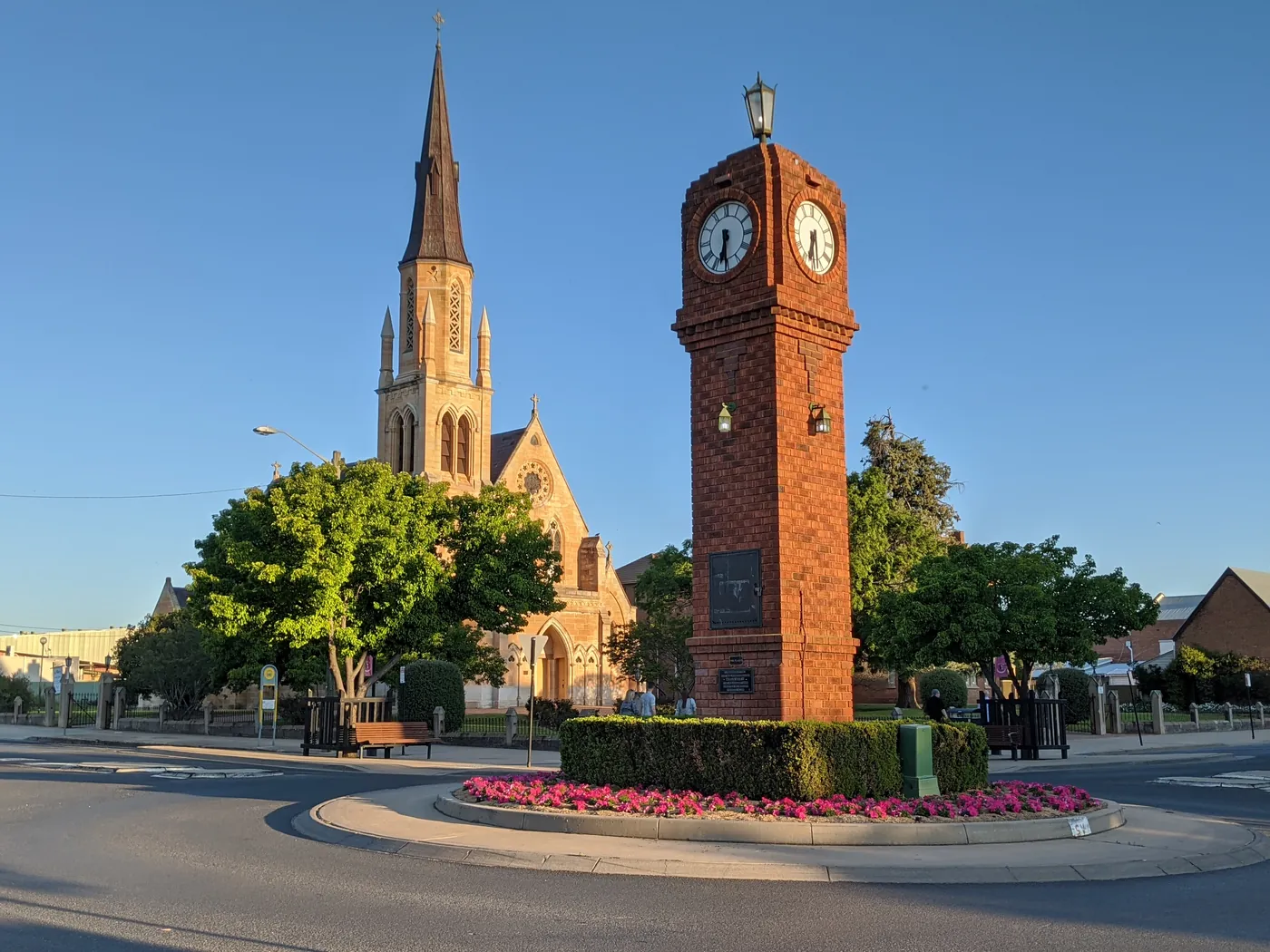
The clock tower and a church spire at the roundabout in central Mudgee

Photo: “Mudgee Roundabout” by MDRX, CC BY-SA 4.0, via Wikimedia Commons

Cavmir in Mudgee

What Cavmir Does for Mudgee Hosts

Cavmir works remotely with Mudgee-area owners, treating each house as a small business that has to be found before it can be booked. For a house here, that means a booking site of your own that tells a Sydney couple how far you are from the cellar doors and the town, search and AI-assistant pages built on the questions guests type (best Mudgee house for a group, dog-friendly stay near the wineries, where to stay in Gulgong), photo briefs that put the hot tub, the fire and the verandah first, a social calendar for the Friday-to-Sunday guest, and a mailing list that calls last year's guests back for the next festival weekend. We don't manage your property or promise a revenue figure; the job is to put your home in front of the right guest and give them a reason to book you direct.

Then and now

The Mudgee Short-Stay Market, Then and Now

Visitors have been drawn to this valley for a long time, and the places they visit today carry that history. Hands On Rock, which Visit Mudgee Region lists among its walks, 40 minutes from Mudgee off Ulan Road, shows hand stencils made by the Wiradjuri people. Europeans first came to the Cudgegong Valley in late 1822, according to the Mudgee Museum, and in February 1823 the brothers George and Henry Cox arrived with cattle and set up camp at Munna, the place now called Menah, north-west of the future site of the town.

Two events in the nineteenth century shaped what guests see now. The first was gold. Visit Mudgee Region records that Tom Saunders found gold at Red Hill in 1870, which led to the founding of Gulgong, and the town's buildings from the rush are the reason people still walk its main streets. Its page notes that the town's buildings appeared on Australia's first ten-dollar note, that the Prince of Wales Opera House was built in 1871 and is described as the oldest-operating theatre in the Southern Hemisphere, and that the Centennial Hotel, known locally as The Cenny, is among the pubs that survive from that time. The second was wine. A 2015 Travel Weekly article says Mudgee began growing grapes during the 1850s gold rush and that Robert Oatley Vineyards is the region's oldest, established in 1858. The Mudgee wine region's own website says its viticulture stretches back to 1858.

Wine is a main draw today. The same 2015 article put the region at about 2,500 ha of vineyards, 14 million bottles a year, 12 wineries and more than 38 cellar doors, and the region's wine website today speaks of more than 35 cellar doors and a choice of 44 grape varieties. The Flavours of Mudgee festival began in 2012 as a small wine and food event for about 4,000 people, and more than 10,000 attended in 2023. Alongside the wine, the region has built a calendar of markets, sculpture, farm tours and live music that gives a guest reasons to stay three nights instead of one, and the Rest Rebate in winter 2026 is the latest step in that direction. I could not find a sourced account of when the first holiday rentals in the district appeared, so I have not guessed at one; the market below is described from AirROI's current figures.

Today the short-stay market is established, concentrated and growing. AirROI counts 226 active listings, up 9 percent on the year, while average revenue rose 13 percent, and ranks Mudgee 29th of 305 New South Wales markets. Ownership is mixed: 23.9 percent of listings are professionally managed, 47.8 percent are co-hosted and 45.1 percent are run by Superhosts. The ten biggest hosts hold 47 percent of the listings, led by Bliss Stays MUDGEE, which AirROI shows running 75 listings and earning A$6,009,144 across them. That concentration is worth noticing. A single-home owner is competing with operators who have professional photography, consistent pricing and a repeat-guest list, and the gap is usually in the details: how a listing describes distance to the cellar doors, how it prices a long weekend, and whether it has any way to reach a guest after they check out.

Rates and seasons

Rates, Occupancy and Seasons in Mudgee

Rates and revenue

Mudgee's average daily rate in AirROI's data is A$471, which compares with A$445 for New South Wales and A$385 for Australia, and the average listing earns A$58,476 a year. The median listing tells a calmer story: about A$385 a night, 40 percent occupancy and A$4,990 of revenue in a typical month. The top quarter of listings earn A$7,680 or more a month at 59 percent occupancy or better and A$545 or more a night, and the top tenth reach A$11,200 or more a month at 77 percent occupancy and A$795 a night. The bottom quarter take A$2,980 a month or less, at 25 percent occupancy or lower and A$285 a night or lower. That spread, from A$2,980 to A$11,200, is the real picture of the market: the average hides a wide gap between homes that are found and priced well and homes that are not.

Size drives price more than anything else. AirROI's table for entire homes gives average yearly revenue, nightly rate and occupancy by bedroom count: one bedroom A$35,300, A$271 and 43 percent; two bedrooms A$54,300, A$319 and 48 percent; three bedrooms A$53,100, A$396 and 43 percent; four bedrooms A$65,200, A$599 and 37 percent; five or more bedrooms A$118,000, A$993 and 38 percent. The two-bedroom house fills best, while the big houses charge far more a night and book fewer of them. Amenities show up in the same data. Listings with a pool view average A$120,000 against A$55,000 for those without, a hot tub A$113,000 against A$56,000, a pool A$91,000 against A$52,500, an indoor fireplace A$74,500 against A$50,100 and a fire pit A$72,000 against A$51,000. Homes with a hot tub or a pool view tend to be bigger and better placed too, so the gap isn't all down to the feature. It still shows what Mudgee guests pay for: somewhere to sit outside in the evening and somewhere warm in winter.

Guests book about 70 days ahead on average, with the longest lead times in May at 88 days and in October and July at 81 days, and the shortest in January at 42 days. AirROI's headline figure for the average stay is 3.3 nights, although its monthly chart sits closer to three nights, from 2.5 nights in August to 3.9 in December. A two-night minimum is set on 80 percent of listings and a one-night minimum on 17 percent. About four in five listings (81 percent) add a cleaning fee, with a median of A$237 and an average of A$317, which AirROI puts at 15.7 percent of gross revenue, so how a fee is shown affects whether a guest books. Moderate is the most common cancellation policy at 51 percent of listings, ahead of Firm at 23 percent. These are market averages for AirROI's twelve-month window, so your own year will differ with the size of your home and the weeks you open.

The year in Mudgee

Summer here runs from December to February, and in Mudgee it isn't the strongest season. In AirROI's monthly table (September 2025 to August 2026) July is the peak, at A$8,147 per listing, 49.4 percent occupancy and A$524 a night, followed by April at A$7,613, 52.1 percent and A$465, then October at A$6,735 and 48.3 percent. February is the low point, at A$3,745 and 32.3 percent. AirROI groups April, July, October and December as its high season, at about A$6,680 a month, 48 percent occupancy and A$451 a night; May, June, August, September and November as shoulder, at A$5,390, 42 percent and A$440; and January to March as low, at A$4,330, 35 percent and A$422. The peaks line up with the school calendar and with the cooler months, when a log fire and a bottle from a local cellar door are the point of the trip. The NSW Department of Education's 2027 dates put the autumn holidays at 12 to 23 April, the winter holidays at 5 to 16 July and the spring holidays at 27 September to 8 October. The summer break then starts on 21 December 2027 and runs to 28 January 2028 for Eastern-division schools, with Western-division schools back a week later.

The year has a handful of fixed dates worth building around. Mudgee Show & Rodeo is on at the Mudgee Showground on Friday 5 and Saturday 6 March 2027, according to the council's events listing. The Mudgee Small Farm Field Days, which the council says has run for over 40 years and attracts about 20,000 people a year, were held on 10 and 11 July 2026 at AREC in Bombira; I found no 2027 dates. Flavours of Mudgee was held on Saturday 26 September 2026, and its website had not announced a 2027 date when I looked. The Mudgee wine region's website describes September as officially wine festival month. Late in the year, the council lists a Lions Twilight Christmas Market in Lawson Park in mid-December, and both the Gulgong Christmas Celebration in Anzac Park and the carols at the Mudgee Showground on 19 December 2026. The quiet stretch is late January to March, so that is where a midweek offer, a longer-stay rate or a Rest Rebate-style third night gives you something to sell.

The rules

Short-Stay Rules in Mudgee

A Mudgee holiday house sits under three layers of rules: the NSW Government, Mid-Western Regional Council and the federal tax system, plus strata by-laws if it's an apartment. Everything here comes from official pages I opened, with the dates they give. The state starts with a register. Any short-term rental accommodation (STRA) in New South Wales has to be listed on the government's STRA Register, and the Planning portal says the planning framework came into effect on 1 November 2021, with hosts needing to meet the new fire safety standards by 1 March 2022. Registering costs A$65 and each renewal A$25, neither refundable. You can renew from 45 days before expiry; a registration that lapses is held for a further three months and then de-registered automatically. Hosted means you live on the property while guests stay, and the portal says an owner living on a block with a granny flat can let that flat all year. For the other states, our Australian short-stay rules guide sets them side by side.

The 180-day limit you hear about is a local one. The Planning portal restricts non-hosted stays to 180 days a year only in the Greater Sydney region, the Ballina area and certain land in the Clarence Valley and Muswellbrook areas, and a booking of 21 consecutive days or more is exempt from those limits. Most of Byron Shire has been capped at 60 days since 23 September 2024. Mid-Western Regional Council isn't named on that page, and none of the council pages I opened mentions a cap. The NSW legislation site wouldn't load for me, so I couldn't read the land-use table: ask the council whether your zone allows the stay before you buy or list. Its planning controls page names the Mid-Western Regional Local Environmental Plan 2012 and says Amendment 6 to the Development Control Plan commenced on 19 July 2023; the only number it lists is the council's general line, 02 6378 2850. Council rates fall into four categories (residential, business, farmland and mining). The council asks to hear within 30 days if a property's use changes, and instalments fall due on 31 August, 30 November, 28 February and 31 May. Its rates page doesn't say where a holiday let sits, so ask.

Every registered stay also carries fire-safety and conduct duties. The standards sit in the Environmental Planning and Assessment (Development Certification and Fire Safety) Regulation 2021, and the NSW pages describe an evacuation plan and interconnected smoke alarms as part of them. A mandatory Code of Conduct for the STRA industry has applied since 18 December 2020, administered by the Commissioner for Fair Trading, and an Exclusion Register of banned hosts and guests has run since August 2022. If you own an apartment, read the by-laws first: since April 2020 an owners corporation can ban STRA in lots that aren't the host's principal home. Planning's last word on a review of all this, which drew over 430 submissions and more than 2,400 survey responses in early 2024, was dated 10 February 2025 and promised no outcome. Check the portal again before you rely on today's settings.

The ATO's holiday homes page treats rent as assessable income. Interest, rates, body corporate fees and repairs can be claimed only when the home is used, or held for use, mainly to earn rent, and even then you split them for your own stays, for weeks it wasn't available to rent and for cheap lets to family or friends. Commissions, booking fees and advertising that exist only because of the letting are handled separately, as is cleaning after a guest's stay. The tax office names three 2026 documents on this: TR 2026/1, PCG 2026/2 on apportionment and PCG 2026/3 on holiday homes. Foreign buyers meet a national ban on established dwellings, which the Foreign Investment Review Board dates from 1 April 2025 to 30 June 2029 with narrow exceptions, and Revenue NSW says foreign owners of NSW residential land may owe surcharge land tax.

I looked for a council licence, a night cap or a local levy covering Mudgee and Gulgong and found none on the pages I could read. That isn't proof none exists, and councils revise their policies. Take this section as orientation rather than legal advice, and confirm your own position with the council, your strata manager, NSW Fair Trading and an accountant. Cavmir handles the marketing side. Permits, inspections, insurance and tax stay with you and your advisers.

Marketing

Marketing a Holiday Home in Mudgee

What works here

Start with the listing, because most Mudgee guests are comparing six or seven similar houses. Lead with the night they are buying: the wood heater, the hot tub, the verandah at sunset. Put the distance to the cellar doors and to the town centre into the first two lines, in minutes by car and in kilometres. Guests in this market choose by how close they are to the wine and how much space the group has, so say how many cars fit and whether the fence is dog-safe. Most Mudgee listings add a cleaning fee (AirROI's average is A$317), so show the total price clearly, and think about a lower rate and a lower fee for a three-night stay, which suits the Rest Rebate guest.

Photographs carry more weight than any other part of the listing. Brief the photographer to shoot the house at golden hour and the fire in winter, with the guest's morning in mind: coffee on the deck, a breakfast table, a vineyard or paddock view. In a town where a quarter of the listings are run by professionals, a set of twenty-five bright, level photographs with a clear order beats a longer set that mixes styles. Add a short video of the walk from the car to the front door, and one of the evening setup, because guests booking a weekend want to see where they will sit.

Use more than one channel, and measure each. Airbnb is the channel AirROI tracks in this market, and Booking.com adds guests who search for a house through a hotel-style site. Stayz and Vrbo are the other names Australian hosts meet, but stayz.com.au wouldn't open for me, so I couldn't confirm how Stayz now sits beside Vrbo; check your own account before you decide how much time to give each. Whichever channels you pick, keep one calendar and consistent rates. The aim is to move guests from a platform to your own site for the next stay, with a booking link in the welcome note, a printed card in the home, and an email you send in the quiet weeks. A direct guest saves you the platform's fee on the booking, and a returning guest is the cheapest booking you will win.

Time your marketing to the weeks guests plan. With a booking lead time of about 70 days, a house wanting September's wine festival month should be searchable in June, and one targeting the April school holidays should be live by the end of January. Use the event dates on this page as anchors for social posts and email: the Show in March, the winter weeks, Flavours of Mudgee, the October long weekend. For a Gulgong home, build a separate story around the opera house, the museums and the pubs, because those guests are choosing history and a quiet street over a cellar-door crawl. For a home near the vineyards, lead with the tasting trail and what to do on a day when you want to stay in.

What makes it hard

The first challenge is competition from professional operators. AirROI shows that the ten biggest hosts account for 47 percent of listings, and one host runs 75 of them. A single-home owner cannot match that scale, so the aim is to be better at one thing: a clear picture of who the home is for, a price that follows the calendar, and a direct line to guests who return. Pricing every Saturday the same is the common error. A Saturday in the first week of July and a Saturday in February are different products, and AirROI's monthly revenue range, from A$3,745 to A$8,147, shows how far apart they sit.

The second is seasonality inside a moderate market. Every Mudgee owner knows the quiet stretch from late January to March, when AirROI shows occupancy of 32 to 40 percent. The answer is not to chase the same guest with a lower price. Offer a reason to come: a three-night midweek rate, a long-weekend package with a local lunch, a pet-friendly offer for guests who would otherwise leave the dog behind, or a winter log-fire special that you put on sale early. Also use your house for the segments that book in the quiet months: workers on contract in the district, families visiting relatives, and groups gathering for a milestone birthday. Do not promise discounts you cannot sustain; show the value of the stay instead.

The third is distance. Guests come mostly from Sydney and, further back, Newcastle, so your site and your listing should say how long the drive takes and where to stop, and give a clear check-in time so a late arrival does not turn into a bad review. Other regions compete for the same weekend, such as the Hunter Valley or the Blue Mountains. Mudgee's answer is its own list of reasons to come, and a listing should name them: the markets, the sculpture walk, the long lunch and the cellar doors.

Worth knowing. Gulgong's streets are on Australian money. Visit Mudgee Region says the town's buildings were captured on Australia's first ten-dollar note, and it names the Centennial Hotel, known as The Cenny, as one that appears on it. The same page links the poet Henry Lawson to the town, and the Prince of Wales Opera House, built in 1871 and described as the oldest-operating theatre in the Southern Hemisphere, still stages shows by the Gulgong Amateur Musical and Dramatical Society that sell out quickly.
Money matters for Mudgee owners
Insurance

A holiday home that is rented out is not the same risk as a home you live in. Moneysmart warns that cover you'd normally expect can fall away once you take rent, so ask a broker whether your policy extends to short stays, what it says about guest damage and theft, and whether you need public liability cover for visitors. The NSW Code of Conduct also expects hosts to hold insurance for third-party injury and death. Ask what changes if you rent the home some weeks and use it yourself on others, and whether a hot tub, pool or wood heater needs separate conditions. Do not rely on a platform's host protection alone; it is not a replacement for your own insurance, and a broker can explain the difference.

Tax

For the ATO, what a guest pays you is rental income. What you can claim against it depends on how the house is used: the big ownership costs (loan interest, rates, body corporate fees, repairs) are claimable only if the home is used or held mainly to earn rent, and then you carve out your own weekends, weeks it wasn't offered and any cut-price stays for family. Keep records from the day you buy until the day you sell, because they feed the capital gains calculation. The ATO points holiday apartments in commercial residential premises to separate guidance, so put the GST question to an accountant who knows short stays. Sofie is a marketer, not an accountant.

Lending and land tax

Banks don't all value short-stay income the same way, and some are cautious about it, so speak to a broker early about how yours treats Airbnb earnings. Revenue NSW describes land tax as a state tax on the value of unimproved land, and its principal place of residence exemption is for your own home, so ask an accountant how it applies to a holiday house. Overseas buyers face the national ban on established dwellings (1 April 2025 to 30 June 2029, narrow exceptions) and possibly surcharge land tax on NSW residential land, so get advice before you commit.

Your own website

A Direct-Booking Website for a Mudgee Home

A direct-booking website is the one piece of your marketing that you own. Guests who find you on Airbnb or Google want to check three things on it: where the home is, what it costs in total, and what to do nearby. A page for a Mudgee house should answer those quickly: the distance to the cellar doors and the town in minutes, the sleeping arrangements, whether pets are welcome, the fire and the outdoor space, and a calendar with a clear price. Our website design service builds these as fast, mobile-first sites with a booking link and a guest-friendly layout, using your own photographs.

Beyond the home page, the pages that earn their place are the ones guests ask about. A page on Mudgee wine weekends, with the cellar doors you recommend and how far each is from the house, will be read and shared. A page on Gulgong, with the opera house, the museums and the pubs, is the draw for a heritage stay. A page on September's wine festival month, the Show and the July holidays tells guests when to come. Every page should link back to the booking page, with a short note on what the stay includes. Write for the guest who is planning in the evening on a phone, and keep the language plain.

Price is where a lot of direct sites lose guests. Quote one total that rolls in the nightly rate, the cleaning fee and any other charge. AirROI puts cleaning fees at 15.7 percent of Mudgee's gross revenue, too big a share to spring on someone at the last step. Read the Australian Competition and Consumer Commission's guidance on price display before launch (the drip-pricing law doesn't start until 1 July 2027, but the principle is plain), and publish a privacy policy that says what you do with an enquiry form's details. AirROI reports that 98 percent of Mudgee listings show a registration, permit or licence number, so show your NSW STRA registration where a platform or your own site expects it, and keep your fire safety documents on file.

AI search

Getting Named in AI Answers About Mudgee

Plenty of guests now put their questions to an AI assistant before they open a search page. A couple might ask for a dog-friendly house near the Mudgee cellar doors with a hot tub, a family might ask where to stay in Gulgong for a heritage weekend, and a group might ask which Mudgee house sleeps eight and is open at Easter. The assistants draw answers from pages that state facts clearly: how many bedrooms, how far to the town, what is nearby, when it is open, and what a guest can expect. A host whose site says these things in plain sentences, with the same details on every channel, is the one that gets quoted.

Writing for those assistants is called generative engine optimisation, and our guide to generative engine optimisation for holiday rentals goes through it step by step. For a Mudgee home, it means pages on the questions above, consistent names and addresses across your site and listings, and your own words about the local calendar rather than copied brochure text. It also means keeping facts current: if the Rest Rebate or a festival date changes, your pages should too. We write these pages for you, and we check how the major assistants describe your home so you can see where the gaps are.

What's next

Where Mudgee Is Heading

A few things are moving that a Mudgee owner should keep an eye on. The first is the state's long-running look at its STRA settings. Planning's page, last updated on 10 February 2025, still said the 2024 feedback was under consideration and announced no result. Any change could touch caps, registration or fire safety, and a council wanting a lower local cap would need state approval, so watch the portal and Mid-Western Regional Council.

The second is tax. The ATO's 2026 package (TR 2026/1, PCG 2026/2 and PCG 2026/3) spells out how it sees rental income and holiday homes that also get private use. If you stay in the house yourself part of the year, read it with your accountant before you block out your calendar. The third is the foreign-buyer ban on established dwellings, which the Foreign Investment Review Board says runs to 30 June 2029; it narrows who can buy, and so may change who sells and buys in the district.

The fourth is the push to turn visits into stays. The Rest Rebate was a winter 2026 offer, and the Mudgee Guardian's report on it notes that regional NSW welcomed 64.4 million visitors spending A$27.2 billion in the year to March 2026. Flavours of Mudgee has grown from about 4,000 attendees in 2012 to more than 10,000 in 2023, and council events like the Show, the Field Days and the Christmas celebrations keep the calendar full. If the rebate returns in 2027, hosts who have a three-night offer ready will be the ones that benefit. I have not seen an announcement, so plan for it as a possibility, not a promise.

Why we like the work

Why We Love Marketing in Mudgee

What I love about marketing homes here is how concrete the reasons to visit are. Nobody books Mudgee for a vague country mood. They book a Saturday at the farmers' market, a long lunch at a converted homestead, a stroll along the sculpture trail beside the Cudgegong River, a tasting at a cellar door with a big timber table, and a night by the fire. Each of those is a sentence you can put in a listing, a caption or an AI-friendly page, and each one points to a home that sits within reach.

I also like how much Gulgong adds. A heritage street, an opera house from 1871, two museums and a couple of old pubs give a different guest a different reason to come, and that guest is easy to write for. The work is to describe each home truthfully, so the couple who wants a pool and the cellar doors find the house with a pool near the cellar doors, and the couple who wants a quiet cottage and a pub find the cottage in Gulgong.

And I like that the best marketing here is plain. Owners here already know their homes well. What they often lack is a clear way to say it: the right photographs in the right order, a site that answers a guest's questions in a minute, and an email that brings people back for next September. That is what I enjoy building.

Welcome book

Picks for Your Mudgee Welcome Book

Eleven places you can put in a welcome book or on a guide page for guests. Opening days and hours change, so check each business before you send a guest there.

Morning, third Saturday

Mudgee Farmers' Markets

Held at Robertson Park, Market Street, on the third Saturday of each month from 8.30 am to 12.30 pm, with fresh local produce, gourmet food and artisan crafts. Visit Mudgee Region lists 21 November and 19 December as the next two dates in 2026. Tell guests which weekend it falls on, since it is the easiest thing to build a Saturday around.

Wine

Huntington Estate cellar door

A family-run vineyard whose cellar door Visit Mudgee Region describes as cosy and old-school, with a big timber table to sit around. A good first stop for a couple who want to talk to the people who make the wine.

Wine and a picnic

Bunnamagoo Estate Wines

603 Henry Lawson Drive, Eurunderee. Visit Mudgee Region lists it open 10 am to 4 pm every day, with a guided tasting, a lawn for a picnic and live music among its facilities; pets are listed as friendly if you enquire first.

Wine and art

Rosby Wines & Gallery

A winery whose country garden, Visit Mudgee Region says, comes to life with sculptures during Sculptures in the Garden, an annual October event it calls Mudgee's biggest art event (10 to 25 October in 2026). Check the dates for your guests' year.

Wine outdoors

791 Estate

Tastings at a table under a tree, with fields and the Mudgee hills behind and chickens wandering the grass. Visit Mudgee Region says the owner pours the wines herself. Good for a slow afternoon on a warm day.

Long lunch

The Barn at Blue Wren Farm

The farm's on-site restaurant, with a seasonal Mediterranean-inspired menu of shared dishes made from locally sourced produce. Visit Mudgee Region also names it, along with Pipeclay Pumphouse and zin food and wine house, as a place for a long lunch. Days and hours aren't listed there, so check with the farm before sending guests.

Dinner in a homestead

zin food + wine house

A restaurant in a country homestead that celebrates local seasonal produce, reached by a walk through a vegetable garden. Book ahead for weekend evenings and tell guests to do the same.

Easy walk

Mudgee Sculpture Walk

A 1.5 km return stroll of about an hour that starts at the Mudgee Arts Precinct and follows the Cudgegong River through Lawson Park West. Visit Mudgee Region adds that you can look for turtles in the river and fish from the footbridge.

Longer walk

Mt Misery and Castle Rock

Mt Misery is a steep 10 to 11 km return climb (3 to 4 hours) from Rifle Range Road in Mudgee. Castle Rock, in Munghorn Gap Nature Reserve about 30 minutes away, is an 8.5 km return walk to a pagoda lookout.

Rainy day in Gulgong

Gulgong Pioneers Museum and Holtermann Museum

The Pioneers Museum is at 73 Herbert Street in the old Times Bakery and Produce Store, with a restored Cobb and Co. coach and a Museum of Sight and Sound. The Holtermann Museum is in two State Heritage-listed buildings on Mayne Street. Check opening days with each museum.

Evening in Gulgong

Prince of Wales Opera House and the pubs

Built in 1871, with shows by the Gulgong Amateur Musical and Dramatical Society that Visit Mudgee Region says sell out quickly. Afterwards, the Centennial Hotel has a dog-friendly garden and the Prince of Wales Hotel has live music and a fire.

The playbook

How Cavmir Would Market Three Mudgee Homes

Cavmir has no clients in Mudgee yet. These are the plans it would start with for three common kinds of home here: the situation, the plan, and what each one aims at.

Four-bedroom house with a hot tub near the cellar doors
The situation

A house for eight on a rural block outside town, popular with friends and families but listed with thin descriptions and a rate that does not change with the calendar. Guests land on Airbnb, and there is no way to reach them again after they leave.

The plan

Cavmir sets up a booking site of its own with a page for the house and another for wine weekends, reworks the listing around the hot tub, the fire and the distance to the cellar doors, briefs a photographer for evening and winter shots, sets up a seasonal rate calendar around the Show, the July holidays and Flavours of Mudgee, and adds a guest email that goes out before each peak.

What it targets

The plan targets more direct enquiries, a higher average rate on long weekends and school holidays, and a growing list of returning guests. Track direct bookings against platform bookings, average daily rate by month and email sign-ups.

Heritage cottage in Gulgong
The situation

A two-bedroom cottage a short walk from the main street, with period features and a verandah, listed as a generic country stay. It gets weekend bookings but few midweek ones, and guests don't know what there is to do in the town.

The plan

Cavmir writes a Gulgong guide page covering the opera house, the museums, the pubs and the gold-rush streets, rewrites the listing around the walk to the main street and the heritage details, photographs the verandah and the street at different times of day, and builds a social calendar around the Christmas celebration and the quieter months, with a three-night midweek offer.

What it targets

The plan targets better midweek demand, longer stays from guests who want to see the town, and stronger local-search results for Gulgong stays. Track enquiries mentioning Gulgong, average length of stay and midweek nights.

Two-bedroom house in Mudgee town
The situation

A walkable house close to the cafes, the markets and Lawson Park, listed on Airbnb and Booking.com. Occupancy is steady on festival weekends and weak in January to March, and the owner uses the house a few weeks a year.

The plan

Cavmir builds a guide page for a car-free weekend in town, opens the listing with the stroll to the sculpture trail and the third-Saturday markets, sets a quiet-season offer for couples and remote workers, and adds a pet-friendly page if the house allows pets. It also shows how to keep the owner's private weeks in the calendar so the ATO apportionment is simple for the accountant.

What it targets

The plan targets the January to March gap and a wider mix of guests, from event weekends to midweek work stays. Track occupancy by month, lead time and the share of bookings that come direct.

FAQ

Mudgee Airbnb Marketing: Questions, Answered

Does Cavmir offer Airbnb and holiday-home marketing in Mudgee?

Yes, remotely. For Mudgee and Gulgong owners Cavmir builds a booking site, search and AI-assistant pages, photo briefs, a social calendar and a guest mailing list. Cavmir is a marketing agency, so it doesn't run your property or your bookings, and it doesn't promise a revenue figure.

Do I have to register a Mudgee holiday home?

Yes: in New South Wales a short-term rental has to be on the state's STRA Register and meet the fire safety standards. Registering costs A$65 and renewing A$25, per the Planning portal. Ask Mid-Western Regional Council about the planning side, and read your strata by-laws if you own an apartment.

Is there a limit on how many nights I can rent my Mudgee home?

The Planning portal's 180-day limit on non-hosted stays covers only Greater Sydney, the Ballina area and parts of the Clarence Valley and Muswellbrook areas, and Byron Shire has its own 60-day limit. Mudgee isn't named, and I found no council cap, but confirm with the council before you rely on that.

When is the best time to be fully booked in Mudgee?

AirROI's monthly figures for September 2025 to August 2026 show July as the strongest month, then April and October. School holidays, Easter, the Show in March and Flavours of Mudgee in September are the dates owners plan around. January to March is the quiet stretch.

What does a Mudgee holiday home earn?

AirROI's average for its Mudgee market is A$58,476 a year, an average daily rate of A$471 and 41.5 percent occupancy, but results vary widely: the bottom quarter earn A$2,980 a month or less and the top tenth A$11,200 or more. Those describe the market, not a promise for your home.

Should I list on Airbnb, Booking.com, Stayz or Vrbo?

Most Mudgee hosts start with Airbnb and many add Booking.com. I could not confirm how Stayz now presents itself against Vrbo, so check your own account. Whatever you choose, keep your calendar in one place and use a direct-booking site to bring returning guests back.

Do you cover Gulgong as well as Mudgee?

Yes. Gulgong has a different guest from the Mudgee cellar-door trail: people who come for the gold-rush streets, the opera house, the museums and the pubs. We write separate pages and listings for each so the right guest finds the right home.

Can I own a Mudgee holiday home if I live overseas?

Probably not an established dwelling. The Foreign Investment Review Board bars foreign investors from buying them between 1 April 2025 and 30 June 2029, bar narrow exceptions, and Revenue NSW says foreign owners of residential land may owe surcharge land tax. See a lawyer, an accountant and a broker first.

Get a quote

Tell Us About Your Mudgee Holiday Home

Which home, which town, and where it lists today. A written proposal in A$ follows within 48 hours.

What do you need?

Your details go to Cavmir only and are used to answer you. Privacy policy.

Nearby

Markets Near Mudgee

All Australian markets

Photo Credits