New South Wales · Holiday-Home Marketing

Airbnb Marketing
in Snowy Mountains

Marketing for holiday homes in the Snowy Mountains, from Thredbo and Perisher to Jindabyne, Berridale, Cooma and Adaminaby, built around a winter that does most of the earning and the other eight months that don't yet.

Start here Work with Cavmir in Snowy Mountains
Get a Quote
A$565
Avg. nightly rate
30%
Avg. occupancy
A$3,476
Avg. monthly revenue
3-5%
Est. gross yield
HIGH
Seasonality
MODERATE
Rules to follow

* Market averages in Australian dollars from AirROI data for Jindabyne, New South Wales, twelve months October 2025 to September 2026, in Australian dollars as AirROI shows them (Thredbo, Cooma and Berridale figures come from their own AirROI pages and are labelled in the copy). The yield is Cavmir's estimate. A single home's numbers depend on its size, its location and how it is marketed.

The market

Holiday Rentals in the Snowy Mountains

Cavmir is an Airbnb marketing agency for Australian holiday homes. This page is for owners and managers of short-stay homes in Snowy Mountains.

The Snowy Mountains are the only place on the Australian mainland where a holiday home can sell on snow, and almost everything about the market follows from that. Thredbo and Perisher sit inside Kosciuszko National Park, about 30 minutes' drive from Jindabyne by Australian Traveller's count, and Thredbo describes itself as about 5.5 hours from Sydney or Melbourne and 2.5 hours from Canberra. Jindabyne is the town on Lake Jindabyne where most of the bookable homes actually are. Berridale is north of it, Cooma is less than an hour north by Snowy Hydro's count, and Adaminaby is further out again. If you own or manage a home in any of those towns, you are selling to the same families, groups of friends and couples, and the winter calendar sets your year.

The numbers show how lopsided that year is. AirROI's page for Jindabyne, which is the lead market for this page, counts 584 active listings for the twelve months from October 2025 to September 2026. The average listing took A$41,711 over the year at an average daily rate of A$565, but only 29.8 per cent of available nights were booked. For comparison, AirROI shows the New South Wales average at A$46,850 a listing, A$445 a night and 41 per cent occupancy. So Jindabyne charges much more per night than the state and fills far fewer of its nights, and that gap is the commercial story of this region. July alone earned the average Jindabyne listing A$16,558 in 2026 at 61.4 per cent occupancy, and AirROI says the three strongest months account for 51 per cent of annual revenue.

The homes are mostly apartments and houses rented whole. AirROI puts 96.2 per cent of Jindabyne listings as entire homes, 53.6 per cent as apartments and 38.5 per cent as houses, with the rest split between hotel and boutique stays, cabins and other types. Three-bedroom homes are the biggest group at 31.8 per cent of entire-home listings, followed by two-bedroom homes at 25.9 per cent. Size matters for revenue: AirROI's average for a two-bedroom home is A$41,200 a year, for three bedrooms A$43,800, for four bedrooms A$54,900 and for five or more A$75,800. At the top of the market the numbers are another order again: AirROI's best-earning Jindabyne listing took A$252,247 over the year at 71.3 per cent occupancy. That is a single listing, not a typical result, and it is worth studying for how it is presented rather than copying its price.

The places around Jindabyne price and book differently, and it helps to know which one you own in. On its own AirROI page, Thredbo shows 264 active listings, an average daily rate of A$724, occupancy of 23.5 per cent and average revenue of A$41,621, with a booking lead time of 76 days. Cooma shows 44 listings at A$293 a night and 42.3 per cent occupancy, earning A$33,168 on average. Berridale shows 41 listings at A$440 a night and 34 per cent occupancy, earning A$31,742. I did not find an AirROI figure for Perisher or Adaminaby, so I quote none for either. The pattern is that the closer a home is to the lifts, the higher the winter rate and the shorter the season, while the towns further out earn less per night but are not as dependent on July.

Guests here plan early and stay about four nights. AirROI gives an average booking lead time of 68 days in Jindabyne and an average stay of 4.2 nights, with two nights the most common minimum stay at 68 per cent of listings. The average guest rating is 4.76. Most listings carry a permit or registration number in their listing, which AirROI puts at 99 per cent of Jindabyne listings, so being registered is the norm and not a point of difference. What sets one home apart from the next is how clearly it answers the questions a snow-trip planner asks: how far to the lifts, where the skis and wet gear go, whether there is parking for a car with chains, and what the home is like on a day when nobody is skiing.

What brings guests to Snowy Mountains

  • Thredbo village, with its alpine coaster and mountain bike park
  • Perisher, which calls itself Australia's largest ski and snowboard resort
  • Mount Kosciuszko, 2,228 m, the highest point on the mainland
  • Lake Jindabyne and its foreshore walk of up to 30 km
  • Yarrangobilly Caves and the thermal pool in Kosciuszko National Park
  • The Thredbo Valley Track, a 37 km route along the Thredbo River
  • Wildbrumby Distillery and Jindabyne Brewing between the lake and the snow
  • Snowy Hydro Discovery Centre and Cooma Monaro Railway Museum in Cooma
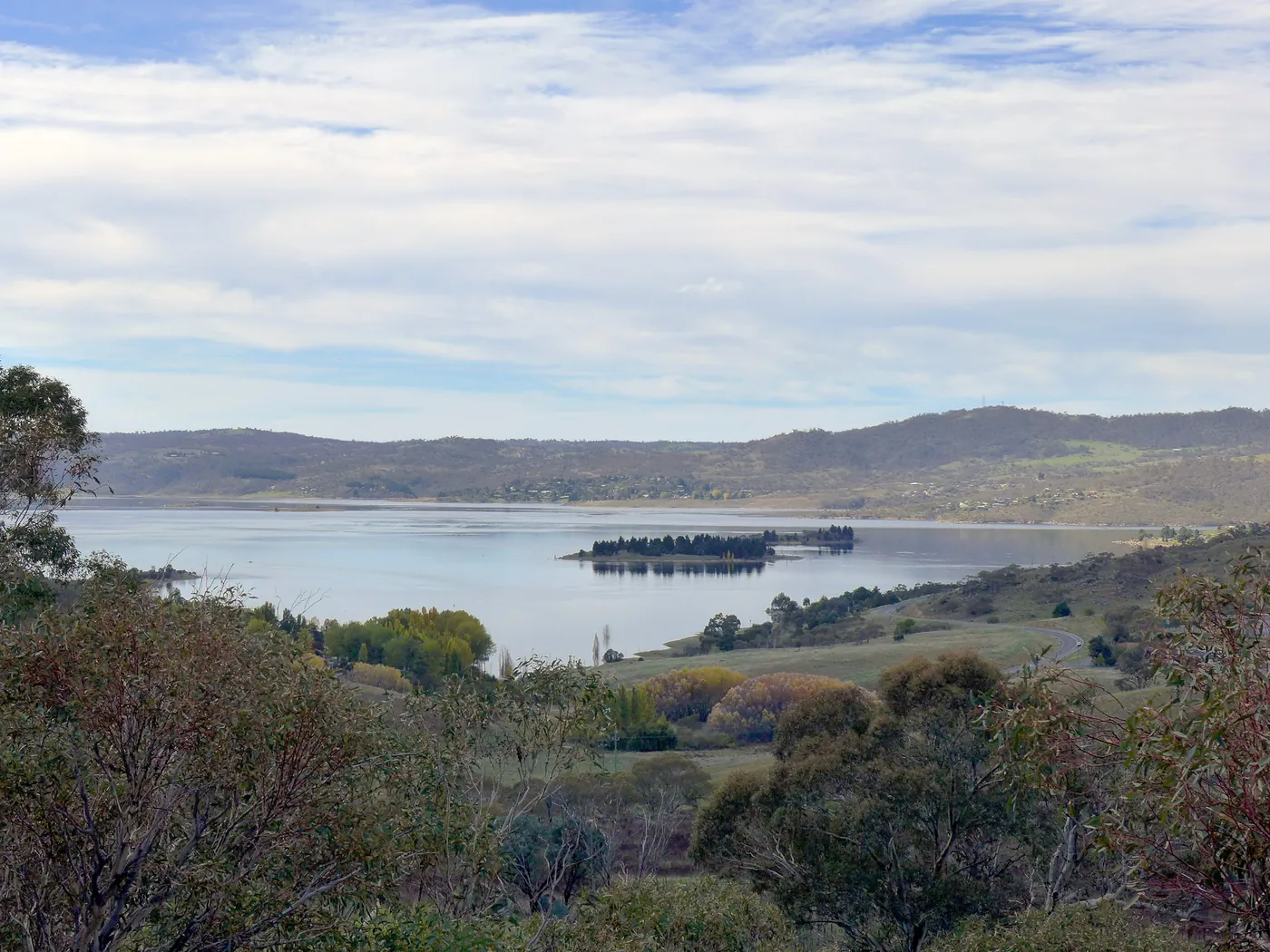
Lake Jindabyne from the hills above the town

Photo: “Jindabyne 1 Stevage” by Steve Bennett (stevage), CC BY 3.0, via Wikimedia Commons

Cavmir in Snowy Mountains

What Cavmir Does for Snowy Mountains Hosts

Cavmir is a marketing agency, not a property manager, and it works with Snowy Mountains owners remotely. For a home here that means a direct-booking website that explains the winter in the detail a trip planner needs (lift distance, drying room, parking, bedding by room), a Google Business presence and local search pages, written answers that AI assistants can quote when someone asks where to stay for a Thredbo week, photography and video that show the home in snow and in January, social posts and a monthly email to past guests. The aim is to give a home a second and third season, because the data shows most of the revenue sits in two months.

Then and now

The Snowy Mountains Short-Stay Market, Then and Now

The town and the lake that holiday guests come to are both products of a dam. Europeans first settled the Jindabyne district in the 1820s, and Stewart Ryrie Junior built a flour mill in 1847, shown in a clip from a film in the Australian Screen Online archive. In 1959 the government banned new building in old Jindabyne, because the Snowy Mountains Scheme was going to flood it. The town was moved to the shores of the new Lake Jindabyne between 1962 and 1964, and Jindabyne Dam flooded the old town. The film Snowy Hydro: The Jindabyne Story, made around 1965 to promote the scheme, tells that story and is on the Australian Screen Online site. The lake that came out of that decision is now the centre of the market: the foreshore, the water sports and the trout fishing all trace to it.

The resorts run on a different footing from the town. Thredbo is a leasehold village inside Kosciuszko National Park, and the tenure still shapes who can buy and rent there. A Canberra Times report published on 17 July 2026 says Thredbo Village homeowners are subtenants of Kosciuszko Thredbo Pty Ltd, which holds the head lease over the resort, that leases typically run 50 years, and that residents pay a bed licence covering communal facilities and utilities. EVT lists Thredbo as leasehold to 2057 across 956.9 hectares. Planning in the alpine resorts is run separately from the council: the NSW Department of Planning, Housing and Infrastructure's Alpine Resorts Team, based in Jindabyne, is the consent authority and certifier, working under Chapter 4 of the Precincts-Regional SEPP 2021 and the Alpine Region Development Control Plan.

The State has also put money behind the region as a year-round destination. The Snowy Mountains Special Activation Precinct master plan was finalised in July 2022, and the NSW Planning Portal says its delivery documents were finalised in 2025 and that the precinct is now in the delivery phase. A NSW Government announcement of 1 July 2022, republished on Snowy Monaro Regional Council's website, committed A$391.3 million to deliver the master plan across 4,879 hectares centred mainly on Jindabyne, with additional residential zoning in Jindabyne and increased bed capacity within the existing footprint of the alpine resorts. For a holiday-home owner the signal is that the State expects more visitors outside the ski months, and more beds to serve them. It is a plan, not a guarantee, and how much of it arrives is still unfolding.

Where the market sits now is easy to read in AirROI's Jindabyne data. There are 584 active listings, and the average revenue per listing rose 1.0 per cent over the year, which means the market is roughly flat after adding supply. Ten hosts operate 54 per cent of the listings, so a large share of the stock is professionally run, and the top host alone runs 116 listings. At the same time, the median listing earns about A$4,190 a month at 26 per cent occupancy, while the top 10 per cent earn A$11,100 a month or more at 67 per cent occupancy or higher. That spread, a median home that is empty three nights in four and a top tier that is nearly full two nights in three, is what a marketing plan is meant to narrow. Home prices have eased from their peak as well: Cotality's median dwelling value for the Jindabyne-Berridale area peaked at A$994,346 in June 2022, and the Canberra Times report of 17 July 2026 puts the latest median at A$851,495, about 14 per cent lower.

Rates and seasons

Rates, Occupancy and Seasons in Snowy Mountains

Rates and revenue

These figures are AirROI's, for the Jindabyne market from October 2025 to September 2026, in Australian dollars as AirROI prints them (it converts from US dollars at about A$1.44). They describe Jindabyne itself, not Thredbo, Perisher, Cooma or Berridale, which have their own AirROI pages that I quote where I name them. The average daily rate is A$565, occupancy is 29.8 per cent, RevPAR is A$185 and annual revenue per listing is A$41,711. The stats box shows A$3,476 a month, which is that annual figure divided by twelve and is an average over the year: in practice a Jindabyne home earned about A$16,000 in July and about A$2,700 in February.

Rates and revenue climb with bedrooms, though occupancy falls a little as homes get bigger. In AirROI's data a studio averages A$315 a night, a one-bedroom A$338, a two-bedroom A$488, a three-bedroom A$624, a four-bedroom A$820 and a home with five or more bedrooms A$1,026. Occupancy runs about 31 per cent for studios and one-bedrooms, 32 per cent for two-bedrooms, 29 per cent for three, 26 per cent for four and 29 per cent for five or more. The seasons set the rate as much as the size does. AirROI's high season is July and August at about A$726 a night and 57 per cent occupancy; June is a shoulder at about A$610 and 28 per cent; the rest of the year, September to May, averages about A$540 at 27 per cent. The median cleaning fee is A$340, and 83 per cent of listings charge one, so the total a guest sees matters as much as the nightly rate.

The month-by-month picture shows how thin the shoulder is. From September 2025 to August 2026 the average listing earned between about A$2,700 and A$5,800 a month in every month except July (A$16,558) and August (A$11,654), with the lowest in February and June the best of the rest. Booking lead time swings with the season, from 26 days in May 2026 to 90 days in July 2026, and in November 2025 it was 121 days. Average stay runs 3.3 to 4.8 nights across the year. In Thredbo the July peak is higher still: AirROI shows July 2026 at A$20,233 per listing, 51.9 per cent occupancy and A$1,084 a night, with a 105-day lead time and 5.3-night stays. If your home is in the resort, the booking window for next winter is the main marketing event of your year.

The year in Snowy Mountains

Summer in the Australian sense, December to February, is not the quiet season here, but it is not the money season either. On Thredbo's own site, its lifts are open 365 days a year, its mountain bike season for 2026-27 opens on 21 November 2026 with the opening weekend on 21 and 22 November, and its Summer of Events and Alpine Hiking Season both run from 21 November 2026 to 25 April 2027. Its Cannonball MTB Festival is listed for 9 to 13 February 2027. Jindabyne works as a lake town in summer, with kayaking, fishing, trails and the foreshore. These guests book later and pay less than ski guests, and they are the group a home most underserves. AirROI's Jindabyne months from December to February earned an average listing about A$2,700 to A$3,800.

The snow season is the main event. The National Parks winter entry rate applies from the Friday of the June long weekend to the Monday of the October long weekend, and that window is a good proxy for when the resorts operate. Perisher's own site shows its 2026 season ended on 25 September 2026, and Thredbo's site carried a post about spring skiing at Friday Flat as winter wound up. School holidays drive the busiest weeks: New South Wales winter school holidays ran from 6 to 17 July 2026 and run from 5 to 16 July 2027, and Victoria's ran from 29 June to 10 July 2026 and run from 28 June to 9 July 2027 (weekdays, as the two education departments list them), so the two states overlap for about a week each July. The quiet months, in AirROI's figures, are February, March and November, and a home that markets only to skiers will see that. Snow depth varies from year to year, and no one can plan around a forecast, so a sensible calendar prices the first week of the season and the last week differently from the middle.

The rules

Short-Stay Rules in Snowy Mountains

Rules here come in layers, and the layer that applies depends on where your home is. At State level, short-term rental accommodation (STRA) in New South Wales is governed by the Housing SEPP 2021 and the mandatory Code of Conduct. On the NSW Planning site, whose STRA page was last updated on 10 February 2025, the Code commenced on 18 December 2020 and the STRA planning policy on 1 November 2021, and every STRA property must be registered on the government's STRA Register. Registration costs A$65 for a new property and A$25 a year to renew, and you confirm before registering that the home meets fire safety standards and that you will follow the Code. Those standards include an evacuation plan and interconnected smoke alarms. The NSW Government's host obligations page adds that hosts must hold insurance covering their liability for third-party injury and death, and that a host in a strata scheme must give the owners corporation their contact details and tell it the premises are used for short-term rental. The nsw.gov.au guide adds that under the model by-laws, a resident who wants to start short-term letting a lot must give the owners corporation at least 21 days' notice.

The day cap is the rule most owners ask about. On the same Planning page, non-hosted STRA (where you are not living there during the stay) is limited to 180 days a year in Greater Sydney, the Ballina area and certain land in Clarence Valley and Muswellbrook, with stays of 21 consecutive days or more exempt. Byron Shire has its own limit of 60 days for most of the shire. Snowy Monaro is not on that list, so I found no statewide day cap that applies to a home in Jindabyne, Berridale, Cooma or Adaminaby. The same page says the government is reviewing the framework and that a discussion paper was on exhibition from 15 February to 14 March 2024, and it lists no finished change. Check the page again before you buy or build, because the review could alter the caps.

The council layer is thinner than the owner might expect. I opened Snowy Monaro Regional Council's pages on development approvals and on rates and found nothing on short-term rental accommodation, holiday letting or a rating category for holiday homes, so I cannot tell you what the council requires beyond the State's rules. Ask the council on 1300 345 345 whether your home needs development consent, how it is rated, and what the waste and parking rules are. Building, fire and use questions for a particular lot are the council's, and strata or owners corporation by-laws can add limits of their own, so read your by-laws before you list an apartment. In the alpine resorts the planning authority is different: the Alpine Resorts Team in Jindabyne is the consent authority for Thredbo, Perisher, Charlotte Pass and Mount Selwyn, and its team's number is 02 6448 8500. I found no short-term rental cap on its pages, but I did not find a statement of how the STRA Register and the Alpine Region DCP fit together, so ask them.

Federal rules apply on top. The ATO says rent from a holiday home is assessable income, including income through a sharing-economy facilitator, and that GST is not payable on residential rent. If the home is not mainly used or held for use to produce rent, you cannot claim ownership and use expenses such as interest and rates, though you can still claim costs of earning the income such as advertising, booking and commission fees and cleaning after guests. If it is mainly used to produce rent, you apportion for private use, including time when family and friends stay. The property has to be genuinely available for rent on commercial terms to claim expenses for the nights it is empty. For foreign buyers, the FIRB site says that from 1 April 2025 to 30 June 2029 foreign investors are generally prohibited from purchasing established dwellings, with limited exceptions, and that new dwellings fall outside the ban's wording. Our Australian rules guide gathers these in one place.

This section is orientation, not legal advice. Rules in a leasehold alpine village, a lakeside town and a farm town differ, and a planning rule can change between the day I read it and the day you buy. Ask your solicitor, your accountant and the council about your own lot. Cavmir handles the marketing side: what your listing says, how your site and your photos present the home, and how guests find it.

Marketing

Marketing a Holiday Home in Snowy Mountains

What works here

Start with the question the winter guest asks first, which is how far the home is from the lifts and how they get there. State it plainly in the first lines of the listing: distance to the Thredbo or Perisher lifts, how long the drive takes in normal conditions, whether there is a shuttle stop or a walk, and what the parking is like. Australian Traveller puts both resorts about 30 minutes from Jindabyne, and a guest comparing Jindabyne with Thredbo Village needs to see that trade-off in numbers, not adjectives. Then cover the ski logistics that make or break a stay: a drying room or heated boot rack, secure storage for skis, a place to hang wet gear, and bedding that is enough for a cold night. Those details are cheap to write and rarely appear in the first photo.

Photograph two seasons. A home that shows only snow tells January and March guests it is closed, and a home that shows only summer misses the winter search. The most useful frames are the ones that show the home as people live in it: the entry with wet gear, the fire or heater, the table where six people eat, the view on a clear day and on a grey one. For lake homes, include the foreshore, the trail and the kayak hire. For resort homes, show the walk to the lift or the village. If you are advertising to mountain bikers, show the bike store, the wash-down area and the trail map. Thredbo's own site says its lifts are open 365 days a year and its bike season starts on 21 November 2026, so summer guests exist; give them reasons to search.

List across the channels Australians and visitors use, and keep a direct-booking site beside them. Airbnb is the platform AirROI measures, Booking.com reaches international and interstate travellers, and Vrbo's Australian host page says it is free to list and charges a 3 per cent payment-processing fee plus a 5 per cent commission when you receive bookings. Stayz is the long-running Australian holiday-rental name, but stayz.com.au would not load for me, so I cannot say what it offers now; ask Vrbo which sites a listing reaches before you list. Set minimum stays by season. AirROI shows two nights as the most common minimum (68 per cent of Jindabyne listings), but July guests stay about 4.5 nights, so a three- or four-night minimum on the school-holiday weeks protects the best weeks. Use dynamic pricing carefully: AirROI's Jindabyne months run from A$506 to A$743 a night, so your rate card is wide, and a sensible calendar moves with the school holidays and the snow reports.

Build the second season on purpose. Guests who book a winter week 68 days ahead are different from guests who book a Friday for a January weekend. Write a separate landing page for summer, for mountain biking, for walking Mount Kosciuszko, for fishing and for Lake Jindabyne, and link each to the homes that suit it. Capture guest emails for a monthly note: opening weekend, the season pass deadline (Thredbo's 2027 season passes are on sale with a A$49 deposit, according to its site, and Perisher is promoting its 2027 Epic Australia Pass), and the holiday weeks that are still open. Past guests are the cheapest bookings a home gets, and they only come back if they hear from you. Put the work into a site that lists your total price, your house rules and your cancellation terms clearly, and treat the platforms as the front door, not the whole building.

What makes it hard

Seasonality is the first challenge. AirROI's numbers make it unavoidable: an average Jindabyne listing earned A$16,558 in July 2026 and A$2,681 in February, and the three best months earn 51 per cent of the year. Occupancy sits near 27 per cent for nine months. The answer is not to hope for a better August. It is to decide what the home is for in the other months: a lake base for families, a trail base for riders, a quiet base for couples, a mid-week base for contractors and event visitors, and to price and market for that group. Even a few extra booked weeks in the shoulder months change the annual figure, because a home sitting at 27 per cent has most of its nights to spare.

Snow and access are the second. Snowfall changes year to year, and so does whether the resorts open on the date guests expect. A booking made 68 days out for a week in July carries weather risk that neither you nor the guest controls, so clear cancellation and change terms, written in plain words and shown before payment, matter more here than in a beach town. Roads matter as well: the National Parks winter entry fee of A$29 per vehicle per 24 hours applies from the Friday of the June long weekend to the Monday of the October long weekend, against A$17 the rest of the year, and the NPWS walk page says private vehicle access between Perisher and Charlotte Pass is closed in winter, so check the road before you promise guests a trailhead. Tell guests about the fee and the chains in advance, or the first thing they say about your home will be a surprise.

Competition and tenure are the third. The ten top hosts run 54 per cent of Jindabyne listings, and a large operator can undercut a single owner on price and on presence. A solo owner wins on the things a portfolio cannot copy: one home described properly, a real person answering, a direct-booking site with a clear price. Tenure matters in the resorts. Thredbo homes are subleases from a head lease. The Canberra Times report says the Guthega Inn and Matterhorn Lodge each have 30 years of lease left, and an agent it quotes says that is too far out for National Parks to guarantee a renewal. If you are buying, ask your solicitor what the lease allows, what the bed licence costs, and what happens when the term ends, before you plan a holiday-rental income around it.

Worth knowing. Old Jindabyne is under the lake. The government banned new building there in 1959, the town was relocated to the shores of Lake Jindabyne between 1962 and 1964, and Jindabyne Dam flooded the old settlement. The flour mill Stewart Ryrie Junior built in 1847 is shown in a film made around 1965 to promote the Snowy Mountains Hydro-electric Scheme, held in the Australian Screen Online archive. The town you stay in today is the second one.
Money matters for Snowy Mountains owners
Insurance

A holiday home that you rent out is not covered the way an owner-occupied home is. Ask your broker whether your policy covers paying guests, loss of rent, accidental damage by guests, and public liability, and whether a ski-resort or alpine location changes the terms (snow load, burst pipes and heating are common questions). NSW Fair Trading's page on the STRA Code of Conduct says hosts must hold insurance covering their liability for third-party injury and death, so that cover is not optional. Platform host protection is not insurance, so read what it excludes. Cavmir does not recommend an insurer.

Tax

The ATO's 2026 rent instructions say rent from a holiday home is assessable income and GST is not payable on residential rent. If the home is not mainly used, or held for use, to produce rent, you cannot claim ownership and use costs such as interest and rates, though advertising, booking and commission fees and post-stay cleaning can still be claimed. If it is mainly used to produce rent, you apportion deductions for private use, including your own stays, and the home must be genuinely available for rent on commercial terms for the nights it sits empty. Keep records for five years. Capital gains tax and anything particular to your lease or business structure is a question for an accountant. Sofie is not an accountant.

Lending and land tax

Lenders look at short-stay homes differently from long-term rentals, and a leasehold home in a resort village adds another question: how many years of lease remain and how that affects the loan term. The Canberra Times report notes that Thredbo Village sales are subleases and that Cotality finds sales data from Thredbo, Guthega and Perisher too limited to be conclusive, so valuations can be harder than in Jindabyne. Ask a broker about the deposit, serviceability on short-stay income, and the state taxes that apply to your purchase, including land tax. Foreign buyers should read the FIRB ban on established dwellings, which the FIRB site dates from 1 April 2025 to 30 June 2029. Cavmir does not give lending or tax advice.

Your own website

A Direct-Booking Website for a Snowy Mountains Home

A direct-booking site is the part of a Snowy Mountains home's marketing that earns every season, so it should be built around the questions guests ask. Show the distance to the lifts in kilometres and minutes, show what the home is like in winter and summer, and show the total price early: the nightly rate, the cleaning fee (the median in Jindabyne is A$340), and any other fee, so a guest does not meet a surprise at checkout. Name the arrival conditions: chains, the park entry fee, parking, check-in after a long drive. Add a page for each type of guest: families with children in snow school, couples, groups of friends, mountain bikers, walkers going up Mount Kosciuszko (18.6 km return from Charlotte Pass, 6 to 8 hours, snowbound from June to October according to the National Parks page).

Pages worth writing are the ones guests search before they book. A Thredbo or Perisher page that explains how to reach the lifts from your home. A lake page for the Jindabyne foreshore walk, the fishing and the water sports. A winter page with season dates, school holidays and the park entry fee. A summer page with Thredbo's bike park, the Thredbo Valley Track, Yarrangobilly Caves and the Lake Jindabyne trails. A page for each home with the bed layout by room, a floor plan if you have one, and the house rules. Our website design work is built on that structure, with your own domain, your own photos and a booking path that goes to your property management system or channel manager where you have one.

Australian rules touch the booking page in a few places. In New South Wales the host must be registered, and 99 per cent of Jindabyne listings in AirROI's data show a permit or registration number, so show yours. Show the full price, the cancellation terms and the fees clearly before payment, and keep your privacy policy and cookie notice on the site. Say who you are and give a real contact. If the home is in a strata scheme, the by-laws can restrict short-term letting, so confirm yours allows it before you take bookings. These are the rules I know to raise; your solicitor can confirm what applies to you.

AI search

Getting Named in AI Answers About Snowy Mountains

Guests now ask assistants questions like where to stay near Thredbo with a ski room, or which Jindabyne homes work for a family of six in July. An assistant answers from pages that are specific and quotable: a distance, a fee, a season date, a bed layout. A listing that says it is cosy and close to everything gives it nothing to cite. A page that says the home is 30 minutes from the Thredbo lifts, sleeps eight across four bedrooms, has a drying room and costs a stated total for a July week gives it a paragraph to repeat. The sites that get named are the ones that answer plainly and keep their facts current.

That is the work of generative engine optimisation. It means one clear page per question, facts the assistant can verify against other sources, and consistent details across your site, Google Business profile and listings. For the Snowy Mountains it means being exact about the seasons, the park entry fees and the resort distances, because a wrong detail gets repeated too. Our guide on generative engine optimisation for holiday rentals explains the method. Cavmir sets it up for your home and keeps it current, so the assistant has a good page to quote.

What's next

Where Snowy Mountains Is Heading

The biggest planned change is the Snowy Mountains Special Activation Precinct. The NSW Planning Portal says its master plan was finalised in July 2022, its delivery documents in 2025, and that it is now in the delivery phase. The 2022 announcement on the council's site committed A$391.3 million to deliver the plan across 4,879 hectares, with Jindabyne the main centre, additional residential zoning there, and increased bed capacity inside the existing footprint of the resorts. If the plan delivers, Jindabyne becomes a bigger town with more year-round services and more beds, which helps a summer market and also adds supply. Watch the delivery dates rather than the plan itself.

The alpine resort planning rules are also being revised. The NSW Planning page for the Alpine Resorts, updated on 23 July 2026, says the Department is updating the 2003 Geotechnical Policy, with a consultation paper on exhibition from 11 June to 23 July 2026 and feedback being considered, and that the Alpine Resorts Team Operational Strategy runs from 2025 to 2028. I have not read the consultation paper, but a geotechnical policy concerns ground stability, so it is most likely to matter to owners planning building works, not to guests. The State's broader STRA review is still open: the Planning page last updated on 10 February 2025 lists a discussion paper from 2024 and no final change.

On the visitor side, Thredbo is investing in summer. Its site lists a Summer of Events from 21 November 2026 to 25 April 2027, a bike season opening on 21 November 2026, the Cannonball MTB Festival on 9 to 13 February 2027 and the Blues Festival in its 32nd year, and it is selling Winter 2027 season passes now. Perisher is selling the 2027 Epic Australia Pass. Both signal that the resorts want guests all year. For an owner that argues for planning two seasons now, because the people who book in November and December for 2027 are making their plans at the same time as you are choosing your calendar.

Why we like the work

Why We Love Marketing in Snowy Mountains

What I love about marketing homes here is how much the place gives you to say. A home in Jindabyne can be a lake base in January, a trail base in November and a ski base in July, and each of those has its own guest, its own search and its own reason to book. Few places hand a marketer three separate stories for one building.

I also like the work of making a hard fact useful. Thirty minutes to the lifts, an entry fee per vehicle, a drying room, a lease that runs to 2057: these are not glamorous, and they are what a guest needs to decide. Writing them well, in the order a planner reads them, is most of what turns a listing into a booking.

And I like that the data is plain about where the gap is. AirROI shows a median Jindabyne home empty about three nights in four, and a top tier that is nearly full. That tells me the difference between them is not luck. It is the page, the photos, the calendar and the follow-up, and those are what I get to work on.

Welcome book

Picks for Your Snowy Mountains Welcome Book

Ten places to put in a welcome book for guests staying in the Snowy Mountains, each checked on an official or recent source. Opening hours change with the season, so tell guests to check before they go.

Winter

Thredbo and Perisher

The two big resorts are about 30 minutes from Jindabyne by Australian Traveller's count. Perisher calls itself Australia's largest ski and snowboard resort, and Thredbo promotes the country's longest ski runs. National Parks charges A$29 a vehicle per 24 hours at the winter rate, from the Friday of the June long weekend to the Monday of the October long weekend.

Summer

Thredbo mountain bike park

Thredbo's bike season opens on 21 November 2026 and its Summer of Events and Alpine Hiking Season run to 25 April 2027. Australian Traveller describes more than 40 km of lift-accessed trails. Check the opening weekend on 21 and 22 November.

Walk

Mount Kosciuszko from Charlotte Pass

The National Parks page gives 18.6 km return, 6 to 8 hours and a summit height of 2,228 m. It is a summer walk, snowbound from June to October, so it suits November to April. Take water, layers and a map.

Easy walk

Thredbo Valley Track

Thredbo describes a 37 km track following the Thredbo River down the valley and lists it as open. Australian Traveller lists a Thredbo River walk of about two hours for guests who want a shorter outing.

Rainy day

Yarrangobilly Caves

In the northern part of Kosciuszko National Park, with a thermal pool for swimming and the historic Caves House. The visitor centre is open 9 am to 5 pm every day except Christmas Day, and entry is A$4 a vehicle unless you have paid park entry.

Lake

Lake Jindabyne foreshore

A foreshore path of up to 30 km runs from Banjo Paterson Park east over the dam wall to the Tyrolean village and west to Hatchery Bay, according to Australian Traveller. Water sports equipment can be hired from Sacred Ride in town. Fishing charters run half-day and full-day trips.

Drinks

Wildbrumby Distillery

On the road between Jindabyne and Thredbo. Australian Traveller lists schnapps, gin and vodka, a sculpture garden and a cafe open Thursday to Monday. Call ahead in the off season.

Food

Jindabyne Brewing

A brewery in Jindabyne with five core beers, rotating seasonal brews and a restaurant that specialises in grilled meats and share plates, per Australian Traveller. Handy after a day on the snow.

Art

Jindabyne Art Gallery

Run by local artists in the Jindabyne Memorial Hall. A good low-key stop for guests on a day when the weather is grey. The Lake Light Sculpture is held on the foreshore over the Easter long weekend.

Day trip

Cooma

Less than an hour north of Jindabyne, according to Snowy Hydro. Its Discovery Centre offers a virtual flight over the Snowy Mountains in an immersive theatre (open 8 am to 4.30 pm on weekdays and 9 am to 2 pm on weekends, per its site; the flyover sessions are booked on 1800 623 776). The Cooma Monaro Railway Museum is at Cooma railway station and lists Tuesday, Wednesday and Saturday, 10 am to 3 pm. For a longer trip, Canberra is covered on its own page.

Spring

Late-season skiing

Thredbo's site carried a post about spring skiing at Friday Flat as winter 2026 ended, with no dates given. Dates change with the snow, so tell guests to check the resort's snow report before they plan a September trip.

The playbook

How Cavmir Would Market Three Snowy Mountains Homes

Cavmir has no clients in Snowy Mountains yet. These are the plans it would start with for three common kinds of home here: the situation, the plan, and what each one aims at.

Three-bedroom apartment in Jindabyne
The situation

An owner has a lakeside apartment that sells in July and sits quiet from September to May, with the same photos and the same two-night minimum all year.

The plan

Cavmir writes separate seasonal descriptions for winter and summer, reshoots or sequences the photos so the lake, the trail and the drying room come first, and builds a direct-booking site with a page for each guest type. A monthly email to past guests goes out before the school holidays and again before the bike season. The calendar gets a three-night minimum for the winter school holidays and shorter minimums outside them.

What it targets

The aim is more booked nights outside July and August without lowering the winter rate. Track occupancy and revenue by month, direct bookings against platform bookings, and the share of guests who return.

Four-bedroom chalet in Thredbo Village
The situation

An owner holds a resort sublease and relies on Airbnb for winter bookings, with a high nightly rate and few summer bookings.

The plan

Cavmir builds a site that explains the walk to the lifts, the ski storage and the bed layout, adds summer pages for the bike park, the Thredbo Valley Track and the Mount Kosciuszko walks, and sets up Google and AI-search pages that answer questions about family stays at Thredbo. It adds a booking-window email in the spring, when winter season passes go on sale.

What it targets

The aim is earlier winter bookings and a summer calendar that is no longer empty. Track lead time, summer occupancy, direct enquiries and which pages guests read before they book.

Two-bedroom cottage in Cooma or Berridale
The situation

An owner has a small home further from the lifts than Jindabyne, which sells to budget-minded winter groups and to visitors for the Snowy Hydro and events, with a flat calendar the rest of the year.

The plan

Cavmir positions the home as a value base for the snow and a quiet country stay for the rest of the year, with accurate drive times, a page for Cooma's attractions and the lake, and a mid-week offer for contractors and visiting workers. Social posts and a seasonal email keep the home in front of past guests.

What it targets

The aim is a steadier calendar through the year. Track bookings by month, average stay, repeat guests and the share of enquiries that come from the owner's own site.

FAQ

Snowy Mountains Airbnb Marketing: Questions, Answered

Does Cavmir offer Airbnb and holiday-home marketing in Snowy Mountains?

Yes. Cavmir is a marketing agency and works with Snowy Mountains owners remotely. It builds a direct-booking website, improves your listings, sets up Google and AI-search pages, and handles photos, social and email. It does not manage guests, keys or cleaning.

Do I have to register my Snowy Mountains holiday home to rent it short term?

In New South Wales, short-term rental homes must be registered on the government's STRA Register, which costs A$65 to register and A$25 a year to renew, according to the NSW Planning site. Hosts also follow the Code of Conduct and fire safety standards. Check your lot with the council or, in a resort, the Alpine Resorts Team.

Is there a 180-night cap in the Snowy Mountains?

The NSW Planning page, last updated on 10 February 2025, applies the 180-day limit for non-hosted homes in Greater Sydney, Ballina and certain land in Clarence Valley and Muswellbrook. Snowy Monaro is not on that list. The State is reviewing the framework, so check before you buy.

Can I rent out a Thredbo or Perisher home?

That depends on your lease, the resort's rules and the planning controls, which the Alpine Resorts Team (02 6448 8500) administers. Thredbo Village homes are subleases under a head lease, and the Canberra Times reports a bed licence is payable. Ask your solicitor and the Alpine Resorts Team before you plan on rental income.

How much can a holiday home in Jindabyne earn?

AirROI's Jindabyne data for October 2025 to September 2026 shows an average of A$41,711 a listing at A$565 a night and 29.8 per cent occupancy, with July at A$16,558 and February at A$2,681. Those are market averages, not a promise for your home. Revenue depends on size, location and how well the home is marketed.

Which booking platforms should I use in the Snowy Mountains?

Most owners list on Airbnb and Booking.com and keep a direct-booking site. Vrbo's host page says listing is free, with a 3 per cent payment-processing fee and a 5 per cent commission once you receive bookings. stayz.com.au would not load when I checked, so ask Vrbo which sites a listing reaches.

What tax applies to income from a holiday home?

The ATO treats rent from a holiday home as assessable income and says GST is not payable on residential rent. Deductions depend on how much the home is used for rent and for private stays. Ask an accountant about your own case, as Cavmir does not give tax advice.

Can a foreign buyer purchase a holiday home in the Snowy Mountains?

The FIRB site says that from 1 April 2025 to 30 June 2029 foreign investors are generally prohibited from purchasing established dwellings, with limited exceptions. New dwellings fall outside the ban's wording. Speak to a solicitor and check the FIRB site before you commit.

Get a quote

Tell Us About Your Snowy Mountains Holiday Home

Which home, which town, and where it lists today. A written proposal in A$ follows within 48 hours.

What do you need?

Your details go to Cavmir only and are used to answer you. Privacy policy.

Nearby

Markets Near Snowy Mountains

All Australian markets

Photo Credits