Victoria · Holiday-Home Marketing

Airbnb Marketing
in Great Ocean Road

Marketing for owners and managers of Airbnb and holiday homes from Aireys Inlet and Lorne to Apollo Bay, Cape Otway and the Twelve Apostles, with the market numbers in A$ and the rules for each council.

Start here Work with Cavmir in Great Ocean Road
Get a Quote
A$553
Avg. nightly rate
31%
Avg. occupancy
A$3,482
Avg. monthly revenue
2.5-3% gross
Est. gross yield
HIGH
Seasonality
MODERATE
Rules to follow

* Market averages in Australian dollars from AirROI data for the Lorne, Victoria market, twelve months to September 2026 (published 1 October 2026), in Australian dollars as AirROI shows them; Aireys Inlet, Apollo Bay and Port Campbell figures come from their own AirROI markets and are labelled as such in the copy. The yield is Cavmir's estimate. A single home's numbers depend on its size, its location and how it is marketed.

The market

Holiday Rentals on the Great Ocean Road

Cavmir is an Airbnb marketing agency for Australian holiday homes. This page is for owners and managers of short-stay homes in Great Ocean Road.

This page covers the Great Ocean Road from Aireys Inlet to the Twelve Apostles: Aireys Inlet, Fairhaven and Eastern View at the Surf Coast end, Lorne, Apollo Bay, Cape Otway and Port Campbell with the Twelve Apostles at the western end. Victorian Places puts Aireys Inlet about 105 km south-west of Melbourne in a direct line and Lorne roughly 120 km, so the eastern towns are a weekend drive for a city of millions and the western end is a different trip altogether. Three councils share the coast. Surf Coast Shire's own pages and its structure plan cover Aireys Inlet, Fairhaven, Eastern View and Lorne, Colac Otway Shire covers Apollo Bay and, in its emergency plan, Cape Otway, and Victorian Places lists Port Campbell, the town for the Twelve Apostles, in Corangamite Shire. That matters for an owner, because the council that covers your address decides which rules apply to your house, and a guest searching for a stay on the Great Ocean Road is really choosing between three quite different holidays.

Every figure in the stats box is AirROI's Lorne data for the twelve months to September 2026 (published 1 October 2026), in the Australian dollars AirROI shows. Lorne is one town on a coast of several, so where Aireys Inlet, Apollo Bay or Port Campbell differ we quote that town's own AirROI page and say which. In Lorne, AirROI counts 417 active listings, 10 percent more than a year earlier, and the average listing earned A$41,786, 11 percent less. It was booked on about 31 percent of nights at an average of A$553. Across Victoria the same data has 40 percent occupancy at A$360 a night, so this coast sells fewer nights at a much higher price, and most of them in summer.

Who stays here depends on where you are. In Lorne, AirROI counts 78 percent of guests as Australian, with Melbourne alone sending about 19 percent, and the United Kingdom, the United States, Singapore and New Zealand making up most of the rest. Aireys Inlet is more local still, with 87 percent of reviewers Australian and about 22 percent from Melbourne. Apollo Bay sits in the middle, at 61 percent domestic and 39 percent international. Port Campbell flips the picture: 53 percent of its guests are international, led by the United Kingdom at 8.9 percent, Singapore at 8.1 percent, the United States at 7.2 percent and China at 4.4 percent, with Melbourne still the largest single city at 12.8 percent. A Lorne house sells a family summer or a long weekend from the city. A Port Campbell home sells the night before or after the Twelve Apostles to someone who may have flown in from the other side of the world.

The homes are mostly whole houses, and they're big. In Lorne, 96 percent of AirROI's listings are entire homes, 58 percent are houses and 32 percent are apartments or units, and 37 percent of listings sleep eight or more. Three-bedroom homes are the largest group at 36 percent, then two-bedroom homes at 22 percent and four-bedroom homes at 19 percent. In Aireys Inlet, 98 percent of listings are entire homes, 90 percent are houses and 46 percent sleep eight or more. Apollo Bay has a wider mix, with 66 percent houses, 10 percent hotel or boutique stays and 7 percent cabins, and 43 percent of its entire homes have three bedrooms. Port Campbell's stock is smaller, with one-bedroom and two-bedroom homes making up more than half of the entire homes AirROI could size. That mix tells you what a good listing needs to say: how many beds, how many cars, where the dog goes, and whether the fire works.

What sets this coast apart from most Australian holiday markets is how much of the year hangs on one month. January earns about A$9,560 per listing in Lorne, nearly three times May's A$3,590, and AirROI says the three strongest months bring in 36 percent of the year's revenue. Averages also hide a wide spread: the median Lorne listing books about 28 percent of its nights at around A$505, while the top tenth reach 70 percent occupancy and A$915 a night. The top listings tend to share habits an owner can copy: a clear answer to who the house is for, photos in a sensible order, summer priced early and a plan for the quiet months. Doing those well is what a marketing plan is for, and the rules around it are lighter than a night cap but not absent.

What brings guests to Great Ocean Road

  • The Twelve Apostles and the new Keerray Woorroong Visitor Centre, open to visitors from 16 October 2026
  • Loch Ard Gorge and Gibson Steps in Port Campbell National Park
  • Split Point Lighthouse at Aireys Inlet, built in 1891
  • Cape Otway Lightstation, built in 1848
  • Lorne's foreshore and main street
  • Apollo Bay's harbour and the Otway rainforest behind it
  • The Great Ocean Walk from Apollo Bay to the Twelve Apostles
  • The Great Ocean Road Running Festival, 15 and 16 May 2027, starting from Lorne, Kennett River and Apollo Bay
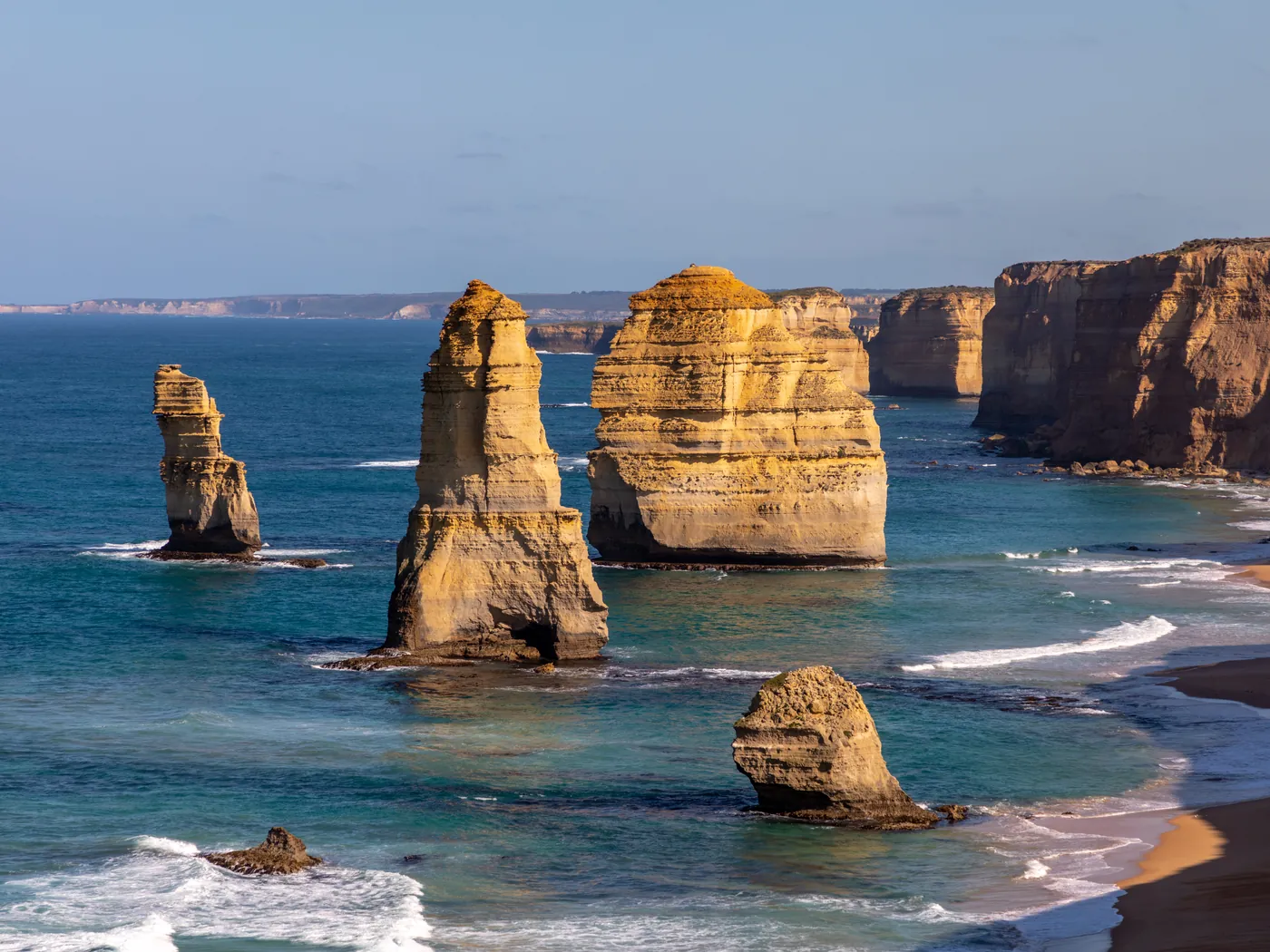
Limestone stacks of the Twelve Apostles near Princetown

Photo: “Princetown (AU), Port Campbell National Park, Twelve Apostles -- 2019 -- 1017” by Dietmar Rabich, CC BY-SA 4.0, via Wikimedia Commons

Cavmir in Great Ocean Road

What Cavmir Does for Great Ocean Road Hosts

Cavmir markets Great Ocean Road homes for what each one is, rather than as one more address on a famous road. A Lorne house that sleeps ten gets a website, a Google Business Profile and listing copy built around the summer family who rebooks every January. An Aireys Inlet cottage gets a winter story about the lighthouse and the inlet. A Port Campbell home gets pages for the guest who wants to be at the Twelve Apostles before the car park fills. We write the listings, build the direct-booking website, set up search for Google and for AI assistants, plan photography, run social and email, and keep the Victorian levy and your council's rules in the plan from the start. Cavmir works with Australian owners remotely and doesn't manage properties, hold keys or take bookings for you.

Then and now

The Great Ocean Road Short-Stay Market, Then and Now

Tourism here is older than the road. Victorian Places records that the Mountjoy family opened a guest house at what was then called Loutitt Bay in 1868 for a growing number of visitors, and that a town was surveyed there in 1869 and named after the Marquis of Lorne. By 1878 Lorne had Erskine House, the Pacific Hotel and the Lorne Hotel, and in the section on the 1920s and 1930s it quotes a Government Tourist Bureau description of two hotels and eleven guest houses. Until the Great Ocean Road reached Lorne in 1922, guests came by rail to Deans Marsh and then by coach over the Otways. Aireys Inlet followed a similar path: about 100 blocks were subdivided in 1887, a school opened in 1893, and the post office and the Grand Hotel followed in 1893 and 1894. Port Campbell had a jetty from 1879 and holiday facilities and guest houses from the 1910s and 1920s. The coast was a holiday coast long before anyone wrote the words short-term rental.

The road itself is a memorial. The Australian Geographic reported in April 2011, when the Great Ocean Road was added to the National Heritage List, that returned servicemen built it over 13 years from 1919 to honour Victoria's First World War servicemen and women. Victorian Places notes that the road reached Lorne in 1922, and that access to Port Campbell was improved in 1926 from Timboon and in 1927 from the west. The Great Ocean Road Coast and Parks Authority now looks after 355 km of coastline from Point Impossible to the Hopkins River. Port Campbell National Park was set aside in 1964, and Victorian Places says the coast has been heavily promoted as a scenic attraction since the late 1980s.

The holiday rental boom is recent and very large. In September 2024 the Geelong Times reported that about 10 percent of private dwellings in Surf Coast Shire were listed on Airbnb, and as many as 24 percent in Lorne. Apollo Bay's economy has long leaned on visitors: Victorian Places gives 18.1 percent of its employment in accommodation at the 2011 census, against 1.2 percent nationally. Short-stay supply is now large in all four AirROI markets on this page: 417 active listings in Lorne, 125 in Aireys Inlet, 440 in Apollo Bay and 131 in Port Campbell. Apollo Bay and Lorne each added about 10 percent more listings in the latest year, and revenue per listing fell in both, by 8 percent in Apollo Bay and 11 percent in Lorne. Aireys Inlet and Port Campbell moved the other way, with revenue per listing up 4 and 8 percent.

State regulation arrived on 1 January 2025: Victoria's 7.5 percent Short Stay Levy began that day, and owners corporations gained the power to ban short stays. Most of the supply is run by owners themselves. AirROI counts 19 percent of Lorne's listings, 28 percent of Aireys Inlet's and 12 percent of Apollo Bay's as professionally managed, although a few managers are big: Great Ocean Road Holidays has 164 Lorne listings, Otway Retreats has 44 in Apollo Bay, and the ten largest hosts in Lorne hold 56 percent of the market. The gaps worth closing first are the cheap ones. The average Lorne listing carries 11 photos, and only 24 percent show an exact location. Then comes a plan for May and a direct channel for the families who return every January.

Rates and seasons

Rates, Occupancy and Seasons in Great Ocean Road

Rates and revenue

Nightly rates run well above the Victorian average, and they climb with the size of the house. In AirROI's Lorne data, entire homes average about A$254 a night for a one-bedroom, A$422 for two bedrooms, A$570 for three, A$774 for four and A$1,045 for five or more. Median annual revenue climbs the same way, from A$20,400 for a one-bedroom to A$25,000, A$29,200, A$37,100 and A$61,400 for five or more bedrooms. Across the market, the median listing charges about A$505 a night and the top quarter A$680 or more, while the bottom quarter charges A$330 or less. In Aireys Inlet the average is A$468 a night at 31 percent occupancy, in Apollo Bay A$393 at 35 percent, and in Port Campbell A$363 at 39 percent, where the average listing earned A$46,821, more than any of the other three towns. Port Campbell's three-bedroom homes had a median of A$77,900 in AirROI's data, though that rests on a small sample of 27 listings.

The calendar does most of the work. AirROI's Lorne high season is December to February, at about A$7,620 a month, 44 percent occupancy and A$603 a night. March, April and November are a shoulder at A$5,480, 36 percent and A$554, and May to October is the low season at A$3,970, 28 percent and A$533. January 2026 earned A$9,563 per listing at 51 percent occupancy and A$628 a night, May 2026 earned A$3,588 at 23.6 percent, and July 2026 was a pleasant surprise at A$5,092 and 34.8 percent. Guests book about 93 days ahead on average in Lorne, 61 days in Aireys Inlet, 63 in Apollo Bay and 55 in Port Campbell. November stays in Lorne are booked about 122 days ahead, while July stays are booked about 31 days ahead. Stays average about four nights in Lorne by AirROI's account (a chart on the same page shows 3.4), 4.7 nights in Aireys Inlet, 3.5 in Apollo Bay and 2.1 in Port Campbell.

Most owners lose money in the same places: fees, minimum stays and cancellation terms. In Lorne, 81 percent of listings charge a cleaning fee, the median is A$225 and the average A$309, which AirROI works out at about A$55 a night and 13.5 percent of gross revenue. Seventy-three percent of listings set a two-night minimum, and the most common cancellation terms are Firm at 29 percent and Super Strict 30 Days at 28 percent. Those terms suit a house that sells whole weeks in January, and they punish one that needs weekday bookings in June. AirROI also shows which extras travel with higher revenue: listings with a pool (7 percent of them) average A$78,000 against A$39,000 without, and the few with a ping pong table (3 percent) average A$114,000 against A$39,600. Those listings are mostly larger, more expensive houses, so the table shows what high-earning houses have, not what a ping pong table will earn you.

The year in Great Ocean Road

The Australian year here is steep. Summer, December to February, carries the money: Victorian government school holidays run from Monday 21 December 2026 to Wednesday 27 January 2027, and Lorne's January 2026 earned about 2.7 times its May 2026. Apollo Bay's January is A$8,470 on a two-year average and its December A$6,770, against A$2,810 in May. Aireys Inlet peaks at about A$8,180 in January and bottoms at about A$2,630 in August. Port Campbell is flatter, at A$7,640 in January and A$3,150 in May on a two-year average, which fits a place people come to see in any month. The shoulders matter more than most owners price for. The autumn school holidays in 2027 fall between the end of Term 1 on Thursday 25 March and the start of Term 2 on Monday 12 April, which takes in Easter. The winter holidays fall between the end of Term 2 on 25 June and the start of Term 3 on 12 July. The spring break sits between the end of Term 3 on 17 September and the start of Term 4 on 4 October.

Events add a few firm dates. The Great Ocean Road Running Festival is on 15 and 16 May 2027. The organisers' event page has the kids' gallop leaving Apollo Bay on the Saturday, and on the Sunday the marathon, 60 km ultramarathon, 10 km run and 5 km walk start in Lorne and the half marathon starts at Kennett River, so it lands in the month AirROI finds quietest in Lorne. The Twelve Apostles' new booking system has changed the western end: from 16 October 2026 visitors need to reserve before they arrive, and the Premier's media release says entry is free until April 2027. The quiet months are May, June and August in the holiday towns, and the way through them is a product built for them: a fire, a weekly rate, walks, and a reason to come in winter that the listing says out loud.

The rules

Short-Stay Rules in Great Ocean Road

Start with the state. On the pages we opened, Victoria's tool for short stays is a levy rather than a night cap, and we found no statewide register. The Short Stay Levy has applied since 1 January 2025, at 7.5 percent of the total booking fee for any stay of under 28 consecutive days in one property; the State Revenue Office rounds the levy down to the nearest 5 cents. Who pays depends on how the booking arrives. A booking through Airbnb or another platform is the platform's to remit, but a booking taken on your own Lorne or Apollo Bay website makes you the one who registers and lodges, so a direct-booking site adds a job. The fee base takes in the nightly rate, cleaning fees, GST and late check-out fees, and leaves out card surcharges, optional extras and damage charges. Your own principal place of residence is outside the levy, and so are hotels, motels and hostels. If you only use platforms, you don't register. Lodgement depends on size: A$75,000 or more in booking fees a year means quarterly returns, due 30 April, 30 July, 30 October and 30 January, and anything less means a single return by 30 January for the calendar year just ended.

Councils are next, and this is where the Great Ocean Road splits. For Surf Coast Shire, covering Aireys Inlet, Fairhaven, Eastern View and Lorne, the council's accommodation page says businesses providing most forms of accommodation for six or more persons must operate from premises registered under the Public Health and Wellbeing Act 2008, that a planning permit may be required depending on the type of accommodation and location, and that annual renewal for 4 to 15 persons costs A$364 (initial registration is pro-rated, from A$182 to A$455). For Colac Otway Shire, covering Apollo Bay and Cape Otway, the council's page says an accommodation business for more than five people needs planning approval or an exemption, compliance with building rules and registration as prescribed accommodation. Neither page mentions Airbnb or short stays by name, and the thresholds on the Colac Otway page are inconsistent (more than 5, 5 or more, more than 4), so ring the shire's health protection team for your address. For Corangamite Shire, covering Port Campbell and the Twelve Apostles, we searched for a short-stay rule and found none on a page we could open. In September 2024, the Geelong Times reported that Surf Coast Shire was still waiting to learn what powers the new legislation would give it. We found no Victorian state register of holiday rentals, and AirROI found no permit number on any of Lorne's 417 listings.

Apartments bring a different rule. Consumer Affairs Victoria says that from 1 January 2025 an owners corporation can ban short stays in its building by special resolution, which takes 75 percent of lot owners (counted by lot entitlements if the vote is by ballot or poll). The ban can't reach a lot that is its owner's or occupier's principal place of residence, and the owners corporation is told to check council rules and plan for existing bookings first. Buying a unit at Lorne or Apollo Bay? Ask for the rules and the minutes before you sign. Already own one? Find out whether a vote is coming, and keep your listing and website easy to take down or rewrite if a ban passes.

Federal rules come last. The ATO's holiday home page points to three 2026 documents: Taxation Ruling TR 2026/1 on rental income and deductions, PCG 2026/2 on apportioning deductions, and PCG 2026/3 on holiday homes that are also rented out. In short, a house kept mainly to earn rent keeps its ownership deductions, less a share for the days you or your family use it, and the ATO weighs whether it's free at the times people want to holiday. Accountants Daily reports that the available-for-rent test looks at broad advertising, rates close to comparable homes and active handling of enquiries. A house that isn't kept mainly for rent loses claims on interest, rates and repairs, though platform commissions and post-stay cleaning stay deductible. Foreign buyers should know that Guidance Note 6 from the Foreign Investment Review Board (version 5, 1 July 2026) sets government policy as a general ban on foreign persons buying established dwellings from 1 April 2025 to 30 June 2029, with limited exceptions that need approval. McCullough Robertson reports that the new unfair trading practices law has passed and starts on 1 July 2027; it will require extra per-transaction charges to be shown clearly next to the base price, so show cleaning and extra-guest fees up front now.

Our rules page sets out every state and territory in turn. What you've just read is orientation only, not legal advice: your shire, the State Revenue Office, your owners corporation, your accountant and your insurer can each tell you what applies to your address. Cavmir does the marketing; permits, levy returns, tax and compliance stay with you and your advisers.

Marketing

Marketing a Holiday Home in Great Ocean Road

What works here

First, name the stretch of coast you're on and stop selling the whole road. A guest who types Great Ocean Road into Airbnb sees hundreds of kilometres of houses, so a listing has to say in its first line whether it's a walk to Lorne's main street, a few minutes from Apollo Bay's harbour, beside the lighthouse at Aireys Inlet or twenty minutes from the Twelve Apostles. Put the drive time from Melbourne in the first paragraph, and give a drive time to the nearest supermarket, because guests who underestimate the drive arrive tired and cross. AirROI's Lorne listings average 11 photos and only 24 percent show an exact location, so a listing with thirty photos in a sensible order and a map of the walk to town stands out in a field this large.

Second, sell the shoulders and the winter on purpose. Lorne's July 2026 earned A$5,092 per listing at 34.8 percent, well above May and August, which suggests there is demand for a warm house in the cold if somebody tells people about it. Build a winter product around what the area really offers: the Great Ocean Walk, the rainforest walks near Apollo Bay, little penguins at dusk at the western end, and a house with a fire and drying space. Check the walks before you promote them: the Great Ocean Road Coast and Parks Authority lists Erskine Falls, Phantom Falls and Cora Lynn Cascades as temporarily closed, and Parks Victoria says Wye Road is closed until further notice after storm and flood damage, so don't promise a waterfall without checking. Offer a weekly rate and a long-weekend rate, since 73 percent of Lorne listings only ask for two nights and winter guests who stay longer are worth more to you than one-night stays after a clean.

Third, price the summer early and plan the direct channel around returning families. Guests in Lorne book about 93 days ahead on average, and November stays about 122 days ahead, so summer needs to be on sale well before it arrives. Put next summer's rates up as early as your calendar allows, ask families who take the same house every year to rebook before they leave, collect emails at check-out with a reason to give them, and build a monthly plan around an email to past guests in the autumn. On Airbnb, Stayz, Vrbo and Booking.com, check which of those channels your house is on and which one drives the quiet-month bookings, because Lorne's cancellation terms (Firm, Strict and Super Strict 30 Days make up most of the market) are harsh for midweek winter guests. A flexible policy for June and August may buy you bookings that a Firm policy never sees.

Fourth, treat the levy and the fees as part of the price, not an afterthought. The 7.5 percent levy applies to the whole booking fee, cleaning fee included, so a cleaning fee of A$225, the Lorne median, adds to the levy as well as the price. Decide with your accountant whether to absorb the levy or build it into the rate, and don't add it as a surprise at the end of a booking on your own website. On direct bookings you collect and remit it yourself, so choose a booking system that shows the levy and the cleaning fee on the first price screen. Operations are marketing too: a clear arrival message, a bin plan, a written fire plan for guests, parking directions and a quick answer to a late-night call all show up in the reviews that decide next season's bookings.

What makes it hard

The first challenge is how steep the year is. Lorne's January earns nearly three times its May, the top three months bring in 36 percent of annual revenue, and a house that only does well in January has to carry its mortgage and insurance through the rest of the year on much lower earnings. Revenue per listing fell 11 percent in Lorne and 8 percent in Apollo Bay in the latest year while listings grew about 10 percent in each, so the same nights are being shared among more houses. The answer is a house with a clear reason to book in the quiet months, a calendar with two or three tested products (a family week, a couple's winter weekend, a group of walkers) and a rate structure that gives guests a reason to stay longer than a night or two.

The second is the rules, which we found to be a state levy plus three councils, each with its own approach. A house in Lorne, one in Apollo Bay and one in Port Campbell each deal with a different shire, and none of the shire pages we could open mentions short stays by name. That's useful, because it means most owners can run a compliant holiday home with registration, a planning check and the levy, and also a risk, because councils can change their approach and the rules for an apartment can change by a vote of the owners corporation. Keep your paperwork in one folder: the council correspondence, your levy returns, your insurance and your house rules. If you buy, check what the parcel allows before you count on income.

The third is access and physical risk. The coast is exposed, the roads are long, and the Great Ocean Road Coast and Parks Authority and Parks Victoria both list closures that change from season to season, from Erskine Falls to individual walks and roads. The Lorne Historical Society records the Ash Wednesday fire of 16 February 1983, which started at Deans Marsh and reached Lorne's coast about three hours later, and Black Friday in January 1939, when Lorne was described as completely surrounded, so insurers and councils treat bushfire seriously here. A host answers all this with a written plan for guests, a link to VicEmergency in the welcome message, a clear cancellation policy for dangerous days and accurate drive-time information, and a broker who understands holiday homes in bushfire-prone areas.

Worth knowing. Until the Great Ocean Road reached Lorne in 1922, guests got there by rail to Deans Marsh and then by coach over the Otways, according to Victorian Places. By the 1930s the town had two hotels and eleven guest houses. Apollo Bay's accommodation sector is still unusually large: at the 2011 census, 18.1 percent of its employment was in accommodation, against 1.2 percent across Australia.
Money matters for Great Ocean Road owners
Insurance

Ask a broker who writes holiday homes, because a standard home and contents policy usually isn't written for paying guests. Look for loss of rent, accidental damage by guests and public liability, and read what the policy says about empty periods and about bushfire-prone or storm-exposed land. Bushfire has shaped this coast's history, from Black Friday in 1939 to the Ash Wednesday fire of 16 February 1983, so ask your council whether your address sits under a bushfire overlay and ask your insurer what it requires. If you have a pool, spa, fire pit or sauna, tell the insurer and ask how it affects cover. Cavmir doesn't recommend insurers.

Tax

The ATO's holiday home page and its 2026 guidance (TR 2026/1, PCG 2026/2, PCG 2026/3) ask whether the house is used, or held for use, mainly to produce rental income. If so, you claim ownership costs after setting aside private use, empty stretches and any below-market rent; if not, most ownership deductions go. Accountants Daily reports that being available for rent on commercial terms turns on wide advertising, rates near comparable homes and monitored enquiries. Whether GST applies depends on your turnover and circumstances, and the levy base includes any GST in the booking fee. Capital gains tax and Victorian land tax also matter, and the State Revenue Office publishes an absentee owner surcharge for owners living overseas. Sofie isn't an accountant, so put these questions to yours before you list.

Lending and land tax

Lenders look at short-stay income cautiously, so talk to a broker before you buy rather than after. Prices on this coast vary a great deal. Your Property Guide, quoting the latest quarter Land Victoria had published as of May 2026, puts Lorne's median house at A$1,695,000 and its median unit at A$805,000, and Aireys Inlet's median house at A$1,247,500. OpenAgent puts Apollo Bay's median dwelling at A$720,000 over the past three months, but on only four sales, so treat that as a rough guide. Against those prices, the average Lorne listing's A$41,786 is a gross yield of about 2.5 percent before any costs (the Aireys Inlet average of A$36,068 is about 2.9 percent), and AirROI's own owner-operated profit figure for Lorne, A$25,296 before a mortgage, is about 1.5 percent. Buyers here are paying for the coast and the lifestyle as well as the rent, so model the purchase on conservative bookings and a full year of costs. Foreign buyers should read the Foreign Investment Review Board's ban on established dwellings, which runs from 1 April 2025 to 30 June 2029, before making an offer.

Your own website

A Direct-Booking Website for a Great Ocean Road Home

A direct-booking website pays on this coast because so many guests are returning families. A family that takes the same Lorne house for the same January week for years doesn't need an Airbnb search to find you; it needs to remember your name and trust that the price on your site is the real one. The pages that earn their place here are the house itself with a full photo gallery and a bed list, a page for each season (summer, autumn, winter walks), a getting-here page with real drive times from Melbourne, and a page for each reason to come, such as the Great Ocean Walk or the Twelve Apostles. For Port Campbell, add a page about the new booking system at the Twelve Apostles and when to arrive. Cavmir builds these sites, and you can see how on our website design page.

A booking page in Australia has a few jobs. Put the full price, with cleaning and any extra-guest fees, in front of the guest before they type a card number; the unfair trading practices law from 1 July 2027 will demand clear display of extra per-transaction charges, and doing it now is free. On direct bookings the owner pays the 7.5 percent Short Stay Levy, according to the State Revenue Office, so fold it into your total. Publish a privacy policy saying what you collect and why, plus a terms page with your cancellation policy. Write your own wording rather than copying a platform's, and don't invent a registration number: we found no state register for Victorian holiday rentals, so there is nothing to display unless your shire issues you something.

Make the site work for a phone in a car park at Lorne in January. Load times matter when mobile signal drops, so keep images compressed, keep the booking button on every page and put the check-in time, parking and house rules on the same page as the price. Link the site to a Google Business Profile with your photos and your address area, add a reviews page with guests' own words and the date they stayed, and feed the same facts to your Airbnb, Booking.com and Vrbo listings so they agree. Use your own photos only: a hero image of the Twelve Apostles that isn't yours is a copyright claim waiting to happen, and guests notice when the photos aren't of the house.

AI search

Getting Named in AI Answers About Great Ocean Road

Guests now put questions to AI assistants: where to stay for Twelve Apostles sunrise, which Great Ocean Road town suits a family in January, whether a Lorne house takes dogs and sleeps eight. The assistants lift answers from pages that state facts plainly: bedrooms, the drive from Melbourne, the walk to the beach, the dog policy, the fire in the lounge, what's open in winter. A site that gives those facts in clear sentences, worded the same way on every page, is easy for an assistant to quote. Vague copy about a coastal escape loses to a page that says how many minutes it is to the lighthouse.

That's the job of generative engine optimisation: structured pages, accurate local facts, a Google Business Profile that matches your website, and reviews that mention the things guests ask about. On this coast it means a page per town, a page for each season, a page about the Twelve Apostles booking system, and accurate information about closures such as Erskine Falls, because assistants favour pages that are current. Our guide to generative engine optimisation for holiday rentals sets out the method step by step. The advantage compounds, because a source an assistant quotes once tends to be quoted again.

What's next

Where Great Ocean Road Is Heading

The biggest change at the western end is already open. The Keerray Woorroong Visitor Centre at the Twelve Apostles cost A$126 million, with A$88 million from the Australian Government and A$38 million from the Victorian Government, and opened to visitors on 16 October 2026. The Premier's media release says it has a 230-seat café, a kiosk, gallery space and parking for more than 950 vehicles, and that bookings are required before arriving, including for a car park. Entry is free until April 2027, after which a booking fee will apply. For a Port Campbell host, that's a new thing to tell guests, and you can help guests plan a booking, a sunrise and a night, rather than hope they stop on the way past.

The Great Ocean Road Coast and Parks Authority lists a string of projects: the Apollo Bay Harbour Redevelopment, the Point Grey Redevelopment in Lorne, tourism infrastructure at Kennett River, a Fishermans Beach car park upgrade, and trail planning that includes a Great Ocean Road Coastal Trail and a Regional Trail Strategy. It also says camping fees at its parks are reinvested in the surrounding coastline. Those are public facilities, and each one gives a host a new thing to write about, a new walk to recommend or a new reason to come outside January. The Authority's page lists them by name only, with no dates or scope, so check the Authority's project pages before you promise a guest that something is open.

The rules and the market could both shift. The ban on foreign purchases of established dwellings runs to 30 June 2029, so foreign buyers generally stay out of that part of the market for another two and a half years. The Victorian Legislation website lists a second version of the Short Stay Levy Act 2024, in force since 1 January 2026, so read the State Revenue Office pages again before you set a direct-booking price. The unfair trading practices law starts on 1 July 2027. Supply is growing in Lorne and Apollo Bay while revenue per listing falls, which leaves less room for generic listings. The owners who do best will probably be those with a clear point of view, a direct channel and a reason for guests to come in more than one month.

Why we like the work

Why We Love Marketing in Great Ocean Road

What I like about marketing homes on this coast is how specific each place is. Aireys Inlet has a lighthouse built in 1891, the inlet itself and Fairhaven's surf beach next door. Lorne has a pier, the Otway hills behind it and a main street that fills in January. Apollo Bay has a working harbour and rainforest walks behind it. Cape Otway has a lightstation that has been there since 1848. Port Campbell has the Twelve Apostles and Loch Ard Gorge a few minutes away. When a listing says exactly which of those a guest is getting, it attracts the right people, and the right people tend to leave good reviews.

The work is also satisfying because the gap between a good and an average listing is easy to see. Many Great Ocean Road listings show eleven photos, no exact location and a cancellation policy that works against a winter guest. A host who fixes those three things, writes down what the house is for and builds a simple email list is already ahead of most of the market. I enjoy finding the angle an owner has stopped noticing, like the quiet of the lighthouse walk in July, the sunrise at the Apostles before the car park fills, or the way a family's tenth January in the same house is a story in itself.

And there is plenty to work with. The road is a memorial to those who built it after the First World War, the coast has a shipwreck history that Port Campbell still tells, and every one of these towns has a reason to visit that has nothing to do with a platform's ranking. Our job is to take those facts, write them plainly, put them in front of the guest who's already looking for them, and keep the Victorian levy and local rules in view so the owner can sleep.

Welcome book

Picks for Your Great Ocean Road Welcome Book

The picks Cavmir puts in a Great Ocean Road welcome book: places that are open now, with the details guests ask about, and a note where something is closed or needs a booking.

Sunrise

The Twelve Apostles and the new visitor centre

The Keerray Woorroong Visitor Centre opened to visitors on 16 October 2026 and its website lists daily opening from 8 am to 8 pm. Bookings are required before arriving, including for a car park, and entry is free until April 2027. Book at twelveapostles.org.au and tell guests to do it before they leave the house.

Coast walk

Loch Ard Gorge and Gibson Steps

Both are in Port Campbell National Park, which the Authority says is open year-round. Gibson Steps puts you at the base of the limestone cliffs, and Loch Ard Gorge is just minutes from the Twelve Apostles. Dogs aren't allowed in the park, so say so in the listing.

Lighthouse

Split Point Lighthouse, Aireys Inlet

Built in 1891 and 34 m tall, the lighthouse is run by Eco Logic. Its site says guided tours leave every 30 minutes, weather permitting, and offers a self-guided Express Tour, both booked at splitpointlighthouse.com.au. An older listing says the grounds are open all year. Check tour times before you promise guests a slot.

History

Cape Otway Lightstation

Built in 1848 and described as the oldest surviving lighthouse on mainland Australia. The Lightstation's site lists the precinct and café as open Friday to Tuesday, 9:30 am to 4:30 pm, with last entry at 4 pm, and closed on Christmas Day, but its pages disagree on hours, so check before you send guests. The tower is closed for conservation works, so tell guests they can't climb it.

Rainforest

Maits Rest Rainforest Walk

The Great Ocean Road Coast and Parks Authority manages the Maits Rest visitor area near Apollo Bay and lists the walk with no closure notice. It's a good first stop for guests who want trees rather than cliffs, and a wet-weather plan for a rainy afternoon.

Wildlife

Wild Life Wonders near Apollo Bay

A 75-minute guided walk through a predator-protected sanctuary near Apollo Bay, with a café on site, and all profits go to conservation and research. It's listed on the Great Ocean Road Running Festival's 2027 page, so confirm opening times when you plan the visit.

Long walk

The Great Ocean Walk

It runs between Apollo Bay and the Twelve Apostles, with hike-in campsites, and the Authority describes it as flexible in pace. Many guests will walk a section and be driven back, which makes it an easy way to turn a two-night stay into a longer one.

Event

Great Ocean Road Running Festival

A weekend of running on 15 and 16 May 2027, with a 60 km ultramarathon, the Great Ocean Road Marathon, a half marathon, a 10 km run, a 5 km walk and a kids' gallop, starting from Lorne, Kennett River and Apollo Bay. The organisers also list an Apollo Bay Kite Festival that weekend, with times to be confirmed. Runners and families book early, so open May weekends early.

Evening

Little penguins at dusk

The Authority says little penguins can sometimes be seen returning from the sea at dusk near the Twelve Apostles and London Bridge, and short-tailed shearwaters arrive at Mutton Bird Island between October and April. It's a good reason for a guest to stay the night at Port Campbell instead of driving back.

Walk and talk

Port Campbell Discovery Walk

The Authority describes a walk that starts in Port Campbell township and goes to Two Mile Bay, and a blowhole lookout, Poombeeyt Koontapool, with a viewing platform and accessible paths. It's a gentle walk for guests with children or older relatives.

The playbook

How Cavmir Would Market Three Great Ocean Road Homes

Cavmir has no clients in Great Ocean Road yet. These are the plans it would start with for three common kinds of home here: the situation, the plan, and what each one aims at.

Four-bedroom family house in Lorne
The situation

A weatherboard house that sleeps eight and rents well in January and at Easter, with a listing that shows eleven photos, no exact location, a Firm cancellation policy and a cleaning fee added at the end of the booking. The owner takes direct bookings from friends and wants the levy handled properly.

The plan

Rewrite the listing around the walk to town and the beach, reshoot in winter as well as summer, and set a simple rate structure with a weekly rate in January and a lower midweek rate in June. Build a direct-booking site that shows the total price and the Short Stay Levy before payment, set up the State Revenue Office registration for direct bookings, and start an email list for returning families.

What it targets

Aims to spread demand beyond January and keep the levy from eroding the owner's return. Track winter and shoulder occupancy against the same months last year, direct bookings, the share of returning families and review scores.

Two-bedroom cottage in Aireys Inlet
The situation

A couple's cottage near the inlet that books at weekends in summer and sits empty from May to August, listed as a generic coastal getaway with no mention of the lighthouse, the beach or the drive from Melbourne.

The plan

Reposition the cottage for city couples looking for a quiet weekend, with the lighthouse tours, the inlet, Fairhaven's surf beach and the drive from Melbourne in the first lines. Add a winter offer with a fire, firewood and a two-night weekday rate, and build a short page for each reason to visit. Check the shire's registration requirement for the number of guests and keep the paperwork on file.

What it targets

Targets weekend and midweek bookings in the months the cottage is empty. Track May to August occupancy, the nightly rate on winter weekends, enquiries from Melbourne and direct bookings.

Three-bedroom home in Port Campbell
The situation

A holiday home that gets overnight stays from people who drive in for the Twelve Apostles, with a listing that says nothing about the new visitor centre, the booking requirement or sunrise, and a cleaning fee that makes a one-night stay look expensive.

The plan

Build the listing and a direct-booking page around the Twelve Apostles night: how far to the car park, when sunrise is, the new booking requirement, the penguins at dusk and Loch Ard Gorge. Add a clear one-night price with the cleaning fee shown up front, target overseas and interstate visitors who plan the drive months ahead and keep an open calendar for last-minute enquiries.

What it targets

Aims to turn drive-through visitors into overnight guests. Track one-night and two-night bookings, the share from overseas, lead time, direct bookings and review comments about the Twelve Apostles.

FAQ

Great Ocean Road Airbnb Marketing: Questions, Answered

Does Cavmir offer Airbnb and holiday-home marketing in Great Ocean Road?

Yes. Cavmir works remotely with owners and managers of holiday homes from Aireys Inlet and Lorne through Apollo Bay and Cape Otway to Port Campbell, covering listings, photography direction, direct-booking websites, Google and AI search, social and email. It's a marketing agency, so it doesn't manage properties, hold keys or take bookings for you, and permits, tax and levy returns stay with you and your advisers.

What do holiday homes earn on the Great Ocean Road?

AirROI's Lorne data for the twelve months to September 2026 gives an average listing A$553 a night, 31 percent occupancy and about A$41,786 in a year, 11 percent down. In their own AirROI markets, Aireys Inlet averages A$36,068, Apollo Bay A$39,382 and Port Campbell A$46,821. Results spread widely: the median Lorne listing sits near 28 percent occupancy and A$505 a night, and the top tenth reach 70 percent or better at A$915 or more. Treat these as market averages, not a forecast for your house.

When is demand highest on the Great Ocean Road?

January, in every town here. Lorne's January 2026 earned A$9,563 per listing at 51 percent occupancy, nearly three times May. Christmas and the Victorian summer school holidays, 21 December 2026 to 27 January 2027, carry most of the money, with Easter and the school holiday breaks as shoulders. May is Lorne's quietest month. Port Campbell's year is flatter.

What is the Victorian Short Stay Levy and who pays it?

A 7.5 percent charge on the total booking fee, cleaning and GST included, for each stay under 28 consecutive days. When a guest books through a platform, the platform pays; when they book direct, the owner or tenant does. Owners who only use platforms needn't register, and A$75,000 or more in booking fees a year means quarterly returns. Stays in your own principal home are outside it.

Do I need council approval to run a holiday rental here?

It depends on your council and the size of the house. Surf Coast Shire says accommodation for six or more people needs registration under the Public Health and Wellbeing Act 2008 and that a planning permit may be required. Colac Otway Shire asks for planning approval or an exemption, building compliance and registration for larger accommodation. We couldn't find a short-stay page for Corangamite Shire, which covers Port Campbell. Ring your shire and ask about your address before you list.

Can an owners corporation ban short stays?

Yes, since 1 January 2025. An owners corporation can pass a short-stay ban by special resolution with 75 percent of lot owners behind it, though not against a lot that's someone's principal place of residence. Apartment buyers and owners should ask for the rules and find out whether a vote is planned.

How should I market a Port Campbell home now the Twelve Apostles needs a booking?

Tell guests early. Since 16 October 2026, visitors need to book before they arrive at the Keerray Woorroong Visitor Centre, including a car park, and entry is free until April 2027. Build a page and a welcome message around the booking, sunrise, Loch Ard Gorge and the penguins at dusk, show the one-night price clearly and keep the calendar open for last-minute enquiries.

How do I get bookings outside January?

Treat each shoulder as its own product. Lorne's July 2026 earned A$5,092 per listing at 34.8 percent occupancy, well above May. Offer a weekly rate and a long-weekend rate, show the fire and the walks in the first photos, check the walks are open, and review your cancellation policy: Firm and Strict terms suit January and punish winter guests. A direct-booking site and an email list let you tell returning guests about quiet-month offers first.

Get a quote

Tell Us About Your Great Ocean Road Holiday Home

Which home, which town, and where it lists today. A written proposal in A$ follows within 48 hours.

What do you need?

Your details go to Cavmir only and are used to answer you. Privacy policy.

Nearby

Markets Near Great Ocean Road

All Australian markets

Photo Credits