AI Search · GEO
Getting a Sydney rental named in AI search
Ask an AI assistant where to stay near Bondi or Circular Quay and it names a handful of places; GEO (generative engine optimization) is the work of making your home one of them. Sydney adds a second language to that work. China Trading Desk's Q3 2026 survey of Chinese outbound travellers, released on 15 September 2026, found 33.2% use AI to plan trips abroad, and the assistants they named are Chinese: Doubao, cited by 89% of those AI planners, DeepSeek by 59%, Qwen by 46% and Yuanbao by 34%, with the average user on 2.5 platforms. Your English pages are written for guests asking ChatGPT, Gemini, Copilot, Perplexity or Google's AI Overviews, and the Simplified Chinese pages for the guests asking in Chinese. In Cavmir's July 2026 study of 550 Google AI answers across 15 U.S. markets, independent and regional operators took 82% of the citations and Airbnb or Vrbo appeared in 17% of answers. No Sydney answers were in that sample, so take it only as a sign that one well-documented home can be the name an assistant gives.
How guests ask about Sydney
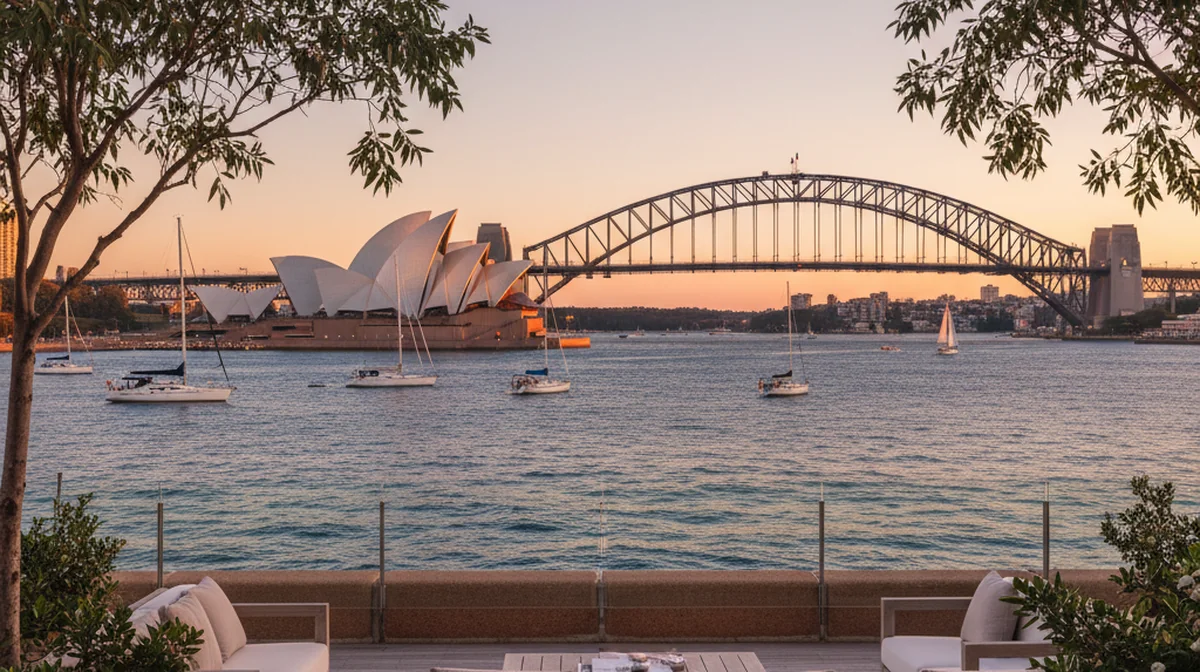
Sydney questions arrive with a suburb, a date and a constraint attached. A couple in Auckland asks for a two-bedroom apartment near a ferry wharf with a fireworks view for New Year's Eve. A family in Chengdu types 悉尼邦迪海滩附近适合家庭的公寓, an apartment near Bondi for a family, and adds its Spring Festival dates. A Melbourne group wants a terrace in Surry Hills within walking distance of the Mardi Gras parade. A traveller from Los Angeles asks which suburb puts them near the Opera House and a metro station without hiring a car, and a Singapore family asks whether to land at the new western airport or at Kingsford Smith. An assistant can match your home to these only when your pages answer them in sentences: the suburb, the minutes to the named wharf or station, how many it sleeps, whether the view is of the harbour, the bridge or the ocean, and which event nights are still open.
One fact block for every Sydney channel
Write one block of facts and repeat it word for word on your site, Airbnb, Booking.com and Vrbo, in English and in Chinese. It holds the STRA property ID, the suburb and street, bedrooms, bathrooms and maximum guests, the minutes on foot to the closest named wharf, station and beach, the view in exact words (harbour, bridge, ocean or none), parking and the lift, which rooms have air conditioning, the minimum stay by season, the cancellation terms, and a sample A$ total for three nights with every compulsory fee included. If Booking.com says the apartment sleeps four and your site says six, an assistant holds two answers and no reason to prefer either. Mark up each property page with schema that carries the same values, and keep those pages open to crawlers.
Sources that vouch for you in Sydney
Assistants borrow confidence from the sources that already describe Sydney. Destination NSW is the state's tourism and events agency: it publishes the visitor figures quoted on this page, runs Vivid Sydney and the Sydney.com guide, and its business listings come through the Australian Tourism Data Warehouse, so check whether a registered home qualifies. Tourism Australia's australia.com is the national counterpart. In English, the Sydney Morning Herald's Traveller section, Time Out Sydney, Broadsheet and Concrete Playground cover the suburbs, openings and events guests ask about, and Australian Traveller reviews stays. For Chinese guests, the Sydney Today news site and travel notes on Xiaohongshu (RedNote) are where Sydney trips get compared, so a factual Chinese post about your street, its wharf and its beach is a digital PR target. New Zealand travel editors are worth a pitch around Air New Zealand's Auckland service into Western Sydney from 26 October. Keep the property's name, address and phone identical on Airbnb, Booking.com, Vrbo and your site, because two spellings of one home can read as two places.