$365
Avg. Nightly Rate
76%
Avg. Occupancy Rate
$8,330
Avg. Monthly Revenue
7–10%
Est. Cash-on-Cash ROI
LOW
Seasonality
MEDIUM
Regulatory Burden

* Market averages. Cavmir-managed properties typically exceed these figures by 25–45%. Data sourced from AirDNA, STR market reports, and Cavmir internal analytics.

The Market

Why Aruba is One of the World's Premier STR Markets

Aruba sits outside the Caribbean hurricane belt and benefits from the most consistent year-round STR demand in the region — a Dutch Caribbean island whose dry desert geography, steady trade winds, and direct-flight access from most major U.S. cities have produced a visitor profile that barely distinguishes between high and low season. Palm Beach anchors the high-rise resort corridor; Eagle Beach leads the low-rise and villa market and is routinely named among the world's best beaches; Oranjestad is the Dutch-colonial capital; Noord holds most of the island's private-villa inventory; Arikok National Park covers the rugged eastern interior; the California Lighthouse is the northwest landmark every itinerary ends at.

Aruba's STR market is the most occupancy-consistent in the Caribbean, with very limited seasonal swing — a direct function of the hurricane-belt geography and strong year-round flight connectivity. Palm Beach and Eagle Beach lead in rate; Noord villa inventory and the off-beach neighborhoods lead in volume. Regulatory environment is medium, with required registration and 9.5% tourism levy.

Top Attractions & Landmarks

  • Palm Beach
  • Eagle Beach
  • Oranjestad
  • Arikok National Park
  • Noord
  • California Lighthouse
  • Baby Beach
  • Natural Pool

Nearby Markets: Curaçao  |  Cayman Islands  |  Dominican Republic
Airbnb marketing services in Aruba, Caribbean
Why Cavmir

The Cavmir Advantage
in Aruba

Cavmir's professional positioning and direct-booking infrastructure serve Aruba's repeat-visitor profile better than platform-only distribution — this is a market where the same family returns to the same villa every year, and protecting that relationship compounds revenue. Our cinematic photography and content strategy extend the shoulder and summer seasons that already represent Aruba's structural advantage.

State of the Industry · History

The Aruba STR Market — Past & Present

Aruba sits in the southern Caribbean, 29 km off the Venezuelan coast, and has been Dutch since 1636 when the West India Company took the island from the Spanish. For nearly three centuries the economy ran on gold mining, aloe cultivation (Aruba was once the world's largest aloe exporter), and phosphate. The 20th century was defined by oil — the Lago refinery at San Nicolas, opened by Standard Oil in 1924, made Aruba one of the wealthiest per-capita economies in the Western Hemisphere. Refinery decline through the 1980s forced reinvention. In 1986 Aruba achieved status aparte, becoming an autonomous country within the Kingdom of the Netherlands, separate from the Netherlands Antilles.

Tourism replaced oil as the structural economy from the 1990s forward. The high-rise hotel corridor at Palm Beach (Hyatt Regency, Marriott, Ritz-Carlton, Hilton) and the low-rise stretch along Eagle Beach built Aruba into one of the Caribbean's most visited islands per capita. Oranjestad's colonial Dutch architecture, the constitutional stability of the Kingdom framework, and — critically — the island's position outside the Atlantic hurricane belt created a year-round demand profile that most Caribbean markets simply cannot match. The STR market concentrates in Palm Beach, Eagle Beach, Noord, and increasingly Savaneta on the south coast.

Pricing Strategy & Seasonality

Pricing, Seasonality & When to Capture ROI

Pricing Strategy

Eagle Beach and Palm Beach oceanfront villas and condos clear USD $400–$1,200/night year-round, with peak weeks reaching $1,500–$2,500. Noord villa-district properties (private pools, walkable to high-rise strip) perform strongly at $500–$1,500/night. The absence of hurricane-season discounting is Aruba's defining financial feature — summer rates hold within 15–25% of winter rates rather than the 40–60% drops typical elsewhere. Savaneta and the south coast attract a quieter, repeat-guest segment at more modest rates but with exceptional occupancy.

Seasonality & ROI Windows

Low seasonality — the Aruba structural advantage. Peak: December 15 through April 15, plus July–August European family window. Shoulder: May, September, early December. There is no true low season — even October–November runs 65–75% occupancy. Missed revenue: mid-September to mid-October, often under-priced despite stable weather and building holiday demand.

Regulation & Licensing · 2026

What the Law Requires in Aruba

Aruba requires mandatory registration of all short-term rental properties with the Aruba Tourism Authority (ATA), introduced to formalize the STR sector and bring parity with hotel operators. Registration triggers collection obligations for the 9.5% environmental levy (introduced 2023) plus the tourism levy that applies to all accommodation. Business license registration with the Chamber of Commerce is required for rental operation, and the Department of Infrastructure and Planning regulates zoning — not all residential zones permit commercial short-term rental.

Foreign ownership is permitted without restriction — Aruba's Kingdom-of-the-Netherlands framework provides European-grade property law. Condominium developments may impose their own STR restrictions at the association level; verify before acquisition, particularly in the Palm Beach high-rise towers where some complexes have moved toward rental-pool exclusivity. The 2024–2026 regulatory direction has been toward tighter enforcement of registration and tax compliance rather than supply caps — Aruba wants the STR sector to function, collect tax, and compete on quality with hotels.

Market-Specific Tips & Challenges

Local Tips & Unique Market Challenges

Tips That Actually Move Revenue in Aruba

The Aruba strategic insight: sell the year-round story. Most Caribbean operators build their marketing around a winter-peak calendar and leave summer to languish. Aruba operators who actively market June–November to US, European, and South American travelers who have been scared off by hurricane coverage of other islands capture disproportionate revenue. Build hurricane-free messaging explicitly — comparison-shopping guests reading about Caribbean hurricane seasons respond strongly to clear no-hurricane positioning.

Second — lean into the Dutch-European layer that differentiates Aruba from the English-Caribbean competition. Dutch design references in interior styling, Dutch-curated wine lists, Dutch-language website variants for the Netherlands feeder market — these cues resonate with the European segment that TCI and Bahamas operators cannot easily reach. Third — cultivate the Venezuelan and Colombian weekender segment. Short-haul South American demand is significant, especially for long weekends and extended family groups, and Spanish-language booking workflows capture demand that English-only operators miss. Fourth — consider Savaneta or Noord for buyers entering the market below the Palm Beach pricing tier. Occupancy is comparable, acquisition cost is meaningfully lower, and the guest profile (repeat, longer stays) stabilizes revenue.

Unique Aruba Challenges

Aruba challenges: the high-rise Palm Beach corridor is saturated, and new-build condominium inventory continues to arrive; commodity-tier properties compete on price. Hotel-sector lobbying periodically pushes for tighter STR limits. Workforce costs are meaningful (Dutch labor standards apply). Water and electricity are expensive — all water is desalinated. The environmental levy raised effective guest tax burden and requires diligent collection administration.

A Curious Aruba Fact
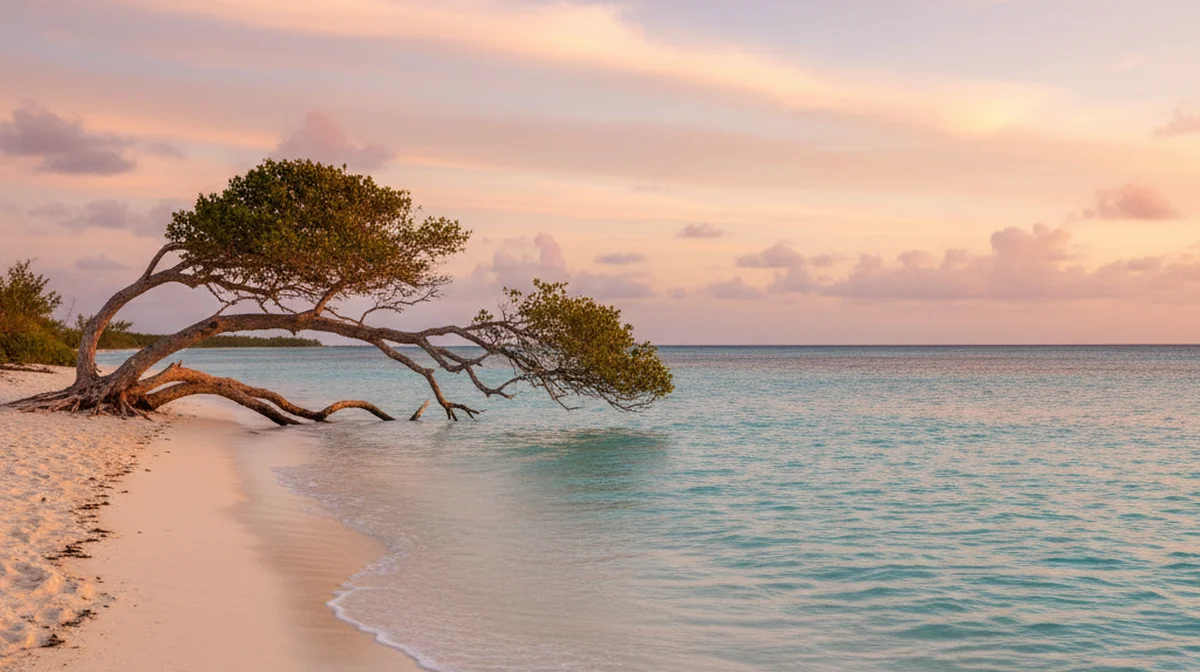
Aruba's iconic divi-divi trees always point southwest. The island's constant northeast trade winds, blowing year-round at 15–25 knots, physically bend the young trees during their first decade of growth into a permanent horizontal lean. A divi-divi on your property is a living wind compass — and a marketing gift, because guests photograph them constantly and those photos travel.
Finance Essentials — Aruba
🛡️

Insurance

Aruba insurance costs are meaningfully lower than the hurricane-belt Caribbean because the island sits outside the primary hurricane track. Named-storm coverage still applies (tropical storms occasionally graze the ABCs) but wind premiums are a fraction of TCI or Bahamas equivalents. Budget USD $3,000–$10,000 annually for luxury properties. Dutch and European carriers (including Fatum, Ennia, local Aruban syndicates) offer competitive coverage.

🧾

Property & Income Tax

Aruba levies income tax up to roughly 25% on resident-owned rental income. Non-resident owners can structure through Aruban NVs or foreign holding entities for more favorable treatment, though 2024 transparency rules narrowed aggressive planning. Property transfer tax at acquisition is 6%. Annual land tax is modest. The environmental levy and tourism levy are guest-collected pass-throughs. US owners remain subject to US tax; Kingdom tax treaties do not override that.

🏦

Mortgages & Financing

Aruba mortgages for foreign buyers are available through Aruba Bank, RBC Royal Bank Aruba, and Caribbean Mercantile Bank. Typical 60–70% LTV for non-residents, with Dutch-standard documentation. Rates track Dutch/European benchmarks more than US rates. Many European buyers finance through Netherlands-based banks against the Aruban asset. Cash acquisition remains common at the luxury tier.

Future Outlook · 2027 & Beyond

Where Aruba is Headed Next

Aruba through 2027 and beyond: the out-of-hurricane-belt structural advantage will only grow as climate volatility increases insurance costs across the rest of the Caribbean. The island is likely to be a relative winner — steadier occupancy, steadier pricing, steadier insurance markets. Regulatory direction is toward tighter compliance and higher guest-tax collection rather than supply caps; the government wants the STR sector functioning and formal. Palm Beach high-rise supply continues growing, so operators differentiating on villa, experience, and service layer will outperform commodity condominium inventory. European and South American feeder demand is structurally growing. Cavmir's Aruba thesis: a durable, defensive Caribbean market with unusual year-round cash-flow stability.

From the Desk of Sofie Sinag

Why We Love Marketing in Aruba

Aruba's the island that rewrote the rulebook. Sitting below the hurricane belt, shaped by trade winds that bend the divi-divi trees permanently southwest, it's built a tourism identity around reliability the rest of the Caribbean can't match. We love that the Palm Beach high-rise corridor (Marriott, Ritz-Carlton, Hyatt, Hilton) and the low-rise Eagle Beach villa district solve for completely different guests, and a marketing plan that treats them as one audience misses on both. Oranjestad's pastel Dutch colonial facades photograph differently than anywhere else in the region, and Papiamento slipping between Dutch, English, and Spanish gives the island a linguistic texture that most campaigns flatten into generic beach-speak.

What pulls us back is everything the high-rise corridor doesn't show you. Arikok's rugged eastern interior, the Natural Pool at Conchi, California Lighthouse at the northwest tip, Baby Beach and Savaneta's quieter south coast, the refinery heritage at San Nicolas that nobody puts on a brochure. Carnival runs January through February and reshapes the calendar. Soul Beach Festival anchors Memorial Day weekend. The One Happy Island tagline works because it earned it, and our job is helping Aruba operators tell stories specific enough that guests book the actual island instead of a generic warm-weather placeholder.

Cavmir's Aruba Cheat Sheet

The Picks We Recommend for Your Welcome Book

How we actually use Aruba when we're scouting, shooting, or showing a client why their current brand positioning is leaving bookings on the table.

Morning

Eagle Beach at sunrise before the shade palapas fill

The divi-divi trees are the shot everyone knows and almost nobody gets right. Arrive before 7am, work the low angle, and you'll leave with library images that outperform anything your competitors are running on paid social.

Golden Hour

California Lighthouse and the dunes at the northwest tip

The wind is relentless and that's the point. It gives you movement in hair, fabric, and sand that flat-calm beach shoots never produce. We build entire brand refreshes around a single golden-hour session up here.

Neighborhood Walk

Oranjestad's pastel grid from Wilhelminastraat to Queen Wilhelmina Park

Dutch colonial color blocking that doesn't exist anywhere else in the region. We route client walks here deliberately so owners can see firsthand why we push back on generic palm-tree-and-turquoise creative.

Dinner That Photographs

Zeerovers in Savaneta, fish straight off the boat

Paper plates, plastic forks, and the best food photography on the island. Southern coast quiet means no waiting crowds in your backgrounds, which matters more for social content than most owners realize.

Local Obsession

Flamingo Beach at Renaissance Island

Yes it's the Instagram shot. Yes it still works. We'd rather clients understand why a trope keeps converting than pretend it doesn't. Day passes for non-resort guests, book ahead.

Shoulder Season Secret

Mid-April through early June before Soul Beach weekend

Rates soften, the trade winds stay reliable, and you're still well outside hurricane windows. This is when we shoot refresh content for properties that need fresh assets for fall-winter campaign pushes.

Weekend Escape

Arikok National Park and the Natural Pool via 4x4

Most of the island's marketing ignores the eastern interior entirely. That's a gift. Adventure-oriented villa clients convert on this kind of content at rates the beach-only feed can't touch.

What Guests Ask For

Carnival dates, Papiamento phrases, and the quiet beaches

Every high-season inquiry we've audited includes some version of these three. Build your FAQ and pre-arrival sequences around them and watch your response-to-booking ratio move.

Local Work · Composite Case Vignettes

What Cavmir Has Done for Aruba Properties

Representative Cavmir engagements in Aruba. Property identifiers redacted; figures composited from internal analytics and market benchmarks.

Eagle Beach low-rise villa collection
The Brief

A small villa operator was losing direct inquiries to the Palm Beach high-rise brands because their site and paid social read as generic Caribbean rather than specifically Eagle Beach. Guests arriving were delighted; guests browsing never got far enough to book.

What We Did

We rebuilt the brand narrative around the low-rise covenant that protects Eagle Beach's character, reshot the entire photo library during trade-wind golden hour, rewrote the booking flow to front-load the divi-divi and quiet-beach story, and restructured the paid search account around long-tail intent keywords instead of broad Aruba terms.

The Result

Direct-booking share grew meaningfully against the brand channels in the first two shoulder seasons, and the cost per qualified inquiry on paid search dropped enough to let the owner stop bidding on brand-Aruba competition altogether.

Noord district private villa
The Brief

A new-build luxury villa in Noord had no history, no reviews, and no organic discoverability. The owner had been relying entirely on a single OTA and wanted a direct channel before the next high season.

What We Did

We launched a standalone site with structured data, built an editorial content program around Arikok, Savaneta, and the northwest coast, produced a short-form video library for the routes guests actually took, and set up a first-party email program tied to Carnival and Soul Beach seasonality.

The Result

Within three quarters the property's own site was producing a meaningful share of confirmed bookings, with average length of stay running longer than the OTA baseline and repeat-guest inquiries arriving before the second winter.

Palm Beach boutique hotel
The Brief

A sub-100-key property on the high-rise strip was being priced and positioned against the flagged brands next door and losing on both fronts. Independent character was real; the marketing wasn't showing it.

What We Did

We repositioned the hotel against a more specific competitive set, rebuilt the restaurant and bar narrative to pull non-guest locals and cruise-day traffic, added a Papiamento-forward welcome program, and restructured the site so the independent story led instead of the standard amenity grid.

The Result

F&B covers from non-guests grew into a reliable secondary revenue line, and the property's direct-booking mix improved enough to renegotiate OTA parity terms on the owner's preferred conditions.

Ready to Grow in Aruba?

Let's Put Your Aruba
Property on the Map

Talk to Cavmir today. We'll show you exactly what your Aruba property is leaving on the table — and how fast we can change that.

Book a Free Strategy Call