$265
Avg. Nightly Rate
64%
Avg. Occupancy Rate
$5,080
Avg. Monthly Revenue
6–9%
Est. Cash-on-Cash ROI
HIGH
Seasonality
MEDIUM
Regulatory Burden

* Market averages. Cavmir-managed properties typically exceed these figures by 25–45%. Data sourced from AirDNA, STR market reports, and Cavmir internal analytics.

The Market

Why Doha is One of the World's Premier STR Markets

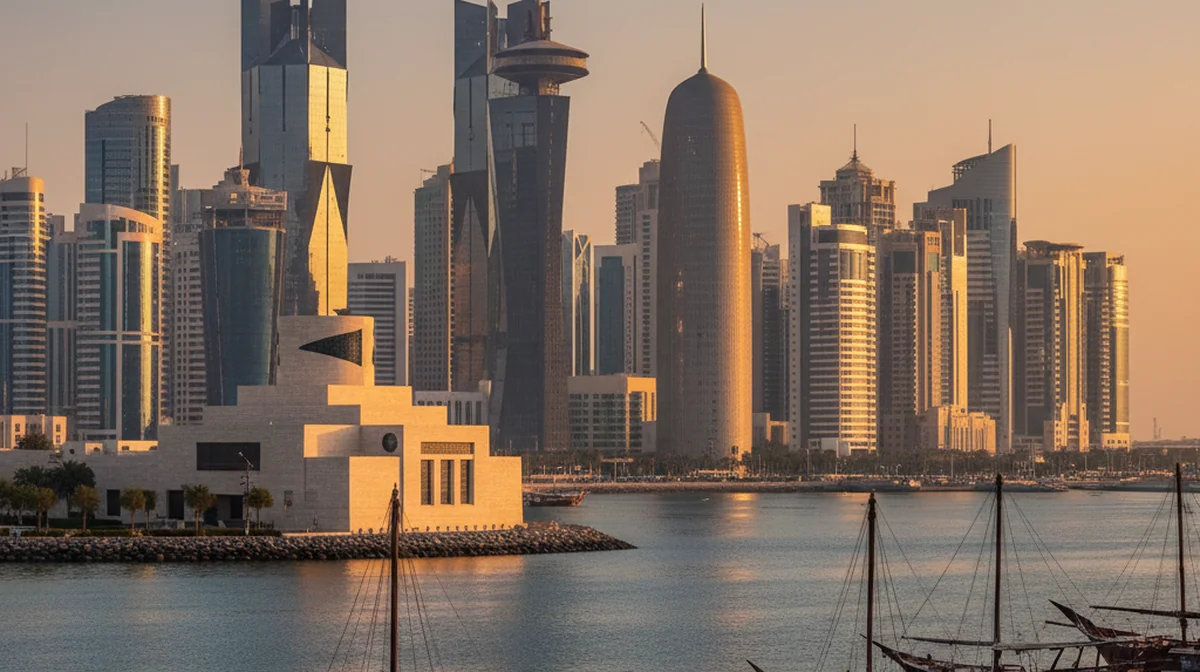
Doha is the Gulf's most architecturally ambitious capital — a city that reinvented itself for the 2022 FIFA World Cup and has kept building. The Pearl's Mediterranean-styled marinas, Lusail's futuristic skyline above the new metro, West Bay's corniche towers, and Msheireb's restored old-town quarter give Qatar's capital a range no single-neighborhood Gulf city can match. Hamad International Airport connects Doha to nearly every major market on earth, and the post-World Cup tourism push has turned an underbuilt hotel sector into a real short-term-rental opportunity.

Doha's STR market is young and structurally underpriced relative to demand. The Pearl and Lusail anchor the luxury tier; West Bay serves corporate and cultural travel; Msheireb attracts design-conscious visitors seeking the heritage narrative. Peak runs October through April when outdoor life is genuinely livable; summer collapses on 45°C heat. Major events (F1 Qatar GP, Doha Tennis Open, Qatar National Day, Expo-adjacent cycles) create sharp demand spikes.

Top Attractions & Landmarks

  • The Pearl-Qatar
  • Museum of Islamic Art
  • Souq Waqif
  • Katara Cultural Village
  • Lusail Marina
  • Msheireb Downtown
  • Corniche Promenade
  • National Museum of Qatar

Nearby Markets: Dubai  |  Muscat
Airbnb marketing services in Doha, Qatar, Middle East
Why Cavmir

The Cavmir Advantage
in Doha

Cavmir helps Doha owners position their inventory for the right visitor — the business traveler staying through a conference, the design-conscious family avoiding hotel sterility, the regional GCC weekender. We build multilingual listings (English, Arabic, Russian, Mandarin) and calibrate pricing around Doha's event calendar where the rate ceiling actually lives.

State of the Industry · History

The Doha STR Market — Past & Present

Doha grew from a small pearl-diving and fishing village on the Qatar peninsula into the modern capital over a remarkably compressed century. Until British protection ended in 1971 and Qatar became independent, the town was economically marginal — oil exploration had begun in the 1930s but commercial production only scaled in the post-independence decades. The Al Thani ruling family's deliberate investment of hydrocarbon wealth into infrastructure, education (Education City), media (Al Jazeera launched 1996), sports, and cultural institutions (Museum of Islamic Art opened 2008, National Museum 2019) built a capital from what had been a coastal town. The 2022 FIFA World Cup accelerated the transformation — Lusail, the entire northern planned city, was effectively built for the tournament, as was much of the metro, stadium, and hotel infrastructure that supported it.

The STR market in Doha is newer than Dubai's and has developed on a different model. Short-term rental grew rapidly in the 2020–2022 World Cup build-up window as visitor demand far outstripped hotel inventory, and the regulatory framework was accelerated to manage it. The inventory concentrates in three corridors: The Pearl, the artificial-island luxury development with marina views, apartments and townhouses available for foreign freehold ownership; Lusail, the planned city north of Doha with marina and stadium-adjacent inventory; and West Bay, the downtown skyscraper corridor with business-traveler serviced-apartment product. Foreign ownership is structured around specific freehold-designated zones (The Pearl, Lusail Marina District, parts of West Bay) and leasehold in other areas. The Qatar Tourism Authority (QTA), restructured in recent years and often operating as Qatar Tourism, administers tourism licensing.

Pricing Strategy & Seasonality

Pricing, Seasonality & When to Capture ROI

Pricing Strategy

The Pearl luxury apartments run USD $200–$600/night in peak season, with marina-front and view-facing 3–4BR townhouses reaching $800–$1,500/night. Lusail Marina apartments run $180–$500/night. West Bay serviced apartments sit $150–$400/night and serve the business-traveler segment. Major event windows — Formula 1, AFC Champions League finals, Qatar Exxon Open tennis — produce dramatic rate lifts of 3–5x baseline for specific dates. World Cup 2022 produced the most extreme rate spikes Doha has seen, and operators still reference the benchmark when pricing around major sporting events. The underlying business-traveler base keeps occupancy relatively steady year-round in West Bay.

Seasonality & ROI Windows

Strong winter-peak seasonality driven by climate. Peak: November through March (pleasant 18–26°C). Super-peak: December–February and major event windows (Formula 1 Qatar, Doha Tennis Open, Qatar National Day December 18). Shoulder: April, October. Low: June through August (40°C+ heat with high humidity). Ramadan shifts the daily rhythm — quieter daytime operations, active post-iftar evenings — and affects but does not kill occupancy. Major sports and cultural events dominate the revenue calendar more here than in most comparable markets.

Regulation & Licensing · 2026

What the Law Requires in Doha

Qatar regulates tourism accommodation through Qatar Tourism (QT, formerly QTA), which classifies and licenses accommodation including hotels, hotel apartments, tourist-residence apartments, and holiday-rental categories. Short-term rental of residential property in freehold zones requires QT licensing, a commercial registration from the Ministry of Commerce and Industry (MOCI), and compliance with municipal by-laws. A Tourism Fee — typically 10% on accommodation charges, combined with municipality and service fees — is collected per-night from guests and remitted by operators. VAT is not currently applied in Qatar as of 2026 (GCC-wide VAT implementation is uneven — Qatar has delayed implementation relative to UAE and Saudi Arabia), though this is policy-watchable.

Foreign ownership is structured through designated freehold and leasehold zones. Freehold zones — where non-Qataris can hold full title — include The Pearl-Qatar, Lusail Marina District, specific plots in West Bay, and a handful of other designated areas. Leasehold zones allow 99-year leases to non-Qataris. Outside these zones, residential property is restricted to Qatari nationals. Ownership in freehold zones above a threshold value also grants residency permit eligibility, which is a material consideration for international buyers. Community-level rental rules at developments like The Pearl and Lusail often require that short-term rental operate through designated channels or approved operator programs — verify before acquisition. The 2024–2026 direction has been more active QT enforcement against unlicensed listings, platform-level data sharing tightening, and continued expansion of freehold zones as part of Vision 2030 investment-attraction policy.

Market-Specific Tips & Challenges

Local Tips & Unique Market Challenges

Tips That Actually Move Revenue in Doha

The Doha strategic tip: the event calendar is the revenue calendar, and disciplined dynamic pricing around specific fixtures captures several months' baseline revenue in a few weekends. Formula 1 Qatar, the ATP tennis, AFC matches, MotoGP, Qatar National Day, and the rotating international sporting calendar drive rate spikes that dwarf what Dubai or Abu Dhabi see. Operators who fail to price these windows aggressively leave real money on the table; operators who over-price baseline weeks because the event rates looked easy lose year-round occupancy. The discipline is event-aware pricing, not blanket premium.

Tactically: first, QT licensing and community-rental-program consent are genuinely non-negotiable — The Pearl and Lusail community rules are enforced by the developers and unlicensed listings get delisted quickly. Second, the business-traveler base in West Bay produces reliable weekday occupancy that's valuable to price for separately — corporate serviced-apartment rate logic (weekly and monthly rates, invoicing to company entities, loyalty to specific buildings) captures a different revenue segment from weekend leisure travelers. Third, the GCC-regional short-haul market (Saudi Arabia, UAE, Bahrain, Kuwait) is structurally important — Arabic-language listing copy and content imagery tuned to GCC travel preferences converts meaningfully better than generic English-language luxury content. Fourth, Qatar's museum and cultural product (National Museum, MIA, Katara Cultural Village, Msheireb Museums) is genuinely world-class and under-marketed in residential listings — operators who build cultural-itinerary content into the listing differentiate from pure beach-luxury alternatives.

Unique Doha Challenges

Summer heat (June–August) kills occupancy outside air-conditioned interiors. Community-level rental-program rules at The Pearl and Lusail can constrain operator flexibility. The alcohol framework (hotels licensed, residences not) affects what operators can offer. QT licensing timelines can stretch. Event-driven revenue concentration creates volatility — a cancelled or shifted sporting fixture can materially change the year. Regional geopolitical sensitivity episodically affects international-guest sentiment.

A Curious Doha Fact
The Museum of Islamic Art, designed by I.M. Pei (who also designed the Louvre pyramid in Paris) and opened in Doha in 2008, was the architect's last major building — Pei was 91 when it opened and had specifically come out of retirement to design it after studying Islamic architecture across the Middle East for years. The building sits on its own artificial island in Doha Bay, and its geometric form is drawn directly from the ablution fountain of the 9th-century Ahmad ibn Tulun mosque in Cairo. A Doha listing that packages a late-afternoon MIA visit with a corniche walk at sunset and dinner at IDAM (the Alain Ducasse restaurant inside the museum) sells an experience no generic Gulf-city listing can match.
Finance Essentials — Doha
🛡️

Insurance

Qatari property insurance through Qatar Insurance Company, Doha Insurance, and regional carriers covers fire, theft, and third-party liability. STR-specific endorsements are available, increasingly standard at freehold-zone developments. Budget QAR 3,000–QAR 15,000 annually depending on property value and coverage. Building-level insurance at The Pearl and Lusail developments covers structural elements; owner-level policies cover contents and liability. Sandstorm and flood cover worth explicitly confirming.

🧾

Property & Income Tax

Qatar has no personal income tax on individuals — rental income earned by individuals is not taxed at source. Corporate income tax 10% applies to foreign-held entity structures. VAT is not currently implemented in Qatar though regional convergence remains policy-watchable. No property tax on residential. Registration fees on property transfer apply at modest rates. Tourism fees are guest-collected rather than owner-taxed. The absence of personal income tax is a material structural advantage for foreign individual owners of freehold-zone property.

🏦

Mortgages & Financing

Qatar mortgages for foreign non-residents are available through Qatar National Bank (QNB), Doha Bank, Commercial Bank, and HSBC Qatar — generally tied to freehold-zone inventory. Typical LTV 60–70% for foreign buyers, tied to QCB benchmark rates plus a margin. Developer-financed payment plans at The Pearl and Lusail are widely used and often more competitive than traditional mortgage products. Cash purchases remain common given favorable payment-plan structures.

Future Outlook · 2027 & Beyond

Where Doha is Headed Next

Doha through 2027 and beyond has structurally supportive drivers. Qatar National Vision 2030 continues to prioritize tourism and international-visitor growth, Hamad International Airport keeps expanding, and the sporting-event calendar (World Athletics, Asian Cup, Formula 1 multi-year extensions, rotating global tournaments) ensures recurring event-driven demand. Freehold-zone expansion is likely to continue as investment-attraction policy. Risk factors: regional geopolitics episodically affects sentiment, Saudi Arabia's competing tourism spend (Riyadh Season, Red Sea, NEOM) will pressure the regional premium positioning, and event-driven revenue concentration creates volatility year-to-year. Cavmir's thesis: Doha's cultural and architectural product (I.M. Pei's MIA, the National Museum, Msheireb, Katara) is genuinely differentiated but chronically under-marketed in residential listings, and operators who lead with the cultural-narrative positioning rather than the generic Gulf-luxury language capture a traveler segment the market largely ignores.

From the Desk of Sofie Sinag

Why We Love Marketing in Doha

Doha is the Gulf capital that used the 2022 World Cup preparation as a decade-long forcing function to build a city, and the resulting inventory is unlike anything else in the region. We love working here because the infrastructure is genuinely new — the Doha Metro, the expanded Hamad International Airport, the Msheireb Downtown urban-renewal district — and because the cultural investment was not ornamental. The Museum of Islamic Art (I. M. Pei's final major commission, sitting on its own island at the end of the Corniche) is one of the more serious museums anywhere; the National Museum of Qatar (Jean Nouvel's desert-rose building) opened in 2019 as a genuinely ambitious national statement; the Mathaf and the Fire Station arts center anchor a contemporary-art scene with real program weight. The Souq Waqif remains the working cultural heart of the old city — restored but actually used, with the falcon souq, the spice stalls, the shisha terraces, and Damasca One as the long-standing Syrian-cuisine anchor.

What keeps us coming back is the neighborhood differentiation that's emerged since the World Cup. The Pearl-Qatar is the man-made-island luxury district with the Porto Arabia marina, the Qanat Quartier Venetian canals, and a branded-residence villa and apartment tier that competes honestly with Palm Jumeirah in Dubai — but at a different rate position and with a different guest profile. Lusail is the newer master-planned city north of Doha with the Lusail Iconic Stadium (where the 2022 World Cup final was played), the Place Vendome mall, and a rapidly maturing waterfront residential inventory. West Bay holds the established business-and-embassy skyline with Corniche frontage. Msheireb Downtown is the heritage-meets-contemporary urban-renewal district with Msheireb Museums and a growing boutique-hotel tier. The Qatar Creates cultural calendar (Fashion Trust Arabia, the Doha Film Institute, and the Qatar Museums exhibition program) pulls a seriously curated international audience at premium rates. Our job is helping Doha operators stop defaulting to generic Gulf imagery and start owning the specific island, the specific district, and the specific cultural anchor that actually converts the Doha-seeking guest — who, as in Muscat, is not the Dubai-seeking guest.

Cavmir's Doha Cheat Sheet

The Picks We Recommend for Your Welcome Book

How we actually use Doha when we're scouting district-specific content, reshooting a Pearl or Lusail villa library, or briefing a client on why the post-World-Cup inventory needs its own positioning language rather than borrowed Dubai copy.

Morning

The Corniche from the Museum of Islamic Art park to the MIA plaza

The MIA building on its own island at first light with the Doha skyline across the water is the single most distinctive composition in the city, and it photographs cleanly before the morning heat and the foot traffic arrive. We schedule hero shoots here because the museum, the park, and the skyline compose an image that explains Doha faster than any deck.

Golden Hour

Porto Arabia at The Pearl-Qatar or the Lusail Marina Promenade

The Pearl's Porto Arabia marina at golden hour — superyachts in the foreground, the Venetian-canal Qanat Quartier pastels on the far side, the Doha skyline behind — is the frame most Pearl villa marketing should be building around. Lusail's marina offers the newer, cleaner waterfront composition for properties in the northern master-plan.

Neighborhood Walk

Souq Waqif through the falcon souq and the spice-and-gold lanes

The restored-but-functioning old souq runs a working falcon market, genuine spice vendors, the gold souq, and the shisha terraces where Doha actually socializes. We route clients here specifically to explain why Doha's heritage layer is a credible brand asset that the skyline-only marketing is leaving unused.

Dinner That Photographs

Damasca One at Souq Waqif, IDAM at the Museum of Islamic Art, or Nobu Doha at the Four Seasons

Damasca One for the long-running Syrian-cuisine anchor at the souq; IDAM for the Alain Ducasse-designed dinner inside the MIA building with the water view; Nobu Doha for the scene-setting global-luxury room with the skyline. We brief clients to eat through all three because the F&B range is one of the parts of the Doha brief that consistently gets underdelivered in marketing.

Local Obsession

Falcon-souq visit at Souq Waqif followed by karak tea on the terrace

The falconry heritage is genuinely lived rather than staged, and karak — spiced milk tea — is Qatar's actual daily drink rather than a tourist-targeted rebranding. A Doha villa that builds a credible falconry-and-karak welcome sequence accesses a cultural layer that the generic Gulf brief never reaches.

Shoulder Season Secret

Mid-October through early December and March into early May

Weather is livable for outdoor use, the Qatar Creates cultural calendar runs at full weight, and the rate structure sits below the December-January peak. This is when we schedule refresh shoots for Pearl and Lusail clients whose peak-winter content libraries have gone stale.

Weekend Escape

Inland Sea (Khor Al Adaid) dune day or a desert-camp overnight

The Khor Al Adaid inland sea on the Saudi border is a genuine natural-wonder desert-meets-sea landscape an hour and a half from the city, and almost no Doha villa marketing packages it seriously. A property that builds a credible dune-day-and-camp concierge accesses the layered-content story that separates a Doha weekend from a generic Gulf city break.

What Guests Ask For

Dress-code expectations, alcohol-logistics at hotels, and metro-versus-rideshare logic

Every Doha inquiry audit we run surfaces these three. The dress-code briefing for the Museum of Islamic Art and the Souq Waqif, the honest explanation of alcohol availability (hotel bars and restaurants only), and the practical metro guidance are the pre-arrival content that measurably reduces first-day concierge friction.

Local Work · Composite Case Vignettes

What Cavmir Has Done for Doha Properties

Representative Cavmir engagements in Doha. Property identifiers redacted; figures composited from internal analytics and market benchmarks.

Pearl-Qatar branded residence portfolio
The Brief

A 5-villa portfolio at The Pearl-Qatar's Porto Arabia was being marketed through a generalist Gulf-rental channel that defaulted to borrowed Dubai-Marina language and pricing logic. The Pearl-specific positioning — the island master-plan, the marina walkability, the Qanat Quartier canals — was being flattened into generic luxury-waterfront copy that gave the guest no reason to choose Doha.

What We Did

We rebuilt the portfolio brand explicitly around The Pearl as a distinct Doha district rather than a generic luxury-island — the Porto Arabia marina light at golden hour, the walkable cafe and dining density, the Qanat Quartier colorwork, and the Doha skyline as the view rather than the default. Produced a library that treated each villa's specific relationship to the marina or the canals as a content asset, launched a direct-booking program with a Doha cultural-itinerary concierge layer (MIA, National Museum, Souq Waqif), and restructured paid media around Pearl-Qatar and Doha-specific intent rather than generic Gulf-luxury keywords.

The Result

The portfolio stopped being cross-shopped against Palm Jumeirah inventory it was not structurally equivalent to, ADR on direct bookings moved into alignment with the actual Pearl positioning, and the repeat-guest segment that specifically preferred Doha's lower-density luxury to Dubai's scale began forming within the first full year.

Lusail new-build apartment program
The Brief

A 60-unit rental program inside a new-build Lusail tower was struggling with the classic new-district problem — zero brand recognition in the funnel, no repeat-guest base, and OTA algorithms defaulting the inventory to lowest-common-denominator pricing alongside West Bay commodity apartments it had no structural similarity to. The post-World-Cup Lusail positioning story had not been told.

What We Did

We built the Lusail positioning from the ground up — the 2022 World Cup-final stadium as the district anchor, the Place Vendome and Lusail Boulevard walkability, the marina promenade, the specifically newer-than-West-Bay character — produced a library that treated the tower interiors, the podium amenities, and the Lusail waterfront as a connected experience, launched a direct-booking program with an event-pricing structure tied to the Qatar Grand Prix and the stadium's ongoing events calendar, and restructured paid media around Lusail-specific and post-World-Cup intent rather than Doha-generic terms.

The Result

The direct channel moved from effectively zero to a meaningful share of confirmed nights within the first full year, event-window ADR multiples ran substantially above baseline, and the program began attracting the specifically Lusail-seeking traveler whose booking intent had previously had nowhere in the funnel to land.

Msheireb Downtown boutique hotel
The Brief

A 41-room boutique hotel inside a restored Msheireb heritage building was being priced on OTAs alongside West Bay chain hotels with an entirely different product thesis. The architectural heritage, the Msheireb Museums proximity, and the walkable-downtown positioning — the actual differentiators — were buried under amenity-list copy that made the hotel sound like a smaller version of the chain inventory it couldn't compete with on loyalty programs.

What We Did

We repositioned the hotel as Doha's heritage-and-downtown alternative to the chain-skyscraper default, produced a library that treated the architecture, the Msheireb cultural context, and the Souq Waqif walkability as co-headlines, launched a direct-booking program with a Qatar Museums concierge layer and a Msheireb architectural-walk welcome sequence, and restructured paid media around cultural-travel and heritage-downtown intent rather than generic Doha hotel keywords.

The Result

ADR on direct bookings moved meaningfully above the OTA baseline within two peak seasons, the review mix shifted toward the architecture and the downtown cultural context as the reasons guests had booked, and the hotel stabilized a repeat-guest cohort of culturally motivated travelers who had previously defaulted to West Bay without considering the downtown alternative.

Ready to Grow in Doha?

Let's Put Your Doha
Property on the Map

Talk to Cavmir today. We'll show you exactly what your Doha property is leaving on the table — and how fast we can change that.

Book a Free Strategy Call