$295
Avg. Nightly Rate
71%
Avg. Occupancy Rate
$6,290
Avg. Monthly Revenue
7–10%
Est. Cash-on-Cash ROI
MEDIUM
Seasonality
MEDIUM
Regulatory Burden

* Market averages. Cavmir-managed properties typically exceed these figures by 25–45%. Data sourced from AirDNA, STR market reports, and Cavmir internal analytics.

The Market

Why Mauritius is One of the World's Premier STR Markets

Mauritius is the Indian Ocean's most established luxury villa market — a volcanic island wrapped in a nearly continuous coral reef, with beach corridors on every compass point and a foreign-ownership framework (IRS, PDS, and Smart City schemes) that has attracted European and South African villa buyers for over two decades. Grand Baie anchors the northern luxury corridor; Tamarin and Le Morne the west coast surf-and-luxury crossover; Belle Mare the east coast blue-lagoon villa estates; the south's wild coastline the boutique-eco tier. Direct flights from Paris, London, Frankfurt, Dubai, and Johannesburg sustain year-round European and African demand.

Mauritius's STR market is mature, seasonal, and structurally skewed toward high-end villa inventory. Peak runs October–April (Southern Hemisphere summer); July–September is the European winter-escape corridor with excellent weather and premium rates. Grand Baie and Belle Mare command the top villa tier; Tamarin and Le Morne draw the surf, kite, and sundowner crowd; IRS/PDS gated-estate villas carry their own premium. Cyclone season (January–March) requires operational planning but rarely cancels peak travel.

Top Attractions & Landmarks

  • Le Morne Brabant (UNESCO)
  • Seven Coloured Earths of Chamarel
  • Black River Gorges
  • Port Louis Waterfront
  • Île aux Cerfs
  • Trou aux Biches Beach
  • Grand Baie Marina
  • Île aux Aigrettes Reserve

Nearby Markets: Seychelles  |  Cape Town
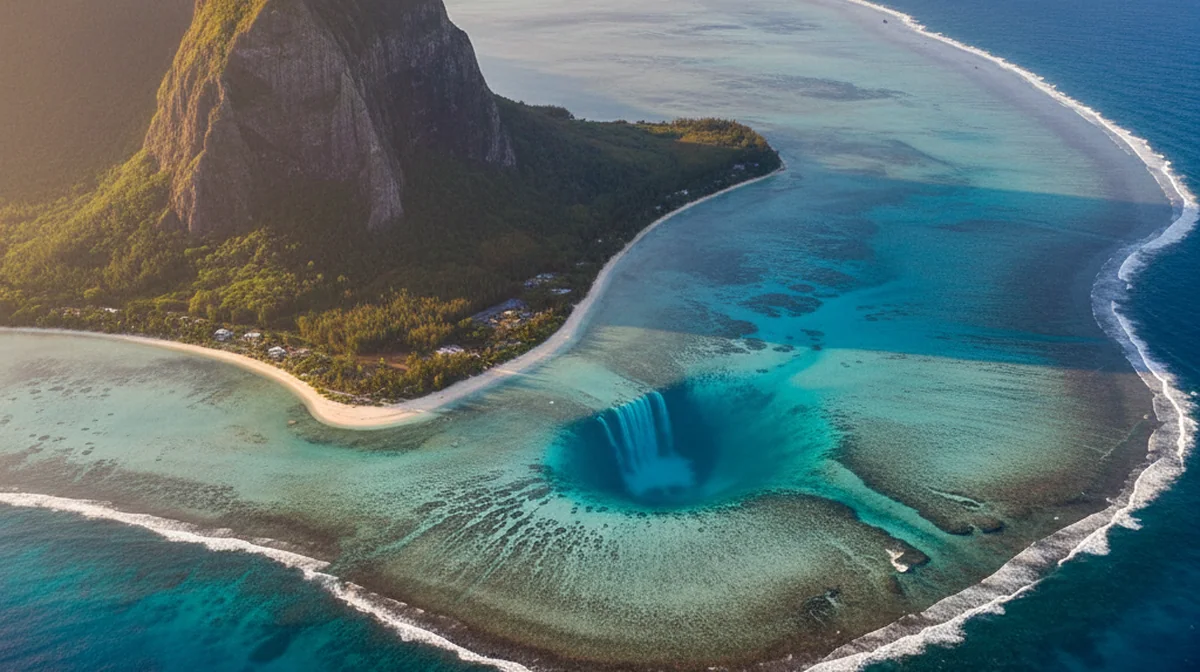
Airbnb marketing services in Mauritius, Mauritius, Indian Ocean
Why Cavmir

The Cavmir Advantage
in Mauritius

Cavmir markets Mauritius on the specific coast that matches the property — the north's nightlife and marina scene, the east's blue-lagoon quiet, the west's wind and surf, the south's wild boutique story. Flattening all four coasts into one 'Mauritius luxury' story is the single most common operator mistake, and our positioning corrects it.

State of the Industry · History

The Mauritius STR Market — Past & Present

Mauritius was uninhabited until Portuguese navigators sighted it in the early 1500s. The Dutch settled briefly from 1638, gave the island its current name (after Prince Maurice of Nassau), introduced sugarcane, and hunted the flightless dodo to extinction before abandoning the colony in 1710. The French followed, founded Port Louis in 1735, and built the sugar economy that would define the island economically for two and a half centuries. Britain took Mauritius in 1810, retained French civil law and the French-speaking planter class, and governed until independence in 1968. The population's layered origins — French, African, Tamil, Hindi-speaking Indian, Chinese, and mixed Creole — make Mauritius one of the more genuinely multicultural small societies in the world, with four languages (English, French, Mauritian Creole, Bhojpuri) active in daily life.

Modern Mauritius built itself away from sugar — offshore finance, textiles, IT services, and tourism are the pillars now. The STR market concentrates in the northern coast around Grand Baie, Péreybère, and Trou aux Biches; the west coast around Flic en Flac, Tamarin, and Black River; the south-west around Le Morne and its UNESCO-listed mountain; and increasingly the east coast boutique corridor from Belle Mare through Poste Lafayette. The 2016 Property Development Scheme (PDS) and its predecessor programs (IRS, RES, Smart City) formalized foreign ownership channels, creating a specific tier of branded-residence villa inventory that sits alongside older freehold villas and resort-owned rental inventory. Mauritius has become a mature, investor-friendly STR market — arguably the most institutionally structured in the African region.

Pricing Strategy & Seasonality

Pricing, Seasonality & When to Capture ROI

Pricing Strategy

Grand Baie and Péreybère luxury villas run USD $400–$1,800/night in peak season, with full-staff beachfront PDS villas reaching $2,500+/night for buyouts. Tamarin and Black River villas run $350–$1,500/night and attract the kitesurfing and wellness audience. Le Morne villas, especially those with Indian Ocean and mountain views, clear $500–$2,200/night. Belle Mare and the east coast run $300–$1,200/night. Interior and non-coastal inventory sits in the $120–$400/night range. Staffed service is expected at the villa tier and priced in explicitly — cook, housekeeper, sometimes a gardener and a pool-maintenance visit.

Seasonality & ROI Windows

Southern Hemisphere seasonality. Peak: mid-December through February and June through August (the cool dry season, popular with European winter escape). Super-peak: Christmas/New Year and European summer holidays. Shoulder: March, April, September, October, November. Low: cyclone-risk window January–March (though cyclones are episodic, not constant). The winter (June–August) is Mauritius's quiet secret — 22–26°C days, clear skies, lower rates in many properties, and an opportunity for operators who price aggressively to capture the European mid-winter escape segment.

Regulation & Licensing · 2026

What the Law Requires in Mauritius

Mauritius regulates tourism accommodation through the Mauritius Tourism Authority (MTA), which issues the Tourist Accommodation License required for any commercial short-term rental. Categories include Hotel, Tourist Residence, Guesthouse, and Domaine/Villa, each with its own minimum-standards and safety requirements. The MTA license is paired with a business registration from the Corporate and Business Registration Department, a tax account with the Mauritius Revenue Authority (MRA), and local-authority operating approval. The Tourist Accommodation License is annually renewable and the MTA conducts periodic inspections.

Foreign ownership in Mauritius is structured through specific schemes — PDS (Property Development Scheme), IRS (Integrated Resort Scheme), RES (Real Estate Scheme), and Smart City are the vehicles that allow non-citizens to acquire freehold residential property with full legal rights. Each scheme has minimum investment thresholds (typically USD $375,000+ for PDS) and specific approval processes through the Economic Development Board (EDB). Property acquired inside these schemes can be rented short-term without the additional foreign-ownership friction that applies to standard non-scheme residential land. Non-scheme property can be acquired by foreigners only with Prime Minister's Office approval, which is case-by-case. The regulatory environment is genuinely investor-friendly — clear rules, stable policy, and a government that views tourism investment as strategic — but compliance is not optional, and the MTA does enforce.

Market-Specific Tips & Challenges

Local Tips & Unique Market Challenges

Tips That Actually Move Revenue in Mauritius

The Mauritius strategic tip: the guest base is genuinely global, and your marketing has to reflect that. French, British, South African, Indian, Chinese, German, and increasingly Gulf travelers all book Mauritius — and they book with different expectations, different channel preferences, and different content that converts. A listing that works for a French family booking a December villa won't necessarily convert a Mumbai-based honeymoon couple or a South African long-weekend traveler. Multilingual listings and regionally-tuned imagery aren't optional at the villa tier.

Tactically: first, PDS and IRS inventory should be marketed as such — the legal-ownership clarity is a real feature and some buyer audiences specifically search for it. Second, the cook is again the highest-leverage amenity — Mauritian Creole cuisine, Indian Ocean seafood, and French technique are all native on this island and a villa with a proper in-house chef sells at a premium that's easy to justify. Third, solve the car problem — Mauritius's bus system doesn't serve most villa addresses well, and the guest who doesn't want to drive needs a pre-arranged driver solution built into the listing. Fourth, the east coast is under-marketed relative to its genuine product quality — operators on Belle Mare and Poste Lafayette who lead with the calmer sea, the boutique scale, and the sunrise beaches (versus the west-coast sunsets) differentiate effectively.

Unique Mauritius Challenges

Cyclone season (January–March) requires storm shutters, generator backup, and clear guest-communication protocols when storms form. PDS and non-scheme ownership rules are complex and a foreign buyer without proper legal counsel can get it wrong. Summer (November–April) humidity is real — dehumidification matters at the villa tier. MTA licensing timelines can stretch for first-time operators. The broader African regional narrative sometimes unfairly suppresses Mauritius's premium positioning in guest perception.

A Curious Mauritius Fact
The dodo — the flightless bird endemic to Mauritius — went extinct within roughly 80 years of Dutch settlement, and no complete specimen exists in any museum in the world. The most famous reference image, the painted portrait held in the Natural History Museum in London, is based on a captive bird likely overfed in European zoos. The actual dodo was leaner, faster, and smarter than the popular caricature suggests. A Mauritius villa that integrates a day-trip to Île aux Aigrettes (the Mauritian Wildlife Foundation's rewilding island near Mahébourg) offers guests a genuine endemic-species encounter — the pink pigeon, the Mauritius kestrel — that no other tropical destination can replicate.
Finance Essentials — Mauritius
🛡️

Insurance

Mauritius has a developed insurance market — Swan Insurance, Mauritius Union Assurance, Jubilee Allianz, and SICOM cover commercial tourism property with cyclone, fire, theft, and third-party liability. STR-specific endorsements are available and increasingly standard. Budget USD $2,000–$8,000 annually depending on property value and exposure. Cyclone cover is essential, not optional. Higher-tier operators frequently layer international liability cover through European underwriters alongside the local policy.

🧾

Property & Income Tax

Mauritius applies a 15% flat Personal Income Tax (with an additional 10% solidarity levy above a high threshold) on rental income — one of the most competitive rental-income regimes globally. Corporate tax 15% for operators using a company structure. VAT 15% applies to tourism accommodation. Registration duty on property transfers 5% for non-scheme; specific fee schedules apply inside PDS/IRS schemes. No capital gains tax on property disposal. No wealth tax. No inheritance tax between close family. The tax regime is a material part of Mauritius's competitive positioning for foreign investors.

🏦

Mortgages & Financing

Mauritius offers reasonable mortgage access for foreign non-residents through Mauritius Commercial Bank, State Bank of Mauritius, Absa Mauritius, and HSBC. PDS and IRS acquisitions typically qualify for 60–70% LTV; non-scheme foreign acquisition financing is tighter. Rates tied to the Mauritius repo rate plus a margin. Multi-currency mortgages (EUR, USD, MUR) are available and commonly used to match the rental-income currency.

Future Outlook · 2027 & Beyond

Where Mauritius is Headed Next

Mauritius through 2027 and beyond has genuinely strong structural tailwinds. The government continues to position the island as an African tech and financial hub while keeping tourism as a strategic pillar. Airlift keeps expanding — new direct routes from Mumbai, Nairobi, Singapore, and additional European gateways continue to be announced. PDS and Smart City inventory continues to deliver, bringing institutional-quality villa product into the STR market. Regulatory environment is stable and predictable. Risk factors: cyclone climate intensification, competition from emerging African luxury destinations (Madagascar, Mozambique coast), and the global tightening of offshore-finance rules which affects part of the buyer base. Cavmir's thesis: Mauritius is under-marketed to the North American audience relative to its actual product quality, and operators who build US-market direct-booking infrastructure capture a segment competitors have largely ignored.

From the Desk of Sofie Sinag

Why We Love Marketing in Mauritius

Mauritius is the Indian Ocean market with the most complete infrastructure, the most developed villa-rental legal framework, and the widest range of coastal product per square kilometer in the region. We love working here because the foreign-ownership schemes — the Integrated Resort Scheme (IRS), the Real Estate Scheme (RES), and the newer Property Development Scheme (PDS) — have built an inventory of genuinely serious branded villa developments (Anahita, Heritage Villas Valriche, Villas Valriche, La Balise Marina) that are structurally different from the small-operator villa market that dominates most Indian-Ocean competitors. That inventory mix — branded-estate product, boutique independents, and hotel-group-managed villa blocks — makes Mauritius one of the few markets where a serious marketing strategy can actually differentiate within a mature supply. The northwest coast around Grand Baie runs lively and accessible; the west coast around Tamarin and Flic en Flac carries the sunset-facing and the dolphin-watching audience; Le Morne in the southwest anchors the kite-surf and the Le Morne Brabant UNESCO mountain-and-lagoon composition; Belle Mare on the east coast holds the long-white-sand and branded-resort corridor.

What keeps us coming back is the cultural layer almost no Indian-Ocean competitor can credibly claim. Mauritius is a genuine multi-ethnic society — Indo-Mauritian, Creole, Sino-Mauritian, Franco-Mauritian — and the cuisine is the most interesting in the region for exactly that reason. Dholl puri and gateau piment on the street, Creole rougaille, Chinese mine frite, serious French-influenced hotel kitchens at the LUX, Constance, and One&Only flagships. The Pamplemousses Botanical Gardens hold the giant Victoria amazonica water lilies and the avenue of royal palms. Black River Gorges National Park covers the interior with ebony forests and endemic pink pigeons. The Cavadee festival in January, the Chinese New Year in February, and the Port Louis Saturday market anchor a cultural calendar most generic Indian-Ocean marketing ignores. Our job is helping Mauritius operators stop competing on generic Indian-Ocean imagery and start owning the specific coastal corridor, the branded-estate context, and the cultural depth that actually converts.

Cavmir's Mauritius Cheat Sheet

The Picks We Recommend for Your Welcome Book

How we actually use Mauritius when we're scouting coastal-corridor content, reshooting a villa library inside an IRS or PDS development, or briefing a client on why the generic Mauritius positioning is leaving the cultural-depth and branded-estate stories on the table.

Morning

Tamarin Bay at dawn with the fishing pirogues still on the water

The west-coast fishing tradition photographs honestly at first light — wooden pirogues, the still lagoon, the mountains of the Riviere Noire backdrop. We schedule west-coast villa reshoots at this hour because the working-coast authenticity carries a story the mid-morning tourist beach shot completely loses.

Golden Hour

Le Morne Brabant lagoon with the mountain behind at sunset

The UNESCO-listed Le Morne Brabant mountain rising directly out of the lagoon at golden hour is the single composition that most powerfully explains Mauritius's geography. We build hero libraries around this vantage for southwest-coast clients because no amount of copy can substitute for the frame itself.

Neighborhood Walk

Port Louis from the Caudan Waterfront through to the Central Market and Chinatown

The capital's walkable center runs through Franco-Mauritian colonial architecture, the Indo-Mauritian Central Market with its spice stalls, and a compact Chinatown — the multi-ethnic identity reads in a 40-minute walk. We route clients here deliberately to explain why a one-dimensional beach positioning is costing them the cultural-depth advantage Mauritius actually owns.

Dinner That Photographs

Chateau Mon Desir at Balaclava, La Clef des Champs in Floreal, or the Beach Shack on the southwest

Chateau Mon Desir for the heritage-plantation dinner with a serious kitchen; La Clef des Champs for the long-running chef's-table experience in the central highlands; the Beach Shack for the casual-but-honest west-coast seafood frame. We brief clients to eat through all three on scouting trips because between them they explain the F&B range the island can actually support.

Local Obsession

Street dholl puri at the Port Louis Central Market at lunch

Mauritius's single most identifiable street food — a folded flatbread with split-pea filling, chutney, and bean curry — and almost no villa marketing uses it. A property that packages a credible Port Louis food-walk with the stay accesses a cultural layer the beach-only competitors can't replicate.

Shoulder Season Secret

Late March through early May and September into early November

Between cyclone risk and the peak-winter European arrival, the weather holds, the lagoons are at their clearest, and the rates step down materially. This is when we schedule refresh shoots for villa clients whose winter-heavy content has gone stale.

Weekend Escape

Ile aux Cerfs by catamaran or a Black River Gorges National Park day

Ile aux Cerfs for the classic east-coast-island day with lagoon swimming and a Grand Riviere Sud-Est waterfall stop; Black River Gorges for the rainforest-interior day most beach-only itineraries miss entirely. Both extensions that properly layered villa marketing should be packaging.

What Guests Ask For

Cyclone-season briefing, driver-versus-rental-car logic, and branded-estate access rules

Every Mauritius inquiry audit we run surfaces some version of these three. The branded-estate question — whether guests at an Anahita or Valriche villa can access the hotel's own beach, gym, and restaurants — is a brand-integrity issue if the pre-arrival sequence doesn't handle it cleanly.

Local Work · Composite Case Vignettes

What Cavmir Has Done for Mauritius Properties

Representative Cavmir engagements in Mauritius. Property identifiers redacted; figures composited from internal analytics and market benchmarks.

PDS-scheme villa in a branded east-coast estate
The Brief

A 4-bedroom PDS-scheme villa inside a branded east-coast resort estate near Belle Mare was being marketed through the estate's in-house rental program alongside dozens of visually similar units. The owner wanted a complementary direct channel that could capture the repeat-guest and private-event layer the estate program wasn't set up to court.

What We Did

We built a complementary direct brand that led with what the estate's rental program couldn't meaningfully differentiate — private chef options, a properly curated concierge layer for catamaran and Ile aux Cerfs days, first-party repeat-guest email sequencing, and honest content around the villa's specific positioning within the estate rather than generic brand imagery. Produced a library that captured the villa's interiors, the direct lagoon access, and the Belle Mare light at dawn and golden hour honestly.

The Result

Direct bookings moved from effectively zero to a meaningful share of confirmed nights within the first full year, ADR on direct bookings ran materially above the estate's program baseline, and the villa began building the repeat-guest pipeline that the underwriting case had always depended on — without disturbing the estate relationship that was non-negotiable for the owner.

Tamarin west-coast boutique villa portfolio
The Brief

A three-property boutique villa portfolio on the Tamarin and Black River west coast was being marketed with generic Mauritius imagery that gave no sense of the sunset-facing geography, the dolphin-watching heritage, or the genuinely different character of the southwest versus the better-known Grand Baie. The repeat-guest pipeline that the owners had been told would form naturally had not materialized.

What We Did

We rebuilt the portfolio brand around Tamarin specifically — the sunset-facing coast, the dolphin-watching morning program, the Black River Gorges access, the quieter character relative to the north. Produced a library that captured each villa's relationship to the coast and the mountains, launched a direct-booking program with a dolphin-watching-first concierge layer, tied the content calendar to the west-coast kite-surf season, and restructured paid media around west-coast and Tamarin-specific intent rather than broad Mauritius keywords.

The Result

Direct-booking share grew substantially, average length of stay extended, and the portfolio established the repeat-guest cohort — Europeans returning for a second and third west-coast stay — that the original underwriting case had modeled but that the generic marketing had been unable to produce.

Grand Baie boutique hotel repositioning
The Brief

A 22-room boutique hotel in Grand Baie with a well-reviewed Franco-Mauritian kitchen was competing on OTA pricing against the large-format all-inclusive resorts nearby. The boutique-scale, the culinary program, and the design-led interiors — the actual differentiators — were being buried under amenity-list copy that made the hotel sound like a smaller version of the resorts it couldn't beat.

What We Did

We repositioned the hotel as Grand Baie's boutique-design-and-culinary alternative to the resort-corridor default, produced a library that treated the architecture, the kitchen, and the Grand Baie nightlife-walk lifestyle as co-headlines, launched a direct-booking program with a culinary-tour concierge layer tied to the Port Louis Central Market and the Pamplemousses Gardens, and restructured paid media around design-and-culinary-travel intent rather than all-inclusive-adjacent keywords.

The Result

ADR on direct bookings moved meaningfully above the prior baseline within two peak seasons, the review mix shifted toward the kitchen and the design language as the reasons for booking, and the hotel stabilized a repeat-guest cohort of culturally motivated travelers who had previously defaulted to the resort-corridor without considering the boutique alternative.

Ready to Grow in Mauritius?

Let's Put Your Mauritius
Property on the Map

Talk to Cavmir today. We'll show you exactly what your Mauritius property is leaving on the table — and how fast we can change that.

Book a Free Strategy Call