$285
Avg. Nightly Rate
69%
Avg. Occupancy Rate
$5,900
Avg. Monthly Revenue
8–11%
Est. Cash-on-Cash ROI
LOW
Seasonality
MEDIUM
Regulatory Burden

* Market averages. Cavmir-managed properties typically exceed these figures by 25–45%. Data sourced from AirDNA, STR market reports, and Cavmir internal analytics.

The Market

Why Curaçao is One of the World's Premier STR Markets

Curaçao combines Dutch Caribbean scale with a distinctive cultural mix that sets it apart from Aruba and Bonaire — Willemstad's pastel Punda and Otrobanda waterfronts are a UNESCO World Heritage site and one of the most architecturally photographed cityscapes in the region; Jan Thiel and Mambo Beach anchor the southern resort-and-restaurant corridor; Westpunt's cliff-and-cove coastline holds most of the island's quieter villa inventory; Klein Curaçao is the uninhabited day-trip island; Shete Boka National Park covers the dramatic north-coast blowholes. Like Aruba, Curaçao sits outside the hurricane belt and benefits from consistent year-round demand.

Curaçao's STR market offers some of the strongest owner economics in the Caribbean — below-market entry pricing on real estate, year-round occupancy driven by Dutch and North American flight connectivity, and a broadening traveler profile as the island's culinary and design scene matures. Willemstad and Jan Thiel lead in rate; Westpunt and the eastern villa corridors lead in lifestyle-oriented villa inventory. Regulatory environment is medium, with required operator registration.

Top Attractions & Landmarks

  • Willemstad (UNESCO)
  • Jan Thiel Beach
  • Mambo Beach
  • Westpunt
  • Klein Curaçao
  • Shete Boka
  • Playa Kenepa
  • Christoffel National Park

Nearby Markets: Aruba  |  Dominican Republic  |  Cayman Islands
Airbnb marketing services in Curaçao, Caribbean
Why Cavmir

The Cavmir Advantage
in Curaçao

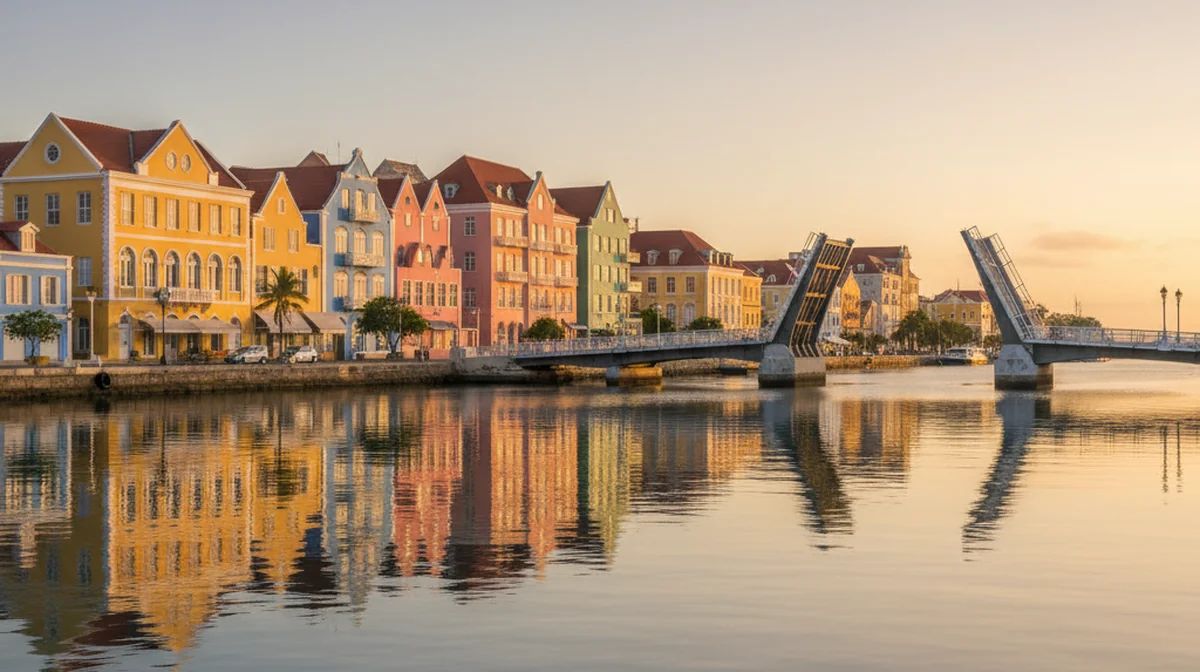
Cavmir's cinematic photography of Willemstad's pastel waterfront and the island's dramatic coastline positions Curaçao villas for the design-aware traveler who is actively looking for a less-obvious Caribbean island. Our direct-booking infrastructure and European-market distribution complement the strong Dutch traveler base with the North American and Latin American segments that are the market's current growth edge.

State of the Industry · History

The Curaçao STR Market — Past & Present

Curaçao, the largest of the ABC islands, entered the Dutch orbit in 1634 when the Dutch West India Company seized it from Spain. For the next two centuries it functioned as a Caribbean linchpin of the Atlantic trade — salt, sugar, and, devastatingly, enslaved Africans trafficked through Willemstad on their way to plantations across the Americas. That history is inseparable from the island's modern cultural identity, and sites like the Kurá Hulanda museum engage it directly. The Royal Dutch Shell refinery, opened at Schottegat in 1918, made 20th-century Curaçao an industrial Caribbean economy rather than a plantation one. Willemstad's distinctive pastel Dutch-colonial waterfront earned UNESCO World Heritage recognition in 1997.

The Netherlands Antilles dissolved in 2010, and Curaçao became a constituent country of the Kingdom of the Netherlands — autonomous in domestic affairs, Dutch in foreign policy and defense. Tourism grew steadily from the 1990s on, accelerating as the refinery wound down and the island diversified. Unlike Aruba's high-rise model, Curaçao's STR footprint is more distributed — Pietermaai and Otrobanda in Willemstad, Jan Thiel and Piscadera Bay on the southern coast, and dive-focused Westpunt at the island's western tip. And, like Aruba, Curaçao sits safely outside the Atlantic hurricane belt.

Pricing Strategy & Seasonality

Pricing, Seasonality & When to Capture ROI

Pricing Strategy

Pietermaai historic-district townhouses and boutique villas clear USD $300–$800/night, with renovated UNESCO-zone properties reaching $1,000+. Jan Thiel villas with pools and ocean views run $500–$1,500/night. Westpunt dive-oriented villas run $300–$700/night with exceptional dive-season occupancy. Curaçao pricing sits meaningfully below Aruba for comparable product, which is both a challenge (absolute revenue ceiling) and an opportunity (acquisition cost leaves more room for yield). Year-round demand — the hurricane-belt-free advantage — stabilizes annual revenue.

Seasonality & ROI Windows

Low seasonality, mirroring Aruba. Peak: December 15 through April 15, plus July–August Dutch family window. Shoulder: May, September, early December. No true low season; October–November sustains 65–70% occupancy. Dive-oriented Westpunt runs strong year-round — the visibility is essentially seasonless.

Regulation & Licensing · 2026

What the Law Requires in Curaçao

Curaçao requires registration of all short-term rental accommodations with the Curaçao Tourist Board (CTB). Registration triggers collection obligations for the tourism tax — currently assessed per person per night — which the operator collects from guests and remits. Business registration with the Chamber of Commerce is required, and zoning rules in the Willemstad historic district (UNESCO-protected) constrain exterior modifications. Foreign ownership is unrestricted under Kingdom property law.

Willemstad's UNESCO designation deserves serious operator attention — exterior colors, window treatments, and structural modifications in Pietermaai, Otrobanda, Punda, and Scharloo require monument-board approval. Restoration is a slow, permitted process with specialist contractors. On the flip side, these controls are why Willemstad looks the way it does, and that visual identity is exactly what your marketing sells. The 2024–2026 regulatory trajectory parallels Aruba's: tighter compliance, consistent tourism-tax collection, formalization of the STR sector. No supply caps currently in place.

Market-Specific Tips & Challenges

Local Tips & Unique Market Challenges

Tips That Actually Move Revenue in Curaçao

The Curaçao strategic insight: lean hard into UNESCO Willemstad as a distinct Caribbean product. Most competing Caribbean markets sell beach-and-pool; Curaçao can sell beach-and-pool plus walkable colonial-Dutch urbanism, jazz venues, art galleries, and restaurant density that small-island competitors cannot match. A Pietermaai boutique-villa listing that frames the property as 'waterfront in a UNESCO city' rather than 'Caribbean house' captures a different, higher-intent guest segment than the beach-generic market.

Second — the dive segment is a real, durable revenue layer. Curaçao's shore-diving reputation drives repeat guests from the Netherlands, Germany, and the US Northeast, and dive-operator partnerships (tank storage, pickup logistics, certification packages) meaningfully raise per-stay revenue. Third — the Kingdom-of-the-Netherlands channel is under-exploited by English-market operators. Dutch-language listings, Dutch-market OTA presence (Booking.com's Dutch footprint is structural), and awareness of Dutch school-holiday calendars unlock summer-window revenue most Caribbean operators leave on the table. Fourth — use the hurricane-belt-free positioning to capture shoulder-season demand that Jamaica, DR, and the Bahamas cannot serve confidently in September–October.

Unique Curaçao Challenges

Curaçao challenges: absolute rate ceilings are lower than Aruba, so revenue-per-property caps sooner; the refinery's uncertain future casts periodic shadows over the macro economy; workforce costs are Dutch-standard and meaningful; water and power are expensive; UNESCO-zone renovation is slow and specialist-dependent. Marketing sophistication is uneven — many local operators compete on price rather than positioning.

A Curious Curaçao Fact
The Queen Emma Bridge, the pontoon bridge linking Punda and Otrobanda across Willemstad's harbor, is locally nicknamed the swinging old lady. It pivots open throughout the day to let ships pass — every passage, from dinghies to cruise liners, interrupts foot traffic for several minutes. The bridge is free to cross, dates to 1888, and is one of the most-photographed Caribbean landmarks that is not a beach.
Finance Essentials — Curaçao
🛡️

Insurance

Curaçao insurance, like Aruba's, is materially cheaper than hurricane-belt Caribbean coverage. The island sits outside the main hurricane track, so named-storm exposure is limited. Budget USD $3,000–$9,000 annually for luxury properties. Dutch and Caribbean regional carriers (Ennia, Fatum, local syndicates) compete on this book. Monument-zone properties may require specialist heritage-restoration riders — verify before acquisition.

🧾

Property & Income Tax

Curaçao imposes income tax on resident-owned rental income, with progressive rates. The island historically offered favorable offshore-holding structures, though international transparency rules since 2018 narrowed aggressive planning. Non-resident owners commonly use Curaçao NVs or foreign holding vehicles. Property transfer tax at acquisition is 4%. Annual land tax is modest. Guest-collected tourism tax is a pass-through. US owners remain subject to US tax on foreign rental income.

🏦

Mortgages & Financing

Curaçao mortgages are available through Maduro & Curiel's Bank (MCB), RBC Royal Bank, and Banco di Caribe. Foreign-buyer LTVs typically 60–65%, with Dutch-standard documentation and rates tracking European benchmarks. Dutch buyers frequently finance through Netherlands-based banks. Cash purchase is common in the Pietermaai restoration market given renovation-timeline risk.

Future Outlook · 2027 & Beyond

Where Curaçao is Headed Next

Curaçao through 2027 and beyond: the hurricane-belt-free positioning compounds in value as Caribbean insurance markets tighten. UNESCO Willemstad is a structural, irreplicable asset that differentiates the market from every other ABC and English-Caribbean competitor. Pietermaai restoration continues gradually — inventory quality is rising and the boutique-accommodation segment is maturing. Dutch feeder demand is stable; US and German demand is growing. The refinery's fate remains a macro variable but STR is increasingly insulated from it. Cavmir's Curaçao thesis: a secondary-priced, primary-quality Caribbean market with the highest cultural-differentiation ceiling in the ABC group — undersold, well-positioned for the next cycle.

From the Desk of Sofie Sinag

Why We Love Marketing in Curaçao

Curaçao is the Caribbean island that reads like a European capital that happened to land in warm water. UNESCO Willemstad, split by the harbor into Punda and Otrobanda and anchored by the Queen Emma pontoon bridge the locals still call the swinging old lady, is unlike anywhere else in the region, and the pastel waterfront at Handelskade is probably the most-photographed single block in the Dutch Caribbean. We love that Pietermaai and Scharloo have turned their restored townhouses into a restaurant and design scene that holds up against anything in San Juan or Cartagena, and that Papiamentu, Dutch, English, and Spanish move through the same conversation without anyone slowing down.

What keeps us working here is the range. Jan Thiel's southern beach corridor and Mambo Beach solve for the resort guest, Westpunt's cliff coves and Playa Kenepa Grandi for the villa traveler who wants something quieter, Shete Boka's blowholes and Christoffel for the half-day-adventure crowd. The shore-diving reputation at Tugboat, Director's Bay, and Porto Mari is real and underleveraged in most of the marketing we audit. Klein Curaçao is a day-trip story worth its own campaign. North Sea Jazz lands in late August and King's Day in late April, and that calendar shapes how we build every content and paid-media plan for operators on this island.

Cavmir's Curaçao Cheat Sheet

The Picks We Recommend for Your Welcome Book

How we actually use Curaçao when we're building a brand story, scouting imagery, or figuring out why a property's positioning isn't landing.

Morning

Handelskade in Punda before the cruise tenders come in

The pastel facades read completely differently in soft morning light with no foot traffic. We routinely schedule 6:30am walks with clients here because it's the fastest way to explain why their current beach-only creative is underselling the island.

Golden Hour

Otrobanda rooftops looking back across the pontoon bridge

The Queen Emma swing happens several times a day and almost nobody times the shot. Sunset from the west side of the harbor with the bridge in motion is the single strongest hero image you can build a campaign around.

Neighborhood Walk

Pietermaai from Nieuwestraat through to Scharloo

Restored townhouses, independent galleries, and a dining scene that finally has depth. Any villa brief that skips this walk is missing the island's most convertible story for higher-spend guests.

Dinner That Photographs

Kome or Mundo Bizarro in Pietermaai

Tight rooms, strong interior design, and menus that photograph without staging. We book both on client trips because they explain a repositioning argument faster than any deck we could build.

Local Obsession

Shore diving at Tugboat and Director's Bay

Walk-in reef access a minute from the car, and most of the island's villa marketing doesn't mention it. There's a defensible niche here for any operator willing to invest in dive-forward content.

Shoulder Season Secret

Early May through mid-June after King's Day

Outside hurricane windows, cruise volume drops, rates ease, and North Sea Jazz demand hasn't built yet. This is when we produce refresh libraries for owners whose assets are getting tired.

Weekend Escape

Klein Curaçao day trip from Spanish Water

Uninhabited, photogenic, and the story writes itself. We use Klein footage to anchor social calendars for months because the contrast with Willemstad's density is exactly the narrative hook villa clients need.

What Guests Ask For

North Sea Jazz dates, Playa Kenepa directions, and dive briefings

Every inquiry audit we run on this island surfaces the same three questions. Front-load the answers in your pre-arrival sequence and you'll measurably shorten the path from inquiry to booking.

Local Work · Composite Case Vignettes

What Cavmir Has Done for Curaçao Properties

Representative Cavmir engagements in Curaçao. Property identifiers redacted; figures composited from internal analytics and market benchmarks.

Pietermaai boutique guesthouse
The Brief

An eight-room guesthouse in a restored Pietermaai townhouse was being discovered through Willemstad's generic OTA searches and competing on price with properties a fraction of the quality. Design-forward guests loved it on arrival; the browsing funnel never communicated that.

What We Did

We rebuilt the site around the building's architectural story, produced a photo and video library that showed the neighborhood walk instead of just the rooms, launched a direct-booking program with a meaningful package tied to the Pietermaai dining scene, and restructured paid search around design-travel intent rather than broad Curaçao terms.

The Result

Average daily rate on direct bookings moved significantly above the OTA baseline within two quarters, and the property's review mix shifted toward the higher-spend design-conscious guests the owner actually wanted.

Westpunt cliff-cove villa
The Brief

A high-end private villa on the quiet western end had almost no organic presence and was depending on a single OTA listing that buried it among mid-market rentals. The owner was hesitant to invest in direct channels without evidence.

What We Did

We built a standalone brand from scratch, produced a full library covering Westpunt, Playa Kenepa, Shete Boka, and Christoffel, set up a first-party email program around King's Day and North Sea Jazz seasonality, and implemented a booking flow that let the concierge layer in before the payment step rather than after.

The Result

The direct channel moved from zero to a meaningful share of confirmed nights inside the first full year, with average length of stay running notably longer than the OTA baseline and a repeat-guest pipeline beginning to form by the second high season.

Jan Thiel beach resort F&B program
The Brief

A mid-size beachfront resort had strong occupancy and weak ancillary revenue. The restaurants were priced and positioned for captive house guests, and locals and non-resort travelers weren't showing up.

What We Did

We repositioned the F&B brand as an independent destination rather than a hotel outlet, rebuilt the visual identity, produced content around the kitchen team and supplier sourcing, and launched a local-resident loyalty program tied to off-peak lunch and sunset windows.

The Result

Non-guest F&B revenue grew into a reliable secondary line, the resort's review mentions shifted to emphasize the dining experience, and the owner was able to justify kitchen investment that had been stalled for two budget cycles.

Ready to Grow in Curaçao?

Let's Put Your Curaçao
Property on the Map

Talk to Cavmir today. We'll show you exactly what your Curaçao property is leaving on the table — and how fast we can change that.

Book a Free Strategy Call