$185
Avg. Nightly Rate
69%
Avg. Occupancy Rate
$3,830
Avg. Monthly Revenue
9–13%
Est. Cash-on-Cash ROI
MEDIUM
Seasonality
MEDIUM
Regulatory Burden

* Market averages. Cavmir-managed properties typically exceed these figures by 25–45%. Data sourced from AirDNA, STR market reports, and Cavmir internal analytics.

The Market

Why Marrakech is One of the World's Premier STR Markets

Marrakech is one of the largest short-term-rental markets in Africa and the Middle East — a red-walled imperial city whose medina has been a UNESCO World Heritage Site since 1985 and whose riad rental culture predates Airbnb by centuries. The medina's 300-plus rentable riads, the Palmeraie's luxury villa estates, the Art Deco quarter of Gueliz with Yves Saint Laurent's Jardin Majorelle, and the Hivernage hotel district give Marrakech a multi-corridor STR landscape comparable to any mature European capital.

Marrakech's STR market is mature, seasonal, and fragmented across distinct product categories. Medina riads run $120–$600/night and sell on architectural authenticity; Palmeraie villas clear $500–$2,500/night on pool, privacy, and garden scale; Gueliz apartments serve the design-conscious younger traveler. Peak runs October–April with Christmas/New Year and Easter as super-peak; July–August heat softens demand but European holiday volume sustains occupancy. Film and fashion production generates reliable shoulder-season bookings.

Top Attractions & Landmarks

  • Jemaa el-Fnaa Square
  • Koutoubia Mosque
  • Bahia Palace
  • Jardin Majorelle
  • Medina Souks
  • Saadian Tombs
  • Menara Gardens
  • Atlas Mountains (day trip)

Nearby Markets: Lisbon  |  Ibiza
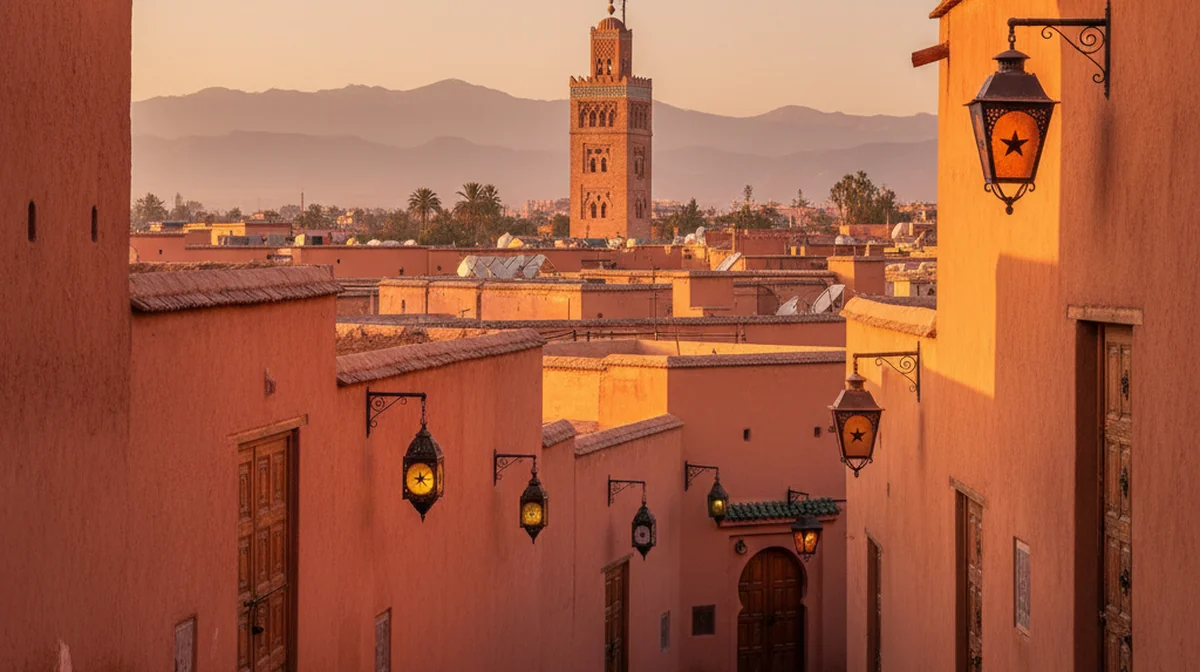
Airbnb marketing services in Marrakech, Morocco, North Africa
Why Cavmir

The Cavmir Advantage
in Marrakech

Cavmir markets Marrakech on its actual product differentiation — the riad's heritage architecture against the Palmeraie's pool scale against Gueliz's design energy — rather than flattening the city into a single 'Moroccan luxury' story. We reach the European, North American, and GCC traveler with corridor-specific content the broad Marrakech category can't compete against.

State of the Industry · History

The Marrakech STR Market — Past & Present

Marrakech was founded in 1070 by the Almoravid dynasty and served as the imperial capital of Morocco through successive dynasties — the Almohads, Saadians, and later the Alaouites. The medina, a UNESCO World Heritage Site since 1985, preserves nearly a millennium of North African urbanism: the Koutoubia Mosque's 12th-century minaret, the Saadian Tombs rediscovered in 1917, the Bahia and El Badi palaces, and the thousand-year-old souks radiating from Jemaa el-Fnaa square. French Protectorate rule from 1912 to 1956 added the Ville Nouvelle (Gueliz, Hivernage) — wide boulevards, Art Deco villas, and the Majorelle Garden that Yves Saint Laurent later rescued. Independence under King Mohammed V re-centered Moroccan political life on Rabat, but Marrakech kept its status as the cultural and tourism capital.

The modern short-term rental market grew out of the riad revival — foreign buyers, predominantly French and British, began restoring crumbling medina courtyard houses in the late 1990s and early 2000s. What started as romantic private retreats became a professional boutique accommodation sector: hundreds of restored riads now operate as maisons d'hôtes alongside villas in the Palmeraie, the oasis of date palms north of the city, and golf-resort developments toward the Atlas foothills. Airbnb arrived in force around 2013 and layered on top of the existing riad industry rather than replacing it. Morocco introduced the Classement system and formal licensing frameworks through the 2010s, and 2026 Marrakech sits as one of Africa's most mature STR markets — a rare combination of deep cultural draw, legal foreign ownership, and a recognized hospitality category (the riad) that doesn't exist anywhere else.

Pricing Strategy & Seasonality

Pricing, Seasonality & When to Capture ROI

Pricing Strategy

Medina riads are the signature inventory — restored 4–6 bedroom courtyard properties with plunge pools and rooftop terraces clear USD $300–$900/night in peak season, with the highest-design museum-quality riads reaching $1,500–$2,500/night for full-buyout stays. Palmeraie villas (pool, garden, staff) run $500–$2,000/night depending on size and design pedigree. Hivernage and Gueliz apartments sit in the $120–$350/night range and draw the urban-traveler segment. Atlas-foothill villas toward Amizmiz and the Ouirgane valley run $400–$1,200/night. Staffed service (cook, housekeeper, often a guardian) is standard in the riad and villa segments — the included-labor model is the product.

Seasonality & ROI Windows

Strong double-peak seasonality. Peak: mid-September through late November and mid-February through May. Super-peak: Christmas/New Year and Easter week. Shoulder: early September and June. Low: July and August (heat regularly exceeds 40°C) and January's quieter weeks. The October light and November weather draw the highest-spend European traveler. Ramadan (dates shift annually) slows the medina rhythm but doesn't kill bookings — international guests keep coming and the post-iftar evenings are some of the most memorable experiences a well-positioned riad can sell.

Regulation & Licensing · 2026

What the Law Requires in Marrakech

Morocco regulates tourism accommodation through the Ministry of Tourism's Classement framework, which defines categories (maison d'hôtes, riad, gîte rural, résidence immobilière de promotion touristique) and sets minimum operational standards. A formal Classement dossier — filed with the regional Délégation du Tourisme — is required for properties operating as commercial hospitality, along with commercial registration (Registre de Commerce), a fiscal identifier, and CNSS registration if you have employees. The Taxe de Promotion Touristique (TPT), locally known as the CRT tourism tax, is collected per guest per night and remitted to the Conseil Régional du Tourisme — the amount scales with property classification and is generally modest but non-optional.

Foreign ownership of Moroccan real estate is permitted — with a narrow exception for agricultural land — and the title registration system (Conservation Foncière) produces clean titre foncier documents that international buyers can rely on. Medina properties sometimes sit on older melkia title that requires immatriculation (formal titling) before a secure transaction can close; a Moroccan notaire (adoul or modern notary) handles the conveyancing and is legally mandatory. Operating informally without Classement remains common in parts of the medina but exposes the operator to fines, forced platform delisting, and — when guests are injured or properties have safety incidents — civil liability without insurer backing. The 2026 direction has been gradual tightening: more frequent platform-level data sharing, more visible TPT collection, and clearer commercial-zone versus residential-zone distinctions.

Market-Specific Tips & Challenges

Local Tips & Unique Market Challenges

Tips That Actually Move Revenue in Marrakech

The Marrakech strategic tip: sell the experience architecture, not the room count. A Marrakech riad is not a hotel substitute — it's a private house with a plunge pool, a hammam, a rooftop, a cook who shops the souk that morning, and a driver who knows which Atlas village serves the best tajine. Listings that lead with bedroom count and generic amenities underprice the asset badly. The guests paying $1,200/night for a medina riad are buying the Friday couscous, the pre-arranged henna artist, the Ourika Valley day trip, and the private dinner served on the rooftop under the Koutoubia lights.

Tactically: first, localize in French before anything else — Morocco's top guest source markets read French natively and Moroccan hospitality is French-coded. Second, invest in courtyard and rooftop photography at the golden hour; the light is the product. Third, build the excursion catalog (Atlas, Essaouira, Agafay desert, Ourika) and present it inside the listing — guests booking a 6-night stay want to see the week planned before they commit. Fourth, don't fight the staffed model: guests who try to compare against self-catering villas in Spain are the wrong audience. Price for the service layer and market to the audience that understands what they're buying.

Unique Marrakech Challenges

Medina access is on foot — cars don't enter most of the old city, which affects arrival logistics, luggage, and elderly-guest comfort. Summer heat in July–August genuinely hurts occupancy. The Classement process can move slowly and informal operators create pricing pressure. September 2023's earthquake reminded operators that insurance and structural assessments matter — most medina properties are centuries old. Currency movement (the dirham) is managed but not fully free-floating, which affects international pricing discipline.

A Curious Marrakech Fact
The word 'riad' specifically means a house built around an interior garden with a fountain — the form traces back to the Persian chahar bagh and arrived in Morocco through Andalusian refugees after the 1492 fall of Granada. A true riad must have four symmetrical planting beds around a central water feature. Houses built around a paved courtyard without a garden are technically dar, not riad — a distinction most Airbnb listings ignore but that medina purists and experienced travelers absolutely notice. Getting the nomenclature right in your listing signals you know the market you're in.
Finance Essentials — Marrakech
🛡️

Insurance

Moroccan property insurance through AXA Assurance Maroc, Saham Assurance (now Sanlam), Wafa Assurance, and RMA covers fire, theft, and third-party liability. STR-specific endorsements exist but are thinner than European markets — expect to negotiate explicit guest-liability coverage. Budget MAD 8,000–MAD 30,000 annually depending on property value. Earthquake coverage is worth buying post-2023 and is not always default-included in base policies.

🧾

Property & Income Tax

Moroccan rental income is taxed under the Impôt sur le Revenu (IR) on a progressive scale up to 38%, with a standard 40% allowance on gross residential rental income for non-professional landlords. Classified tourism accommodation trades as commercial activity and can access preferential regimes. VAT (TVA) 10% applies to classified tourism accommodation, 20% to non-classified. Municipal Taxe d'Habitation and Taxe de Services Communaux apply at modest rates. Capital gains on property disposal run 20% with exemptions for long-held primary residences.

🏦

Mortgages & Financing

Moroccan mortgages for foreign non-residents are available — Attijariwafa Bank, BMCE/Bank of Africa, and Société Générale Maroc run dedicated non-resident programs. Typical LTV 60–70%, dirham-denominated or convertible-dirham structures, 15–20 year terms. Rates tied to the central bank benchmark plus a margin. Many foreign buyers still pay cash given Moroccan exchange-control considerations on eventual capital repatriation.

Future Outlook · 2027 & Beyond

Where Marrakech is Headed Next

Marrakech through 2027 and beyond sits on genuinely strong structural drivers. Morocco is co-hosting the 2030 FIFA World Cup with Spain and Portugal, which will accelerate infrastructure investment and raise international visibility through the late 2020s. The Al Boraq high-speed rail extension toward Marrakech is in planning, which would reshape weekend-tourism flows from Casablanca and eventually Tangier. Regulatory tightening is the direction of travel, not the destination — Classement will matter more, informal operators will face more friction, and professional operators with proper paperwork will gain share. Cavmir's thesis: the riad as a product category is under-marketed internationally relative to its actual uniqueness, and the operators who lead with cultural narrative and photography (rather than generic villa-listing language) will take the premium tier as the World Cup cycle pulls in new audiences.

From the Desk of Sofie Sinag

Why We Love Marketing in Marrakech

Marrakech is one of the few cities on earth where the architecture is the brand, the light is the brand, and the hospitality tradition is the brand, and they all reinforce each other without any help from the marketing. We love working here because the medina inside the ochre walls — the Kasbah, the Mellah, the Jemaa el-Fnaa square at dusk with its storytellers and food stalls — is a visual language that converts the moment guests see it honestly photographed. The riad is the product almost no other market can replicate: a courtyard home turned inside out, zellige tilework and carved cedar ceilings opening onto a central orange tree and a fountain, and a rooftop terrace where the Atlas Mountains sit on the horizon at sunset. The Yves Saint Laurent Jardin Majorelle on the Gueliz side anchors the modernist contrast, and the Musee Yves Saint Laurent next door earns the kind of cultural loyalty villa marketing rarely accesses.

What keeps us coming back is the specificity of the neighborhoods. Gueliz runs European-modernist with proper cafes and galleries (Cafe du Livre, David Bloch Gallery) and a completely different product than the medina. The Palmeraie holds the large-format villa and pool inventory — the kind of Richard-Branson-era Kasbah-style compounds that draw multi-generational families and private events. Sidi Ghanem is the design district for operators building a contemporary-Morocco story. The food scene has shifted beyond the standard tagine pitch: Nomad, Le Jardin, Dar Moha, Plus 61, and La Famille run serious contemporary kitchens that photograph cleanly. The Marrakech Biennale, the Marrakech International Film Festival in late autumn, and the Atlas Mountains day-trip to the Ourika Valley or the Agafay desert anchor a cultural calendar most generic North Africa marketing sleeps through. Our job is helping Marrakech operators stop competing on generic Moroccan-luxury copy and start owning the specific riad, the specific courtyard, the specific rooftop, and the specific neighborhood they actually sit inside.

Cavmir's Marrakech Cheat Sheet

The Picks We Recommend for Your Welcome Book

How we actually use Marrakech when we're scouting riads, reshooting a medina library, or briefing a Palmeraie villa client on why the pool-size argument is losing them the culturally curious guest they should be winning.

Morning

Jemaa el-Fnaa at dawn before the storytellers set up

The medina's central square photographs completely differently at 6am than at sunset. We schedule riad reshoots in the Kasbah and Mellah at this hour because the architectural silhouette and the soft morning light carry a story the crowded evening shot flattens into a generic tourist image.

Golden Hour

A medina rooftop terrace looking toward the Koutoubia minaret and the Atlas

The minaret, the terracotta rooflines, and the snow-capped Atlas behind them are the composition that explains Marrakech faster than any copy deck can. We build hero libraries around this single vantage for nearly every riad client we take on.

Neighborhood Walk

Mellah and Kasbah quarters from the Bahia Palace to the Saadian Tombs

The medina's southern half is quieter, more architecturally legible, and rarely what tourists photograph. We route clients on this walk when we need to show that a riad's neighborhood context is part of the brand asset, not a footnote beneath the bedroom count.

Dinner That Photographs

Nomad rooftop in the spice square, Le Jardin, or Dar Yacout

Nomad for the contemporary-Morocco rooftop frame, Le Jardin for the courtyard-garden composition with banana trees and zellige, and Dar Yacout for the full heritage-palace dinner. We brief clients to eat through all three on scouting trips because between them they explain the F&B story the city can actually tell.

Local Obsession

Breakfast of msemen and amlou at a medina riad's own kitchen

The riad breakfast — fresh msemen, amlou (argan-and-almond paste), fig jam, mint tea served on the courtyard table — is the product experience that converts. We structure content calendars around it because it's the one meal competitors can't replicate without the architecture.

Shoulder Season Secret

Late March through May and October through early November

The city is in balance — the heat eases, the Atlas is still snow-capped through spring, and the Biennale and Film Festival calendar pulls a cultural audience at premium rates. This is the window where we schedule reshoots for clients whose winter-heavy content has gone stale.

Weekend Escape

Agafay desert stone-desert camps or the Ourika Valley in the Atlas

Agafay is a 45-minute drive to a completely different landscape — stone desert, Berber tents, sunset dunes — that most villa marketing treats as unrelated. A Marrakech riad or Palmeraie villa that packages a credible Agafay or Ourika day inside the stay captures a layered-content guest the generic city brief loses.

What Guests Ask For

Hammam etiquette, tipping norms, and whether to drink the mint tea

Every inquiry audit we run on a Marrakech property surfaces some version of these three. A pre-arrival sequence that handles the hammam, the souk-haggling expectations, and the cultural etiquette briefing measurably reduces first-day concierge calls and builds the trust that converts repeat-guest bookings.

Local Work · Composite Case Vignettes

What Cavmir Has Done for Marrakech Properties

Representative Cavmir engagements in Marrakech. Property identifiers redacted; figures composited from internal analytics and market benchmarks.

Medina riad in the Kasbah
The Brief

A 6-room riad inside the Marrakech medina was relying on generic Moroccan-luxury marketing and competing on OTA price against newer Palmeraie villas whose pool-and-lawn inventory the medina riad architecturally couldn't match. The zellige, the carved cedar, the rooftop Atlas view — the actual differentiators — were buried in the listing gallery.

What We Did

We rebuilt the brand around the architectural authenticity the newer builds can't replicate — the original 19th-century zellige tilework, the carved cedar ceilings, the courtyard orange tree, the rooftop terrace context in the heart of the Kasbah — produced a library that captured the riad as heritage architecture rather than hotel amenity, restructured the booking flow so the medina-walk lifestyle loaded before the bedroom count, and rebuilt paid search around medina-riad intent rather than broad Marrakech terms.

The Result

Direct bookings lifted materially off the OTA baseline within the first two peak seasons, average length of stay extended, and the property began attracting the culturally curious luxury guest willing to trade pool size for specificity of place — which had always been the riad's real advantage but had never been the marketing story.

Palmeraie large-format villa
The Brief

An 8-bedroom Palmeraie compound with tennis court, staffed kitchen, and Atlas views was being marketed as a generic pool villa in a category that now includes hundreds of comparable options. The multi-generational family and private-event audiences that represented the real rate ceiling were almost entirely missing from the funnel.

What We Did

We built three distinct product brands under one portfolio umbrella — multi-generational family rental, private-event and Moroccan-wedding venue, and creative-retreat / brand-shoot rental — each with its own photography direction, tear sheets, and distribution. We layered in a chef partnership for on-site dining, built a wedding-and-event tear sheet distributed through Marrakech planners, and launched a direct-booking program with a full-staff concierge layer.

The Result

Event bookings alone became a meaningful new revenue channel within the first full year, peak-season family-rental ADR moved substantially above the prior baseline, and booking lead time extended materially as the property shifted its competitive reference set from Palmeraie commodity inventory to the small pool of genuinely private-event-ready villas.

Gueliz design-district boutique hotel
The Brief

A 14-room boutique hotel in Gueliz with a serious contemporary art program and a well-reviewed restaurant was being discovered through generic Marrakech searches that lumped it alongside medina riads and Palmeraie resorts it had nothing in common with. The design-district identity was the asset and the marketing wasn't telling the story.

What We Did

We repositioned the hotel as Marrakech's contemporary-Morocco base — Jardin Majorelle and the YSL Museum on foot, the Sidi Ghanem design district minutes away, a walkable cafe and gallery scene — produced a library that treated the architecture and the art program as co-headlines, launched a direct-booking program with a design-focused concierge layer, and restructured paid media around contemporary-Morocco and design-travel intent rather than riad or resort keywords.

The Result

ADR on direct bookings moved meaningfully above the OTA baseline, the review mix shifted toward the architecture and the art program as the reasons for booking, and the hotel stabilized a repeat-guest cohort of culturally motivated travelers who had previously defaulted to medina riads without considering the alternative.

Ready to Grow in Marrakech?

Let's Put Your Marrakech
Property on the Map

Talk to Cavmir today. We'll show you exactly what your Marrakech property is leaving on the table — and how fast we can change that.

Book a Free Strategy Call