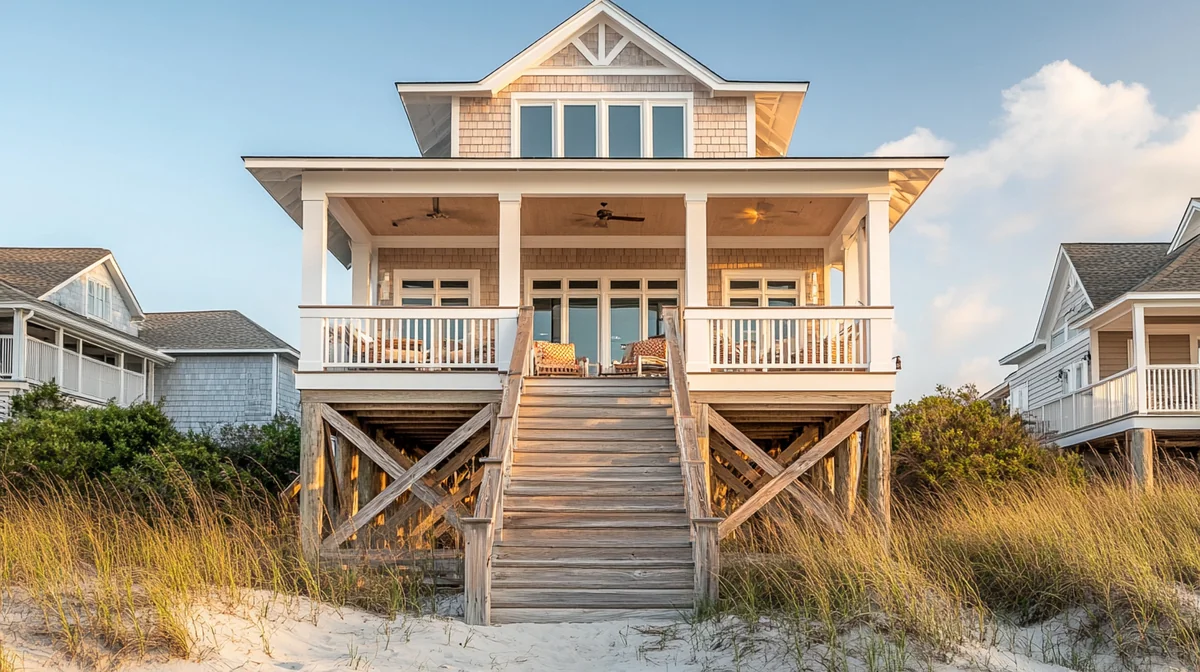



This guide is for Americans who are close to buying a home abroad and plan to rent it to travelers: a condo in Phuket, a house near Tulum, a flat in Paris or Florence. Before you wire a deposit, you need four answers. Can you hold title there? Can you rent it by the night? What does the IRS expect from you? And what will the home net after the local manager, local tax and a swing in the exchange rate?
Below you'll find the ownership rules for the countries Americans ask about most, the short-term rental rules in the places they buy, the US filings that come with a rental abroad, a net-yield calculator, three emails you can send today, and a before-you-wire checklist you can tick off on your phone. Every rule links to its source, checked as of October 2026. None of it replaces a local lawyer or a cross-border CPA. It tells you exactly what to ask them.
- Mexico bars foreigners from owning land directly within 50 km of the coast or 100 km of a border. Beach homes there are held through a bank trust (fideicomiso) of up to 50 years, renewable.
- Canada bars most non-Canadians from buying homes of up to three units in its cities until January 1, 2027. Thailand lets foreigners own condo units within a 49% foreign quota, but never the land.
- The rental license often decides the deal. France required every tourist rental to be registered by May 20, 2026, Italy fines up to €8,000 per unit with no CIN code, and Barcelona plans to end 10,000 tourist-flat licenses in November 2028.
- On your US return, foreign rental income goes on Schedule E, the building is depreciated over 30 years instead of 27.5, and local income tax can become a US credit through Form 1116.
- File an FBAR when your foreign accounts top $10,000 at any time in the year. Form 8938 starts at $50,000 for a single filer living in the US. A house you own directly goes on neither form.
- Run the numbers after the manager's cut, local tax and a currency move before you make an offer. The calculator below does it in a minute.
Foreign Ownership Rules by Country
The first check is whether the deed can carry your name at all. Countries fall into three groups. Some let you own on the same terms as a citizen. Some let you own through a structure, such as a bank trust, a local company or a condo quota. A few ban most foreign buyers outright for a period of time. The table covers the countries American buyers ask about most, as of October 2026.
| Country | Can a US buyer own a home? | How it is held | Check before you sign |
|---|---|---|---|
| Mexico, coast and border strip | Not directly within 50 km of the coast or 100 km of a border | Bank trust (fideicomiso) for up to 50 years, renewable on request | The trust needs a permit from Mexico's foreign ministry (SRE) |
| Costa Rica | Yes, titled land on the same terms as citizens, with a passport | In your own name or a company | Beachfront: the first 200 meters belong to the state |
| Thailand | A condo unit, yes; land, no | Freehold condo inside the 49% foreign quota, or a lease | Proof the purchase money came from abroad in foreign currency |
| Canada | Mostly no in cities until January 1, 2027 | The ban covers homes of up to three units in census metropolitan areas and agglomerations | Fines up to $10,000 (Canadian) and a possible court-ordered sale |
In the European places covered in the next section, the question that shapes your rental plan is usually the rental license. Confirm ownership rules with a local notary anyway, because rules for non-residents can change with little notice.
Mexico and the Bank Trust
Mexico's constitution keeps foreigners from holding direct ownership of land and water in a restricted strip: 100 km along the borders and 50 km along the coasts. Because the strip runs 50 km inland from every coast, any Mexican beach town falls inside it. According to a Garrigues analysis from April 30, 2026, the legal route is a fideicomiso. A Mexican bank acts as trustee and holds the property, and you, as beneficiary, get the right to use and profit from it, which includes renting it out.
Three details matter for your timeline. The bank applies to Mexico's foreign ministry (SRE) for the trust permit. That permit expires 180 calendar days after it is issued and can be extended once for another 180 days, so a stalled closing can cost you the permit. The trust itself can run for up to 50 years and can be extended when you ask. Ask each bank for its setup fee and any yearly trust fee in writing before you choose one.
If you plan to buy a house in Tulum or Playa del Carmen, read the Tulum market guide for demand and seasonality before you look at listings.
Costa Rica and the Beach Zone
Costa Rica is one of the easier countries for an American buyer. The Tico Times buyer guide of September 11, 2026 notes that foreigners can own land on the same terms as citizens, with a valid passport and no residency, visa or local partner needed. The exception is the coast. Under the Maritime Terrestrial Zone Law (Law 6043), the first 200 meters inland from the high-tide line belong to the state. The first 50 meters are public and no one may build there. The next 150 meters are a restricted zone where the municipality grants concessions instead of title.
A concession is a lease from the state with a term and renewal risk. A foreign national cannot hold a majority interest in one without at least five years of legal residency in Costa Rica. Some sellers get around that by holding the concession through a company that is mostly Costa Rican owned, which puts your asset in someone else's name on paper.
Every Costa Rican property has a folio real number, and its Registro Nacional record is public. Ask your lawyer to pull it before you pay a deposit. It shows the registered owner, boundaries, fiscal value, liens, easements and any lawsuits, and it tells you whether a beach listing is titled land or a concession.
Thailand and the Condo Quota
Foreigners cannot own land in Thailand, but a condo unit counts as a separate property right. Lex Bangkok Law Firm explains that foreign ownership in one building cannot exceed 49% of the total sellable floor area. When a building's foreign quota is full, the route left is a lease, typically for 30 years with renewal at discretion rather than by right, which is a weaker hold than ownership.
The money has to arrive the right way. At the Thai bank that receives your funds, you ask for a Foreign Exchange Transaction Form (FET form) or an equivalent bank letter to prove the purchase money came from abroad. Ask the developer or the building's juristic office how much of the foreign quota is left before you reserve a unit. If you are looking at Phuket, the Phuket market guide covers the island's demand.
Canada and the Foreign Buyer Ban
Canada's Prohibition on the Purchase of Residential Property by Non-Canadians Act took effect on January 1, 2023. On February 4, 2024, Finance Canada extended it to January 1, 2027. A non-Canadian is anyone who is not a Canadian citizen, a person registered under the Indian Act or a permanent resident.
The ban covers buildings with up to three dwelling units and parts of buildings such as condo units. It does not apply outside census metropolitan areas and census agglomerations, so homes outside those areas remain open to non-Canadian buyers. A buyer who breaks the ban, and anyone who knowingly helps, can be fined up to $10,000 (Canadian), and a court can order the home sold, with the buyer getting back no more than the price paid. As of October 2026 the ban is scheduled to end on January 1, 2027, and Canadian Mortgage Professional reported in July 2026 that Ottawa was weighing a new framework rather than another simple extension. Check Finance Canada for any announcement before you sign, and ask a Canadian lawyer about provincial taxes on foreign buyers, which are separate from the federal ban.
Buying Business Property Abroad
If you are buying a small hotel, a mixed-use building or a commercial lot instead of a home, the rules can open up. In Mexico, a Mexican company whose bylaws include the Article 27 foreigner clause can own property inside the restricted zone for non-residential uses, and it must notify the SRE within 60 business days of the purchase, per the same Garrigues analysis. In Canada, the ban stops at buildings with four or more units, which the CMHC FAQ on the Act confirms are not covered. Company ownership brings its own local accounting and filings, and it can change your US reporting. Ask a local lawyer and your US CPA to agree on the structure before you form anything.
Email to a local property lawyer, before you make an offer
Hello [Lawyer name],

I am a US citizen and I am looking at a property in [Town, Country] to rent to short-term guests. The listing is [Listing link or address]. Before I make an offer, could you tell me what it would cost for you to answer these questions in writing:

1. Can I hold title in my own name, or do I need a trust, a company or a lease? What does that structure cost to set up and to keep each year?
2. Is the property inside any restricted, coastal or protected zone?
3. Does the public registry show the seller as owner, with no liens, easements, lawsuits or unpaid taxes?
4. Is short-term rental allowed at this address under national, regional, city and building rules? Which license or registration number do I need, and how long does it take?
5. Which taxes do I pay at closing, every year as an owner, and on rental income as a non-resident?
6. What would stop me from selling later, and what taxes apply when I sell?

I have not signed anything yet. Please send your fee and timeline.

Thank you,
[Your name]
[Phone and time zone]
Short-Term Rental Rules by Place
A deed you can hold is worth little if the city will not let you rent by the night. Rules in the places Americans buy have mostly tightened since 2023, and several changed again in 2025 and 2026. The table gives the rule that matters most in each place as of October 2026. For the wider trend, see how short-term rental rules are tightening worldwide.
| Place | Main rule | Key date | What it means for a buyer |
|---|---|---|---|
| France, all towns | Every tourist rental must be registered; a main residence is capped at 120 nights a year, and towns may lower that to 90 | Law of November 19, 2024; registration by May 20, 2026 | Show the number on every listing; ask the town hall about a second home before you buy |
| Italy, nationwide | A national code (CIN) for every rental unit, shown online and at the entrance | Regional codes had to move to the national system by January 1, 2025 | Fines of €800 to €8,000 per unit with no code |
| Spain, national registry | A single national registration number for platform listings | Required from July 1, 2025; annulled by the Supreme Court on May 19, 2026 | Regional registries and licenses are again the main control; check which number each platform asks for |
| Barcelona | The city plans not to renew its 10,000 tourist-flat licenses | November 2028 | A licensed flat bought today may lose its license within a few years |
| Portugal | Alojamento Local (AL) registration with the town; licenses no longer need renewal every five years and transfer on sale | Decree-Law 76/2024, from November 1, 2024 | Towns can pause new licenses in contention areas for up to a year |
| Amsterdam | Only your own main home; 30 nights a year; register, hold a permit and notify the city before each stay; four guests at most | 15 nights a year in parts of the center and De Pijp since April 1, 2026 | Not a market for a pure investment rental |
France
France's Le Meur law (Law no. 2024-1039 of November 19, 2024) rewrote the rules for furnished tourist rentals. According to a March 30, 2026 note from the law firm AGN Avocats, registration became a legal duty for every furnished tourist rental by May 20, 2026 at the latest. A main residence can be rented for up to 120 days a year, and towns can now lower that cap to 90 days.
The same law tightened energy rules. In high-demand areas where a home needs a change of use to become a tourist rental, it has needed an energy rating (DPE) of at least F since 2025, rising to E in 2028, and by 2034 every furnished rental must be rated between A and D. Ask the seller for the current DPE before you make an offer, because a poor rating can mean a renovation bill before your first guest. The Paris market guide covers demand in the capital.
Italy
Italy now gives every short-term rental unit a national identification code, the CIN, created by Article 13-ter of Decree-Law 145/2023 and converted into law in December 2023. Frankvest's guide for foreign investors, updated September 2026, lists the duties: show the CIN at the entrance to the unit and in every online listing. Fines run from €800 to €8,000 per unit for having no code, €500 to €5,000 for not showing it at the property, and €500 to €5,000 per listing for leaving it off online. Regions can add their own rules on top (Tuscany, for one, sets minimum safety standards such as smoke detectors and fire extinguishers), so ask a local commercialista which regional database and rules also apply to your unit.
Spain
Spain's Royal Decree 1312/2024 created a single national registration number, required from July 1, 2025 for homes listed on platforms that take bookings and payments online, as Spanish Property Insight's registry guide explains. On May 19, 2026, the Supreme Court annulled the national registry procedure in ruling 620/2026.
That does not make renting free of rules. According to a June 2, 2026 alert from the law firm Andersen, the regional registries are again the main tool for authorizing short-term rentals, while the national digital window and the platforms' duty to transmit data remain in force. Owners must check which registration number each platform asks for under their region's rules. Before you buy in Spain, ask your lawyer for the regional tourist license status of the exact flat, not the building.
Barcelona
Barcelona is the clearest case of a license with an end date. Catalan News reported on March 14, 2025 that Spain's Constitutional Court had upheld the Catalan decree limiting tourist housing, and that the mayor welcomed it as backing for the city's decision not to renew 10,000 tourist-apartment licenses in November 2028. If a seller prices a Barcelona flat on its rental income, ask what that income is worth after 2028. The Barcelona market guide covers the city's demand.
Portugal
Portugal moved the other way in late 2024. Sovereign Group's summary of Decree-Law 76/2024 says that from November 1, 2024, Alojamento Local licenses no longer need renewal every five years, no longer expire for inactivity and can transfer with a sale. Town councils gained power to limit or suspend new licenses in designated contention areas for up to one year, and a building's owners can object to a unit if the objection is justified and approved by more than 50% of them, with the town making the final decision. When you buy a flat that already has an AL license, have your lawyer confirm the license is active and transfers to you at the deed.
Amsterdam
Amsterdam allows holiday rental only in a home that is your main residence, where you are registered in the city's population records. Hostaway's Amsterdam rules guide lists a cap of 30 nights per calendar year, a registration number on every listing, a holiday rental permit, a notification to the city before guests arrive, a maximum of four guests and fines from about €1,500 to €20,500. For an American buying to rent, the main-residence rule rules out the usual investment plan.
The cap has since tightened. From April 1, 2026, homes in parts of the city center and De Pijp may be rented to tourists for only 15 nights a year, NH Nieuws reported that day. The same report says the city can stop holiday rental in an area altogether if nuisance continues, so check the current map for the exact street.
US Taxes on a Rental Home Abroad
Owning abroad does not move the rental off your US return. The IRS treats it much like a rental in Ohio, with three differences that catch new owners: a longer depreciation period, a credit for the tax you pay locally, and extra forms for the bank accounts that come with the home. This section gives you each rule and its source. Then take it to a CPA who works with cross-border clients; our directory of short-term rental tax CPAs is a place to start.
Rental Income Goes on Schedule E
IRS Publication 527 says you normally report rental income and expenses on Schedule E, Part I. That covers the home abroad too. Convert the income and expenses to dollars and keep the exchange rates you used with your records. The same publication sets the personal-use test: you use a unit as a home if your personal days are more than the greater of 14 days or 10% of the days it is rented at a fair price. Cross that line and different rules limit what you can deduct, so log every night you and your family stay there. For the domestic basics, see the Airbnb tax guide for hosts.
Depreciation Over 30 Years
A US rental building is depreciated over 27.5 years under the general system (GDS), per Publication 527. A rental abroad does not get that schedule. IRS Publication 946 requires the alternative system (ADS) for "any tangible property used predominantly outside the United States during the tax year," and the ADS period for residential rental property is 30 years, or 40 years if it was placed in service before January 1, 2018.
Example: a made-up building basis of $300,000, straight-line before first-year timing rules. Over 27.5 years that would be about $10,909 a year. Over the required 30 years it is $10,000 a year, so plan on about $909 less in yearly depreciation than a similar US rental.
The Foreign Tax Credit
When the country where the home sits taxes your rental profit, you can usually avoid paying full tax twice. The IRS foreign tax credit page says you can take foreign income taxes either as a credit or as an itemized deduction. A credit reduces your US tax itself, a deduction only reduces taxable income, and the IRS notes that in most cases the credit works out better. Individuals claim it on Form 1116. If you missed a credit, the same page notes a 10-year window to file a refund claim for foreign taxes paid or accrued in a year.
FBAR and Form 8938
These forms are triggered by the bank account you open to collect rent and pay local bills. The house itself stays off both. The IRS comparison of Form 8938 and the FBAR sets out both rules.
| Item | FBAR (FinCEN Form 114) | Form 8938 |
|---|---|---|
| When you file | Your foreign accounts together top $10,000 at any time in the calendar year | Single, living in the US: more than $50,000 on the last day of the year or more than $75,000 at any time |
| Married filing jointly, living in the US | Same $10,000 total | More than $100,000 on the last day or $150,000 at any time |
| Living abroad | Same $10,000 total | Single: $200,000 or $300,000; married filing jointly: $400,000 or $600,000 |
| Where it goes | FinCEN's BSA E-Filing System, separate from your tax return | Attached to your Form 1040 |
| Due | April 15, with an automatic extension to October 15 | With your return, including extensions |
| A house you own directly | Not reported | Not reported |
| Penalties | Civil penalties, adjusted each year for inflation; criminal penalties possible | Up to $10,000, plus $10,000 per 30 days after an IRS notice, to a $60,000 maximum |
What the numbers say
Total in all your foreign accounts at any time in the year.
The ADS period for a residential rental used outside the US.
Inside it, foreigners hold homes through a bank trust.
Sources: IRS Form 8938 and FBAR comparison, Oct 2026; IRS Publication 946, Oct 2026; Garrigues, Apr 2026
Email to a cross-border CPA, before closing
Hello [CPA name],

I am a US [citizen or green card holder] buying a home in [Country] that I plan to rent to short-term guests from [Month Year]. I would like a one-time planning session before I close. Could you cover:

1. How the rental goes on my return (Schedule E), and how to convert local income and costs to dollars.
2. Depreciation under ADS for property used outside the US, and how to split land from building.
3. The local tax I will owe as a non-resident, and claiming it through Form 1116.
4. FBAR and Form 8938 for the local bank account, and anything the ownership structure ([trust, company or direct]) adds.
5. Whether the US and [Country] have a tax treaty that changes any of this.
6. What records you want from me and from my local manager each month.

Purchase price: [Amount and currency]. Expected closing: [Date].

Thank you,
[Your name]
Local Taxes and Closing Costs
The country where the home sits will want its share twice: once when you buy, and every year the home earns rent. Rates for non-residents differ from rates for locals, and they change with each budget. Use the figures below to sense-check a seller's or agent's numbers, then get the current rate for your case from a local accountant.
| Country | Cost or tax | Figure, as of October 2026 |
|---|---|---|
| Costa Rica | Transfer tax at closing | 1.5% of the higher of the declared price or the registered fiscal value |
| Costa Rica | Stamps, registry and notary | Stamps and recording about 0.5% to 0.8%; notary about 1% to 2%; total closing about 3.5% to 5% |
| France | Simplified (micro-BIC) regime for unclassified furnished rentals | 30% flat allowance on income up to €15,000 a year, from January 1, 2025 |
| France | Same regime for classified rentals and guest rooms | 50% allowance on income up to €77,700 |
| Italy | Flat tax on short-term lets (cedolare secca) | From January 1, 2026: 21% on one unit, 26% on a second; a third unit counts as a business |
| Mexico | Bank trust | Fees set by the bank; get the setup fee and any yearly fee in writing |
Two more checks belong on your list. First, ask whether the country withholds tax on rent paid to non-residents and whether the platform or manager does the withholding. Second, ask whether a tax treaty with the US changes the rate. Your local accountant answers the first; your US CPA answers the second. Whether a non-resident can use a reduced regime, such as Italy's flat tax, is a question for a local accountant. Listing agents are the wrong people to ask.
The French allowances and Italian flat-tax rates above come from law-firm and adviser summaries dated 2026. Ask a local accountant to confirm the rate that applies to you as a US resident before you put it in your budget.
Financing and Moving Money Across Borders
Buyers abroad have three main routes: cash, a loan against a home they own in the US, or a mortgage from a local bank. Local mortgages for foreigners exist in some countries, but terms, down payments and approval rules vary by bank and by your residency status. Get a written offer before you build a budget around one.
Fits when you want a fast, clean closing and fewer moving parts abroad.
- No financing condition in your offer, so one fewer thing can delay closing
- A US loan is in dollars, so your debt does not swing with the local currency
- Your US home secures the loan, so a bad year abroad still has to be paid from home
Fits when a local bank lends to non-residents on terms you can live with and you want to keep cash free.
- Debt in the local currency matches rent earned in that currency
- Ask what extra paperwork, down payment and approval time apply to a foreign borrower
- Ask the bank in writing for the rate, term, fees and any rule on renting the home short-term
Currency Risk
Your guests pay in local currency or in dollars converted at the platform's rate, your manager and bills are paid locally, and your US return is in dollars. If the local currency falls against the dollar during the year, the same bookings are worth fewer dollars when you bring them home. The calculator below has a currency-move field so you can see the effect before you buy. Test a move of 10% in both directions.
Wiring the Purchase Money
Wire purchase funds only to an account your lawyer or notary has confirmed by phone, never to bank details that arrive by email alone. In Thailand, ask the receiving bank for the FET form at the time the money lands. In Mexico, the money flows through the trust bank's process. Keep every wire confirmation: your CPA needs them for your cost basis, and the local registry may need them to record the sale.
The Local Bank Account
You will likely need a local account for rent deposits, utilities, building fees and taxes. Once it, and any other foreign account you hold, passes $10,000 in total at any point in the year, the FBAR applies. Put a reminder in your calendar for April 15 the day you open the account.
Net Yield Calculator for a Home Abroad
Agents abroad quote gross numbers. What you keep is what is left after the local manager's cut, yearly running costs, local income tax and the exchange rate. Enter the figures in dollars at today's exchange rate. The last tile turns the result into the most you could pay for the home and still earn a 6% net yield, an example target you can compare with the asking price.
What a rental abroad nets you in dollars
Change the example numbers to match the home you are looking at. Nothing leaves your device.
Example inputs only, not market data. A minus currency move means the local currency lost value against the dollar. Before US tax, mortgage payments and closing costs.
Example: with the made-up inputs above, $220 a night for 180 nights is $39,600 in bookings. A 20% manager fee ($7,920) and $12,000 of running costs leave $19,680. Local tax at 25% takes $4,920, leaving $14,760, and a 5% drop in the local currency turns that into $14,022 in dollars. At a 6% target yield, that supports a price of about $233,700. If the asking price is $400,000, the same home yields about 3.5% net.
Two habits make this calculator more useful. Take the nightly rate and booked nights from a local manager's owner statements for similar homes. A seller's brochure is a sales document. And when the country taxes rent before costs, enter the rate that works out on profit, or ask your local accountant for it. For a deeper US-style analysis with financing, use the short-term rental ROI framework.
Hiring a Local Manager or Co-Host
Unless you live nearby, someone local will greet guests, handle cleaning and fix the water heater at midnight. That person or company also touches your license, your taxes and your money, so you hire them the way you would hire a property lawyer, with references and written answers. Interview at least three before you close.
| Ask this | A good answer | A warning sign |
|---|---|---|
| Which license or registration covers my home, and who holds it? | Names the exact license and shows it on current listings | "We handle that later" or "nobody checks" |
| Who files and pays local tourist and income taxes? | A clear split, with a monthly report you can give your accountant | No written answer |
| Where does guest money go, and when do I get paid? | Platform payouts to your account, or a trust account with monthly statements | Everything paid into the manager's personal account |
| Can I speak to two foreign owners you work for now? | Gives names and numbers the same day | Only testimonials on their website |
| How fast do you answer guests, day and night? | A stated response time and a named backup person | One person, no backup |
| What is the fee, and what costs extra? | One fee schedule in writing, with cleaning, linens and repairs listed | A low headline fee with extras discovered later |
Email to a local manager or co-host you are considering
Hello [Manager name],

I am buying [Property type] in [Neighborhood, Town] and plan to rent it to short-term guests from [Month Year]. I live in the US and will visit [Number] times a year. Before I decide, could you send:

1. Your fee and everything charged on top (cleaning, linens, repairs, restocking).
2. Owner statements for two similar homes you manage, with names removed: nights booked and average nightly rate over the past 12 months.
3. Which license or registration my home would need, and if you handle the application.
4. Who files and pays local tourist tax and rental income tax, and the monthly report I would receive.
5. How guest payments reach me and how often.
6. Contacts for two foreign owners who work with you now.

Thank you,
[Your name]
[Phone and time zone]
For the systems that let you run a home from another time zone, from smart locks to cleaning checklists, read the guide to managing an Airbnb remotely.
Your Own Booking Website Abroad
Many owners abroad add a website for guests who search for the home by name or find it through social media or Google. Keep the line clear with Airbnb. Its off-platform and fee transparency policy bars asking or encouraging guests to move current, future or repeat bookings off Airbnb, offering discounts to book elsewhere, and using guest contact details for marketing, and payments for Airbnb stays stay on Airbnb. So the site serves people who find your own brand through search or social media, and guests who booked with you direct. The direct booking strategy guide covers how to build that channel within the rules.
Before You Wire Checklist
Work through this list before any deposit leaves your account. Each item matches a section above, and your progress stays on your device, so you can tick items off as answers come back from your lawyer, accountant and manager.
Before you wire money for a rental abroad
Tick items off as you finish them. Your progress stays on this device.
- Ownership and title
- Rental permission
- Tax and reporting
- Money and operations
What to Do This Week
If you have a property in mind, you can move from interest to a clear yes or no in about a week of emails. Here is a sequence that keeps the expensive steps until last.
- Day 1Send the lawyer email above to two independent local lawyers. Ask for a fixed fee.
- Day 1Send the manager email to three local managers or co-hosts.
- Day 2Book a planning call with a cross-border CPA and send the CPA email.
- Day 3Look up the license rules for the exact town in the rental rules section above, and note the authority your lawyer should confirm with.
- Days 4 to 6Run the calculator with the managers' real statements, a 10% currency drop and your lawyer's cost figures.
- Day 7Work through the checklist. Make an offer only when every ownership and rental item is ticked.
If you are still choosing a country, start with the best countries to buy an Airbnb investment property in 2027, which compares ownership rules, regulation and demand across markets.
Once the home is yours, it has to be found by travelers who search for that town, in Google and in AI answers. That is the work Cavmir™ does for vacation rental owners and managers: a direct booking website, search and AI visibility, and the marketing around it. Our published prices are on the site, and if you want to talk through a home abroad before you buy, you can book a call.
Sources
Every figure in this guide comes from these sources, checked in October 2026.
- Garrigues, "México: la normativa exige una estructuración jurídica precisa para que inversionistas extranjeros accedan a inmuebles", April 2026: garrigues.com
- The Tico Times, "Buying Property in Costa Rica: What Foreign Buyers Need to Know", September 2026: ticotimes.net
- Lex Bangkok Law Firm, "Can Foreigners Buy Condominiums in Thailand", 2025: lexbangkok.com
- Department of Finance Canada, "Government announces two-year extension to ban on foreign ownership of Canadian housing", February 2024: canada.ca
- Canadian Mortgage Professional, "Canada's foreign buyer ban is expiring: what comes next could reshape the market", July 13, 2026: mpamag.com
- CMHC, "Prohibition on the Purchase of Residential Property by Non-Canadians Act: FAQ", 2023: cmhc-schl.gc.ca
- AGN Avocats, "Loi Le Meur et meublés de tourisme: enregistrement mai 2026", March 2026: agn-avocats.fr
- Frankvest, "Italy short-term rental CIN obligations for foreign investors", September 2026: frankvest.it.com
- Spanish Property Insight, "Short-term rental registry and Ventanilla Única Digital", updated June 2026: spanishpropertyinsight.com
- Andersen, "Sentencia del Tribunal Supremo sobre el registro único de arrendamientos de corta duración", June 2026: es.andersen.com
- Catalan News, "Barcelona mayor welcomes Constitutional Court ruling on tourist apartment restrictions", March 2025: catalannews.com
- Sovereign Group, "New rules for Alojamento Local (AL) licensing in Portugal", 2026: sovereigngroup.com
- Hostaway, "Complete Guide to Airbnb Rules in Amsterdam 2026", December 2025: hostaway.com
- NH Nieuws, "Regels vakantieverhuur in Amsterdam vanaf nu strenger: dit verandert er", April 1, 2026: nhnieuws.nl
- Airbnb Help Center, "Off-Platform and Fee Transparency Policy": airbnb.com
- IRS, "Publication 527, Residential Rental Property", 2025 edition: irs.gov
- IRS, "Publication 946, How To Depreciate Property", 2025 edition: irs.gov
- IRS, "Foreign tax credit": irs.gov
- IRS, "Comparison of Form 8938 and FBAR requirements": irs.gov