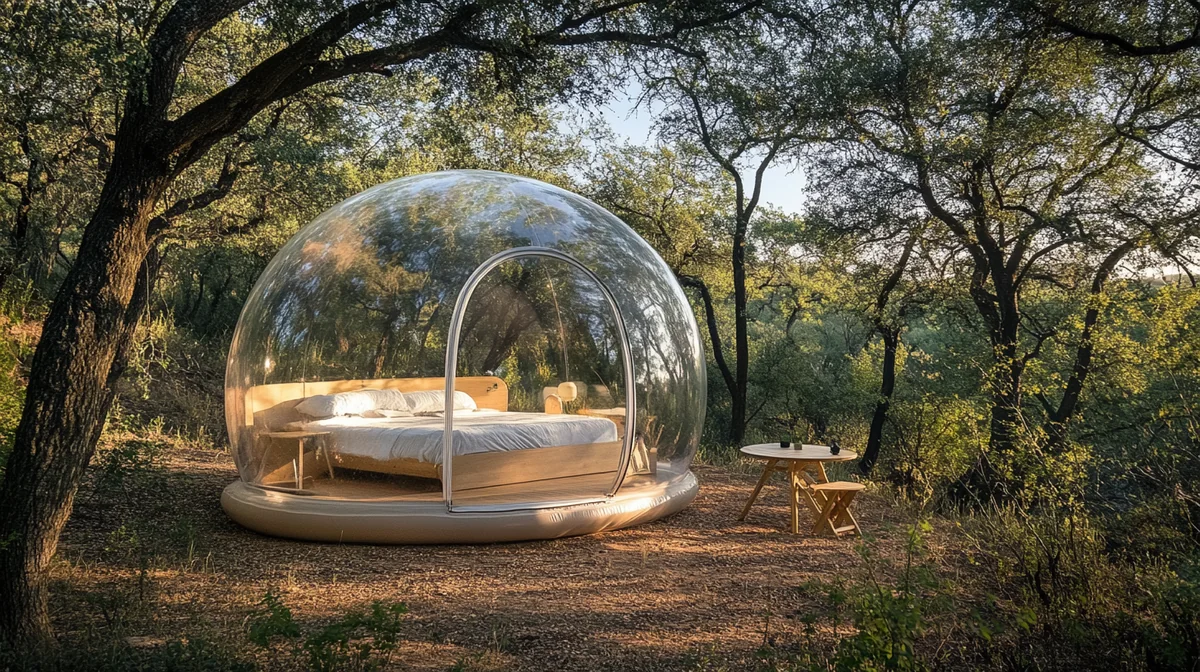
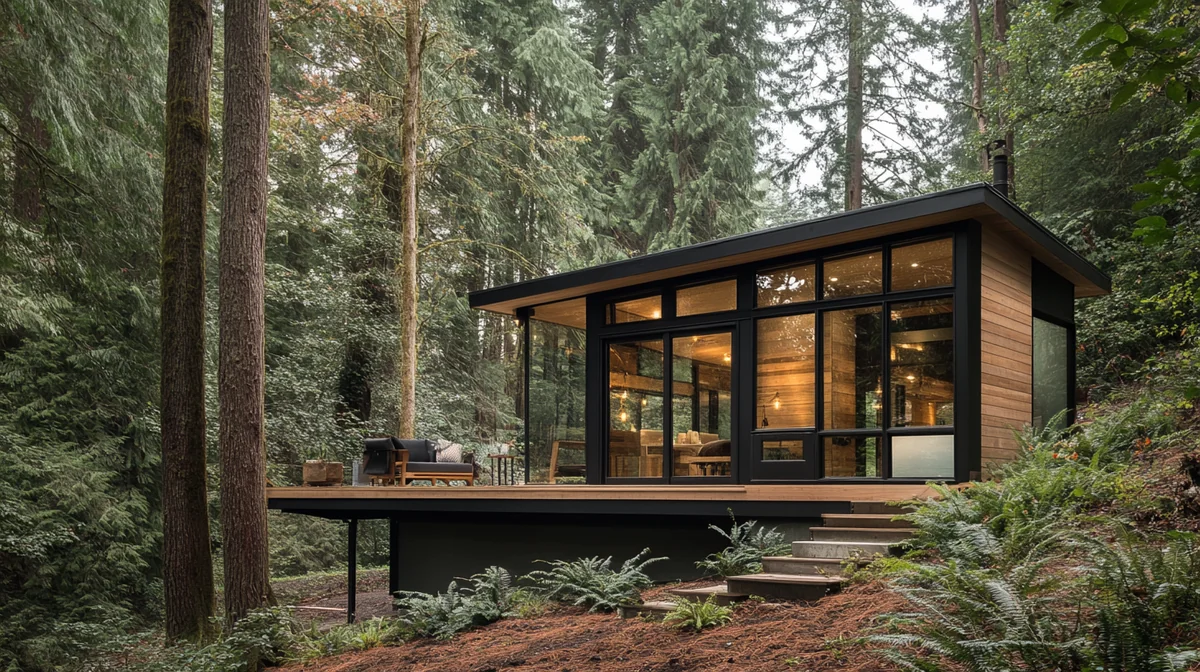
Container homes, tiny homes, A-frames, domes, and other unique-build STRs have exploded as a category since 2020. Design-focused travelers have discovered they'd rather stay in a visually distinctive 400 sq ft container home than a standard 1,200 sq ft rental. The category rewards specific marketing and design decisions that standard STR operators overlook.
Cavmir works with unique-build property operators across the Southwest US, Australia, Portugal, and Mexico. The category's marketing advantage is inherent photogenic appeal — but realizing that advantage requires treating the property as a design object and marketing it accordingly. Done right, unique builds can command higher rates per square foot than any other accommodation category.
How Container Home Marketing Is Different
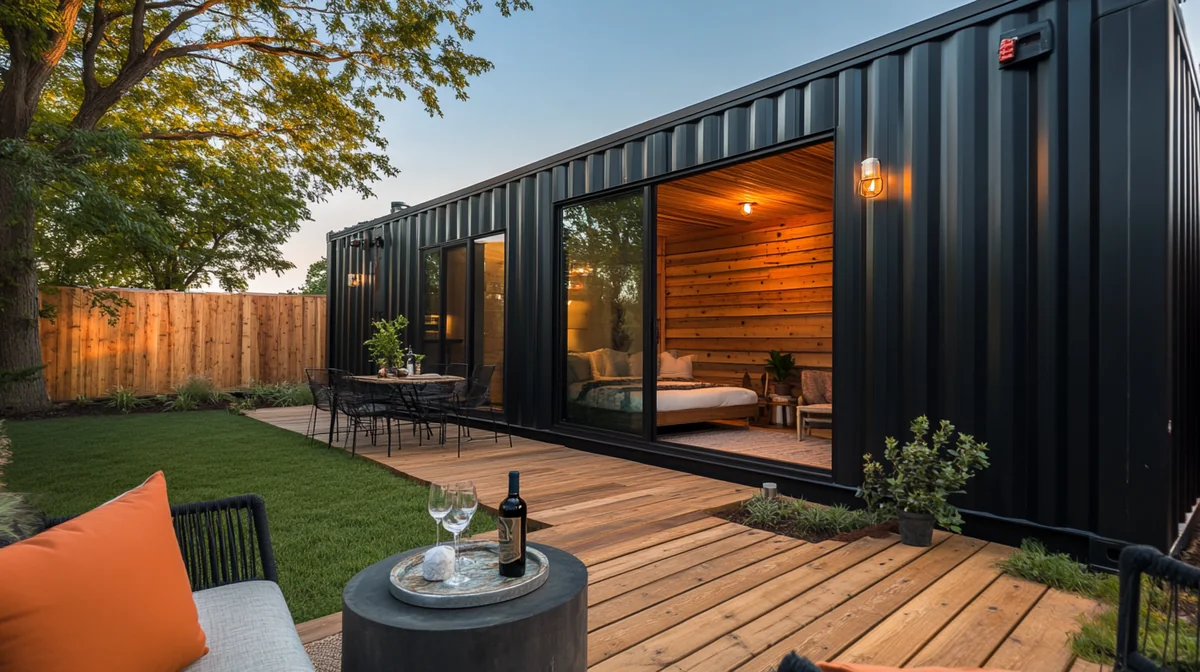
Container and unique-build properties have a massive marketing advantage: they photograph unlike anything else. A black-clad shipping container perched on a desert slope, an A-frame cabin in snow, a tiny home tucked in a forest — these images stop scroll in ways conventional property photos can't. The marketing opportunity is maximizing this inherent visual distinction.
The most effective container home marketing in 2026 leans into architectural and design-focused positioning rather than 'unique Airbnb' positioning. Marketing the property as a work of architecture (the designer, the materials, the spatial decisions) attracts design-conscious guests who pay premium rates. Marketing it as 'cool weird Airbnb' attracts novelty-seekers who under-value the experience and leave mediocre reviews.
Social media is central to this category. Instagram Reels and TikTok showing the property — especially interior shots highlighting space-efficiency and design details — drive direct bookings at much higher rates than general travel content. A single well-made Reel can produce 30-100 direct inquiries. Many successful unique-build properties in 2026 have larger social followings than traditional rental properties 5x their size.
Best Marketing ROI for Container Homes in 2026
The highest-ROI investment is professional interior and architectural photography — $1,500-$3,500 for a comprehensive shoot that captures the property's design details (light, materials, spatial moments, views from inside). Generic wide-angle STR photography badly underserves this category. Architectural photographers who understand how to photograph small spaces return 5-10x on investment within the first year.
After photography, Instagram Reels and TikTok content cadence drives the highest sustained booking rate. 3-5 Reels per week showing the property in different moments — morning light, sunset, design details, weather, surroundings — build an audience that converts to direct bookings. Container home Instagram accounts with 10,000+ engaged followers are genuine booking machines in 2026.
Press coverage in design publications (Dwell, Dezeen, Architectural Digest, Wallpaper*) drives outsized returns for architecturally-distinctive properties. A single inclusion in a 'best tiny homes' or 'container home' roundup generates months of bookings. Target these publications specifically with high-quality media kits.
Who Books Container Homes in 2026
Unique-build properties attract a specific guest base that justifies premium positioning.
Design-conscious couples and solo travelers (28-48 age range) represent the core segment. They book for the visual experience, the social-media content opportunity, and the novelty. They care deeply about photography quality of the listing, the actual design execution, and small details (finish materials, lighting, furniture choice). They'll pay significant premiums for well-designed properties and write glowing reviews that explicitly reference design quality.
Architects, designers, and creative professionals (all ages) book container homes as professional interest — experiencing architectural choices first-hand. They're exceptionally valuable as guests because they write high-quality detailed reviews, share on professional networks, and often become repeat customers across your properties.
Urban professionals on weekend 'reset' trips (32-48) book container homes for the minimalist escape from cluttered city life. They value the design quality as therapeutic. They stay 2-4 nights, typically solo or as couples, and pay premium rates for the specific aesthetic.
Container Home Seasonality
Container home seasonality depends heavily on location. Desert container homes (Joshua Tree, Marfa, Sedona) peak in mild winter and shoulder months (October-April) and struggle in extreme summer heat (May-September). Forest or mountain container homes (Pacific Northwest, Catskills) mirror cabin seasonality. Tropical container homes (Mexico, Bali) can run year-round with rainy-season shoulders.
The 2026 shoulder-season strategy for container homes combines specific experience positioning (yoga retreat, design writing residency, creative weekend) with social-content generation (encouraging guests to share content). Properties that market actively during shoulder periods typically maintain 40-60% occupancy when similar category non-marketed properties fall to 20-30%.
One specific opportunity in 2026: container homes work particularly well for work-from-anywhere stays of 7-21 nights. Remote workers willing to pay monthly rates for unique environments find container homes appealing. Marketing to this segment during shoulder months fills slow periods with higher-margin longer stays.
Container Home Economics
Container home economics are unusually favorable. Build costs are lower than conventional construction ($80,000-$180,000 all-in for a quality 320-400 sq ft container home including land prep, utilities, and interior build-out), while the nightly rates often match or exceed properties 2-3x the size. This delivers outsized ROI.
Operating margins in 2026 commonly hit 35-50% net for well-marketed container homes — higher than nearly any other STR category. Low utility costs, minimal cleaning time, and low maintenance combine with premium rates to generate exceptional per-square-foot economics.
The caveat: container homes have higher customer-expectation risk. Guests paying premium rates for a small space expect every detail to be thoughtful — finishes, lighting, spatial experience. Cutting corners on interior design or amenities in this category cripples reviews. Budget for quality on every touchable surface and element.
Top Global Markets for Unique & Container Homes
Container home and unique-build markets cluster around areas with design-conscious travelers and favorable zoning. Joshua Tree became the global reference market for this category; other markets share its combination of natural drama, proximity to major metros, and permissive regulation.
- Joshua Tree, California
- Marfa/West Texas
- Sedona, Arizona
- Byron Bay, Australia
- Comporta, Portugal
- Tulum, Mexico
- Catskills, NY
How Cavmir Works With Unique & Container Homes
Cavmir markets container homes as architectural objects. Our 12-step system for this category emphasizes: architectural/editorial photography, design-focused positioning, Instagram Reels and TikTok-first social strategy, design press coverage (Dwell, Dezeen, AD), direct-booking site that feels like a design portfolio, and targeted distribution on design-focused OTAs and marketplaces.
Container home clients typically see 25-45% rate increases within 6 months of proper marketing, with particularly strong direct-booking growth (often 40%+ of revenue within 12 months). The category's visual distinctiveness compounds quickly when marketed deliberately.
What It Takes to Hit 4.9+ Ratings on Unique & Container Homes
Container home ratings reward thoughtful design execution and punish cheap-out decisions. What drives 4.9+ ratings:
- Thoughtful space planning that feels spacious despite small footprint. Storage solutions, multi-use furniture, and careful spatial transitions make a 320 sq ft home feel generous. Poor space planning makes guests feel cramped and unhappy.
- Quality materials on every touchable surface. Good flooring, quality fixtures, substantial door hardware, real (not veneer) wood. Guests in small spaces notice every detail — cheap materials sink ratings immediately.
- Excellent lighting design with multiple control points. Small spaces suffer from bad lighting more than large ones. Dimmable ambient, task, and accent lighting creates atmosphere that matches the marketing photos. Bright overhead lighting only is a major design fail.
- Serious attention to acoustics. Small hard-surface spaces echo. Soft materials (rugs, textiles, upholstery), acoustic paneling where needed, and thoughtful HVAC noise control matter. Noisy climate control in a tiny space is a rating killer.
- Outdoor space that extends the interior experience. Deck, patio, firepit area, or outdoor shower effectively doubles the usable space and meets guest expectations for outdoor-focused living. Interior-only container homes without outdoor extensions underperform.
Frequently Asked Questions
What owners, operators, and prospective buyers ask us about this property type — answered with 2026 data.
Are container homes still trending in 2026?
Yes — demand has matured from novelty to established design category. Guests who wouldn't have considered container homes five years ago now seek them specifically. The category has moved beyond 'weird Airbnb' positioning into legitimate design hospitality. Well-designed container homes in good markets are among the fastest-to-book STR categories in 2026.
What does it cost to build a container home for Airbnb in 2026?
$80,000-$180,000 all-in for a quality 1-bedroom container home, including land prep, utilities (water, septic, electric), containers, interior build, insulation, HVAC, fixtures, and basic furnishings. Premium builds with dramatic exteriors, high-end interiors, and special features run $200,000-$350,000. The cheap version ($40,000-$60,000) rarely competes in the premium segment.
What permits do container homes require in 2026?
Varies dramatically by jurisdiction. Some counties (Joshua Tree area, parts of West Texas, rural Oregon) are container-friendly with straightforward permitting. Others classify containers as 'temporary structures' or outright prohibit them. Check specific county zoning, septic requirements, and residential code compliance before purchasing land. A pre-purchase consultation with a local planning officer is worth the $200-$400 fee.
Are container homes cold in winter or hot in summer?
Poorly-built ones, yes. Properly insulated container homes (spray foam, closed-cell insulation) perform comparably to conventional construction. Invest in quality insulation, high-performance windows, and appropriately-sized HVAC. The cheap version of container homes skimps on insulation and guests suffer in extreme weather. The premium version doesn't.
How small can a rentable container home be in 2026?
160 sq ft (single 20ft container) works for solo or couple stays in permissive jurisdictions. 320 sq ft (single 40ft container) is a more comfortable minimum. 480-640 sq ft (combined or stacked containers) handles couples or small families. Under 160 sq ft, guest experience suffers for multi-night stays. Match size to target guest segment.
What amenities are essential for a container home Airbnb?
Full bathroom (not just shower), real kitchen (even if compact — induction cooktop, small fridge, dishwasher if space permits), quality sleeping (memory foam mattress, good pillows, blackout curtains), climate control, fast WiFi, and outdoor extension (deck or patio). Skipping any of these kills rates and reviews. Small doesn't mean incomplete.
Can I stack or combine containers for larger properties?
Yes, and this is where container construction advantages compound. Two 40ft containers side-by-side creates 640 sq ft; stacking adds levels. Architectural firms specializing in container construction (Eco Life, IQ Container Homes, others) have proven designs. Combined/stacked containers can reach 1,200+ sq ft for family-sized rentals.
What's the best market for container home investment in 2026?
Joshua Tree remains the global reference market due to design-conscious demand and permissive regulation. Secondary markets with similar dynamics: West Texas, Byron Bay area Australia, Comporta Portugal, Catskills NY, Sedona AZ. Avoid markets with unclear or hostile zoning — regulatory risk can wipe out investment returns.
How do container homes handle dramatic temperature swings?
Quality insulation and HVAC handle it well. Mini-split heat pumps have become standard for container homes because they're efficient, compact, and handle both heating and cooling. Thermal mass additions (interior concrete or stone elements) help with overnight temperature regulation. Cheap builds with poor insulation suffer; quality builds perform comparably to conventional homes.
What's the biggest mistake new container home owners make in 2026?
Cutting corners on interior finishes and expecting the container novelty to compensate. Guests paying premium rates for container homes in 2026 expect premium interiors. Cheap IKEA furnishings, basic builder-grade fixtures, or minimal design attention produces disappointed reviews. The container is the frame; the interior experience is the product. Invest in interior quality.