Coffee at Heart or Coava
Heart for the design-roaster Nordic aesthetic; Coava for the woodworking-shop coffee-bar atmosphere. Both Portland in a cup.
Expert short-term rental marketing to grow your bookings and nightly rate in Portland, Oregon, USA.
* Market averages. Cavmir-managed properties typically exceed these figures by 25–45%. Data sourced from AirDNA, STR market reports, and Cavmir internal analytics.
Portland is the Pacific Northwest's most distinctive city — a place of extraordinary natural beauty, culinary innovation, and fierce independent spirit. The city's 'keep it weird' culture has produced one of the country's most interesting food scenes, a craft beer culture of global reputation, and neighborhoods of remarkable character from the Alberta Arts District to the Pearl District's converted warehouses. The Columbia River Gorge, Mount Hood, and the Oregon Coast are all within two hours.
Portland's STR market is shaped by the city's proximity to exceptional natural destinations — Mount Hood ski resorts, the Columbia River Gorge, and the Oregon Coast — which drives weekend escapes. The tech sector (Nike, Intel, Adidas North America) supports business travel; the summer festival season drives leisure demand.
Nearby Markets: Seattle | Columbia River Gorge
Cavmir positions Portland properties to capture the design-conscious traveler who appreciates authenticity, sustainability, and neighborhood character — exactly the profile that leaves the best reviews and books direct the second time.
Portland's hospitality identity is inseparable from the Pacific Northwest food, coffee, and independent-retail movement that emerged from the 1990s. Before that, Portland was a lumber and shipping city of modest national profile. The transformation — Stumptown Coffee (1999), Powell's Books' rise to world's-largest-independent-bookstore status, the Pearl District's conversion from industrial warehouses to design-gallery district — created the Portland that contemporary guests book. Food carts, craft beer, and neighborhood coffee culture are not amenities here; they are the destination. Short-term rental scaled through the 2010s alongside Portland's broader national-profile growth.
The 2015 Portland regulatory framework was one of the earliest US city-level STR ordinances. It established categorized licensing (Type A owner-present, Type B owner-absent whole-home) with different requirements. The subsequent evolution of these rules, combined with Oregon's measured state-level involvement, has made Portland's STR environment more regulated than most of the Pacific Northwest but substantially less than California's coastal markets.
Portland STR pricing concentrates in the Alberta Arts District, Pearl District, Hawthorne, Mississippi Avenue, and downtown/Pearl-adjacent neighborhoods. Alberta Street's design-district identity supports creative-traveler premium. Pearl District's converted-warehouse loft aesthetic appeals to design-conscious guests. Hawthorne and Division Street support family and neighborhood-exploration segments. Summer (July–September) is the peak — Oregon's legendary summer weather (after the famously rainy winter) is why people visit. Christmas/New Year sees holiday-travel premium. The missed revenue window is late April through early June, when spring weather is actually excellent but rates haven't yet climbed to summer levels.
Medium seasonality driven by weather. Peak: July through mid-September. Shoulder: May–June and late September through early October. Weak: mid-October through April (substantial winter rain). Craft-beer and food-tourism events punctuate the year — Portland Beer Week (June), Feast Portland (September), and ongoing craft-beverage calendar drive punctuated demand even in shoulder months.
Portland's STR regulation operates through the Bureau of Development Services. Type A (Accessory Short-Term Rental — owner present during guest stay) is permitted broadly. Type B (non-owner-occupied whole-home) requires a Conditional Use Permit — a public-notice, neighbor-hearing process that is genuinely difficult to complete and typically takes 6+ months. Most Portland whole-home STR inventory operates on grandfathered permits or in multi-family buildings specifically zoned for transient lodging.
Registration fees apply, TOT (Transient Occupancy Tax) is 6% city, Multnomah County adds 5.5%, Oregon state does not collect state sales tax but charges a state lodging tax of 1.5%. Total guest-collected lodging tax approximately 13%. HOA and condo restrictions add significant complexity in many Pearl District and downtown luxury buildings — several tower associations explicitly prohibit STR use. 2026 platform enforcement and data-sharing have strengthened.
Portland's tip: owner-present Type A hosting is the underutilized strategy. A primary residence hosting guests in a guest suite or ADU can generate significant revenue with minimal regulatory friction — Type A permits are straightforward. Owners pursuing Type B whole-home without existing permits face a substantially more difficult approval path than they expect.
Second — ADUs (Accessory Dwelling Units) are a real opportunity. Portland has aggressively supported ADU construction (zoning allows on most single-family lots), and a separate-entrance ADU on an owner-occupied property can generate strong Airbnb income under Type A permitting. Third — design-conscious photography wins in Portland. The guest demographic here specifically values aesthetic coherence — mid-century, Scandinavian, Japandi, or craftsman-restoration aesthetics, well-photographed, command premium. Fourth — emphasize food and coffee proximity. Portland is a food-tourism destination, and the best-performing listings include walkable-distance maps to specific restaurants, bakeries, coffee roasters, and breweries.
Portland's challenges: Type B permitting difficulty for new investor-owned whole-home STRs, downtown-specific safety and street-environment perception issues affecting guest reviews, HOA restrictions in luxury towers, and wildfire-smoke exposure during summer (August–September) that can affect guest experience. Oregon's economy and urban-policy debates have created political volatility that periodically affects downtown-area tourism. Property-tax burden is moderate but rising.
Pacific Northwest insurance moderate. Earthquake coverage recommended (Cascadia subduction zone exposure). Water-damage claims common. STR-specific policies widely available. Budget $1,800–$4,500 annually for typical urban STRs. Wildfire exposure increasing in surrounding hills; pure urban inventory less affected.
Oregon state income tax graduated 4.75%–9.9% (among highest in the US). Oregon has no state sales tax — unusual structural feature. Property tax moderate (Multnomah County effective ~0.85–1.05%). Combined lodging tax ~13% guest-collected.
Portland financing is mature. Conventional and DSCR products competitive. Type B permit status critical to valuation and should be verified before closing. Conforming loan limits cover most inventory; jumbo for Pearl District luxury. 20–25% down typical for investment.
Portland through 2027 and beyond is a slow-growth market. Type B permitting will likely remain difficult, which supports existing permitted-property values. Downtown recovery depends on continued urban-policy evolution. Design and food-culture identity remains durable; Portland's brand is distinct and defensible. Wildfire-smoke frequency will continue to affect late-summer experience. Moderate regulatory tightening expected; outright restrictions unlikely.
Portland is a market built on sincerity. The marketing mistake that ruins most Portland listings is performative quirkiness — the "Keep Portland Weird" framing that locals rolled their eyes at ten years ago. The actual Portland guest — design-forward, coffee-obsessed, architecture-literate — wants a property that signals understanding of the city as it is, not as the caricature. The specific identity of the neighborhood matters: Northwest's Victorian warmth, the Pearl's industrial-loft conversion, Alberta's art-walk energy, Division Street's new-restaurant density, Sellwood's quieter antique-and-garden pace.
What we love about marketing Portland is the shoulder-season strength. The rainy-season mythology scares off less-marketing-savvy owners; the properties that lean into the cozy-interior, warm-coffee, rain-on-the-skylight aesthetic capture guests that competitors can't. A listing shot for winter Portland — not fighting the weather, celebrating it — books at rates that surprise operators who expected seasonal collapse. Portland is a market where editorial restraint pays.
The picks Cavmir recommends for Portland welcome books — genuine, unperformative, and the level of specificity Portland's food-and-design-literate travellers expect.
Heart for the design-roaster Nordic aesthetic; Coava for the woodworking-shop coffee-bar atmosphere. Both Portland in a cup.
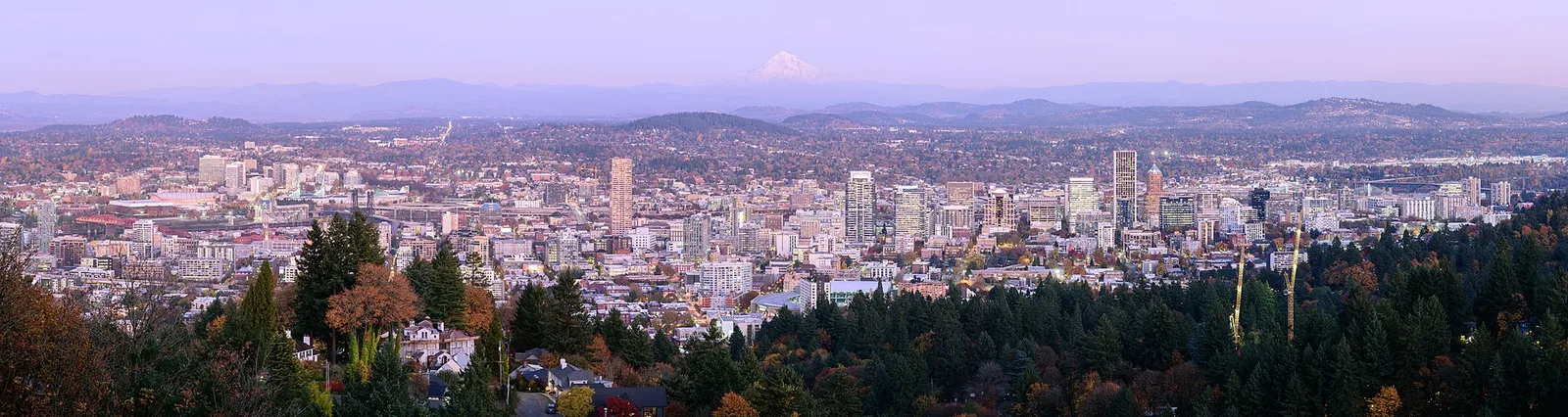
Free public overlook of the city and Mount Hood. West-facing. The photograph most Portland guests don't realise is available to them.
Monthly street fair in late-thursday-of-the-month. Galleries, food carts, live music. The real Portland street-level life.
Le Pigeon for the James-Beard-classic; Kann for Gregory Gourdet's Haitian project; Olympia for the butcher-meets-bistro aesthetic.
A full city block of bookstore. A host who leaves a Powell's bag and a recommended section in the welcome book demonstrates genuine Portland literacy.
The two weeks when cherry blossoms arrive before Portland's reputation catches up with the calendar. Pricing is soft, the city is photographing beautifully.
Multnomah Falls for the Gorge photograph; Cannon Beach for the Haystack Rock coastal classic. Each adds a legitimate half-day.
Portland's rain is constant and fine, not dramatic. A stocked umbrella and a printed work-friendly-café list turns the weather from guest objection to guest feature.
Representative Cavmir engagements in Portland. Client details removed; numbers composited from internal analytics and AirDNA ranges.
Beautifully-restored home whose marketing leaned on tired "Portland quirky" framing. Alberta's actual guest audience (creative-professional weekend traveller) was not converting.
Rebuilt the listing around the specific craftsman-restoration story and Alberta's art-walk culture. Photography emphasised the architectural detail, the garden, the neighborhood walkability. Copy rewrote for the design-professional weekend audience.
ADR climbed 34%. Occupancy moved from 62% to 81%. Repeat-guest share grew as the guest-property match improved.
Generic industrial-loft competing with dozens of similar units. Pure price competition. ADR stuck at platform benchmark.
Differentiated through the Pearl-specific design-district positioning. Photography included the Powell's walkability, the gallery-hop walk, the rooftop design of the building. Repositioned for the design-and-business traveller.
ADR up 26%. Occupancy climbed 15 points. Business-leisure bookings (arriving Wednesday, staying through Sunday) grew to a substantial revenue segment.
Home in a neighborhood with excellent restaurants and weak marketing. Guest profile defaulted to budget travellers rather than the food-tourism audience the neighborhood deserved.
Repositioned for the Portland food-tourism audience. Welcome-book rebuilt as a restaurant-walking-tour of SE Division and Clinton. Photography emphasised the walk-to-dinner experience.
ADR climbed 31%. Stay length grew from 2.4 to 3.8 nights average, materially improving cleaning economics.
Talk to Cavmir today. We'll show you exactly what your Portland property is leaving on the table — and how fast we can change that.
Book a Free Strategy Call