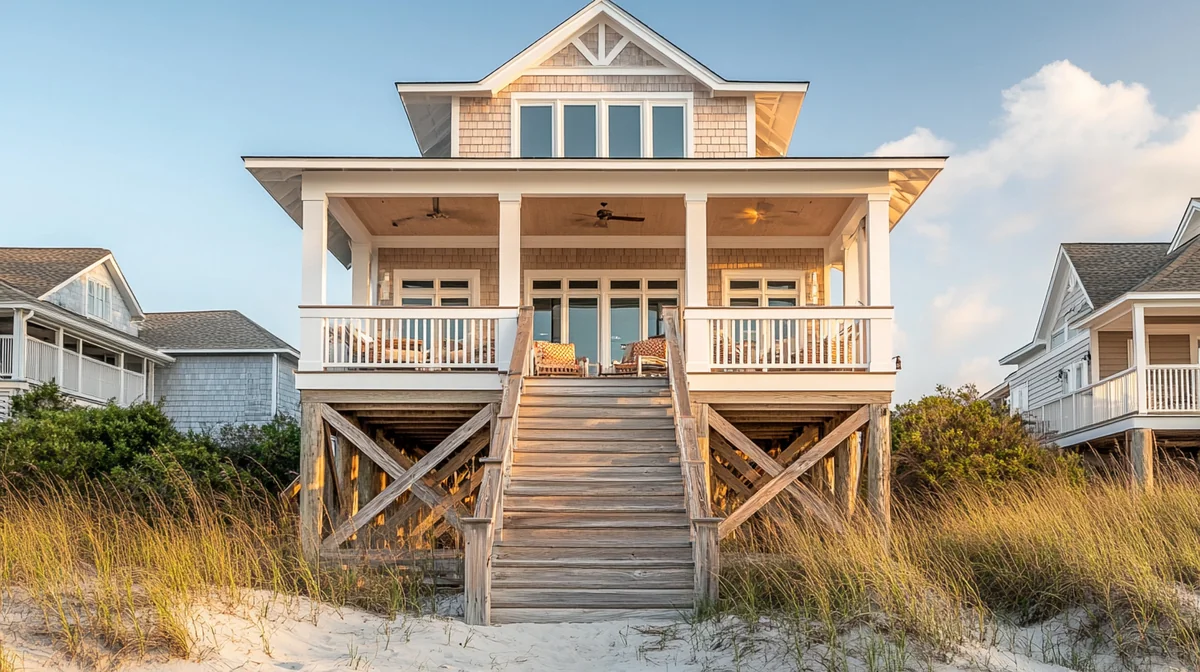


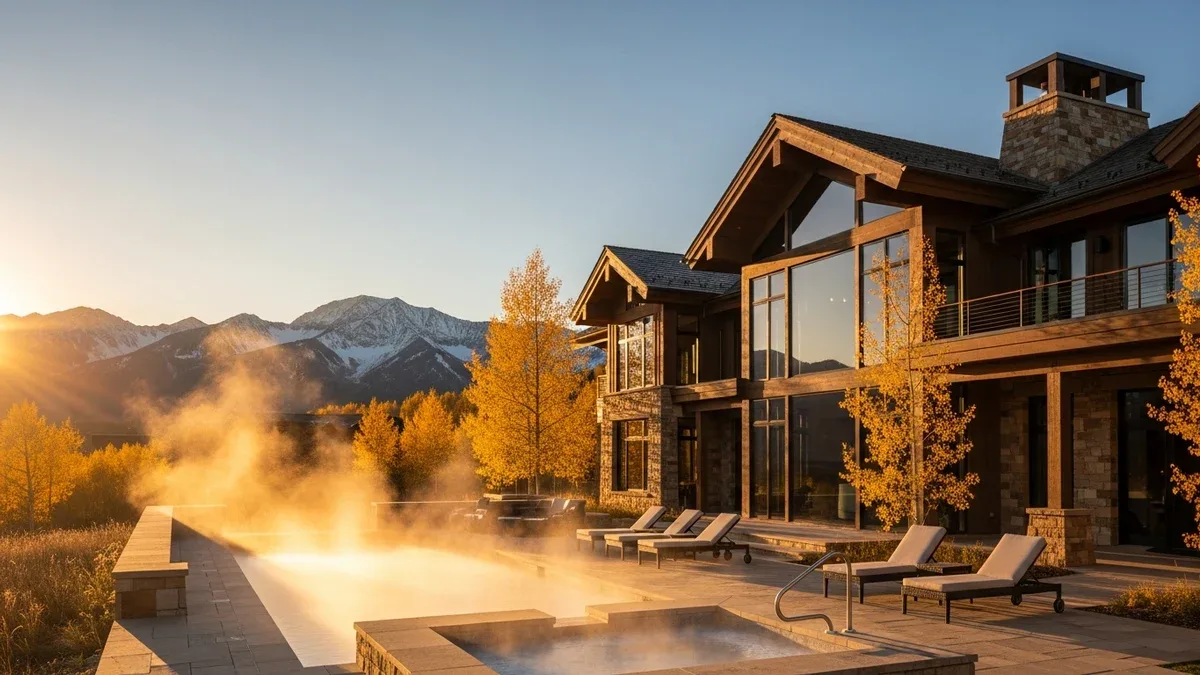
This guide is for investors and owners comparing U.S. markets for a luxury short-term rental: a large, well-finished home that earns most of its income from families, groups and holiday weeks. It covers 12 established luxury markets, from Aspen and Jackson to Malibu, Maui, Palm Beach and Scottsdale, with the rules that apply in each as of October 2026.
You'll be able to score any market against 12 weighted checks, see how many booked nights a purchase needs to break even, and send the right questions to the city, the HOA and the seller before you make an offer.
- Pick a luxury market on fit, not on a ranking: the rules at the exact address, a lasting reason to visit, limited supply, a season long enough to carry the year, and costs you can carry.
- Rules decide first. Aspen caps its Classic permits in some residential zones, the Town of Jackson limits homes outside its lodging zones to 60 days of rentals a year, and Southampton Town bars rentals under 14 days.
- Some places are tightening. Maui ends vacation rentals in apartment-zoned districts by January 1, 2029 in West Maui and 2031 elsewhere, and unincorporated Napa County prohibits short-term rentals.
- Some states protect rentals. Florida bars new local bans and limits on how long or how often you rent, though rules adopted on or before June 1, 2011 survive. Arizona law says cities may not prohibit short-term rentals.
- Test a purchase at the median comparable home, not the best listing. The calculator below shows the booked nights you need to break even, and the scorecard rates any market out of 100.
How We Chose These Markets
Before you trust any list of the best Airbnb markets, check what it measured. A city average that mixes studios with six-bedroom estates tells a luxury buyer very little, and public data on the top tier of homes is thin. So this guide doesn't rank markets by profit. It compares them on what you can check before you buy: the rules at the address, the reason guests come, the competition, the seasons and the costs of owning.
We chose 12 established U.S. luxury travel markets that cover the types buyers weigh against each other: four mountain markets, three coast and island markets, two Florida markets, two desert markets in Arizona, and Napa Valley in wine country. For each one, we opened the government page or local news report that sets out the current short-term rental rules and took one sourced data point from it: a permit cap, a limit on nights, a deadline, a settlement or a visitor count. Where we couldn't confirm a rule from a source, the table says so and tells you who to ask.
Plenty of other markets deserve a look with the same tools, including Vail, Telluride, Big Sky, Nantucket, Martha's Vineyard, Kiawah Island and Naples. If return on investment is your first filter, the companion guide to the best-ROI luxury Airbnb markets for 2027 adds international options.
If you're buying below the luxury tier, the guide to U.S. Airbnb markets for value-add investors covers that search. The scorecard and calculator on this page work at any price point.
Read "best market" as "best fit for how you'll own the home." If you plan to use the house yourself for much of the year, a market that limits rental nights can still be the right buy, because you weren't going to rent those weeks anyway.
Luxury Markets at a Glance
Use this table as a first filter. The rule status is as of October 2026 and comes from the sources at the end of this guide. Rules change, so treat each row as the first question to ask the city or county, never the final answer.
| Market | Main seasons | Rule status, October 2026 | One sourced data point |
|---|---|---|---|
| Aspen, Colorado | Winter ski season and summer | City permit for stays under 30 days; Classic permits capped in some residential zones, with a waitlist | Owner-occupied permits are limited to 120 rental nights a year |
| Park City, Utah | Winter ski season and summer | Not confirmed for this guide: ask the city whether nightly rentals are allowed in the zone, and read the HOA rules | Sundance held its last Park City festival in January 2026 and moves to Boulder in 2027 |
| Jackson, Wyoming | Winter ski season and summer park season | Town of Jackson: 2024 limits don't apply inside the Lodging Overlay and Resort District; outside them, a permit and HOA approval | Homes outside those zones may rent up to three times and 60 days a year |
| Lake Tahoe, North Shore | Winter ski season and summer lake season | Placer County permit; total permits capped | Cap of 3,900 permits, with 3,411 in place as of June 1, 2024 |
| Napa Valley, California | Spring through the fall harvest | Prohibited in unincorporated Napa County; the City of Napa issues permits | A county enforcement case ended in a $500,000 settlement, reported in March 2024 |
| Malibu, California | Year-round | City permit program; a 2020 rule requiring an on-site host was denied by the California Coastal Commission | The Coastal Commission vote came on August 12, 2022 |
| The Hamptons, New York | Summer | Southampton Town: a permit for any rental and a 14-day minimum; East Hampton and the villages have their own codes | Southampton Town permits last two years and don't transfer to a new owner |
| Maui, Hawaii | Year-round | Bill 9 ends vacation rentals in apartment-zoned districts; hotels, timeshares and other permitted rentals are not affected | Deadlines of January 1, 2029 in West Maui and January 1, 2031 elsewhere |
| Palm Beach, Florida | Winter into spring | State law limits new local bans; check the town's older rental rules | Local rules adopted on or before June 1, 2011 are exempt from the state limit |
| 30A, Florida | Spring and summer | State law limits new local bans; check Walton County and community rules | Local governments keep their building and fire code inspection powers |
| Scottsdale, Arizona | Winter and spring | City license for stays under 30 days at $250 a year; Arizona law bars city bans | 3,024 licensed short-term rentals as of June 2025 |
| Sedona, Arizona | Spring and fall | Arizona law bars city bans; cities may require a permit, neighbor notice and insurance | Permit fees are capped at $250 or the actual cost, whichever is less |
Read the table in two passes. First, cross off every market where the rule status rules out the way you plan to use the home. Then compare the markets that are left on demand, supply, seasons and costs, using the scorecard further down.
How to Judge a Luxury Market
Five checks separate a luxury market that pays from one that only looks expensive. Run them in this order. A failed rules check ends the analysis, however good the rest looks.

Rules at the Address
Short-term rental rules come in layers: the state, the county, the city or town, and then the HOA or recorded covenants. Any layer can say no, so check the exact address, not the town name. In Napa Valley, a home inside the City of Napa can get a permit, while a home in the unincorporated county can't take short stays at all. The table below shows the main rule types you'll meet and what each one means for an offer.
| Rule type | Example in this guide | What it means for a buyer |
|---|---|---|
| Permit cap and waitlist | Aspen Classic permits in some zones; Placer County's 3,900-permit cap | Ask whether a permit is open now and whether you can hold one after closing |
| Limit on nights or rentals | Aspen owner-occupied permits, 120 nights; Jackson outside its lodging zones, 60 days | Your income has a ceiling, so model the capped nights only |
| Minimum stay | Southampton Town, 14 days | Fewer, longer bookings; price by the two weeks, month or season |
| Area ban | Unincorporated Napa County | No short stays at the address; buy it as a second home or walk away |
| Phase-out with a date | Maui apartment-zoned districts | Rental income with an end date; price the deadline into the offer |
| License with state protection | Scottsdale under Arizona law; Florida's limit on local bans | Lower ban risk; check supply, because entry is open to others too |
| Proposed rule that failed | Malibu's 2020 on-site host rule, denied in 2022 | Proposals can return; read council agendas before you offer |
Rules that set the ceiling
Placer County, Lake Tahoe's North Shore; 3,411 in place as of June 1, 2024.
Town of Jackson homes outside the Lodging Overlay and Resort District.
Town of Southampton; shorter stays are not allowed.
Sources: Avalara MyLodgeTax, Aug 2024; Buckrail, Dec 2023; Town of Southampton, Oct 2026
Demand That Lasts
Look for demand anchored to something that will still be there in 20 years: a ski mountain, a beach, a national park, vineyards. Events add peak weeks, but a market that leans on one event carries a risk you can't control. Park City shows it: the Sundance Film Festival held its last Park City edition in January 2026 and moves to Boulder, Colorado, in 2027.
Access matters too. If your guests fly in, count the drive from the nearest commercial airport and the direct routes from the cities they live in. Then ask whether the trip works for a long weekend as well as a full week.
Supply and Competition
Permit caps cut both ways. A cap limits new competition for homes that already hold permits, but a new buyer may have to wait, as with Aspen's waitlist for Classic permits in its capped zones. Where there's no cap, as in Scottsdale, count the licensed homes before you buy. For the state-by-state picture, see the Cavmir™ short-term rental permit data for 2026.
Then narrow the count to homes like yours. Pull the listings with the same bedroom count, the same level of finish and the same location type (slopeside, oceanfront, in town), and note how many are new in the past year. Those are the homes a guest compares you with.
Seasons and the Peak-Week Test
In a seasonal market, a few peak weeks can carry much of the year. So test them on their own. Add up the peak weeks at the rate the median comparable home gets, not the best one. If those weeks cover your fixed costs and loan payments, the rest of the year is upside. If they don't, you're betting on the shoulder months.
Rules shape the calendar too. In the Town of Southampton, rentals must run at least 14 days, so you sell two-week, monthly and seasonal stays. Under a night limit, like the 120 nights on an Aspen owner-occupied permit, your best move is to fill the allowed nights with the highest-priced weeks.
Buyer Costs
The purchase price is the start. Add permit and license fees: in Aspen, $394 for the permit plus a $150 yearly business license; in Scottsdale, $250 a year. Add lodging taxes and the time to file them, since Aspen wants sales, lodging and short-term rental excise tax returns every month. Add insurance for rental use, HOA dues and upkeep. And add the local team the rules require; the Lake Tahoe section below shows one county's standard.
Get a written insurance quote before you make an offer, especially where wildfire, wind or flood apply. Then put every one of these costs into the break-even calculator further down.
Score Any Market
Fill this in once for each market on your shortlist, with one real address in mind. The heaviest lines are the rules, the permit and the median test, because a "No" on any of them can sink the purchase whatever else is true. Your answers stay on this device.
Luxury Market Scorecard
Answer each line for one market and one address you have in mind. Nothing leaves your device.
Compare totals across markets, but treat a "No" on either of the first two lines as a stop sign whatever the score. Then score the market again after the city and the HOA reply in writing, because their answers can move several lines at once.
Mountain Markets
Ski towns offer two seasons and some of the most detailed rules in this guide. Here is what each one asks of a buyer.
Aspen
Aspen guests book large homes near the lifts and downtown for ski weeks and the holidays, and summer brings a second season. Any rental of fewer than 30 days needs a city short-term rental permit, and there are three kinds, according to the City of Aspen. Lodging Exempt permits are for managers of lodges and condo-hotels. Owner-Occupied permits are for owners who live in the home as their primary residence, and they're limited to 120 rental nights a year. Classic permits have no night limit, but they're capped by zone in several residential districts, with a waitlist: 81 permits in the R-6 zone, 190 in R/MF and 47 in R-15, among others. Commercial and lodge zones such as C-1, CC and L have no cap.
Permits expire at the end of each calendar year. Miss a renewal and the permit ends; in a capped zone you go back to the waitlist. A permit with a full year of zero tax filings counts as abandoned. Before you offer on a home in a capped zone, ask the city in writing whether you'll be able to hold a Classic permit after closing, and price the home as a second home if the answer is no.
Park City
Park City pairs a big ski resort with a summer season, and for 40 years Utah hosted the Sundance Film Festival, centered on Park City. That has changed. The festival held one last edition in Park City in January 2026 and moves to Boulder, Colorado, in 2027, the Associated Press reported. The 2024 festival drew 72,840 in-person attendees, 24,200 of them from out of state, and out-of-state visitors spent an estimated $106.4 million in Utah, according to the festival's figures.
For a buyer, the open question is what late January earns without the festival. Model that week at a normal ski-season rate. We couldn't confirm Park City's current nightly rental rules for this guide, so ask Park City Municipal to confirm in writing that nightly rentals are allowed in the address's zone, and read the HOA documents before you offer.
Jackson
Jackson pairs skiing with summer trips to Grand Teton and Yellowstone national parks, which gives it two seasons. The Town of Jackson set new rules that took effect January 1, 2024, Buckrail reported. Inside the Lodging Overlay and Resort District, the new limits don't apply. Outside them, homes in residential zones may rent for less than 30 days up to three times and 60 days a year, with an annual basic use permit, an annual business license, HOA approval and a yearly notice to neighbors. Break the rules and you lose the right to rent short-term for five years.
The practical split is easy to state. If rental income is central to the purchase, buy inside the Lodging Overlay or Resort District. Outside them, plan the home as a second home that rents a few weeks a year. Teton County, outside the town limits, has its own rules, so first confirm which government covers the address, and check that the 2024 town rules are still the ones in force.
Lake Tahoe
Lake Tahoe has a winter ski season and a summer lake season, and homes near the water or the lifts can book in both. The lake sits in two states and several counties, each with its own rules. Placer County, which includes much of the North Shore, caps short-term rental permits at 3,900, and 3,411 were in place as of June 1, 2024, according to Avalara MyLodgeTax. Rules that took effect August 22, 2024 require a local contact who answers the phone 24 hours a day and lives within 35 driving miles, defensible space and fire-safety inspections every three years, and no guest parking on roadways. Fines run up to $5,000 for operating without a permit. Hotels, motels, condo-hotels and timeshares sit outside the cap.
Before you buy, ask the county how many permits are active against the cap today, how new permits are issued once it's reached, and whether you can hold a permit for the home after closing.
A listing that says "Lake Tahoe" can sit in California or Nevada and in one of several counties. Get the parcel's county and city from the title report before you read any rules.
Coast and Island Markets
Beach and island markets sell the water and the address. Their rules run from a 14-day minimum in Southampton to a dated phase-out on Maui.
Malibu
Malibu sells oceanfront and ocean-view homes to guests who notice design, and demand runs through the year. The rules are still unsettled. The City Council adopted Ordinance No. 472 on November 23, 2020, requiring an on-site host during short-term rentals, but it couldn't take effect without approval from the California Coastal Commission. On August 12, 2022, the Commission voted to deny it, finding that the host rule would reduce the number of short-term rentals and that Malibu lacked enough other lodging to make up the loss, according to the City of Malibu. The city's page points to a separate permit program in effect for rentals, and in January 2023 the council formed an ad hoc committee to work with staff on a recommendation.
So check two things before you offer: the permit requirements for the address today, and the council's latest agenda items on short-term rentals. Get the insurance quote early as well, because coastal and wildfire exposure can change what a home costs to carry.
The Hamptons
The Hamptons is a summer market, and in Southampton the rules set the length of stay for you. In the Town of Southampton, the minimum rental is 14 days; shorter stays count as transient rentals and aren't allowed. Any home rented for any period needs a rental permit, permits last two years, and they don't transfer to a new owner, according to the Town of Southampton. A New York State certified code enforcement officer does the safety inspection, or you can hire an architect or engineer to do it.
East Hampton and the incorporated villages write their own codes, so start by confirming which government covers the address. Then plan the calendar in two-week, monthly and seasonal blocks, and budget for a new permit after closing.
Maui
Maui books through the year, and its rules are changing on a fixed timetable. The Maui County Council passed Bill 9 by a 5-3 vote on December 15, 2025, and Mayor Richard Bissen signed it the same day, Maui Now reported. It ends transient vacation rental use in apartment-zoned districts, where grandfathered units on the Minatoya List operate today, by January 1, 2029 in West Maui and January 1, 2031 in the rest of the county. The administration says more than 6,000 units will return to long-term housing. The bill doesn't affect hotels, more than 2,400 timeshare units and bed-and-breakfasts, or about 6,500 transient vacation rental parcels.
If you're looking at a condo in an apartment-zoned building, treat its rental income as ending on the deadline and price your offer that way. For any other home, confirm the zoning and permit status with Maui County before you buy.
On the coast, two homes on the same road can fall under different towns, villages or zoning districts. Ask for the governing jurisdiction and zoning district in writing, then read that code.
Florida Luxury Markets and State Law
Florida and Arizona are the two states in this guide with laws that bar local bans on short-term rentals. Under section 509.032 of the 2025 Florida Statutes, a local law may not prohibit vacation rentals or regulate how long or how often they're rented. The limit doesn't reach local rules adopted on or before June 1, 2011, and cities and counties keep their power to inspect for building and fire code compliance.
That leaves three things to check for any Florida address. First, whether the town or county had a rental rule on the books by June 1, 2011, because that rule still applies. Second, the HOA or condo association rules, since the statute speaks to local governments and says nothing about private associations. Third, the registration, tax and inspection steps the county requires. For the statewide picture, see the Cavmir Florida short-term rental permit data.
Palm Beach
Palm Beach is a winter market, with demand from the holidays into spring and a quiet summer. Before you buy, ask the Town of Palm Beach for every rental rule on its books and the date each one was adopted. A rule from June 1, 2011 or earlier survives the state limit, so the adoption date matters as much as the rule itself.
Walton County and 30A
The beach towns along Scenic Highway 30A in Walton County draw families and groups in spring and summer. Many homes there sit inside planned communities with their own rental rules, so read the community documents alongside the county's registration and tax requirements.
Naples and the Gulf Coast
Naples draws winter visitors to the Gulf Coast, and the same state rules apply. On any Florida coast, get the wind and flood insurance quote before you make an offer and put it in your break-even numbers, since it can decide whether a home works.
Ask the town clerk for the adoption date of every rental rule that touches the address. A date on or before June 1, 2011 means the state limit doesn't reach that rule.
Desert and Wine Country Markets
Arizona's state law makes the rules in Scottsdale and Sedona easy to predict. Napa Valley sits at the other end, with a ban across the unincorporated county.
Scottsdale
Scottsdale is a winter and spring market built on golf, resorts and warm weather. Every property offered for fewer than 30 days must be licensed by the city, at $250 a year per property, on top of county and state permits, and the city had 3,024 licensed short-term rentals as of June 2025, according to the City of Scottsdale.
Arizona law frames what the city can do. Under A.R.S. 9-500.39, a city or town may not prohibit vacation or short-term rentals. It may require a permit with a fee no higher than $250 or the actual cost, an emergency contact, notice to neighbors before the first rental, the permit number in every ad, and liability insurance of at least $500,000 or platform coverage that matches it. Three verified violations in 12 months can bring a permit suspension of up to 12 months, and civil penalties climb to $3,500 or three nights' rent, whichever is greater, from the third violation.
Sedona
Sedona sells red-rock trails and views, with busy spring and fall seasons. The same state law applies: the city can't ban short-term rentals, but it can require a permit, neighbor notice and insurance within the limits above. With entry open to anyone who meets them, your edge comes from the home itself, so test your numbers against comparable homes with the same views and finish.
Napa Valley
Napa Valley sells wine, food and a slower pace, with demand building toward the fall harvest. The rules depend on where the home sits. Short-term rentals are prohibited in unincorporated Napa County, while the City of Napa does issue permits, KRCB reported in March 2024. The county enforces the ban: that report covered a case that ended in a $500,000 settlement for unpaid occupancy taxes, penalties, enforcement costs and outside counsel fees. A 2019 grand jury report found about 450 homes used as short-term rentals despite the prohibition.
So an estate among the vines in the unincorporated county can't take nightly guests; buy it as a second home unless the county confirms another use in writing. If short stays matter to your plan, focus on addresses inside the City of Napa, and confirm the permit with the city before you write an offer.
In wine country, a residential zone doesn't mean a rentable home. Confirm which government covers the parcel before you look at anything else.
Buyer Due Diligence Before You Offer
Once a market passes the scorecard, the work moves to one address. These checks take about a week, and they cost little next to buying a home you can't rent the way you planned.
What to Check and Where
| Check | Where to find it | Red flag |
|---|---|---|
| Zoning and permit | City or county planning office, in writing | A verbal yes with no code section behind it |
| Permit after a sale | Permit office and the permit conditions | The permit ends at closing in a capped zone |
| Night and stay limits | Local code, permit conditions, HOA rules | Fewer allowed nights than your break-even point |
| Pending changes | Council and planning agendas, local news | A moratorium, phase-out bill or ballot measure |
| Booking history | Seller's lodging tax filings and payout reports | Revenue claims with no filings behind them |
| Comparable homes | Listings with the same bedrooms, finish and area | A pro forma built on the top listing |
| Insurance | A written quote from a local broker | Rental-use exclusions, or no carrier willing to quote |
| Taxes and filings | City, county and state tax pages | Monthly returns nobody on your team owns |
Run the Break-Even Numbers
The calculator below answers the question that matters most: how many booked nights does this home need to cover its fixed costs and loan payments? Use the median comparable home's nightly rate, not the best listing in the market.
Break-Even Nights for a Luxury Rental
Change the example numbers to match the home you're weighing. Nothing leaves your device.
Example inputs only, not market data. The financing options use standard 30-year loan math; use your own loan quote for a real offer.
Example: a made-up $2,500,000 home bought with 30% down on a 30-year loan at 6.5% carries about $132,725 a year in loan payments. Add $90,000 of yearly fixed costs, and the home has to clear $222,725 before it earns a dollar. At a $1,500 average nightly rate, with 30% of revenue going to management, platform fees and cleaning, each booked night keeps $1,050. Divide $222,725 by $1,050 and you need 213 booked nights to break even. At 140 booked nights, the example brings in $210,000, a gross yield of 8.4%, and runs $75,725 short for the year.
The example isn't a forecast for any market. It shows how fast debt and fixed costs raise the bar where prices are high. Switch the financing to all cash and the break-even point drops to 86 nights. If the median comparable home books fewer nights than your break-even point, the purchase depends on personal use or appreciation, so price it that way.
Ask in Writing
A phone answer from a planning counter is a start, but it won't protect you later. Send these emails, keep the replies, and give them to your attorney.
Email to the city or county planning office
Subject: Short-term rental status for [Property address]

Hello,

I'm considering buying [Property address], parcel number [Parcel number], and I'd like to confirm how short-term rentals are treated at this address before I make an offer.

1. Are rentals of fewer than 30 nights allowed in this zone? Which permit or license do they need?
2. Is there a cap, waitlist or lottery for that permit in this zone? How many permits are active today?
3. Does the current owner hold a permit, and can a new owner keep it or apply for one after closing?
4. Are there limits on nights per year, rentals per year, minimum stay, occupancy or parking?
5. Are any changes to the short-term rental rules scheduled or under discussion?

A reply by email is ideal so I can keep it with my due diligence file. Thank you for your help.

[Your name]
[Phone number]
Request to the listing agent before an offer
Hi [Agent name],

Before we write an offer on [Property address], could the seller share the following?

1. The short-term rental permit or license number, its expiry date, and any violations or complaints on record.
2. Lodging tax filings or platform payout reports for the last 24 months, showing booked nights and nightly rates.
3. The booking calendar for the next 12 months, and how the seller plans to handle existing reservations at closing.
4. The HOA or community rules on rentals, plus any changes the board has proposed.
5. The insurance carrier, the current premium and any claims in the last five years.
6. A list of the furniture and equipment included in the sale.

Thanks,
[Your name]
Question for the HOA or community association
Hello,

I'm considering buying [Property address] in [Community name]. Could you confirm the association's current rules on rentals?

1. Are rentals of fewer than 30 nights allowed? Is there a minimum stay or a limit on rentals per year?
2. Are there registration fees, guest rules, parking limits or occupancy limits for renters?
3. Has the board proposed any change to the rental rules, and when is the next vote?

If possible, please send the current rules and the minutes of the last two board meetings.

Thank you,
[Your name]
Insurance quote request for a rental home
Hello [Broker name],

I'm buying [Property address], a [Number of bedrooms]-bedroom home. I plan to rent it to guests for stays of [Typical stay length] for about [Number] nights a year and use it myself the rest of the time.

Please quote coverage for short-term rental use, including liability of at least [Liability limit], loss of rental income, and [Wildfire, wind or flood] coverage where it applies. Please also list any exclusions for rentals, occupancy limits or required safety equipment.

Thank you,
[Your name]
[Phone number]
Rules, taxes and insurance differ by state and by how you hold the property. Check the answers with a local real estate attorney and your accountant before you sign, and with your insurance broker before you close.
What to Do This Week
You can move from a long list to one serious candidate in seven days.
- Day 1Pick two or three markets from the table and fill in the scorecard for each. Drop any market that gets a No on the rules or permit lines.
- Day 2Choose one candidate address in each remaining market and send the planning-office email.
- Day 3Ask each listing agent for the permit number, tax filings, booking calendar and HOA rules.
- Day 4Find the median comparable homes: same bedrooms, same finish, same location type. Note their nightly rates and booked nights.
- Day 5Run the calculator at the median, then again with 20% fewer booked nights. If the home only works at the top listing's numbers, renegotiate or walk away.
- Day 6Send the insurance request and add every permit fee, license and lodging tax to your budget.
- Day 7Book calls with a local real estate attorney and your accountant to review the written answers before you sign anything.
After You Buy
Once you own the home, the work shifts to getting it found by the guests who pay luxury rates: listing quality, a site of your own, search and AI answers, and press. Direct bookings come from people who find your own site, brand, social pages or Google listing, and each platform's rules still apply to guests who booked there. The guide to a direct booking strategy for 2027 covers how to build that channel.
Cavmir is a marketing agency for luxury vacation rentals and the managers who run them. If you're buying in one of these markets and want help with the website, search visibility and PR for the new home, see how Cavmir works with real estate investors.
Sources
Every figure in this guide comes from these sources, checked in October 2026.
- City of Aspen, "Short Term Rental Permit", accessed October 2026: aspen.gov
- Associated Press via News4JAX, "The Sundance Film Festival will move to Colorado in 2027 after spending 40 years in Utah", March 2025: news4jax.com
- Buckrail, "Town of Jackson announces new short-term rental rules", December 2023: buckrail.com
- Avalara MyLodgeTax, "Placer County, California, amends short-term rental rules", August 2024: avalara.com
- KRCB Northern California Public Media, "Unpermitted short-term rental saga ends in $500,000 settlement", March 2024: krcb.org
- City of Malibu, "STR Ordinances", updated January 2023: malibucity.org
- Town of Southampton, rental permit questions and answers, accessed October 2026: southamptontownny.gov
- Maui Now, "Maui Council passes Bill 9, 5-3, on second and final reading", December 2025: mauinow.com
- The Florida Senate, 2025 Florida Statutes, section 509.032: flsenate.gov
- Arizona State Legislature, A.R.S. 9-500.39, vacation rentals and short-term rentals: azleg.gov
- City of Scottsdale, "Scottsdale strengthens strategy to manage short-term rentals and protect neighborhoods", July 2025: scottsdaleaz.gov