Downtown, Rainey & 6th Street
The SXSW and F1 command center — walk to everything, price on the event calendar. Draws the group trip and the festival crowd. Individual-date pricing here is the difference between good and extraordinary.
North America · Airbnb Marketing
Expert short-term rental marketing to grow your bookings and nightly rate in Austin, Texas, USA.
Sixteen services, one team. Everything below is built in-house and scoped to your property and market. Most owners start with the 12-Step System.
Every engagement is quoted to your portfolio. These are the ready-made scopes owners pick most — the AI Efficiency Discount is already applied. A clear proposal within 48 hours.
The work is public. Selected engagements and what changed — and reviews from the owners and managers behind them.
* Market averages. Properties marketed by Cavmir typically exceed these figures by 25–45%. Data sourced from AirDNA, STR market reports, and Cavmir internal analytics.
Austin is the fastest-growing major city in the United States — and its STR market has exploded alongside it. The Live Music Capital of the World never slows down: South by Southwest, Austin City Limits Music Festival, the Formula 1 United States Grand Prix at Circuit of the Americas, and a year-round pipeline of tech conferences keep hotels and vacation rentals in high demand. South Congress, East Austin, and Rainey Street are the most desirable STR neighborhoods.
Austin's STR market is uniquely event-driven, with massive spikes during SXSW (March), ACL (October), and F1 (November). Properties that market effectively during these peak periods and maintain occupancy in between significantly outperform the market. Lake Travis and Hill Country properties attract a distinct leisure traveler seeking nature access.
Nearby Markets: San Antonio | Houston
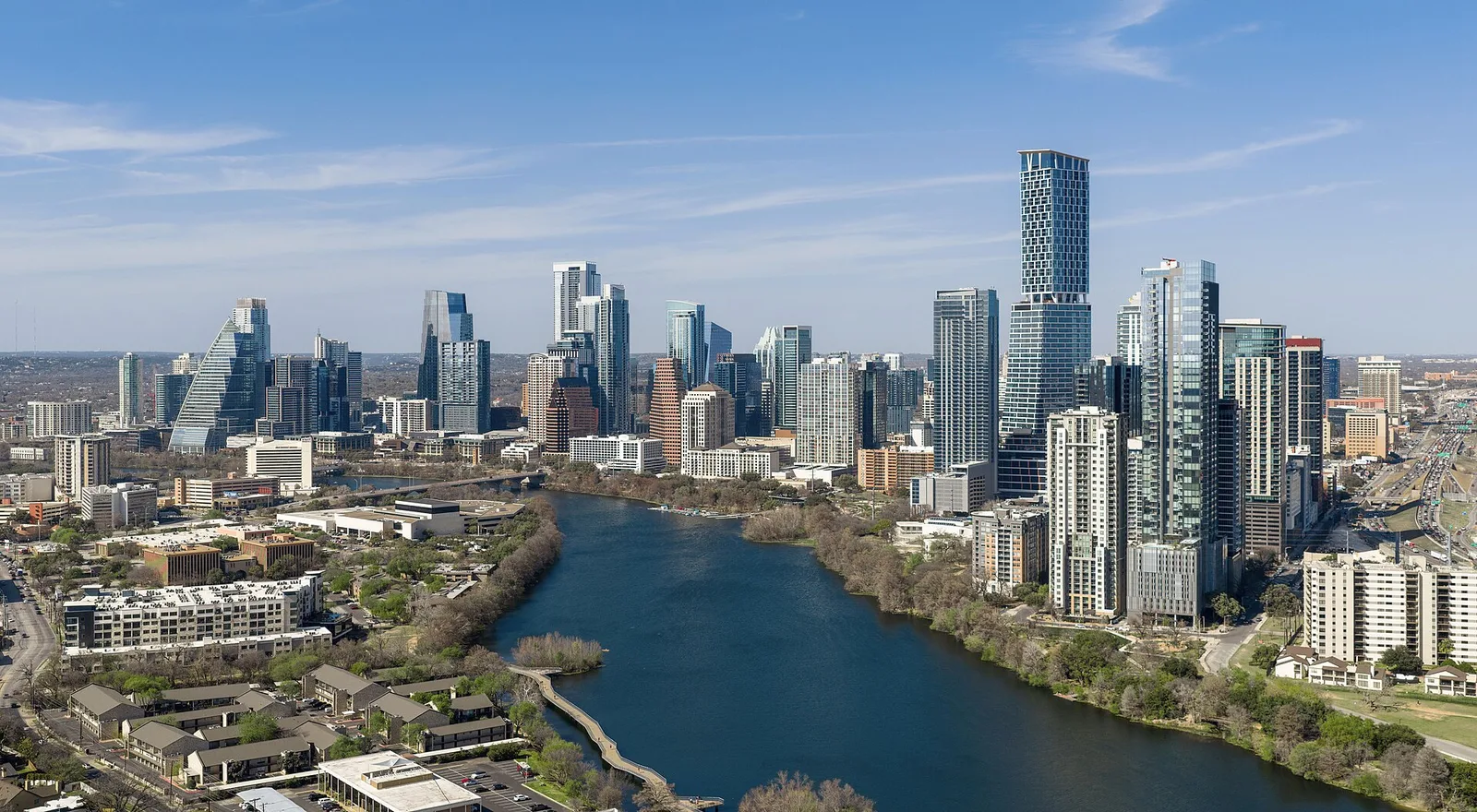
A few of the visual fingerprints we lean into when we shoot, brand and market a Austin property — courtesy of the open Wikimedia Commons archive.
Cavmir builds Austin properties that perform across every season — not just during the festivals. We create a brand identity that resonates with Austin's creative, entrepreneurial culture while ensuring your property is visible to the event travelers who book months in advance and pay premium rates.
Austin's visitor economy is genuinely young. The city was a quiet state capital and college town through most of the 20th century. The transformation began with SXSW's 1987 founding (originally just a music conference), accelerated with the tech-industry influx in the 1990s (Dell, IBM, later Apple, Google, and Meta), and reached something like its current shape when Formula 1 United States Grand Prix came to Circuit of the Americas in 2012. Short-term rental as an Austin business category is even younger — Airbnb entered Texas around 2011, and SXSW-driven rental inventory exploded through the 2010s.
The specific Austin story is event-driven lumpiness. SXSW (mid-March), ACL Music Festival (two October weekends), F1 US Grand Prix (late October or November), and a rotating pipeline of tech conferences create weeks where demand exceeds all available inventory — and weeks between where the market is much quieter. This pattern favors operators who can market aggressively into event weeks and hold patience during the gaps.
Austin pricing is neighborhood-specific. South Congress (SoCo), East Austin, Rainey Street, and Downtown command the highest rates. West Lake Hills and Lake Travis properties trade as luxury lake-vacation inventory. Mueller, Zilker, and Travis Heights serve the design-oriented professional traveler. Event weeks are rate super-peaks — SXSW sees 5–10x baseline rates for well-located properties, F1 weekend 4–6x, ACL weekends 3–4x. The biggest pricing error is rigid event-week pricing: Austin event rates move dramatically with lineup announcements, hotel availability, and date proximity.
Medium seasonality but intensely event-lumpy. Peak weeks are a handful of super-peaks (SXSW, ACL, F1); steady baseline demand in spring and fall from tech business travel and moderate weather. Summer heat (100°F+ July–August) softens leisure demand but barely affects corporate travel. Late November through mid-January can be weak outside major corporate events. Missed revenue window: the weeks immediately after SXSW — rates cliff-drop, but demand from SXSW-adjacent business travel remains high for 2 weeks.
Austin's STR framework underwent major change in 2025–2026. Under updated regulations, all STR owners must be licensed annually through the City (renewing every two years after initial), with new-application fees around $836. Austin classifies STRs into three types: Type 1 (owner-occupied), Type 2 (non-owner-occupied whole-home, tightly restricted to commercial and mixed-use zones with 1,000-foot spacing from other Type 2 properties), and Type 3 (multi-family with partial commercial use).
The significant 2026 development: platform enforcement rules took effect July 1, 2026, requiring Airbnb, Vrbo, and other platforms to display license status and remove unlicensed Austin listings on city request. This is a structural shift — unlicensed listings are now at real risk of delisting. Type 2 licenses are scarce and trade with property value; new Type 2 licenses are limited by the 1,000-foot spacing rule. Texas state Senate Bill 1120 (2023) preempted some local regulation but Austin's framework survived constitutional challenge in 2024.
Austin's strategic tip: calendar management for event weeks is the single largest revenue lever. Open event-week calendars 12+ months ahead, refuse non-event-week bookings that block event weeks, and tier pricing progressively as announcement dates approach (SXSW keynote announcements in January drive rate spikes for March). Use multi-night minimums (5+ nights for SXSW, 4+ for ACL and F1) to filter for trip-planning guests.
Second — corporate-retreat positioning is underused. Austin's mid-week tech-conference ecosystem creates 30–90 night demand. Furnished properties marketed to corporate relocation and project-stay segments can hold premium monthly rates. Third — verify your license status before July 1, 2026 platform delisting enforcement. Operating without a valid license in 2026 Austin is a listing-ending mistake, not just a fine. Fourth — summer heat changes guest expectations; pools, shaded outdoor space, and explicit AC-capacity claims materially affect summer conversion.
The Type 2 license spacing rule is Austin's structural challenge — determining Type 2 eligibility requires GIS-level mapping of neighboring Type 2 properties. Summer heat affects leisure demand. Austin's rapid growth has produced volatile housing costs, making investment math fluid. Water restrictions and pool-use regulations (lawn watering, pool filling) periodically affect amenity positioning during drought.
Texas insurance is generally affordable compared to California or Florida. Hail-storm risk is the dominant weather driver. Pool and short-term rental liability riders standard. Budget $2,000–$6,000 annually for typical Austin single-family homes. Flood insurance advisable near Shoal Creek and other flood-risk zones.
Texas has no state income tax — a significant structural advantage. Texas property tax is high (Travis County effective around 1.8–2.2%). Total lodging tax collected from guests runs 15% (6% state + 9% city). No state-level tourism-development tax.
Austin financing is competitive and widely available. DSCR loans work well given Austin's event-driven rental history data. Type 2 license eligibility affects valuation and should be verified before underwriting. 20–25% down typical for investment; primary-residence purchases with second-home treatment possible at 10%.
Austin spent a decade in a tug-of-war between a city that wanted to rein short-term rentals in and a state that kept overruling it, and in 2026 the city finally drew a hard line. The headline every Austin owner needs to know: as of July 1, 2026, the city began asking the platforms to remove unlicensed listings outright. Enforcement stopped being a letter in the mail and became a delisting. If your property isn't licensed, no amount of marketing matters, because the listing itself is now at risk of disappearing.
Austin sorts rentals into types. Type 1 is owner-occupied — your principal residence — and it's the workable one: available in virtually every residential zone, with an annual license around $543. Type 2 is the whole-home, non-owner-occupied rental, and this is the constrained asset: the city stopped issuing new Type 2 licenses in residential areas, so the only way to hold one is to buy a property that already carries a transferable license. Type 3 covers multifamily and commercial contexts. On top of the license, the 2026 rules set occupancy at two guests per bedroom plus two, capped at ten, and require a local contact who can be at the property within two hours of a call.
Austin's Hotel Occupancy Tax runs 11% — a 9% occupancy tax plus a 2% venue-project tax — and since April 2025 the booking platforms collect and remit it for you. Hovering over all of it is the Texas-versus-Austin dynamic: the legislature has repeatedly moved to limit how far cities can restrict rentals, so the rules here shift with each session in a way they don't in most markets. The practical takeaway for an owner is to treat compliance as a live subscription, not a one-time checkbox — confirm your license status and the current ordinance before every season, and ask your attorney where the state line currently sits.
The Type 2 freeze quietly reshaped Austin's investment map. Because the city no longer issues new whole-home, non-owner-occupied licenses in residential areas, the ones already in circulation became a scarce and transferable asset — and a property that carries a valid, transferable Type 2 can command a premium precisely because the license, not just the house, is what you're buying. If that's your play, the due diligence is everything: verify the license exists, verify it transfers cleanly, and verify it against the current ordinance before you sign, because a lapsed or non-transferable permit turns a whole-home investment into an owner-occupied one overnight. For buyers who'd rather not chase a frozen license, the durable path is Type 1 — live in the property as your principal residence and rent the balance — which stays broadly available across the city's residential zones and sidesteps the scarcity entirely. The mistake to avoid is assuming you can buy any Austin house and run it as a full-time whole-home rental; in most of the city, that door closed, and the marketing plan has to start from which door is actually open.

Austin is an event town, and its revenue curve looks less like a season than a skyline — a few enormous towers with ordinary ground between them. Miss the towers and you've priced a great property like an average one. The operators who win here run their whole year around a short list of dates that everyone in the city already knows are coming.
SXSW in March is the mountain — a two-week stack of tech, film and music that turns central Austin into the most expensive lodging in Texas and books out months ahead. Austin City Limits takes two October weekends and does it again on the Zilker side of town. The Formula 1 United States Grand Prix in November draws a genuinely international, high-spend crowd to Circuit of the Americas and lifts rates across the metro for a long weekend. And every fall Saturday, Texas Longhorns football — now in the SEC — fills the campus side of the city with visiting fans. Around the towers, the Moody Center concert calendar, spring rodeo and steady tech-corporate travel keep a workable baseline running.
Here's the counterintuitive part that catches out-of-town owners: Austin's summer is a leisure lull, not a peak. July and August run genuinely brutal — triple-digit heat for weeks — and pure-vacation demand softens even as the events keep marching. Owners who price those months like a beach town's high season end up staring at an empty calendar with an ambitious rate. The move is to convert summer to a different product entirely: the mid-length corporate and relocation stay, the Hill Country pool booking for groups escaping the city, and hard direct-booking outreach to lock occupancy before the fall event stack returns. Read the heat as a demand signal, not a marketing backdrop.
Set event pricing the day dates are announced, not the week before — SXSW, F1 and marquee games move on announcement and again in the last-minute scramble, and a static rate captures neither. Position for the corporate and relocation stay in the flatter stretches, because Austin's tech base rewards the 30-plus-night furnished booking that also keeps you clear of nightly-turnover friction. And treat the compliance story as part of the pitch: in a market where unlicensed listings are being pulled, "fully licensed, fully compliant" is now a genuine trust signal worth saying out loud.
"Austin" on a listing tells a guest almost nothing — a Rainey Street high-rise and a Lake Travis pool house are opposite products for opposite trips. Each district draws its own traveler and prices in its own band. Here is how Cavmir reads the map before writing a word, because in Austin the neighborhood is the audience.
The SXSW and F1 command center — walk to everything, price on the event calendar. Draws the group trip and the festival crowd. Individual-date pricing here is the difference between good and extraordinary.
The postcard Austin — boutiques, food trucks and the skyline view. Draws the design-aware couple and the repeat visitor. Sells on walkability and the it-neighborhood story, and holds rate year-round.
Murals, breweries and the city's creative edge. Younger, independent travelers who want the real Austin, not the tourist one. Editorial copy and authentic neighborhood detail outperform generic listings here.
Austin City Limits' backyard and the greenbelt lifestyle. Families and outdoor-first guests; a huge October window. Sells the springs, the park and the walk-to-the-festival advantage.
The second downtown — Apple, tech campuses and the relocation stay. The 30-plus-night furnished booking lives here, steady and rate-resilient. Sells convenience and the corporate-clean aesthetic.
Pool houses, bachelor and bachelorette weekends and multi-family group trips. Prices on the amenity — the view, the pool, the boat dock. Photography of the outdoor space does the selling.
Master-planned calm near the core — parks, trails and space. Draws the family visit and the longer, planned stay over the party weekend. Sells quiet, safety and proximity without the noise.
Longhorns football, graduation and parent weekends. A fall-Saturday rate machine and a steady visiting-academic base. Sells the campus walk and the game-day calendar most owners underprice.
Austin's 2026 shift changed the order of operations. Before you photograph a room or write a headline, confirm your license: Type 1 if the property is your principal residence, or a transferred Type 2 if you're buying whole-home inventory that already carries one. Register for the Hotel Occupancy Tax even though the platforms now remit it, line up a local contact who can reach the property within two hours, and check your occupancy math against the two-per-bedroom-plus-two cap. With the city now asking platforms to pull unlicensed listings, an unregistered property isn't a compliance risk anymore — it's a listing that can vanish.
Austin rewards operators who treat the event calendar as a pricing engine: SXSW, Formula 1 and the ACL weekends should each carry their own rate and minimum-stay rules, set the day the dates drop. Make compliance part of the pitch — in a market actively removing unlicensed listings, saying "fully licensed" out loud is a trust signal guests and co-hosts now look for. And lean into the tech base for the flat weeks: a furnished property positioned for the 30-plus-night relocation or project stay earns steadily and turns less, which matters more here than in a pure-leisure market.
The details that sink an Austin rating are climate and volatility. Summer runs brutally hot, so air conditioning isn't an amenity — it's the whole review, and a failed unit in August is a guaranteed one-star. The state-versus-city rulebook shifts with each legislative session, so what's compliant this year deserves a re-check next year. Downtown noise ordinances and some suburban deed restrictions catch owners off guard, and marquee-event weekends invite the party booking that damages both the house and the neighborhood relationship — screen for it and price it out with deposits and stay minimums.
Austin through 2027 and beyond will be shaped by Type 2 license scarcity (bullish for existing license holders), continued platform enforcement (bearish for unlicensed operators), and ongoing tech-sector-driven demand. Expect Type 2 license values to appreciate relative to non-licensed properties. Water and grid-resilience constraints may affect new development in outlying areas. The Permanent STR-friendly commercial-mixed-use zones should see sustained investment interest. F1 contract renewal (through at least 2026) keeps November premium weekend reliable.
Austin is the most-hyped STR market in America and the marketing failure most listings commit is believing the hype does the work for them. It doesn't. The city has matured past the point where "close to Sixth Street" or "heart of Austin" language pulls bookings. The guest now knows too much — they've read about Rainey versus South Congress, they've heard about East Austin's gentrification debates, they care whether the property is actually walkable to Barton Springs or requires a 25-minute drive across the river. Specificity wins in Austin, and generic loses.
We love marketing Austin because the guest profile is unusually specific and unusually willing to pay. Tech-industry travellers, SXSW and ACL festival waves, music tourism, food tourism, the bachelor-and-bachelorette migration, the increasing Californian inflow. Each of those audiences needs different photography, different listing copy, and different pricing logic. Austin rewards marketers who audit their property's specific strengths and match them to a specific audience rather than pretending to serve all audiences at once.
The picks Cavmir recommends for Austin welcome books — the level of specificity the Austin guest now expects.
Veracruz for the migas taco. Joe's in East Austin for the old-school Tex-Mex breakfast that locals visit in pickup trucks.
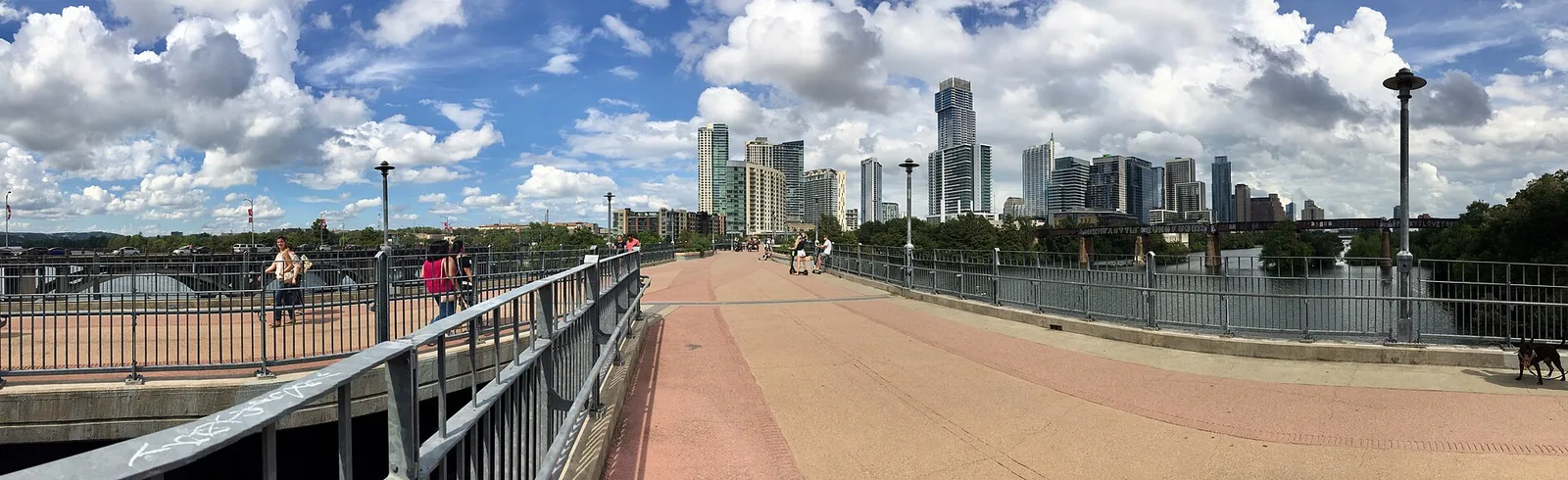
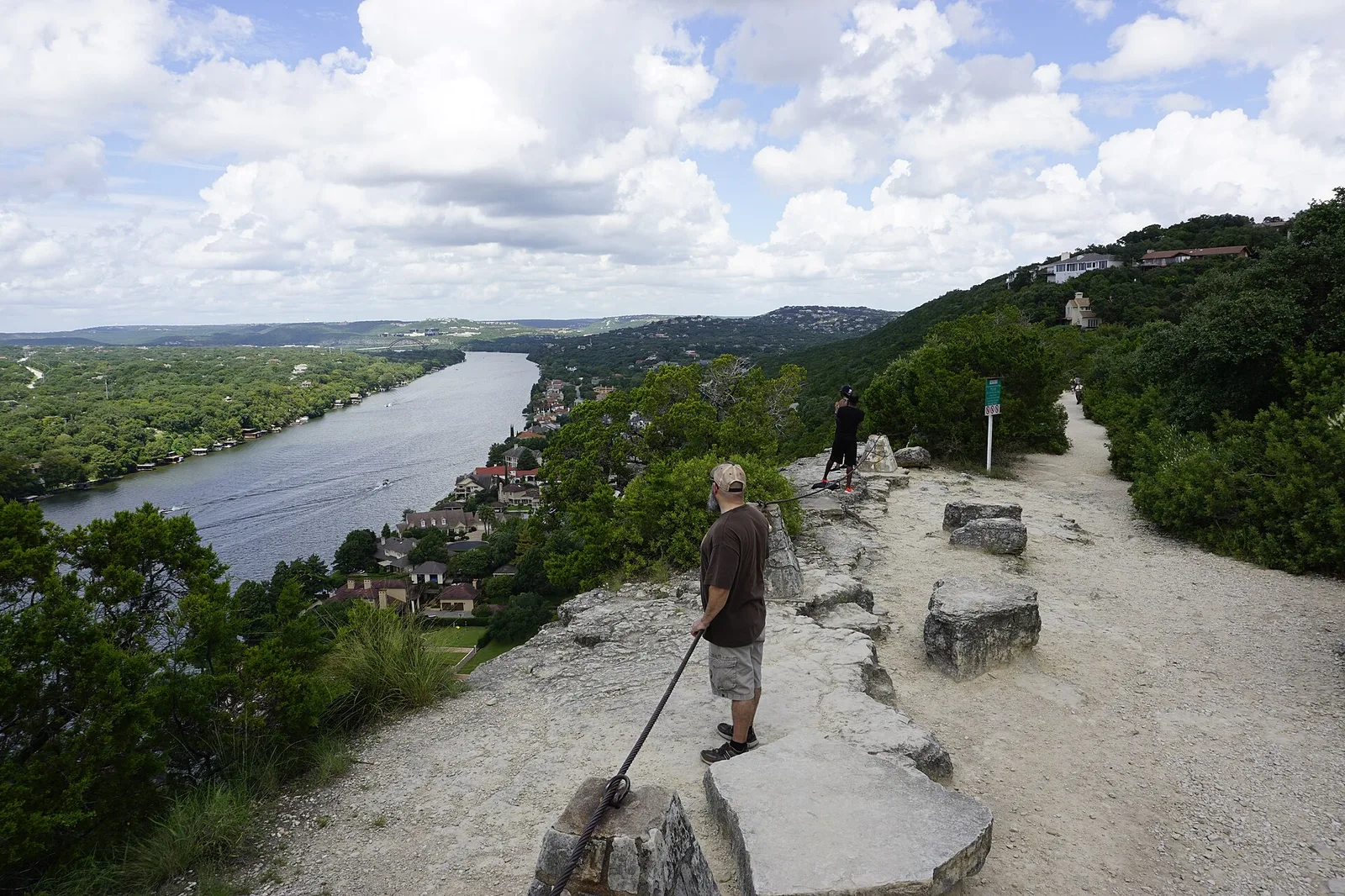
Mount Bonnell is the skyline-and-river photograph; Pfluger Bridge is the bat-colony emergence at dusk. A good welcome book recommends both.
SoCo is wrecked on weekends. Weekday mornings photograph well and shops are browsable. Stop at Allens Boots even if boots aren't the plan.
Uchi for sushi that defined Austin's food scene; Launderette for the East-Austin design aesthetic; Suerte for the best corn tortilla Texas has to offer.
The line is real. A host who pre-explains the timing and alternatives (La Barbecue, Interstellar, Terry Black's) prevents guest frustration.
Post-ACL, pre-Thanksgiving. Weather finally cooperates, restaurants regain reservations, Austin is at its most liveable. A pricing window most hosts ignore.
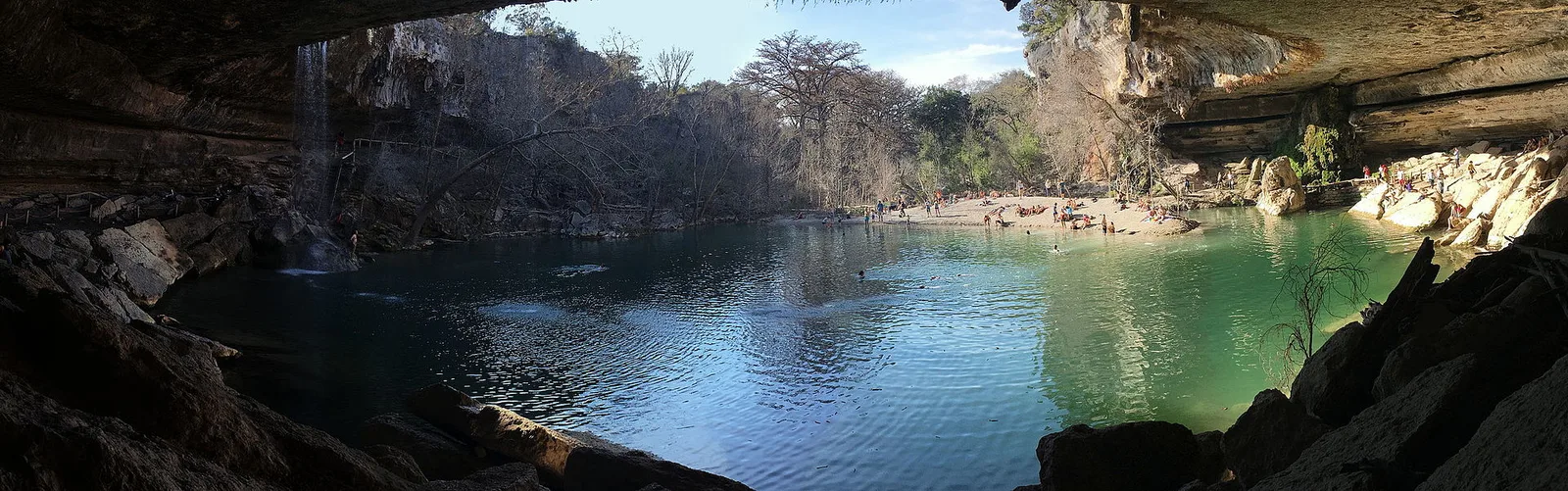
Fredericksburg wine trail for one crowd; Hamilton Pool Preserve for the swimming-hole photograph. Both are legitimate Austin-trip additions.
Austin traffic is worse than guests expect. A printed cheat-sheet of "leave before X or after Y" timing for Mopac and I-35 pays off immediately.
Representative Cavmir engagements in Austin. Client details redacted; numbers composited from internal campaign analytics and market benchmarks.
Renovated historic home marketed generically. ADR tracking $90 below comparable Clarksville properties. Listing photography missed the neighborhood's specific character entirely.
Rebuilt around Clarksville's historic-neighborhood identity. Photography emphasised the walkability to downtown, the porch culture, the specific architectural period. Copy rewrote for the design-conscious creative-class audience that actually books the neighborhood.
ADR climbed 34%. Occupancy moved from 67% to 81%. Music-and-design-industry bookings (photographers, producers, art directors) grew to a measurable repeat-guest segment.
Modern condo in a fast-changing neighborhood. Positioning confused — trying to appeal to both downtown-access corporate travellers and East-Austin music-scene visitors.
Picked a lane. Repositioned entirely for the East-Austin music-and-design scene guest. Photography included the venue walkability, the coffee-shop scene, the specific East-side identity. Corporate-traveller channels were dropped deliberately.
Occupancy climbed 18 points despite losing the corporate segment. ADR up 26% on the higher-intent leisure audience. Review score improved due to better guest-property match.
Premium family-and-executive home whose marketing read generic-luxury. Missing the corporate-retreat and tech-industry-offsite audience that represented its real value.
Built a corporate-retreat brand parallel to the family-vacation listing. Produced a corporate-retreat tear sheet with meeting-room specifications, wifi benchmarks, chef-partnership contacts. Distribution to three Austin-based executive-assistant networks and two corporate-events planners.
Corporate-retreat bookings alone cleared $140K in the first year — a revenue channel that had not previously existed. Family-vacation ADR also climbed due to the elevated brand halo.
Demand in Austin peaks around March and October and runs quietest around January, July and August. Here is how the year actually books — and what to do about each stretch of the calendar.
Austin peaks twice: March, when SXSW, Rodeo Austin, spring break and bluebonnet weather land in the same month, and October, when ACL's two festival weekends and the Formula 1 race at Circuit of the Americas stack three enormous demand spikes into five weeks. These windows carry rates the rest of the year can't touch, so have your listing photographed, priced and minimum-stayed before February and again before September. Guests booking these dates decide fast and compare hard.
April, May and September are reliably good: wedding season, graduation at UT, Longhorns home football weekends and conference travel keep both weekends and midweek moving. The play is date-level pricing around the football schedule and a listing that works for both a bachelorette group and a business traveler, because Austin genuinely draws both in the same week.
July and August are the honest soft stretch, when triple-digit heat thins out leisure travel, and the winter weeks either side of the holidays run quiet too. A pool changes the summer math entirely if you have one. Otherwise lean on longer stays for remote workers and relocators, keep rates flexible, and use the heat months for maintenance and the photo refresh before the October wave.
F1 and ACL dates start filling as soon as tickets move, months ahead, and SXSW regulars book early too. Ordinary weekends and business travel move inside a few weeks. The practical rhythm: calendar dialed by February for the spring wave, again by late summer for October, and priced to catch short-window bookings the rest of the year.
Two-to-three-night weekend stays are the core, with festival windows stretching to four or five nights and midweek business stays running shorter. Summer skews longer as remote workers and relocators fill the gap the heat leaves, which rewards listings set up for a week or more.
The Austin winner is a two-or-three-bedroom house in East Austin, Zilker, Travis Heights, South Congress or Hyde Park with real outdoor living: a shaded patio, a fire pit, ideally a pool. Design-forward interiors matter here because Austin guests screenshot their way to a decision. Big downtown towers compete with hotels on price; character houses in walkable neighborhoods compete on feel and win the groups and festival crowds.
Build the listing around Austin's event calendar: photography that leads with your outdoor space, copy that names your neighborhood and what it's walkable to, and pricing that treats SXSW, both ACL weekends and the F1 race as their own seasons instead of averaging them away. Then add the layers that compound: a Google Business Profile so you surface in map searches, and a direct-booking site for the repeat festival guests who come back every year. That's the stack Cavmir builds for Austin hosts, and it works because each piece feeds the others.
March and October are the twin peaks. March stacks SXSW, Rodeo Austin and spring break; October delivers ACL across two weekends plus the Formula 1 race at Circuit of the Americas. Spring and fall shoulders stay strong with football weekends and conference travel, while July and August soften in the heat unless you have a pool.
Event dates drive the window: F1 and ACL weekends start filling months ahead as soon as tickets move, and SXSW regulars book early too. Ordinary weekends and midweek business stays book inside a few weeks. Have your calendar polished by February for the spring wave and by late summer for October.
The Texas Triangle does the everyday work, with Houston, San Antonio and Dallas-Fort Worth all within an easy drive for weekend trips. The festivals and the tech economy bring the fly-in crowd, heaviest from Los Angeles, New York, Chicago and San Francisco. If you run ads, pitch weekend getaways to Texas metros and event stays to the coasts.
Outdoor living leads: a pool or shaded patio carries the brutal summer and sells the Austin lifestyle year-round. Fast wifi and a real workspace matter for the tech and business base, off-street parking removes a genuine downtown anxiety, and pet-friendliness widens your audience in a seriously dog-forward city.
Run your Airbnb, Vrbo, or website through Cavmir's free grader. It checks the things that decide whether guests book in Austin — photos, listing copy, page speed, local search — and shows you where bookings leak. Takes about a minute, and there's no sales call attached.
If the report says your booking engine is the weak link, that's fixable: a direct-booking website of your own means repeat guests stop paying platform fees to come back to you. That's the work Cavmir does — see Airbnb website design in Austin.
Send us the listing and we'll tell you what we'd change. Not a pitch deck — a straight read on your photos, your title, your rates against the Austin comp set, and whether a direct-booking site would pay for itself.
You'll hear back from a person, usually inside one business day. If we don't think we can move your numbers, we'll say so. Cavmir is a short-term rental marketing agency — we position and market properties, we don't manage them.
Talk to Cavmir today. We'll show you exactly what your Austin property is leaving on the table — and how fast we can change that.
Book a Free Strategy CallPhotography via Wikimedia Commons (images resized and cropped): Skyline of Austin, Texas (cropped) by Quintin Soloviev (CC BY 4.0) · Pfluger Pedestrian Bridge by Sk5893 (CC BY-SA 4.0) · Covert Park at Mount Bonnell 20160905130602 by Spawnzilla (CC BY-SA 4.0) · Austin Skyline 1980s by Larry D. Moore (CC BY 4.0).