

Expert short-term rental marketing to grow your bookings and nightly rate in Tel Aviv, Israel, Middle East.
Sixteen services, one team. Everything below is built in-house and scoped to your property and market. Most owners start with the 12-Step System.
Every engagement is quoted to your portfolio. These are the ready-made scopes owners pick most — Low-season pricing shown (through September 15), discount already applied. A clear proposal within 48 hours.
The work is public. Selected engagements and what changed — and reviews from the owners and managers behind them.
* Market averages. Properties marketed by Cavmir typically exceed these figures by 25–45%. Data sourced from AirDNA, STR market reports, and Cavmir internal analytics.
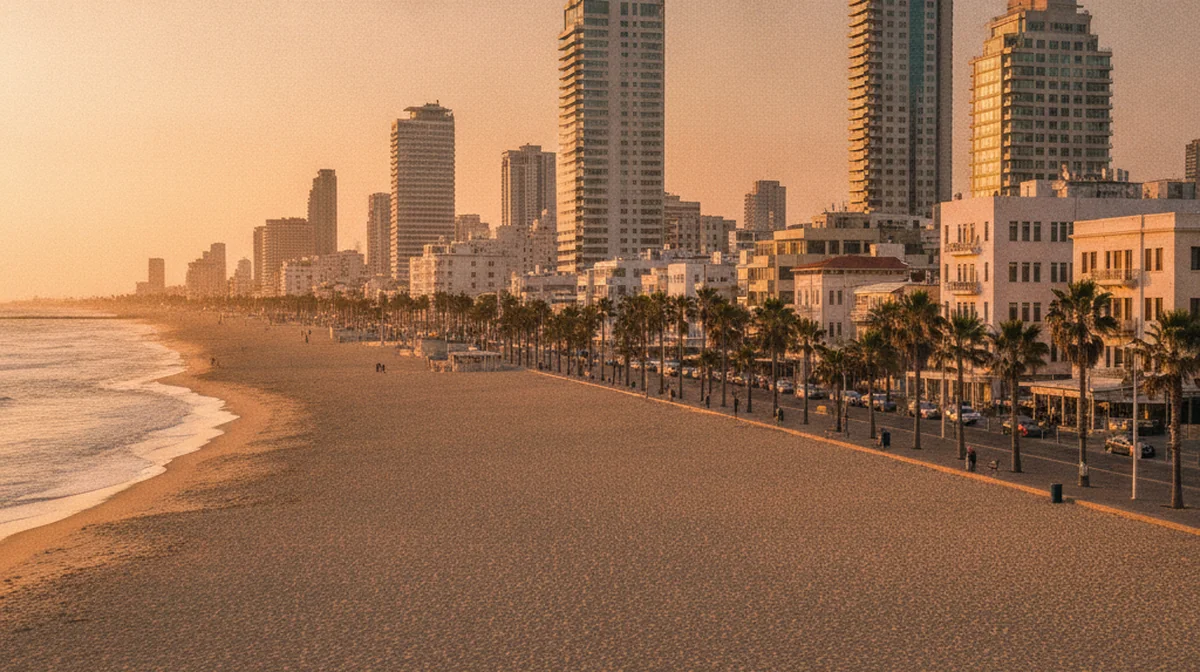
Tel Aviv is the Eastern Mediterranean's most energetic coastal city — a UNESCO-recognized 'White City' of over 4,000 Bauhaus buildings set two blocks from four miles of open beach. Neve Tzedek's boutique lanes, Florentin's street-art-covered warehouses turned nightlife district, the beachfront promenade's unbroken run of cafés and towers, and Rothschild Boulevard's tree-lined center strip give the city a genuine year-round rhythm — beach by day, restaurant and bar scene that runs past midnight. A dense tech and startup economy keeps business travel steady alongside leisure demand.
Tel Aviv's STR market runs on two engines — tech-sector business travel that fills apartments Sunday through Thursday, and Mediterranean beach tourism that peaks May through October. The beachfront and Neve Tzedek command the premium tier; Florentin and the city center serve younger, design-forward travelers. Israel's national short-term-rental framework has moved toward formal host registration and municipal tourism levies, which favors professionally managed listings over informal ones.
Cavmir positions Tel Aviv properties for the international business traveler filling a week of meetings and the beach-and-food leisure guest, with multilingual listings (English, Hebrew, French, Russian) built for a booking audience that already spans Europe and North America.
Tel Aviv is barely more than a century old, and that youth is the key to understanding it. The city was founded in 1909 as a garden suburb north of the ancient port of Jaffa, when a few dozen Jewish families drew lots on the sand dunes for building plots. Jaffa itself is old — a working Mediterranean port with thousands of years of history — but the city that grew beside it was built fast, on open ground, by people who wanted something modern. That is why Tel Aviv looks the way it does and why it behaves the way it does as a rental market.
In the 1930s a wave of architects trained in the German Bauhaus school arrived and built, in a single burst, the largest concentration of International-Style architecture anywhere in the world — the clean white cubes, curved balconies and ribbon windows that gave the centre its nickname, the White City. UNESCO named it a World Heritage Site in 2003. Those same buildings are the housing stock you are marketing today: light, compact, often walk-up apartments on tree-lined streets, charming to a guest and quietly demanding of an owner, for reasons we will come to.
What Tel Aviv became in this century is a global technology capital — "Silicon Wadi" — a dense concentration of startups, venture money and multinational R&D offices packed into a small, walkable city on a warm sea. That is the engine of its rental demand. The guest here is often a business traveller in for a funding round or a product sprint, but they are just as likely to be a returning family member, an LGBTQ traveller drawn by one of the world's biggest Pride celebrations, a European on a beach-and-food city break, or an Israeli down from Jerusalem or up from the south for the weekend. Tel Aviv sells sun, sea, food, nightlife and business all at once, and a listing that understands which of those a given guest came for is a listing that stays full.
Tel Aviv prices on two calendars at once, and the trick is holding both in your head. There is the beach-and-weather calendar, which is straightforward — the Mediterranean summer is hot and the promenade is full, so warm months command more than cold ones. And there is the events-and-holidays calendar, which is where the real premiums sit and where a lot of owners leave money on the table because they price against the weather alone.
The single biggest spike is Tel Aviv Pride in June, one of the largest Pride celebrations in the world, which draws visitors from across Israel and abroad and fills the city for the surrounding week. Set that window at event pricing the moment the dates are confirmed, because the demand is real and it books ahead. The Jewish holiday calendar is the other major driver: Passover in the spring and the autumn cluster of Rosh Hashanah, Yom Kippur and Sukkot each move large numbers of people, both international visitors coming for the holiday and Israelis travelling within the country. These are known dates every year, published far ahead, and they reward being visible early.
Keep two Tel Aviv-specific things in mind on minimum stays and turnovers. The city has a genuine short-stay business market — a founder or an engineer in for a few nights — so a rigid week-long minimum in the centre hands that guest to a hotel. And the working week here runs Sunday to Thursday, with Shabbat falling from Friday evening to Saturday evening, when much of the city's transport and many businesses pause. That rhythm shapes when guests arrive, when they check out, and when your cleaner can actually get in, so build your turnover logic around it rather than a Monday-to-Friday assumption imported from elsewhere.
The strong stretch is roughly May through October — the long, hot, humid beach season when the weather does half your marketing for you and the promenade, the cafés and the nightlife are at full tilt. June carries the extra weight of Pride. The spring and autumn holiday clusters punch above the surrounding weeks whatever the weather. The genuine quiet is the winter, roughly December through February, which is milder and rainier and sees lower leisure demand — though the technology business travel that underpins the city never fully switches off, which is exactly what makes Tel Aviv steadier through the cold months than a pure beach town. Treat winter as your maintenance-and-reshoot window and as the season to lean on the business guest rather than the sunbather.
Israel does not run a US-style municipal short-term rental permit system, so there is no single clean licence to point at in Tel Aviv. What exists instead is a set of overlapping questions — tax, VAT, municipal property tax and your building's own rules — that together decide whether your listing is on solid ground. A lot of confident advice online skips past this, and it is precisely where owners get caught.
Start with income tax, because it is the one most people get wrong. Israel offers residential landlords some gentle tax tracks — a monthly exemption up to a ceiling, and a flat 10% track on residential rental income — but those tracks are built for passive, long-term residential letting. The Israel Tax Authority generally treats short-term, hotel-style letting as a business rather than passive rental income, which means it can be taxed at your full marginal rate rather than the friendly 10%, and can bring National Insurance (Bituach Leumi) contributions into the picture too. That single distinction — passive residential versus active hospitality business — is the hinge the whole tax question turns on, so do not assume the 10% track applies to a nightly Airbnb.
VAT is the next layer. Ordinary long-term residential rental is outside VAT, but hotel and tourist-style accommodation is not, and once your activity looks like a business and your turnover crosses the VAT-registration threshold, VAT can apply. Then there is Arnona, the municipal property tax. Tel Aviv has actively debated treating short-term rentals as a commercial or hotel use and charging higher, business-rate Arnona accordingly, and the municipality has discussed measures such as annual caps on short-term letting. The direction of travel is toward more scrutiny, not less.
Finally, do not overlook the building. Israeli apartment blocks are run by a house committee — the va'ad bayit — and the arrangements among co-owners can constrain how a unit is used. None of this is marketing advice, and the honest answer on several of these points is that the rules are still being worked out. Confirm your specific position with an Israeli lawyer and an accountant — a רו"ח — before you list, and get it in writing.
Lead with the neighbourhood and the walk, not the city. "Tel Aviv" tells a guest nothing; "a five-minute walk to the beach from a quiet Bauhaus street off Rothschild" tells them exactly what they are buying. This is a small, dense, walkable city, and proximity is the whole product — name whether you are steps from the sea, from Rothschild Boulevard, from Neve Tzedek's lanes, from Florentin's bars or from the Carmel Market, and be honest about the real walking time.
Be truthful about air conditioning and treat it as a headline, not a footnote. Tel Aviv summers are genuinely hot and humid, and a guest arriving in August who finds a single weak unit will say so in the review. Working, well-specified AC in every room that needs it is not a luxury here; it is the difference between a five-star summer stay and a complaint.
Photograph and describe the workspace for the tech guest. A real desk, a proper chair and honestly-stated wifi speed sell hard in a city full of founders and engineers who will spend part of their stay working from the unit. If the connection is fast, say the number.
Handle the walk-up honestly. Many of the most charming buildings in the White City are older Bauhaus blocks without a lift, and a fourth-floor walk-up is a real consideration for a family with a stroller, an older guest or anyone with heavy bags. Stating the floor and whether there is an elevator up front prevents a bad arrival and filters for guests who are happy with the trade-off.
Give guests the parking truth before they book. Parking in central Tel Aviv is scarce and expensive, and a guest who assumes a free space will be unhappy on night one. Tell them plainly whether you offer parking, what the paid options nearby cost, and — better still — why they may not need a car at all in a city this walkable and this well served by the promenade and bike lanes.
The first challenge is the tax-and-classification question. Whether your letting is treated as passive residential rental or as an active hospitality business changes your tax rate, your VAT position and your Arnona bill, and the answer is not always obvious. Settle it in writing with a local accountant before you build a business plan on the friendly 10% track that may not apply to you.
The second is the summer climate itself. The same heat and humidity that fill the beach are hard on a poorly-equipped apartment, and cooling, ventilation and honestly-described comfort are running costs and expectations you have to manage, not gloss over.
The third is a market reality it would be dishonest to ignore: tourism demand to Israel is sensitive to the regional security situation, which has affected visitor numbers in recent years. We say that plainly and without alarm, because it belongs in a serious owner's planning. What steadies the market underneath it is genuinely durable demand — the technology business travel that does not stop, the diaspora and returning visitors who come regardless, the large domestic Israeli market, and the enduring pull of the beach, the food and the culture. Build on those fundamentals, keep your calendar flexible, and don't over-leverage against a single peak season.
A standard residential policy is unlikely to respond correctly to paying guests coming and going, and in a dense city of apartment blocks the exposures are specific: liability for a guest in the unit or in a shared stairwell, water damage that travels between apartments, and theft or damage during a let. Ask your insurer directly how the policy treats short-term paying guests, whether guest liability is covered both inside the unit and in the building's common areas, and how the building's own arrangements interact with your cover. Get the answer in writing before your first booking rather than after a claim.
Israel has friendly tracks for residential landlords — a monthly exemption up to a ceiling and a flat 10% option — but those are built for passive, long-term letting. Short-term, hotel-style hosting is generally treated by the Israel Tax Authority as a business, which can mean marginal-rate income tax, National Insurance contributions and, above the turnover threshold, VAT registration. On top of that sits Arnona, the municipal property tax, which Tel Aviv has debated charging at higher commercial or hotel rates for short-term rentals. Platforms do not settle your Israeli tax for you, and direct bookings are entirely your responsibility. Confirm your classification and your obligations with an Israeli רו"ח — this is general information, not tax advice.
Financing conditions in Israel differ from North American norms, and foreign buyers in particular should take local advice before assuming a mortgage structure they know from home applies here. The Tel Aviv-specific point is the one that governs everything else: a lender or a co-investor underwriting projected short-term rental income needs that income to be legally achievable, and if your activity is reclassified as a business — with the higher tax, VAT and Arnona that can follow — the numbers change. Settle the tax and classification question before the financing question, take advice from someone who has actually closed short-term rental purchases in the city, and treat this as general information rather than financial advice.
Tel Aviv's underlying demand is structural, and that is the reason to be measured rather than either bullish or bearish about it. This is a genuine global technology hub with a small, walkable, sun-soaked centre on the Mediterranean, and that combination of business gravity and lifestyle appeal is not something another city can simply take over. The tech business traveller, the returning diaspora visitor, the domestic Israeli guest and the summer beach-and-culture crowd are durable segments that do not depend on any single trend holding.
The honest complication is that visitor numbers to Israel are sensitive to the regional security situation, which has affected tourism in recent years. We note that plainly and without prediction, because a serious owner plans for it — by keeping the calendar flexible, leaning on the steadier business and domestic demand when international leisure softens, and not building a business that only works at a single peak. The fundamentals underneath have repeatedly proven resilient, and the city recovers demand when conditions allow.
The regulatory direction to watch is the municipal and tax one. Tel Aviv has debated caps on short-term letting and higher commercial-rate Arnona, and the Tax Authority's treatment of hosting as a business rather than passive rent is the settled-enough reality to plan around. The owners who do best over the next few years will be the ones who get their classification right early, run compliant, well-insured operations, and compete on presentation and a direct-booking relationship rather than on price. As supply grows, the market splits between well-told, honestly-positioned properties and a long tail of generic listings — and honest, specific marketing is what keeps you out of the discount tier.
Tel Aviv is a satisfying market to work in because it gives you real, specific things to sell. You are not reaching for adjectives here — you have the beach and the promenade, the White City's Bauhaus streets, Neve Tzedek and Florentin, the Carmel Market, a food and café scene people genuinely travel for, and a nightlife that is famous for a reason. A listing that names those things precisely and tells the truth about the walk to each of them does more work than any amount of "vibrant" and "cosmopolitan."
We like that the demand is a calendar as much as a mood. Pride in June, the spring and autumn holidays, the long summer beach season and the steady tech business travel underneath are all things you can see coming and price against with confidence, rather than guessing at a season. That suits the way we work.
And we like that this is a market that rewards honesty, which is the whole of our house style. The AC has to be real, the walk-up floor has to be stated, the parking truth has to be told, and the tax question has to be settled with a professional — and the owners who do all that, and market the genuine article clearly, are the ones who outperform. We also handle the harder realities of this market plainly and without drama, because that is what a serious owner deserves. A city with this much real substance to sell is exactly the kind of place we enjoy telling the truth about.
Tel Aviv runs on two calendars at once — the Mediterranean beach season and the Jewish holiday calendar — with steady tech business travel underneath. Demand peaks across the hot summer and around Pride and the holidays, and softens in the cool, rainy winter. Here is how the year books, and what to do with each stretch.
Roughly May through October is the strong stretch, when the hot Mediterranean weather does half your marketing and the promenade, cafés and nightlife are at full tilt. June carries the extra weight of Pride. Make sure the air conditioning is genuinely up to the heat and humidity, price the peak with confidence, and keep minimums short enough to catch the business guest who never leaves.
Passover in the spring and the autumn cluster of Rosh Hashanah, Yom Kippur and Sukkot each move large numbers of international and domestic visitors, whatever the weather is doing. These are known dates every year — publish holiday pricing the moment the calendar firms up, and remember that Shabbat, Friday evening to Saturday evening, shapes when guests arrive and depart.
December through February is milder, rainier and softer on leisure demand. Nothing markets the beach in the rain, so lean on the tech business travel that keeps running through the cold, hold your rate rather than panic-discount, and use the window for reshoots and maintenance before the spring holidays and the summer peak.
Pride and the holiday weeks book furthest ahead and reward being visible early, often as soon as the dates are set. Pure business travel is the opposite — a short window, frequently inside a week — so being instantly bookable and easy to reach from Ben Gurion matters more than long-lead visibility for that guest.
Business stays skew short, a few nights and often weighted to the Sunday-to-Thursday working week. Diaspora, family and holiday stays run longer. A short minimum that opens up the mid-week business guest usually earns more than a rigid week-long rule that hands them to a hotel.
Well-located one- and two-bedroom units win here — walkable to the beach or to Rothschild, Neve Tzedek and the centre, with air conditioning that genuinely handles the summer and a real work setup for the tech guest. Location precision beats size. Say which neighbourhood, and how long the walk to the sea is, in the first line.
Yes. Cavmir works with short-term rental owners and boutique hotels in Tel Aviv and across Israel — property branding, listing optimization, photography direction, direct-booking websites, SEO, and paid campaigns. Properties near Tel Aviv Beach Promenade, Neve Tzedek and Carmel Market are exactly the kind of stays we market.
The market snapshot on this page shows average nightly rates around $215 with occupancy near 71% for Tel Aviv. Treat those as directional market averages, not guarantees — the spread between a well-marketed property and a poorly marketed one in the same market is wide.
Tel Aviv sees moderate seasonality — clear peaks, but respectable demand through the rest of the year. That shoulder-season demand is exactly where marketing earns its keep, because travelers have more choices and pick the property that looks the part.
Tel Aviv sits in the middle of the regulatory spectrum — some registration or permit requirements typically apply. Rules change often in this industry, so confirm the current requirements with local authorities before you list. Cavmir handles the marketing side; we don't provide legal or permitting advice.
Give guests a way to book you without a platform in the middle: a fast direct-booking website, a complete Google Business Profile, and follow-up that brings past guests back. Cavmir builds that stack — see vacation rental SEO — so your repeat Tel Aviv guests stop paying platform fees to find you.
It depends on scope. Current plans and one-time project pricing are on the pricing page — most owners start with a listing overhaul or the 12-step system. A conversation about your property costs nothing: contact Cavmir.
Send us the listing and we'll tell you what we'd change. Not a pitch deck — a straight read on your photos, your title, your rates against the Tel Aviv comp set, and whether a direct-booking site would pay for itself.
You'll hear back from a person, usually inside one business day. If we don't think we can move your numbers, we'll say so. Cavmir is a short-term rental marketing agency — we position and market properties, we don't manage them.
Demand in Tel Aviv peaks around June through August and runs quietest around January through February. Here is how the year actually books — and what to do about each stretch of the calendar.
Summer is the height, when the beaches, the nightlife and the promenade run at full tilt and the city fills from late June through August. June is the sharpest single stretch, when Tel Aviv Pride draws one of the largest crowds of its kind anywhere and central listings sell out. Set firm summer pricing, hold a minimum stay on the best sea-adjacent flats, and have the listing dialed by spring, because Pride and high summer book early.
Spring and early autumn are prime, with warm days, swimmable sea and an easier pace than high summer. Passover in spring and the autumn holidays each pull a wave of domestic and diaspora travel, and the mild weather keeps the beach and the cafes busy. Market the beach and the city's food and design scene to couples and remote workers, and keep pricing responsive around the holiday dates, which move each year.
January and February are the true lull, cooler and wetter, though Tel Aviv rarely goes fully quiet. Business travel, the tech scene and a steady flow of city-break visitors keep a real midweek floor even in winter. Use the softest weeks for maintenance and a fresh photo set of the sea, the Bauhaus streets and the rooftops, and court longer remote-work and relocation stays.
Pride and the best summer flats book the furthest out, with regulars locking June and high summer months ahead, while the shoulder and holiday weeks fill through the spring. Business and city-break stays move on shorter notice, often a couple of weeks out. Set the event and summer blocks early and firm, and keep the midweek layer nimble.
Summer and event weeks run on short, lively city-break stays of a few nights, while the tech scene adds a real midweek business and multi-week relocation layer year-round. Holidays bring longer family stays. It is a more balanced, less purely seasonal calendar than most beach cities, which rewards hosts who market to leisure and business alike.
The flat that wins is a stylish, well-kept apartment close to the beach or in a walkable central neighborhood like the old city center, Neve Tzedek or the Bauhaus streets, ideally with a balcony and good light. For the business market, a quiet, modern unit with a real desk and an easy commute competes hard midweek. Air conditioning and design-forward interiors are close to mandatory in a city this style-conscious.
Lead with your neighborhood and your distance to the beach, and let photography sell the light, the balcony and a design-forward interior, because this city filters hard on style. Price the calendar deliberately: Pride, Passover and high summer book far ahead and behave nothing like ordinary weeks, and the holiday dates move each year. Add a Google Business Profile for map searches and a direct-booking site for the event regulars and diaspora families who return, with listing copy that speaks to both the beach traveler and the business guest. That is the marketing layer Cavmir builds for Tel Aviv hosts, and this city's mix of leisure and business demand makes it compound.
July and August are the height for the beaches and nightlife, with June the sharpest single stretch around Tel Aviv Pride. Passover in spring and the autumn holidays each bring strong surges, while January and February are the quiet, cooler window, softened by steady business and city-break travel.
Pride and the best summer flats book the furthest out, with regulars securing June and high summer months ahead and the shoulder and holiday weeks filling through the spring. Business and city-break stays move on shorter notice. Lock the event and summer blocks early, then stay responsive for the midweek layer.
Domestic weekend demand comes from the surrounding central-coast cities, but the volume is heavily fly-in through Ben Gurion airport. The international hubs of New York, London, Paris, Los Angeles and Berlin lead, especially for the summer and Pride weeks.
Air conditioning and a stylish, bright interior lead in a city this design-conscious, followed by a balcony and a genuinely short walk to the beach or a lively neighborhood. For the year-round business layer, fast wifi and a dedicated workspace are what close the midweek booking.
Talk to Cavmir today. We'll show you exactly what your Tel Aviv property is leaving on the table — and how fast we can change that.
Book a Free Strategy Call