
Morning
Breakfast at Talho Capixaba or Armazém do Café
Talho Capixaba for the Leblon-neighborhood-bakery scene with real pão de queijo; Armazém do Café for the specialty-coffee-plus-cariocas-morning that signals actual Rio literacy.

Expert short-term rental marketing to grow your bookings and nightly rate in Rio de Janeiro, Brazil, LATAM.
Sixteen services, one team. Everything below is built in-house and scoped to your property and market. Most owners start with the 12-Step System.
Every engagement is quoted to your portfolio. These are the ready-made scopes owners pick most — our Fall Special (55% off list or more) is already applied to the website, King Broker, Hotels and à la carte scopes. A clear proposal within 48 hours.
The work is public. Selected engagements and what changed — and reviews from the owners and managers behind them.
* Market averages from AirDNA and STR market reports. A single home's numbers depend on its size, its location and how it is marketed.
Cavmir is an Airbnb marketing agency. We build the brand, the direct-booking website and the marketing for short-term rentals in Rio de Janeiro.
Rio de Janeiro is one of the world's most naturally spectacular cities — a place where Sugarloaf Mountain, Corcovado, and the Christ the Redeemer statue frame a landscape of extraordinary drama. Ipanema and Copacabana are among the world's most famous beaches; Leblon offers Rio's highest-end dining and shopping; Santa Teresa's hillside Bohemia is the city's artistic soul. Angra dos Reis and Paraty — both within reach of Rio — offer some of the most stunning coastal landscapes in South America.
Rio's STR market has significant international demand driven by Carnival, New Year's Eve at Copacabana, Rock in Rio, and the legacy of the 2016 Olympics. Ipanema and Leblon command the highest rates; Copacabana leads in volume. Barra da Tijuca attracts a growing business traveler segment. The market is most competitive for properties that clearly differentiate through branding and visual quality.
Nearby Markets: Angra dos Reis | Paraty | São Paulo
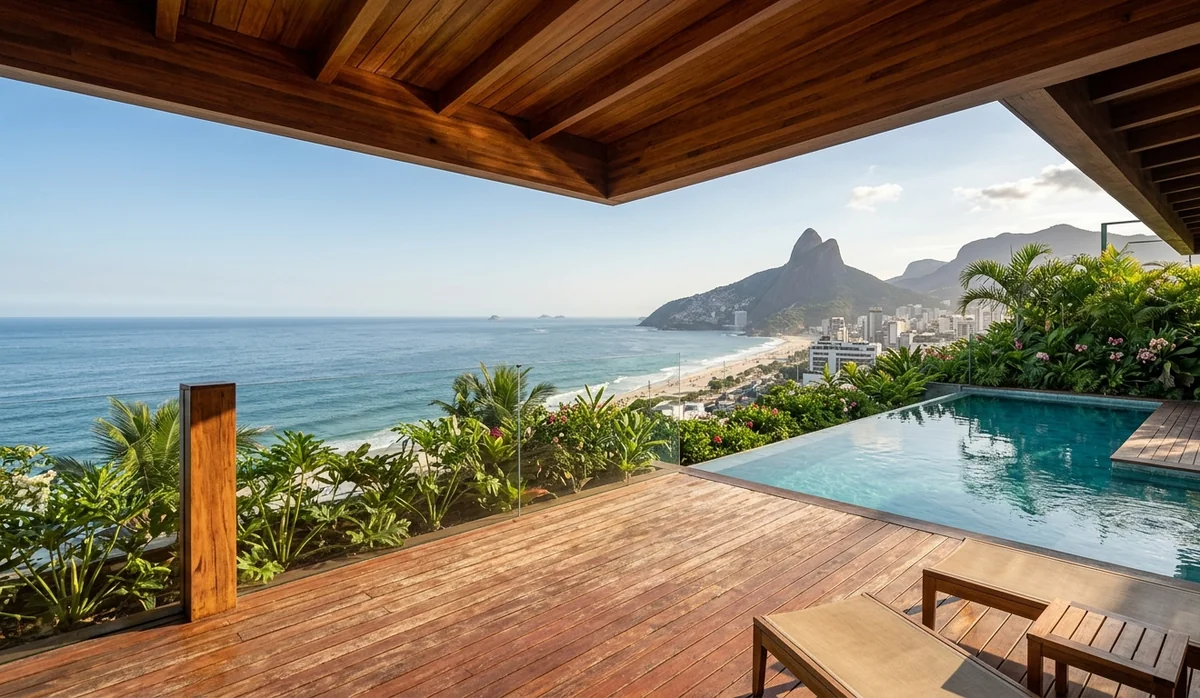
Cavmir was born in Rio and has the deepest expertise in positioning Rio properties for the international traveler. Our cinematic photography of the city's iconic landscapes — Dois Irmãos, the Lagoa, Ipanema at golden hour — creates listings that convert the traveler who has dreamed of Rio into a confirmed booking.
Rio de Janeiro was Brazil's capital for nearly two centuries — from 1763 (when Portugal moved the colonial capital from Salvador) until 1960 (when Brasília was inaugurated). The 19th-century royal court, the 20th-century industrial boom, and the cultural productions that made Brazilian music, dance, and sport global phenomena all emerged from Rio. Short-term visitor accommodation in Rio has long history — the Copacabana Palace (opened 1923) remains the city's most storied hotel, and the Ipanema beachfront has been a tourism magnet since the 1960s when 'The Girl from Ipanema' made the neighborhood globally famous. Carnival (pre-Lent), Réveillon (New Year's Eve on Copacabana), and year-round beach culture drive continuous visitor demand.
The contemporary Rio STR market scaled through the 2014 World Cup and 2016 Olympics preparation cycle, with infrastructure investment (Linha 4 metro extension, VLT light rail, port-area Porto Maravilha redevelopment) improving visitor logistics. Rio's STR demand is highly event-driven — Carnival and Réveillon are the super-peaks — but year-round international tourism from Europe, the US, and increasingly Argentina and Chile supports baseline. Brazilian regulatory culture has remained comparatively permissive at federal level, with the most significant restrictions happening at building-level through condominium associations.
Rio STR pricing concentrates along the South Zone beach corridor. Ipanema and Leblon anchor the premium tier — oceanfront properties can clear BRL 2,000–6,000/night (roughly USD $380–$1,150) during peak windows. Copacabana serves volume demand with wide price range. Barra da Tijuca's modern beach-community inventory attracts a different guest (more family, more business travel). Santa Teresa's bohemian hillside character appeals to cultural travelers. Niterói across the bay offers value positioning. Réveillon (New Year's Eve) pricing for Copacabana-view properties can reach 10x baseline for the 4-night Dec 30–Jan 2 window — this is the single highest-concentration revenue event of the Rio calendar.
Medium seasonality, inverted from Northern Hemisphere markets. Peak: December–February (Southern Hemisphere summer, Réveillon, Carnival). Super-peak: New Year's Eve week and Carnival week. Strong secondary: July (Brazilian winter vacation, European summer demand), Rock in Rio years (biennial September). Weakest: May–June, August–early September. Missed revenue: March–April, when weather remains excellent and major events have ended but pricing often drops too aggressively.
Brazil has a distinctive light-touch regulatory approach to short-term rentals at the federal level. Law 8.245/1991 (Brazil's federal tenancy law) recognizes 'locação por temporada' (seasonal rental) as a legitimate form of accommodation — no specific city license is required for individual hosts. Rio de Janeiro's city council has periodically discussed additional short-term rental regulation but as of early 2026 no restrictive citywide ordinance has been enacted.
The most significant practical restriction is at the condominium level. Brazil's Superior Court of Justice (STJ) ruled in 2021 that residential buildings can legally prohibit Airbnb-style short-term rentals through their internal bylaws (convenção). Many Rio luxury buildings — particularly in Ipanema, Leblon, Copacabana, Botafogo, and Flamengo — have adopted STR restrictions. Verification of the building's convenção before investment is essential. Tax obligations: municipal ISS (service tax, generally 3–5%), income tax on rental revenue, CPF (individual) or CNPJ (entity) registration. IPTU (property tax) owner-paid. Foreign owners face specific considerations including mandatory use of a Brazilian tax representative.
Rio's strategic tip: Réveillon is the single most important week of the year — plan your entire strategy around it. Copacabana-view properties for December 30–January 2 book 12+ months in advance at premium rates. A 4-night Réveillon booking at a 2BR can generate BRL 25,000–60,000 — sometimes more than the entire rest of summer combined. Minimum-stay and pricing discipline here is revenue-defining.
Second — verify the condominium bylaws rigorously before buying. The 2021 STJ ruling empowered Rio buildings to ban Airbnb, and many have. A Leblon or Ipanema apartment where short-term renting is prohibited by convenção cannot be Airbnb'd — and enforcement through the building's property manager is straightforward. Third — safety communication is essential. International guests book Rio with real security questions; clear guidance on neighborhoods to visit and avoid, trusted taxi apps (99, Uber), property security features (building portaria/doorman 24/7 is standard in South Zone), and contextualized walking routes affects both conversion and review scores. Fourth — partner with trusted transfer and tour operators. Rio guests typically want guided access to Christ the Redeemer, Sugarloaf, favela tours (with responsible operators like Favela Experience), and samba nights.
Rio's challenges are real and need professional management. Security perception affects all international marketing. Infrastructure varies widely between buildings and neighborhoods. Political and economic volatility periodically affects currency and demand (Brazilian real's exchange rate can move dramatically). Hillside-favela-adjacent properties require careful micro-location analysis. Condominium-rule variability creates transaction-level risk. And hurricane is not a concern but severe summer storms (December–February) occasionally cause disruption.
Brazilian property insurance through major carriers (Porto Seguro, Bradesco, SulAmérica). Specialist STR products less common than in Europe or North America. Specific Airbnb-liability coverage often requires international policy layering. Budget BRL 2,500–BRL 15,000 annually (roughly USD $475–$2,850). Condominium master coverage handles building structure in most cases.
Brazilian income tax on rental revenue — progressive individual to 27.5%, corporate alternatives. Non-resident withholding 15% typical on rental income to foreign owners. ISS (municipal) 3–5%. IPTU (property tax) annual, varies by municipality. No federal property tax but capital gains on property sale. Monthly Carnê-Leão for individual taxpayers. Foreign-owner Brazilian tax representative mandatory for non-residents — budget for the service.
Brazilian mortgages for foreign buyers are limited. Local Brazilian banks (Caixa, Banco do Brasil, Itaú, Bradesco) primarily serve Brazilian residents. Foreign buyer mortgages available but rates and terms materially less favorable than developed-market equivalents. Most international buyers use cash or international financing structures. Brazilian currency-hedging considerations material for long-term ownership planning.
Rio's guest book reads like a map of South America. Embratur counted 2,196,443 international visitors to Rio de Janeiro state in 2025, up 43.7% on the 1,528,133 of 2024, and the five biggest senders were Argentina with 787,229, Chile with 359,705, the United States with 214,795, Uruguay with 100,476 and France with 86,806. Add the Brazilians who fly in from São Paulo, Brasília and Belo Horizonte, and a direct-booking website for a Rio apartment has to work in Portuguese and Spanish before it works in English, whether it sells a Zona Sul flat or a house in Barra.
Portuguese comes first, and the law backs that order. Article 31 of the Consumer Defence Code, Lei 8.078 of 1990, says an offer must give its information, price included, in Portuguese, so an English-only site selling to a family from Campinas starts on weak ground. Spanish is the second build, because Argentina, Chile and Uruguay together sent more than 1.2 million visitors in 2025, more than half of the state's foreign arrivals. Hire a writer from Buenos Aires or Montevideo, since Argentines and Uruguayans supply most of that traffic and spot a machine translation in one line. English covers the Americans and most long-haul guests, and French, for France's 86,806, is the fourth version, worth it first for a Santa Teresa house that sells to the design crowd. Give each language its own URLs with hreflang tags (pt-BR, es, en, fr) instead of a translate widget, so Google and an AI assistant can hand each searcher the right page. Quote the base price in reais, then show an estimate in Argentine pesos, Chilean pesos, US$ and euros, labelled as approximate. At checkout, Brazilians expect Pix, the Banco Central's instant-payment system: the Ministry of Finance counts almost 80 billion Pix transactions in 2025 and 148 million individual users, and Agência Brasil puts it at 86% of Brazilians. Foreign guests will mostly pay by card, so take both.
Decree 7.962 of 2013, Brazil's e-commerce rule, wants the seller's name, CPF or CNPJ number and a physical and email address on the site, usually in the footer. Show the whole stay in reais with the cleaning fee and any deposit itemised before payment, and put the cancellation policy beside the book button. Article 49 of the consumer code gives a buyer who purchases away from a shop 7 days to withdraw, so have a Brazilian lawyer check how your policy sits with it. Rio charges no tourist tax today. A bill filed at the Câmara Municipal in May 2026 would make hosts register with the Prefeitura, report check-in and check-out dates and amounts, keep cameras out of indoor guest areas and disclose outdoor ones, and pay R$1,000 fines, doubled on a repeat; it mentions a future Taxa de Turismo that would need a law of its own. It's pending, so leave a slot in the footer and on each property page for a registration number. Tax changes arrive with the reform: under LC 214 of 2025, an individual renting out more than three properties and earning at least R$240,000 a year pays the new CBS and IBS, stays of up to 90 days are taxed under hotel rules with a 40% rate reduction, and CBS takes full effect in 2027, so the quote engine needs room for a tax line. Data handling falls under the LGPD, Lei 13.709 of 2018, enforced by the ANPD, which Lei 15.352 of 25 February 2026 turned into a national agency. Its cookie guidance rules out pre-ticked boxes and wants Reject shown as prominently as Accept on the banner's first layer. Confirm all of it with a Brazilian lawyer and accountant.
Rio guests search by bairro, so give each neighbourhood you serve its own page: Copacabana and Leme, Ipanema and Arpoador, Leblon, Botafogo and Urca, Santa Teresa, Barra da Tijuca. Each one names the nearest metro station (Siqueira Campos or Cardeal Arcoverde in Copacabana, General Osório or Nossa Senhora da Paz in Ipanema, Jardim Oceânico in Barra) and the walk to the sand in minutes. The getting-here page starts at RIOgaleão, which handled a record 17.5 million passengers in 2025, up 23.5% after airlines moved routes there from Santos Dumont, then covers Santos Dumont itself, the downtown airport for the São Paulo shuttle, and the drive or metro from each to your door. Photograph what a Rio guest checks before paying: split air conditioning in every bedroom, the round-the-clock portaria, the elevator, the garage space if there is one, and the balcony with exactly what it looks at, whether that's the sea, Corcovado, Sugarloaf or the Lagoa, plus whether the Copacabana fireworks show from it on 31 December. State on the page that the building's convenção permits short stays, because a guest who learns otherwise at the front desk is the worst review a Rio host can get. Careful SEO on each bairro page puts those answers in front of the person searching that street.
GEO (generative engine optimization) is the work that gets your apartment named when a traveller asks ChatGPT, Gemini, Copilot or Google's AI Mode where to stay in Rio. Brazilians have taken to it fast. In Adyen's 2025 hospitality and travel report, run with Censuswide among 2,000 Brazilian consumers, 51% said they already use AI to plan and book holidays, up 92% on 2024 and well above the 35% global average. Two mechanics hold everywhere: the pages must be crawlable, and lodging schema helps an assistant read bedrooms, price and location. Everything else depends on how Rio is asked about and who already writes about it.
Rio questions arrive in at least three languages, and most of them are about where. A family in São Paulo types “qual o melhor bairro do Rio para ficar com crianças perto da praia?”, an Argentine couple asks “¿conviene alojarse en Ipanema o en Copacabana?”, and an American group asks which neighbourhood has the easiest ride back from the Sambódromo after the last school parades. Event questions come back every year: where to watch the Réveillon fireworks without a ticket, how early to book for Carnival, whether Leblon stays quieter than Ipanema in February. Logistics follow, such as Galeão or Santos Dumont, metro or Uber from the airport, and which station serves the Maracanã for the Women's World Cup. Safety runs through questions about Santa Teresa, Lapa and Centro, and the useful page answers it calmly with named streets, routes and times of day. A guide titled with the exact comparison, in the asker's language, hands the assistant a sentence it can lift with your address attached.
Keep one fact block per apartment, in short declarative sentences, identical in Portuguese, Spanish and English and on the site, Airbnb, Booking.com and Vrbo. For Rio it holds the bairro and street, the walk to the beach and to the nearest metro station in minutes, bedrooms, bathrooms and how many it sleeps, air conditioning room by room, the portaria's hours, the elevator, the garage space, the view, the nightly price in reais with the cleaning fee, Pix accepted, the Réveillon and Carnival minimum stays, the cancellation rule, and a line confirming the building's convenção allows short stays. A sentence such as “Ipanema, two bedrooms, sleeps four, six minutes on foot to the sand and four to General Osório station, air conditioning in every room” is the model. When the site says two blocks from the beach and the Airbnb listing says five minutes, readers and assistants get two answers instead of one, so recheck every listing after any edit, and add the city registration number the day one exists.
The official voice is Riotur, the city's tourism company, whose site carries the Rio o Ano Inteiro events calendar, Carnaval and Réveillon sections, and Onde Ficar and Mobilidade pages. Use its neighbourhood and event names on your guides so the two corroborate each other. Riotur also publishes the numbers the press repeats, such as Guinness recognising the 2025 Réveillon as the largest on the planet, with 2.5 million people counted on Copacabana beach. The Rio press that covers stays, events and the short-stay bill includes O Globo, Veja Rio and Diário do Rio, with Panrotas and Mercado & Eventos on the trade side, and in Buenos Aires, Clarín and La Nación reach the Argentine families who book Rio for January. Digital PR works best on angles those desks already follow: record arrivals, Carnival dates, the Women's World Cup, the city's short-stay bill. Keep the property's name, phone and address identical across every one of them and every listing. Cavmir's July 2026 study of 550 Google AI answers across 15 U.S. markets found independent and regional operators took 82% of citations, with Airbnb or Vrbo in 17% of answers; Rio wasn't in that sample, but it shows a small operator with well-documented facts can be the one an assistant names.
Content marketing for a Rio rental means publishing the pages guests and answer engines go looking for, in the order the city's calendar sets. Réveillon and Carnival book earliest, so their guides lead, followed by the pages that settle arrival and payment, then the dated events of 2027 and the neighbourhood comparisons. Each page carries the same quotable core: the bairro, the minutes from your door, the price in reais, the dates, and a visible “last checked” line.
The Réveillon guide goes up first. Riotur's count of 2.5 million people on Copacabana beach at the 2025 edition tells the guest what they're joining, and your page adds what only you know: whether the fireworks show from the balcony, how you reach the building once the avenues close, the minimum stay, the check-in time on 31 December, and which stretch of Leme, Copacabana or Arpoador to head for. The Carnival guide comes right behind it. The Grupo Especial parades at the Sambódromo run on 7, 8 and 9 February 2027, with the Champions' parade on 13 February, and Ticketmaster is selling the special grandstands at R$250 a night. Give the metro route from your door to the Marquês de Sapucaí and back after the last school, plus the blocos that parade near the apartment. Link both guides from the booking confirmation so guests read them before landing, and write the Spanish versions with Buenos Aires and Montevideo readers in mind.
Three practical pages come next. The getting-here page compares RIOgaleão, with its record 17.5 million passengers in 2025, and Santos Dumont for the São Paulo shuttle, and describes the ride to your door by taxi, app or metro with landmarks a first-timer will recognise. The payment page explains the price in reais, the cleaning fee and deposit, Pix for Brazilian guests and cards for everyone else, the cancellation rule, and the tax line the reform brings in 2027 for larger owners, in Spanish and English as well. The building page shows the portaria, the elevator and the garage, explains what the doorman asks for at check-in, and sets out the house rules in Portuguese, Spanish and English, starting with the line that the convenção permits short stays.
For 2027, FIFA has scheduled 64 Women's World Cup matches in eight host cities, with Brazil's opening match at the Maracanã on 24 June 2027 and the final at the same stadium, so publish a page on reaching the Maracanã by metro from Copacabana, Ipanema or Barra, with every Rio match date from FIFA's published schedule. Each spring, add a page for Todo Mundo no Rio, the free concert on Copacabana beach the Prefeitura has guaranteed through 2028, after Madonna in 2024, Lady Gaga in 2025 and Shakira on 2 May 2026, with the beach entry points near your building and the walk home. Then write the comparisons Rio travellers keep asking for: Ipanema or Copacabana for a first trip, Leblon or Barra da Tijuca for families, Santa Teresa and Lapa for music and the tram with the safest route home after dark, Botafogo and Urca for value and the Sugarloaf cable car. Date-stamp every guide and update it when something changes, such as the short-stay bill passing, because a visibly current guide is the one a Veja Rio writer or an answer engine will cite.
Rio through 2027 and beyond: regulatory environment likely to remain comparatively permissive at federal and city level; condominium-level restrictions will continue expanding on a building-by-building basis. The FIFA Women's World Cup 2027, which opens at the Maracanã on 24 June 2027 and ends there with the final, creates a dated demand window. Infrastructure investment (Linha 6 metro, continued port-area redevelopment) supports specific neighborhoods. Climate-adaptation investment in beach-erosion prevention matters for oceanfront properties. Economic and political cycles affect short-term pricing but long-term tourism demand for Rio's iconic landscapes and cultural heritage remains structurally strong.
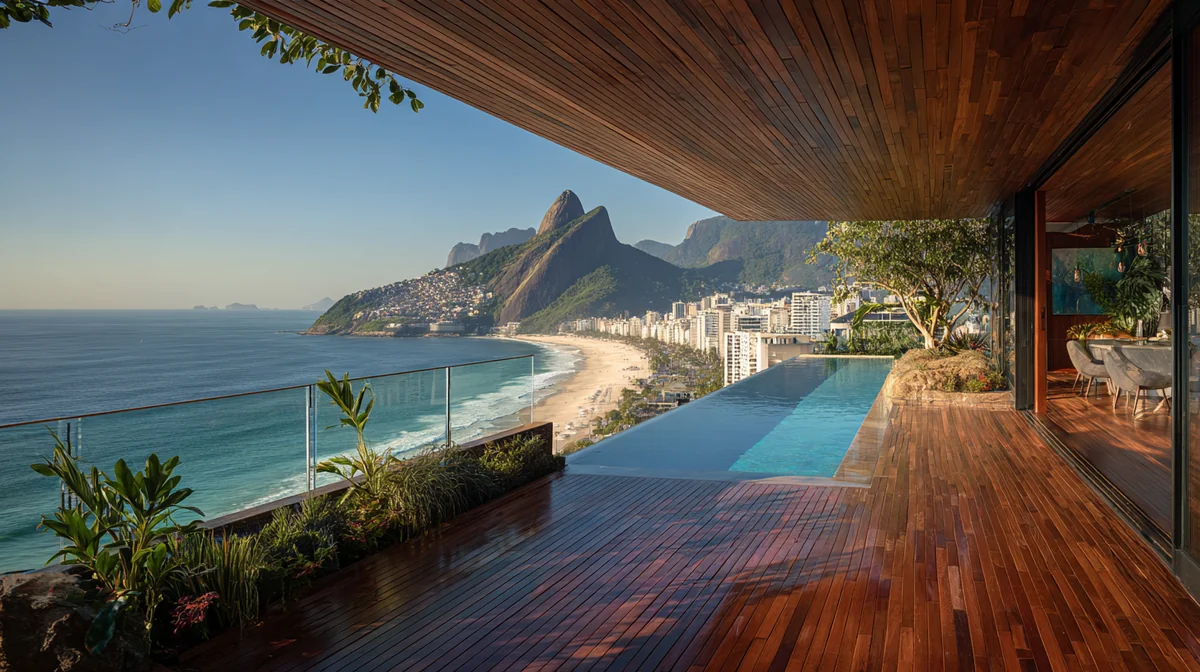
Rio is the most visually-generous city in the Americas. The specific light off the Atlantic, the geometry of the morros rising directly behind the beaches, Copacabana's calçadão mosaic, Ipanema's lifeguard posts and their photographable light, Leblon's quieter family-beach culture, Santa Teresa's hilltop bohemian aesthetic, Lapa's arches and nightlife, the Jardim Botânico's historic garden formality — all of it is photography-ready and almost none of it shows up in generic Rio listings. The marketing opportunity is the light itself, the specific neighborhood identity, and the rare discipline of actually photographing Rio the way the guest emotionally expects it to look.
What we love about marketing Rio is the audience volume and international diversity. Argentine summer-escape travellers, European creative-class visitors, American event-tourism (Carnival, Rock in Rio, Copa América, New Year's), domestic Brazilian weekenders from São Paulo, and an increasing volume of design-tourism visitors. Each audience needs different things: different language, different photography emphasis, different welcome-book knowledge. Rio rewards hosts who treat the city seriously rather than defaulting to Christ-the-Redeemer-and-beaches cliché. The real Rio — neighborhood-specific, light-aware, culturally literate — sells at premiums the cliché-Rio cannot.
The picks Cavmir recommends for Rio welcome books — neighborhood-specific, written with genuine Rio literacy, and honest about the practical logistics the international guest needs.
Talho Capixaba for the Leblon-neighborhood-bakery scene with real pão de queijo; Armazém do Café for the specialty-coffee-plus-cariocas-morning that signals actual Rio literacy.
The rock between Ipanema and Copacabana. West-facing sunset with both beaches in frame. Free, public, universally-known by locals and under-marketed to tourists.
The hilltop bohemian quarter above Lapa. Artist studios, hidden restaurants, the specific aesthetic that defines a different Rio from the beaches.
Lasai for the farm-to-table Botafogo tasting menu; Oteque for the two-star Japanese-Brazilian fusion; Aprazível for the Santa-Teresa-treehouse-dining experience.
Brazil's national dish, properly prepared, on the traditional day. A host who flags the Saturday tradition specifically demonstrates Brazilian-cultural literacy.
Post-summer, pre-winter. Weather holds, crowds have thinned, Argentinians have returned home, prices have softened. The Rio value window.
Ilha Grande for the tropical-island escape; Búzios for the beach-town-with-restaurants pivot; Petrópolis for the imperial-mountain-city historic experience.
Situational awareness in specific neighborhoods at specific times is a real Rio reality. A host who addresses this transparently — Uber almost always preferred, specific routes to avoid, specific neighborhood-by-neighborhood guidance — builds trust rather than erodes it.
Representative Cavmir engagements in Rio de Janeiro. Client details redacted; figures composited from internal analytics and AirDNA ranges.
Premium Leblon apartment whose marketing used generic Brazil-tourism copy and photography that undersold the neighborhood's quieter-family-beach character.
Rebuilt with Brazilian-Portuguese register for domestic guests, Spanish for Argentine inbound, and English for international audience — each version calibrated rather than translated. Photography emphasised the specific Leblon posto-11-and-12 family-beach character that distinguished it from Ipanema or Copacabana.
ADR climbed 34%. Argentine summer-escape bookings grew to 28% of peak-season revenue. Repeat-family bookings from São Paulo now represent a measurable share of annual bookings.
One of thousands of Ipanema listings. Commodity-level positioning; competing purely on price. Missing the design-tourism and creative-class international audience.
Repositioned around the specific Ipanema cultural-history identity (Tom Jobim, the bossa-nova legacy, the specific cafés the movement centered on). Photography at the Rio-specific morning light that photographs Ipanema best. Distribution added two design-and-music-tourism partnerships.
ADR up 31%. Cultural-tourism bookings from Europe and North America grew to a measurable repeat-guest segment. Occupancy moved from 68% to 84%.
Architecturally significant hilltop home marketed as a beach-adjacent property, which insulted the home's actual identity and missed its real audience.
Completely repositioned for the arts-and-design-tourism audience that specifically booked Santa Teresa. Welcome-book PDF built around the neighborhood's artist-studio heritage, the tram system, the specific gallery-walk routes. Photography emphasised the view, the architectural detail, the garden.
ADR climbed 47%. Carnival-week pricing moved to a 4.2× multiplier over baseline. Design-publication feature coverage produced long-term brand equity and direct-booking inbound inquiries from international design readers.
Yes. Cavmir works with short-term rental owners and boutique hotels in Rio de Janeiro and across Brazil — property branding, listing optimization, photography direction, direct-booking websites, SEO, and paid campaigns. Properties near Ipanema Beach, Copacabana Beach and Christ the Redeemer are exactly the kind of stays we market.
The market snapshot on this page shows average nightly rates around $175 with occupancy near 70% for Rio de Janeiro. Treat those as directional market averages, not guarantees — the spread between a well-marketed property and a poorly marketed one in the same market is wide.
Rio de Janeiro sees moderate seasonality — clear peaks, but respectable demand through the rest of the year. That shoulder-season demand is exactly where marketing earns its keep, because travelers have more choices and pick the property that looks the part.
Rio de Janeiro is comparatively light on short-term rental regulation today, but rules change quickly in this industry. Confirm current requirements with local authorities before you list. Cavmir handles the marketing side; we don't provide legal or permitting advice.
Give guests a way to book you without a platform in the middle: a fast direct-booking website, a complete Google Business Profile, and follow-up that brings past guests back. Cavmir builds that stack — see vacation rental SEO — so your repeat Rio de Janeiro guests stop paying platform fees to find you.
It depends on scope. Current plans and one-time project pricing are on the pricing page — most owners start with a listing overhaul or the 12-step system. A conversation about your property costs nothing: contact Cavmir.
Send us the listing and we'll tell you what we'd change. Not a pitch deck — a straight read on your photos, your title, your rates against the Rio de Janeiro comp set, and whether a direct-booking site would pay for itself.
You'll hear back from a person, usually inside one business day. If we don't think we can move your numbers, we'll say so. Cavmir is a short-term rental marketing agency — we position and market properties, we don't manage them.
Demand in Rio de Janeiro peaks around January, February and December and runs quietest around April through October. Here is how the year actually books — and what to do about each stretch of the calendar.
The Brazilian summer runs the show, from late December through Carnival, and the two hottest dates are Reveillon on Copacabana beach and Carnival itself. Both fill the calendar months out and reward premium pricing with firm minimum stays. Have the listing dialed and the price set by winter, because the Reveillon and Carnival regulars book long before anyone else.
March into May and the spring stretch from October hold up well, since Rio is a year-round city, not just a summer beach town. The weather stays warm, the crowds thin, and mid-week rates plus business and event travel keep the calendar moving. This is the window to court couples, digital workers on longer stays, and the steady flow of domestic weekenders.
The Southern winter, roughly June through August, is the low, cooler and rainier with fewer beach days. Lean into longer stays, remote workers, and value-minded domestic guests, and use the gaps for maintenance and a photography refresh before the summer rush. Keep pricing realistic here; this is not the week to hold out for a peak-season number.
Reveillon and Carnival book the furthest out, often many months ahead, and summer beach weeks fill through the spring. Domestic weekends and shoulder-season trips move inside a couple of weeks. Set the peak dates early and firm, then keep shoulder and winter pricing nimble for the short-fuse bookings.
Summer runs on week-long and event-length stays around Reveillon and Carnival, while the rest of the year mixes short couples trips and long weekends. The winter adds a genuine month-plus remote-work layer. Marketing to more than one guest type keeps a Rio calendar full across the seasons.
The winner is a well-finished flat in the Zona Sul, walkable to Ipanema, Copacabana or Leblon, with air conditioning and a view worth photographing. A real ocean or Christ-the-Redeemer sightline sells the listing on its own, and a building with reliable security and an elevator reassures international guests. Space and light matter more than square footage; guests are buying the neighborhood and the view.
Build the listing around your geography and your view, with photography that captures the beach walk, the water and the evening light that makes Rio the product. Price the peak calendar deliberately, because Reveillon and Carnival behave nothing like an ordinary weekend and fill months ahead. Add a Google Business Profile for map searches and a direct-booking site for the repeat summer and event guests who come back every year. That listing-and-marketing layer is what Cavmir builds for Rio hosts, and this city's mix of seasons rewards a site that speaks to more than one guest type.
The Brazilian summer from late December through Carnival is the clear peak, with Reveillon on Copacabana and Carnival the two highest-demand dates of the year. March and the October spring are gracious shoulders, and the cooler winter from June through August is the low, softened by events like the Rio Marathon.
Reveillon and Carnival regulars book many months out, and summer beach weeks fill through the spring. Domestic weekends and shoulder trips move inside a couple of weeks. Lock the peak dates early and firm, then stay responsive for the short-notice layer the rest of the year.
Domestic air travel leads, from Sao Paulo, Brasilia and Belo Horizonte, with a strong international layer from Buenos Aires, Lisbon and the US and European markets. Nearer guests drive in from Minas Gerais and the lakes region for weekends. Peak season skews international and event-driven, while the shoulders lean domestic.
Air conditioning is non-negotiable in the summer heat, a real ocean or mountain view sells the listing, and a short walk to the beach anchors the location story. Reliable wifi and a secure building with an elevator reassure the international and business guests who fill the shoulder months.
Talk to Cavmir today. We'll show you exactly what your Rio de Janeiro property is leaving on the table — and how fast we can change that.
Book a Free Strategy Call