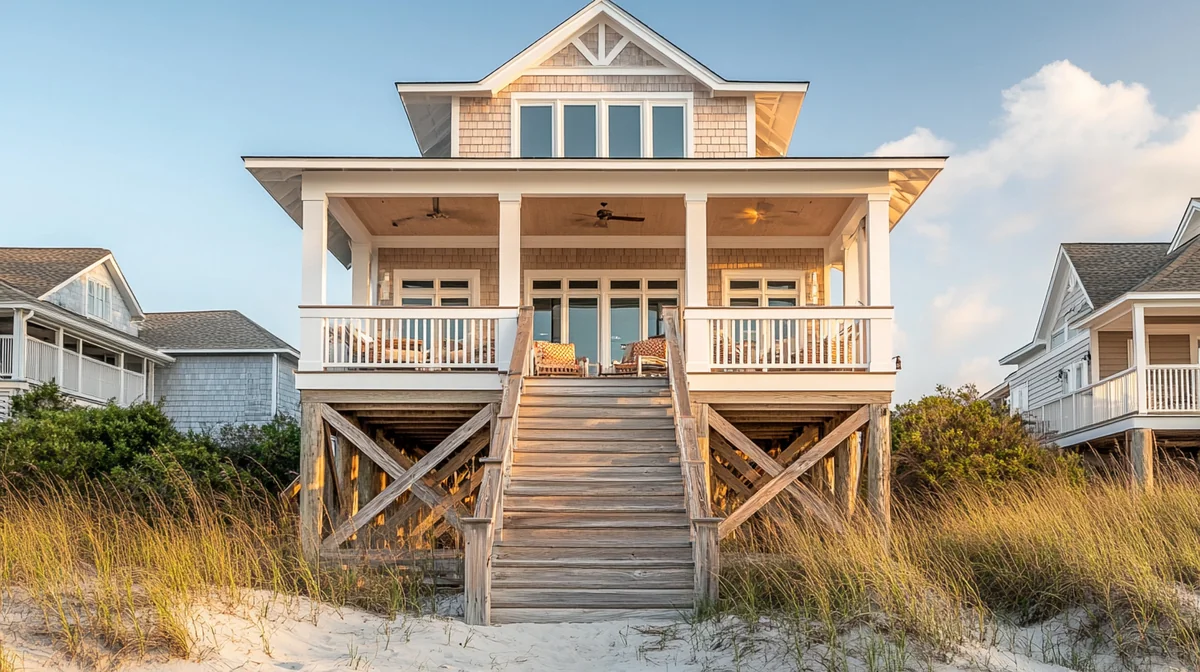


A beach house is one of the easiest property types to list — and one of the hardest to make truly profitable. The water view does not sell the property; it's the baseline every other listing in your market also has. The beach house that earns $600 a night in a market where the average is $280 is doing something different, and it usually starts long before the guest hits 'book.'
Cavmir works with beach house owners across Florida, California, the Caribbean, Mexico, and Southeast Asia. The pattern is consistent: the properties that convert at premium rates aren't just photographed with a wider lens — they're positioned as a specific experience for a specific guest. That's what this page is about.
How Beach House Marketing Is Different
Marketing a beach house looks deceptively simple — point a camera at the water, write a few lines about the ocean breeze, done. That's also why so many beach house listings underperform. The properties competing for the premium tier are doing something most hosts overlook: they're marketing the beach house experience, not the beach house itself.
Concretely, that means three things. First, the hero photography shows people using the space — a twilight shot of the deck at sunset with wine glasses on the railing, not an empty deck at noon. Second, the listing copy leads with scene-setting ("Coffee on the deck as the first surfers walk past at 6am") rather than feature lists ("3 bedrooms, 2 baths, ocean view"). Third, the amenity mix is deliberately curated for the beach experience — outdoor shower, towel bin, boogie boards, a reliable WiFi signal that reaches the beach — not a generic "fully equipped" checklist.
The difference between a generic beach house listing and a well-marketed one is often 30–60% in nightly rate, and a stronger booking window (guests book further out, reducing last-minute stress). In a saturated coastal market, that gap is what separates the viable rental from the one that gets delisted after two bad seasons.
Best Marketing ROI for Beach Houses
If you only spend on one thing, spend it on professional photography with a dedicated twilight session. Beach house listings compete visually, and twilight shots — the sky still blue, interior lights warm, maybe a fire in the fire pit — are the single highest-converting photo style in the coastal category. A $1,200–$2,000 shoot with a twilight add-on typically lifts booking conversion 30–50% within 6 weeks and holds that lift for 18+ months.
After photography, the next highest ROI is a named, branded listing. "The Surf Bungalow" or "Casa del Mar" outperforms "Beach House Near Pier" on click-through rate and repeat bookings. Guests remember names, not addresses. A simple logo, a consistent visual identity across Airbnb, Instagram, and a direct-booking site, and a short brand story adds 10–20% to rate over time.
Beyond that, Instagram Reels featuring the property (sunset drone, morning surf, the dog running on the sand) drives direct inquiries at a cost-per-booking that's typically 40–60% lower than Meta Ads. Influencer stays work here specifically — travel and lifestyle creators with 20k–200k followers in your region generate outsized returns in this category.
Who Actually Books Beach Houses in 2026
The beach house guest is not a single persona. Understanding which sub-segment you're targeting is the difference between "fills the calendar" and "fills the calendar at premium rates."
Multi-generational families (30–55 age range, 2–4 adults + children) are the biggest booking volume. They need multiple bedrooms, a real kitchen, and a laundry. They book 2–4 months out, stay 5–10 nights, and care deeply about cleanliness and kid-friendly safety (pool fencing, beach access, baby gates). Price-sensitive, but willing to pay for genuine space and convenience.
Couples on milestone trips (35–55, anniversary or honeymoon) book smaller 1–2 bedroom beach houses at high rates. They care about privacy, design, and a "postable" aesthetic. They book 6–10 weeks out and pay 40–70% more per night than families. These are the guests that make beach house marketing worth it.
Remote-work groups (3–6 friends, 28–42 age range) book 7–14 night stays in shoulder season. Fast WiFi, dedicated workspaces, and a large dining table they can Zoom from matter more than you'd expect. This is the fastest-growing segment in 2026 and where most of the shoulder-season revenue lives.
Seasonality & How Top Hosts Fill Shoulder Season
Beach house seasonality depends on hemisphere and climate. Florida and Caribbean properties peak November–April (Northern Hemisphere snowbirds) and dip in summer (too hot, too humid). Northeast US and Northern California beach houses peak May–September and go almost dormant November–March. Tropical properties (Bali, Tulum, Maldives) run year-round with a rainy-season shoulder.
The 2026 move for filling shoulder season is segment shifting, not price cutting. Target remote workers with 28+ night monthly-rate discounts (typical 40–55% off nightly), corporate retreats (offer the whole house for team offsites with invoicing), and off-season wedding elopements (2–4 night bookings at full rate for couples with photographers). Dropping rates in shoulder attracts bargain hunters who leave mediocre reviews; repositioning for a different guest keeps ratings and rates intact.
The one-year calendar that works: peak season at premium fixed rates (resist over-discounting for long stays), shoulder at 20–30% off with monthly promotions to remote workers, and off-peak filled with locals (staycations, elopements, birthday weekends) at shoulder-season rates.
Profit Margins for Beach Houses in 2026
Beach houses have higher operating costs than inland STRs — insurance (especially hurricane/flood zones), higher utility consumption (AC running all summer), beach-maintenance landscaping, and more frequent turnover cleaning. Budget 45–55% of gross revenue for operating costs in owner-operated beach houses; 60–70% if professionally managed.
Net margins in 2026 land in the 25–40% range for owner-operated beach houses with strong marketing, and 15–25% for professionally-managed ones. The single biggest margin driver is not cost control — it's rate. A beach house operating at $420/night average with 65% occupancy nets meaningfully more than one at $300/night with 75% occupancy, even though the gross revenue is similar.
Capital expenditures matter more here than most categories. Salt air eats appliances, HVAC systems, and furniture. Budget 5–8% of gross annually for capital repairs, furniture refresh, and major system replacement. Properties without this line item in the budget tend to underperform in year 4–5 when everything simultaneously wears out.
Top Global Markets for Beach Houses
Beach house demand concentrates around a predictable set of global markets. These are the areas where the combination of guest demand, regulatory stability, and rate potential all support strong STR performance in 2026.
- Florida Keys, USA
- Malibu, California
- Maui, Hawaii
- Tulum, Mexico
- Algarve, Portugal
- Amalfi Coast, Italy
- Seminyak, Bali
How Cavmir Works With Beach Houses
Cavmir markets beach house properties through the full Cavmir system. For this property type, the 12-step system emphasizes: professional photography with mandatory twilight sessions, branded property naming, direct-booking website with a specific beach-guest checkout flow, Instagram-first social content (Reels featuring the property, not stock beach imagery), and targeted Meta Ads to the three guest segments that actually book beach houses.
The typical engagement length is 4–8 weeks from brief to full deployment across OTAs, social, and direct booking. Our clients in coastal markets have lifted nightly rates 25–60% within a single peak season and built 20%+ of their annual revenue through direct bookings within 18 months of engagement.
What It Takes to Hit 4.9+ Ratings on Beach Houses
Hitting 4.9 stars or higher on a beach house requires attention to the specific anxieties and expectations of beach travelers. The five things that drive or kill the rating:
- Sand management. Provide an outdoor shower, a sand-free entry mat, beach-towel hooks outside the door, and a labeled "sandy laundry" basket. Guests who track sand inside and feel embarrassed about it write defensive reviews.
- Salt-resistant quality fixtures. Rust on faucets, corroded door handles, stained appliances — guests notice immediately in a premium beach house and mention it in reviews. Budget for coastal-grade fixtures.
- Working AC that keeps up with humidity. Beach guests are often coming in from heat and sand. An AC that takes 90 minutes to cool the bedroom costs you a star. Commercial-grade dehumidifier installation is worth it in tropical markets.
- Beach gear provided. Boogie boards, beach chairs, a cooler, towels, an umbrella — treating these as amenities rather than extras turns a "nice stay" review into a "thought of everything" review. Cost: $400–$800 one-time.
- Clear water safety information for families. Current conditions, nearest lifeguard, warning flags explained — a printed one-page sheet or a waterproof card by the door. Families with kids write you a five-star review specifically because you made them feel safe.
The shot list for a beach house
Beach house photography fails in one predictable way: every frame is the ocean, and none of them show what it is like to live in the house for a week. Guests already believe the water is there. What they cannot tell from the listing is whether the deck is usable at noon, whether the kitchen can feed eight, and whether the walk to the sand is two minutes or twenty. The shot list below is the one we brief for coastal properties, in the order the photos should appear.
- The deck at twilight, interior lights on, one table set. This is the cover photo in almost every coastal market.
- The walk to the beach, shot from the door looking toward the water, so the distance is obvious.
- The kitchen with the fridge open and the big table in frame. Families read this photo before they read the description.
- Every bedroom from the doorway, beds made hotel-tight, with the bed size visible.
- The outdoor shower and the gear: boards, chairs, the cooler, towels on hooks.
- The view from the primary bed, if there is one. If there is not, do not fake it with a lens.
- Morning light on the main living room, blinds open, no staging props that will not be there at check-in.
- The drone frame that shows the roof and the shoreline in one image, where local rules allow it.
- The parking, the entry keypad and the stairs. Boring photos that prevent one-star surprises.
Shoot in the season you sell. A Florida house photographed in a grey January looks wrong to the family booking for spring break, and a Cape Cod cottage shot in August will not help you sell October. If the property only gets one shoot a year, time it for the light you want guests to imagine. Our photography direction covers the brief, the shot order and the edit.
Writing the listing for a beach house
The title carries three things: the setting, the standout feature and the group it fits. "Oceanfront on 30A, heated pool, sleeps 12" tells a planner everything a filter cannot. "Beautiful beach house with amazing views" tells them nothing they did not already assume. Lead with what the water view is not: the pool, the dock, the walk-to-town, the rooftop.
The first line of the description is the only line most guests read before the fold, so it has to describe a moment rather than a floor plan. Coffee on the deck before the beach fills up. Rinsing the boards under the outdoor shower. Dinner for ten at the long table with the doors open. Write the day, then list the rooms. Put the beach access in plain measurements, minutes on foot or steps, not "close to the beach," because the guest who is misled about the walk writes the review you do not want.
Tag every amenity, including the dull ones: beach chairs, umbrella, cooler, boogie boards, high chair, pack-and-play, washer and dryer, outdoor shower, covered parking. Filters run on tags, and a coastal house that offers gear but never tagged it loses to the one that did. Say what the house does not have too. No pool, no elevator, a steep staircase, a road between the house and the sand. Guests forgive what they were told and punish what they discover. Our listing optimization work rewrites titles, first lines and amenity tags across every platform the property sits on.
Where a direct-booking site earns its keep for beach houses
Beach houses have the strongest repeat behaviour of any property type we work with. The same family takes the same house the same week every summer, and snowbirds return to the same coast every winter. Every one of those bookings that routes back through a platform pays a commission on demand the house created. A guest list, a returning-guest offer that goes out before the calendar opens and a booking page on your own domain keep that revenue. Run your own numbers in the direct-booking calculator.
The site itself needs a few pages the platforms cannot give you: the beach and the town, written for the searches guests actually type; a page for each trip type the house serves, family week, couples' escape, remote-work month; and a plain page on hurricane season and the cancellation policy that goes with it. A Google Business Profile for the property answers the map search, and the search work around the town name brings in guests who have never seen the listing.
Beyond Airbnb, list the house where coastal guests shop: Vrbo carries family groups, Google Vacation Rentals surfaces the direct site, and regional coastal marketplaces matter in some markets. The full comparison is in our booking platforms directory. Short video does real work for beach houses on Instagram and TikTok, because a sunset from the deck is the one clip that sells itself; the site is where that attention becomes a booking.
Frequently Asked Questions
What owners, operators, and prospective buyers ask us about this property type — answered with 2026 data.
What's the most profitable type of beach house to own in 2026?
The 3–4 bedroom beach house at 100–300 feet from the water typically generates the highest gross revenue per dollar invested. Oceanfront commands premium rates but carries significantly higher insurance, flood-zone, and capital-maintenance costs. 'Walk to beach' properties in the 200–1000ft range often have better net yields in 2026, especially in markets where insurance has tightened (Florida, Caribbean, Gulf Coast).
How much does a professional photo shoot cost for a beach house?
Budget $1,200–$2,500 for a comprehensive shoot with twilight session in most US coastal markets — more in remote destinations where travel/lodging is added. This typically includes 50–80 final images, interior, exterior, drone (where regulations allow), and lifestyle shots. It's the single highest-ROI marketing spend for this property type, consistently returning 5–10x within the first year through lifted booking rates.
Should I allow pets in my beach house in 2026?
Yes, with a pet fee of $75–$175 and clear rules. The pet-friendly segment has grown substantially since 2020, and beach markets have particularly strong pet-traveler demand. Pet-friendly beach houses in 2026 typically see 15–25% higher annual occupancy. Require a sofa cover clause, outdoor rinse station, and a 'no pets on beds' rule in the house manual. Charge the fee up front, not as damage deposit.
What insurance do I need for a beach house Airbnb?
At minimum: commercial STR liability ($1–2M coverage), wind/hurricane rider, and flood insurance if in Zone A/V or any coastal overlay. Many standard homeowner policies explicitly exclude STR use — confirm with your agent and likely add a commercial landlord policy. In 2026, insurance in Florida, Louisiana, and the Carolinas has tightened significantly; budget higher than you would for inland rentals.
Do beach houses need a pool to compete in 2026?
Depends on market. In Florida, Caribbean, and tropical markets, a pool has become nearly required for premium positioning — guests filter for it. In temperate markets (Outer Banks, Cape Cod, Pacific Northwest), a hot tub or outdoor soaking tub delivers similar benefit at lower cost. A pool adds $8,000–$25,000 in annual maintenance plus insurance; make sure the ADR lift justifies the expense before installing one.
How do I compete with large beach rental chains like Vacasa or Evolve?
On personality and presentation — not on price or convenience. Chain-managed properties tend to feel generic (similar decor, similar welcome packets, similar photography styles). Independent beach house owners who brand their property, tell a specific story, and handle guest communication personally routinely outperform chain-managed listings on both rate and rating. Your competitive advantage is that you actually care about the property.
What's the best social platform for beach house marketing in 2026?
Instagram Reels and TikTok, both heavily visual and driven by aspirational travel content. A single viral Reel showing a sunset from your deck can drive 30–50 direct inquiries. Pinterest continues to drive sustained traffic for beach house searches. Facebook matters less than it used to but still works for specific markets (Florida snowbird communities, for example). Focus effort on one platform before diversifying.
How do I handle hurricane season bookings and cancellations?
Set a clear written hurricane policy on your listing: if a named storm warning is issued for your region within 72 hours of arrival, guests get a date change or full refund. Communicate this proactively. In 2026, travel insurance has become more accessible and most OTAs accept 'Named Storm' as a valid cancellation reason. Don't wait for a storm to land — communicate policy up front to reduce friction.
What's a realistic occupancy target for a beach house in peak season?
75–85% during peak months (June–August in Northeast/California, December–March in Florida/Caribbean) is realistic for a well-marketed beach house in a strong market. Higher than 85% typically means you're under-priced. Aim for 65–75% annual blended occupancy at premium rates rather than chasing 85%+ at discount rates — gross revenue is nearly identical but the stress, wear-and-tear, and review risk are much lower at the former.
Should I use a property manager for my beach house in 2026?
Depends on distance and volume. If you live within 30 minutes, self-manage with a good cleaning team and virtual PMS (Hostaway, Guesty). If remote, use a hybrid: property manager for cleaning, maintenance, and guest-present tasks; dedicated marketing agency like Cavmir for listing, photography, branding, and distribution. Pure full-service managers typically charge 20–30% and under-invest in marketing — the split approach often yields better net returns.
What should the first photo of a beach house listing be?
The deck or terrace at twilight, with the interior lights on and the water visible, is the frame that wins most coastal markets. If the house has no water view, lead with the pool or the best outdoor living space at the same hour. The ocean-only shot goes second or third; guests already assume the beach exists.
How far from the beach can a house be and still market as a beach house?
Guests read distance in minutes on foot, so state it that way and let them decide. A house a ten-minute walk from the sand can market well if the walk is described plainly and the house offers what an oceanfront property cannot, usually a pool, more space or a lower rate. The listing that says "steps to the beach" for a fifteen-minute walk loses the review.
Which amenities do beach guests filter for most?
A pool where the climate supports it, air conditioning, fast wifi, parking, an outdoor shower, and beach gear such as chairs, an umbrella and a cooler. Families also look for a washer and dryer and a proper kitchen. Tag every one of them; a filter only finds what is tagged.
Do beach houses get more repeat guests than other rentals?
In our experience yes. Families return to the same house and the same week for years, and winter guests return to the same coast. That loyalty is why a returning-guest email and a direct booking path matter more for a beach house than for most property types.