$225
Avg. Nightly Rate
63%
Avg. Occupancy Rate
$4,250
Avg. Monthly Revenue
7–10%
Est. Cash-on-Cash ROI
HIGH
Seasonality
MEDIUM
Regulatory Burden

* Market averages. Cavmir-managed properties typically exceed these figures by 25–45%. Data sourced from AirDNA, STR market reports, and Cavmir internal analytics.

The Market

Why Muscat is One of the World's Premier STR Markets

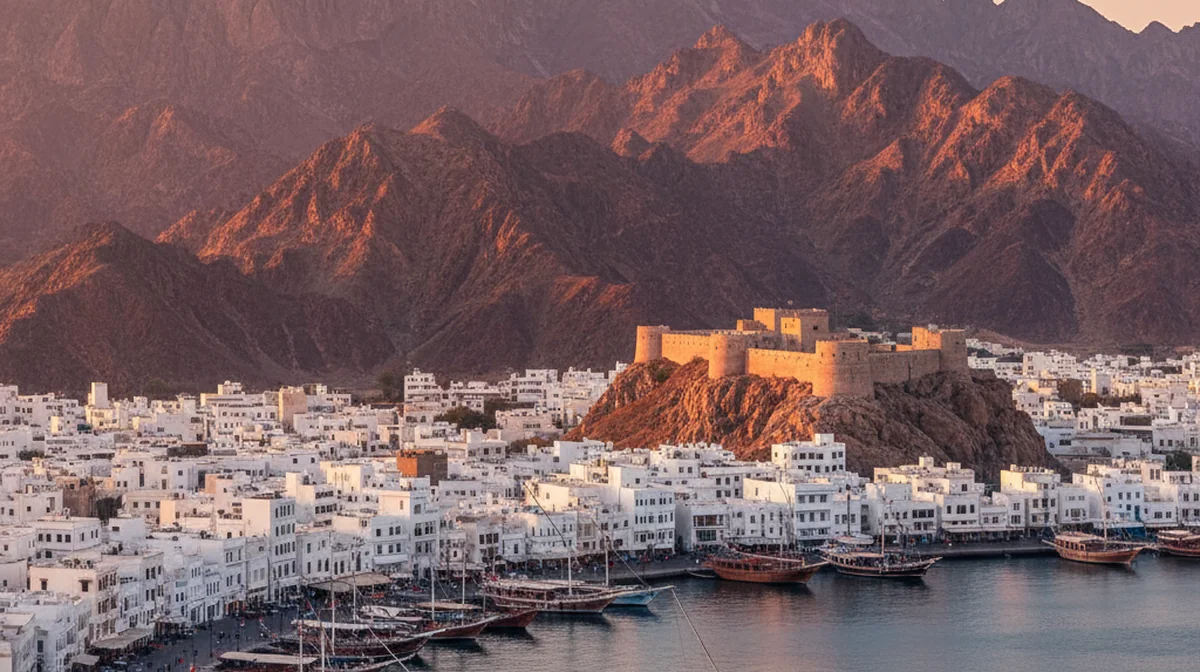
Muscat is the Gulf's quiet alternative — a capital that has kept its low-rise skyline, its whitewashed walls, and its 16th-century Portuguese forts while the rest of the region built upward. Muscat Bay and Jebel Sifah anchor the luxury villa market with The Chedi and Alila as anchor hotels; Al Mouj's marina development runs the accessible-luxury corridor; Shatti Al Qurum holds the embassy-and-long-stay market. Visitors who have already done Dubai and are looking for something slower, older, and more architecturally coherent find it in Muscat.

Oman's STR market is small but structurally attractive — light regulation, strong European arrival growth, and a visitor base that skews older and higher-spending than Dubai's. Peak runs October through April; summer is quiet outside the Salalah khareef (monsoon) corridor further south. Muscat Bay and Sifah villas command the highest rates; Al Mouj apartments serve the mid-luxury corridor; Shatti Al Qurum caters to relocation and 30-to-90-day stays.

Top Attractions & Landmarks

  • Sultan Qaboos Grand Mosque
  • Mutrah Souq
  • Royal Opera House Muscat
  • Al Alam Palace
  • Jebel Sifah Marina
  • Wadi Shab
  • Ras Al Jinz Turtle Reserve
  • Nizwa Fort (day trip)

Nearby Markets: Dubai  |  Doha

Airbnb marketing services in Muscat, Oman, Middle East
Why Cavmir

The Cavmir Advantage
in Muscat

Cavmir markets Muscat to the traveler who has already exhausted Dubai and wants the Arabia that came before — the forts, the souks, the wadi swimming holes, the wild turtle beaches at Ras Al Jinz. We build the quiet-luxury brand story that Oman deserves and that most operators here under-tell.

State of the Industry · History

The Muscat STR Market — Past & Present

Muscat is one of the oldest continuously inhabited port cities in the Arabian Peninsula — the natural deep-water harbor and its flanking mountain ranges have anchored trade for well over two thousand years. Oman's maritime reach in the 17th through 19th centuries was extraordinary: the Omani Sultanate controlled Zanzibar, parts of the East African coast, and sections of the Persian Gulf, with Muscat as the imperial capital and Stone Town on Zanzibar as the frequent secondary residence of the sultan. Portuguese fortifications from the 1500s (Al Jalali and Al Mirani forts still frame the Old Muscat harbor), Omani palaces, and British protectorate-era influence all layer on top of each other. Sultan Qaboos bin Said, who ruled from 1970 to 2020, deliberately reopened the country from decades of isolation, built modern infrastructure, and established the cautious, culturally-grounded tourism policy that distinguishes Oman from its neighbors.

The STR market in Muscat is younger and less developed than Dubai's or Doha's but is accelerating. Oman's Vision 2040 strategy places tourism among the five priority sectors for economic diversification away from hydrocarbons, and the regulatory framework for short-term rentals has been formalized through the 2010s and early 2020s under what was the Ministry of Tourism and is now the Ministry of Heritage and Tourism. The inventory concentrates in three corridors: Muscat Bay and the Old Muscat sea-facing neighborhoods, Al Mouj (The Wave) marina and beachfront integrated-lifestyle development, and the Barr Al Jissah / Sifah coastal corridor south of the city where The Chedi, Shangri-La, and private villa communities anchor the luxury segment. Foreign ownership became possible in 2006 through Integrated Tourism Complex (ITC) designations — a specific set of approved developments where non-Omanis can hold freehold title, and almost all serious foreign-owned STR inventory in Muscat sits inside these ITC zones.

Pricing Strategy & Seasonality

Pricing, Seasonality & When to Capture ROI

Pricing Strategy

Al Mouj marina apartments run USD $150–$400/night for 1–2BR inventory, with larger beachfront apartments and townhouses reaching $500–$900/night in peak season. Muscat Bay villas with private pools and sea views clear $400–$1,500/night. Barr Al Jissah and the Sifah corridor luxury villas run $600–$2,500/night at the top end for full-staff private-beach compounds. Downtown and older Muscat apartments sit $80–$250/night and serve the business-traveler and regional-weekend segment. Muscat pricing is generally below Dubai's headline rates but the guest is typically a higher-intent culturally-curious traveler with longer average stays, which changes the revenue math materially.

Seasonality & ROI Windows

Strong winter-peak seasonality driven by climate. Peak: November through March (pleasant 20–30°C days, clear skies). Super-peak: mid-December through mid-February and Eid holiday windows. Shoulder: April and October. Low: June through August (extreme heat regularly above 40°C, humidity along the coast). The khareef (southern monsoon) window in Salalah from June to September actually inverts regional seasonality — Omanis and GCC travelers flood south for the cool misty weather, so Muscat operators lose the GCC-staycation segment to Salalah in summer.

Regulation & Licensing · 2026

What the Law Requires in Muscat

Oman regulates tourism accommodation through the Ministry of Heritage and Tourism (MHT), which issues tourism licenses across categories including hotel apartments, tourist rental apartments, and tourism villas. Short-term rentals in residential inventory require MHT approval, a commercial registration from the Ministry of Commerce, Industry and Investment Promotion (MOCIIP), and local municipality sign-off. The tourism tax in Oman is a combined figure — typically 4% tourism tax plus 5% VAT plus a municipal fee — collected per-night from the guest and remitted by the operator. Operating without MHT license carries genuine risk: fines, platform delisting, and visa complications for foreign operators.

Foreign ownership is the defining structural feature. Non-Omanis can hold freehold residential title only within Integrated Tourism Complex (ITC) designated developments — Al Mouj (The Wave), Muscat Bay, Barr Al Jissah Residence, Sifah (Jebel Sifah), Salalah Beach, and a handful of others. ITC property comes with residency rights for the owner and immediate family, which is meaningful for international buyers. Non-ITC residential land is restricted to Omani nationals and GCC citizens. This structural constraint means foreign-operator STR inventory is functionally concentrated in those specific developments, with each community having its own rental-program rules and often mandating that short-term rental operate through designated channels. The 2024–2026 direction has been more active MHT enforcement against unlicensed operators, clearer guest-data sharing requirements, and some community-level tightening on rental-program participation. The regulatory picture is investor-friendly within the ITC framework and unnavigable outside it.

Market-Specific Tips & Challenges

Local Tips & Unique Market Challenges

Tips That Actually Move Revenue in Muscat

The Muscat strategic tip: position explicitly as the culturally-grounded alternative to Dubai, not as Dubai-lite. The guest who chooses Muscat is making an active choice — they've seen Dubai and they want wadis, frankincense markets, centuries-old forts, traditional dhow cruises, and a country where the cities close at reasonable hours and the mountains are genuinely empty. Listings that compete on luxury-amenity checklists against Palm Jumeirah inventory lose the comparison badly; listings that lead with the pre-dawn drive to Wadi Shab, the Bimmah sinkhole picnic, the Nizwa Friday goat market, and the Jebel Akhdar drive capture the specific audience that's looking for exactly that experience.

Tactically: first, ITC compliance is non-negotiable — non-Omani operators outside the ITC zones are operating outside the legal framework, and the MHT and community-level enforcement is real. Second, build the excursion catalog inside the listing — the Nizwa day, the Wahiba Sands overnight, the Jebel Akhdar drive, the Musandam dhow cruise — and present the week as planned itineraries guests can choose from. Third, the GCC-regional weekend market (Saudi Arabia, UAE residents, Bahrain, Qatar) is structurally important and has different content preferences than Western audiences — Arabic-language listing copy and imagery featuring family-compatible experiences converts at materially higher rates in that segment. Fourth, the quietness of Muscat is a genuine feature — lean into it. Some travelers specifically want a beachfront villa with no club scene, no brunch culture, and no Jumeirah-adjacent chaos, and that audience is structurally underserved globally.

Unique Muscat Challenges

ITC-ownership constraint limits where foreign operators can build inventory. Summer heat (June–August) kills occupancy. MHT licensing timelines can stretch for first-time operators. The alcohol-service framework (hotels have licenses, residences generally don't) affects what operators can offer guests. Community-level rental-program rules vary across ITCs and can constrain pricing flexibility. The Muscat-to-Salalah summer GCC flow means summer isn't rescuable the way it is in other regional markets.

A Curious Muscat Fact
The Omani Sultanate ruled Zanzibar from 1698 through most of the 19th century, and at one point Sultan Said bin Sultan effectively moved the imperial capital from Muscat to Stone Town — the sultan lived in Zanzibar and governed Oman remotely. The architectural and cultural DNA shared between Muscat and Stone Town (similar carved doors, similar merchant-house courtyards, similar Swahili–Arabic fusion in elements of the built environment) is a direct result. A Muscat villa whose listing integrates the Zanzibar connection into its cultural narrative tells a story Dubai and Doha cannot match.
Finance Essentials — Muscat
🛡️

Insurance

Omani property insurance through Dhofar Insurance, Oman Qatar Insurance, AXA Gulf, and National Life covers fire, theft, and third-party liability. STR-specific endorsements are available and increasingly standard at ITC developments. Budget OMR 400–OMR 2,500 annually depending on property and coverage. Sandstorm, coastal-erosion, and flash-flood cover is worth explicitly confirming — base policies don't always include all three. Some ITC developments carry building-level insurance alongside owner-level, which affects what operators need to cover individually.

🧾

Property & Income Tax

Oman has no personal income tax on individuals — rental income earned by individuals is not taxed at source. Corporate tax 15% applies for entity-level structures above thresholds. VAT 5% (introduced 2021) applies to tourism accommodation services. No property tax on residential property. Registration fees (3% of property value at acquisition) apply at transfer. The absence of personal income tax is a material structural advantage for individual foreign owners holding ITC property.

🏦

Mortgages & Financing

Omani mortgages for foreign non-residents are limited and generally tied to ITC developments. Bank Muscat, National Bank of Oman, HSBC Oman, and Standard Chartered Oman have non-resident ITC-specific products with typical LTV 50–65%. Developer-financed payment plans at Al Mouj, Muscat Bay, and Jebel Sifah are common and often more attractive than bank financing. Cash purchases remain the dominant foreign-buyer route.

Future Outlook · 2027 & Beyond

Where Muscat is Headed Next

Muscat through 2027 and beyond has structurally supportive drivers. Vision 2040 prioritizes tourism as a diversification sector, Muscat International Airport keeps expanding direct routes, and Oman's visa liberalization (including extended tourist visas and GCC residency-holder entry) keeps widening the addressable guest base. The ITC framework is stable policy and new designations are periodically announced. Risk factors: regional geopolitical sensitivity affects guest sentiment episodically, the hydrocarbon-economy dependency creates macroeconomic cycles, and Saudi Arabia's rapidly expanding tourism sector (NEOM, Red Sea Project, AlUla) will pressure the regional premium-alternative positioning. Cavmir's thesis: Muscat remains structurally under-marketed to the Western culturally-curious audience that would pay premium for exactly the product Oman offers, and operators who build that audience directly — rather than competing on Dubai-comparison logic — capture a segment competitors largely ignore.

From the Desk of Sofie Sinag

Why We Love Marketing in Muscat

Muscat is the Gulf capital that did not trade its identity in for skyline, and we love working here for exactly that reason. The city is built into the Hajar Mountains along a series of separate bays rather than as one connected grid, which gives it a geography that photographs unlike any other Gulf market. The Sultan Qaboos Grand Mosque, the Royal Opera House, the Mutrah Corniche with the 17th-century Portuguese-built Al Jalali and Al Mirani forts guarding the old harbor, the frankincense-scented souqs of Mutrah — this is a city where the cultural anchors were never demolished to make room for towers. Muscat Bay (the integrated residential-and-hospitality development with a Jumeirah-managed hotel), Al Mouj Muscat (the marina master-plan with the Kempinski and a growing villa and branded-residence inventory), Sifah on the coast east of the city (the Jebel Sifah resort community with its own marina and 18-hole course), and Shatti Al Qurum (the established beachfront embassy-and-residential district) each anchor a distinct villa-rental story, and a generic Oman positioning leaves every one of them underselling.

What keeps us coming back is how much range sits within a day's drive. The Wahiba Sands dune country is two and a half hours south for the desert-camp night; Jebel Akhdar (the Green Mountain) and Jebel Shams (the Grand Canyon of Arabia) are three hours inland and a full thousand meters cooler than the coast — Anantara Al Jabal Al Akhdar and Alila Jabal Akhdar have built a genuinely serious mountain-resort tier at 2,000 meters; Nizwa with its restored 17th-century fort and Friday goat market anchors the interior cultural circuit; Wadi Shab and Wadi Bani Khalid run turquoise pools through canyons an hour or two from the city. The Muscat Festival in January-February and the Royal Opera House's season anchor a cultural calendar most Gulf-generic marketing never references. Our job is helping Muscat and coastal-Oman operators stop being lumped into generic Middle East luxury copy and start owning the specific bay, the specific mountain or desert extension, and the specific cultural heritage that actually convert the Oman-seeking guest — who is a different guest than the Dubai-seeking guest, and who pays a different rate for the reason.

Cavmir's Muscat Cheat Sheet

The Picks We Recommend for Your Welcome Book

How we actually use Muscat when we're scouting the bay-by-bay coastal geography, reshooting an Al Mouj or Muscat Bay villa library, or briefing a client on why the generic-Gulf positioning is costing them the traveler who specifically wants Oman rather than Dubai.

Morning

Mutrah Corniche at 6:30am before the souq opens

The corniche in early light — the fish market activity, the dhows on the harbor, the Portuguese forts on the headlands — is the composition that explains Muscat's identity fastest. We schedule reshoots at this hour because the harbor light and the empty corniche carry a story the midday tour-bus frame completely loses.

Golden Hour

The Sultan Qaboos Grand Mosque's grounds or the Al Bustan Bay overlook

The Grand Mosque at late afternoon, and the Al Bustan palace-hotel bay at sunset with the Hajar Mountains behind it, are two of the single most distinctive compositions in the Gulf. We build hero libraries around both depending on the property's geographic home inside Muscat's separated-bay city structure.

Neighborhood Walk

Mutrah Souq through to the fish market and the Al Mirani fort base

One of the last genuine working souqs in the Gulf — frankincense, silver, textiles — and a working fish market on the same morning route. We route clients here deliberately to explain why Muscat's heritage context is a defensible brand asset that the glass-and-steel Gulf competitors cannot replicate.

Dinner That Photographs

Bait Al Luban near the Mutrah Corniche or The Restaurant at The Chedi

Bait Al Luban for the serious Omani-cuisine room with sea views and traditional majlis seating; The Chedi's restaurant for the architectural-set-piece dinner that has defined Muscat's luxury dining for two decades. Two completely different F&B stories and we brief clients to book both on scouting trips.

Local Obsession

Friday morning at the Nizwa goat market two hours inland

The Friday livestock market at Nizwa is the single most identifiable cultural scene in Oman's interior, and almost no Muscat villa marketing packages it. A property that builds a credible Nizwa day inside its concierge program accesses a cultural-depth layer the generic Gulf brief cannot touch.

Shoulder Season Secret

Mid-October through early December and late February through April

Weather steps down from the summer heat, the mountain and desert extensions become fully viable, and the rate structure remains below the December-and-January peak. This is when we schedule reshoots for coastal villas whose winter-only content libraries have gone stale.

Weekend Escape

Wahiba Sands desert camp or Jebel Akhdar mountain resort

Wahiba for the classic dune-and-Bedouin-camp night; Jebel Akhdar for the 2,000-meter cooler-air escape to terraced rose farms and infinity pools hung over canyons. Either extension repositions a Muscat stay from city-break to multi-landscape Oman — which is the actual product the rate can support.

What Guests Ask For

Dress-code expectations at the Grand Mosque, alcohol logistics, and driving-versus-driver logic for the interior extensions

Every Muscat inquiry audit we run surfaces these three. The Grand Mosque dress code in particular — covered shoulders and knees for men and women, headscarf for women — is a brand-integrity issue if the pre-arrival sequence doesn't handle it cleanly, because nothing goes sideways faster than a guest being turned away at Oman's most iconic visitor site.

Local Work · Composite Case Vignettes

What Cavmir Has Done for Muscat Properties

Representative Cavmir engagements in Muscat and coastal Oman. Property identifiers redacted; figures composited from internal analytics and market benchmarks.

Al Mouj marina branded residence
The Brief

A 3-bedroom branded-residence villa at Al Mouj Muscat was being marketed through a generalist Gulf-rental channel that priced it alongside Dubai Marina apartments with an entirely different product thesis. The marina-and-golf integration, the 18-hole Greg Norman course, and the Muscat-specific positioning were invisible in a funnel dominated by Dubai demand.

What We Did

We built a standalone brand that led explicitly with what Al Mouj offers that Dubai cannot — a smaller marina, a real golf course, the Muscat cultural context on the same drive — produced a library that captured the marina light at dawn and the mountain backdrop honestly, launched a direct-booking program with a Muscat-itinerary concierge layer (Grand Mosque morning, Mutrah souq evening, Nizwa day), and restructured paid media around Oman-specific and Al Mouj intent rather than generic Gulf-luxury keywords.

The Result

The villa stopped being cross-shopped against Dubai Marina inventory it was structurally unlike, ADR moved into alignment with the actual Al Mouj positioning, and the repeat-guest segment that specifically chose Oman over Dubai began forming within the first full year.

Muscat Bay boutique villa portfolio
The Brief

A 4-villa collection inside the Muscat Bay integrated development was being marketed with generic Gulf imagery that gave no sense of the mountain-meets-bay geography specific to this stretch of coast. The Hajar Mountains rising directly behind the villas and the bay's quieter character relative to the main Muscat corniche were entirely absent from the funnel.

What We Did

We rebuilt the portfolio brand around the bay-and-mountain geography as the headline composition, produced a library that captured each villa's relationship to the sea, the mountain wall, and the resort spine, launched a direct-booking program with mountain-and-desert extension packaging (Jebel Akhdar two-night add-on, Wahiba Sands overnight add-on), and restructured paid media around Muscat Bay and Oman-landscape intent.

The Result

Direct-booking share grew substantially, average length of stay extended as guests began adding the mountain or desert legs inside the same booking, and the portfolio stabilized the multi-landscape-Oman traveler as its core segment — which was the underwriting thesis the owners had always modeled but never previously been able to execute on in the marketing.

Shatti Al Qurum heritage hotel repositioning
The Brief

A 34-room boutique hotel in Shatti Al Qurum with a serious Omani-cuisine kitchen and direct beach access was being priced on OTAs against generic business hotels in the same district. The kitchen, the architectural interior, and the Royal Opera House proximity — the actual differentiators — were buried under amenity-list copy that made the hotel sound undifferentiated.

What We Did

We repositioned the hotel as Muscat's cultural-and-culinary boutique — walkable to the Royal Opera House, a kitchen that actually serves serious Omani cuisine rather than generic international, a compact architectural interior referencing traditional majlis forms — produced a library that treated the kitchen, the interior, and the beachfront context as co-headlines, launched a direct-booking program with an Opera-House concierge package, and restructured paid media around cultural-travel and culinary-Oman intent.

The Result

ADR on direct bookings moved meaningfully above the prior baseline within two peak seasons, the review mix shifted toward the kitchen and the cultural-proximity as the reasons guests had booked, and the hotel built a repeat-guest cohort of cultural travelers who had previously defaulted to chain hotels without considering the boutique alternative.

Ready to Grow in Muscat?

Let's Put Your Muscat
Property on the Map

Talk to Cavmir today. We'll show you exactly what your Muscat property is leaving on the table — and how fast we can change that.

Book a Free Strategy Call