Start here Work with Cavmir in Eilat
Get a Proposal (786) 751-3426
$165
Avg. Nightly Rate
68%
Avg. Occupancy Rate
$3,150
Avg. Monthly Revenue
8–11%
Est. Cash-on-Cash ROI
HIGH
Seasonality
LIGHT
Regulatory Burden

* Market averages. Properties marketed by Cavmir typically exceed these figures by 25–45%. Data sourced from AirDNA, STR market reports, and Cavmir internal analytics.

The Market

Why Eilat is One of the World's Premier STR Markets

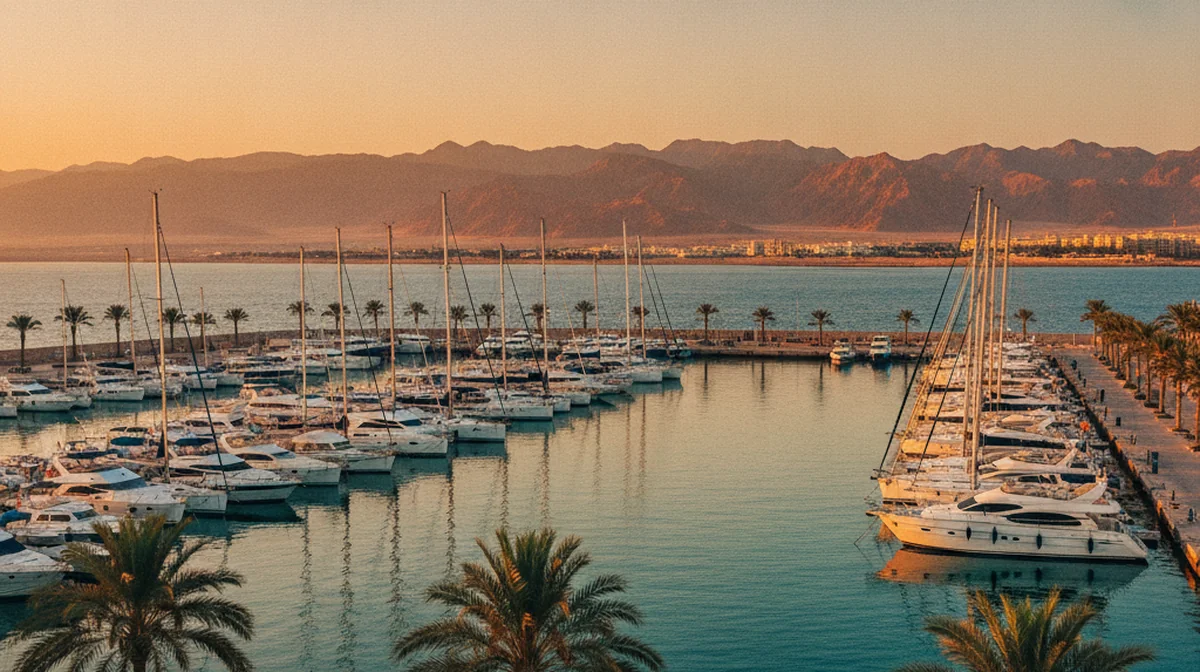
Eilat sits at Israel's southernmost point, where the Negev desert meets the Red Sea — a warm-water resort city built around coral reef diving, a full-service marina, and reliable winter sun. The Coral Beach Nature Reserve holds some of the most accessible reef snorkeling anywhere, the marina district anchors a walkable strip of restaurants and hotels, and North Beach runs the main hotel and rental corridor. Eilat's duty-free status and desert-meets-sea setting — a short drive from Timna Park's red-rock canyons — make it Israel's primary winter-sun destination.

Eilat's STR market is driven by domestic Israeli weekend and holiday travel plus international dive tourism and winter-sun visitors escaping colder climates further north. Peak season runs November through March when the city stays warm while much of Europe is cold; a second peak hits around local summer holidays. Marina and North Beach properties command the highest rates; villa-style rentals near Coral Beach serve the diving-focused traveler.

Top Attractions & Landmarks

  • Coral Beach Nature Reserve
  • Eilat Marina
  • North Beach
  • Underwater Observatory Marine Park
  • Timna Park
  • Dolphin Reef
  • Ir Ha'Adom (Kings City)

Nearby Markets: Jerusalem  |  Tel Aviv

Airbnb marketing services in Eilat, Israel, Middle East
Why Cavmir

The Cavmir Advantage
in Eilat

Cavmir markets Eilat beyond the domestic weekend crowd — positioning marina and beachfront inventory for the international winter-sun and diving traveler who has never considered a Red Sea resort city, with pricing calibrated around Eilat's sharp seasonal swing.

State of the Industry · History

The Eilat STR Market — Past & Present

Eilat sits at the very bottom of Israel, on a thin wedge of Red Sea coast at the head of the Gulf of Aqaba, with Jordan's Aqaba a short distance across the water to the east and Egypt's Sinai just to the west. For most of its history there was almost nothing here — a hot, dry corner of desert at the end of the country, valued for one thing, which was access to the sea. When the modern state took the site in 1949 it was a handful of huts; the town that grew up around the new port in the following decades was built deliberately, as Israel's window onto the Red Sea and the shipping lanes beyond.

What turned that outpost into a resort was the water itself. The northern tip of the Gulf of Aqaba holds coral reefs that are among the most accessible in the world — you can walk off a beach and be snorkelling over living coral within minutes — and from the 1960s onward Eilat reinvented itself around diving, sun and the sea. The hotel strip along the north beach and the lagoon, the marina, the Coral Beach Nature Reserve, the Underwater Observatory Marine Park and Dolphin Reef all belong to that second life. Behind the town, the desert does its own work: Timna Park with its ancient copper mines, the Red Canyon, the Eilat Mountains, and one of the great bird-migration crossings on Earth, where hundreds of thousands of birds funnel through the Rift Valley twice a year.

For an owner, the thing to understand is that Eilat is a purpose-built holiday town, not a city that happens to have tourists. It is Israel's warm-weather escape — the place the rest of the country flies to when it wants sun, sea and a few days off — and its rental demand runs on holidays, school breaks and the winter-sun calendar rather than on business or a coastline that fills a single summer. Get the calendar right and Eilat rewards you across most of the year; misread it and you are competing with a very deep hotel bench on price alone.

Pricing Strategy & Seasonality

Pricing, Seasonality & When to Capture ROI

Pricing Strategy

Eilat prices on a holiday calendar, and the biggest single lever you have is the Jewish holiday and school-break schedule rather than the day of the week. Passover in spring, Sukkot in autumn, the long summer school holiday and the mid-winter breaks are the dates that empty the rest of the country toward the Red Sea, and they book far ahead. When those windows land, you are not pricing against a quiet Tuesday — you are pricing against a whole nation trying to get south at once, and a rate held at its everyday level is money handed straight to the hotel next door. Load the holidays the moment the calendar is set.

The second lever is winter sun. While much of the northern hemisphere is cold, Eilat stays warm and bright, and that pulls two distinct guests at once: Israeli families escaping the northern winter, and European charter tourists flying in for guaranteed sun. That combination makes the deep-winter months a genuine high season here, which inverts the instinct of anyone used to a European or North American beach town where winter is the dead spot. Price December through March with confidence, not caution.

Because this is a leisure market, minimum stays can sit longer than they would in a business city — a two- or three-night floor is reasonable, and holiday weekends can carry more. But be careful not to over-restrict the shoulder weeks: a rigid four-night minimum in a soft stretch just sends the couple looking for a quick diving weekend to a hotel that will take two nights happily. Match the minimum to the window rather than setting one rule for the whole year.

Seasonality & ROI Windows

Eilat runs warmer and busier through more of the year than almost any other market in the country, but it is far from flat. The strong stretches are the winter-sun season from roughly December to March, and the holiday peaks around Passover in spring and Sukkot in autumn, plus the long domestic summer school holiday in July and August. Summer is brutally hot — the desert sun here is not a figure of speech — yet Israeli families still come for the sea and the pools, so the heat suppresses the experience without emptying the town. The genuinely softer weeks are the shoulders: late spring after Passover clears and the run into the deep heat, and the gap in November between Sukkot and the start of the European winter season. Treat those as your reshoot-and-maintenance windows and your longer-stay windows rather than fire-sale weeks, because the sun and the diving never actually stop.

Regulation & Licensing

What the Law Requires in Eilat

Israel does not run a US-style municipal short-term-rental permit system, so in Eilat there is usually no city licence to apply for in the way an American host would expect. But Eilat carries one genuinely unusual feature that shapes the whole market, and every owner here should understand it: the town is a VAT-free zone. Under the Free Trade Area in Eilat (Exemptions and Tax Discounts) Law of 1985, the standard Israeli VAT — which rose to 18% on 1 January 2025 — does not apply to many goods and services bought and consumed inside Eilat, and that expressly includes hotel and accommodation services. In practice a stay in Eilat is not carrying the VAT that the same stay would carry anywhere else in the country, which is part of why the destination competes the way it does. Be precise about this rather than sweeping: the exemption is local, it attaches to consumption within Eilat, and there have been national proposals to review or narrow it, so treat it as a live rule to confirm rather than a permanent fixture.

The critical thing to separate is VAT from income tax. VAT is an indirect, local exemption; the income tax you owe on your rental profit is a national matter and it does not go away because you are in Eilat. And here Israel's treatment is stricter than many hosts assume. The favourable passive-rental tracks — the monthly exemption threshold and the flat 10% tax option — are designed for long-term residential letting. The Tax Authority has consistently taken the view that hotel-style short-term hosting is an active business, which means profit is taxed at your marginal income-tax rate rather than the passive 10%, and National Insurance (Bituach Leumi) contributions come into play as well. That is a materially different bill, and it is the single most common thing owners here get wrong.

The other constraints are the ones that apply to any Israeli apartment. Municipal property tax, Arnona, is due to the city. If your unit sits in a building with a house committee, the va'ad bayit, its rules and the building's temperament toward a steady flow of holiday guests matter, and a hostile committee can make life difficult even where the law is on your side. None of this is marketing advice, and none of it is something to take from a web page. Confirm your VAT position, your income-tax classification and your building situation with an Israeli lawyer and an Israeli accountant before you list.

Market-Specific Tips & Challenges

Local Tips & Unique Market Challenges

Tips That Actually Move Revenue in Eilat

Lead with the water and the walk. In Eilat the whole product is proximity to the sea, so the first line should say exactly what a guest can reach on foot — the north beach and hotel zone, the lagoon and marina, or the Coral Beach and dive sites down the southern shore. "In Eilat" tells a guest nothing; "a five-minute walk to the lagoon, twenty minutes to Coral Beach" tells a family and a diver two different, useful things.

Be honest about the heat, because it protects your reviews. Eilat summers are extreme, and the single worst thing you can do is let a guest arrive in July expecting a gentle beach breeze. Say plainly that air conditioning is essential here, confirm that yours is strong and works in every room, and you turn the climate from a complaint into a reassurance. AC is not a nice-to-have amenity in this market — it is the amenity, and a unit that cannot cool properly should not be taking summer bookings at all.

Sell the family, because the family is the core guest. The domestic Israeli market that fills Eilat travels in family groups on school holidays, and a listing that shows sleeping for four or five honestly, with a real kitchen and a pool, speaks directly to the person actually booking. A pool in this climate is worth stating clearly and photographing well; in the desert it is close to decisive.

Help with the trips guests actually come for. Diving and snorkelling arrangements, a steer toward the Underwater Observatory or Dolphin Reef, and honest guidance on the desert — Timna Park, the Red Canyon, the Eilat Mountains, and the bird migration for the people who come specifically for it — all read as local knowledge rather than filler. You are not the tour operator, but pointing guests at the right thing is part of why they rebook.

State the getting-there logic plainly. Ramon Airport, about eighteen kilometres north near Timna, opened in 2019 and handles the domestic flights and the international and charter traffic that feed the town; the alternative is a long drive down from the centre of the country. Telling a guest which option suits them, and roughly how long the road really takes, prevents the arrival that starts a stay off badly.

Unique Eilat Challenges

The first challenge is the heat, and it is real. The desert summer is punishing, and a unit that reads beautifully in photos but cannot cool a bedroom at night will earn the reviews it deserves. Invest in cooling and in honesty about it, and the season becomes an asset rather than a liability.

The second is a deep hotel bench. Eilat was built as a hotel town, and the strip is dense with rooms that discount hard, especially in the shoulder weeks. You do not win here by undercutting a chain hotel on a soft Tuesday — you win by offering the things a hotel cannot: a real kitchen, space for a family, a home base near the water at a price that makes sense across a longer holiday stay.

The third is the regional security situation, which is simply a planning reality to name and move past. Tourism to Israel and Eilat, and the flights that serve it, are sensitive to events in the wider region, and that has affected visitor numbers and air access at times. It is not something to predict or dramatise. The honest, useful posture is to build on the things that endure — the domestic resort demand, the year-round diving and desert, and the winter sun — and to keep your cancellation and communication practices calm and clear so guests trust you when plans wobble.

The town with no VAT
Eilat is the only place in Israel where the national VAT largely does not apply. Under the 1985 Free Trade Area law, most goods and many services bought and used inside the city — accommodation included — sit outside the standard VAT that rose to 18% across the rest of the country in January 2025. It is one of the genuinely distinctive facts about the destination, and it is more than trivia for an owner: it is part of why Eilat can compete as a value winter-sun resort against places abroad. Just keep the two taxes straight in your head. The VAT relief is local and it belongs to the guest's consumption in Eilat; the income tax on your rental profit is national, it still applies, and for short hosting it is usually the higher business rate rather than the gentle passive track. Selling the value the free-trade zone creates is fair game. Assuming it lets you off your own tax bill is the mistake.
Finance Essentials — Eilat
🛡️

Insurance

A standard residential policy is unlikely to respond correctly to paying guests coming and going, and a busy holiday unit near the water has its own exposures: guest liability, water damage, and wear from a constant turnover of families. Ask your insurer directly how the policy treats short-term paying guests, whether guest liability is covered inside the unit and in any shared areas or around a pool, and whether your building's own insurance interacts with yours. Get that in writing before your first booking rather than after a claim, especially given how hard the AC and the pool are working in this climate.

🧾

Property & Income Tax

Eilat's VAT exemption is the headline, but it is not income-tax relief. Profit from short-term hosting is generally treated by the Israeli Tax Authority as active business income, taxed at your marginal rate rather than the passive 10% track, with National Insurance contributions on top, and municipal Arnona due to the city regardless. The favourable long-term-rental exemptions do not apply to hotel-style short stays. Platforms do not settle your Israeli tax for you, and direct bookings are entirely your responsibility. Confirm your classification, your thresholds and your filing obligations with an Israeli accountant — this is general information, not tax advice.

🏦

Financing & Ownership

Financing conditions in Israel differ from North American norms, and foreign buyers in particular should take local advice before assuming a structure they know from home applies here. The Eilat-specific point is that anyone underwriting projected short-term rental income needs that income to be both legally clean and realistic across a seasonal, holiday-driven calendar — not a flat year of full occupancy. Settle the tax classification and the building question before the financing question, and talk to a local advisor who has actually closed short-term rental purchases in the Eilat market. Treat this as general information rather than financial advice.


Future Outlook · 2027 & Beyond

Where Eilat is Headed Next

Eilat's core is durable because it is domestic. This is the country's own warm-weather resort, the place Israeli families go for Passover, Sukkot, the summer break and a winter dose of sun, and that role does not depend on any single stream of foreign visitors staying fashionable. When international travel and flights soften — and in this region they periodically do — the domestic market is the floor that holds Eilat up, and that floor is real. The winter-sun proposition, the year-round diving and the desert nature behind the town are enduring reasons to come that outlast any given year's headlines.

The regulatory question to watch is the VAT-free status itself. The Eilat exemption is a long-standing feature, but it has repeatedly surfaced in national budget discussions, and any narrowing of it would change how the destination prices against competitors abroad. It is not something to predict, only something to keep an eye on and to confirm with a professional at the time you list, rather than assuming today's rule is permanent. The same goes for the income-tax treatment of short hosting, which the Tax Authority has been tightening rather than loosening.

On the demand side, the improvement in access from Ramon Airport since 2019 has made both the domestic hop and the European charter route easier, and that supports the two guest streams the town relies on. The competitive pressure, as everywhere, is quality against a deep hotel supply. As short-term listings multiply, the market splits between well-presented homes with a clear story — the family space near the water, the cool unit that beats the heat, the honest local steer on diving and the desert — and a long tail of generic listings that compete only on price against hotels that will always out-discount them. Presentation, a direct-booking relationship and honest positioning are what keep you out of that discount tier.

From the Desk of Sofie Sinag

Why We Love Marketing in Eilat

Eilat is a satisfying market to work in because the product is so honest. There is a real sea with real coral, a real desert behind the town, and a real reason people come — sun, water and a break from the rest of the country. You do not have to manufacture a story here; you have to tell the true one clearly, and that suits the way we work. The winning listing says what a guest can walk to, admits the heat and answers it with strong AC, and shows the family space and the pool without dressing them up.

We like that the demand is a calendar you can actually read. Passover, Sukkot, the summer school holiday and the winter-sun months are visible a year out, and once you can see them, marketing becomes a matter of showing up early and pricing with confidence instead of guessing at a mood. The free-trade-zone angle is a genuine gift, too — it is a real, verifiable reason Eilat offers value, and value is a story guests trust when you tell it straight rather than hype it.

And we like that this market rewards steadiness. The regional situation means some years are harder than others, and the honest, calm operator who communicates well and leans on the durable domestic demand is the one who comes through it with a business intact. Properties here that tell the truth clearly — the beach, the walk, the cooling, the honest getting-there logic — outperform the ones reaching for "paradise" and "oasis," every time. That is a market we enjoy.

Market Intelligence · Seasonality

Airbnb seasonality in Eilat, month by month

Eilat runs on a holiday and winter-sun calendar. Demand holds warm and high across most of the year, spikes hard on the Jewish holidays and the summer school break, and softens only in the shoulder weeks. Here is how the year actually books — and what to do with each stretch.

Peak demandSteadyQuiet

The winter-sun season

Roughly December through March is a genuine high season, not a dead spot. While the northern hemisphere is cold, Eilat stays warm and bright, drawing Israeli families south and European charter tourists in for guaranteed sun. Price these months with confidence and resist the instinct — borrowed from other beach markets — that winter means discounting.

The holiday spikes

Passover in spring and Sukkot in autumn are the two hardest domestic spikes, with the long summer school holiday and the winter school breaks close behind. These are known, calendar-fixed dates that empty the rest of the country toward the Red Sea. Load holiday pricing the moment the calendar firms up and set your longer minimums here.

The soft shoulders

The gaps are the late-spring weeks after Passover and the run into the deep heat, plus November between Sukkot and the European winter season. Nothing turns those into a peak, but the sun and diving never stop. Hold your rate, open up longer-stay pricing, and use the quiet for reshoots and maintenance.

Dates that fill first

Passoverspring
The largest domestic spike of the year, as families take the holiday and the school break south to the sea.
Sukkotautumn
A second major holiday peak in pleasant weather, one of the most reliable fill windows on the calendar.
Summer school holidayJuly–August
Extreme heat, but domestic families still come for the sea and the pools — strong AC is non-negotiable here.
Winter sun & HanukkahDecember–March
Domestic escapes and European charter tourists chasing guaranteed sun make deep winter a true high season.
Market Intelligence · Guests

Who books Eilat Airbnbs — and how far ahead

Domestic families
The core of the market. Israeli families travelling on Passover, Sukkot and the summer break, booking family-sized space with a kitchen and a pool near the water.
Domestic couples & weekenders
Shorter breaks for sun, sea and nightlife along the north beach and lagoon. Lower on lead time, quick to book a warm winter weekend.
European winter-sun charter tourists
Flying into Ramon for guaranteed sun when home is cold. Fixed charter dates, longer stays, they book once the flights are set.
Divers & snorkellers
Drawn to the Coral Beach reserve and the southern dive sites year-round. They value proximity to the water and a steer on the dive centres.
Nature & desert travellers
Timna, the Red Canyon, the Eilat Mountains and the bird migration pull a quieter, curious guest who wants honest local guidance.

The booking window

The holiday peaks book furthest ahead — Passover, Sukkot and the summer break reward being visible early, because families plan those months well in advance. Domestic weekend and winter-sun trips are the opposite, a short window that rewards being instantly bookable and easy to reach from Ramon. Charter guests sit in between, moving once flights are confirmed.

Typical stays

Holiday and family stays run longer, often the length of a school break, and value space and a kitchen. Couples and weekenders skew short. A minimum matched to the window — a longer floor on the holidays, a shorter one in the soft shoulders — earns more than a single rigid rule applied all year.

Where guests come from (domestic)

Tel AvivJerusalemHaifaBe'er Shevathe central region

Where guests fly in from (international)

European charter citieswinter-sun marketsregional visitors
Ramon Airport, about eighteen kilometres north near Timna, handles the domestic flights and the international and charter traffic; the alternative is a long road trip down from the centre of the country. Tell the guest which option suits them and how long the drive really takes — it prevents an arrival that sours the stay before it starts.
Market Intelligence · What Wins

The Airbnb that wins in Eilat

Family-sized, well-cooled units near the water win here — walkable to the north beach and lagoon or to the Coral Beach dive sites, with strong AC and a pool. In this climate, cooling beats a view and honest space beats a clever adjective. Say which beach and how far in the first line.

Amenities that move bookings here

strong, room-by-room ACa poolwalk to the beach or lagoonfamily-sized sleepinga real kitchennear the dive siteshonest getting-there guidance
Map the walk to the water and name the trips guests come for — the reefs at Coral Beach, the Underwater Observatory, Timna and the desert. In a purpose-built resort town, that honest local steer does more work than any "paradise."
Straight Answers

Eilat Airbnb Marketing:
Questions, Answered

Does Cavmir offer Airbnb marketing services in Eilat?

Yes. Cavmir works with short-term rental owners and boutique hotels in Eilat and across Israel — property branding, listing optimization, photography direction, direct-booking websites, SEO, and paid campaigns. Properties near Coral Beach Nature Reserve, Eilat Marina and North Beach are exactly the kind of stays we market.

What do short-term rentals earn in Eilat?

The market snapshot on this page shows average nightly rates around $165 with occupancy near 68% for Eilat. Treat those as directional market averages, not guarantees — the spread between a well-marketed property and a poorly marketed one in the same market is wide.

When is demand highest for Eilat rentals?

Demand in Eilat is distinctly seasonal — a strong peak stretch carries much of the year, which makes pricing discipline and early-calendar marketing matter more, not less. The properties that win are the ones already visible before the peak begins.

Are short-term rentals regulated in Eilat?

Eilat is comparatively light on short-term rental regulation today, but rules change quickly in this industry. Confirm current requirements with local authorities before you list. Cavmir handles the marketing side; we don't provide legal or permitting advice.

How do I get more direct bookings in Eilat?

Give guests a way to book you without a platform in the middle: a fast direct-booking website, a complete Google Business Profile, and follow-up that brings past guests back. Cavmir builds that stack — see vacation rental SEO — so your repeat Eilat guests stop paying platform fees to find you.

How much does Airbnb marketing cost for a Eilat property?

It depends on scope. Current plans and one-time project pricing are on the pricing page — most owners start with a listing overhaul or the 12-step system. A conversation about your property costs nothing: contact Cavmir.

Free Property Review

What is your Eilat property actually worth per night?

Send us the listing and we'll tell you what we'd change. Not a pitch deck — a straight read on your photos, your title, your rates against the Eilat comp set, and whether a direct-booking site would pay for itself.

You'll hear back from a person, usually inside one business day. If we don't think we can move your numbers, we'll say so. Cavmir is a short-term rental marketing agency — we position and market properties, we don't manage them.

  • No obligation, and no automated call sequence
  • We market and position — we never manage your property or hold keys
  • Works whether you're on Airbnb, Vrbo, or direct

Market Intelligence · Seasonality

Airbnb seasonality in Eilat, month by month

Demand in Eilat peaks around April, July and August and runs quietest around January, February and March. Here is how the year actually books — and what to do about each stretch of the calendar.

Peak demandSteadyQuiet

Peak season

Eilat is a warm-weather Red Sea resort, so unlike the Gulf cities its calendar peaks around the Israeli holidays and the domestic summer rather than inverting. Passover in the spring and the summer school holidays in July and August are the highest stretches, when families fill the beaches and the diving and snorkeling are at their best. Hold firm holiday and summer pricing, set the Passover and Sukkot windows early, and have the listing dialed before each holiday break opens.

The shoulders

June and September bookend the summer as strong shoulders, warm and busy but a notch below the school-holiday crush, and they suit couples and divers who want the reef without the peak crowds. Late spring and early autumn also carry weekend and long-weekend demand from the center of the country. Mid-week angles and a listing that sells the water and the sun keep these months full.

The quiet stretch

The winter months outside the holidays, especially November through March apart from Passover and the festival breaks, are the softer stretch, though Eilat stays a genuine winter-sun escape for Israelis when the rest of the country is cold and wet. Lean into longer stays, off-season sun-seekers and divers, and use the quieter weeks for maintenance and a photography refresh before the spring holidays arrive.

Dates that fill first

Passoverspring
The Passover holiday break is one of the biggest domestic travel weeks of the year, filling Eilat with families for the whole festival period. Price the window early and hold, because it books out.
Sukkotautumn
The autumn holiday brings another major domestic surge as families take the week to head south for sun and the sea. It's a reliable second holiday peak alongside Passover.
Red Sea Jazz Festivalsummer
The long-running jazz festival at the Eilat port draws music fans for its run and adds a cultural anchor to the busy summer season. Central and waterfront listings win it.
Summer school holidaysJuly and August
The domestic summer break is the sustained peak, when Israeli families fill the beaches and the resorts. It's the core of the year, so market hard to the family stay.
Ironman and desert sport eventscooler months
Endurance and desert sporting events through the cooler season bring recurring weekend demand from mainland athletes and their families.
Market Intelligence · Guests

Who books Eilat Airbnbs — and how far ahead

Israeli holiday families
The core guest: families from across the country who head south for Passover, Sukkot and the summer break. They compare on beach access, space and family amenities and book the holiday windows ahead.
Divers and snorkelers
Guests here for the Red Sea reef and the marine life, drawn year-round by the warm water. They value proximity to the dive sites and the beaches, gear storage and clear directions.
Domestic weekenders and couples
Pairs and friends from Tel Aviv, Jerusalem and the center in for a few nights of sun and the resort scene. They book on shorter notice and value walkability to the promenade and the water.
Winter-sun seekers
Israelis escaping the cold, wet mainland winter for Eilat's reliable sunshine. They keep the off-season ticking with longer, calmer stays and value warmth, a pool and a sea view.
European charter tourists
Overseas visitors arriving on winter-sun charters through Ramon Airport for the beach and the reef. They book further ahead and want the resort setting and clear arrival directions.

The booking window

The Passover and Sukkot holiday weeks and the summer school break fill the furthest out, since domestic demand for those dates is intense. Off-season weekends and dive trips come together closer in, often inside a couple of weeks. Lock the holiday windows and summer early and firm, then keep the shoulder and winter calendar responsive.

Typical stays

Eilat runs on holiday-week and summer family stays, often several nights to a full week, mixed with shorter domestic weekend breaks the rest of the year and a longer winter-sun layer. The reef also brings steady dive trips across the seasons. It's a leisure-led calendar that rewards marketing to families, divers and weekenders in turn.

Where guests drive from

Tel AvivJerusalemBeershebaHaifaNetanya

Where guests fly from

Tel AvivLondonWarsawBerlinVienna
Most guests are domestic, driving down from Tel Aviv, Jerusalem and the center or taking a short hop into Ramon Airport, so the mainland cities are your core market. European winter-sun charters through Ramon add an international layer, which is where the reef and resort imagery earn their keep.
Market Intelligence · What Wins

The Airbnb that wins in Eilat

A comfortable apartment or villa close to the beach, the promenade or the dive sites wins in Eilat, and a sea view or a pool sells the resort stay hard. Space and family amenities capture the holiday families who drive the peak, while walkability to the water and the nightlife suits weekenders and couples. Reliable cooling is essential in the desert heat. Show the water, the pool and the walk to the beach, because that's what guests are booking.

Amenities that move bookings here

private pool or pool accesssea viewcentral air conditioningwalk to the beach or promenadefamily sleeping spacedive and beach gear storagefast wifiparking
A pool paired with a genuine beach walk is the highest-leverage combination for the family peak, so make the pool and the distance to the water your first and strongest images.
Straight Answers

Eilat Airbnb marketing questions, answered

How do I market my Airbnb in Eilat?

Lead with your proximity to the beach, the promenade and the dive sites, and with your pool and sea view, since that's what guests filter on, and back it with photography that sells the water, the sun and the resort setting. Price the holiday calendar deliberately, because Passover, Sukkot and the summer school break behave nothing like an ordinary winter week. Add a Google Business Profile so visitors find you on the map and a direct-booking site for the families and divers who return each year, and write copy that speaks to families, weekenders and divers alike. That's the marketing layer Cavmir builds for Eilat hosts, and this repeat holiday market rewards it.

When is peak season for Eilat Airbnbs?

Eilat peaks around the Israeli holidays and the domestic summer, not on the Gulf's inverted pattern. Passover in spring and the July and August school holidays are the highest stretches, Sukkot in autumn is a strong second holiday peak, and the Red Sea Jazz Festival anchors the summer. The non-holiday winter weeks are softer, though Eilat stays a genuine winter-sun escape.

How far in advance do guests book Eilat Airbnbs?

The Passover and Sukkot holiday weeks and the summer school break fill the furthest out, because domestic demand for those dates is intense. Off-season weekends and dive trips come together closer in, often inside a couple of weeks. Lock the holiday windows and summer early and firm, then stay responsive.

Where do most Eilat Airbnb guests come from?

Most guests are domestic, driving down from Tel Aviv, Jerusalem, Beersheba and the center or taking a short flight into Ramon Airport. European winter-sun charters through Ramon add an international layer from cities like London, Warsaw and Berlin, which is worth targeting for the cooler months.

What amenities matter most for an Eilat Airbnb?

A pool or pool access and a genuine short walk to the beach lead, since they carry the family and holiday peak, backed by reliable air conditioning for the desert heat. A sea view, family sleeping space, and gear storage for the divers round out what wins bookings.

Ready to Grow in Eilat?

Let's Put Your Eilat
Property on the Map

Talk to Cavmir today. We'll show you exactly what your Eilat property is leaving on the table — and how fast we can change that.

Book a Free Strategy Call