Start here Work with Cavmir in Rossland & Red Mountain
Get a Proposal (786) 751-3426
C$425
Avg. Nightly Rate
37%
Avg. Occupancy Rate
C$3,090
Avg. Monthly Revenue
4–6%
Est. Cash-on-Cash ROI
HIGH
Seasonality
MODERATE
Regulatory Burden

* Market averages in Canadian dollars from AirROI data for the City of Rossland, British Columbia, October 2025 to September 2026, converted from US dollars at 1.39. ROI is Cavmir's estimate. A single home's numbers depend on its size, its location and how it is marketed.

The Market

Why Rossland and RED Mountain Are a Ski and Trail Rental Market

Cavmir is an Airbnb marketing agency. We build the brand, the direct-booking website and the marketing for short-term rentals in Rossland & Red Mountain.

Rossland is a gold-rush city of 4,140 people, by the 2021 census, set in the Monashee Mountains 10 kilometers southwest of Trail, and RED Mountain Resort lies inside its limits on the north side of town. For a rental owner that makes several products under one city hall: condos, chalets and lodges at the base of RED, licensed houses on the old streets of the town, and homes around the Redstone golf course. The guests come from both sides of the border. In AirROI's count of guest origins, 47.8% are from the United States and 45.7% from Canada, and the leading cities are Seattle at 7.4%, Vancouver at 4.6%, Spokane at 4.2%, Calgary at 3.7% and Toronto at 3.5%. RED puts Spokane's airport about two and a half hours away by road, and the airports at Castlegar and Trail 35 and 20 minutes away.

AirROI measures bookings in US dollars and shows its Canadian markets in Canadian dollars at about C$1.39 per US dollar, the average rate for the period, and every figure on this page is in Canadian dollars on that basis. In the twelve months to September 2026, its Rossland market of 161 active listings averaged C$425 a night, sold 37.2% of the nights its listings were open and grossed C$37,121 per listing, up 8.2% on the year; AirROI ranks it 44th of 212 B.C. markets. That's about 18% below the provincial average of C$45,117. The nightly rate is well above B.C.'s C$335 and occupancy well below its 48%, and a short, strong winter does most of the earning. Supply is growing fast, with 32% more active listings than a year earlier. The year's top earner, a four-bedroom home, grossed about C$128,000 at roughly C$1,044 a night. The markets around Rossland charge far less a night: AirROI counts 21 listings in Trail at C$185 (for July 2025 to June 2026), 25 in Castlegar at C$179, 50 around Christina Lake at C$307 and 164 in Nelson at C$235.

Most of what's for rent is built for ski groups. Of AirROI's listings, 88.8% are entire homes, and by type 44.7% are condos or apartments, 29.2% houses, 13.0% hotel or boutique units and 5.6% cabins. One-bedroom units are the largest single group, at 27.6% of entire homes, but three- and four-bedroom homes together make up 41.1%, and about a quarter of all listings sleep eight or more. AirROI marks 38% as ski-in, ski-out, 42% with an indoor fireplace and 30% with a hot tub, and 54% allow pets. Guests give the market 4.88 stars on average, and 62% of listings carry Airbnb's Guest Favorite badge; location is the highest-rated category, at 4.94, and value the lowest, at 4.79.

Provincial law leaves Rossland open, and the City's bylaws do the sorting. B.C.'s principal-residence rule has no hold here, since the province's list names Rossland as an exempt municipality and Red Mountain Resort as an exempt ski resort area. The City of Rossland has a rule of its own, in force since May 1, 2024. In most residential zones a short-term rental has to be the operator's principal residence, rented while they're home or for up to three months a year while they're away. A whole home with no one living in it can be rented short term in the commercial areas, which are the Red Mountain area, Redstone's R-3 properties and commercially zoned property downtown, and in a zone the City created in 2024 for existing rentals of that kind. Every rental needs a City business licence and a provincial registration number, and both belong on the listing.

Those rules make the address the first fact to check and the first thing to sell. A condo at RED can sell a whole season of ski weeks; a house on the old streets can sell up to three months a year while its owners are away, or a room while they're home. Cavmir's job in Rossland is the selling: a brand and a listing that say what the zone allows, the shot list for winter and summer photos, a direct-booking site, a place in Google results and AI answers, and ads aimed at Spokane, Seattle and Vancouver skiers and at riders planning a Seven Summits weekend. The licence, the registration and the taxes stay with the owner, their lawyer and their accountant. What follows: the market's numbers, the rules at each level, what they mean for price and calendar, and plans for a RED condo, a house in town and a large chalet.

Top Attractions & Landmarks

  • RED Mountain Resort's five skiable peaks
  • Mt. Kirkup cat skiing at RED
  • The Seven Summits Trail and the Dewdney Trail
  • RED MTN Bike Park
  • Black Jack Ski Club's Nordic trails
  • Rossland Winter Carnival, held since 1898
  • Rossland Museum & Discovery Centre
  • Redstone Golf Course

Nearby Markets: Sandpoint  |  Fernie  |  Penticton

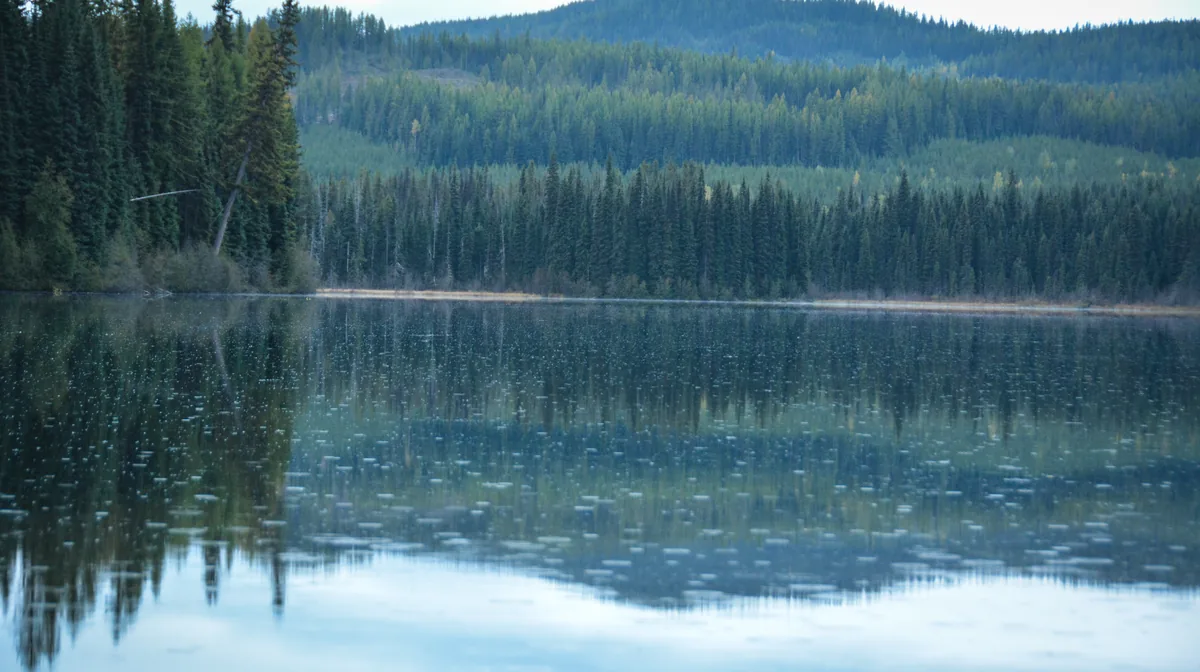
Nancy Greene Lake reflecting the forest in Nancy Greene Provincial Park, north of Rossland, British Columbia

Photo: Stephen Hui · CC BY-SA 4.0 · via Wikimedia Commons

Why Cavmir

The Cavmir Advantage
in Rossland & Red Mountain

Cavmir sells each Rossland rental for what its zone and licence allow: a ski-in condo at RED priced week by week through the snow months, a licensed chalet offered to two families sharing a February week, an owner's house in town marketed for the months they're away, and a summer base for riders who need somewhere to wash a bike and a plan for the Seven Summits shuttle. The guest we go after is often American, from Spokane or Seattle, or a Vancouver or Calgary skier. We find them through Google search, AI assistants and Instagram, and we bring last season's group back with an email to past guests before their week opens to everyone. We do the marketing and nothing else: no keys, no property management, no guest messages. Bookings, guest conversations and every inquiry from the direct site belong to the owner or to the manager they've hired.

State of the Industry · History

The Rossland & RED Mountain STR Market — Past & Present

The City of Rossland acknowledges that it sits on the traditional, ancestral and unceded territory of the sngaytskstx (Sinixt) People. In 1865 the Dewdney Trail was built through the area, and the Seven Summits ride still ends on a trail that carries its name, coming down to Highway 22 near the border. Copper-gold ore was first found on Red Mountain in 1887, and the richest strike came in 1890, made by Joe Bourgeois and Joe Moris. Ross Thompson pre-empted a townsite in 1892 and called it Thompson; in 1894 the postal authorities changed the name to Rossland.

The mines built a city in a few years. Miners came for the strikes, for the Le Roi Mine and for a new smelter in nearby Trail, many of them from Scandinavia, and Rossland had about 7,000 inhabitants when it became a city in 1897: the province's Speedy Incorporation of Towns Act received royal assent on March 4 that year, and the letters patent reached Rossland on March 23. Mining boomed until 1916 and carried on in fits and starts until 1929, when the Le Roi closed, and molybdenum was mined briefly from 1966 to 1972. The Rossland Heritage Commission, created by City bylaw in 2009, maintains the Rossland Heritage Register, which lists the buildings and sites that tell the city's story, particularly from the gold-mining era of 1895 to 1929.

Skiing arrived with the miners. Scandinavian miners formed the Rossland Ski Club, and on February 15, 1897, Olaus Jeldness, a Norwegian mining engineer, organized and won a downhill race from the top of Red Mountain to the spot where the Rossland Museum & Discovery Centre stands today, then donated the Jeldness Trophy. He promoted snow sports at the town's first Winter Carnival in 1898, and in 1900 Red Mountain hosted the first Dominion Ski Championships. The City remembers him as the father of competitive skiing in Western Canada, and his statue stands downtown.

The ski hill grew out of local clubs. The Trail-Rossland Ski Club began in 1929 with about 20 founding members, split into separate Rossland and Trail clubs in 1933 and came back together in 1947 as the Red Mountain Ski Club, which built the lodge and the first chairlift to the top of Red Mountain; it opened on December 26, 1947. The Granite Mountain chair followed in 1965, twice as long and twice as high as the Red lift, and more than doubled the terrain skiers could reach. In March 1968 the club hosted Canada's first World Cup race, and Rossland's Nancy Greene won her second World Cup championship there. The Canadian Encyclopedia names Greene and Kerrin Lee-Gartner as Olympic champions from Rossland.

Private owners took over in 1989. By the fall of 1987 the club's debt had reached C$1,105,000, the hill went up for sale in 1988, and on May 3, 1989 the club accepted an offer from six Canadian investors led by Eric Skat-Peterson. The Silverlode and Motherlode triple chairs replaced the Granite chair in 1995, and in June 2004 a group led by Howard Katkov of San Diego bought the resort with a master plan for up to 1,400 dwellings on the mountain over 15 to 20 years. Condos followed at the base: Slalom Creek opened for the 2007-08 season, the 18 suites of Morning Star were finished by the end of 2008, and the TMP compound added 10 more units. The Grey Mountain chair and its runs added more than 900 acres in 2014, the Josie Hotel opened with 106 rooms in 2019, and the Topping chair added about 300 acres in 2019-20, bringing RED to the 3,850 acres it lists today.

Today RED lists five skiable peaks, eight lifts, a base at 1,185 meters and a summit at 2,075 meters, a longest run of 7 kilometers and an average of 760 centimeters of snow a season, with 26% of the terrain rated expert, 23% advanced, 34% intermediate and 17% beginner. Its Mt. Kirkup cat carries skiers from the top of Grey Mountain to the top of Mount Kirkup, Ikon Pass holders get up to seven days, and RED calls itself the oldest resort in Western Canada. Summer has its own network: Tourism Rossland credits the Kootenay Columbia Trails Society with building and maintaining more than 200 kilometers of singletrack around town, the Seven Summits is rated an IMBA Epic, and RED's lift-served bike park, built in 2025 with Gravity Logic, is the newest piece. The 2026-27 ski season is tentatively set to open on December 12, 2026.

The rental rules came in steps. The City began regulating short-term rentals in 2016 and put a moratorium on rezoning for short-term rental use in 2022. In April 2024 it adopted Business Licence Bylaw No. 2801 and Zoning Amendment Bylaw No. 2828, both in force from May 1, 2024, alongside the provincial changes. The zoning bylaw dropped the need to rezone and the old one-per-block cap, limited short-term rentals in most residential zones to principal residences, ended them in those zones' secondary suites and created a new zone for existing non-principal-residence homes and suites, and the City lifted its moratorium on applications in the city core. The provincial registry followed on May 1, 2025. AirROI now finds a registration or licence number on 99% of Rossland listings, Superhost status on 67.1% and a co-host on 29.8%, and the ten largest hosts, RED's own lodging company among them, hold 40% of the listings. The gaps we look for first are the expensive ones: one rate for the whole winter, a summer with no photographs of its own, a listing that never says how far the door is from the chair, and no direct way back for last year's Seattle or Spokane group.

Pricing Strategy & Seasonality

Pricing, Seasonality & When to Capture ROI

Pricing Strategy

Bedrooms set the price in Rossland, and the step up at three is steep. AirROI's bedroom table makes the point: one-bedroom homes, 27.6% of entire homes and the largest group, earn a median C$19,700 a year at C$264 a night; two-bedroom homes C$31,400 at C$408; three-bedroom homes C$55,600 at C$603; and four-bedroom homes C$85,600 at C$774. Studios sell the most nights, at 54% occupancy against 40% for two to four bedrooms, but at C$209 a night. Across the market the median listing charges C$320 a night; the top quarter charges C$545 or more and the top tenth C$805 or more, while the bottom quarter sits at C$210 or less.

Revenue spreads just as widely. Counting only the months a listing was open, the median Rossland listing took in about C$3,150 a month, the top quarter C$6,270 or more and the top tenth C$9,570 or more, while the bottom quarter made C$1,610 or less. The C$3,090 in the box is a different measure, the year's average revenue of C$37,121 divided by twelve whether or not a listing was open every month; AirROI shows 64.6% of listings open for 271 days or more and the rest for fewer. Occupancy ranges from 29% for the median listing to 70% or more for the top tenth, and once AirROI takes out its running costs, a top-quarter listing keeps about C$51,470 a year against C$25,611 for the average one.

Features show what guests here pay for. Split by amenity, AirROI's averages sit far apart: listings with a hot tub, 30% of the market, averaged C$57,300 a year against C$28,300 without one; with an indoor fireplace, 42%, C$53,900 against C$25,200; ski-in, ski-out listings, 38%, C$47,900 against C$30,600; and the 54% that allow pets C$49,300 against C$22,800. Each gap blends the feature with the kind of home that tends to have it, but together they describe a Rossland ski day: skis off at the door, a soak, a fire and, for many groups, the dog.

Fees and minimums are moderate. Of Rossland listings, 86.3% charge a cleaning fee, with a median of C$149; cleaning fees work out to about C$25 a night over the average stay of 5.5 nights and to 5.9% of gross revenue. Two-night minimums are the most common, at 45%, then three nights at 29%; 41.6% of listings use Instant Book, and a firm cancellation policy, at 42%, is the most common. Add the 5% GST (where it applies), the 8% PST and Rossland's 3% MRDT (up for renewal; see the rules below), and AirROI's average C$425 night costs a guest about C$493 before fees. For the American half of the market the same night is about US$306 at the period's rate, and a booking page that shows both currencies saves a Spokane or Seattle guest the arithmetic.

Seasonality & ROI Windows

Winter carries the year. Over two years of AirROI data, February averaged about C$10,500 per listing, January C$8,020, March C$7,110 and December C$5,190, against C$1,840 in November and C$1,870 in October, and the three best months brought in 51% of annual revenue. From December to March the average listing ran about 50% occupancy at C$458 a night, or about C$7,710 a month. In the twelve months to September 2026, February ran 71.1% occupancy at C$483 a night and January 49.8% at C$472, and AirROI reckons December to February pays about 2.6 times what June to August does.

Summer is the smaller season, and it has guests of its own. AirROI's low season runs from April to November, at about C$2,470 a month, 28% occupancy and C$366 a night; inside it, July averaged C$3,480 and June C$3,010 over two years, and stays in June 2026 were the longest of the year, 7.7 nights on average. Those months belong to the trails: Tourism Rossland calls July to early October the best time for the Seven Summits, and RED's site listed its bike park as open Friday to Sunday. September, October and November are the thin months, with October 2025 at 21.4% occupancy, and they're the ones to sell to couples and to longer stays at a lower rate.

Winter is planned far ahead. Rossland's guests book about 78 days out on average, and February furthest: in the latest twelve months, February stays were booked about 127 days ahead, December's 101, March's 95 and January's 94, against 35 days for October and 37 for May. The average stay is 5.5 nights, with January at 5.9 and October at 3.1. For an owner that means two calendars: the ski weeks priced and open by early fall, since February books about four months out, and the spring and fall months sold close in, to guests who can come at short notice.

Regulation & Licensing · 2026

What the Law Requires in Rossland & Red Mountain

Start with the province. Where British Columbia's principal-residence requirement applies, under the Short-Term Rental Accommodations Act, a host may rent short term only the home they normally live in, plus one secondary suite or accessory dwelling on that property. The rule reaches every municipality with at least 10,000 residents and smaller places within 15 kilometers of one. On the province's June 1, 2026 list, Rossland, Trail and Castlegar appear as exempt municipalities and Red Mountain Resort as an exempt ski resort area, so under provincial law a second home here can be a short-term rental; Nelson is on the list where the requirement applies. Councils can opt in by sending the province a resolution, and one filed by February 28 applies from November 1 of that year, but the province says such a request can't change a resort area's exemption. Being exempt from the provincial rule doesn't stop a city from writing its own, and Rossland has.

Exempt or not, every host registers with the province. Since May 1, 2025, every listing has had to carry a provincial registration number, with the City licence number beside it, and the address you list must be identical to the registered one, since platforms validate the two against each other. Registration costs C$100 a year when the rental is in the home you live in, whether the whole house while you're away or rooms while you're there, and C$450 for one you don't live in, which covers a secondary property where the principal-residence rule doesn't apply and a strata hotel unit offered on a platform; both carry a C$1.50 service fee, and neither is refunded if the application is denied. The application asks for the property's PID, its number of bedrooms and, in Rossland, a copy of the City business licence. A registration lasts a year, renewal opens 40 days before it expires, and reminder emails go out 40 days, 14 days and one day ahead. Operating without one exposes a host to administrative penalties, compliance orders and removal from the platforms, and a renewal can be refused while a penalty is unpaid. Platforms, for their part, must check registration numbers against the registry, share their listing data with the province every month and take down a listing that lacks a required local licence when the local government asks. The Act also raised the ceiling on local fines: a municipal ticket can now reach C$3,000 per infraction, per day.

Rossland's own bylaws are where the detail is. Every short-term rental in the city, meaning a stay of 30 days or less, needs a City business licence under Business Licence Bylaw No. 2801, and its number must be printed in every ad for the rental. The City recognizes two kinds. A residential short-term rental, the kind allowed on most single-family lots, must be in the operator's principal residence, which the City defines as a home someone lives in more than 240 days a year. It can run while the resident is there, or for up to three months a year while they're away, but not on a property with a secondary or detached suite, nor in a duplex, triplex or multi-family building, and residential zones cap it at three sleeping units and six guests. A tenant can operate one with the landlord's permission, and the owner doesn't have to be the resident. A commercial short-term rental needs no one living there but must provide a local contact around the clock, and every unit needs its own licence. Commercial rules apply in the Red Mountain area north of the Star Gulch reservoir, where the Comprehensive Development, Commercial and R3 zones carry no principal-residence or owner-present condition, to Redstone's R-3 properties and to commercially zoned property in the downtown core; Redstone's R-1 lots follow the residential rules.

The costs and the paperwork are modest. The licence fee is C$400 for a residential-zone rental, C$800 for a commercial or R5 rental and C$500 for a bed and breakfast, and every applicant also pays a C$150 inspection fee, because a building inspector checks life-safety items before a licence is issued. The application goes in with a fire safety plan, a parking plan and a safety attestation, plus consent forms for a strata unit or a tenant operator. Parking is one space for each guest room plus two for the home itself, so a house with one spare bedroom needs three. The City finds unlicensed rentals with software and random checks, usually starts with a warning, and can fine continued illegal operation up to C$500 a day. For existing non-principal-residence homes and suites, Bylaw No. 2828 created a short-term rental zone of their own. The City's page describes letting those operators carry on until they sell, after which Council would start a rezoning to bring the lot in line with the city-wide rules, and it calls that approach proposed, so ask City Hall how it applies to any address you're considering.

Three taxes land on a Rossland stay. The federal GST is 5% where it applies, the provincial PST on short-term accommodation is 8%, and the Municipal and Regional District Tax adds 3% under a provincial regulation that names the City of Rossland as the designated area and Tourism Rossland Society as the body that receives the money. In that regulation, as consolidated on October 20, 2026, Rossland's designation shows a repeal date of November 1, 2026, and Council's April 20, 2026 agenda listed a delegation from Tourism Rossland seeking a letter of support for its renewal application, so confirm with the City or the province whether the 3% still applies before your own checkout charges it. On B.C. reservations of up to 26 nights, Airbnb charges and remits the PST and MRDT itself, and the GST as well for hosts without a GST number; a continuous stay of 27 days or more pays no PST or MRDT. The province exempts small providers only when they use no platform at all and take in less than C$2,500 a year from the accommodation, so an Airbnb host who also books guests directly has to register for PST and MRDT on those stays, and shares liability for any tax a platform fails to collect. A host must also register for GST once taxable sales top C$30,000, whether in one calendar quarter or across four in a row. Federally, from the 2024 tax year on, the Canada Revenue Agency won't allow income-tax deductions for any day a short-term rental (one rented for under 90 consecutive days) runs outside the provincial or local registration, licensing or permit rules, and expenses are cut in proportion to those days. None of this is legal advice; it's a guide to where the rules sit. Before you buy or list, confirm each point with City Hall, the registry, your lawyer and your accountant, and leave the marketing to us.

Market-Specific Tips & Challenges

Local Tips & Unique Market Challenges

Tips That Actually Move Revenue in Rossland & Red Mountain

Put the paperwork where guests can see it. The City requires the business licence number in every advertisement, the province requires the registration number on every listing, and a commercial rental must have a local contact who answers at any hour. Put all three in the listing's opening lines, on your own site and on page one of the welcome book, with the guest limit and the parking count beside them. In a market where 99% of listings already show a number, a missing one stands out, and a guest who can see the licence has one less question before booking.

Sell the ski day in the first photos and lines. More than a third of Rossland listings are marked ski-in, ski-out, and only 41% show their exact location, so say what the claim means for yours: the minutes on foot to the nearest chair, whether guests can ski back to the door, where boots dry and where skis go. AirROI's average listing here has just 11 photos, so a gallery that covers the boot room, the hot tub, every bedroom and both seasons stands apart. RED's winter deals let kids 12 and under ski free when the stay is booked with RED; if your unit isn't part of that, say so and point guests to RED's online tickets, which the resort says save C$20 a day.

Write for the guests who cross the border. AirROI puts US guests at 47.8% of Rossland's total, with Seattle and Spokane among the top three cities, so answer their questions in the listing. RED describes the Paterson crossing, reached on Highway 25 north of Northport, Washington, as open 24 hours; the drive from Spokane's airport is about two and a half hours; and Kootenay Charters runs a shuttle from that airport five days a week from mid-December to early April. Give directions that start at the border, and on your own site show a US-dollar guide beside the Canadian price.

Decide on the dog, and say so plainly. More than half of Rossland's listings, 54%, allow pets, and in AirROI's split they average more than twice the revenue of those that don't. If you take pets, say how many and what size, whether the yard is fenced, what the cleaning fee covers and where to walk them in winter (Black Jack's Nordic trails include a dog loop); if you don't, say that just as clearly. For the four-bedroom homes that sleep eight or more, write the bed plan room by room and give the parking count, because two families sharing a February week decide on exactly those details.

Give summer its own listing and its own guests. Riders who come for the Seven Summits need a place to lock and wash bikes, an early breakfast and a shuttle plan (Tourism Rossland suggests leaving a car at the Dewdney end, and Kootenay Mountain Biking runs full- and half-day shuttles to the top trails), and they should hear from you that the trail has no water and long stretches without cell coverage. June stays averaged 7.7 nights in 2026, so offer weekly summer rates and send last winter's guests your July dates. After that, bring the rider back without a platform in between: a direct-booking website that shows the open July weeks and the full price with GST, PST and MRDT included, plus a past-guest list that sees next winter's dates before anyone else. Once you take bookings off the platforms, collecting and remitting the PST and MRDT on them is your job.

Unique Rossland & Red Mountain Challenges

The zone decides what you can sell, so check it before you buy. In most of Rossland's residential zones a short-term rental has to be someone's principal residence, so a house nobody lives in can't be one, and secondary suites, duplexes and multi-family buildings are out altogether. A whole-home rental with no resident needs a commercial zone, at Red Mountain, in Redstone's R-3 areas or downtown, or a place in the zone created in 2024 for existing rentals of that kind; the City's page describes a proposal to let those operators carry on until they sell and then rezone the lot, so a buyer shouldn't count on inheriting the rental. Ask the City for the zoning and licence history of any address, read the strata bylaws for a condo at RED, and don't pay for a seller's rental income until the City has confirmed in writing that you can keep earning it.

Most of the year is quiet. From April to November the average listing earned about C$2,470 a month at 28% occupancy, and October and November each averaged under C$1,900 over two years, while the mortgage, insurance, snow clearing and strata fees arrive every month. December to February earns about 2.6 times what June to August does, so a property with only a winter plan leaves eight months to chance. Weekly summer rates for riders, golf at Redstone, offers for remote workers in the fall and a lower rate for a full week in October give those months something to sell.

The paperwork runs on several clocks. The province's registration is annual, and you can renew from 40 days out; the City licence comes with its own terms and an inspection; Rossland's MRDT designation is listed to November 1, 2026 and depends on renewal; and your strata, insurance policy and tax returns run on dates of their own. Keep them all on one calendar beside the booking windows: February stays book about four months out, so a registration that lapses in October can take a listing off the platforms just as the best month of the year is selling.

A Curious Rossland & Red Mountain Fact
Rossland's first downhill race finished where the museum now stands. RED's history credits the town's Scandinavian miners with the first recorded ski competitions in Canada, and dates the first downhill race to February 15, 1897: Olaus Jeldness, a Norwegian mining engineer, organized it from the top of Red Mountain to the site of today's Rossland Museum & Discovery Centre, won it, and donated the Jeldness Trophy. A guest who stops at the museum on Highway 3B is standing at the finish line, and the race's organizer is the man in the statue downtown.
Finance Essentials — Rossland & Red Mountain
🛡️

Insurance

Tell your insurer the home takes short-term guests, then ask in writing how the policy treats a guest hurt in the hot tub, on an icy step, by the wood stove or by a dog the listing allows. The City's application already asks for a fire safety plan, a parking plan and a safety attestation, and a building inspector checks life-safety items before the licence is issued, so much of what an underwriter wants is already in your file. AirROI's cost model allows only about C$370 a year for short-term rental insurance; get a real quote before you rely on that number. For a condo at RED, read the strata corporation's insurance and rental bylaws too, and ask a broker who writes ski-town policies in the Kootenays.

🧾

Property & Income Tax

Most of the guest-side tax on platform stays is handled for you: on bookings of up to 26 nights, Airbnb charges the 8% PST and Rossland's 3% MRDT, and it charges GST for hosts who aren't registered. Your own filings start when you register for GST, required once taxable sales top C$30,000, and when you take a booking off the platforms, because PST and MRDT on that stay are then yours to collect and remit. On the income-tax side, the federal rule since the 2024 tax year removes deductions for any day the rental runs outside the provincial or City rules, which makes the licence and registration a tax matter as well as a legal one. If you live in the United States, find an accountant who works on both sides of the border, and settle how the rental income and an eventual sale will be taxed before the first winter. Rossland isn't on the province's list of speculation and vacancy tax areas, last updated December 8, 2025.

🏦

Mortgages & Financing

On BC Assessment's 2026 roll, a typical Rossland single-family home was valued at C$625,000, 2% more than a year earlier, against C$376,000 in Trail and C$519,000 in Castlegar. CREA's Kootenay benchmarks for September 2026 were C$638,300 (single-family), C$503,200 (townhouse) and C$358,700 (condo). A mortgage broker should tell you, before you make an offer, how lenders view a strata unit at the resort, how much short-term rental income they'll count and whether the zone affects the loan. Then build the cash flow with the licence, registration, taxes and running costs in it from the start. Take out AirROI's estimates for the Airbnb fee, cleaning and laundry, utilities and internet, guest supplies, upkeep, insurance and the registration, and the average Rossland listing is left with about C$25,600 a year, before the mortgage, strata fees, property tax and home insurance.

Future Outlook · 2027 & Beyond

Where Rossland & Red Mountain is Headed Next

Several dates are worth watching. Rossland's 3% MRDT designation is listed to November 1, 2026, and the renewal application, for which Tourism Rossland sought Council's support in April 2026, decides whether the 3% carries on into this winter's bookings, so confirm the outcome before you set direct-booking prices. The province's exemption list can change each year as local governments opt in, though not for resort areas, and the City's housing needs assessment of spring 2025 and its action plan of June 2025 keep housing on Council's agenda. None of that changes the basic position, a strong ski market where whole-home rentals belong in the commercial zones, but it rewards owners whose licence, registration and records are in order.

Demand rests on assets that took decades to build. RED added Grey Mountain in 2014, the Topping chair in 2019-20 and a bike park in 2025, and Tourism Rossland says a network of singletrack, jump lines and gravity trails will be developed there over three years. Redstone's resort area, with 400 units allowed and 150 built, brought plans for more condos, short-term rentals among them, to Council in February 2025, Castanet reported, with no completion date set. Supply is growing as well: AirROI counted 32% more active listings over the year, while revenue per listing rose 8.2%. Read one good year as a direction, not a forecast.

Search is shifting too. A Seattle family planning February can put a precise request to an AI assistant, say a RED condo with ski-in access, eight beds and room for the dog, and the reply names properties before anyone opens Airbnb or Vrbo. Assistants recommend what they can read, so the owner whose own site states the licence and registration numbers, the bed plan, the minutes to the chair, the pet rules and the drive from Spokane gives it something to cite. Our guide to generative engine optimization explains the method, and it's why the site builds and the AI-search work for Rossland owners happen side by side.

From the Desk of Sofie Sinag

Why We Love Marketing in Rossland & Red Mountain

What I love about this work in Rossland is how much of it comes down to steps and minutes. The walk from a condo door to the nearest chair, the drive up from the Paterson crossing, the 30.4 kilometers of the Seven Summits: guests decide on facts like these, and a listing built from them needs very few adjectives.

I like that the mountain and the town sell two different holidays. In February it's a powder morning on Granite, a ride on the cat to Mt. Kirkup and a pint on Columbia Avenue; in July it's an early start on the Seven Summits and a long dinner after it. Getting both right, each with its own photographs, is my favorite part of the job here.

The history helps too, and it's close at hand. A race in 1897 that finished where the museum stands, a carnival running since 1898, a bobsled race down eight blocks of Spokane Street and a city that got its name when the post office renamed Thompson: a welcome book with those in it gives guests something to talk about at dinner, and our job is to put it in their hands.

Cavmir's Rossland & Red Mountain Cheat Sheet

The Picks We Recommend for Your Welcome Book

A Rossland welcome book, as we'd write it: the groceries, the bakery, the brewery, the mountain, the cats, the trail and the carnival that guests ask about in winter and summer, and finally the two pages that tell guests what the licence allows and who to call.

First Stop

Ferraro Foods, Columbia Avenue

The family-run grocery at 2029 Columbia Avenue has a butcher, a deli and cheese counter, a bakery and fresh produce, which makes it the place to send guests before they settle in for a ski week. Put it in the arrival message, so the first dinner is sorted before the car is unpacked.

Afternoon Treat

Hooper's Bakery

A French-style bakery known for croissants, sourdough, tarts and macarons. It opens Tuesday to Friday from noon to 6 p.m., sometimes later, and closes Mondays and weekends, with online orders ready from 12:30 p.m., so suggest it as an après-ski stop or an order placed before a long weekend, not a Saturday breakfast.

Après

Rossland Beer Company

The brewery at 1990F Columbia Avenue pours its 7 Summits Milk Stout, Paydirt Pale Ale and Helter Smelter Amber Ale in a tasting room that looks into the brewhouse. It opens at 1 p.m. daily and closes at 8 p.m. Sunday to Wednesday and 9 p.m. Thursday to Saturday, with live music on Friday afternoons.

Powder Day

RED Mountain Resort

Five skiable peaks and 3,850 acres, from a 1,185-meter base to a 2,075-meter summit, with a 7-kilometer longest run and 49% of the terrain rated advanced or expert. Opening day is tentatively December 12, 2026; RED says lift tickets bought online save C$20 a day, and Ikon Pass holders get up to seven days.

Cat Skiing

Mt. Kirkup Cat Ski at RED

A snowcat runs from the top of Grey Mountain to the top of Mount Kirkup, for about 626 meters of vertical over nearly 200 acres of gladed trees. Last season it ran Friday through Sunday, between 10 a.m. and 2 p.m., first come, first served, at C$20 a ride, usually from mid-January; tell guests they need to be strong on ungroomed blue and black runs.

Backcountry

Big Red Cats

Guided full-day cat skiing on more than 20,000 acres across eight peaks and over 700 named runs, staged 24.8 kilometers north of RED on Highway 3B. Guests meet at 8:30 a.m. and ride in separate cats for intermediate, advanced and expert groups, so a house with mixed abilities can still book the same day.

Nordic

Black Jack Ski Club

Minutes north of town, more than 50 kilometers of groomed classic and skate trails, a 2.5-kilometer loop lit on select evenings, three warming cabins and a dog loop. The trails usually open in late November or early December and stay groomed into March or early April; day passes and rentals are sold at the trailhead kiosk.

Summer Signature

The Seven Summits Trail

An IMBA Epic of 30.4 kilometers, or 36 with the Dewdney Trail, ridden north to south from the trailhead at Nancy Greene Summit (Strawberry Pass) on Highway 3B down to Highway 22 near Paterson, about 12 kilometers south of town. It climbs 1,035 meters, tops out at 2,194 meters and takes an average rider six hours or more; there's no water and little cell coverage, and e-bikes are banned. Ride it from July to early October.

Bike Park

RED MTN Bike Park

RED's lift-served park, built with Gravity Logic, runs off the Silverlode chair. RED's 2026 price list showed C$68 for an adult day ticket and C$34 for the Thursday and Friday evening sessions from 4 to 7 p.m., and late in the season every bike rental was C$65 a day; check the resort's site for operating days and prices before guests drive up.

Golf

Redstone Golf Course

At 953 Redstone Drive, a course that Redstone describes as the first-ever Les Furber Signature Course and the only one in Canada, with classic pub fare in the historic log clubhouse. It's the summer page for the golfers in a group, and a reason to book the warm months for couples who don't ride.

Winter Festival

Rossland Winter Carnival

Running since 1898, with the Sonny Samuelson Bobsled Race, teams of four on self-built sleds down eight icy blocks of Spokane Street, plus a rail jam on Queen Street and the Blizzard Music Festival. Tourism Rossland lists January 28 to 31, 2027; open that weekend early and tell guests where to watch the bobsleds.

History

Rossland Museum & Discovery Centre

The museum at 1100 Highway 3B opens at 10 a.m. and closes at 5 p.m., Tuesday through Sunday, with exhibits on Rossland's mining, geology, skiing and social history. It stands where the 1897 downhill race finished, and a second phase, a mine experience, is in design after a renewal campaign that had raised C$5 million by May 2025.

First Page

Licence, registration and house rules

Open the book with the City business licence number, the provincial registration number, the guest limit, the parking spaces and the quiet hours for the hot tub. The City already requires the licence number in every advertisement, so the welcome book repeats what the listing says.

Who to Call

The local contact

For a commercial rental, the City requires a local contact available around the clock. Name the person, give a number that works at 3 a.m. in a snowstorm and say how fast they'll come; a guest who gets a quick answer at the door rarely needs to phone anyone else.

Local Playbook · Three Property Types

How Cavmir Markets Rossland & Red Mountain Properties

Three property types that do well in Rossland & Red Mountain, a common starting point for each, and the plan Cavmir builds for it.

Ski-In Condo · RED Mountain base
The Situation

A two-bedroom condo in a strata building at RED's base, licensed as a commercial short-term rental, listed with one rate from opening day to closing and a summer calendar left mostly blank. The listing calls it ski-in, ski-out without saying how far it is to the chair, shows the registration number only in the house rules and has no photos of the boot room or the hot tub.

The Plan

Cavmir first confirms the City licence, the provincial registration and the strata's rental bylaws with the owner, then puts both numbers in the listing's opening lines. Winter is priced week by week, with Christmas, the Winter Carnival weekend, the Family Day and Presidents' Day weekend and March skiing set apart; the copy is rebuilt around the walk to the lift, boot storage and the soak; a summer shoot sells the bike park and the Seven Summits; and a direct-booking page gives Seattle and Spokane groups a way back each season.

What It Targets

Aimed at winter rates set one week at a time and a summer season with photographs and prices of its own. Track the February nightly rate, holiday-week bookings, summer occupancy, review scores for accuracy and value, and direct stays from returning groups.

Heritage House · Rossland's Old Town
The Situation

A three-bedroom house a few blocks from Columbia Avenue that is its owners' principal residence. They spend part of each winter away and want to rent the whole house then, and a room while they're home, but the listing describes it as a generic mountain cabin and says nothing about the City's rules.

The Plan

The owners hold the residential licence and the registration; Cavmir builds the marketing inside them. The months away are sold as full ski weeks and summer trail weeks within the three-month limit, the guest count stays within the residential cap of six, the parking is described space by space, and the house's gold-rush history and the walk to the brewery and the bakery go into the copy. The room listing gets its own photos and rate for couples and solo riders.

What It Targets

Designed to earn the most from the months the owners are away, inside the City's limits, and to give the room a steady market of its own. Track the nightly rate in the weeks away, room bookings while the owners are home, review scores and repeat guests.

Large Chalet · Red Mountain area
The Situation

A four-bedroom chalet in the Red Mountain area's commercial short-term rental zone, with a hot tub, a fireplace and beds for ten, that allows no pets, sets a one-night minimum all winter and sells mostly to couples on weekends. Its owners live in Calgary and work with a co-host.

The Plan

Cavmir repositions it for two families or a ski club sharing a week: a room-by-room bed plan, parking for every car, a three-night winter minimum, and a pets-allowed option with a clear fee and house rules, since more than half the market welcomes dogs. We price Christmas, the carnival and February week by week, write a summer page for groups riding the Seven Summits and golfing at Redstone, and run a past-guest list that offers last winter's families their week first.

What It Targets

Aimed at full group weeks at a chalet rate in winter and longer summer stays, with the pet policy and the bed plan settled before guests ask. Watch the weekly winter rate, average stay length, group size, review scores for value, and repeat stays by the same families.

FAQ

Rossland & Red Mountain Airbnb Marketing:
Questions, Answered

Does Cavmir offer Airbnb marketing services in Rossland and RED Mountain?

Yes. Cavmir markets condos and chalets at RED Mountain Resort, licensed homes and rooms in Rossland's old town, and homes around Redstone. Our part is the brand, the listing copy, photo direction, a direct-booking website, visibility on Google and in AI assistants, and paid ads pointed at skiers in Spokane, Seattle, Vancouver and Calgary; the biggest chalets at RED fit what we call our estates and private collections. Because we're a marketing agency, the owner or their manager keeps the keys, the cleaning and every message to guests.

How much does a Rossland short-term rental earn?

Over October 2025 to September 2026, the average Rossland listing in AirROI's data charged about C$425 a night, filled 37.2% of the nights it was open and grossed C$37,121, which works out to about C$3,090 for each month of the year (AirROI counts in US dollars; we show Canadian dollars at about 1.39). Winter does most of the work: February averaged about C$10,500 per listing over two years, November about C$1,840. Size matters a great deal, with four-bedroom homes at a median of about C$85,600 a year against C$19,700 for one-bedroom units. They're a starting point for planning, and any one house can land well above or below them. The 4–6% in the box is a rough yield: the year's revenue is about 5.9% of C$625,000, BC Assessment's typical 2026 value for a single-family home in Rossland, and about 4.1% once AirROI's running costs come out, with the mortgage, property tax and strata fees still to pay.

When is the peak season in Rossland?

Winter, from December to March, with February the strongest month: in the year to September 2026 it ran 71.1% occupancy at C$483 a night. January and March come next, and together the top three months earn about half of the year's revenue; the long weekend that B.C.'s Family Day shares with US Presidents' Day falls in February. Summer is a smaller second season built on the Seven Summits Trail and RED's bike park, and October and November are the quietest months. February books about four months ahead, so open and price the winter by early fall.

Is Rossland exempt from B.C.'s principal-residence requirement?

Yes. On the province's June 1, 2026 list, Rossland is an exempt municipality and Red Mountain Resort an exempt ski resort area, so provincial law doesn't limit short-term rentals to a host's own home here. The City of Rossland has its own version, though: in most residential zones a short-term rental must be in the operator's principal residence, and only the commercial areas, at Red Mountain, in Redstone's R-3 zone and downtown, allow a whole home with no resident. Every host still needs a provincial registration number and a City business licence on the listing. For legal advice on a particular property, a B.C. lawyer and the City are the people to ask; Cavmir handles the marketing.

Can I rent a second home short term in Rossland's old town?

Usually not as a whole-home rental. Under the City's rules since May 1, 2024, most residential zones allow short-term rentals only in a principal residence, meaning a home someone lives in more than 240 days a year, rented while they're there or for up to three months a year while they're away, with a cap of three sleeping units and six guests, and never in a secondary suite, duplex or multi-family building. Whole-home rentals with no resident are allowed in the commercial areas: the Red Mountain area north of the Star Gulch reservoir, Redstone's R-3 properties and commercially zoned property downtown. Existing non-principal-residence rentals were given a zone of their own in 2024, and the City's page describes a proposed approach in which they carry on until the property sells and Council then rezones it, so ask City Hall about any address before you buy.

Who collects GST, PST and MRDT on a Rossland booking?

For stays booked on Airbnb, the platform gathers the 8% PST and Rossland's 3% MRDT on any B.C. booking up to 26 nights long, plus the GST when the host has no GST number. Once a Rossland host has a GST number, charging the 5% on their stays becomes their own job, and registering is compulsory when taxable sales pass C$30,000 within one calendar quarter or over the last four quarters combined. On direct bookings you register for PST and MRDT yourself, then charge and remit them, because the province's small-provider exemption covers only hosts who use no platform and earn under C$2,500 a year. Rossland's MRDT goes to Tourism Rossland Society; its designation is listed to November 1, 2026 and Tourism Rossland is seeking renewal, so confirm the rate in force before you charge it on a direct booking.

How do I get more direct bookings from Spokane and Seattle guests?

Give them a reason to come back and an easy way to do it. American guests are nearly half of Rossland's market in AirROI's data, and Seattle and Spokane are two of the top three cities, so your own direct-booking website should load fast and show, on its first screen, the licence and registration numbers, the guest limit and an all-in price with GST, PST and MRDT, with a US-dollar guide beside it. Add a complete Google Business Profile, directions from the Paterson crossing and from Spokane's airport, and an email that offers last winter's groups their February week before it goes public. Our vacation rental SEO page shows where search and AI assistants come in.

What does Cavmir charge to market a Rossland rental?

That depends on what the property needs, and our pricing page sets out each plan and one-off project. A common first step is the 12-step system, or a rebuilt listing before the ski season. The first conversation is free: get in touch here.

Free Property Review

What is your Rossland & Red Mountain property actually worth per night?

Send us the listing and we'll tell you what we'd change. Not a pitch deck — a straight read on your photos, your title, your rates against the Rossland & Red Mountain comp set, and whether a direct-booking site would pay for itself.

You'll hear back from a person, usually inside one business day. If we don't think we can move your numbers, we'll say so. Cavmir is a short-term rental marketing agency — we position and market properties, we don't manage them.

  • No obligation, and no automated call sequence
  • We market and position — we never manage your property or hold keys
  • Works whether you're on Airbnb, Vrbo, or direct

Market Intelligence · Seasonality

Airbnb seasonality in Rossland & Red Mountain, month by month

Demand in Rossland & Red Mountain peaks around February and runs quietest around April, September and October. Here is how the year actually books — and what to do about each stretch of the calendar.

Peak demandSteadyQuiet

Peak season

Winter is the peak in Rossland, from December through March, and February is the strongest month of the year, when RED Mountain Resort is deep into its season and B.C.'s Family Day and the US Presidents' Day holiday land on the same long weekend. Winter stays are booked furthest ahead, so have the ski-week pricing, the boot room and hot tub photos and the winter copy live by early fall, price each holiday week on its own, and give last season's groups the first chance at their February week.

The shoulders

Summer is the second season, from June into early October, built on the Seven Summits Trail, the lift-served bike park at RED, the Redstone golf course and the singletrack around town. Early-summer guests stay the longest of the year, so weekly and multi-night rates work, and riders want secure bike storage, a place to wash bikes and shuttle advice more than a ski locker. December is the build-up month, rising with opening day and the Christmas weeks.

The quiet stretch

October and November are the quietest months, with April and September close behind, and guests book them closest to arrival, about five weeks out. Use the stretch for longer stays at a lower rate, offers to couples and remote workers, maintenance and a photo refresh, and have the winter listing and the pricing calendar ready before RED opens in December.

Dates that fill first

RED Mountain Resort opening dayDecember
RED has tentatively set December 12 as opening day for the 2026-27 season; publish and price the first ski weekends and the run-up to Christmas well before it.
Christmas and New Year weekslate December
Ski families book the holiday weeks months in advance; price each week separately and set a minimum stay that suits a family ski holiday.
Rossland Winter Carnivallate January
Held since 1898, with the bobsled race down Spokane Street, a downtown rail jam and the Blizzard Music Festival; Tourism Rossland lists January 28 to 31 for 2027, so open that weekend early and mention the carnival in the listing.
B.C. Family Day and US Presidents' Day weekendFebruary
The two holidays fell on the same Monday in 2026 and do again in 2027, so Canadian and American families arrive together in the busiest month; give the weekend its own rate and promote it early in Spokane, Seattle and Vancouver.
Seven Summits Trail seasonJuly to early October
The trail is at its best from July to early October, and riders book several nights at a time; sell weekly summer rates, bike storage and shuttle advice.
Market Intelligence · Guests

Who books Rossland & Red Mountain Airbnbs — and how far ahead

Pacific Northwest ski groups
Families and friends from Seattle and Spokane who drive up through the Paterson crossing for ski weeks at RED. They want room for everyone, parking, a hot tub and clear directions from the border, and they are the guests most worth inviting back directly.
Canadian ski families and clubs
Vancouver, Calgary and Toronto skiers who book February and the holiday weeks, some flying into Castlegar or Trail. They care about the walk to the lift, boot and ski storage, and a bed plan that works for two families.
Summer riders and trail runners
Mountain bikers who come for the Seven Summits Trail, the bike park and the singletrack around town, usually small groups staying several nights. Secure bike storage, a wash station, an early breakfast and shuttle advice matter more to them than decor.
Couples and dog owners on quiet weeks
Couples, remote workers and guests traveling with dogs who book the shoulder months at a lower rate, for golf at Redstone, the Nordic trails at Black Jack in winter or a slower week in town. A pet-friendly home with a fenced yard and a fireplace wins them.

The booking window

Guests book winter far ahead, February furthest of all at about four months out, with December, January and March not far behind. Summer books a month or two ahead and October and November about five weeks ahead, so have the winter calendar priced and open by early fall and keep spring and fall rates flexible.

Typical stays

Winter stays usually run most of a week, early summer stays are the longest of the year as riders settle in for the trails, and fall stays are the shortest, often a long weekend. Minimum stays should change with the season rather than sit fixed all year.

Where guests drive from

SpokaneSeattleCalgaryVancouver

Where guests fly from

TorontoVancouverCalgary
Seattle and Spokane lead the American side and Vancouver, Calgary and Toronto the Canadian side, in close to equal measure, so geo-target the Pacific Northwest for ski weeks and holiday weekends, and Vancouver and Calgary for February and summer. Guests from farther away fly into Spokane, about two and a half hours' drive from RED, or into Castlegar or Trail, which both have flights from Vancouver.
Market Intelligence · What Wins

The Airbnb that wins in Rossland & Red Mountain

The winner is a two- to four-bedroom condo or chalet in the Red Mountain area, with the walk to the lift in the first line, a private hot tub and a fireplace. Larger homes earn far more per year when they are presented for two families or a ski club sharing a week, with a bed for every adult, parking for every car and a clear pet policy. In town, an owner's heritage house does best sold for the weeks they are away, with its gold-rush character and the walk to Columbia Avenue in the copy.

Amenities that move bookings here

private hot tubindoor fireplaceski-in ski-out accessboot and ski storagepet-friendly with house rulessecure bike storageoff-street parkingfast wifi
The single most valuable move is to state the ski access exactly, the minutes to the chair and where boots and skis go, and to photograph the hot tub and the fire in winter light. Welcoming dogs, with clear rules and a fee, is close behind in a market where pet-friendly homes are common and earn well.
FAQ

Rossland & Red Mountain Airbnb marketing questions, answered

How do I market my Airbnb in Rossland & Red Mountain?

Lead with the product you actually have: a ski-in condo at RED with the walk to the lift in the first line, a chalet for two families sharing a week, or a house in town sold for the weeks you are away. Photograph winter and summer separately, price the ski weeks and holiday weekends one at a time, and answer the border and drive questions American guests ask. Then add a Google Business Profile and a direct-booking site so returning Spokane, Seattle and Vancouver groups can book you again without a platform. Cavmir builds that layer for Rossland owners, from photo direction and listing copy to the direct site and local search.

When is peak season for Rossland & Red Mountain Airbnbs?

Winter, from December to March, with February the strongest month and January and March close behind. December lifts with opening day and the Christmas weeks, and summer is a smaller second season built on the Seven Summits Trail and the bike park. October and November are the quietest months.

How far in advance do guests book Rossland & Red Mountain Airbnbs?

Winter books furthest ahead, with February stays reserved about four months early and the other ski months not far behind. Summer books a month or two out, and October and November about five weeks out. Have the winter calendar priced and open by early fall.

Where do most Rossland & Red Mountain Airbnb guests come from?

From both sides of the border, in close to equal numbers: Seattle and Spokane lead the American side, and Vancouver, Calgary and Toronto the Canadian side. Many drive up from Spokane through the Paterson crossing, and others fly into Castlegar or Trail from Vancouver.

What amenities matter most for a Rossland & Red Mountain Airbnb?

A private hot tub and an indoor fireplace lead, and ski-in, ski-out access with boot and ski storage is the next thing guests look for. Pet-friendly homes are common and do well, and summer guests want secure bike storage. Off-street parking and fast wifi round out the list.

Free Tools · Websites That Book

See what your listing in Rossland & Red Mountain is leaving on the table

Run your Airbnb, Vrbo, or website through Cavmir's free grader. It checks the things that decide whether guests book in Rossland & Red Mountain — photos, listing copy, page speed, local search — and shows you where bookings leak. Takes about a minute, and there's no sales call attached.

If the report says your booking engine is the weak link, that's fixable: a direct-booking website of your own means repeat guests stop paying platform fees to come back to you. That's the work Cavmir does — see Airbnb website design in Rossland & Red Mountain.

What the grader measures

  • ✓Photos and the first-impression frame
  • ✓Listing title and copy
  • ✓Your direct-booking website (or the lack of one)
  • ✓Page speed and mobile experience
  • ✓Local search and Google visibility
Grade My Listing — Free
Ready to Grow in Rossland & Red Mountain?

Let's Put Your Rossland & Red Mountain
Property on the Map

Talk to Cavmir today. We'll show you exactly what your Rossland & Red Mountain property is leaving on the table — and how fast we can change that.

Book a Free Strategy Call