Start here Work with Cavmir in Inverness
Get a Proposal (786) 751-3426
C$360
Avg. Nightly Rate
44%
Avg. Occupancy Rate
C$2,790
Avg. Monthly Revenue
5–8%
Est. Cash-on-Cash ROI
HIGH
Seasonality
MODERATE
Regulatory Burden

* Market averages in Canadian dollars from AirROI data for Inverness, Nova Scotia (50 active listings), October 2025 to September 2026, converted from US dollars at 1.39. ROI is Cavmir's estimate. A single home's numbers depend on its size, its location and how it is marketed.

The Market

Why Inverness Is a Golf and Ceilidh Trail Rental Market

Cavmir is an Airbnb marketing agency. We build the brand, the direct-booking website and the marketing for short-term rentals in Inverness.

Inverness is a former coal town on the west coast of Cape Breton Island, in the Municipality of the County of Inverness, which runs along the island's western shore. The village sits beside a long beach on the Gulf of St. Lawrence, and the old mine land next to it is now Cabot Links, one of the two big courses at Cabot Cape Breton that Cabot lists first and second in Golf Digest's 2026 ranking of the best courses in Canada. South of the village, Route 19 runs down the Ceilidh Trail through Mabou, Port Hood and Judique, past the pubs, halls and music centers that give the county its Canada's Musical Coast name; north are the Margarees and the Cabot Trail into Cape Breton Highlands National Park. For a rental owner that adds up to three products under one name: the golf house, the Ceilidh Trail cottage and the base for the river and the highlands, and each one books on its own calendar.

AirROI's market for Inverness gives the numbers. Over the twelve months from October 2025 to September 2026, its 50 active listings averaged about C$360 a night and 44% occupancy, and gross bookings came to about C$33,500 per listing. The Nova Scotia averages on the same page are about C$235 a night and C$32,100 a year, and the Canadian average rate is about C$280. Fifty listings is a small sample, so a handful of houses can move these averages; Port Hood and Chéticamp are separate AirROI markets, and the figures here describe the village of Inverness and the land around it. The underlying data is in US dollars, and this page, like AirROI's own, shows it in Canadian dollars at C$1.39 to the US dollar.

The spread inside that sample is wide. The median nightly rate was about C$285 and the median listing was booked on about 34% of the nights it was open; the top quarter by rate charged C$430 or more and the top tenth C$575 or more, while the top tenth by occupancy booked 61% or more of their open nights. The highest earner in AirROI's data, a three-bedroom home, took in about C$89,700 at about C$611 a night and 51% occupancy, and a five-bedroom house earned about C$83,100 while booked on only about 23% of its nights, at about C$1,476 a night. A big house can earn well on few nights, and a well-placed three-bedroom can earn more by booking half its calendar.

The year is short and steep. AirROI calls Inverness a highly seasonal market with one high season, June through October: July and August ran at about 71 to 72% occupancy in 2026, while January, February and March sat near 16%. The three strongest months bring in 47% of the year's revenue. Supply is moving too: active listings rose 11% in the year while average revenue per listing fell 11.7%, so roughly the same guest spending was shared among more houses.

The rules come from two levels of government. Nova Scotia requires every rental of 28 days or less to register with the province, and the registration number is needed to advertise; the annual fee runs from C$50 to C$500 depending on the type of rental, and 98% of AirROI's Inverness listings show a number. We found no short-term rental licence in the county's by-law list, but the Municipality of the County of Inverness has charged a 3% marketing levy on accommodation, including registered rentals, since January 1, 2024, and its new planning by-law for the areas outside its older village plans, Plan Inverness, took effect on September 11, 2025. We handle the marketing side: your brand and listing, the photo brief, a direct-booking site, search and AI visibility, and campaigns timed to the weeks you want filled. The registration, the levy returns and the zoning questions stay with you and your local advisers. The sections below cover the market, the rules, the calendar from Cabot's opening in May to Celtic Colours in October, and the plans we'd build for a golf house, a Ceilidh Trail cottage and a house in the Margarees.

Top Attractions & Landmarks

  • Cabot Links and Cabot Cliffs at Cabot Cape Breton
  • The Nest, Cabot's 11-hole par-3 course
  • Inverness Beach on the Gulf of St. Lawrence
  • The Red Shoe Pub in Mabou
  • Celtic Colours International Festival (October)
  • Glenora Distillery in Glenville
  • The Margaree River and the Margaree Salmon Museum
  • The Cabot Trail and Cape Breton Highlands National Park

Nearby Markets: Chester & Lunenburg  |  Bar Harbor  |  Charlevoix

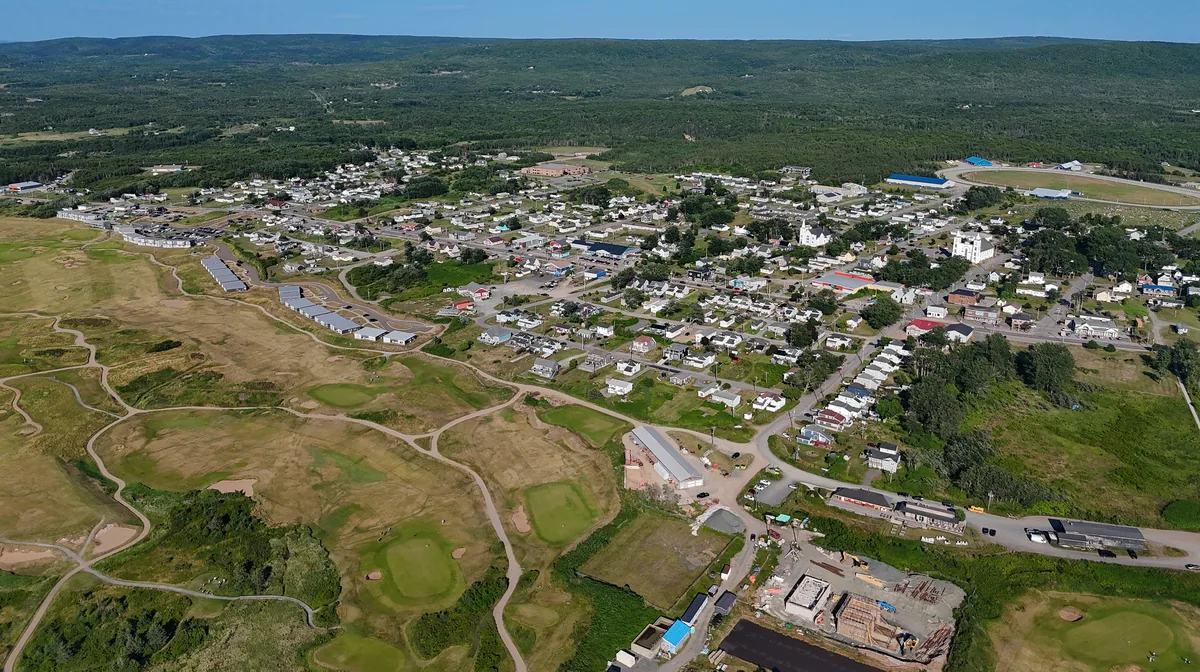
Inverness, Nova Scotia, from the air, with the Cabot Links golf course along the shore

Photo: Quintin Soloviev · CC BY 4.0 · via Wikimedia Commons

Why Cavmir

The Cavmir Advantage
in Inverness

Cavmir sells each Inverness property as the trip it's built for: the golf house that hosts the same group of friends every September, the Ceilidh Trail cottage a Halifax couple books for Celtic Colours week, the house in the Margarees that sells the river, the trails and the drive up the Cabot Trail. Guests who plan this coast on purpose look on Google, ask AI assistants and scroll Instagram, so the listing and the site have to answer them in each place, and a past-guest email brings last year's group back for another round. Cavmir is a marketing agency and only that: the house, the keys and all guest messages remain yours or your manager's, and the direct-booking site sends inquiries and reservations to you, not to us.

State of the Industry · History

The Inverness STR Market — Past & Present

Inverness's visitors come for things its history built. Scottish immigrants settled this coast in 1803 after landing at Pictou, and the village took the name Inverness in 1904, after the Scottish home of many of those settlers. The county still shows that inheritance plainly: An Drochaid, The Bridge, in Mabou keeps Gaelic traditions, artifacts and family records; the Father John Angus Rankin Cultural Centre in Glendale holds Gaelic and historical archives; and the Celtic Music Interpretive Centre in Judique teaches Gaelic and holds ceilidhs seven days a week in season. North of the Margarees the culture changes: Chéticamp is Acadian, and Les Trois Pignons there shows the tapestries of Élizabeth LeFort and the history of rug hooking.

Coal built the town. Coal was discovered here in 1863; William Penn Hussey, an American industrialist, formed the Broad Cove Coal Company in 1894; and the mines were sold to the Inverness Railway and Coal Company in 1899. Output peaked just after 1910 at almost 300,000 metric tons a year, but the company was in receivership by 1915, mining operations ended in the 1950s and the mines were abandoned by 1965. The Inverness Miners Museum, run by the Inverness Historical Society and now at 15932 Central Avenue, tells that story, and the Celtic Shores Coastal Trail runs about 90 kilometers from Port Hastings, where the causeway reaches the island, to a trailhead on Railway Street in Inverness.

The modern visitor economy starts with golf. In 2004 Ben Cowan-Dewar, now Cabot's co-founder and chief executive, came to this remote stretch of coastline, then a town facing hard times after its coal mines closed. Cabot Links, designed by the Canadian architect Rod Whitman, opened with 10 holes and reached 18 in the middle of 2012, and five of its holes run right beside the beach. Bill Coore and Ben Crenshaw's Cabot Cliffs opened in 2015 across cliffs and sand dunes, and The Nest, a par-3 course on the highest point of the Cliffs, opened in 2020 and now has 11 holes, for 47 in all. Cabot lists the Cliffs 14th and the Links 25th in Golf Digest's 2026–27 ranking of the world's 100 greatest courses.

The resort sells its own lodging, and plenty of it. Cabot Cape Breton has 72 lodge rooms, 19 golf villas, 8 Cliffs residences, 14 Dunes cottages and 24 Hillside homes on site, with Panorama for breakfast and dinner, the Cabot Bar, Coore's Lobster Shack and Whit's Public House, which sits between the lodge and the main street. Guests who stay with the resort can book tee times when they reserve their rooms, 12 to 18 months ahead; anyone else, including a group in a private rental, can book only 14 days in advance. The golf season runs from early May to late October, May 8 to October 25 in 2026. Both 18-hole courses are walking-only, with caddies available by advance request and a limited number of medical carts for golfers with a doctor's note.

Music carries the shoulder seasons. The Celtic Colours International Festival was introduced in 1997 by its founders, Joella Foulds and Max MacDonald, and runs nine days each October with as many as eight concerts a day in communities across the island; for 2025 it reported C$18.2 million in economic activity across Nova Scotia, nearly C$15.8 million of it in Cape Breton, and it counts more than 2,100 volunteers. The everyday version is on Route 19: the Red Shoe Pub, the Rankin Sisters' pub in Mabou, with live music seven days a week in season, and Glenora, which became North America's first single malt whisky distillery in 1990 and has live Celtic music most evenings in its Washback Pub.

Registration came to Nova Scotia in steps. The Tourist Accommodations Registration Act took effect in April 2020; amendments passed in April 2022 removed the registration exemption for rentals in or attached to the host's own home, every short-term rental had to register from April 1, 2023, and operators were given until June 21, 2023 to put the registration number in their online listings. About 5,000 short-term rentals registered with the province for 2023–24. New regulations under the Short-term Rentals Registration Act took effect on September 30, 2024, with annual fees from C$50 to C$2,000 per unit and fines up to C$100,000, and amendments in force since December 1, 2025 added administrative penalties. The county passed its marketing levy in September 2023 and extended it to small properties from January 1, 2024, and Plan Inverness followed in September 2025.

Today's market is small and mostly run by owners. AirROI counts 50 active listings in Inverness, 92% of them entire homes and about three-quarters houses, with an average rating of 4.88, 66% of hosts Superhosts and 62% of listings carrying Airbnb's Guest Favorite badge; only about 2% are professionally managed and about a third are co-hosted. In an audit we'd start with the misses that cost this market bookings: a golf house that never explains the 14-day tee-time window, galleries averaging eight photos when the water view should carry the listing, no French text when about one guest in six speaks French, and no direct way back for the groups who return.

Pricing Strategy & Seasonality

Pricing, Seasonality & When to Capture ROI

Pricing Strategy

Inverness pricing starts with bedrooms and position. Two-bedroom homes are the largest group in AirROI's sample, 38% of entire homes, followed by three-bedroom homes at 29%, four-bedroom homes at 13% and five or more at 4%. Two-bedroom homes earned a median of about C$37,900 a year at about C$356 a night, and three-bedroom homes about C$33,800 at about C$396, both at 44% occupancy. At the low end, a quarter of the market charged C$225 a night or less. For listings open in a given month, the median Inverness listing made about C$3,350 a month, the top quarter C$5,640 or more and the top tenth C$7,670 or more. The C$2,790 in the box sits below those figures, and below nightly rate times occupancy, because it divides the average listing's year by twelve, closed months included, and AirROI measures occupancy only on the nights a listing is open; 40% of Inverness listings were open between 181 and 270 days.

The calendar moves occupancy more than price. Averaged over AirROI's typical year and counting the listings open in those months, the high season, June through October, brought about C$6,800 a month at 55% occupancy and C$372 a night, and the low season, November through May, about C$2,410 at 25% and C$325. July's rate was about C$422 and August's C$416, against about C$330 from November to March, so winter rates sit only about a fifth below summer while occupancy falls by roughly three-quarters. In a market shaped like this, a lower winter rate on its own won't change much; the product and the length of stay do more of the work.

Lead time and stay length follow the season. Guests booked about 77 days ahead on average, about four months ahead for July and about a month ahead for February and March stays. The average stay was about four nights, but it ran longer in April, at 6.9 nights, and December, at 5.5, and shortest in February, at 1.8. Half of the listings accept one-night stays, 38% ask for two nights and only 12% require three, so a golf house can set its summer minimum to match a golf trip and still open shorter stays in the quiet months. Check-in is usually 3 p.m. and check-out 11 a.m.; if your house lets golfers drop their bags early, say so in the listing.

Show guests the whole bill. Seven in ten Inverness listings add a cleaning fee, typically about C$87, which comes to roughly 5% of their revenue, and guests score value lower than any other category, 4.75 out of 5 against 4.88 overall. The county's 3% levy goes on the price of the stay before tax, HST at 14% goes on top where it's charged, and Airbnb's tax list covers GST/HST for unregistered hosts but leaves out the county levy, so the owner adds the levy and files it. A direct-booking site that adds up the nightly rate, fees, levy and tax before the guest reaches checkout shows them what they'll pay.

Seasonality & ROI Windows

The high season runs from June to October, and it has three layers. July and August are the full months, at about 71 to 72% occupancy in AirROI's data. June, at about 46%, and September, at about 44%, are golf months with room in them. October still ran about 42% in 2025, carried by Celtic Colours, which brings concerts across the island each October (October 9 to 17 in 2026), and by the last weeks of golf before Cabot closes in late October. From late August, night golf under lights at The Nest gives golf groups an evening round.

The low season runs from November to May. Occupancy sat between about 16 and 21% from November 2025 to March 2026, recovered to about 32% in April and 30% in May, and the openings that matter come in May: Cabot's courses on May 8 in 2026 and the Red Shoe Pub on the last Friday of the month. December and April also brought some of the year's longest stays, a sign that weekly and monthly guests are worth courting in the quiet months.

Many owners don't sell the cold months at all, and for a cottage that isn't winterized that's the sensible call. If your house is winterized, decide what it sells from November to April before you open the calendar: longer stays at a weekly or monthly rate, a wood stove or fireplace in the photographs if you have one, and a guidebook built on what stays open, such as Route 19 Brewing in Inverness, Strathspey Place in Mabou, the Celtic Shores Coastal Trail and the Dancing Goat cafe in North East Margaree. That gives one house two products, the June-to-October stay and the winter stay, and each needs its own photographs and copy.

Regulation & Licensing · 2026

What the Law Requires in Inverness

Nova Scotia regulates short stays through registration. Anyone providing roofed accommodation for 28 days in a row or less must register with the province before operating, under the Short-term Rentals Registration Act, whose current regulations took effect on September 30, 2024; only long-term rentals and unroofed campsites are exempt. What you pay depends on the category. Renting your own primary residence while you're away costs C$50 a year. A commercial short-term rental, meaning a home you own or a condominium unit that isn't your primary residence, costs C$500 a year per unit in Inverness, the rate everywhere outside seven Halifax-area communities, which pay C$2,000, and five small towns, which pay C$240. Traditional tourist accommodations, which the province says include inns, bed and breakfasts, personal vacation homes and cottages as well as rooms rented in your home, pay C$50 a location with up to four bedrooms and C$150 with five or more. Which category a house falls into is the province's call, so ask the registry before you budget. The application needs proof of compliance with municipal land-use by-laws, two documents showing whether the home is or isn't your primary residence, owner or condo-board consent where it applies, and a Nova Scotia office or representative if you live outside the province. Numbers usually take two to three weeks and are renewed by April 1 each year; they don't pass to a new owner, and Airbnb, Booking.com, Expedia and Vrbo need one before a listing goes up. Operating unregistered can bring a fine of up to C$100,000 for each year, and since December 1, 2025 the province can also impose administrative penalties of C$2,000, C$4,000 and C$8,000 for first, second and later offenses.

The Municipality of the County of Inverness doesn't license short-term rentals: we checked the county's by-law list in October 2026 and found no rental licensing by-law. It does charge a levy on them. Marketing Levy By-law No. 44, passed on September 7, 2023, applies to all accommodation in the county, including any facility that must register with the province, and since January 1, 2024 the rate has been 3% of the purchase price of the stay, not counting the GST; before that it was 2%, and properties with fewer than ten rooms were exempt until the end of 2023. Stays of more than 30 consecutive days, rooms of C$20 a night or less, guests in the area for medical treatment and families displaced by a natural disaster are exempt. Every operator needs a registration certificate from the municipality for each place of business, displayed on the premises and not transferable; returns are monthly and due by the 15th of the following month, including a nil return when nothing was collected; the levy must appear as a separate line on receipts and invoices; records are kept for seven years; and fines run from C$500 to C$1,000 for a first offense and C$1,500 to C$5,000 after that.

Planning for the county is handled by the Eastern District Planning Commission (EDPC). Since September 11, 2025, most of the county has been under Plan Inverness, a municipal planning strategy and land use by-law that council adopted on May 22, 2025, which brought land-use rules to areas that had none; Chéticamp, Inverness, Port Hastings, Port Hood and Whycocomagh keep their own plans. Plan Inverness calls renting a building or part of one to the traveling public for 28 days or less accommodation, whether it's a whole home, a room, a cottage, a cabin, a dome or a yurt. That use is permitted outright in six zones, mostly village centers and commercial areas: Main Street, General Centre, Hamlet Core, Rural Commercial, Highway Commercial and Commercial Recreation, plus up to three units per lot in the Source Water Protection zone. In the residential, rural general, agricultural, lakeshore and watershed zones, rentals fit in as a home-based business run from the operator's principal residence: one or two rental units at Level I and, in most of those zones, up to five at Level II. So an owner who lives on the property has a route to renting in those zones, while a cottage that is nobody's home needs an accommodation zone. A rental that was already operating lawfully before September 11, 2025 may be able to carry on as a non-conforming use, which the by-law handles under the Municipal Government Act and lets restart after a break of up to 12 months; EDPC can confirm the zone, and whether an existing rental qualifies, before you buy, build or register.

Inside the village of Inverness, the 2015 Inverness Land Use By-law, amended several times since, still applies. Its closest match to a house rented to visitors is the tourist or guest home, a single-detached dwelling with no more than eight sleeping rooms let to transient guests, which needs site plan approval and is allowed in the Rural Development, Residential Urban and Residential Multiple-Unit zones and in the Commercial Business District and Commercial Mixed-Use zones; the Rural Residential zone allows a bed and breakfast instead. Tourist cabin and cottage developments need the Commercial Tourism zone, with site plan approval, or a development agreement, and parking is one space plus one for every two overnight guests. Two tax points sit above the provincial and county rules. Nova Scotia's HST rate is 14%, down from 15% on April 1, 2025, and from the 2024 tax year the CRA won't allow a short-term rental's income-tax deductions for any day it lacks a registration, licence or permit that the province or the municipality requires. None of this is legal advice: the province, the county, EDPC, a Nova Scotia lawyer and an accountant have the final say on your property. Cavmir looks after the marketing; the registration, levy returns and tax filings stay with you and your advisers.

Market-Specific Tips & Challenges

Local Tips & Unique Market Challenges

Tips That Actually Move Revenue in Inverness

Show the paperwork where guests decide. The province requires the registration number to advertise, the county requires its certificate on display and the levy as its own line on the receipt, and a guest planning a golf trip or a festival week wants to know exactly what they're paying and where they're staying. A listing with the registration number, the legal guest count, the bed list and the full price including the levy looks like the professional operation it is, and the same facts on your direct-booking site give search engines and AI assistants something to cite.

Sell the golf trip on its real terms. Cabot's courses are walking-only, caddies come by advance request, rain doesn't stop play (only lightning does), and a guest who isn't staying at the resort can book tee times only 14 days ahead, while resort guests book theirs with their rooms 12 to 18 months out. Say that plainly, with the date the booking window opens for each stay, the drive to each golf shop, and a backup round at Le Portage in Chéticamp if the group misses a time. Then fit the house to a golf group: its own bed for each adult, bathrooms enough for an early tee time, a porch or mudroom where wet shoes and rain gear can dry overnight, space for the bags, and a parking spot for every car, since Cabot's FAQ says the county has no taxi or ride-share service.

Give the Ceilidh Trail its own product. A cottage in Mabou or Port Hood sells the music, the beaches and the drive: the Red Shoe Pub's live music every day of its season, from the last Friday in May to mid-October, the ceilidhs at the Celtic Music Interpretive Centre in Judique, concerts at Strathspey Place, an evening at Glenora's pub, and the supervised beaches at Port Hood and Inverness. Publish the Celtic Colours dates as soon as the festival announces them, offer festival week as a package with a minimum stay, and give past guests the first chance at it.

Write for the guests you actually get. In AirROI's data, 72% of guests are Canadian and 21% American; Halifax, Toronto and Ottawa are the top origin cities, and about 16% of guests speak French, so a French version of the description, the house rules and the arrival guide is worth the effort. Many guests fly: Halifax Stanfield is about three and a half hours away by road, Sydney's airport, which has direct flights from Toronto, about two hours, and the private airport at Port Hawkesbury about one. Put the drive, the check-in steps and the parking plan where a guest arriving after dark will find them.

Plan for the second visit. A golf group that likes a house wants it again next year, festival guests like to keep their week, and a booking taken direct skips the platform fee. Before the next season opens, put up a quick direct-booking website that shows live dates and the all-in price, a Google Business Profile with this year's photos and opening months, an email list that hears next season's dates first, and photographs of the water and the evening light on this west-facing shore.

Unique Inverness Challenges

Most of the year's income arrives in five months. With occupancy near 16% from January to March, a house has to earn its year between June and October, while insurance, heat, snow clearing and the mortgage run all twelve months. An owner who prices only for summer leaves the shoulders to chance; the answer is a written plan for each part of the year: golf minimums and weeks in summer, the festival in October, and longer stays or a closed season the rest of the time.

The rules depend on exactly where the house is. Plan Inverness covers most of the county, while the village of Inverness, Port Hood, Chéticamp, Port Hastings and Whycocomagh keep their own by-laws; under Plan Inverness, a rental in a residential or rural zone runs as a home-based business from the owner's principal residence, the village-center and commercial zones allow accommodation outright, and a rental already running lawfully before the plan may be able to continue. The provincial category decides whether registration costs C$50, C$150 or C$500, and the county levy brings monthly returns. A registration doesn't pass to a buyer either, so check the zone with EDPC, the category with the province and the levy with the county before you buy or set a price.

The resort is both the draw and the competition. Cabot sells its own rooms, villas, cottages and homes, and its guests lock in tee times when they book their rooms, while a group in a private house waits for the 14-day window. A private house wins the golf guest by being upfront about that window and by giving the group what a block of resort rooms can't: one kitchen, one long table, a living room where everyone fits and a total that divides neatly. Owners who live off the island have a second issue: from a distance, photos age, replies slow and calendar mistakes go unnoticed, which a local operations partner and current marketing put right.

A Curious Inverness Fact
Cabot Links is built on top of an old coal mine. Inverness grew up around its mines, and when Ben Cowan-Dewar came to this coast in 2004, Cabot describes a town still facing hard times after they closed. A golfer walking the Links today crosses ground that once kept the town in work.
Finance Essentials — Inverness
🛡️

Insurance

Tell the insurer the house is rented short-term and ask how guest liability, the empty winter months and any bikes, kayaks or golf gear you provide are covered. Check the flood maps too: Plan Inverness includes flood-line mapping for the Margaree River, with inland and coastal climate-change flood extents, and a Floodway zone where no permanent structures are allowed, so a house near the river or the shore deserves a closer look before you buy. A broker who writes Nova Scotia seasonal homes is the right person to price the policy.

🧾

Property & Income Tax

Set the books up for three jobs. The county levy is monthly work: a return by the 15th of each month, nil returns included, with records kept for seven years. HST depends on whether you register for it, since that decides whether you charge it yourself or Airbnb collects it on your Airbnb bookings, so settle the question with an accountant before the first guest. And the federal deduction rule makes your registration and zoning dates part of your tax file, because deductions are lost for any days a rental was out of compliance. Owners who live in the United States or another province have more to sort out, so bring in a Nova Scotia accountant who knows short-term rentals before the season starts.

🏦

Mortgages & Financing

Prices here sit below the provincial level. Wahi's figures put the median sold price of a detached home in Inverness County at C$292,500 in the month to October 22, 2026, up 7.7% on a year earlier, with 116 detached homes listed, while Nova Scotia Association of REALTORS data put the provincial median at C$448,500 in April 2026. The county median mixes rural houses with homes near the beach and the courses, so price the house you're buying rather than the county. Out-of-province buyers also owe the province's non-resident deed transfer tax, now 10% for deals signed after March 31, 2025 and charged on the price or the assessed value, whichever is higher; buyers who settle in Nova Scotia and prove residency within the deadline, 12 months for transfers from August 6, 2026, are exempt, and the county's 1.5% deed transfer tax applies to every buyer. Build the registration fee, the levy, insurance and the cost of heating or closing the house for winter into the cash-flow model, and ask the lender how it treats seasonal rental income.

Future Outlook · 2027 & Beyond

Where Inverness is Headed Next

The rules have settled at both levels of government. The province's registry has carried its higher fees and C$100,000 fines since September 2024, when it also said it would bring in outside support for compliance monitoring, and it added administrative penalties in December 2025; the county's levy has applied to rentals since January 2024; and 2026 was the first full season under Plan Inverness. The next season is the first in which owners can plan the whole year knowing all of it, which favors the houses already registered in the right category and zoned for what they do.

Golf and music keep bringing people to this coast. Cabot's two 18-hole courses play from early May to late October, with night golf at The Nest from late August, and Celtic Colours, introduced in 1997, has brought tens of thousands of visitors from more than two dozen countries to the island. Golf groups and festival-goers plan months ahead, so a house that opens next season's calendar early, with the tee-time window and the concert dates already in the listing, is in front of them while they're still choosing. Neither reason to visit depends on a platform's search ranking.

Guests have also started asking AI assistants first. A golf group can ask for houses in Inverness that sleep eight within a short drive of Cabot Links, or cottages near Mabou free during Celtic Colours week, and get names back before it opens a booking platform. Assistants only recommend places they can find written up, so a fast site of your own with the bed list, the drive times, the registration number and the full price is what gets a house mentioned. The guide to generative engine optimization in Cavmir's Learn section explains the approach; at Cavmir, building the direct site and doing the AI-search work are one project.

From the Desk of Sofie Sinag

Why We Love Marketing in Inverness

What I love about Inverness is that its best selling points are things a guest can go and see: a coal town that turned into a golf town, a beach with five holes of Cabot Links along it, a pub in Mabou with music every day of its season and a festival that puts concerts in communities across the island each October. A listing built on facts like those earns trust before anyone asks a question.

I also like that every part of the year has its own guest. July and August are full, June and September suit golf groups, October belongs to the festival and the last rounds, and winter to the few who want a quiet coast. One house can serve all of them, as long as each gets its own photographs, copy and price.

And the guests are good to write for. A golf group wants the bed list and the tee-time window, a music traveler wants the ceilidh schedule, a family wants the beach and the drive, and a French-speaking couple wants the arrival guide in French. Answering those questions well in the listing, the welcome book and the direct site is most of the job, and it's the part of this market I enjoy most.

Cavmir's Inverness Cheat Sheet

The Picks We Recommend for Your Welcome Book

What we'd put in an Inverness welcome book: the courses, pubs, beaches and trails guests ask about first, plus two practical pages for a registered stay.

Tee Times

Cabot Links and Cabot Cliffs

Both courses are walking-only, caddies are available by advance request, and play stops only for lightning, so pack rain gear. Guests staying in a private house can book tee times up to 14 days ahead through Cabot's online portal; put that date in the welcome email. The season runs from early May to late October.

Evening Round

The Nest at Cabot Cliffs

An 11-hole par-3 course on the highest point of Cabot Cliffs, where caddies aren't permitted. From late August to the end of the season it's lit for night golf, which gives a golf group a round after dinner.

Live Music

The Red Shoe Pub, Mabou

The Rankin Sisters' pub on Route 19 has live music seven days a week in season, which runs from the last Friday in May to mid-October. Tell guests to arrive early on summer weekends.

Ceilidh

Celtic Music Interpretive Centre, Judique

South of Port Hood on Route 19, the center holds ceilidhs seven days a week in season, teaches Gaelic and runs the Buddy MacMaster Fiddle Camp. The province's 2026 listings showed it open from mid-June to mid-October.

Single Malt

Glenora Inn & Distillery, Glenville

North America's first single malt whisky distillery, opened in 1990 on Route 19 between Mabou and Inverness. It runs tours and tastings from late May to late October, and the Washback Pub has live Celtic music most evenings. Someone in the group should be the driver.

Beach Day

Inverness Beach

On Beach No. 1 Road, the village beach is supervised by lifeguards in season, and five of Cabot Links' holes run beside the shore. Port Hood Beach and West Mabou Beach Provincial Park are the choices to the south.

Trail

Celtic Shores Coastal Trail

The trail runs about 90 kilometers from Port Hastings to a trailhead on Railway Street in Inverness and is open year-round for walking and cycling; its 16-kilometer Inverness Shean section runs from Blackstone into town. E-bikes can be rented in Inverness from June to October.

Mining History

Inverness Miners Museum

The Inverness Historical Society's museum covers the 19th- and 20th-century coal mining that built the town, from its new home at 15932 Central Avenue. In 2026 the province listed it as open from May 1 to October 17, so save it for a wet afternoon in season.

Arts

Inverness County Centre for the Arts

An arts center on five acres overlooking the Gulf of St. Lawrence, at 16080 Route 19 in Inverness. The province's 2026 listings show it open from May 15 to December 31, so it stays open after the golf crowds have gone.

Day Trip North

The Margarees and the Skyline Trail

Drive north through the Margarees, where the Margaree Salmon Museum covers the river's salmon angling from June to October and the Dancing Goat cafe stays open year-round, to the 6.5-kilometer Skyline Trail in Cape Breton Highlands National Park. In 2026, parking there needed a paid reservation from June 26 to October 25, so check Parks Canada before you go.

Front Page

Registration number, levy and rules

Put the provincial registration number on the welcome book's first page, with the legal guest count, a line explaining the county levy on the bill, and the house rules. The county also wants its registration certificate displayed on the premises, so say where it hangs; a guest who reads the rules first has fewer questions later.

Getting Around

Who drives, and where to park

Cabot's guidance notes there are no taxi or ride-share services in the county, so tell guests to plan a driver for evenings at the Red Shoe or Glenora, say how many cars the driveway holds, and give the drive times to Cabot Links, Cabot Cliffs and the airports.

Local Playbook · Three Property Types

How Cavmir Markets Inverness Properties

Three property types that do well in Inverness, a common starting point for each, and the plan Cavmir builds for it.

Golf House · Inverness village
The Situation

A four-bedroom house a short drive from Cabot Links, booked mostly by golf groups in summer. The listing calls it a beach house, puts two adults in a bunk room, says nothing about how guests outside the resort book tee times, and lets the calendar empty after Thanksgiving.

The Plan

First Cavmir checks three things with the owner: the zone with EDPC, the provincial registration category and the county levy. Then the listing is rebuilt for golf groups, with its own bed for each adult, drive times to each golf shop, the 14-day tee-time window and a fallback round at Le Portage, photos of the drying area and bag storage, and a three-night summer minimum. We build a direct-booking site that shows the levy and the tax, and a past-group list that hears about next season's dates first.

What It Targets

A golf product that groups can plan around, priced for the house and its beds, with a direct channel for the groups who return. Track group inquiries, June and September occupancy, average stay length, repeat groups and the share booked direct.

Ceilidh Trail Cottage · Mabou / Port Hood
The Situation

A two-bedroom cottage with a water view off Route 19, rented by couples and small families. The listing leads with the kitchen, never mentions the Red Shoe, the ceilidhs or the beaches, has no French text, and sits empty most of October even though Celtic Colours brings concerts across the island that month.

The Plan

Cavmir rewrites the listing around the music and the shore: the view in the first photograph, drive times to the Red Shoe, Strathspey Place and the beach, a music calendar for each month of the season, French text for the description and the house rules, a Celtic Colours week offered to past guests first, and search content for Mabou and Port Hood stays backed by a direct-booking page.

What It Targets

A cottage that sells the Ceilidh Trail by the week in summer and by festival week in October, with a past-guest list that hears about each season first. Measure October occupancy, inquiries in French, festival-week rates, review mentions of the music guide and direct bookings.

Riverside House · The Margarees
The Situation

A three-bedroom house near the Margaree River that markets itself as a quiet cottage and competes on price with Inverness listings it can't match for golf. Its photographs are all summer, it never mentions the salmon museum, the Cabot Trail or the national park, and it closes in early October.

The Plan

Cavmir repositions it as the base for the river and the highlands: the drive to the Skyline Trail and the park's visitor-services season, the Margaree Salmon Museum and the Dancing Goat in the guidebook, fall photography, a reminder in the welcome email to reserve Skyline Trail parking, and a later closing date with a weekly rate if the owner's insurance and registration allow it. We add a direct-booking page and search content for the Cabot Trail and the Margarees.

What It Targets

A house with its own reason to book, the river and the highlands, rather than a cheaper version of a golf house. Track September and October occupancy, stays of a week or more, searches for Cabot Trail terms, review scores for location and the share booked direct.

FAQ

Inverness Airbnb Marketing:
Questions, Answered

Does Cavmir offer Airbnb marketing services in Inverness?

Yes. Cavmir markets golf houses, cottages and inns in Inverness and along Cape Breton's west coast, from the village near Cabot Links to Mabou, Port Hood and the Margarees. We can take on the branding, the listing, the photo brief, a direct-booking website, paid campaigns and the work that makes the house visible in search and AI answers; the largest golf and waterfront homes go into Cavmir's estates and private collections tier. Marketing is all we do: we never run the property, hold its keys or talk to its guests.

What can an Inverness short-term rental earn?

Over October 2025 to September 2026, AirROI's average Inverness listing took about C$360 a night at 44% occupancy and grossed about C$33,500, which becomes the C$2,790 a month in the box once it's spread across all twelve months (converted from AirROI's US-dollar data at 1.39). The sample is small, 50 listings, and the spread is wide: the median listing charged about C$285 a night and the top tenth C$575 or more, and summer carries the year, with July and August at about 71 to 72% occupancy. AirROI estimates that the average listing kept about C$23,600 a year after running costs, before the mortgage. The 5–8% in the box is Cavmir's rough estimate of that figure against the county's median detached-home price of C$292,500 and the provincial median of C$448,500, before financing, property tax and your own use. Treat these as directional estimates, not a forecast.

When is the peak season for Inverness rentals?

June through October, which AirROI treats as the market's one high season. July and August are the fullest months, at about 71 to 72% occupancy in 2026; June and September have room for golf groups; and October holds up with Celtic Colours, October 9 to 17 in 2026, and the last weeks of golf before Cabot closes in late October. November to May is quiet, with occupancy near 16% from January to March.

Are short-term rentals regulated in Inverness County?

Yes, by the province and the county. Every rental of 28 days or less must register with Nova Scotia and show the registration number to advertise; the fee is C$500 a year per unit for a commercial short-term rental in Inverness, C$50 for a primary residence, and C$50 or C$150 for traditional tourist accommodations, and unregistered operators face fines up to C$100,000 a year. We found no county rental licence, but the county charges a 3% marketing levy with monthly returns and a registration certificate. Zoning decides the rest: under Plan Inverness, rentals in residential and rural zones run as a home-based business from the owner's principal residence, the commercial and village-center zones allow them outright, and the village of Inverness has its own by-law. EDPC can confirm a property's zone; Cavmir's work is marketing, not legal or permit advice.

Who collects the Inverness County marketing levy?

The operator does. The county's By-law No. 44 puts a 3% levy on the price of every stay, before GST/HST, requires it to appear as its own line on the receipt, and requires monthly returns by the 15th of the following month, including nil returns. Airbnb's list of the local taxes it collects in Canada includes Halifax's marketing levy but not Inverness County's, so plan to add the levy to your pricing and file it yourself unless the county tells you otherwise. Stays of more than 30 consecutive days are exempt.

How do golfers book Cabot Links and Cabot Cliffs if they stay in a rental?

Through Cabot's online booking portal, up to 14 days before the round. Resort guests book their tee times when they reserve their rooms, 12 to 18 months ahead, so a group staying in a private house should know its window, set a reminder and have a backup plan, such as a round at Le Portage in Chéticamp. The courses are walking-only, with caddies by advance request, and the season runs from early May to late October (May 8 to October 25 in 2026). See vacation rental SEO for how a golf page on your own site reaches those groups.

How do I get more direct bookings in Inverness?

Make the direct route the easy one. That means a fast-loading direct-booking website listing the registration number, the guest limit and the full price including levy and tax; a Google Business Profile with current photos and seasons; optimized listings that point returning guests to the site; and AI search work so assistants can find and name the house. Golf groups and Celtic Colours guests plan months ahead, so start the past-guest list now.

How much does Airbnb marketing cost for an Inverness property?

Costs follow the scope of the work. The pricing page sets out the monthly plans and one-time projects, and many Inverness owners begin with the 12-step system or a rebuild of the listing itself. Contact Cavmir to talk over your property; there's no charge for that conversation.

Free Property Review

What is your Inverness property actually worth per night?

Send us the listing and we'll tell you what we'd change. Not a pitch deck — a straight read on your photos, your title, your rates against the Inverness comp set, and whether a direct-booking site would pay for itself.

You'll hear back from a person, usually inside one business day. If we don't think we can move your numbers, we'll say so. Cavmir is a short-term rental marketing agency — we position and market properties, we don't manage them.

  • No obligation, and no automated call sequence
  • We market and position — we never manage your property or hold keys
  • Works whether you're on Airbnb, Vrbo, or direct

Market Intelligence · Seasonality

Airbnb seasonality in Inverness, month by month

Demand in Inverness peaks around July through August and runs quietest around January, February and March. Here is how the year actually books — and what to do about each stretch of the calendar.

Peak demandSteadyQuiet

Peak season

July and August are the full months in Inverness, when golfers, beach families and Ceilidh Trail music travelers all arrive at once and summer stays book months ahead. Hold summer rates, set a minimum stay that matches a golf trip or a summer week, and have the listing, photographs and house rules finished by early spring, because the best weeks are spoken for long before the season opens.

The shoulders

June, September and October are the shoulder, and they run on golf and music. Cabot's courses open in early May and close in late October, golf groups book the quieter weeks of June and September, night golf at The Nest starts in late August, and the Celtic Colours festival brings concert-goers to the whole island in October. Sell golf weeks and festival week as products of their own, with their own minimum stays, and give past guests the first chance at them.

The quiet stretch

November to April is the quiet stretch, when the courses and many seasonal businesses close and the guests who do come tend to stay longer. A winterized house can sell weekly and monthly stays with photographs of the stove and the winter shore, while a seasonal cottage can close and use the time well. It's the window to refresh photography, fix what guests mentioned in reviews and open next summer's calendar to past guests first.

Dates that fill first

Cabot Cape Breton golf season opensMay
Cabot Links, Cabot Cliffs and The Nest reopen in early May, and golfers who aren't staying at the resort can book tee times two weeks ahead, so explain that window in the listing before the first golf weekend.
Red Shoe Pub season opens in Maboulate May
The Rankin Sisters' pub opens on the last Friday in May with live music every day of its season, which gives a Ceilidh Trail cottage a reason to sell the first weekend of summer.
Night golf at The Nestlate August to October
Cabot lights its par-3 course for night golf from late August to the end of the season, an evening round that late-season golf groups like to plan around.
Celtic Colours International FestivalOctober
Nine days of concerts in communities across Cape Breton Island each October; publish festival-week availability early, set a minimum stay and offer it to past guests first.
Cabot Cape Breton season closeslate October
The golf season ends in late October, so the last weeks sell to golfers and festival guests together, and the calendar goes quiet soon after.
Market Intelligence · Guests

Who books Inverness Airbnbs — and how far ahead

Golf groups
Friends traveling to play Cabot Links and Cabot Cliffs who want a bed for every adult, room for bags and wet gear, parking for several cars and a clear plan for tee times. They plan well ahead and come back when the house works for them.
Ceilidh Trail music travelers
Couples and friends who come for the pubs, ceilidhs and concerts along Route 19 in summer and during Celtic Colours in October. They value a music calendar and a cottage within an easy drive of Mabou and Judique.
Summer beach families
Families from Halifax, Ontario and the rest of the Maritimes who come for the beaches at Inverness, Port Hood and Mabou in July and August. They want a full kitchen, laundry and room to stay a week.
Cabot Trail and highlands travelers
Hikers and drivers using the west coast as a base for the Cabot Trail and Cape Breton Highlands National Park, especially in September and October. They want an early start, a good map and a house in the Margarees or near Inverness.
French-speaking guests
About one Inverness guest in six speaks French. A French version of the description, the house rules and the arrival guide helps them choose the house and settle in.

The booking window

Summer books furthest out, with July stays reserved about four months ahead, and the resort's own guests reserve rooms and tee times 12 to 18 months out, so golf groups plan early. Winter and early spring stays book about a month ahead. Have the summer calendar, rates and photographs ready by early spring, and open festival week as soon as the dates are announced.

Typical stays

Most stays run from a long weekend to a week. Summer and golf trips lean toward several nights, while the cold months mix very short stays with longer weekly and monthly ones.

Where guests drive from

HalifaxSydneyAntigonishTruroMonctonCharlottetown

Where guests fly from

TorontoOttawaMontrealBostonNew York
Halifax and the rest of the Maritimes drive in, with Halifax about three and a half hours away, while guests from farther away fly into Halifax or into Sydney, which has direct flights from Toronto and sits about two hours from Inverness. Americans are the largest group of international guests, so geo-target Boston and New York golf travelers in the winter planning months and the Canadian drive markets for summer and festival weeks.
Market Intelligence · What Wins

The Airbnb that wins in Inverness

The winner is a two- to four-bedroom house close to Inverness village, Cabot and the beach, with a water view, a bed for every adult and a clear plan for golf groups. Larger homes do well with groups that split the cost, cottages along the Ceilidh Trail win by selling the music and the beaches, and houses in the Margarees win by selling the river, the highlands and the Cabot Trail.

Amenities that move bookings here

water viewa bed for every adultdrying space for rain gearparking for several carsbarbecue grillfast wifiwasher and dryerwood stove or fireplace
The highest-leverage move is explaining the golf trip in the listing: the drive to each course, how guests outside the resort book tee times two weeks ahead, and where the bags and wet gear go. Golf guests choose the house that answers those questions before they ask.
FAQ

Inverness Airbnb marketing questions, answered

How do I market my Airbnb in Inverness?

Decide which product you're selling, a golf house near Cabot, a Ceilidh Trail cottage or a base for the Margarees and the Cabot Trail, and build the title, photographs and copy around it. Explain the golf logistics plainly, publish a music calendar for summer and Celtic Colours week, and add a French version of the listing for the guests who read it. A direct-booking website, a Google Business Profile and a past-guest list let golf groups and festival guests book again without a platform fee. That's the marketing layer Cavmir builds for owners here: photography direction, listing copy, a direct-booking site and local search.

When is peak season for Inverness Airbnbs?

Summer is the peak, with July and August the fullest months. June and September are golf shoulders, October holds up with Celtic Colours and the last weeks of golf before Cabot closes in late October, and November to April is quiet.

How far in advance do guests book Inverness Airbnbs?

Summer books furthest ahead, about four months out for July, and golf groups plan early because the resort's own guests reserve rooms and tee times 12 to 18 months ahead. Winter and early spring stays book about a month ahead. Have summer ready by early spring and open festival week as soon as its dates are announced.

Where do most Inverness Airbnb guests come from?

Most are Canadian, led by Halifax, Toronto and Ottawa, and Americans are the largest group of international guests. Maritime guests drive in from Halifax, Sydney, Antigonish and beyond, while guests from farther away fly into Halifax, about three and a half hours away, or Sydney, about two hours away, and rent a car.

What amenities matter most for an Inverness Airbnb?

A water view and a bed for every adult lead, because golf groups and couples pay for both. After that, drying space for rain gear, parking for several cars, a barbecue grill, a washer and dryer and fast wifi matter, and a wood stove or fireplace helps sell the cooler months.

Free Tools · Websites That Book

See what your listing in Inverness is leaving on the table

Run your Airbnb, Vrbo, or website through Cavmir's free grader. It checks the things that decide whether guests book in Inverness — photos, listing copy, page speed, local search — and shows you where bookings leak. Takes about a minute, and there's no sales call attached.

If the report says your booking engine is the weak link, that's fixable: a direct-booking website of your own means repeat guests stop paying platform fees to come back to you. That's the work Cavmir does — see Airbnb website design in Inverness.

What the grader measures

  • ✓Photos and the first-impression frame
  • ✓Listing title and copy
  • ✓Your direct-booking website (or the lack of one)
  • ✓Page speed and mobile experience
  • ✓Local search and Google visibility
Grade My Listing — Free
Ready to Grow in Inverness?

Let's Put Your Inverness
Property on the Map

Talk to Cavmir today. We'll show you exactly what your Inverness property is leaving on the table — and how fast we can change that.

Book a Free Strategy Call