
Farm stays and agritourism have exploded since 2020 — guests seeking authentic rural experiences have become a massive market, and working farms adding accommodation have discovered a second revenue stream that often outpaces primary farm income. By 2026, farm stays are a $15+ billion global segment. But the farms thriving are the ones treating accommodation as a real business, not an afterthought.
Cavmir works with farm stays from cattle ranches in Texas to vineyards in Mendoza to olive farms in Tuscany. The marketing playbook is consistent: position the farm's story and the immersive experience — not just the beds. Guests book farm stays for connection to the land and the operation; marketing has to deliver on that promise visually and verbally.
How Farm Stay Marketing Is Different
Farm stay guests book a different product than generic Airbnb guests — they're paying for access to an authentic working farm experience, not just a rural room. The marketing has to signal that the farm is real, the experience is hands-on, and the hosts have legitimate agricultural knowledge. Generic 'country property' marketing fails in this category because guests can find standard rural Airbnbs at lower prices.
The most effective farm stay marketing shows the farm at work: animals being fed, crops being harvested, the farmer in their element, the family business in action. Photography focuses on hands (working, feeding, harvesting) not just landscapes. Copy emphasizes the farm's history, its specific products, and the experiences guests can have. Guests who read this marketing book confident they're getting the real thing.
Farm stays also benefit from hosted experience offerings more than any other accommodation category. A 2-hour cheese-making class for $65 per guest, a farm-to-table dinner at $85 per person, a horseback trail ride for $120 — these ancillary revenues often match or exceed the room revenue. Marketing has to surface these experiences prominently.
Best Marketing ROI for Farm Stays in 2026
The highest-ROI investment for a farm stay in 2026 is professional photography of both accommodation and farm operations across multiple seasons. Farm stays are visual categories, and one season of flat photography limits marketing reach. Budget $2,000–$4,000 for a full-season-rotation shoot across spring, summer, and harvest. The return typically hits 40–80% conversion rate lift and enables premium rate positioning.
After photography, Instagram-first social content drives the highest direct bookings. Farm stays photograph spectacularly — animals, harvest scenes, food, landscapes — and this content performs organically in ways polished hospitality content doesn't. A consistent 3–5 post/week cadence can build a 5,000+ follower engaged audience within 18 months, driving meaningful direct inquiries.
Google Business Profile and local SEO matter more for farm stays than for most STRs because 'farm stay near me' and 'agritourism {region}' searches drive substantial demand. Invest in proper GBP setup, seasonal posts, guest photo uploads, and review responses. Farm stays in tourism regions often see 25–40% of direct inquiries come through local search.
Who Books Farm Stays in 2026
Farm stay guests span broader demographics than most STR categories, with three main segments driving demand.
Families with young children (30–45 parents, kids 3–12) are the largest farm stay segment. They book for the educational experience — kids meeting animals, seeing where food comes from, getting off screens. They book 2–4 months out, stay 3–5 nights, and prioritize safety, cleanliness, and hands-on activities. They're moderately price-sensitive but will pay for genuine experiences.
Food-and-wine-oriented couples (35–60) book farm stays specifically for the culinary connection. They care deeply about the farm's specific products, farm-to-table dinners, cooking classes, and wine pairings (for vineyard farms). They book 6–10 weeks out and pay premium rates for excellent food experiences. They're the highest-revenue-per-night segment.
Urban professionals seeking 'hard reset' (28–50, typically 1–2 guests) book farm stays for digital detox and rural immersion. They often stay longer (5–14 nights in 2026, growing trend) and prioritize peace, natural beauty, and authentic food. They're the steadiest shoulder-season demand source for well-marketed farms.
Farm Stay Seasonality
Farm stays have among the most pronounced seasonality in hospitality — tied directly to the agricultural calendar. Harvest seasons command premium rates (wine harvest September–November in Northern Hemisphere, olive harvest October–December, lavender bloom June–July in Provence). Dead-of-winter farm visits struggle except in specific markets (New Zealand summer during Northern winter, for example).
The 2026 shoulder-season strategy: lean into what's happening on the farm that week. 'Lamb Season Weekend' in early spring, 'First Strawberry Weekend' in late spring, 'Cider-Making Weekend' in autumn, 'Olive Pressing Weekend' in late autumn — each creates a bookable narrative tied to real farm activity. Guests pay premium rates for these active-participation weekends.
Off-season for working farms often coincides with farm downtime (winter for row-crop farms, late summer for wine regions after harvest). Some farms close during these periods; others run reduced offerings with longer-stay monthly-rate guests who appreciate the quieter version of the farm.
Farm Stay Profit Margins in 2026
Farm stay margins vary more than any other accommodation category because the underlying farm operation's economics drive everything. A well-run farm stay can achieve 25–40% net margins on accommodation alone, with experiences (dinners, classes, tours) adding another 40–60% margin on top — and often representing 30–50% of total revenue.
Key margin drivers: capital investment in accommodation (purpose-built lodgings vs. existing farmhouse conversion), labor (farm staff often support accommodation at marginal cost, but dedicated hospitality staff add meaningfully to costs), food cost for any included meals or classes, and insurance (farm-stay-specific policies cost more than standard STR insurance).
The financial pattern most successful farm stays follow in 2026: accommodation revenue covers fixed costs and generates modest margin; experiences and add-ons generate the real profit. A farm stay charging $280/night with an average of $180 per stay in ancillary revenue (dinners, classes, farm products) more than doubles effective revenue per booking.
Top Global Markets for Farm Stays
The top farm stay markets globally share three characteristics: established tourism infrastructure, strong food-and-wine culture, and a critical mass of farms that have embraced agritourism. Tuscany, Napa, and New Zealand lead in 2026 with decades of agritourism maturity.
- Tuscany, Italy
- Napa/Sonoma, California, USA
- New Zealand North Island
- Umbria, Italy
- Burgundy, France
- Mendoza, Argentina
- Upstate New York, USA
How Cavmir Works With Farm Stays
Cavmir markets farm stays by telling the farm's story, not just showing the rooms. Our 12-step process for farm stays emphasizes: multi-season photography (3 seasonal shoots ideal), strong Instagram presence featuring the farm operation, direct-booking site with integrated experience booking (dinners, classes, tours), Google Business Profile optimization, and targeted Meta Ads to the three guest segments.
Every farm stay starts from a different place, so we do not promise a percentage. We take your starting numbers before the work begins and report progress against them. The biggest shift is usually in positioning: from a generic 'rustic farm stay' to the specific working farm you run, which draws the guests who value it and want the experiences that go with it.
What It Takes to Hit 4.9+ Ratings on Farm Stays
Farm stay ratings reward authenticity and punish pretense. What drives 4.9+ reviews:
- The farm is genuinely working, not decorative. Guests can tell within 10 minutes whether the farm is real or staged. Authenticity — including some of the messy, smelly, early-morning reality — scores higher than polished faux-farm aesthetics.
- Animals, if present, are clearly well-cared-for. Guests photograph animals extensively and notice welfare conditions. Happy, healthy, well-handled animals drive glowing reviews; stressed or poorly-housed animals tank them instantly.
- Hosts (or dedicated staff) available for real conversation. Farm stay guests want to talk to the farmer about the farm. A host who answers questions knowledgeably, shares stories, and invites guests into the operation scores much higher than absent owners who've outsourced all guest interaction.
- Experiences that feel participatory, not performative. A cheese-making class where guests actually make cheese scores higher than one where they watch. Hands-on involvement is the core value proposition.
- Food sourced from or featuring the farm's own products. Breakfast with farm eggs, dinner with farm produce, wine from the farm's vineyard — guests reward farm-to-table authenticity. Bringing in mass-produced food undermines the entire experience.
The shot list for a farm stay
Farm-stay guests are usually city families buying an experience they have never had, and the photos have to show them that the experience is real and that the beds are comfortable. Most farm listings show the animals and skip the bathroom. The shot list we brief covers both halves.
- The morning chore with a guest in it: collecting eggs, feeding the goats, a child at the fence. The frame that sells the stay.
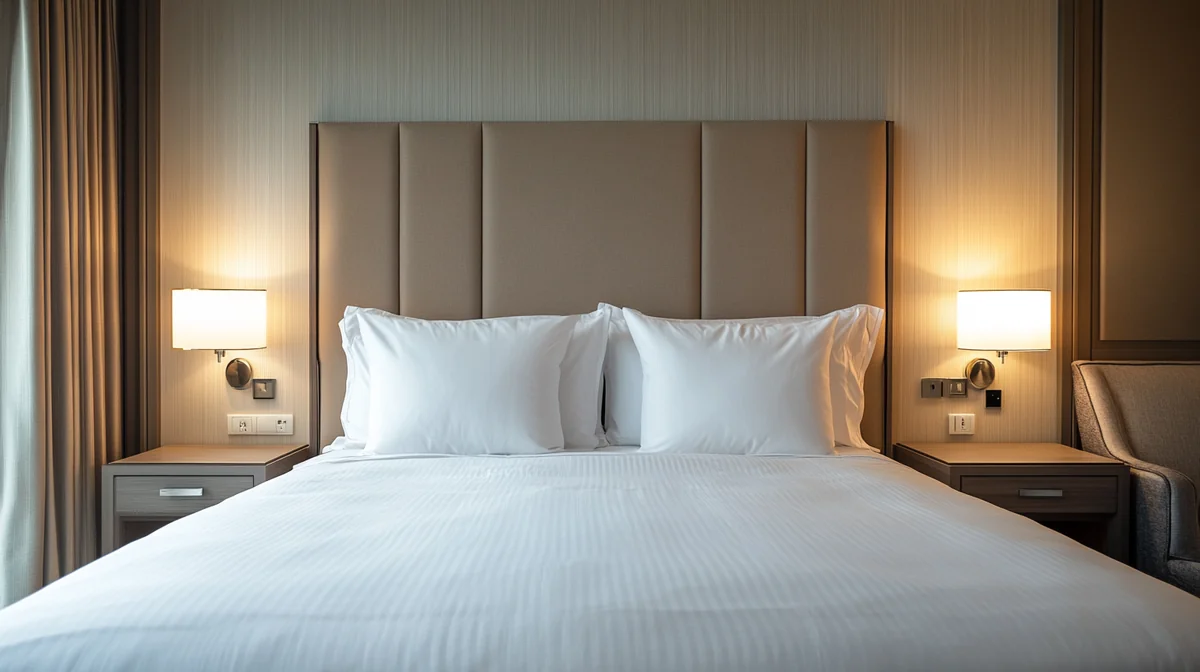
- The accommodation from the doorway, bed made tight, so the comfort is obvious.
- The bathroom and the kitchen, because a family of four needs to know both work.
- The table set with what the farm produces: eggs, bread, the jam, the vegetables.
- The animals, each species once, close and calm.
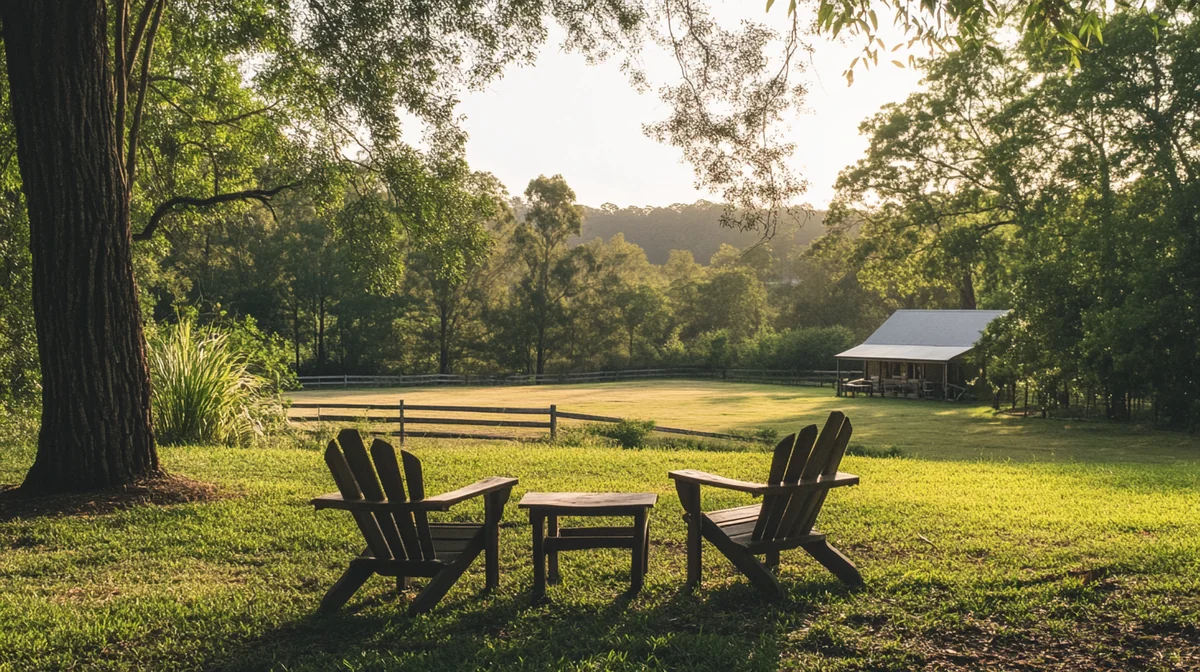
- The land: the orchard, the vines, the pasture, the pond, the path to the barn.
- The farmer or host, at work, one honest frame.
- The experience spaces: the fire pit, the picnic table, the swimming hole, the tractor if rides are offered.
- The drive and the arrival, gate, track, parking, so nobody gets lost after dark.
Shoot in the working season. A dairy farm at milking time, an orchard in blossom or at harvest, a lambing shed in spring: the listing should show the farm doing what it does, because that is what guests are booking. The photography direction service plans the shoot around the farm calendar.
Writing the listing for a farm stay
The title names the farm, the accommodation and the experience: "Working lavender farm, restored barn loft, feed the goats at breakfast." Guests searching for farm stays type the words "farm stay," "ranch" or "agritourism," so use them, and name the animals guests will meet because families choose on that.
The first line describes the morning: the eggs collected before breakfast, the sound of the place, the walk to the barn. Then the practical layer that prevents the complaints farms get: which areas are open to guests and which are working areas, the safety rules around animals and machinery, the smells and sounds of a real farm, the distance to the nearest town and restaurant, wifi and cell signal, what breakfast includes. A farm that is plain about mud, early tractors and a rooster gets the guest who wanted the real thing.
Tag the amenities city guests look for: a full kitchen, wifi, air conditioning, a washer, a crib, parking, a fire pit, a pool or a swimming spot, pet policy. Then tag the experiences as amenities where the platform allows it, farm tours, animal feeding, pick-your-own, cooking with the harvest. Write the region into the copy too: the wine trail, the national park, the market town, because farm stays are often booked as part of a road trip. The listing optimization service rewrites the set across every platform.
Where a direct-booking site earns its keep for a farm stay
Farm stays sell more than nights: tours, workshops, produce boxes, weddings in the barn, school visits, seasonal events. None of that fits a platform listing, and all of it fits a website. The site is where a farm becomes a hospitality business, with a page for the stay, a page for the experiences guests can add, a calendar of the farm's seasons and a shop or an order form for what it grows. Bookings that come through it keep the margin the farm earned, and the direct-booking calculator shows what that is worth.
Farm guests repeat by season. The family that came for the lambs will come for the pumpkins, and a returning booking that goes back through a platform pays a commission on loyalty the farm built. A guest list, a seasonal email with a real reason to return and a booking path on the farm's own domain keep it. A Google Business Profile with the farm category puts the property on the map for the region, and search work around "farm stay" and the county brings in the guest who searched the experience, not the platform.
Beyond Airbnb, farm stays list well on the agritourism and rural-stay marketplaces, on Hipcamp for the camping version, on Vrbo for the family cottage, and on the regional tourism sites that feature working farms. Short video is the natural channel for farms: the goats at the fence, the harvest, the barn at dusk. We run that in the social media service, and each post drives to the farm's own booking and experiences pages.
Frequently Asked Questions
What owners, operators, and prospective buyers ask us about this property type — answered with 2026 data.
Can I start a farm stay on a small farm in 2026?
Yes — many successful farm stays operate on 5-20 acres. The farm doesn't need to be large; it needs to be real and interesting. Small farms with distinct products (goat cheese, olive oil, heirloom vegetables, honey) often outperform large generic farms because the story is clearer. Start with 1-3 accommodation units and scale based on demand.
What permits do I need for a farm stay in 2026?
Varies by jurisdiction. Many US states have 'agritourism' legislation that simplifies permitting for working farms (Michigan, Pennsylvania, California, Vermont are farm-stay friendly). Internationally, Italy and France have mature agriturismo regulatory frameworks. Engage a local agricultural attorney or extension officer before investing — some jurisdictions restrict or cap farm-stay operations.
Should I build new accommodations or convert existing farm buildings?
Conversion usually wins on cost and authenticity. Converted barns, old farmhouses, silos, and dairy buildings command premium rates specifically because of their agricultural heritage. New-build cabins work but compete on a narrower experience dimension. Budget $120,000-$400,000 per converted unit depending on condition; new-build runs $150,000-$500,000.
What experiences should I offer beyond accommodation?
Cooking classes, farm tours, animal feeding experiences, harvest participation (seasonal), farm-to-table dinners, and specific product classes (cheese, bread, wine, olive oil). Successful farm stays typically generate 30-50% of total revenue from experiences — making them the highest-margin part of the business. Start with 2-3 experiences well-executed; add more as demand builds.
How do I handle liability for farm-stay experiences in 2026?
Commercial farm-stay insurance with agritourism rider is essential — most farms underestimate coverage needs. Required: general liability ($1-2M), agritourism-specific liability (covers guest interaction with animals, equipment, farm hazards), property coverage for accommodations, and workers compensation if you employ staff. Many farms require guests sign agritourism liability waivers; some states legally recognize these.
What's the ideal farm stay size for 2026 investment?
3-6 accommodation units paired with an active farm operation. Smaller than 3 struggles to cover fixed costs (marketing, insurance, maintenance); larger than 6-8 typically requires dedicated hospitality staff, shifting from 'farm stay' to 'boutique hotel with farm.' The 3-6 unit range allows family operation with occasional help.
Is agritourism profitable or just a lifestyle business?
Both, depending on execution. A well-run 5-unit farm stay with active experience programming can generate $300,000-$700,000 in annual revenue with 20-30% net margins, creating genuine business returns. A poorly-marketed farm stay with 2-3 units and no experiences often breaks even at best. The difference is entirely execution — the underlying demand is strong in 2026.
What's the best marketing platform for farm stays in 2026?
Instagram drives the highest organic reach for farm stays — animal content and harvest content both perform strongly. After Instagram: Airbnb for booking volume, Google Business Profile for local search, and email marketing to repeat guests. Specialty farm-stay platforms (Farm Stay USA, Agriturismo.it) provide niche audience. Skip TikTok unless your farm has a unique angle (unusual animals, distinctive personality).
How do I handle city guests who've never been on a farm?
Build a clear 'first 15 minutes' orientation: farm rules, which areas are off-limits, animal interaction guidelines, and what to wear. Offer a guided first-day tour for every guest — this anticipates urban-guest confusion and turns it into a welcome experience. Expect some guests to be tentative around animals and farm equipment; patience and humor matter.
What's the biggest mistake farm owners make when launching agritourism in 2026?
Treating it as a side hustle. Farm stays that succeed treat accommodation as a legitimate business with professional photography, real marketing, and systematic operations — not as 'let's rent out the old farmhouse when we feel like it.' The farms that half-commit get half-results. Either invest properly in the accommodation business or focus fully on farming. The in-between rarely works.
What should a farm-stay listing show first?
A guest doing the thing the farm offers, in morning light: collecting eggs, feeding animals, walking the orchard. It answers the question city guests are asking, which is whether the experience is real. The accommodation comes second, photographed as carefully as a hotel room.
How does a farm stay handle safety and working areas in the listing?
State which areas are open to guests and which are working farm, list the rules around animals and machinery, and say it plainly in the house manual too. Guests respect rules they were told before they booked.
Can a farm sell experiences and produce through its website?
Yes, and it should. Tours, workshops, seasonal events and produce boxes do not fit a platform listing, and a website with a page for each turns the farm into a hospitality business rather than a room for rent.
Which platforms work for farm stays?
Airbnb's farm-stay category, the agritourism and rural-stay marketplaces, Hipcamp for camping and glamping on the land, Vrbo for the family cottage, and the regional tourism sites that feature working farms. The direct site should be on Google Vacation Rentals too.