$175
Avg. Nightly Rate
67%
Avg. Occupancy Rate
$3,510
Avg. Monthly Revenue
10–14%
Est. Cash-on-Cash ROI
MEDIUM
Seasonality
LIGHT
Regulatory Burden

* Market averages. Cavmir-managed properties typically exceed these figures by 25–45%. Data sourced from AirDNA, STR market reports, and Cavmir internal analytics.

The Market

Why Zanzibar is One of the World's Premier STR Markets

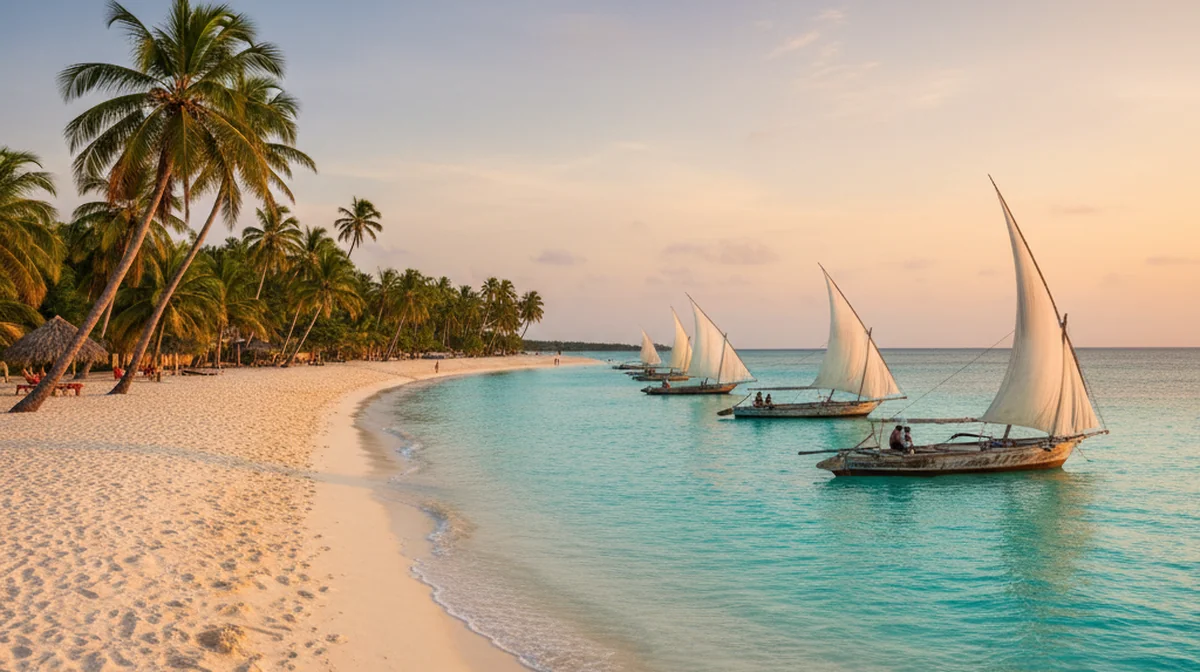
Zanzibar is the East African coast's fastest-growing STR market — a Swahili-Arab-Portuguese archipelago whose Stone Town (UNESCO World Heritage since 2000) anchors the cultural tier and whose north-coast beaches at Nungwi and Kendwa deliver some of the most photogenic white-sand-and-turquoise geography on the Indian Ocean. The southeastern coast at Paje draws the kite-and-surf crowd; the northwest at Kendwa commands the beach-villa luxury premium; Stone Town itself retains a boutique-riad character that the beach corridors can't replicate.

Zanzibar's STR market is young, fast-growing, and light on regulation relative to mature Indian Ocean peers. Peak runs July–October (European summer) and December–February (Northern Hemisphere winter escape); the long rainy season (March–May) suppresses occupancy meaningfully. Nungwi and Kendwa luxury villas clear $300–$1,200/night; Paje apartments and boutique hotels run $120–$400/night; Stone Town riads sit mid-tier on architectural differentiation. The safari-extension stopover from the northern Tanzania parks is a structural demand driver.

Top Attractions & Landmarks

  • Stone Town (UNESCO)
  • Nungwi Beach
  • Kendwa Beach
  • Jozani Forest (red colobus)
  • Prison Island
  • Forodhani Gardens
  • Mnemba Atoll snorkeling
  • Spice Plantation Tours

Nearby Markets: Nairobi  |  Seychelles  |  Mauritius

Airbnb marketing services in Zanzibar, Tanzania, East Africa
Why Cavmir

The Cavmir Advantage
in Zanzibar

Cavmir markets Zanzibar to the safari-extension luxury traveler already in the region and the growing European direct-flight audience. We build the brand story that separates the UNESCO Stone Town product from the Nungwi beach-villa product — two completely different guest personas the generic 'Zanzibar' marketing routinely conflates.

State of the Industry · History

The Zanzibar STR Market — Past & Present

Zanzibar is an archipelago off the Tanzanian coast with a layered history that few tropical-beach destinations can match. Stone Town, a UNESCO World Heritage Site, was the capital of the Omani Sultanate of Zanzibar from 1840 and for decades the most important trading city on the East African coast — spices (clove especially), ivory, and, shamefully, one of the largest slave markets in the Indian Ocean world. The Anglican cathedral at the old slave market site and the Old Fort anchor a maze of coral-stone buildings with Omani, Indian, Swahili, and Portuguese architectural fingerprints. The 1964 Zanzibar Revolution overthrew the sultanate and the islands joined mainland Tanganyika to form Tanzania, retaining semi-autonomous status with their own president, legislature, and tourism policy.

The modern tourism economy built itself around two distinct products: Stone Town cultural stays and the north-coast beach corridor of Nungwi and Kendwa, with the east coast (Paje, Jambiani, Matemwe) running as the kitesurf and quieter-beach alternative. The STR market grew rapidly through the 2010s as East African safari itineraries increasingly bolted on a Zanzibar beach extension, and then accelerated again in the 2020–2023 window when Zanzibar stayed visibly open to international travel during much of the pandemic. Foreign investment in beachfront villas and boutique hotels boomed. Regulation through the Zanzibar Commission for Tourism (ZCT) and the mainland Tanzania Tourist Board (TTB) has been catching up with the supply growth ever since — licensing is now enforced more actively than it was five years ago.

Pricing Strategy & Seasonality

Pricing, Seasonality & When to Capture ROI

Pricing Strategy

Nungwi and Kendwa beachfront villas clear USD $400–$1,500/night in peak season, with the top-tier private-beach compounds reaching $2,500+ for full-buyout stays. Matemwe and Pwani Mchangani run $250–$900/night — quieter, more boutique. Paje and Jambiani on the east coast sit in the $150–$600/night range and skew toward the kitesurf and wellness audience. Stone Town boutique houses run $120–$400/night with full character premium in the most atmospheric Omani merchant-house conversions. Staffed villas (cook, housekeeper, askari guard) are standard in the beach segment and priced to include the service layer.

Seasonality & ROI Windows

Bi-modal peak seasonality tied to monsoon patterns. Peak: July through October (dry, cooler) and mid-December through February (hot, dry). Super-peak: Christmas/New Year window. Shoulder: March and June. Low: the long rains from mid-April through late May, when many boutique properties actually close. Safari-extension demand (guests arriving from Serengeti and Ngorongoro) is the reliable dry-season driver and books 6–12 months out for the July–October window.

Regulation & Licensing · 2026

What the Law Requires in Zanzibar

Zanzibar regulates tourism through the Zanzibar Commission for Tourism (ZCT), which operates semi-autonomously from the mainland Tanzania Tourist Board (TTB). Any commercial accommodation — villa, guesthouse, boutique hotel, or Airbnb-style rental — requires ZCT registration and classification. The Zanzibar Investment Promotion Authority (ZIPA) handles foreign-investor strategic projects and sits alongside ZCT. A business license from the Zanzibar Revenue Authority (ZRA), a TIN (tax identification number), and fire-safety sign-off from the municipal authority are part of the standard package. The Infrastructure Development Tax and the hotel levy are collected per guest per night and remitted monthly.

Foreign ownership of land is the defining constraint. Zanzibar — and Tanzania more broadly — operates a leasehold system for non-citizens: foreigners cannot hold freehold title but can hold long-term leases (typically 33, 66, or 99 years) through ZIPA-approved investment structures. Many foreign-owned beach villas are held through Tanzanian companies with local nominee shareholding — this works but requires proper legal structuring upfront. The 2024–2026 regulatory direction has been visible: ZCT has cracked down on unlicensed listings, platform-level data sharing has increased, and several high-profile operators have faced enforcement. Getting the licensing right isn't optional, and the window for informal operation is closing.

Market-Specific Tips & Challenges

Local Tips & Unique Market Challenges

Tips That Actually Move Revenue in Zanzibar

The Zanzibar strategic tip: your guest almost always arrives from a safari, not from their home country. This single fact reshapes the marketing. They've just spent five to ten days on dusty game drives, early wake-ups, and lodge-rotation logistics. They want a plunge pool, a seafood lunch, and absolutely nothing on their schedule for the first forty-eight hours. Listings that frame themselves as the decompression half of an East Africa trip convert far better than listings that try to compete with Maldives or Seychelles on pure beach credentials.

Tactically: first, build direct relationships with safari operators in Arusha and Nairobi — they refer, they book, and the rate guest they send is higher-spend than platform volume. Second, solve the transfer — Zanzibar airport to Nungwi is 90 minutes on roads that surprise first-time visitors, and a pre-arranged driver is worth the margin you'd lose offering it complimentary. Third, the house chef is the highest-leverage amenity on the island; a villa with a cook who can do fresh-catch grilled snapper, coconut-braised octopus, and Swahili-style biryani commands real premium over a villa with a kitchenette. Fourth, respect Ramadan and the Muslim-majority cultural context — bikini-heavy marketing imagery lands differently in Stone Town than on the beach, and the operators who understand the nuance build better local relationships.

Unique Zanzibar Challenges

Power reliability on Zanzibar is real — generators and inverters aren't optional at the luxury tier. Water supply requires storage tanks and often desalination at beach properties. The long rains (April–May) genuinely close the tourism economy for weeks. Foreign ownership requires leasehold structuring and careful legal setup. Informal operator competition is real and ZCT enforcement is uneven. Road transfer times from the airport limit impulse-guest conversion.

A Curious Zanzibar Fact
Freddie Mercury was born Farrokh Bulsara in Stone Town in 1946, in a Parsi family that had emigrated to Zanzibar when it was still under the Omani sultanate. The family fled during the 1964 revolution and never returned. The house on Kenyatta Road where he was born is now a small museum, and it sits a five-minute walk from several of the most photogenic boutique houses on the island. A Stone Town property that builds the Queen-fan day-walk itinerary into its listing — the Mercury house, the old post office, Forodhani Gardens at sunset — sells a narrative no generic beach villa can match.
Finance Essentials — Zanzibar
🛡️

Insurance

Tanzania-based insurance carriers (Jubilee Allianz, ICEA Lion, Sanlam Tanzania, Alliance) cover commercial tourism property with fire, theft, and third-party liability. STR-specific endorsements are available but require explicit negotiation. Budget USD $1,500–$6,000 annually depending on property value and location. Cyclone and flood coverage is worth explicitly confirming — base policies don't always include it. International liability cover through a supplemental policy is common for higher-end operators.

🧾

Property & Income Tax

Tanzania taxes rental income at progressive rates up to 30% for individuals; non-resident rental income faces 20% withholding at source. VAT is 18% and applies to commercial accommodation above threshold. The Zanzibar hotel levy is separately collected. Capital gains on property disposal runs 10% for residents, 20% for non-residents. Stamp duty 1% on property transfers. Zanzibar's semi-autonomous status means the island levies and mainland taxes both apply depending on the activity — a local accountant who understands both regimes is essential.

🏦

Mortgages & Financing

Local mortgage availability for foreign non-residents is limited and expensive. CRDB, NMB, and Exim Bank Tanzania have non-resident programs but typical LTV is 50–60% with rates notably higher than European or North American benchmarks. Most foreign buyers pay cash or use international financing against assets in their home country. Developer-financed structures exist at larger branded residence projects.

Future Outlook · 2027 & Beyond

Where Zanzibar is Headed Next

Zanzibar through 2027 and beyond is one of the more interesting African STR markets to watch. The new Abeid Amani Karume international airport terminal has expanded arrival capacity, direct flights from Europe and the Gulf keep multiplying, and branded-residence development (Four Seasons-adjacent, Pemba luxury projects) is bringing institutional capital into a market that was recently informal. The ZCT licensing tightening is genuine — informal operators will lose share, professional operators will gain it. Risk factors: over-supply in Nungwi beachfront, the long-rains seasonality problem doesn't go away, and political transitions on the island have historically been noisy. Cavmir's positioning: Zanzibar works best marketed as the safari-extension decompression product, priced with the service layer explicit, and presented with Stone Town cultural depth rather than generic tropical-beach language.

From the Desk of Sofie Sinag

Why We Love Marketing in Zanzibar

Zanzibar is the Indian Ocean market where a UNESCO cultural city and a world-class beach archipelago sit 90 minutes apart by road, and the marketing opportunity for operators who respect that split is enormous. We love working here because Stone Town — the old Omani-Swahili capital on the west coast — is genuinely one of the more layered cultural cities on the continent: carved Zanzibari doors, the Old Fort, the House of Wonders (when it's open), the former slave market at the Anglican Cathedral, and a food scene at Forodhani Gardens that photographs without any styling. It's a UNESCO World Heritage Site, and a boutique hotel inside the old town — Emerson on Hurumzi, Zanzibar Serena, the Park Hyatt in the restored Mambo Msiige — sells a completely different product than the beach villas on the other side of the island.

What keeps us coming back is the beach corridor on the north and east: Nungwi and Kendwa on the northern tip, where the tide doesn't retreat a kilometer the way it does on the east coast, and the sand is the ultra-fine white Indian Ocean sand the brand imagery was invented for. The east coast — Paje, Jambiani, Matemwe — runs slower, more kite-surfing, more boutique. The private islands off the coast — Mnemba, Chumbe, Thanda — anchor the ultra-luxury end. The spice-farm tours in the island's interior, the Jozani Forest with its red colobus monkeys endemic to Zanzibar, and the dhow-sail sunsets off Stone Town's waterfront anchor a cultural layer that pure-beach marketing sleeps through. The Sauti za Busara music festival in February and the Zanzibar International Film Festival in July pull cultural audiences at premium rates. Our job is helping Zanzibar operators stop flattening Stone Town and Nungwi into one generic Zanzibar brand and start marketing the specific corridor each property actually sits inside.

Cavmir's Zanzibar Cheat Sheet

The Picks We Recommend for Your Welcome Book

How we actually use Zanzibar when we're scouting dual-corridor content, reshooting a beach-villa library, or briefing a Stone Town boutique client on why the beach-resort comparison is costing them the cultural-traveler audience they should be winning.

Morning

Stone Town alleys at 7am before the spice vendors open

The labyrinth of narrow stone lanes, the carved Zanzibari doors, and the Omani-Swahili facades read honestly in early light with no foot traffic. We schedule Stone Town reshoots at this hour because the emptiness is the content and the architecture carries a story the midday tourist-crowd shot completely loses.

Golden Hour

Forodhani Gardens waterfront looking out toward the dhow traffic

The Indian Ocean with traditional dhows silhouetted at sunset, the Old Fort and the House of Wonders behind you — this is the single composition that explains Stone Town's identity faster than any deck can. We build hero libraries around this vantage for every Stone Town client.

Neighborhood Walk

Stone Town from the former slave market at the Anglican Cathedral through to Mizingani Road

Forty-minute walk that covers the Omani palace history, the slave-trade memorial, the Freddie Mercury house, and the working waterfront. We route clients here specifically to explain why a Stone Town boutique has cultural depth no Nungwi resort can credibly claim.

Dinner That Photographs

The Rock Restaurant on Michamvi Pingwe or Emerson on Hurumzi's rooftop

The Rock for the viral tidal-island image that most travelers know before they arrive; Emerson's rooftop for the authentic Swahili multi-course dinner with the Stone Town skyline at sunset. Two completely different F&B stories and we brief clients to book both on scouting trips.

Local Obsession

Spice farm tour in the island interior with a Stone Town chef

Most Zanzibar marketing treats the spice heritage as a tagline. A boutique that packages a credible spice-farm half-day with a working Stone Town chef accesses a layer of cultural content that pure-beach properties cannot replicate — and it photographs beautifully.

Shoulder Season Secret

Late June through early October after the long rains

Dry, cooler, fewer crowds, rates still reasonable before the December peak. The Zanzibar International Film Festival in July and the clearer dive season off Mnemba anchor the cultural and activity calendar. This is when we schedule reshoots for clients whose December-January-heavy libraries have gone stale.

Weekend Escape

Mnemba Atoll day sail from Matemwe or a dhow trip to Prison Island

Mnemba for the ultra-luxury private-island day with world-class snorkeling; Prison Island for the giant tortoise colony and the slave-trade history close to Stone Town. Both extensions that most beach-only marketing leaves on the table.

What Guests Ask For

Tidal timings for the east coast, Stone Town dress expectations, and malaria-prophylaxis logistics

Every Zanzibar inquiry audit we run surfaces these three. The east-coast tide question alone — the kilometer-long tidal retreat that completely reshapes the afternoon beach experience — is a brand-integrity issue if the listing doesn't address it honestly up front.

Local Work · Composite Case Vignettes

What Cavmir Has Done for Zanzibar Properties

Representative Cavmir engagements in Zanzibar. Property identifiers redacted; figures composited from internal analytics and market benchmarks.

Stone Town heritage boutique
The Brief

A 16-room boutique hotel inside a restored 19th-century Omani townhouse in Stone Town was being priced alongside Nungwi beach resorts in OTA search results, losing the exact culturally motivated guest who should have been its core audience. The UNESCO context, the carved door, the original coral-rag walls — the actual differentiators — were invisible in the booking funnel.

What We Did

We rebuilt the brand around the heritage story specifically — the building's Omani-Swahili architectural lineage, the restoration process, the neighborhood walking context — produced a library that treated the carved doors, the rooftop Stone Town view, and the courtyard as architectural co-stars, launched a direct-booking program with a cultural-concierge layer (Stone Town walking tour, dhow sunset, spice-farm day), and restructured paid media around heritage-travel and UNESCO-city intent rather than Zanzibar-beach broad terms.

The Result

Direct-booking share displaced OTA volume meaningfully within two peak seasons, average daily rate on direct bookings moved materially above the prior baseline, and the property shifted its competitive reference set from Nungwi resorts it couldn't match on beach to Stone Town heritage boutiques where it clearly led.

Nungwi beachfront villa collection
The Brief

A 4-villa beachfront collection on the Nungwi tip was competing on generic Indian-Ocean marketing against Maldives and Seychelles properties a full rate tier above. The tide-stable Nungwi advantage — swimmable all day, unlike the east coast — wasn't being communicated, and the dhow-sunset geography specific to the northern tip was being flattened into standard beach imagery.

What We Did

We repositioned the collection around the Nungwi-specific advantages: tide-stable swimming, the working dhow harbor, sunset-facing west coast. Produced a library that captured the fishing-boat context at dawn and the sunset dhow traffic honestly. Launched a concierge program tied to Mnemba Atoll day sails and Stone Town cultural days, rebuilt paid media around Nungwi-specific intent, and structured a direct-booking program with extended-stay pricing logic.

The Result

Direct bookings grew substantially, ADR moved into alignment with the collection's actual positioning rather than the commodity beach tier, and repeat-guest bookings began forming by the second high season as the Nungwi story started compounding against the generic competitive set.

East-coast boutique eco-retreat in Paje
The Brief

A 12-room eco-retreat on the east coast in Paje was quietly beloved by kitesurfers and the design-travel audience but had no direct presence worth mentioning. OTAs were pricing it into the mid-market east-coast bracket it had outgrown, and the sustainability-and-design story that was its actual brand was not showing up in the funnel.

What We Did

We built a standalone brand from scratch, produced a library that captured the design language — natural materials, thatch, Swahili craft, honest environmental infrastructure — and the Paje kite-beach lifestyle as a connected experience. Launched a direct-booking program with a kite-school partnership and a wellness-retreat calendar, tied the content strategy to the Zanzibar International Film Festival and the Sauti za Busara music festival windows, and built individual stay-narrative copy for each cabin.

The Result

The direct channel moved from effectively zero to a meaningful share of confirmed nights within the first full year, average length of stay ran notably longer than the OTA baseline, and the property established a repeat-guest cohort of design-conscious travelers willing to pay the premium the retreat's actual product deserved.

Ready to Grow in Zanzibar?

Let's Put Your Zanzibar
Property on the Map

Talk to Cavmir today. We'll show you exactly what your Zanzibar property is leaving on the table — and how fast we can change that.

Book a Free Strategy Call