



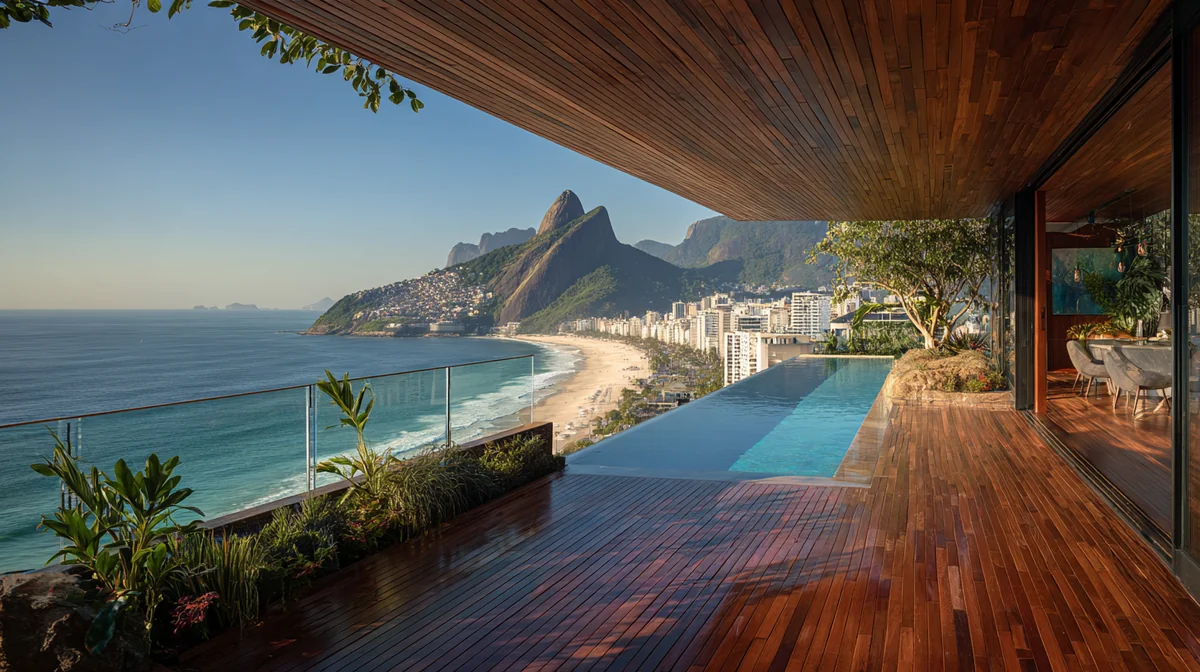


The Westside Beaches
Venice & Santa Monica-adjacent
Bohemian, design-forward, summer-premium. Draws the solo creative and the remote worker on a long stay — but watch the Santa Monica line, where only hosted home-sharing is legal.

North America · Airbnb Marketing
Expert short-term rental marketing to grow your bookings and nightly rate in Los Angeles, California, USA.
Sixteen services, one team. Everything below is built in-house and scoped to your property and market. Most owners start with the 12-Step System.
Every engagement is quoted to your portfolio. These are the ready-made scopes owners pick most — our Fall Special (55% off list or more) is already applied to the website, King Broker, Hotels and à la carte scopes. A clear proposal within 48 hours.
The work is public. Selected engagements and what changed — and reviews from the owners and managers behind them.
* Market averages from AirDNA and STR market reports. A single home's numbers depend on its size, its location and how it is marketed.
Cavmir is an Airbnb marketing agency. We build the brand, the direct-booking website and the marketing for short-term rentals in Los Angeles.
Los Angeles is a city of neighborhoods, each with its own distinct character and traveler appeal. Venice Beach attracts the creative and bohemian crowd. Silver Lake and Los Feliz draw the design-conscious. West Hollywood and Beverly Hills cater to luxury seekers. Hollywood and Downtown LA are anchors for entertainment and business travelers. The sheer diversity of LA means there's a guest segment for every type of property — if you know how to reach them.
Despite STR regulations, LA remains one of the highest-revenue short-term rental markets in the US. The entertainment industry creates constant demand for extended stays. Airbnb Plus and luxury tier properties consistently outperform the market average due to guest quality and loyalty.
Nearby Markets: Malibu | San Diego | Palm Springs
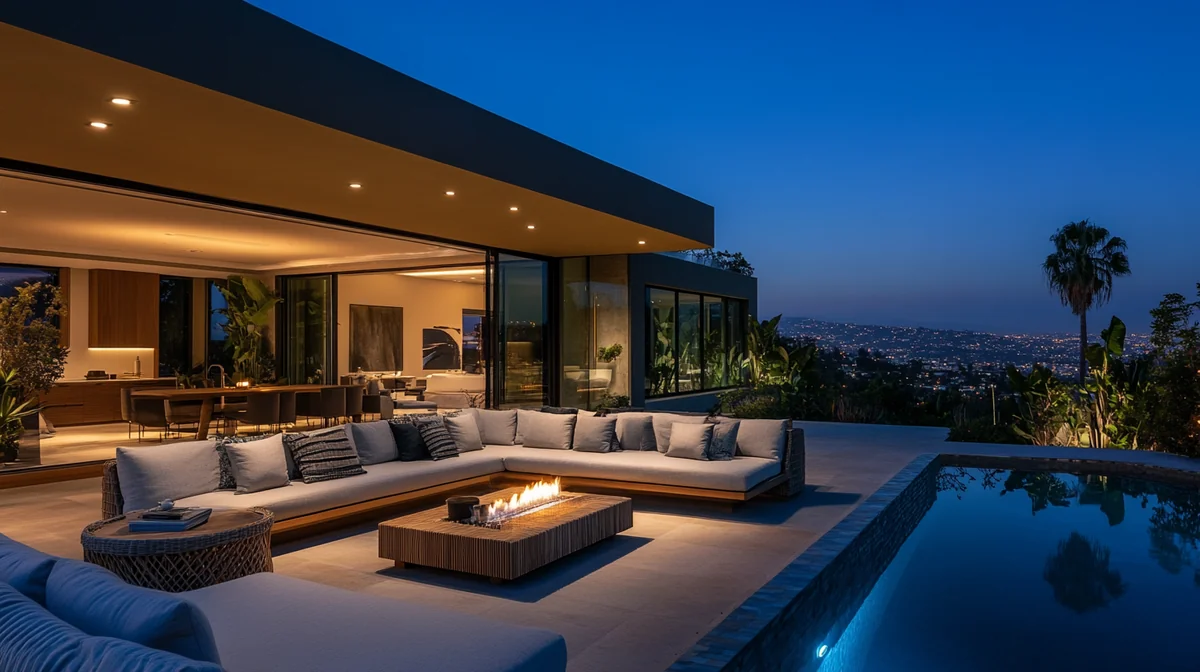
A few of the visual fingerprints we lean into when we shoot, brand and market a Los Angeles property — courtesy of the open Wikimedia Commons archive.
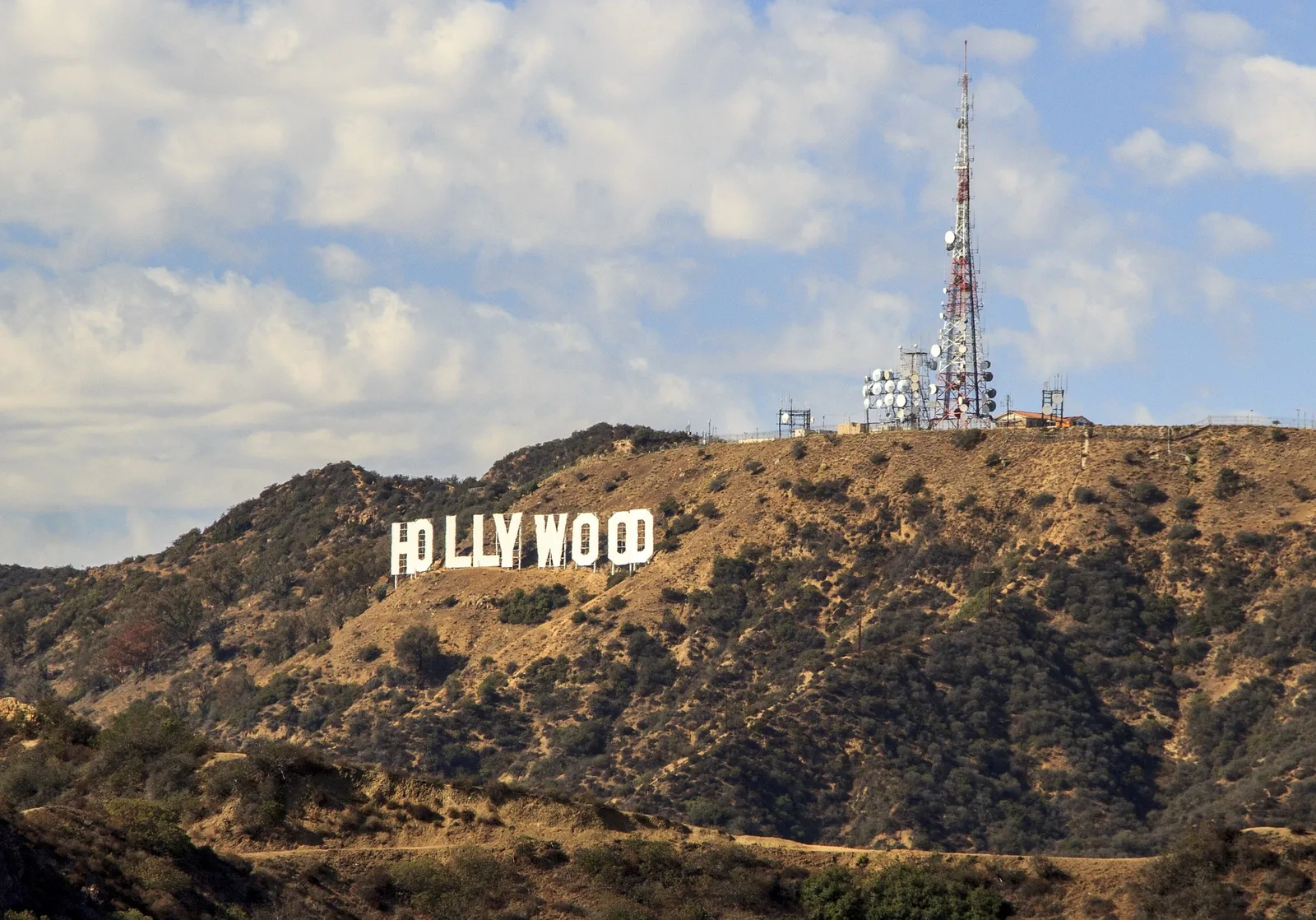

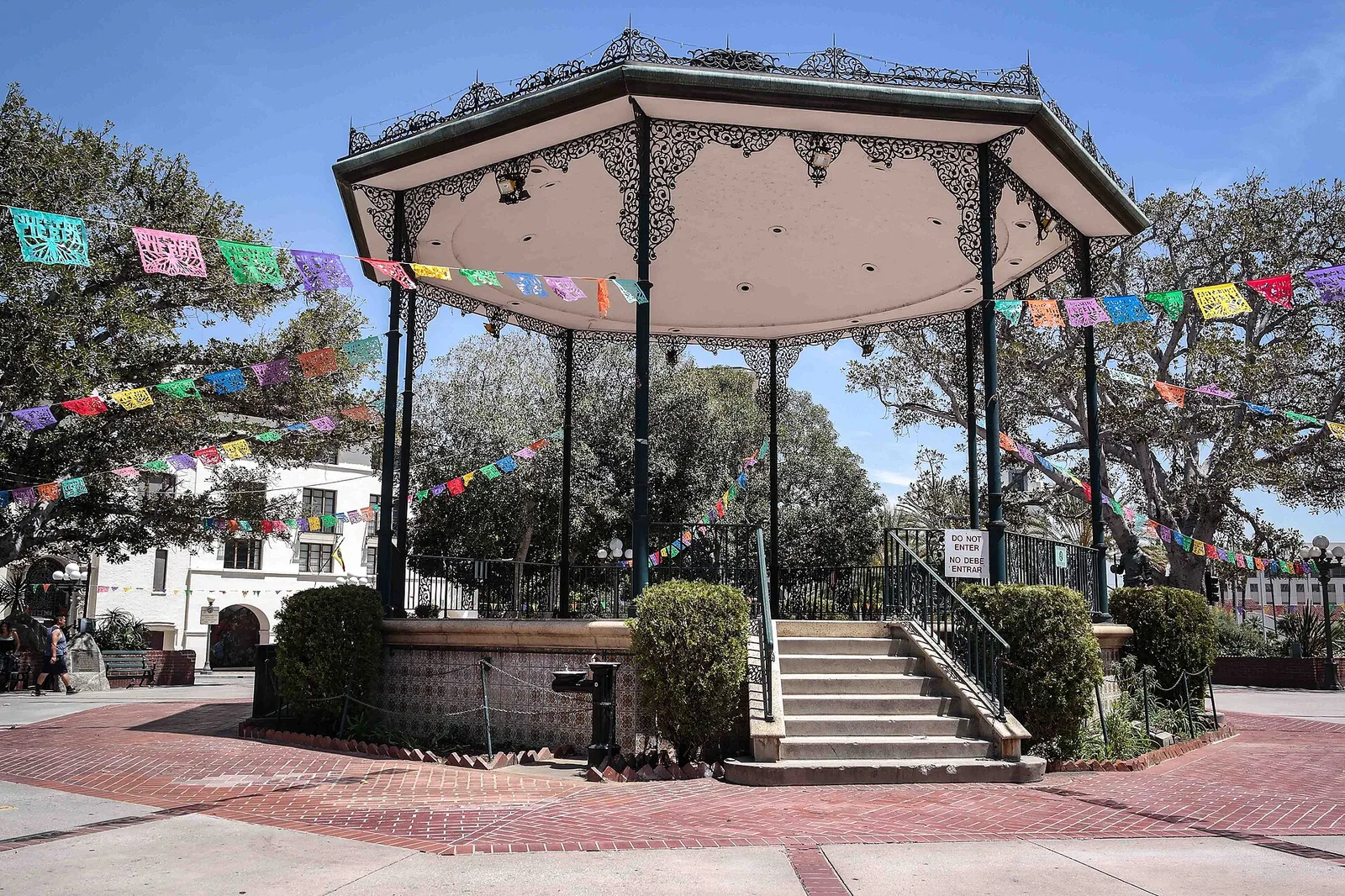
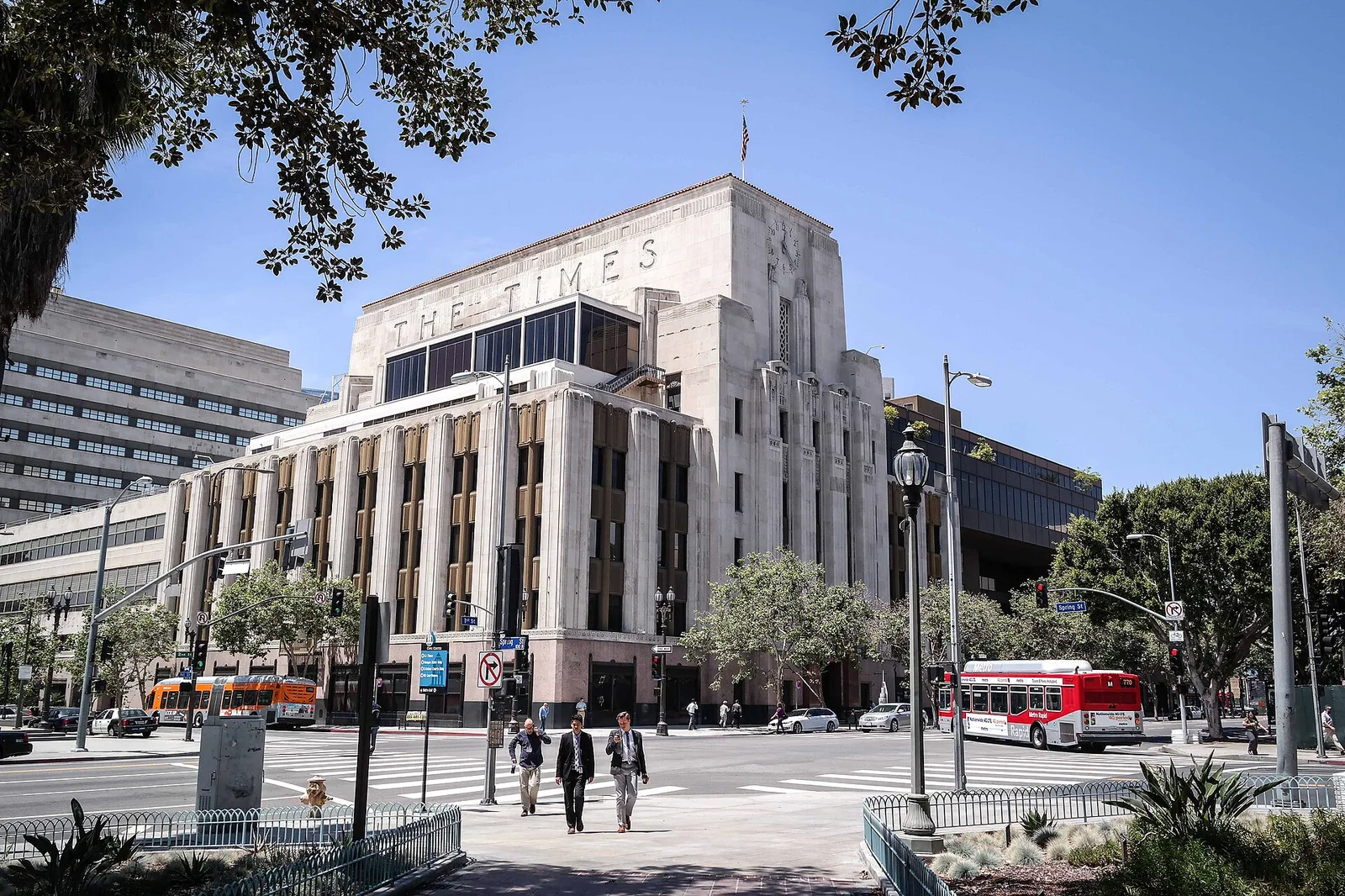
Cavmir builds LA properties into recognizable brands within their neighborhoods. Whether your property is in Venice, the Hills, or DTLA, we craft a brand identity, visual story, and distribution strategy that positions it for the guests who will pay the most and leave the best reviews.
Los Angeles has sold a room next to the movies for more than a century — the hotel that built a town, the ballroom that held the first Oscars, the hideaway that promised discretion. Cavmir writes the current chapter of that story.
Los Angeles built its reputation on hospitality long before Airbnb. The Hollywood Roosevelt opened in 1927 (hosting the first Academy Awards there in 1929), the Chateau Marmont on Sunset opened the same year, and the Beverly Hills Hotel had already been operating for 15 years. What makes LA unusual in STR history is the length of the extended-stay tradition — corporate housing, studio housing for actors and executives on projects, and furnished short-term rentals have been a real estate category in Los Angeles since at least the 1940s. Apartment corporate-housing specialists like Oakwood operated throughout LA decades before Airbnb existed.
The platform-era LA STR market exploded between 2011 and 2017 — Venice, Silver Lake, and West Hollywood led the creative-class wave, while the Hills and Beverly Hills hosted the luxury segment. The Home-Sharing Ordinance of 2018 and its 2019 enforcement onset reshaped the market dramatically: many non-owner-occupied investment STRs exited, while compliant owner-occupied home-shares remained strong. The market in 2026 is smaller than its 2018 peak but significantly more professionalized.
Before the platforms, the hotels did the marketing, and in Los Angeles they marketed proximity to the movie business. The Beverly Hills Hotel opened in 1912, two years before the city around it existed, put up by a land company to lure buyers out to empty foothills. The Hollywood Roosevelt handed its ballroom to the first Academy Awards in 1929 and never stopped trading on it. The Chateau Marmont sold the opposite promise — privacy, a place the famous could disappear for a month. Each one was selling an idea of Los Angeles to a guest who wanted in on it. That's the same business Cavmir is in today.
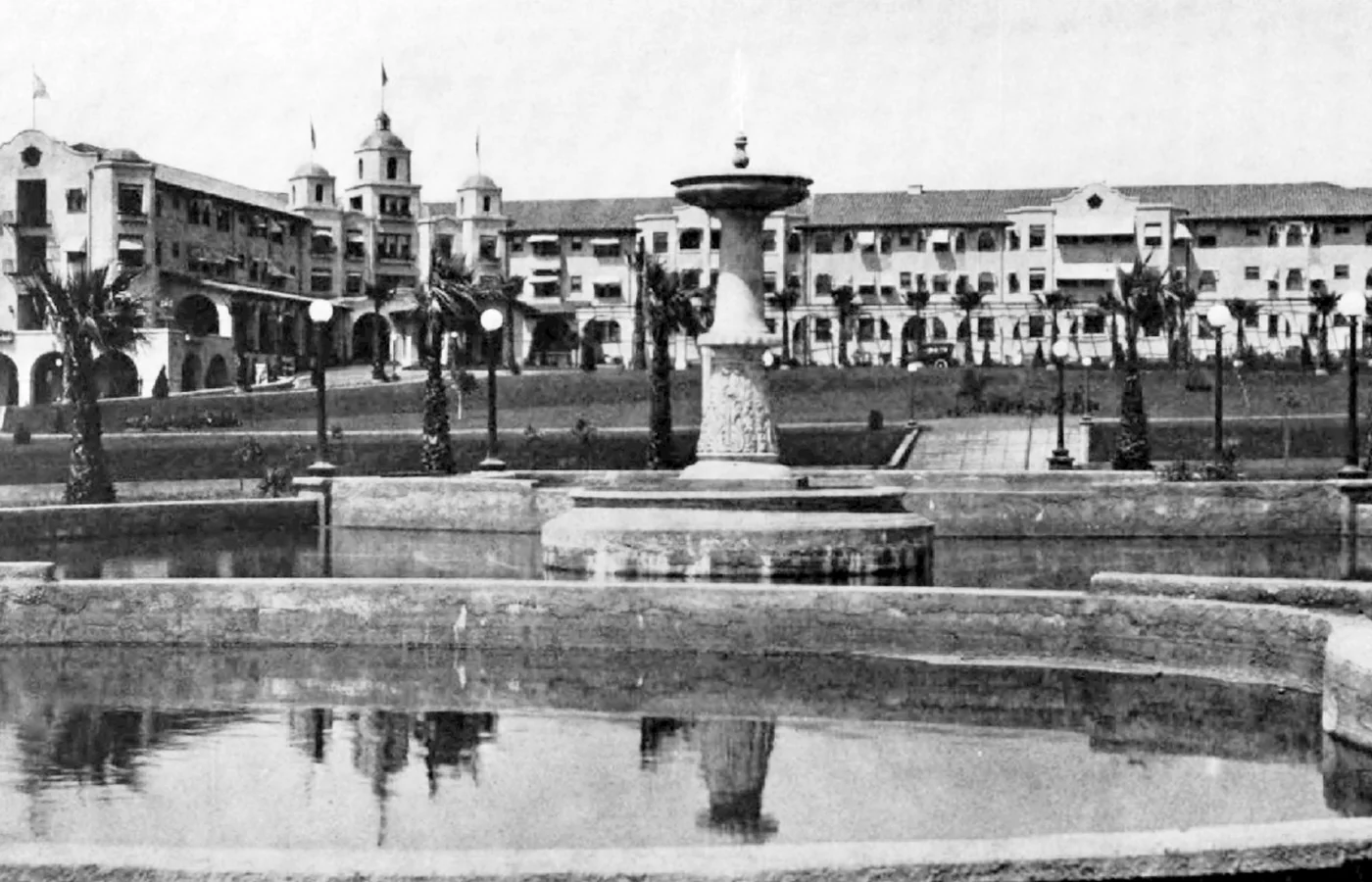
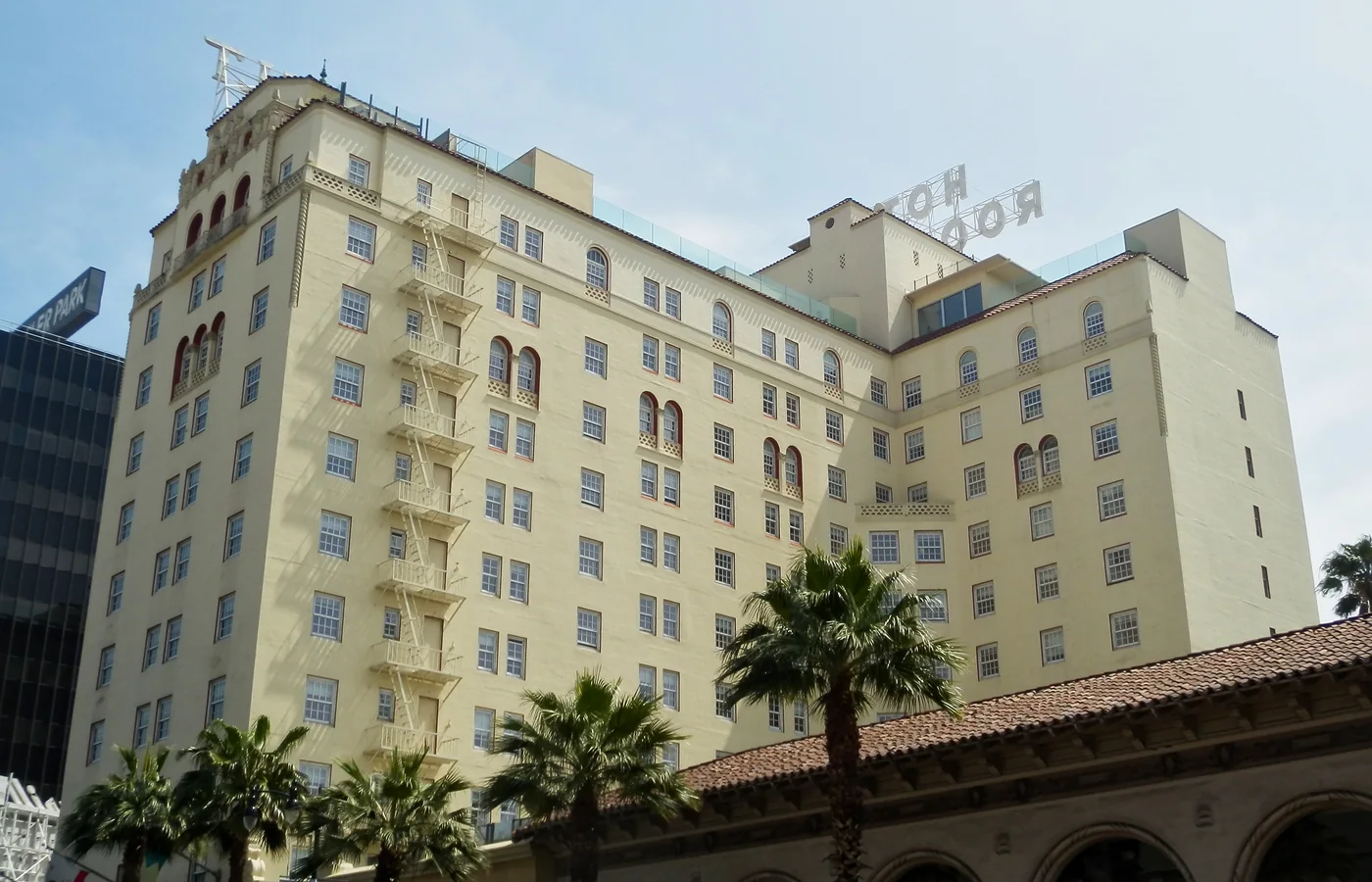
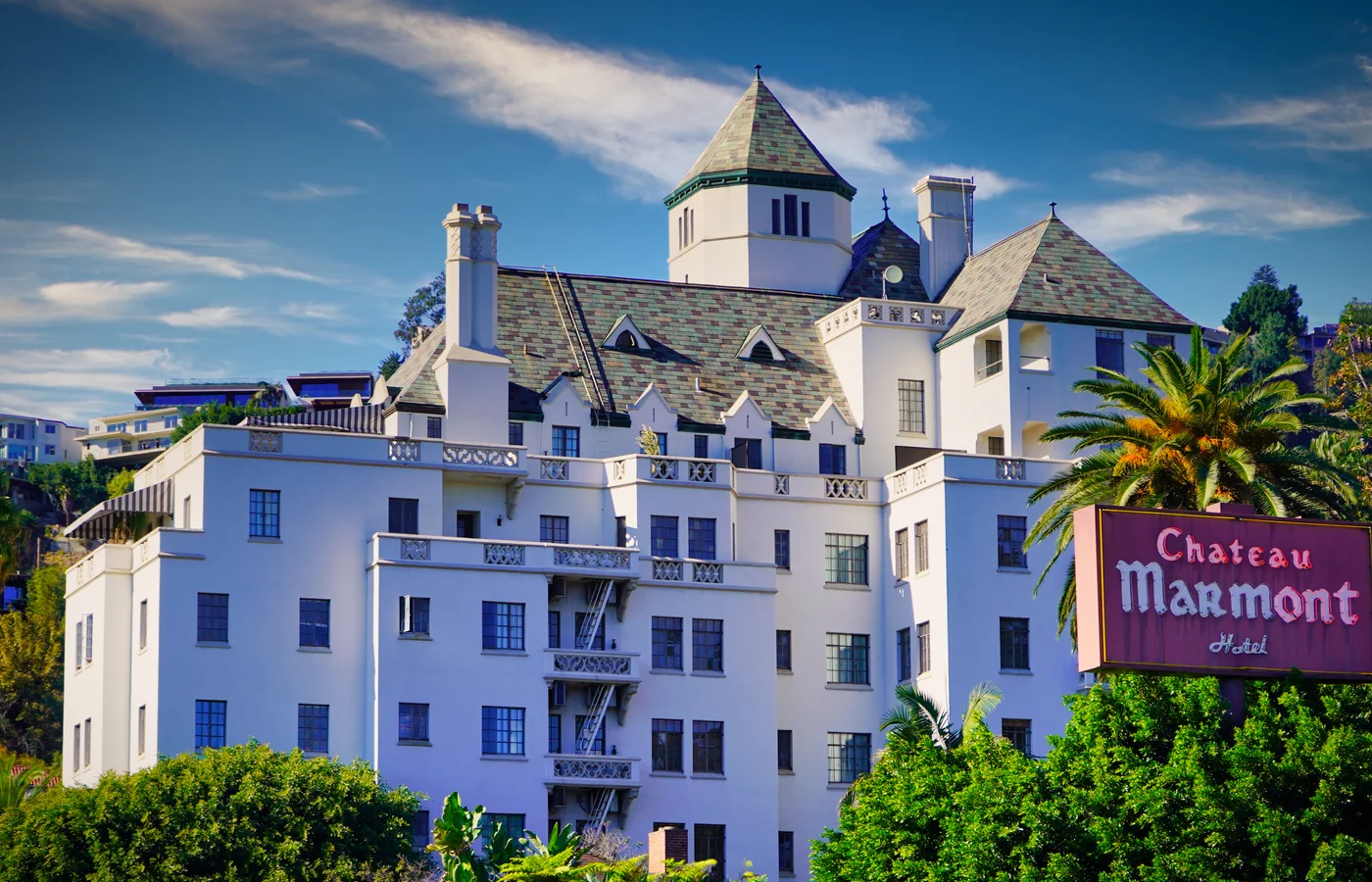
Historical images: public domain and Creative Commons via Wikimedia Commons — The Hollywood Roosevelt, 1927 (Alexander Migl, CC BY-SA 4.0); Chateau Marmont, 1929 (Tony Mariotti, CC BY 2.0); others public domain.
LA pricing is radically neighborhood-specific. West Hollywood and Beverly Hills anchor the luxury tier ($500–$2,500/night). Venice and Santa Monica beach-adjacent command summer premiums. Silver Lake, Los Feliz, and Echo Park draw the design-conscious creative traveler year-round. Hollywood and DTLA price lower but occupy higher. The Hills (Bird Streets, Laurel Canyon, Nichols Canyon) sit in their own luxury category. The most common pricing error: charging Beverly Hills rates for a West Hollywood property or vice versa — each micro-market has a tightly defined price band and outliers get filtered out of search.
LA is the least-seasonal major US market — year-round temperate weather, continuous industry events, and sports seasons keep demand nearly flat. February (Super Bowl, Oscars, Grammys ceremony windows) can briefly super-peak. Summer sees a family-travel lift. January can soften post-holiday. The biggest revenue leverage in LA is not seasonality — it is dynamic pricing around events (Coachella, awards, studio-release premieres) and proper mid-term-stay capture for industry-project bookings (30–90 night stays).
The LA Home-Sharing Ordinance (HSO) is the operative rule. Short-term rental is only legal in your primary residence — the place you live for at least 6 months of the year — with an annual cap of 120 nights. Extended Home-Sharing Permits (about $1,030, plus review fees) allow year-round hosting but require 6 months of prior registration or 60 days of hosting history, plus additional criteria. Non-primary-residence STRs are illegal in the City of Los Angeles. Your registration number must appear in every listing.
2026 brought meaningful enforcement teeth. California's SB 346 (signed 2025, effective early 2026) mandates that platforms share host data (name, address, nights booked, registration status) with cities on request. LA is using this data to remove non-compliant listings at scale. Rent-stabilized units (pre-October 1978 construction) are entirely banned from short-term rental. Condominium buildings frequently prohibit STRs in their bylaws regardless of city permission.
The most valuable LA tip: the market for compliant STRs is less crowded than it looks. A large portion of Airbnb-listed LA inventory is non-compliant and facing increasing delisting risk under SB 346. Owners with clean primary-residence compliance and Extended Home-Sharing Permits are in a structurally protected position and should price to reflect scarcity, not compete against illegal inventory.
Second — capture the industry 30+ night segment. Corporate housing (30–90 night stays) is not subject to the HSO. Furnished apartments in West Hollywood, Beverly Hills, and Culver City that are positioned for studio executives, film crew, and production stays earn $5,000–$15,000+ per month and avoid STR regulatory exposure entirely. Third — lean into neighborhood identity. LA guests book a neighborhood first, then a property — listings that feature neighborhood walkability, local cafes, and specific neighborhood landmarks outperform generic descriptions.
LA's challenges: compliance complexity, enforcement intensity, and neighborhood anti-STR politics. NIMBY pressure has driven multiple rounds of tightening. Insurance costs have risen with wildfire exposure (Bel Air, Pacific Palisades, Topanga). Seismic retrofit requirements on older buildings add capital costs. And the HSO's primary-residence requirement is a structural constraint that many out-of-state investors discover only after purchase.
LA STR insurance is a specialty market shaped by wildfire zones. FAIR Plan or surplus-lines carriers cover much of the Hills, Palisades, and Topanga. Budget $3,500–$20,000+ annually depending on zone. Urban Venice, Silver Lake, and DTLA properties are more insurable. STR-specific liability riders are essential — standard HO-3 or HO-6 policies exclude STR use.
California Prop 13 caps property tax at 1% of purchase price plus local assessments, growing 2%/year until sale. State income tax top rate 13.3%. LA City TOT is 14% (collected from guests). LA County adds small tourism fees. Form 571-L business personal property return applies to furnished STRs.
Conventional financing available at conforming loan limits where applicable; jumbo for Hills and Beverly Hills pricing. DSCR loans common for out-of-state investors, though LA HSO restrictions limit non-primary-residence investment STR viability. 20–25% down typical; primary-residence purchases can go as low as 10% with second-home treatment.
The single most expensive mistake an LA owner makes is assuming "Los Angeles rules" apply to their property. They probably don't. What people call LA is a patchwork of independent cities and unincorporated county land, and each one writes its own short-term-rental law. A duplex two blocks apart can sit under two completely different regimes — one where hosting is a permit away, one where it is flatly illegal. Before you market a single night, confirm which authority your parcel actually answers to, because the address on the deed decides everything that follows.
If you are inside city limits, the Home-Sharing Ordinance governs you: short-term rental is legal only in your primary residence (the home you occupy at least six months a year), capped at 120 unhosted nights unless you qualify for an Extended Home-Sharing permit. The city raised its fees in 2026 — roughly $183 a year for standard registration and about $1,030 for Extended Home-Sharing, with additional review fees layered on top. Rent-stabilized units built before October 1978 are barred from home-sharing entirely, your registration number has to appear in every listing, and the transient occupancy tax runs 14%. Non-primary-residence STRs are not permitted, full stop.
Cross a border and the rules change hard. Santa Monica allows only hosted home-sharing — you must live on-site during the stay — and has banned unhosted, whole-home vacation rentals since 2015, making it one of the strictest beaches in the country. West Hollywood likewise limits short-term stays to hosted home-sharing in a primary residence and charges its own transient tax. Beverly Hills prohibits rentals under 30 days across its residential zones outright. Unincorporated LA County land runs its own ordinance with a tighter unhosted cap, and cities like Culver City operate separate permit systems again. The lesson for marketing is simple: match your listing's legal reality to the truth, and never copy a compliance claim from a neighbor whose parcel sits in a different city.
LA doesn't have one high season — it has a hundred small spikes, and the operators who win are the ones who price each one on purpose instead of leaving a flat rate up all year. The calendar below is the difference between a listing that drifts and a listing that captures the moments its neighborhood is briefly the most wanted address in the city.
Awards season stacks Grammy weekend, the Oscars and the whole guild-and-screening circuit from January into March, filling the Westside and the Hills with industry visitors on expense accounts. Coachella and Stagecoach turn April into a fly-in month — LA is the landing hub and the stopover, and desert-bound travelers book LA nights on both ends. Summer runs on international and domestic leisure, the Emmys and fall premieres re-tighten September, and the LA Auto Show anchors a corporate midweek lift in November. Underneath all of it, the sports calendar almost never sleeps: Dodgers baseball from spring through October (and deep into the playoffs most years), plus Lakers, Clippers, Kings, LAFC, the Galaxy, Rams and Chargers, and the fall Saturdays of UCLA, USC and the Rose Bowl.
Price event dates individually the day they're announced, not the week before — concert and playoff nights move twice, once on announcement and again in the last-minute rush. Capture the segment the ordinance can't touch: 30-plus-night production and corporate stays are exempt from the Home-Sharing cap and pay a premium, so a furnished property positioned for film crews and studio executives can earn steadily while the nightly market fights over compliance. And keep one eye on the horizon — the 2028 Summer Olympics will pressure-test LA's entire lodging supply, and every year SB 346 removes more non-compliant inventory, which is a quiet tailwind for the hosts who did it right.
A listing that tries to speak to all of LA speaks to no one. Each pocket of the city draws a specific guest, prices in a specific band, and rewards a specific story. Here is how Cavmir reads the map before writing a word of copy — because the neighborhood decides the audience, and the audience decides everything from the photography to the nightly rate.
Bohemian, design-forward, summer-premium. Draws the solo creative and the remote worker on a long stay — but watch the Santa Monica line, where only hosted home-sharing is legal.
The top of the market ($500–$2,500+). Executive, celebrity-adjacent and international-luxury guests — sold on discretion and address, not amenities lists. Beverly Hills bans sub-30-day stays outright.
Bird Streets, Laurel and Nichols Canyon. A category of its own — architecture-led, film-and-music production ready, and a parallel daily-rate location channel most owners never build.
Year-round design-class demand that ignores the tourist season. Rewards editorial copy, mid-century detail and the walkable-cafe story. Long stays over headline rates.
Prices lower, occupies higher. Convention-center business, Crypto.com Arena nights and the loft aesthetic. Individual event-date pricing is where the real money hides here.
Rose Bowl weekends, JPL and Caltech visitors, and the 30-plus-night relocation stay. Quieter, larger homes that win on space and calm rather than nightlife proximity.
Central, transit-served and priced for the value traveler. Occupancy-driven rather than rate-driven — the copy sells location and access, not luxury.
Amazon, Apple, Sony and HBO within reach. The 30-to-90-night furnished stay lives here — exempt from the Home-Sharing cap and paying a steady monthly premium.
LA through 2027 will see continued SB 346-driven cleanup of non-compliant listings — this is a tailwind for fully compliant properties, which benefit from reduced market supply. Expect further tightening of rent-stabilized unit enforcement, possible TOT rate increases, and periodic ballot-initiative attempts to expand restrictions. The 2028 Summer Olympics will pressure-test LA's hospitality capacity — expect massive rate opportunities for compliant operators during that window, with significant regulatory scrutiny surrounding it.
If LA's primary-residence requirement rules out your investment plan, Palm Springs (permit-based but non-owner-occupied allowed), Las Vegas (outside restrictive zones), and Phoenix and Scottsdale (light regulation) are the most commonly considered Southwest alternatives.
Los Angeles isn't a city so much as a constellation of twenty smaller ones, and marketing a property here means picking which LA you're selling. Venice is not Silver Lake is not Beverly Hills is not Los Feliz is not West Adams. The light is different, the clientele is different, the right photography palette is different. The most common mistake we see on LA listings is generic "close to LAX, close to Hollywood" language that signals the owner doesn't understand which audience actually books the neighborhood. A guest in Venice wants bohemian beach-town authenticity; a guest in Beverly Hills wants quiet luxury; a guest in Silver Lake wants creative-class edge.
What we love about LA is the creative-industry reality. A single campaign in LA can pull bookings from music producers, TV-production crews, international design tourism, tech-founder visiting-team stays, and actual Angelenos using staycation weekends to escape their own neighborhoods. The city rewards listings that treat themselves as editorial properties — architecture-led copy, mood-appropriate photography, and a brand narrative that matches the neighborhood's identity rather than fighting it.
The picks Cavmir recommends for LA welcome books — neighborhood-specific details that signal a host who lives the city, not one who Googled it.
Two neighborhood bakeries that represent two Los Angeleses. A host who recommends the one closest to the property looks like a local.
The city lights timing is a 20-minute window. Free, walkable trail, and the view that sells LA to first-time visitors.
Two different walks for two different weekends. Abbot Kinney for the shopping scene; the reservoir for the quieter residential Silver Lake.
Felix in Venice for the design-tourist aesthetic; Guelaguetza in Koreatown for the authentic Oaxacan experience that LA locals actually eat.
Downtown food hall that locals treat as an office. A weekday visit avoids the weekend crush and photographs without crowds.
The two weeks between heat-wave summer and fire season when LA is at its best. Platforms don't price for this; hosts who do win.
Ninety minutes to Ojai, or Mulholland Drive itself. A day that resets the LA scale and makes the return to the city feel new.
Street-sweeping tickets are the single largest guest complaint in non-garage LA rentals. A host who posts the neighborhood schedule on the fridge prevents the one-star review.
Representative Cavmir engagements in LA. Property details removed; figures are composites drawn from internal analytics and market benchmarks.
Architecturally notable property with a listing that read like a real-estate flyer. Owner was booking repeatedly at 30% below comparable Silver Lake design-led listings.
Rebuilt the listing as a piece of architectural writing — naming the era, the design movement, the specific mid-century features that mattered. Architectural photography at morning light, a short film that treated the house as the subject. Pitched to a design publication and landed coverage that became long-term social proof.
ADR climbed 41%. Design-conscious guest profile produced a review-score lift and a measurable increase in repeat bookings from fashion, music, and design clients. Production bookings now represent 20% of revenue at a significant rate premium.
Charming small property competing against hundreds of Venice listings. Occupancy 62% against a market average of 74%. Listing read generic-beach-town.
Differentiated through the specific Venice identity — the canal history, the bohemian architectural character, the walk to Abbot Kinney and the farmers' market. Photography emphasised outdoor space, the morning light in the kitchen, the rooftop patio. Rewrote copy for the solo-traveller and remote-worker audience rather than the family tourist archetype.
Occupancy up to 83%. ADR climbed 27%. Long-stay bookings (14+ nights) grew to 40% of revenue, dramatically reducing cleaning costs and stabilising the monthly revenue curve.
Iconic view property with production-quality bones but amateur-quality marketing. Missing the film- and music-production audience that would normally book this kind of location.
Built a dual-audience brand: premium STR for family and celebrity-traveller guests, and a separate production-rental channel for music-video and boutique-film clients. Location-scout tear sheet built, distributed to production-location agencies. Daily-rate structure for production rentals ran parallel to the nightly-rate structure for STR.
Production bookings alone cleared $180K in the first year — a revenue channel that hadn't existed before. STR-side occupancy and ADR both climbed due to the elevated brand perception the production work created.
Demand in Los Angeles peaks around July through August and runs quietest around January, February and November. Here is how the year actually books — and what to do about each stretch of the calendar.
LA doesn't spike, it hums, and summer is when the hum gets loud. July and August stack international tourists, domestic family trips, stadium tours and the Hollywood Bowl calendar on top of the city's year-round base, and well-located listings hold firm rates without discounting. Have photography, pricing rules and your summer minimums set by late spring, because this is the stretch where underpriced calendars quietly leave the most on the table.
Spring and fall barely qualify as shoulders here. March through June carries awards-season tail, the marathon, graduation season at USC and UCLA and steady conference traffic, while September and October ride concert calendars and October baseball when the Dodgers make a run. The play is event-aware pricing: LA's demand is a hundred small spikes, and hosts who price specific dates beat hosts who set seasonal rates.
January after the Rose Bowl crowds leave, and the weeks before Thanksgiving, are as quiet as LA gets, which is still busier than most cities' shoulder seasons. Lean into longer stays for production crews, traveling nurses and relocation scouts, keep midweek rates flexible, and use the lull for photo refreshes and review housekeeping before spring.
Summer international trips book the farthest ahead, often planned in early spring, while domestic leisure runs one to three months out. Event-driven stays move the moment dates are announced, then again in a last-minute rush. Practically, your calendar should look sharp by March for summer, with pricing that reacts the day a stadium tour or convention date goes public.
The core booking runs three to five nights, longer than most cities because visitors are stitching together beaches, studios and theme parks across a sprawling map. Event stays run shorter and sharper, and there's a real long-stay segment, production crews, relocators, traveling medical staff, that rewards listings set up for a week or more.
The LA winner is a character home with parking and outdoor space in a neighborhood guests already know by name: Venice, Silver Lake, Los Feliz, Highland Park, Culver City. Guests here book a neighborhood first and a floor plan second, so a modest bungalow with a patio in a walkable pocket outbooks a bigger house on an anonymous block. Proximity to one anchor, the beach, a studio, a campus or a stadium, gives the listing a reason to be chosen instead of compared.
Market the neighborhood, not the metro: name it in your title, shoot photos that look like the block feels, and write the listing around your anchor, the beach, a studio lot, a stadium or a campus. Then price event dates individually, because LA demand is a hundred small spikes from concerts, conventions and awards weekends rather than one season. A Google Business Profile gets you into map searches for your neighborhood, and a direct-booking site captures the production crews and repeat visitors who'd rather skip platform fees. That's the stack a marketing agency like Cavmir builds, and in a market this competitive it's what separates listings that get found from listings that wait.
July and August are the clear peak, when international and domestic summer travel stack on top of the concert calendar. But LA is unusually steady year-round: awards season lifts February and March, graduations lift May and June, and stadium tours and October baseball create spikes in every month. Early January and the weeks before Thanksgiving are the closest thing to a lull.
Summer international trips are planned months ahead, domestic leisure books one to three months out, and event stays move twice: the day dates are announced and again in a last-minute rush. Have the calendar polished by March for summer, and react to concert and convention announcements the day they go public.
The drive market sweeps in from San Diego, Las Vegas, Phoenix and up the Central Valley, and LAX supplies the rest from every major domestic metro plus heavy international volume, with New York, Chicago, Texas, Mexico and the UK all well represented. Winter campaigns aimed at cold-weather cities tend to be the efficient advertising play.
Parking is the big one: dedicated off-street parking removes the single biggest friction of visiting a car-first city, and it deserves your second photo. After that, air conditioning, fast wifi and a workspace serve the production and remote-work base, a washer-dryer signals long-stay readiness, and self check-in matters in a city where guests arrive at all hours.
Run your Airbnb, Vrbo, or website through Cavmir's free grader. It checks the things that decide whether guests book in Los Angeles — photos, listing copy, page speed, local search — and shows you where bookings leak. Takes about a minute, and there's no sales call attached.
If the report says your booking engine is the weak link, that's fixable: a direct-booking website of your own means repeat guests stop paying platform fees to come back to you. That's the work Cavmir does — see Airbnb website design in Los Angeles.
Send us the listing and we'll tell you what we'd change. Not a pitch deck — a straight read on your photos, your title, your rates against the Los Angeles comp set, and whether a direct-booking site would pay for itself.
You'll hear back from a person, usually inside one business day. If we don't think we can move your numbers, we'll say so. Cavmir is a short-term rental marketing agency — we position and market properties, we don't manage them.
Talk to Cavmir today. We'll show you exactly what your Los Angeles property is leaving on the table — and how fast we can change that.
Book a Free Strategy CallPhotography via Wikimedia Commons (images resized and cropped): Los Angeles with Mount Baldy by Alek Leckszas (CC BY-SA 4.0) · Los Angeles Plaza-1 by Visitor7 (CC BY-SA 3.0) · Los Angeles Times Building 07 by Visitor7 (CC BY-SA 3.0) · Hollywood Hotel Roosevelt P4050186 by Alexander Migl (CC BY-SA 4.0).
