$142
Avg. Nightly Rate
66%
Avg. Occupancy Rate
$2,820
Avg. Monthly Revenue
10–14%
Est. Cash-on-Cash ROI
MEDIUM
Seasonality
LIGHT
Regulatory Burden

* Market averages. Cavmir-managed properties typically exceed these figures by 25–45%. Data sourced from AirDNA, STR market reports, and Cavmir internal analytics.

The Market

Why Phoenix is One of the World's Premier STR Markets

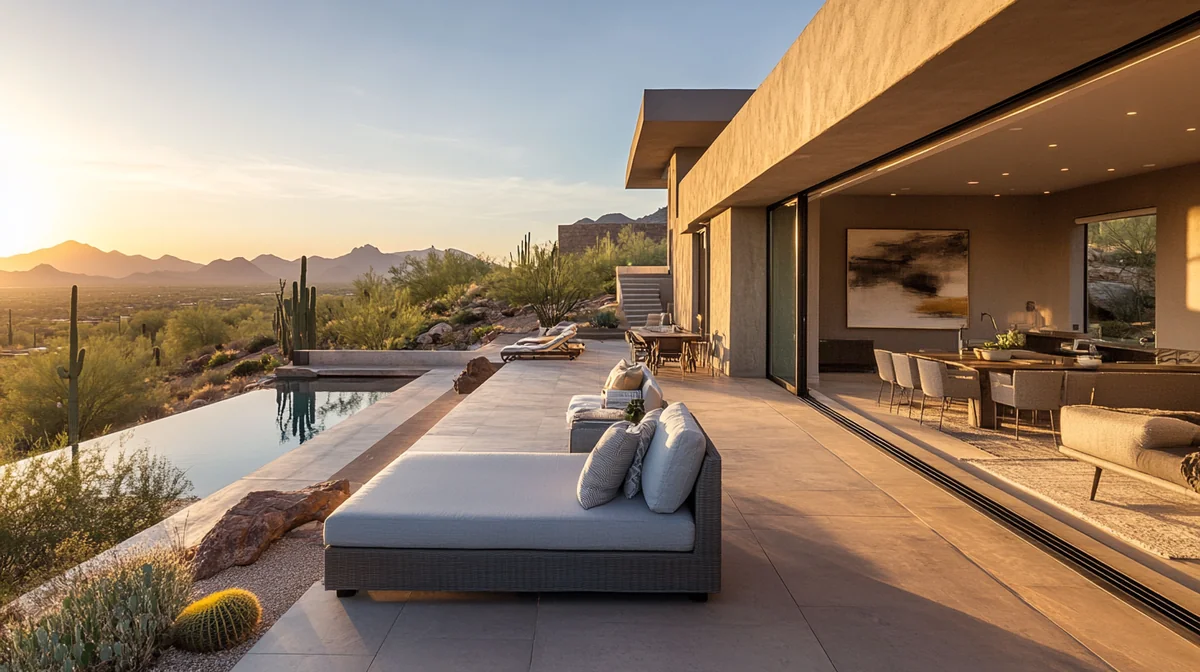
Phoenix and its sister city Scottsdale form the heart of the Sonoran Desert's premier leisure destination. World-class golf courses — including TPC Scottsdale, home of the Waste Management Phoenix Open — luxury spas at resorts like The Phoenician and Camelback Inn, and the natural drama of Camelback Mountain and Papago Park make the Phoenix metro a year-round destination. Old Town Scottsdale's galleries, restaurants, and nightlife create a distinct urban energy within the desert landscape.

Phoenix peaks October through May when snowbirds and sun-seekers escape northern winters. The spring training season ('Cactus League') brings baseball fans from across the country. Summer sees rate drops but maintains strong family occupancy due to Scottsdale's resort amenities and proximity to Sedona and the Grand Canyon.

Top Attractions & Landmarks

  • Camelback Mountain
  • Old Town Scottsdale
  • TPC Scottsdale
  • Desert Botanical Garden
  • Papago Park
  • Taliesin West
  • Sedona (nearby)

Nearby Markets: Las Vegas  |  Tucson

Airbnb marketing services in Phoenix, Arizona, USA
Why Cavmir

The Cavmir Advantage
in Phoenix

Cavmir positions Phoenix properties to capture the premium end of a highly competitive market — where the difference between an average listing and a top performer is entirely in the presentation, brand, and distribution strategy we provide.

State of the Industry · History

The Phoenix STR Market — Past & Present

Phoenix and Scottsdale's hospitality story begins with turn-of-the-century tuberculosis sanatoriums — doctors prescribed desert dry air as convalescent treatment, and early resort hotels like the Arizona Biltmore (1929, designed under Frank Lloyd Wright's influence) built the winter-luxury template that defines the market today. Scottsdale's transformation from cattle town to 'The West's Most Western Town' (official slogan, still on city signage) happened through the 1950s–1970s with golf-course development, resort construction, and deliberate urban planning around tourism. The Scottsdale Resort District — Gainey Ranch, McCormick Ranch, North Scottsdale — was master-planned with seasonal-visitor economics in mind.

Residential STRs in the Phoenix metro have been legal and widely accepted since Arizona's 2016 SB 1350 preempted most local regulation of short-term rentals. This made Phoenix/Scottsdale one of the most STR-friendly regulatory environments in the United States — a reputation that has attracted significant institutional and retail investment through the late 2010s and 2020s. Minor tightening has occurred through subsequent legislation, but the market remains among the most permissive.

Pricing Strategy & Seasonality

Pricing, Seasonality & When to Capture ROI

Pricing Strategy

Scottsdale commands premium — Old Town resort-adjacent condos, North Scottsdale luxury estates, and Paradise Valley homes lead the market. Phoenix proper (Arcadia, Biltmore, Camelback Corridor) trades at healthy premium. Mesa, Tempe, Chandler, and Gilbert serve the family-value and business-travel segments. Spring training season (late February through late March) is a guaranteed rate super-peak — Cactus League baseball brings concentrated demand to Scottsdale and Mesa specifically. Pool is essentially mandatory; a non-pool property earns 40%+ less in this market.

Seasonality & ROI Windows

Strong high-season/low-season split. Peak: October through May — snowbirds, winter visitors, spring training, Barrett-Jackson (January), Waste Management Phoenix Open (February). Summer: June through September sees 110°F+ heat and rate drops of 40–60%. Summer is not dead, but demand shifts to pool-essential family-escape travel and business-travel baseline. Missed revenue: the September–early October shoulder, when daytime temperatures moderate but most owners haven't yet rebuilt winter-season pricing.

Regulation & Licensing · 2026

What the Law Requires in Phoenix

Arizona's SB 1350 (2016) preempted most municipal STR regulation, requiring cities to permit vacation rentals but allowing basic registration, noise, and health/safety rules. Subsequent legislation (SB 1168 in 2022) allowed cities to require registration, impose noise penalties, and establish insurance minimums. Scottsdale, Phoenix, Paradise Valley, and surrounding cities each have specific registration and tax requirements but cannot ban STRs outright.

Registration fees are modest ($300–$600 annual), insurance minimums typically $500,000 liability, and HOA rules remain the most common practical restriction. Most HOAs in Scottsdale resort-district gated communities allow STRs (often with minimum-stay requirements of 30+ days). Residential-only HOAs in other suburban areas may prohibit. Transaction Privilege Tax (TPT) plus city and county lodging taxes combine to roughly 12.5–15% depending on jurisdiction. Enforcement focuses on unregistered operators and noise-complaint-driven compliance.

Market-Specific Tips & Challenges

Local Tips & Unique Market Challenges

Tips That Actually Move Revenue in Phoenix

The Phoenix/Scottsdale tip: market to the snowbird at 30–90 night stays, not just the tourist. Winter-resident-type travelers represent the most stable and highest-LTV guest segment in the market. Properties marketed specifically for longer stays (with a dedicated desk, stocked kitchen with Keurig and full coffee setup, in-unit laundry, and monthly-rate pricing) consistently outperform tourist-only positioning. Longer stays also reduce cleaning turnover costs and HOA-complaint risk.

Second — lean into golf. Scottsdale has more golf courses per capita than almost any US city; listings that include tee-time guidance, proximity to specific clubs, and golf-package partnerships convert for the golf-destination traveler. Third — pool photography during the 'golden hour' (5–7pm desert light) is a creative investment that pays for itself in first-booking rate. Fourth — Old Town Scottsdale's nightlife has specific guest expectations about noise; properties there should clearly set expectations with guests to avoid complaint-driven enforcement.

Unique Phoenix Challenges

Summer heat is the dominant operational challenge — four months of extreme temperatures test pool-equipment reliability, HVAC capacity, and landscape maintenance costs. Pool maintenance is a real budget line ($150–$300/month). HOA restrictions in newer suburban developments have expanded. Water scarcity and drought-related pool/landscape restrictions occasionally affect amenity positioning. Phoenix's housing-market volatility has made acquisition timing material.

A Curious Phoenix Fact
Scottsdale has more art galleries per capita than almost any US city — the Scottsdale ArtWalk on Thursday evenings has run continuously since 1975, making it one of the longest-running gallery-district events in the country. Properties near Old Town or along Main Street and Marshall Way Arts District benefit from the cultural-tourism layer that most Phoenix marketing completely ignores.
Finance Essentials — Phoenix
🛡️

Insurance

Arizona insurance is among the most affordable in the Sunbelt. Pool liability is a significant rider. HVAC and heat-damage coverage notable. STR-specific policies widely available. Budget $1,200–$3,500 annually for typical pool homes. Hail exposure in monsoon season. Wildfire exposure in Northern Valley foothill zones.

🧾

Property & Income Tax

Arizona has a 2.5% flat state income tax — low but not zero. Property tax is moderate (Maricopa County effective rate ~0.55–0.75%). Combined state TPT plus city and county lodging tax runs 12.5–15% depending on city. Scottsdale TPT add-on 1.75%; Phoenix city TPT 2.3%.

🏦

Mortgages & Financing

Phoenix/Scottsdale financing is among the most competitive US STR markets for conventional, DSCR, and investment-focused products. STR income is well-documented for appraisal. 20–25% down typical. Jumbo territory common in Paradise Valley and luxury North Scottsdale; conforming limits cover most suburban inventory.

Future Outlook · 2027 & Beyond

Where Phoenix is Headed Next

Phoenix/Scottsdale through 2027 and beyond remains one of the most investor-friendly US STR environments. State-level preemption is unlikely to reverse. Expect modest additional HOA restrictions, gradual TPT rate adjustments, and continued snowbird demand growth as Sunbelt migration continues. Climate-adaptation investment (water rights, grid resilience, cooling infrastructure) will shape operational costs. The 2027 Super Bowl (Arizona has hosted multiple and will likely again) creates rate opportunities. Sedona and Flagstaff secondary markets will benefit from Phoenix-overflow demand.

From the Desk of Sofie Sinag

Why We Love Marketing in Phoenix

Phoenix is the desert market most people under-estimate. The Valley's STR economy is larger than most national visitors realise — Scottsdale, Paradise Valley, Old Town, Arcadia, Tempe — each with a distinct guest profile and a distinct photography palette. The marketing mistake here is flattening the Valley into "Scottsdale" as if it were a single destination. Arcadia's mid-century aesthetic is not Paradise Valley's quiet-money resort feel is not Old Town's nightlife-and-bachelorette market. Precision of neighborhood is the difference between a rate that holds and a rate that drops in shoulder season.

We love marketing Phoenix because the seasonality is aggressive and the segmentation opportunity is huge. Winter and spring are the revenue peaks (Super Bowl years, spring training, WM Phoenix Open, Barrett-Jackson, snowbird flow from the Midwest and Canada). Summer is the marketing puzzle — and the properties that solve it with monsoon-season photography, indoor-entertaining emphasis, and aggressive cost-per-night positioning for remote-workers and in-state staycations capture revenue that competitors leave on the table. Phoenix rewards hosts who take summer seriously.

Cavmir's Phoenix Cheat Sheet

The Picks We Recommend for Your Welcome Book

The picks Cavmir recommends for Phoenix welcome books — neighborhood-specific, season-aware, and built around what guests don't know to ask.

Morning

Breakfast at Matt's Big Breakfast or Pomo Pizzeria brunch

Matt's for the downtown diner classic; Pomo for the Neapolitan-style brunch in Old Town. Two entirely different registers.

Golden Hour

Camelback Echo Canyon trail (before 9am in summer)

The iconic Valley hike. Timing is everything in summer — the trail becomes dangerous after 10am June–September. A host who flags the timing prevents serious problems.

Neighborhood Walk

Roosevelt Row Arts District

Downtown Phoenix's art-and-coffee walk. Underestimated by guests who only think of the Valley as resort-country.

Dinner That Photographs

FnB Scottsdale or Ocotillo

FnB for the local-food-movement credibility; Ocotillo for the patio-design aesthetic that photographs in every direction.

Local Obsession

Sonoran hot dogs at El Güero Canelo

A legitimate regional specialty most out-of-state guests don't know exists. Bacon-wrapped, pinto beans, salsa verde.

Shoulder Season Secret

Late October and mid-March

The two weeks either side of peak season when the weather is ideal and pricing hasn't fully adjusted. The sophisticated Phoenix guest books these windows specifically.

Weekend Escape

Day trip to Sedona or Jerome

Two hours north for red-rock scenery and the ghost-town-turned-arts-community. Breaks the Valley monotony for longer stays.

What Guests Ask For

Summer-heat protocol and pool care

Pool water routinely hits 95°F in July. Pre-explained cooling strategies (night-swim timing, ice-water bottle stocking, the AC setpoint logic) prevent summer-month review damage.

Local Work · Composite Case Vignettes

What Cavmir Has Done for Phoenix Properties

Representative Cavmir engagements in Phoenix. Property details removed; numbers composited from internal analytics and market benchmarks.

3BR Mid-Century · Arcadia
The Brief

Architecturally distinct home whose marketing ignored its design heritage entirely. ADR tracking $120 below comparable Arcadia design-led listings.

What We Did

Complete architectural-editorial rebuild. Photography by a design-publication-grade photographer, period-appropriate styling, copy that named the era and the Arcadia-specific design context. Partnership with a design-tourism agency for Modernism-Week-adjacent bookings.

The Result

ADR climbed 41%. Peak-season booking pace doubled year-over-year. Design-tourism guests now make up a measurable share of repeat bookings.

5BR Resort-Style · North Scottsdale
The Brief

Large family home competing against corporate-branded resort suites. Weekend-only booking pattern left substantial weekday revenue unclaimed.

What We Did

Built a golf-weekday-retreat product alongside the weekend-family product. Partnership with three area courses for tee-time packaging. Photography emphasised the golf-proximity, the pool-at-dusk entertaining space, the large-group dinner infrastructure.

The Result

Weekday occupancy moved from 41% to 73%. Total revenue up 38% year-over-year. Golf-package bookings now represent a substantial share of midweek revenue.

2BR Condo · Old Town Scottsdale
The Brief

Bachelorette-and-weekend market positioning with weak weekday performance and declining review scores due to guest-profile mismatch in the building.

What We Did

Split-brand approach — two distinct listings from the same inventory with different photography, copy, pricing, and minimum-stay. Weekend variant targeted events; weekday variant targeted corporate and older-couples. Review-score rebuild through guest-profile clarity.

The Result

Review score climbed from 4.3 to 4.82. Weekday ADR up 29%. Total annual revenue grew 31%. Complaint volume dropped substantially, reducing operational friction.

Ready to Grow in Phoenix?

Let's Put Your Phoenix
Property on the Map

Talk to Cavmir today. We'll show you exactly what your Phoenix property is leaving on the table — and how fast we can change that.

Book a Free Strategy Call