$445
Avg. Nightly Rate
58%
Avg. Occupancy Rate
$7,740
Avg. Monthly Revenue
5–8%
Est. Cash-on-Cash ROI
HIGH
Seasonality
MEDIUM
Regulatory Burden

* Market averages. Cavmir-managed properties typically exceed these figures by 25–45%. Data sourced from AirDNA, STR market reports, and Cavmir internal analytics.

The Market

Why Waiheke Island is One of the World's Premier STR Markets

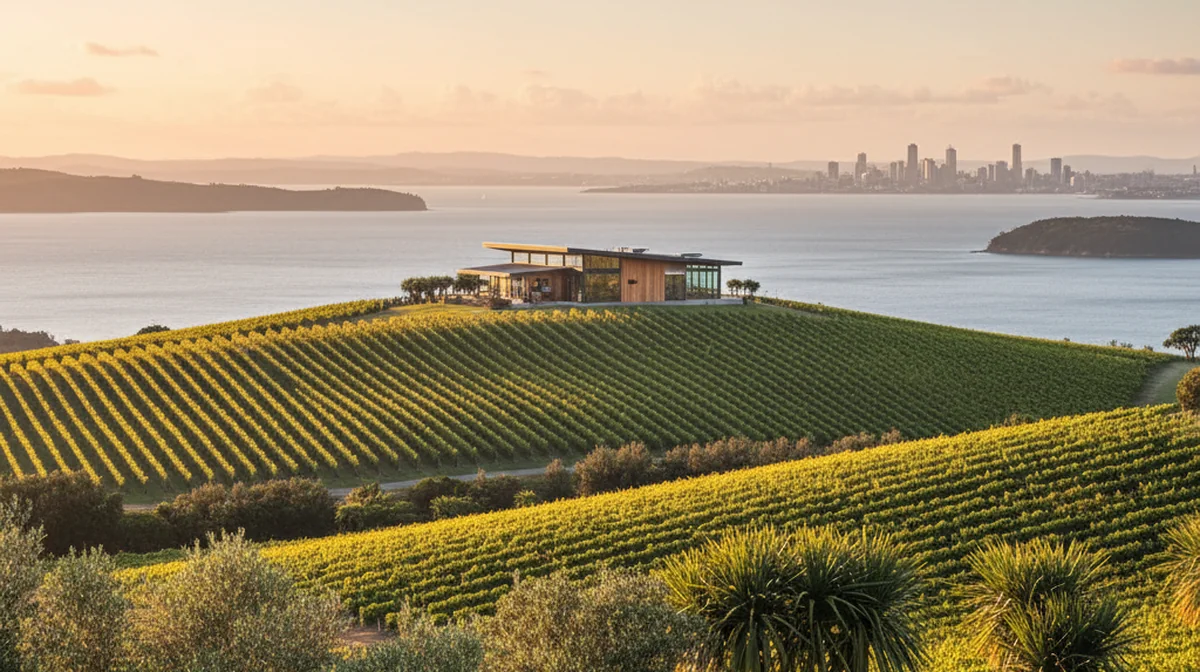
Waiheke Island is New Zealand's flagship wine-island STR market — a 92-square-kilometre island in the Hauraki Gulf, a 40-minute ferry from downtown Auckland, with a village-scale population of roughly 9,000 that swells through the peak summer with Aucklander weekenders, wine-touring international visitors, and the boutique-luxury-villa guest who has made Waiheke the premium Airbnb destination in New Zealand outside Queenstown. Oneroa anchors the western village core with the ferry terminal, Oneroa Beach, and the Headland Sculpture on the Gulf biennial that structures the summer art calendar; Palm Beach sits directly south as the island's most photographed cove with its pōhutukawa-lined crescent; Onetangi runs the central north coast with the island's longest beach and the Onetangi Beach Races summer event; Rocky Bay, Ostend, and Surfdale hold the residential and accessible-luxury inventory. The wine-country spine runs across the island's central ridges: Mudbrick Vineyard (the Tuscan-terraced cellar-door anchor), Cable Bay, Man O'War, Stonyridge, Te Motu, Peacock Sky, Batch Winery, Goldie Estate, and Poderi Crisci each frame the circuit. The guest profile is Auckland-domestic weekender-heavy, New Zealand interstate in the December-February peak, and a growing international segment arriving through the Auckland hub.

Waiheke rates climb sharply through the December-February summer peak and the Auckland Anniversary weekend (late January); the March-May autumn shoulder holds well on the vintage-harvest-and-wine-festival segment, and the June-September winter is the genuine low but increasingly productive for operators marketing truffle-season dinners and the quieter-island product. Oneroa and Palm Beach clifftop villas, Onetangi beachfront homes, and Man O'War-adjacent vineyard estates lead in luxury rates; Ostend and Surfdale central-island properties lead in volume. Regulation is medium — Auckland Council's Unitary Plan applies with Waiheke-specific overlays around rural vineyard zones and resource-consent requirements for new STR inventory; the Waiheke Local Board has advocated periodically for tighter STR controls, making compliance awareness load-bearing.

Top Attractions & Landmarks

  • Oneroa Beach
  • Palm Beach
  • Onetangi Beach
  • Mudbrick Vineyard
  • Cable Bay Vineyards
  • Man O'War Vineyards
  • Stonyridge Vineyard
  • Headland Sculpture on the Gulf

Nearby Markets: Auckland  |  Queenstown  |  Sydney

Airbnb marketing services in Waiheke Island, Hauraki Gulf, New Zealand
Why Cavmir

The Cavmir Advantage
in Waiheke Island

Cavmir markets Waiheke as an integrated wine-and-beach product rather than a generic Auckland-day-trip frame — building itineraries that combine the Mudbrick lunch, the Onetangi Beach afternoon, the Stonyridge cellar-door tasting, the Palm Beach golden-hour shoot, and the sunset-ferry-return-to-Auckland evening into a coherent multi-night narrative. Our cinematic photography captures the Tuscan-terraced Mudbrick light and the pōhutukawa-framed Palm Beach at summer solstice, and our direct-booking infrastructure reaches the Auckland-domestic repeat-weekender household that is the market's loyal backbone.

State of the Industry · History

The Waiheke Island STR Market — Past & Present

Waiheke Island is a 92-square-kilometre island in the Hauraki Gulf — a 35-minute Fullers360 ferry from the Auckland Viaduct and administratively part of Auckland Council, yet culturally and economically distinct from the metropolitan isthmus. The Ngāti Pāoa iwi are the traditional tangata whenua. European settlement from the 1840s produced a kauri-timber-and-flax economy through the 19th century; through the mid-20th century Waiheke was a bach-holiday island for working-class Auckland families, reached by slow passenger ferry from Devonport. The 1994 introduction of the fast Fullers catamaran service from the Auckland Viaduct and the concurrent establishment of the pioneer wine estates — Stonyridge Vineyard (1982), Te Motu (1989), Goldwater (1978), and Mudbrick (1992) — together reshaped the island into the commuter wine-country luxury destination it remains today.

The modern Waiheke luxury STR economy clusters along four distinct geographies: the Oneroa-Palm Beach village corridor on the western end closest to the ferry, the Onetangi Beach stretch at the island's geographic centre (Waiheke's longest beach and the focal point of the summer rental market), the Rocky Bay-Omiha quieter-south corridor, and the Church Bay-Cable Bay wine-country vineyard pocket where the Mudbrick and Cable Bay cellar-door estates anchor the ultra-luxury vineyard-view product. The rentable luxury villa pool stands at roughly 400–650 material properties on an island of only 9,700 permanent residents — a ratio that defines the island's ongoing regulatory debate.

Pricing Strategy & Seasonality

Pricing, Seasonality & When to Capture ROI

Pricing Strategy

Church Bay, Cable Bay, and Man O'War vineyard-view estates with Hauraki Gulf panorama anchor the ultra-luxury tier at NZD 1,800–5,500 per night in peak. Palm Beach absolute-beachfront houses and Oneroa clifftop architect-led homes clear NZD 1,200–3,800 per night. Onetangi Beach houses run NZD 900–2,800 per night, with summer Christmas-through-January weekly rates pushing the ceiling higher. Rocky Bay and Omiha quieter-south houses hold the upper-middle tier at NZD 600–1,800 per night. Surfdale and Blackpool ferry-adjacent volume product runs NZD 400–1,200 per night. The Christmas-through-Auckland-Anniversary summer window drives a clear rate ceiling on beachfront inventory; the Waiheke Wine and Food Festival (late January), Sculpture on the Gulf (March, biennial), and the Headland Sculpture on the Gulf walking programme anchor shoulder pulses.

Seasonality & ROI Windows

High seasonality tied tightly to the Auckland summer calendar. Peak: mid-December through late January (Christmas through Auckland Anniversary Day). Super-peak: Christmas week and New Year. Secondary peak: February (Auckland Pride weekends, wine-festival traffic), March (Sculpture on the Gulf biennial). Shoulder: November, April (Easter), October. Low: June–August (winter). Missed revenue: early December and late February, where weather is peak and pricing discipline on beachfront and vineyard inventory lags the returning Auckland-day-tripper-turned-weekender demand.

Regulation & Licensing · 2026

What the Law Requires in Waiheke Island

Waiheke STR regulation sits under the Auckland Council Unitary Plan framework with island-specific overlays — the island's zoning mix includes significant areas of the Rural – Rātai Zone (which governs the Church Bay, Cable Bay, and Man O'War vineyard parcels) alongside residential and mixed zones along the Oneroa-Onetangi corridor. Short-stay accommodation in residential zones beyond 28 nights per year is subject to commercial rating and the Accommodation Provider Targeted Rate framework on the same terms as Auckland metropolitan. Operators in Rural – Rātai and other rural zones require resource consent under the Resource Management Act 1991 for commercial accommodation use. The Waiheke Local Board has been publicly advocating for tighter STR controls given the island's constrained housing supply and the pressure of commercial accommodation on the permanent-resident rental market — operators should expect the regulatory envelope to tighten further over 2026–2028. Septic and wastewater compliance under the Auckland Regional Plan is a meaningful island-specific compliance layer — most Waiheke properties are not on reticulated sewer and require certified on-site systems. The Overseas Investment Act 2018 applies, making foreign purchase of Waiheke residential land substantially unavailable without OIA consent. GST at 15% above NZD 60,000 turnover is the meaningful federal threshold.

Market-Specific Tips & Challenges

Local Tips & Unique Market Challenges

Tips That Actually Move Revenue in Waiheke Island

The Waiheke strategic tip: merchandise the vineyard-and-ferry combination that Auckland metropolitan inventory cannot replicate. Waiheke is not an outer suburb of Auckland — it is a 35-minute ferry into a distinct island wine country with its own rhythm, and guests who understand that framing pay meaningfully more than guests who treat it as a generic beach day-trip. Properties marketed with the specific combination of Mudbrick lunch plus Cable Bay afternoon plus Onetangi Beach sunset plus Stonyridge dinner — with concrete cellar-door booking relationships rather than reactive concierge — consistently out-convert peer inventory sold as generic Hauraki Gulf getaway.

Tactically: first, coordinate with the Fullers360 ferry schedule and the SeaLink vehicle-ferry service — arrival-and-departure logistics shape the guest experience materially on a car-optional island, and operators who provide proactive transport coordination earn repeat bookings. Second, cultivate the Auckland Virtuoso and Airbnb Luxe advisor relationships — Waiheke is a natural extension product for international advisor-booked Auckland itineraries and most advisors underutilise the island. Third, respect the wine-estate calendar: harvest (late February–April), pruning (winter), bottling windows, and cellar-door event programmes shape the rhythm of the island, and properties that integrate with that calendar rather than sitting outside it earn better five-star ratings. Fourth, anticipate the Waiheke Local Board regulatory tightening — operators who structure inventory under the 28-night commercial-rating threshold and who document wastewater and resource-consent compliance proactively will be positioned when the envelope tightens further.

Unique Waiheke Island Challenges

Waiheke challenges: the Waiheke Local Board advocacy for tighter STR controls is genuine and politically durable — the island's permanent-resident housing pressure is a live issue and STR regulation will continue to tighten; the Overseas Investment Act 2018 blocks most foreign purchase of residential and rural land; septic and wastewater compliance is a real and occasionally costly variable most owners underestimate before purchase; the ferry-dependent logistics create genuine friction during weather events and peak-season queues; Fullers360 is the effective single-operator constraint on peak-week capacity; staffing scarcity on a 9,700-resident island during the Christmas-January peak is acute and housekeeping costs run materially above Auckland metropolitan equivalents; and the Auckland Volcanic Field earthquake exposure applies to the island.

A Curious Waiheke Fact
Waiheke Island's Stonyridge Vineyard produces the Stonyridge Larose — a Bordeaux-style Cabernet-Merlot-Cabernet-Franc-Malbec-Petit-Verdot blend first released in 1985 — that has been consistently ranked in the world top 100 red wines by international critics, including a Wine Spectator rating of 94 and a long track record at international blind tastings alongside Bordeaux First Growths. Stonyridge produces fewer than 4,000 cases annually, allocated almost entirely to an international mailing list with a multi-year waiting period for new subscribers. The vineyard's 1982 planting on Onetangi Road was the first serious commercial red-wine project on Waiheke and is widely credited with demonstrating that the island's climate — a warmer, drier microclimate within the Hauraki Gulf — could produce world-class Bordeaux-style wines in a country previously known primarily for Marlborough Sauvignon Blanc.
Finance Essentials — Waiheke Island
🛡️

Insurance

Waiheke luxury-property insurance is written through New Zealand-domestic carriers (AMI Insurance, Tower Insurance, Vero Insurance, IAG New Zealand, FMG) with Lloyd's syndicate capacity for vineyard estates and premium residences above NZD 3 million. Earthquake coverage is mandatory under the New Zealand framework, with the EQC (Toka Tū Ake) scheme providing the first layer above the deductible and private layers stacked on top for luxury limits — the Auckland Volcanic Field exposure applies to the island. Storm-and-flood coverage tightened following the January 2023 Auckland anniversary floods that delivered meaningful damage at Oneroa and Onetangi. Coastal-erosion and storm-surge coverage on beachfront Palm Beach, Onetangi, and Rocky Bay frontage warrants explicit review. Bushfire and grass-fire peril across the vineyard parcels is a meaningful additional variable during dry late-summer periods. Budget NZD 5,000–18,000 annually for luxury villas and vineyard estates with adequate limits (NZD 2–5 million building plus liability). Septic-system malfunction coverage, pool-liability, and short-term-rental guest-liability riders are standard.

🧾

Property & Income Tax

New Zealand rental income taxation applies uniformly: progressive national schedule (up to 39% on income above NZD 180,000) for residents, 15% non-resident withholding on gross NZ-source rental payments (or treaty rates) for non-residents. GST at 15% applies to commercial accommodation above NZD 60,000 annual turnover — a threshold most Waiheke luxury villa operators cross materially during the December-January peak. The bright-line property-tax rule (2 years from July 2024, reduced from 10 years) taxes residential disposal gains as ordinary income during the bright-line window. No general capital gains tax outside bright-line. Stamp duty does not exist in NZ. Interest-deductibility rules on residential investment property continue to evolve. The Accommodation Provider Targeted Rate framework applies to commercial-rated accommodation if the APTR is reinstated by Auckland Council. US owners remain subject to US federal tax with NZ-credit offsets under the 1983 US-NZ tax treaty.

🏦

Mortgages & Financing

New Zealand mortgages for residents are available through ANZ New Zealand, ASB, BNZ, Westpac NZ, and Kiwibank at LTVs to 75–80% for prime-residential Waiheke properties, somewhat tighter than Auckland metropolitan given island-location and septic-system lender conservatism. Non-resident mortgages are severely constrained by the Overseas Investment Act residential-and-rural-land regime — in practice, non-residents without OIA consent cannot purchase Waiheke property. Australian and Singaporean citizens retain special access under the CER and NZ-Singapore FTA. Vineyard-parcel acquisitions under the Rural – Rātai zone face additional OIA scrutiny where the parcel exceeds sensitive-rural-land thresholds. Private-banking channels (ANZ Private, ASB Private) handle ultra-luxury Church Bay, Cable Bay, and Man O'War transactions. Most ultra-luxury Waiheke transactions involving foreign capital complete in cash given OIA friction.

Future Outlook · 2027 & Beyond

Where Waiheke Island is Headed Next

Waiheke through 2027 and beyond: the vineyard-and-ferry combination positioned 35 minutes from a major metropolitan capital is genuinely unreplicable, and the island's structural scarcity (fixed land area, constrained housing supply, Waiheke Local Board regulatory posture) supports durable pricing power for compliant operators. The regulatory tightening trajectory is the meaningful medium-term variable — the Local Board's STR-control advocacy is likely to produce further consent-framework changes over 2026–2028, and operators who document compliance proactively will benefit. Mudbrick, Cable Bay, and Man O'War continued cellar-door investment keeps the wine-country luxury benchmark rising. The Overseas Investment Act regime is unlikely to loosen. Climate risk — the January 2023 floods demonstrated meaningful exposure, coastal erosion at Palm Beach and Onetangi is accelerating, and drying summer patterns create vineyard and grass-fire risk — will continue to reshape insurance and investment priorities. Fullers360 peak-week ferry capacity remains the binding logistical constraint on demand growth.

From the Desk of Sofie Sinag

Why We Love Marketing in Waiheke Island

Waiheke is the New Zealand market where the 40-minute ferry from downtown Auckland creates a fundamentally different product than the mainland, and where the operators who win are the ones who respect both halves of the Waiheke visitor — the day-tripper who comes for the Mudbrick long-lunch and leaves on the 5 p.m. ferry, and the multi-night house-guest who wants the island at its residential rhythm. A Oneroa apartment is the village-walkable ferry-adjacent position; a Palm Beach cottage is the quiet-northern-cove family-alternative; an Onetangi house is the longest-beach-on-the-island sand-access position; a Rocky Bay home is the southern-vineyard-and-harbour alternative. The listings that collapse the island into 'Waiheke wine holiday' forfeit the neighbourhood-specificity the repeat-booking household pays for.

What we love about marketing Waiheke is how dramatically the vineyard-architecture density has compounded over the past decade, and how a resident-host welcome book that navigates it cleanly outperforms any generic wine-region script. The island now carries a genuine dozen-plus destination wineries — Mudbrick for the ferry-adjacent long-lunch classic, Cable Bay for the architectural-clifftop dining room, Man O'War for the eastern-end boat-and-beach day, Stonyridge for the Larose cult-wine cellar-door, Te Motu for the quietest veranda lunch on the island, Peacock Sky for the food-matching tasting, Batch Winery for the Palm Beach overlook, Goldie Estate for the historic-first-vines position, Poderi Crisci for the Italian-long-table Sunday lunch. Plus Oneroa Beach for the morning swim, Onetangi for the longest-sand-stretch, Palm Beach for the quietest northern cove, and the Headland Sculpture on the Gulf biennial as the cultural anchor. A welcome book with real fluency across those twenty-plus reference points is the moat.

Cavmir's Waiheke Island Cheat Sheet

The Picks We Recommend for Your Welcome Book

The picks Cavmir recommends for Waiheke welcome books — the details that separate resident-hosts from the generic 'New Zealand wine island' script.

Morning

Oneroa Beach swim before the 10 a.m. ferry arrival

The village-adjacent sand-and-rock-pool cove between Little Oneroa and the Oneroa Surf Club, empty before the first mainland ferry lands. A host who flags the swim and the 8:30 coffee at The Oyster Inn or Ki Maha owns the first morning before the day-tripper flow begins.

Golden Hour

Cable Bay terrace at sunset

The architectural-modernist Cable Bay dining-room and tasting-bar terrace, looking west across the Hauraki Gulf back to the Auckland skyline at dusk. The frame every Waiheke editorial feature uses. A host who books the 6 p.m. terrace aperitif and stays for the Cable Bay dinner delivers the week's signature image.

Neighborhood Walk

Oneroa village Ocean View Road

The 20-minute walk along the village clifftop from the ferry-wharf end to the Oneroa Beach steps. Coffee at Island Gelato for the tiny-batch sorbet; lunch at The Oyster Inn for the Waiheke-design-classic room; the boutique-and-gallery row on Ocean View Road. The Waiheke residents' rhythm before the day-tripper flow.

Dinner That Photographs

Mudbrick Vineyard or Cable Bay

Mudbrick Vineyard for the Mediterranean-garden long-lunch classic with the Auckland-skyline view; Cable Bay for the architectural-modernist clifftop tasting dinner. Te Motu for the quietest veranda on the island — the third option residents still protect. A host who books any of the three 4-5 weeks ahead in peak owns the week.

Local Obsession

Poderi Crisci Sunday long-lunch

The Italian-style family-vineyard long-lunch on Sundays — communal tables, six-hour seating, the house-made tagliatelle-and-Hauraki-lamb rotation. The one Waiheke Sunday residents defend most fiercely. A host who books the Crisci long-lunch instead of the Mudbrick tourist-classic signals genuine island fluency.

Shoulder Season Secret

Second half of February and first half of March

Post-Waitangi-Day quiet and the genuine Waiheke late-summer peak. The vineyards are at harvest, the beaches are still warm, the day-tripper flow is lighter mid-week, and the Headland Sculpture on the Gulf biennial (every odd-numbered year) runs through the window. The weeks Auckland and Sydney repeat-households protect for their own trips.

Weekend Escape

Man O'War by boat or 4WD

The 35-minute drive (or private-boat charter) to the far eastern end of the island, to the Man O'War Vineyard's beachside tasting veranda at Man O'War Bay. The swim-and-taste afternoon is the Waiheke day-trip residents save for their own visitors. A host who books the private-charter transfer owns the day.

What Guests Ask For

Which winery for which day

Every Waiheke guest asks the same question and most get routed to the same three wineries. A host who explains the actual map — Mudbrick and Cable Bay for the ferry-adjacent first-night, Stonyridge and Peacock Sky for the cult-wine second-day, Te Motu and Poderi Crisci for the quiet-vineyard third-day, Man O'War for the eastern-end beach-day, Goldie and Batch for the Palm-Beach-overlook fourth-day — prevents the most common Waiheke winery misallocation.

Local Work · Composite Case Vignettes

What Cavmir Has Done for Waiheke Island Properties

Representative Cavmir engagements on Waiheke Island. Property identifiers redacted; figures composited from internal analytics and AirDNA market benchmarks.

4BR House · Oneroa Village Clifftop
The Brief

Oneroa clifftop house with Hauraki Gulf views, peak-week ADR capped at NZD $1,200 because the marketing read as 'generic Waiheke wine rental' rather than Oneroa-village-walkable-to-ferry specific. No Headland-Sculpture-biennial or Waiheke-Jazz-Festival event strategy.

What We Did

Repositioned around the Oneroa-village walkable-to-ferry-and-beach brand. Cinematic property film across the March late-summer harvest window. Welcome book with named Mudbrick, Cable Bay, Te Motu, and Poderi Crisci relationships, plus The Oyster Inn and Ki Maha breakfast-and-coffee routing. Distribution through Auckland, Sydney, and Melbourne design-travel advisors.

The Result

Peak summer ADR climbed from NZD $1,200 to NZD $2,400. Headland-Sculpture biennial fortnight now books 11 months ahead at NZD $2,950/night. Direct-booking share reached 45% of annual revenue. The village-walkable positioning now out-earns peer Palm Beach and Onetangi inventory.

3BR Cottage · Palm Beach Cove
The Brief

Quieter Palm Beach family cottage losing booking funnel to Oneroa-village inventory despite a materially better private-cove family product. The quiet-northern-cove position was reading as second-tier rather than the Batch-Winery-adjacent family asset it actually was.

What We Did

Repositioned around the Palm-Beach-cove quiet-family-alternative narrative for repeat households who had aged out of the Oneroa-village ferry-flow scene. Photography led with the private-cove swim and the Batch Winery 12-minute walk. Welcome book with named Batch Winery, Goldie Estate, and Casita Miro (the Palm Beach tapas institution) relationships. Distribution through Sydney and Melbourne family-travel advisors.

The Result

Occupancy climbed from 51% to 73%. Peak-summer ADR up 34%. A repeat-Melbourne-family book emerged filling two January weeks annually. The Palm-Beach positioning now out-earns peer Onetangi beachfront inventory on revenue-per-available-night.

6BR Estate · Onetangi Ridge
The Brief

Ultra-luxury Onetangi-ridge estate with event capacity and Stonyridge-corridor position, missing the destination-wedding, film-production, and international-advisor revenue streams peer Waiheke vineyard-estates were capturing. Pure peak-summer leisure ceiling.

What We Did

Three-product brand build. Destination-wedding tear sheet distributed through Auckland, Sydney, and Singapore planners (the vineyard-terrace-at-dusk ceremony is a distinct product category). Film-production availability registered with Screen Auckland for international shoots. International-leisure distribution through London and New York advisors familiar with the Marlborough-and-Waiheke tasting-tour positioning.

The Result

Event and production bookings now contribute a substantial share of annual revenue. A single four-day Singapore-to-Waiheke wedding buyout cleared NZD $78,000. Leisure ADR climbed on the elevated brand. Direct-booking share reached 52% of annual revenue.

Ready to Grow in Waiheke Island?

Let's Put Your Waiheke Island
Property on the Map

Talk to Cavmir today. We'll show you exactly what your Waiheke Island property is leaving on the table — and how fast we can change that.

Book a Free Strategy Call