$265
Avg. Nightly Rate
68%
Avg. Occupancy Rate
$5,480
Avg. Monthly Revenue
5–7%
Est. Cash-on-Cash ROI
MEDIUM
Seasonality
MEDIUM
Regulatory Burden

* Market averages. Cavmir-managed properties typically exceed these figures by 25–45%. Data sourced from AirDNA, STR market reports, and Cavmir internal analytics.

The Market

Why Auckland is One of the World's Premier STR Markets

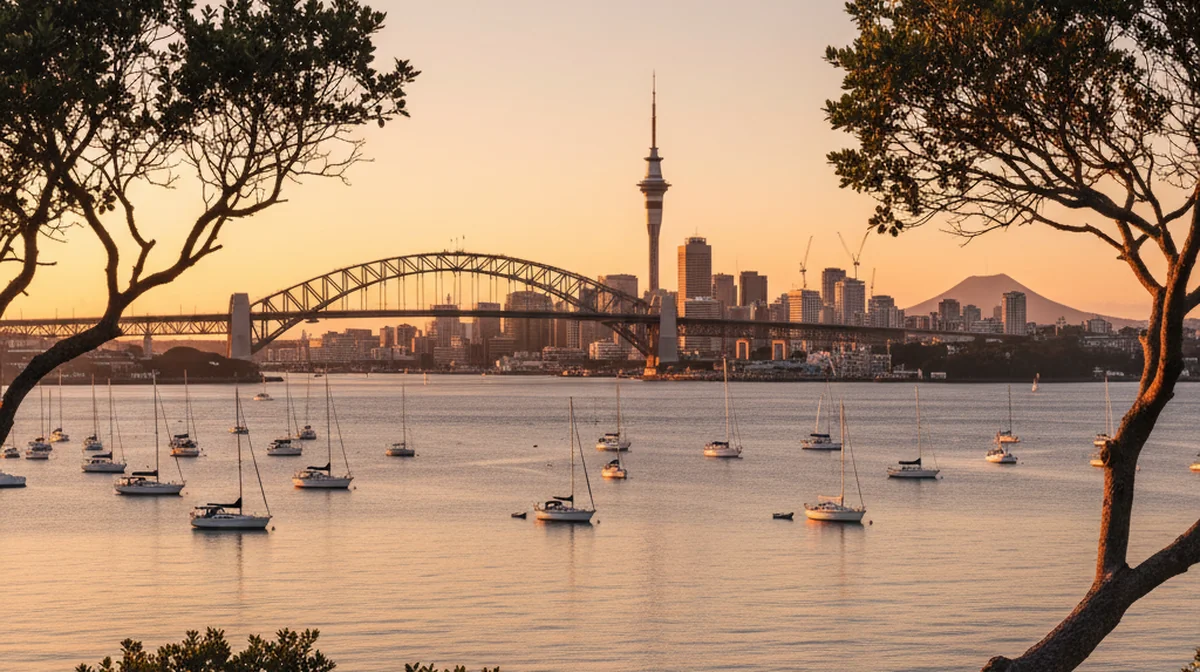
Auckland is New Zealand's commercial capital and the country's only genuinely global-scale urban STR market — a 1.7-million-person harbour city sprawling across the isthmus between the Waitematā and Manukau harbours, with a coastline-heavy inventory that stratifies across neighbourhoods anchored to the water. Parnell and Newmarket hold the heritage-luxury inner-suburb corridor with Cassia, Amano, and Ortolana defining the dining scene; Ponsonby and Grey Lynn carry the design-and-cafe walkable strip around Ponsonby Road and Karangahape Road; Herne Bay, St Marys Bay, and Westmere frame the premium harbour-frontage residential inventory; Devonport on the North Shore sits a ten-minute ferry from downtown with its own village-scale dining and the Mount Victoria and North Head historic-military headlands; Mission Bay and Kohimarama run the eastern-beach family-holiday-house tier; the Viaduct Harbour and Wynyard Quarter frame the post-America's-Cup waterfront-apartment inventory. Beyond the city, the Waiheke Island wine country sits 40 minutes by ferry (Cavmir markets Waiheke separately), the Piha and Muriwai black-sand west-coast beaches anchor the wild-coast day-trip, and the Bay of Islands lies three hours north. The guest profile is Australian-heavy on direct Qantas and Air New Zealand flights, international long-haul (UK, US, Asia) through the Auckland international hub, and corporate-travel via the CBD.

Auckland rates hold relatively consistent across the calendar with a December-through-February summer peak on the domestic leisure segment and an overlay of international-event demand around the Pasifika Festival, the Auckland Arts Festival, America's Cup and SailGP sailing windows, and the NZ rugby calendar. Herne Bay, Parnell, and Devonport harbour-frontage homes lead in luxury rates; Ponsonby and Grey Lynn hold the design-traveller premium; Viaduct Harbour and Wynyard Quarter apartments lead corporate-adjacent volume. Regulation is medium — Auckland Council's Unitary Plan treats residential dwellings let short-term beyond 28 nights per year as commercial-rated, bed-tax discussions have recurred, and the Overseas Investment Act 2018 restricts foreign purchase of residential land, which shapes the investor pool for STR inventory.

Top Attractions & Landmarks

  • Sky Tower
  • Waitematā Harbour
  • Auckland Harbour Bridge
  • Devonport & Mount Victoria
  • Parnell Village
  • Viaduct Harbour
  • Mt Eden Crater
  • Piha Beach

Nearby Markets: Waiheke Island  |  Queenstown  |  Sydney

Airbnb marketing services in Auckland, North Island, New Zealand
Why Cavmir

The Cavmir Advantage
in Auckland

Cavmir markets Auckland with the specific neighbourhood-and-harbour-access specificity that international guests search on — the Devonport ferry-accessible village, the Ponsonby walkable-cafe-and-design corridor, the Herne Bay harbour-frontage home, the Viaduct Harbour America's-Cup-adjacent apartment — each with its own photography library. Our cinematic photography captures the Waitematā Harbour at golden hour and the Rangitoto Island silhouette at dawn, and our direct-booking infrastructure reaches the Australian-domestic-and-Asian-short-haul household that forms the city's most loyal repeat-guest segment.

State of the Industry · History

The Auckland STR Market — Past & Present

Auckland is New Zealand's largest city and principal commercial capital — a 1.7-million-resident isthmus bounded by the Waitematā Harbour to the north and the Manukau Harbour to the south, built across the Auckland Volcanic Field's 53 dormant cones. The Ngāti Whātua and Waiohua iwi are the traditional tangata whenua of the Tāmaki isthmus. The city was founded in 1840 when Governor William Hobson selected the Waitematā foreshore as the colonial capital; Wellington replaced it as political capital in 1865 but Auckland retained commercial primacy and has held it ever since. The 2000 and 2003 America's Cup defences at the Viaduct Harbour catalysed the modern waterfront redevelopment and reshaped Auckland's international profile as a sailing-and-design city.

The modern Auckland luxury STR economy clusters along four distinct geographies: the central-city harbourside belt (Parnell, Ponsonby, Freemans Bay, Herne Bay, Viaduct-Wynyard), the eastern bays coastline (Mission Bay, St Heliers, Kohimarama), the North Shore Devonport-Takapuna corridor across the Waitematā, and the Waiheke-Great-Barrier island overlay that extends Auckland's luxury geography beyond the Hauraki Gulf. Parnell, Ponsonby, and Herne Bay hold the heritage-villa luxury tier; Mission Bay and St Heliers the eastern-beaches family product; Devonport the quieter-harbour North Shore product; and the Viaduct the apartment-tower waterfront tier. The rentable luxury STR pool today stands at roughly 2,500–3,800 material properties, with meaningful additional inventory across Waiheke that operators often treat as a separate market.

Pricing Strategy & Seasonality

Pricing, Seasonality & When to Capture ROI

Pricing Strategy

Herne Bay, Parnell cliff-front, and Mission Bay absolute-beachfront estates anchor the ultra-luxury tier at NZD 2,200–7,500 per night in peak. Ponsonby heritage villas and Freemans Bay architect-led terraces clear NZD 1,200–3,800 per night. Viaduct-Wynyard apartment penthouses with harbour views run NZD 800–2,800 per night. Devonport and Takapuna North Shore heritage houses run NZD 700–2,200 per night. St Heliers and Kohimarama eastern-bays houses run NZD 600–2,000 per night. CBD apartment towers run NZD 350–1,000 per night in volume. The Auckland Anniversary Day regatta (late January), Pasifika Festival (March), the Auckland Marathon (November), the Christmas-to-January summer window, and major events at Eden Park and Spark Arena drive the rate ceiling; any returning America's Cup or World Rugby Cup event is a transformational pulse.

Seasonality & ROI Windows

Medium seasonality with Auckland's temperate maritime climate supporting year-round demand better than most Southern Hemisphere markets. Peak: late December through late January (summer school holidays plus Auckland Anniversary regatta). Secondary peak: February (Auckland Pride, summer harbour events), March (Pasifika Festival, harvest season), November (Auckland Marathon and pre-Christmas corporate). Shoulder: April–May, September–October. Low: June–August (winter) outside corporate and cultural events. Missed revenue: early December and late February, where weather is peak and pricing discipline lags the returning summer demand.

Regulation & Licensing · 2026

What the Law Requires in Auckland

Auckland STR regulation is administered through the Auckland Council Unitary Plan — the single integrated planning instrument adopted in 2016 that governs land-use across the Auckland region. Residential dwellings used for short-term accommodation beyond 28 nights per calendar year are reclassified for rating purposes and subject to commercial rates plus the Accommodation Provider Targeted Rate (APTR) bed-tax regime — the APTR was suspended in 2020 during the pandemic but remains on the council's framework and may return under revised settings. Building Act 2004 compliance (fire-safety, accessibility, Building Warrant of Fitness where applicable) is mandatory for commercial-rated short-stay inventory. The Overseas Investment Act 2018 amendment is the single most consequential regulatory fact for foreign buyers — the 2018 amendment classified most residential land as 'sensitive land' and effectively prohibits foreign purchase of purely residential property by non-resident foreigners (Australian and Singaporean citizens retain special access under the CER and NZ-Singapore FTA). GST at 15% applies to commercial accommodation above NZD 60,000 annual turnover — a meaningful compliance threshold most serious Auckland luxury operators cross. The bright-line property-tax rule (2 years from July 2024) applies to residential disposals. Body-corporate bylaws in Viaduct and CBD apartment towers often restrict short-stay letting.

Market-Specific Tips & Challenges

Local Tips & Unique Market Challenges

Tips That Actually Move Revenue in Auckland

The Auckland strategic tip: position against Sydney as the Pacific gateway alternative, not as its smaller cousin. Auckland's structural differentiators are the Waitematā-Hauraki Gulf sailing geography (no other metropolitan capital in the world sits on an active volcanic field with 53 cones and a world-class sailing harbour), the Waiheke-Great-Barrier island overlay accessible by 35-minute ferry, and the genuine Māori-Pacific cultural depth that no Australian capital can offer. Properties marketed with the harbour-and-islands narrative — Parnell residence plus Mission Bay morning plus Waiheke day-trip plus Hauraki Gulf sailing charter — consistently out-convert peer inventory sold as generic New Zealand city-base.

Tactically: first, coordinate with the Fullers360 Waiheke ferry schedule and the Hauraki Gulf charter operators (Explore Group, Sail NZ, SailingAKL) so that a Parnell or Ponsonby STR books naturally as a city-base-plus-islands itinerary. Second, cultivate the Virtuoso, Fine Hotels & Resorts, and Airbnb Luxe advisor relationships that move North-American and European luxury traffic through Auckland en route to Queenstown or the Pacific. Third, respect the 28-night commercial-rating threshold as a yield-management constraint — operators who structure inventory around the threshold (professional commercial-rated peak-season letting plus 28-night-or-under shoulder letting) outperform peers. Fourth, photograph the Auckland Volcanic Field perspective — Mount Eden, Mount Victoria, Rangitoto, and One Tree Hill — as visual assets rather than treating Auckland as a generic harbour city.

Unique Auckland Challenges

Auckland challenges: the Overseas Investment Act 2018 regime effectively locks foreign buyers out of the residential market, caps investor-driven supply, and shapes the buyer pool materially; Auckland Council community-housing pressure continues to tighten the Unitary Plan and residential-to-commercial conversion rules; earthquake exposure from the Auckland Volcanic Field (while seismically quieter than Wellington) remains a meaningful insurance variable; the North-American and European long-haul distance is a structural demand ceiling; Auckland's housing-affordability crisis through 2020–2024 shaped political posture toward STR regulation in ways that may tighten further if the APTR returns; and staffing-wage inflation through 2023–2025 has compressed housekeeping and property-management margins.

A Curious Auckland Fact
Auckland is built directly on top of the Auckland Volcanic Field — a monogenetic volcanic field of at least 53 individual volcanoes that have erupted over the past 250,000 years, most recently at Rangitoto Island approximately 600 years ago in an event the local Ngāti Pāoa iwi recorded in oral tradition. The Auckland Volcanic Field is geologically classified as active but dormant — future eruptions are considered certain, though timing is unpredictable on the relevant geological scale. The next eruption will almost certainly occur at a new location rather than an existing cone, and GNS Science maintains a continuous monitoring network across the isthmus that informs Auckland Council emergency-management planning. No other metropolitan capital in the developed world sits directly atop an active volcanic field of this scale.
Finance Essentials — Auckland
🛡️

Insurance

Auckland luxury-property insurance is written through New Zealand-domestic carriers (AMI Insurance, Tower Insurance, Vero Insurance, IAG New Zealand, FMG) with Lloyd's syndicate capacity for heritage estates above NZD 4 million. Earthquake coverage is mandatory under the New Zealand framework — the EQC (Earthquake Commission, now Toka Tū Ake) scheme provides a first layer of residential cover above the deductible, with private layers stacked on top for luxury limits; the Auckland Volcanic Field exposure warrants explicit review even though Auckland is seismically quieter than Wellington or Christchurch. Storm-and-flood coverage tightened materially after the January 2023 Auckland anniversary floods that delivered record rainfall across Mount Eden, Remuera, and the North Shore. Coastal-erosion and storm-surge coverage on Mission Bay, St Heliers, and Takapuna frontage warrants explicit review. Budget NZD 5,500–22,000 annually for luxury houses and apartments with adequate limits (NZD 2.5–6 million building plus liability). Body-corporate building-interest coverage for Viaduct and CBD apartments and short-term-rental guest-liability riders are standard.

🧾

Property & Income Tax

New Zealand rental income is taxed via the national income-tax schedule (progressive, up to 39% on income above NZD 180,000) for residents; non-residents face the non-resident withholding regime on NZ-source rental income at 15% on gross payments (or treaty rates where applicable). GST at 15% applies to commercial accommodation above NZD 60,000 annual turnover — a meaningful compliance threshold most serious Auckland luxury operators cross. The bright-line property-tax rule (2 years from July 2024, reduced from 10 years) taxes residential disposal gains as ordinary income during the bright-line window. No general capital gains tax outside bright-line for residential property. Stamp duty does not exist in NZ. Interest-deductibility rules on residential investment property continue to evolve following the 2024 reforms restoring partial deductibility. The Accommodation Provider Targeted Rate (APTR) — if reinstated — is a local-council bed-tax layer applying to commercial-rated accommodation. US owners remain subject to US federal tax with NZ-credit offsets under the 1983 US-NZ tax treaty.

🏦

Mortgages & Financing

New Zealand mortgages for residents are available through ANZ New Zealand, ASB, BNZ, Westpac NZ, and Kiwibank at LTVs to 80% for prime-residential, with rates tracking the RBNZ official cash rate. Non-resident mortgages are severely constrained by the Overseas Investment Act residential-property regime and by RBNZ loan-to-value restrictions — in practice, non-residents without OIA consent cannot purchase residential property in Auckland. Australian and Singaporean citizens retain special access under the CER and NZ-Singapore FTA and can access mortgages on broadly standard terms. Private-banking channels (ANZ Private, ASB Private, BNZ Private) handle ultra-luxury Herne Bay, Parnell, and Mission Bay transactions. Most ultra-luxury Auckland transactions involving foreign capital complete in cash given the regulatory friction on foreign financing.

Future Outlook · 2027 & Beyond

Where Auckland is Headed Next

Auckland through 2027 and beyond: the Pacific-gateway position and Hauraki Gulf sailing geography are permanent and unreplicable structural advantages. The City Rail Link opening (planned 2026) and the continued Wynyard-Quarter waterfront redevelopment keep the CBD-adjacent product evolving. The Overseas Investment Act regime is unlikely to loosen and will continue to shape the foreign-buyer pool. Auckland Council's community-housing pressure may tighten Unitary Plan provisions on STR further, and the APTR bed-tax remains a live policy question that could return at any budget cycle. Climate risk — the January 2023 floods demonstrated a level of flash-flood exposure that underwriters had underpriced, and Auckland Council climate-adaptation planning is already reshaping coastal inventory at Mission Bay and Takapuna. Any future America's Cup defence or World Rugby Cup hosting would deliver a step-change demand pulse. Asian short-haul recovery through Auckland Airport — particularly from Shanghai, Singapore, and Tokyo — is the credible medium-term growth vector.

From the Desk of Sofie Sinag

Why We Love Marketing in Auckland

Auckland is the New Zealand market where the multi-harbour geography creates a neighbourhood-literacy problem most operators never fully solve. The city has two harbours, fifty-three volcanic cones, and genuinely distinct leisure-rental corridors — and the guest flying into AKL for a Waiheke day-trip and a Piha black-sand afternoon has already read enough Metro and Viva coverage to know whether they want Parnell, Ponsonby, Herne Bay, Devonport, or Mission Bay. A Parnell apartment is the Domain-and-museum-district walkable-village position; a Ponsonby terrace is the Ponsonby Road dining-and-design corridor; a Devonport villa is the ferry-to-CBD quiet-peninsular alternative; a Mission Bay apartment is the waterfront-esplanade-and-sand-beach position. Listings that collapse the city into 'Auckland luxury' forfeit the pricing the neighbourhood-specific category actually commands.

What we love about marketing Auckland is how dramatically a welcome book with real Auckland food-and-coffee fluency outperforms the generic Lonely-Planet script. The guest paying NZD $600-plus a night for a Herne Bay house is not looking for Auckland-CBD-tour-operator suggestions. They want the Amano breakfast in Britomart, the Cassia dinner at Fort Lane, the Apero wine-bar on K Road, the Orphans Kitchen on Ponsonby Road, the Ortolana at the Pavilions, the Clooney occasion-room on Sale Street, the Sidart tasting-menu on Ponsonby Road. Plus the morning Mount Eden crater walk, the Devonport ferry for the Mount Victoria lookout, the Waiheke day-trip ferry-and-winery logic, the Piha black-sand afternoon, the Muriwai gannet-colony sunset. A resident-host welcome book with these details does more pricing work than any photograph.

Cavmir's Auckland Cheat Sheet

The Picks We Recommend for Your Welcome Book

The picks Cavmir recommends for Auckland welcome books — the details that separate resident-hosts from the generic 'North Island city' script.

Morning

Amano in Britomart before 8:30 a.m.

The Hip-Group Britomart flagship where the Auckland design-traveller starts their day — the wood-fired bread, the Flight Coffee, the Britomart laneway view through the heritage-window front. A host who flags Amano for breakfast and the 9:30 a.m. walk across to Commercial Bay for the waterfront view owns the first morning.

Golden Hour

Mount Eden crater rim at sunset

The 15-minute walk up to the summit of the Maungawhau volcanic cone — 360-degree panorama across both harbours, the CBD skyline, and Rangitoto Island. Free, uncrowded after 5 p.m., and the single best golden-hour frame in the city. A host who sends guests with a thermos and a blanket delivers the signature Auckland image.

Neighborhood Walk

Ponsonby Road to Three Lamps

The 35-minute walk north along Ponsonby Road from Three Lamps down to College Hill. Coffee at Ozone or Kokako, boutiques in the Ponsonby Central arcade, lunch at Ortolana or Orphans Kitchen. The inner-west Auckland residents actually walk.

Dinner That Photographs

Sidart on Ponsonby Road or Clooney on Sale Street

Sidart for Sid Sahrawat's tasting-menu institution on Ponsonby Road; Clooney for the dark-room occasion-dinner on Sale Street. Cassia at Fort Lane for the third option — Sid's Indian-modern sister restaurant. A host who books any of the three 3-4 weeks ahead owns the week.

Local Obsession

Apero wine bar on Karangahape Road

The small-plates-and-natural-wine K Road institution where residents spend Tuesday evenings. No bookings, counter seats only, the Auckland restaurant the rest of the industry goes to on their night off. A host who routes guests here for a no-reservation Tuesday signals real Auckland fluency.

Shoulder Season Secret

Late February and first three weeks of March

Post-Chinese-New-Year quiet and the genuine Auckland late-summer peak — still swimmable, the humidity has dropped, the Waiheke wineries are at harvest, and rates soften meaningfully before the Easter Rugby-and-wedding window. The weeks Sydney and Melbourne weekender households protect for their own trips.

Weekend Escape

Waiheke Island ferry or Piha black-sand afternoon

Waiheke Island for the 40-minute ferry from Downtown and the Mudbrick-Cable-Bay-Te-Motu winery circuit; Piha for the 45-minute drive west through the Waitakere Ranges to the black-sand surf beach and the Lion Rock. Muriwai for the third option — the gannet colony at the northern end of the beach at sunset. A host who books either with a named driver owns the day.

What Guests Ask For

Ferry-versus-drive to Devonport and Waiheke

Every Auckland guest asks about the ferries. A host who explains the 12-minute Devonport ferry (walk-on only, runs every 30 minutes) versus the 40-minute Waiheke ferry (car or walk-on) and recommends the Devonport-ferry afternoon for the half-day trip and the car-ferry Waiheke-winery-and-beach full-day commitment, prevents the most common Auckland first-week ferry mistake.

Local Work · Composite Case Vignettes

What Cavmir Has Done for Auckland Properties

Representative Cavmir engagements in Auckland. Property identifiers redacted; figures composited from internal analytics and AirDNA market benchmarks.

3BR Apartment · Viaduct Harbour
The Brief

Viaduct Harbour apartment with marina views, peak-week ADR capped at NZD $540 because the marketing read as 'generic Auckland CBD apartment' rather than America's-Cup-village and Britomart-walkability specific. No event-calendar strategy for the SailGP, Auckland Marathon, or Pasifika Festival windows.

What We Did

Repositioned around the Britomart-and-Wynyard-Quarter design-traveller brand. Photography re-shot to lead with the marina-balcony-at-dusk frame and the walk to Amano and Cassia. Event-calendar pricing published 12 months ahead. Welcome book with named Amano, Cassia, Sidart, and Waiheke-ferry concierge relationships. Distribution through Sydney and Melbourne design-travel advisors.

The Result

Peak summer ADR climbed from NZD $540 to NZD $1,180. SailGP weekend now books 10 months ahead at NZD $1,650/night. Direct-booking share reached 40% of annual revenue. The event-week premium contributes roughly 36% of annual revenue.

4BR House · Herne Bay Villa
The Brief

Beautiful Herne Bay villa with Waitemata Harbour views, losing booking funnel to Ponsonby terrace inventory despite a materially better family-rental product. The quieter-residential position was reading as second-tier to peer inner-west listings.

What We Did

Repositioned around the Herne-Bay-harbourside family product and the walk-to-Ponsonby-Road dining-corridor advantage. Photography led with the harbour-view terrace and the morning walk along Marine Parade. Welcome book with named Ponsonby Central, Orphans Kitchen, and Ortolana relationships. Distribution through Sydney and Auckland family-travel advisors.

The Result

Occupancy climbed from 56% to 78%. Peak-summer ADR up 32%. A repeat-Sydney-family book emerged filling two January weeks annually, 11 months ahead of check-in. The Herne-Bay positioning now out-earns peer Ponsonby inventory on revenue-per-available-night.

5BR Villa · Devonport Peninsula
The Brief

Waterfront Devonport villa missing the wedding, film-production, and international-advisor revenue streams peer Herne Bay and Westmere properties were capturing. The ferry-access quiet-peninsular position was being marketed as a liability rather than the asset it actually was.

What We Did

Three-product brand build. Destination-wedding tear sheet distributed through Auckland, Sydney, and Melbourne planners (the Devonport-ferry-arrival ceremony is a distinct product category). Film-production availability registered with Screen Auckland and the NZ Film Commission. International-leisure distribution through London and Los Angeles advisors familiar with the Waiheke-adjacent positioning.

The Result

Event and production bookings now contribute a meaningful share of annual revenue. A single three-day Sydney-to-Auckland wedding buyout cleared NZD $48,000. Leisure ADR climbed on the elevated brand. Direct-booking share reached 46% of annual revenue.

Ready to Grow in Auckland?

Let's Put Your Auckland
Property on the Map

Talk to Cavmir today. We'll show you exactly what your Auckland property is leaving on the table — and how fast we can change that.

Book a Free Strategy Call