

Morning
Versailles Gardens walk at Ocean Club
The terraced gardens and cloister ruins at the top of Paradise Island. Quiet before ten, genuinely beautiful, the walk that orients guests to the non-resort version of the island.

Expert short-term rental marketing to grow your bookings and nightly rate in Nassau & Paradise Island, Bahamas, Caribbean.
Sixteen services, one team. Everything below is built in-house and scoped to your property and market. Most owners start with the 12-Step System.
Every engagement is quoted to your portfolio. These are the ready-made scopes owners pick most — our Fall Special (55% off list or more) is already applied to the website, King Broker, Hotels and à la carte scopes. A clear proposal within 48 hours.
The work is public. Selected engagements and what changed — and reviews from the owners and managers behind them.
* Market averages from AirDNA and STR market reports. A single home's numbers depend on its size, its location and how it is marketed.
Cavmir is an Airbnb marketing agency. We build the brand, the direct-booking website and the marketing for short-term rentals in Nassau & Paradise Island.
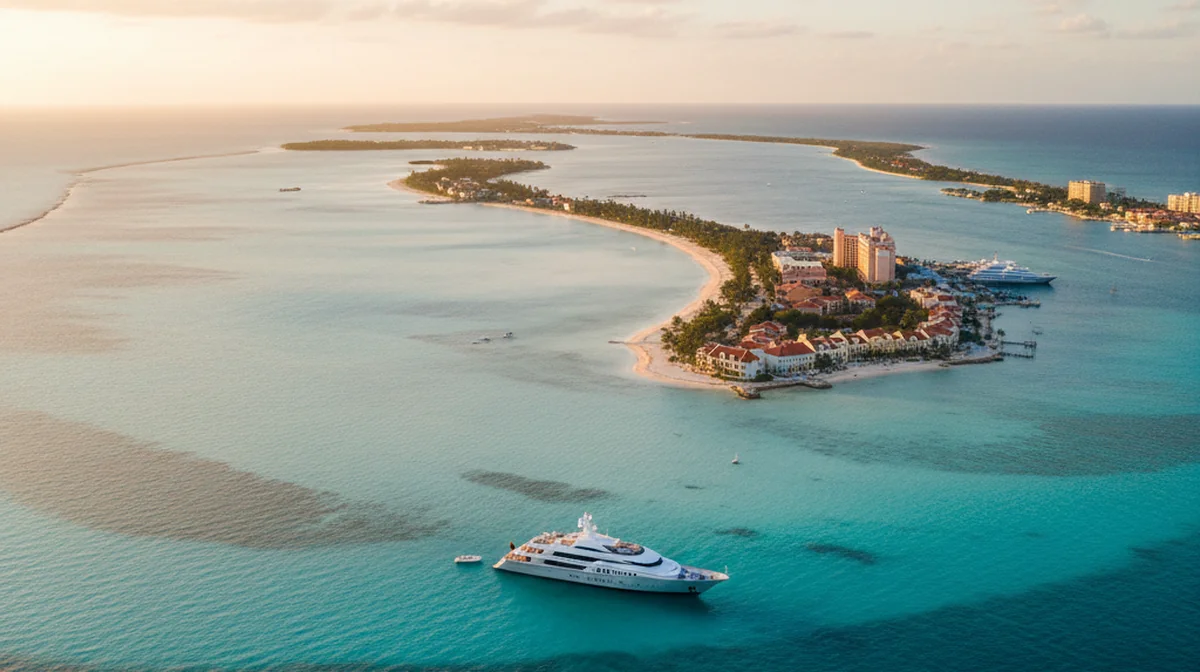
Nassau and Paradise Island sit at the center of the most-visited Caribbean destination — an hour by air from Miami, a short ferry from the downtown cruise port, and the commercial and residential heart of the Bahamas. Cable Beach anchors the mid-market resort and villa corridor; Paradise Island is the Atlantis-anchored resort island, with surrounding villa and condo inventory that runs to very high-end; Lyford Cay and Old Fort Bay are the gated western enclaves where residential villa rentals command the island's top rates; Blue Lagoon Island is the most-booked day excursion. The traveler mix ranges from cruise-extend families to ultra-high-net-worth winter residents.
Nassau's STR market benefits from extraordinary flight connectivity and a bifurcated guest base — volume from cruise-extend and Miami-weekend travelers at the Cable Beach and Paradise Island condo level, and true ultra-luxury villa demand at Lyford Cay and Old Fort Bay. Peak season runs mid-December through April. Regulatory environment is medium, with VAT on accommodation and required operator registration through the Department of Inland Revenue.
Nearby Markets: Harbour Island | Exumas | Turks & Caicos
Cavmir's bifurcated positioning — cinematic photography and ultra-luxury distribution for Lyford and Old Fort villas, professional branding and direct-booking for Cable Beach and Paradise Island condos — matches the actual shape of the Nassau market. Our Virtuoso channel and Airbnb Luxe placements reach the top-of-market guest; our direct-booking infrastructure protects repeat families at the condo level.
Nassau, on the island of New Providence, was founded by British settlers in 1670 and named in 1695 for King William III of the House of Orange-Nassau. Its protected harbor made it a notorious pirate haven in the early 18th century — Blackbeard, Calico Jack, and Anne Bonny all operated from Nassau until Woodes Rogers arrived as royal governor in 1718 with the charge to expel the pirate republic. The Bahamas remained a British colony through blockade-running wealth during the U.S. Civil War and Prohibition-era rum-running in the 1920s, both of which built Nassau mansions that still line the ridge above Bay Street.
The Bahamas achieved independence in 1973 while retaining Commonwealth membership. The modern economy rests on two pillars: tourism, anchored by Paradise Island's Atlantis resort (opened 1994 under Sun International, now operated by Brookfield) and Baha Mar (opened 2017), and offshore financial services, which made Nassau one of the Caribbean's largest banking centers through favorable corporate and trust law. Short-term rental inventory concentrates on Paradise Island, Cable Beach, Old Fort Bay, Lyford Cay (gated, approvals required), and the eastern communities around Winton.
Lyford Cay and Old Fort Bay anchor the ultra-luxury tier at USD $1,500–$6,000/night for private estates with beach access. Paradise Island canal-front and Ocean Club-adjacent villas sit at $1,000–$3,500/night. Cable Beach condominiums at Baha Mar and the Rosewood run $500–$1,800/night. Christmas/New Year is super-peak with 5–7-night minimums; Presidents' Week and Junkanoo Boxing Day hold firm; summer softens but less than Turks or BVI given US weekend proximity.
Medium-to-high seasonality. Peak: December 15–April 15. Super-peak: Christmas/New Year and Junkanoo. Shoulder: May, early June, late November. Low: August–October (hurricane season). Missed revenue: early December and long US weekends year-round, which Nassau's proximity makes uniquely accessible.
Foreign buyers generally require approval from the Bahamas Investment Authority for residential acquisitions above 5 acres or in designated zones, and all foreign buyers must register the purchase with the BIA to obtain a Certificate of Registration or, for larger holdings, a Permit. The International Persons Landholding Act governs the framework. Every operator must register on the Department of Inland Revenue's Short-Term Vacation Rental Portal (launched in 2023 and also used by the Ministry of Tourism), and non-Bahamian owners also need a business license.
VAT of 10% applies to vacation-rental revenue and is guest-collected and remitted. VAT replaced the old 10% hotel guest tax on 1 January 2015; resort hotels add their own levies on top (Atlantis lists 4.4% and 6.6% promotion levies). Lyford Cay, Old Fort Bay, and Albany carry gated-community approval requirements layered on top of national permitting — rental activity often requires board consent and is restricted in some cases. 2023–2024 reforms to the vacation-rental registration regime tightened Airbnb-platform data sharing with the Ministry. Anti-money-laundering and beneficial-ownership compliance has meaningfully increased for property-holding companies.
The Nassau strategic tip: be explicit about gated-community rental rules before you acquire. Lyford Cay in particular has historically restricted commercial rental activity, Albany applies its own program-based framework, and Old Fort Bay sits somewhere between. A buyer assuming open Airbnb flexibility in these enclaves may face board action. Structure the acquisition with a Bahamian attorney who knows the specific community, and obtain written confirmation of rental permissibility in writing before closing. Second — lean into US weekend proximity. Nassau is a 3-hour flight from New York and under 90 minutes from Miami, which makes it uniquely viable for Thursday-to-Sunday luxury escapes that St. Barths or Turks simply cannot serve.
Third — partner with Atlantis, Baha Mar, and the Ocean Club for amenity access. Guests booking private villas still want restaurant reservations, casino floor access, and waterpark day passes. Properties with pre-arranged access agreements outperform those leaving guests to navigate resort gates. Fourth — market the Junkanoo cultural window (December 26 and January 1 parades) as a distinct booking moment. It is Bahamian cultural patrimony that no competing destination offers, and sophisticated travelers will pay a premium for authentic access rather than tourist-bubble exposure. A villa host who arranges parade-route introductions earns a specific kind of repeat guest.
Nassau's challenges: hurricane exposure (Dorian in 2019 devastated Abaco and Grand Bahama but largely spared New Providence), rising operating costs driven by imported goods and electricity rates, workforce-visa complexity under Bahamianization hiring priorities, cruise-passenger volume that degrades downtown Nassau's luxury positioning for some guests, and occasional BIA-approval processing delays that slow cross-border transactions.
Bahamas hurricane coverage is specialty and substantial. Wind, flood, and named-storm endorsements required. Lloyd's of London specialty syndicates, Bahamas First, and Insurance Company of the Bahamas dominate. Budget USD $10,000–$35,000 annually for luxury Nassau villas, with building limits of USD $3–6 million plus liability. Per-event hurricane deductibles are meaningful; business-interruption riders protect peak-season exposure.
The Bahamas levies no income tax, no capital gains tax, and no inheritance tax — a foundational attraction for foreign buyers. VAT of 10% applies to rental revenue and most goods and services. Real Property Tax runs 0.625% annually on owner-occupied homes above the threshold and up to 1% on non-owner-occupied and rental properties, with a cap for owner-occupied. Stamp Duty on acquisition is 10% (typically split 50/50 buyer/seller by custom).
Bahamian mortgages for foreign buyers are available through Scotiabank Bahamas, CIBC FirstCaribbean, and RBC at 60–70% LTV with rates premium to US equivalents. Most luxury buyers use US financing or cash given BIA-approval timelines. Economic Permanent Residence tied to property purchase above USD $750K remains a material buyer motivation.
The Bahamas logged a record 12.5 million visitors in 2025, yet 86.5% of them arrived by cruise ship, and a rental website isn't written for a day in port. Your guest is the stopover visitor: just over 1.8 million of them in 2025, with about two-thirds staying in Nassau or across the harbour bridges on Paradise Island. Those guests chose Nassau and then went looking for somewhere to sleep, and they'll set your page beside the Atlantis and Baha Mar booking engines, which answer every question in two clicks. A direct-booking website for a Nassau house has to do the same: say what the stay costs in total, show exactly where the house sits, and prove it's registered to rent.
Arrival figures for January to July 2025 put Americans at 85.1% of stopover visitors, Canadians at 6.6% and Europeans at 4.7%, so American English is the base language and the U.S. dollar the base currency. The Bahamian dollar trades at par with the U.S. dollar and both circulate in Nassau, so quote in US$ and say once, beside the price, that B$ and US$ are interchangeable; nobody should have to reach for a converter. Canada is where a second version pays. The tourism ministry called Canada a bright spot of 2025, with stopovers back above pre-pandemic levels, and Porter started weekly nonstop flights from Ottawa in December 2025. When enquiries from Montréal and Quebec City start arriving, publish French as its own pages with hreflang tags (fr-CA beside en-US), written by a person, instead of a translate widget that search engines and AI tools pass over. Show a Canadian-dollar estimate next to the US$ rate for those visitors and a sterling estimate for guests booking from the UK, while the charge itself stays in US$.
Registration comes first. Since 2023 every short-term rental in the country, Bahamian-owned or foreign-owned, must be entered on the Department of Inland Revenue's Short-Term Vacation Rental Portal, and a foreign owner also needs a business licence and VAT registration, in the words of Inland Revenue's Shunda Strachan, “even if your turnover is a dollar.” Compliance has been thin: in August 2025 the department said it had flagged more than 20,000 rental properties, with about one in five registered and only 15 percent of those owing VAT signed up, and it now works with a U.S. firm, Avenu Insights, that scans Airbnb and Vrbo. In December 2025 Strachan said enforcement starting early in 2026 would go after rentals seen advertising without registering, and your website is advertising. A 2015 notice from the Ministry of Finance and the Ministry of Tourism says only VAT registrants whose Tax Identification Number is displayed in the holiday accommodation may collect VAT, so print your TIN in the house book, on the booking confirmation and on every invoice. Show prices the way Bahamian VAT policy has asked since 2015, with the tax already inside the figure, and break out the 10% VAT at checkout. Write the cancellation terms on the page, including what happens when a hurricane warning covers New Providence. The cookie banner and enquiry form fall under the 2003 data protection law, overseen by the Data Protection Commissioner; a Data Protection Bill 2025, tabled on 8 October 2025, would replace it with consent that is freely given, specific, informed and unambiguous, registration for anyone processing personal data, and fines up to B$10,000 for processing without it. Build to that standard now, and ask a Bahamian attorney and accountant to confirm what's in force before launch.
Guests search Nassau by area, so give each one its own page: Cable Beach and the Baha Mar strip; Paradise Island, with Cabbage Beach and Ocean Club Estates; Love Beach and Sandyport on the west coast; the gated estates at Old Fort Bay, Lyford Cay and Albany; and downtown around Bay Street and Fort Montagu. Each page states the minutes on foot to the nearest public beach access, the drive to Lynden Pindling airport and, for the gated estates, how the gatehouse registers your guests. A getting-here page earns its place too: arriving at Lynden Pindling, U.S. preclearance on the flight home, taxis against a rental car, and a plain note that The Bahamas drives on the left. The photos and facts that close bookings here are specific: the backup generator and storm shutters for summer and autumn stays, whether the pool is heated in January, the depth at the dock if you advertise boat access, and the view from the bed instead of a drone shot of the whole coast. The same area pages carry your SEO and your AI search work, covered next.
GEO (generative engine optimization) is the work of getting your house named when a traveller asks ChatGPT, Gemini, Copilot, Perplexity or Google's AI Mode where to stay, and for Nassau the audience is already asking. A PhocusWire study reported in March 2026 found slightly more than half of U.S. travellers use an AI tool to plan a trip or help them during it, up from 33% at the start of 2025, and Americans are most of your stopover guests. Answer engines assemble their replies from pages they can read and check against other sources, so the job is to publish clean, dated facts about your house that match what everyone else says about it.
Travellers ask a chatbot for a plan. Where should we stay for Battle 4 Atlantis without paying resort rates? Is Cable Beach or Paradise Island better with teenagers? Which house near Albany sleeps twelve for the Hero World Challenge? Do we need a car to get to the Fish Fry at Arawak Cay on a Friday night? How much tax goes on a rental bill in The Bahamas? Canadian families ask the same things, some in French: “où loger à Nassau pour Junkanoo avec des enfants?” Every one of those questions names a place, an event or a cost. An answer engine can only put your house in that reply if one of your pages already answers the same question with the same names, so write your page titles and opening lines the way those questions are asked, in English first and in French where Quebec bookings justify it.
Write the core facts once, in plain sentences, and repeat them word for word on the site, Airbnb, Vrbo and Booking.com: the registration on Inland Revenue's portal, how many the house sleeps and in how many bedrooms, the minutes on foot to Cabbage Beach, Cable Beach or the Junkanoo route on Bay Street, the drive to the airport, the cancellation rule with its hurricane clause, and the total price with VAT. The tax line deserves a full sentence because guests compare it with resort bills: Atlantis adds a 21% charge to its nightly rates, made up of 10% VAT and two industry levies of 4.4% and 6.6%, while for a rental the government tax is VAT, which replaced the old hotel guest tax in 2015. A sourced, dated sentence like that is the kind an AI answer can lift whole. On the technical side, keep these facts in the page's HTML rather than inside photos or scripts, and mark them up with VacationRental and FAQ schema so machines read the same figures your guests do.
Answer engines lean on sources they already trust, and in Nassau those are easy to list. The Bahamas Ministry of Tourism, Investments and Aviation publishes arrival figures and new airline routes through its pressroom; the Nassau Paradise Island Promotion Board runs the destination's own site, blog and press releases; The Tribune, The Nassau Guardian and Eyewitness News cover rentals, tax and tourism as regular beats; and Canadian travel-trade titles such as Pax News report Bahamas arrivals to the agents who sell the trip in Canada. Digital PR here means giving those outlets something they can use: a house that hosts visiting basketball families every Thanksgiving week, a first-timer's Junkanoo guide, a tax explainer worth quoting. Cavmir's July 2026 study of 550 Google AI answers across 15 U.S. markets found independent and regional operators took 82% of the citations, with Airbnb or Vrbo in 17% of answers. That study covers U.S. markets, so treat it as a signal that a well-documented independent house can be cited, then make sure your house's name, address and description read identically on every platform and in every article.
Content marketing for a Nassau rental means publishing the pages guests and answer engines go looking for, in the order the calendar asks for them. With autumn here, the November and December events come first, then the evergreen guides that carry the rest of the year. Each guide below names the place, the date and the practical answer, and each one ends on the booking page of the house it was written for.
Start with Thanksgiving week. The 2026 Battle 4 Atlantis men's games are scheduled for November 25 and 27 at the Imperial Arena on Paradise Island, and travelling fans often come as extended families who would rather share one house than book three resort rooms; a page on where to stay, how long the trip to the arena takes from Cable Beach or downtown, and how to get across the bridges on game nights is the first thing to publish. The Hero World Challenge follows on December 3 to 6, 2026 at Albany, with a smaller crowd that wants a west-side house close to the course and a driver for the week. Then Junkanoo: a first-timer's guide to the Boxing Day and New Year's Day parades on Bay Street, with where to stand, when to arrive and how to get home in the small hours, tied to your holiday minimum stay.
Behind the events, publish the pages that answer year-round questions. A getting-here guide from Lynden Pindling covers taxis, car hire, driving on the left and U.S. preclearance on the way home. One guide per area follows: Cable Beach, Paradise Island, the western estates, and downtown. A total-price explainer sets your VAT-inclusive rate beside a resort bill with its levies. A hurricane-season page says what your cancellation clause, generator and shutters do from summer into autumn. A cruise pre- and post-stay guide speaks to the passengers who make up most of the island's visitors and sometimes add a night before or after sailing. Day trips belong too, with Rose Island and Blue Lagoon Island written as boat-day plans that start at your door.
Every guide carries the details an AI answer can lift: a date, a place name, a distance in minutes you measured yourself, a price in US$, and the month you last checked it. Put the house's own facts in the same sentence form on each page, so the guide and the listing agree word for word. Refresh the event pages each autumn once Atlantis and the PGA Tour announce new dates, and keep last year's version as a dated archive instead of overwriting it, so returning guests and editors can see what changed. Judge each guide by the enquiries it brings in, not by visits.
Nassau through 2027 and beyond: proximity to the US Eastern Seaboard is a durable structural advantage no other Caribbean jurisdiction can replicate. Expect continued tightening of VAT and vacation-rental registration enforcement, meaningful AML and beneficial-ownership transparency reforms aligned with OECD standards, and ongoing Economic Permanent Residence demand supporting the ultra-luxury segment. Baha Mar's continued maturation and Atlantis's Brookfield-led reinvestment reset the amenity benchmark upward. Hurricane-climate risk remains the defining operational variable. Downtown-Nassau cruise-volume pressure may accelerate a further shift of luxury demand toward Paradise Island, Cable Beach, and the western gated communities — a migration operators should position ahead of.
Nassau is the Caribbean city that rewards hosts who can tell two stories at once. There is the cruise-port Nassau — Bay Street, the straw market, the one-day-in-town version — and there is the resident Nassau of Paradise Island hideaways, Cable Beach sunsets, Fish Fry on Friday, and the specific quiet of the out-islands an hour's boat ride away. A listing that only sells the first story competes with a thousand rooms; a listing that leans into the second — the Versailles Gardens morning walk, the Graycliff wine cellar, the Rose Island day — prices and holds a materially more interesting guest.
What we love about marketing Nassau is how much editorial room the market leaves on the table. Most Bahamas listings default to generic turquoise-water photography and resort-amenity copy, which is exactly what cruise-day visitors already associate with the destination. The Nassau properties that outperform are the ones that behave like small independent hotels — with a specific point-of-view, local storytelling about the working city rather than the postcard, and welcome-book knowledge that extends past the lobby concierge. Guests who book longer Nassau stays skew wealthier and more curious than the island's reputation suggests. They reward listings that take the city seriously and hold onto the properties that do it well.
The picks Cavmir recommends for Nassau welcome books — the details that separate resident-hosts from the cruise-port script.
The terraced gardens and cloister ruins at the top of Paradise Island. Quiet before ten, genuinely beautiful, the walk that orients guests to the non-resort version of the island.
Cable Beach for the long-strand, casual walk; The Dune at One&Only for the architectural terrace and cocktail. A host who offers both reads resident.
Parliament Square, the colonial pastel government buildings, the streets most cruise-day visitors never reach. A proper twenty-minute orientation that repositions the city.
Graycliff for the legacy wine-cellar, jacket-required institution; Mahogany House for the modern-Bahamian counterpoint. Both signal a host who knows the city has actual restaurants.
The conch-fritter, cracked-conch, Kalik-beer Friday-night Bahamas that no resort replicates. A host who routes guests here on the right night looks like an actual Nassau insider.
Post-spring-break, pre-hurricane-watch. Weather is excellent, rates soften meaningfully, cruise volume thins. The window patient marketers build repeat-guest pipelines around.
Rose Island for the quieter, private-beach boat day; Blue Lagoon for the family-friendly infrastructure version. Either one resets the guest's sense of what the destination actually is.
Each base has a different guest profile. A host who explains which neighborhood matches which itinerary prevents the most common Nassau booking regret.
Representative Cavmir engagements in Nassau. Property identifiers redacted; figures composited from internal analytics and market benchmarks.
High-end villa adjacent to Ocean Club with a marketing presence that leaned on Atlantis proximity. Guest profile confused, ADR capped by the association.
Repositioned the villa around the Ocean Club quiet-wealth narrative — Versailles Gardens walks, The Dune dinners, the non-Atlantis Paradise Island. Architectural photography, cinematic film, direct-booking site with a quiet-luxury welcome book.
Peak-season ADR up 41%. Guest profile shifted measurably toward longer-stay, higher-spend families. Direct-booking share climbed to 36% of annual revenue.
Mid-market condo competing against large-building inventory on pure price. Flat shoulder-season demand, commodity positioning.
Differentiated on welcome-book value. Full first-week-itinerary PDF anchored on Fish Fry, Graycliff, Rose Island day-trips. Photography re-shot to emphasise the specific unit's beach-orientation advantages within the building.
Occupancy climbed from 63% to 83%. ADR up 27%. The repositioning broke the property out of the commodity tier it had been stuck in for three years.
Ultra-luxury estate missing the private-event, family-reunion, and production-location revenue streams peer properties in the corridor were capturing.
Three-product brand build. Destination-wedding tear sheet distributed through Bahamas wedding planners. Private-retreat product for family-office clients. Editorial-location availability for resort-lifestyle brand shoots based out of Nassau.
Event and production bookings now represent a meaningful share of annual revenue. A single four-day wedding booking cleared $108K. Leisure ADR climbed on the elevated brand.
Yes. Cavmir works with short-term rental owners and boutique hotels in Nassau & Paradise Island — property branding, listing optimization, photography direction, direct-booking websites, SEO, and paid campaigns. Properties near Cable Beach, Paradise Island and Lyford Cay are exactly the kind of stays we market.
The market snapshot on this page shows average nightly rates around $385 with occupancy near 66% for Nassau & Paradise Island. Treat those as directional market averages, not guarantees — the spread between a well-marketed property and a poorly marketed one in the same market is wide.
Nassau & Paradise Island sees moderate seasonality — clear peaks, but respectable demand through the rest of the year. That shoulder-season demand is exactly where marketing earns its keep, because travelers have more choices and pick the property that looks the part.
Nassau & Paradise Island sits in the middle of the regulatory spectrum — some registration or permit requirements typically apply. Rules change often in this industry, so confirm the current requirements with local authorities before you list. Cavmir handles the marketing side; we don't provide legal or permitting advice.
Give guests a way to book you without a platform in the middle: a fast direct-booking website, a complete Google Business Profile, and follow-up that brings past guests back. Cavmir builds that stack — see vacation rental SEO — so your repeat Nassau & Paradise Island guests stop paying platform fees to find you.
It depends on scope. Current plans and one-time project pricing are on the pricing page — most owners start with a listing overhaul or the 12-step system. A conversation about your property costs nothing: contact Cavmir.
Send us the listing and we'll tell you what we'd change. Not a pitch deck — a straight read on your photos, your title, your rates against the Nassau & Paradise Island comp set, and whether a direct-booking site would pay for itself.
You'll hear back from a person, usually inside one business day. If we don't think we can move your numbers, we'll say so. Cavmir is a short-term rental marketing agency — we position and market properties, we don't manage them.
Demand in Nassau peaks around January, February and March and runs quietest around September. Here is how the year actually books — and what to do about each stretch of the calendar.
The dry winter run from mid-December through April carries Nassau, with the holidays, spring break and the February window packing Cable Beach and Paradise Island. Nassau also holds up better in summer than the Out Islands because of cruise traffic, conventions and easy flights. Price the holidays and spring break at premium and set them early, and keep minimum stays sensible so you don't shut out the long weekenders.
May and June are strong shoulders, warm and busy with the Carnival and Independence build-up and steady flights from the East Coast. October and November recover fast once hurricane risk fades, helped by Thanksgiving and the run into the holidays. These are the months to work mid-week and event-timed pricing.
September is the quiet floor, the heart of hurricane season, with a softer patch in late August. It's the right window for maintenance, a refresh of tired photos and a fair long-stay rate to catch business travelers or displaced homeowners. Even at its slowest, Nassau never goes fully dark thanks to the airport and cruise port.
The holidays, spring break and the winter weeks book the furthest out, often months ahead. Cruise bookends and business trips move on much shorter notice, sometimes inside a week. Lock the peak dates early and firm, and keep pricing nimble for the short-fuse layer that fills the gaps.
The calendar splits between week-long winter family stays and a heavy layer of shorter two-to-four-night couples trips and cruise bookends. Event weekends and business travel add mid-week volume Nassau's Out Island neighbors don't get. It's a broad, year-round mix that rewards hosts who market to more than the beach crowd.
Location within Nassau decides the guest. On Cable Beach or Paradise Island, a bright unit or house with a pool or short beach walk and a view owns the couples and family market. Near downtown, a clean, walkable place close to Bay Street wins the cruise and event traffic. Either way, turquoise water in the first photo and a genuinely short walk to sand or pool is what closes the booking.
Lead with your geography, whether that's Cable Beach, Paradise Island or a walkable spot near Bay Street, and back it with photography that puts turquoise water and honest beach or pool distance up front. Price the winter dry season, the holidays and spring break deliberately, and treat cruise bookends and business mid-weeks as their own short-notice layer. A Google Business Profile helps you surface in map searches, and a direct-booking site captures the couples and families who return every winter. That's the marketing layer Cavmir builds for Nassau hosts, and the airport's year-round traffic makes it pay off across seasons.
The dry winter stretch from mid-December through April is peak, with the holidays, spring break and February the strongest dates. May and June stay busy behind Carnival and the East Coast escape crowd. September, in the heart of hurricane season, is the quietest month, though Nassau never fully slows thanks to the airport and cruise port.
The holidays, spring break and winter weeks book the furthest out, often months ahead. Cruise bookends and business trips move on much shorter notice, sometimes inside a week. Lock the peak dates early and keep pricing flexible for the short-fuse layer that fills around them.
This is a fly-in market fed by one of the busiest airports in the Caribbean, with direct flights from Miami, Fort Lauderdale, New York, Atlanta, Toronto and London. Those are the cities to geo-target. On-island, guests search by neighborhood, so tailor your listing to Cable Beach, Paradise Island or downtown depending on where you sit.
A pool or short beach walk and a water view lead here, followed by strong air conditioning and fast wifi for the couples, families and business travelers who make up the mix. Walkability to dining matters near downtown and the resort strips, and keyless check-in smooths the many short cruise-bookend stays.
Talk to Cavmir today. We'll show you exactly what your Nassau & Paradise Island property is leaving on the table — and how fast we can change that.
Book a Free Strategy Call