
Morning
Café at Sprüngli or Gran Café
Sprüngli on Paradeplatz for the confectionery-institution experience; Gran Café for the specialty-coffee scene in Zurich West.

Expert short-term rental marketing to grow your bookings and nightly rate in Zurich, Switzerland, Europe.
Sixteen services, one team. Everything below is built in-house and scoped to your property and market. Most owners start with the 12-Step System.
Every engagement is quoted to your portfolio. These are the ready-made scopes owners pick most — our Fall Special (55% off list or more) is already applied to the website, King Broker, Hotels and à la carte scopes. A clear proposal within 48 hours.
The work is public. Selected engagements and what changed — and reviews from the owners and managers behind them.
* Market averages from AirDNA and STR market reports. A single home's numbers depend on its size, its location and how it is marketed.
Cavmir is an Airbnb marketing agency. We build the brand, the direct-booking website and the marketing for short-term rentals in Zurich.
Zurich is Switzerland's largest city and one of the world's most livable — a global financial center set against the backdrop of Lake Zurich and the Swiss Alps. The Altstadt (Old Town) with its medieval guild houses, Bahnhofstrasse's world-class shopping, the Kunsthaus Zurich (one of Europe's finest art museums), and the creative energy of Zürich West's former industrial quarter create a city of remarkable contrast. Zurich is also a gateway to Lucerne, the Jungfrau region, and some of the world's finest alpine skiing.
Zurich's STR market is driven by business travel, international conferences, and high-end leisure travelers. Switzerland's position as a neutral financial and diplomatic hub generates consistent demand from every corner of the world. Average spend per visitor is among the highest of any European destination.
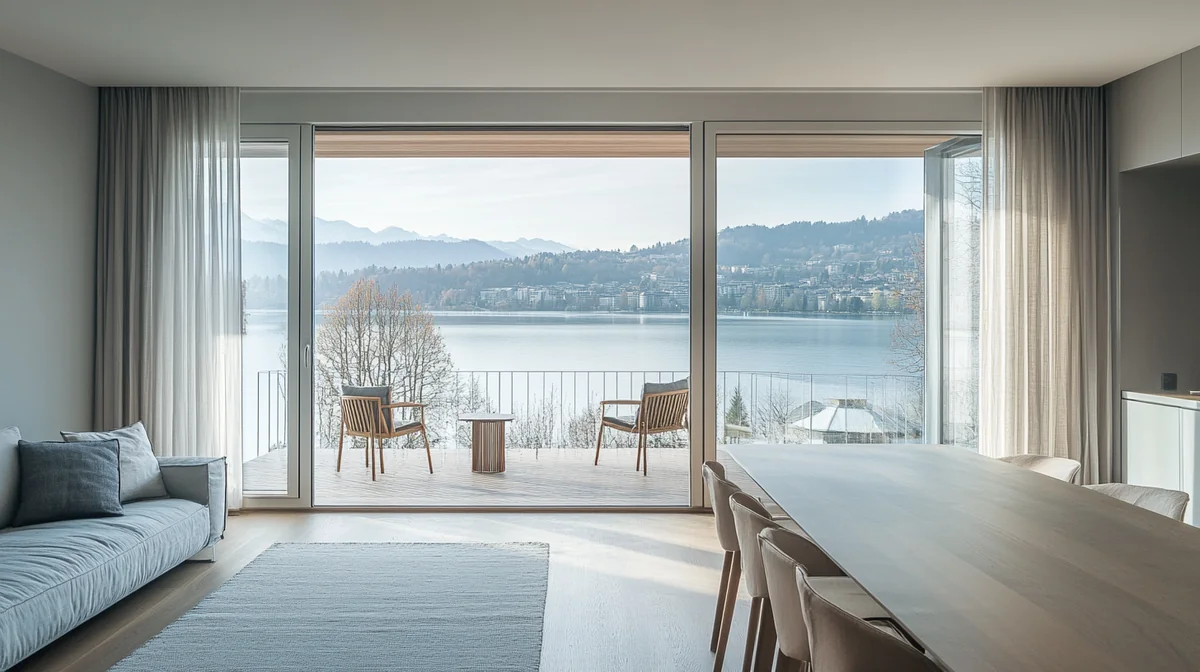
Cavmir positions Zurich properties for the international business traveler and sophisticated leisure guest who expects Swiss-standard quality — and is willing to pay for a short-term rental that genuinely outperforms the hotel experience.
Zurich has been a center of European finance and hospitality for centuries — the Baur au Lac hotel (opened 1844) on the lake has hosted royalty, heads of state, and industry leaders continuously for 180+ years. Switzerland's traditional Gastgewerbe hospitality culture — craft-level precision, hotel-school-trained staff, quiet professionalism — sets expectations that short-term rentals must respect. Zurich's position as Switzerland's financial capital, headquarters to UBS, Credit Suisse successors, Swiss Re, Zurich Insurance, and dozens of global banks and hedge funds, generates year-round business travel of exceptional spending power. Executive stays of 1 week to 6 months are a foundational demand layer.
The platform-era STR market in Zurich scaled through the 2010s, concentrating in the Altstadt (old town), Zürich West (converted industrial quarter), the Seefeld lakefront, and the tram-accessible areas from Hauptbahnhof. Swiss regulatory tradition — cantonal authority, strong federalism, pragmatic local rules — has kept STR regulation notably lighter than in most major European cities. The compliance load is real but rational.
Zurich is one of the world's most expensive cities — and STR pricing reflects it. A well-located 1-bedroom apartment in the Altstadt or Zürich West clears CHF 250–450/night on baseline, with business travelers paying premiums for Montag-Donnerstag stays. Lakefront (Seefeld, Enge, Wollishofen) commands the luxury tier. Business travel drives much of the demand — during major conferences (ZüriCarnival isn't one, but the WEF in Davos draws executive housing to Zurich, and ongoing banking/insurance conferences sustain demand). Weekend leisure is a secondary market — shoppers and cultural visitors fill weekends that business travel doesn't.
Low seasonality. Year-round business travel anchors the market. Peak: June–September (tourism plus business). Strong secondary: January (World Economic Forum in Davos drives executive housing spillover to Zurich), April (shoulder tourism plus business events). Weakest: weeks over Christmas and early January when Swiss business culture slows. Summer brings genuine tourism — Lake Zurich, day trips to Lucerne and the Alps. Ski-season day-trip demand from Zurich to the Davos/Klosters corridor supports winter bookings.
Zurich's STR regulation is handled primarily at the cantonal and communal level — Swiss federalism gives Zurich the city significant autonomy. Registration with the city is required for short-term rentals. Swiss law treats short-term rental under Mietrecht (tenancy law) and Gastgewerberecht (hospitality law) — which framework applies depends on stay duration and service level. Stays under 3 months in furnished accommodation with linen and cleaning service generally fall under hospitality regulation; longer unfurnished tenancies fall under standard tenancy law.
Tax obligations: Tourist tax (Kurtaxe) applies per guest-night (the City Tax, CHF 3.50 per person per night in Zurich since May 2023). VAT (MwSt) at the 3.8% accommodation rate once taxable rental turnover passes CHF 100,000 a year; none below it. Income tax on rental income applies at federal, cantonal, and communal levels. Zürich Kanton has some of Switzerland's more moderate tax rates. Co-owners' building rules (Stockwerkeigentum regulations) are the most common practical STR restriction — many Zurich condominium buildings have rules limiting short lets.
Zurich's strategic tip: the corporate-housing market is the highest-LTV segment. Furnished apartments positioned specifically for 30-180 night executive stays (proper workspace, premium Wi-Fi, Nespresso, daily-to-weekly housekeeping options, corporate-invoicing capability) earn stable CHF 6,000–15,000+ monthly with much lower operational overhead than nightly STR.
Second — Swiss business travelers expect Swiss-standard quality. Clean Scandinavian-modern or classic Alpine aesthetic, genuine quality fixtures, spotless presentation, and reliable everything define the category. Cutting corners visible in photos or on arrival generates reviews that permanently damage Zurich market positioning. Third — emphasize tram and train access. Zurich's public transit is extraordinarily reliable; proximity to specific tram lines or to Hauptbahnhof is a quantifiable amenity. Fourth — winter ski-trip add-ons work. A Zurich apartment positioned as the arrival-and-departure base for an Alpine ski trip (with recommended rail routes and gear-storage guidance) captures a specific demand segment generic listings ignore.
Zurich's challenges: high cost of operation, Stockwerkeigentum building rules, relatively limited inventory (Zurich is small and densely built), language complexity (German, Swiss German, French, Italian, English), and the difficulty of competing against Swiss hotel excellence. Swiss bureaucratic precision requires attention to detail that casual operators find burdensome.
Swiss property insurance with short-term rental rider. Gebäudeversicherung (cantonal building insurance, mandatory in Zürich) plus owner-level Hausrat + Haftpflicht. STR-specific products available through major Swiss insurers (Zurich, AXA, Helvetia). Budget CHF 800–CHF 3,500 annually depending on property size. Swiss Mobiliar offers specialist STR products.
Swiss federal + cantonal + communal income tax on rental income. Canton Zürich total effective rates roughly 20–35% depending on income level and residency. Wealth tax applies (low rate but annual). MwSt at the 3.8% special rate for accommodation once rental turnover passes CHF 100,000 a year; none below it. Property transfer tax and annual property taxes modest by European standards. Kurtaxe guest-collected.
Swiss mortgages typically 65–80% LTV for Swiss residents, 50–70% for non-residents. 15-year amortization requirement to 65% LTV typical. Swiss banks (UBS, ZKB, Raiffeisen, Credit Suisse successor entities) all have non-resident programs. Rate discipline is strict; cash flow underwriting critical. Swiss LEX 'Koller' law restricts non-resident foreign buyers in some categories — applies mainly to vacation homes, less restrictive in Zurich city for eligible residential purposes.
The first reader of a Zurich booking site is usually Swiss. Zürich Tourismus counted more than 7.5 million overnight stays across its region (the canton plus Zug, Baden and Rapperswil) in 2025, up 3.5%, and nearly 39% of those guests lived in Switzerland. North America is the next block that matters, at 13.4% of nights in 2024 after growing 14.2%, and last year the UK rose 8.6%, Italy 6.4% and Germany 3.6%. So the same flat is read by a couple from Bern who already know how Swiss trams and tickets work and by a New Yorker stepping off a transatlantic flight at Kloten for the first time. A direct-booking website here has to serve both without making either one hunt for the price, the address or the book button.
Publish real language versions, each on its own URL with hreflang tags pointing to the others: Swiss German usage (de-CH, written with ss and never the German ß), English, French for guests from Geneva and Lausanne, and Italian for Ticino and the growing Italian market. A translate widget can't be indexed and gets Swiss spelling wrong. Quote Swiss francs first, because the federal price rules require the CHF figure; SECO's guidance lets you add a euro price beside it, which helps the German and Italian guest, and a US-dollar view helps the American comparing you with a Paradeplatz hotel. Then answer what each group asks before booking. The Swiss guest wants the tram stop, the lines that serve it and whether a car fits in the blue-zone parking. The American wants to know about air conditioning, a lift and the size of the bed. The Italian weekend couple wants the final price, City Tax included, on the first screen.
Start with the price. Under the Price Indication Ordinance (PBV), the advertised price is the actual price in Swiss francs including all public charges, and cantonal authorities enforce that under SECO's supervision. If you're VAT-registered, which starts once holiday-rental turnover passes CHF 100,000 a year, the 3.8% accommodation rate sits inside the nightly rate. Show the City Tax as its own line before payment: it's CHF 3.50 per person per night, up from CHF 2.50 in May 2023, and Airbnb collects it on stays of 30 nights or fewer. On a direct booking nobody collects it for you, so agree with Zürich Tourismus how you'll settle it. The cookie notice answers to the revised Federal Act on Data Protection (revFADP), in force since 1 September 2023, and to Art. 45c of the Telecommunications Act, which says visitors must be told what cookies do and that they can refuse them. Because you're selling to guests in Germany, Italy and France, the EU's GDPR can apply too, and that generally means a consent banner, so build to the stricter rule. The regulator is the Federal Data Protection and Information Commissioner (FDPIC), whose cookie guidelines appeared on 3 February 2025; fines under the Swiss act reach CHF 250,000 and fall on the responsible person. One rule helps you: since 1 December 2022, Article 8a of the Unfair Competition Act has voided platform clauses that limit an accommodation provider's prices, availability or conditions elsewhere, so your own site may undercut the platforms. Hosts must also report guests to the Cantonal Zurich Police, so collect ID details in the online check-in. Confirm the specifics with a Zurich lawyer or fiduciary.
Guests search Zurich by quarter and landmark, so give each area you can serve its own page. Seefeld sells the lake promenade and the Opera House, Enge the Rietberg Museum and the Mythenquai lake bath, Niederdorf the old-town lanes, Zürich West the Viadukt arches and the bars off Langstrasse, and Oerlikon the trade fairs at Messe Zürich and the concerts at the Hallenstadion. Build the getting-here page on what Zürich Tourismus publishes: the S2 and S16 reach Zürich HB from the airport in about 10 minutes, trains leave every 5 to 10 minutes, a single ticket costs CHF 7, and tram 10 takes about 35 minutes to the main station, passing Oerlikon and ETH on the way. Then photograph what Zurich guests filter on: the desk and its window light for the bank visitor, the shared Waschküche and how its booking rota works for the long stay, the lift or the stairs in an old building, the lake or Uetliberg view from the bedroom, and the walk to the nearest tram stop with the stop named. Say whether there's air conditioning or fans; a top-floor flat in a July heatwave is a complaint you can head off in one line.
GEO (generative engine optimization) is the work of making your flat the one an AI assistant names when a traveller asks where to stay. In Zurich the first audience is at home: a YouGov Schweiz survey of 1,239 residents in January 2026 found 21% already use tools such as ChatGPT, Gemini or Copilot to plan trips, rising to 29% among under-45s, with ChatGPT leading at 88%. Those users mostly ask for activities (66%), then destinations (45%) and routes (43%), so a recommendation for a place to sleep tends to arrive inside an itinerary for a day in the old town or a weekend on the lake. The platforms don't own that answer by default. Cavmir's July 2026 study of 550 Google AI answers across 15 U.S. markets found independent and regional operators took 82% of citations, with Airbnb or Vrbo appearing in 17% of answers; that's a U.S. reading and says nothing about Zurich, but it shows a small operator can be the source an assistant quotes.
The prompts come in four languages and name places. A family in Basel types, in German, for a flat with a lake view near a tram stop for Sechseläuten weekend. A couple in Milan asks, in Italian, for somewhere near the Niederdorf for the December Christmas markets. A New York analyst starting a two-month posting asks, in English, for a furnished apartment within walking distance of Paradeplatz, with a desk and a washing machine, and how long the train from the airport takes. A group from Lyon asks, in French, where to sleep for the Street Parade without a long walk home. Every one of those questions turns on a landmark, a date or a piece of logistics, and the assistant builds its answer from pages that state those things in the language of the question. A German-only site is invisible to the Milan couple's prompt.
Assistants quote short, declarative sentences, so write each key fact once, the same way, on the site and on every listing: how many guests the flat sleeps and in how many bedrooms; the minutes on foot to Stadelhofen, Bellevue or Zürich HB; the tram lines at the nearest stop; that the airport train takes about 10 minutes to the main station; the City Tax of CHF 3.50 per person per night; the cancellation rule in days and francs; check-in time and how the keys work; and the house rules Swiss buildings run on, from evening quiet hours to the Züri-Sack, the city's fee-paid rubbish bag. Mark the property up with accommodation, address and FAQ schema and keep every language version crawlable as plain HTML. The rest is consistency. If Airbnb says the flat sleeps four and your site says five, the assistant holds two answers and trusts neither.
Answer engines check one source against another. The official voice is Zürich Tourismus, which publishes the city's event calendar, neighbourhood guides, the City Guide app and the Zürich Card, and which draws about 65% of its funding from the City Tax your guests pay; Switzerland Tourism's MySwitzerland lists Sechseläuten and the Street Parade nationally, and the ZVV transit network keeps its own event pages. The press that describes Zurich in German is the NZZ, the Tages-Anzeiger and its Züritipp going-out guide, 20 Minuten and the city magazine Tsüri.ch, and they're the outlets digital PR can approach with a local angle, such as a host's guide to the guild parade route or the best quiet streets on Street Parade night. Keep the property's name, address and details identical on Airbnb, Booking.com, Vrbo and the site, down to whether you spell it Zürich or Zurich.
Content marketing for a Zurich rental runs on the city's calendar. Demand arrives in dated waves on top of the weekday business base: the WEF in January, Sechseläuten in April, the Street Parade in August, the film festival in the autumn. Each wave starts its searches well before the date, and both Google and the assistants need time to read a new page before they'll quote it. So publish each page a season ahead, write it in all four languages, and put the facts a guest needs (dates, times, routes, minutes from the door) in sentences that stand on their own. Here's the order that fits the next twelve months.
First, the WEF page. The 2027 Annual Meeting runs from 18 to 22 January at the Davos Congress Centre, and this page already counts on its executive spillover into Zurich, so write the brief those guests need: rail connections to Davos, the airport transfer, a proper desk, receipts a company will accept and a late check-in that works without a phone call. Second, Sechseläuten. On Sunday 18 April 2027 up to 3,000 children parade through the centre, and on Monday 19 April the guilds march from lower Bahnhofstrasse to Sechseläutenplatz, where the Böögg is lit at 18:00. A page that says how far your door is from the route, which streets close and where to stand is the page an assistant lifts. Third, a getting-here page built around the airport train, the CHF 7 single ticket and the Zürich Card, which Zürich Tourismus lists at CHF 29 for 24 hours and CHF 56 for 72 hours from 13 December 2026, airport rides included.
Fourth, the Street Parade. The 2027 edition is on Saturday 14 August, with about 30 Love Mobiles on a 2.4 km route along the lake from Utoquai to Hafen Enge. Guests want three answers: how close, how loud and the minimum stay. Flats in Seefeld and Enge sit beside the route, so say so, and say what the night sounds like from the bedroom. Fifth, a summer page on the lake and river baths: the nearest Badi, the walk there, swimming in the Limmat at Letten and the boat landings on the lake. Sixth, a Zurich Film Festival page that keeps the evergreen part live all year (the cinemas, the walk from the flat, where to eat after a late screening) and adds the dates as soon as the festival announces them.
Seventh, one guide per quarter you serve, written from your doorstep: the tram lines, the nearest Migros or Coop, the Saturday market, the quiet streets for a morning run. Eighth, a long-stay page for postings of a month or more, covering the laundry-room routine, the Züri-Sack, the guest details your check-in collects and a monthly rate in francs. Write that page with care, because Airbnb's City Tax collection only covers stays of 30 nights or fewer and the city's rules on longer furnished lets are moving. In a ruling dated 30 April 2026, the Federal Supreme Court upheld the zoning rule that short-let flats and business apartments no longer count toward an area's required residential share, which the city expects to apply from autumn 2026. Separately, a popular initiative filed on 4 September 2025 would cap short-term letting at 90 days a year; it's pending, and the city's counter-proposal is due by 4 January 2027. Check the current position with the city before you publish, and update the page when it changes.
Zurich through 2027 and beyond: stable financial-capital status drives durable business travel demand. Regulation likely to remain moderate relative to other European capitals. Stockwerkeigentum building-level restrictions may expand as the city's affordability debate continues. Swiss tourism growth steady but not explosive. Corporate relocation flows (US firms expanding European presence, global finance executives relocating) support mid-term stay demand. Long-term outlook is quality over volume — a steady, premium-priced market.
Zurich is a market where discretion is the brand. The guest audience — corporate financial-services travellers, luxury-tourism visitors, academic and medical-conference attendees, and the surprisingly-substantial cross-border weekend travellers from southern Germany and Austria — expects quality as a baseline and precision as a distinguishing feature. The marketing opportunity most Zurich listings miss is the specific register the Zurich guest reads. Generic aspirational-luxury framing undersells; precise, understated, specific-detail-led copy converts.
What we love about marketing Zurich is the rate ceiling and the consistency. A well-positioned Zurich property commands premium rates steadily across the calendar — the seasonality is unusually mild for a European market, the corporate-travel floor is reliable, and the leisure audience (summer-lake and winter-ski-gateway) adds to rather than replaces the corporate demand. The neighborhoods deserve specificity: Seefeld's lakeside quiet, Niederdorf's medieval charm, Kreis 4 and 5's creative-class transformation, Enge's art-and-quiet residential character.
The picks Cavmir recommends for Zurich welcome books — understated, precise, and pitched at the register Zurich guests actually read.
Sprüngli on Paradeplatz for the confectionery-institution experience; Gran Café for the specialty-coffee scene in Zurich West.
Lindenhof for the public rooftop-terrace view of the old town and river; Uetliberg by S-Bahn for the 871m hill-summit panorama.
Dense medieval streets in the old town. Cafés, bookshops, architectural detail. The half-hour walk that defines what makes Zurich not-Paris.
Kronenhalle for the century-old art-filled dining room (Chagall, Picasso on the walls); Haus Hiltl for the world's oldest vegetarian restaurant — a Swiss institution since 1898.
Swiss chocolate is the Zurich gift-to-carry-home. Läderach for the fresh-slab aesthetic; Teuscher for the champagne-truffle classic.
Lakefront weather at its best, ski-season pricing hasn't begun, corporate-travel calendar in a quieter pocket. A pricing window most platforms misread.
Lucerne by train in an hour; Rhine Falls in 40 minutes; the Alps from Engelberg in 90 minutes. Three completely different days, all same-day-return possible.
Zurich's transit is flawless but ticket-zone logic trips up guests. Restaurant reservation timing and tipping conventions differ from Anglo norms. A printed briefing on each saves real awkwardness.
Representative Cavmir engagements in Zurich. Client details redacted; numbers composited from internal analytics and market benchmarks.
Premium lakeside apartment marketed generically. Missing the quiet-luxury audience that specifically booked Seefeld. ADR tracking 18% below comparable Seefeld inventory.
Rebuilt with Swiss-register copy (understated, specific, precise). Photography at the lake-light times of day. Welcome-book knowledge specific to the Seefeld promenade walk, the specific restaurants, the medical-conference logistics guests often cared about.
ADR moved to market median and 12% above. Medical-conference long-stay bookings grew to a measurable repeat-channel. Occupancy up 17 points.
Modern apartment in the increasingly-design-forward Kreis 4 district. Marketing didn't reflect the neighborhood's creative-class identity; guest profile defaulted generic.
Repositioned for the design-and-creative-industry business traveller. Photography emphasised the walkable food-and-coffee scene, the Frau-Gerold-Garten proximity, the specific Kreis 4 identity. Copy rewrote for the design-conscious-business audience.
ADR up 29%. Occupancy moved from 69% to 84%. Weekend-leisure-add-on bookings grew as design-industry business travellers extended weekday stays into weekends.
Quiet-luxury villa whose marketing was under-calibrated for its actual market position. Missing the private-event and corporate-residence audiences that represented the real rate ceiling.
Built a private-event product parallel to the residential rental. Corporate-residence tear sheet for executive-relocation temporary-housing. Distribution through Swiss private-banking relocation services.
Executive-relocation long-stay bookings now generate a substantial share of annual revenue at ADR equivalent well above platform-rental pricing. Leisure-side ADR also climbed.
Yes. Cavmir works with short-term rental owners and boutique hotels in Zurich and across Switzerland — property branding, listing optimization, photography direction, direct-booking websites, SEO, and paid campaigns. Properties near Lake Zurich, Bahnhofstrasse and Kunsthaus Zürich are exactly the kind of stays we market.
The market snapshot on this page shows average nightly rates around $285 with occupancy near 68% for Zurich. Treat those as directional market averages, not guarantees — the spread between a well-marketed property and a poorly marketed one in the same market is wide.
Zurich sees moderate seasonality — clear peaks, but respectable demand through the rest of the year. That shoulder-season demand is exactly where marketing earns its keep, because travelers have more choices and pick the property that looks the part.
Zurich sits in the middle of the regulatory spectrum — some registration or permit requirements typically apply. Rules change often in this industry, so confirm the current requirements with local authorities before you list. Cavmir handles the marketing side; we don't provide legal or permitting advice.
Give guests a way to book you without a platform in the middle: a fast direct-booking website, a complete Google Business Profile, and follow-up that brings past guests back. Cavmir builds that stack — see vacation rental SEO — so your repeat Zurich guests stop paying platform fees to find you.
It depends on scope. Current plans and one-time project pricing are on the pricing page — most owners start with a listing overhaul or the 12-step system. A conversation about your property costs nothing: contact Cavmir.
Send us the listing and we'll tell you what we'd change. Not a pitch deck — a straight read on your photos, your title, your rates against the Zurich comp set, and whether a direct-booking site would pay for itself.
You'll hear back from a person, usually inside one business day. If we don't think we can move your numbers, we'll say so. Cavmir is a short-term rental marketing agency — we position and market properties, we don't manage them.
Demand in Zurich peaks around August and runs quietest around January through February. Here is how the year actually books — and what to do about each stretch of the calendar.
Zurich is a business-and-leisure city, so it runs steadier than an alpine resort, with a clear summer lift and an August height around the Street Parade. Warm-weather months from May through September carry strong leisure and event demand on top of the year-round business travel. Keep pricing firm through summer, tighten minimum stays around the big August weekends, and have the listing polished before the season since the calendar rewards consistency more than a single spike.
Spring and autumn are solid, powered by the steady flow of business travel and events like Sechseläuten and the Zurich Film Festival. The weather is pleasant, the lake and old town are at their best, and mid-week corporate demand fills gaps a leisure city would leave open. Court the business and culture layer, lean on mid-week angles, and price the shoulders to hold consistent occupancy.
January and February are the low, when the holidays are over and deep-winter leisure travel thins, though Zurich's business base keeps a floor under demand the whole time. December bucks the trend with the Christmas markets. Use the quiet weeks for maintenance and a copy and photography refresh, and lean on the reliable corporate mid-week stays to keep the calendar from going dark.
Business travel books on a shorter, sometimes last-minute window, while leisure weekends and the marquee events like the Street Parade fill further ahead. It is a steadier, shorter booking pattern than a resort market. Set your event weeks early and firm, then keep the rest of the calendar responsive to the corporate and weekend layers that book close in.
The calendar mixes short mid-week corporate stays with weekend city breaks and event clusters, most running one to three nights. Summer and the festivals stretch some stays longer, and the business layer keeps mid-week demand steady in a way leisure cities lack. It rewards hosts who can serve both the quick corporate trip and the weekend visitor.
The Zurich winner is a clean, well-located apartment near the old town, the lake or the main station, easy to reach from the airport and comfortable for a business or weekend guest. Location and reliability beat square footage in this market. A tidy one or two-bedroom with a real desk, fast connectivity and a smooth self check-in outperforms a bigger place in a less convenient spot.
Sell location and reliability first, because Zurich's business base and city-break guests book convenience and a smooth stay over novelty. Lead with photography that shows a clean, well-kept space and a real desk, and listing copy that names your neighborhood and how close you are to the station, the lake and the airport. Price the steady calendar for consistency, with a firm lift around the Street Parade and the summer events. A direct-booking site captures repeat corporate guests, and local SEO helps travelers find you, which is the marketing layer Cavmir builds for Zurich hosts.
Zurich runs steadier than a resort, with a summer lift from May through September and an August height around the Street Parade and Zürich Openair. Spring and autumn hold up well on business travel and events like Sechseläuten and the Film Festival, and December gets a Christmas-market bump. January and February are the low, though the business base keeps a floor under demand year-round.
Business travel books on a shorter, sometimes last-minute window, while leisure weekends and marquee events like the Street Parade fill further ahead. It is a steadier, shorter booking pattern than a resort. Set your event weeks early and firm, then keep the rest of the calendar responsive to the corporate and weekend layers.
Zurich is a major international hub, so business and leisure traffic flies in heavily from London, Frankfurt, Paris and New York, with Munich close by. A regional drive layer from Winterthur, Lucerne and Basel fills weekends. Target the European and transatlantic hubs for the business and event crowd and keep the domestic weekend market warm.
Fast wifi and a genuine work desk lead for the business crowd, followed by a frictionless self check-in for late corporate arrivals. A central or transit-close location does much of the selling, and a well-equipped kitchen and quality bedding round out the essentials. In a business city, dependability is the amenity guests are really booking.
Talk to Cavmir today. We'll show you exactly what your Zurich property is leaving on the table — and how fast we can change that.
Book a Free Strategy Call