Expert short-term rental marketing to grow your bookings and nightly rate in Herzliya, Israel, Middle East.
Sixteen services, one team. Everything below is built in-house and scoped to your property and market. Most owners start with the 12-Step System.
Every engagement is quoted to your portfolio. These are the ready-made scopes owners pick most — Low-season pricing shown (through September 15), discount already applied. A clear proposal within 48 hours.
The work is public. Selected engagements and what changed — and reviews from the owners and managers behind them.
* Market averages. Properties marketed by Cavmir typically exceed these figures by 25–45%. Data sourced from AirDNA, STR market reports, and Cavmir internal analytics.
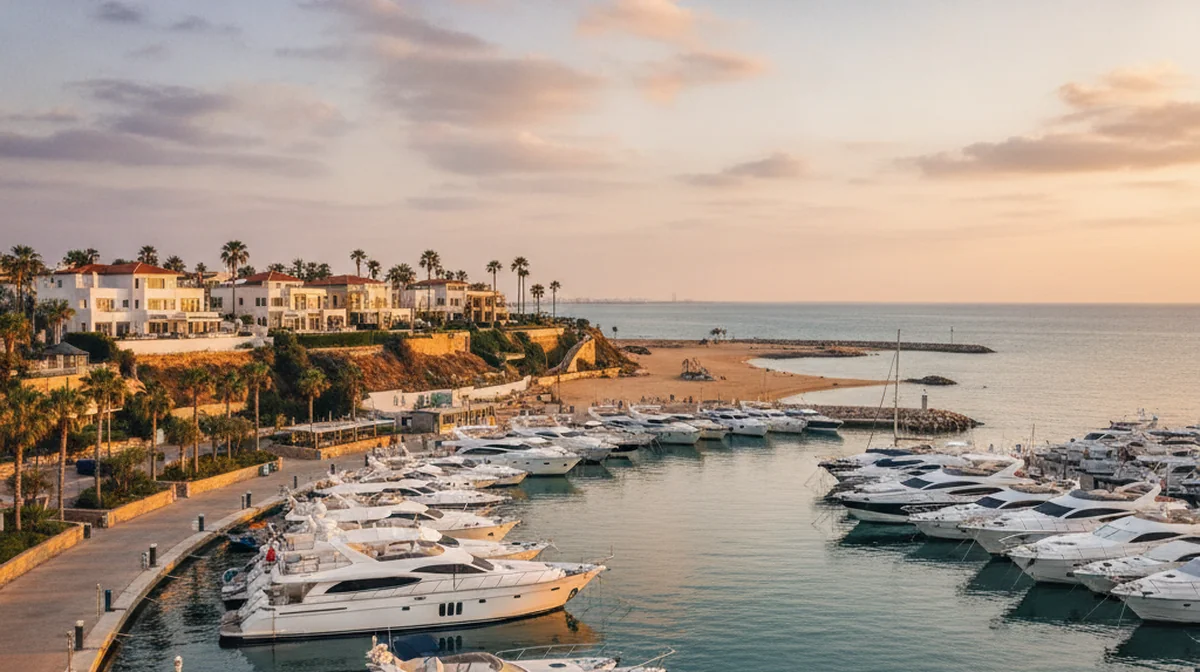
Herzliya is Tel Aviv's upscale coastal neighbor — a quieter, greener beach city fifteen minutes north, built around the Herzliya Marina's yacht-lined waterfront and the villa neighborhoods of Herzliya Pituach. It's home to Israel's densest concentration of tech and biotech offices, which keeps a steady flow of relocating executives and long-stay corporate guests moving through the city alongside leisure travelers drawn to its wide sand beaches and lower-key pace than central Tel Aviv.
Herzliya's STR demand splits between longer-stay corporate and relocation guests tied to the city's tech industry park, and leisure travelers who want beach access without Tel Aviv's density and noise. Marina-adjacent apartments and Herzliya Pituach villas anchor the premium tier; demand holds steady year-round with a summer leisure bump.
Cavmir positions Herzliya as the quieter, higher-end alternative to central Tel Aviv — reaching relocating executives who need a longer-stay furnished option and leisure travelers who want the beach without the crowd.
Herzliya was founded in 1924 as a small farming settlement on the Sharon plain, and it carries the name of Theodor Herzl, the man who set the idea of a Jewish state in motion. For its first decades it was citrus groves and modest houses a short way inland from the Mediterranean. What changed the city was the coast and, later, the money that followed it. The strip of land between the old town and the sea became Herzliya Pituach, and over time that district turned into one of the most sought-after addresses in the country — villas, embassies, a marina and a stretch of beach that people drive up from Tel Aviv to use.
The second thing that shaped the city is quieter but just as important. Herzliya Pituach did not stay purely residential. It grew into a serious business park, home to technology firms, corporate offices and the kind of company that flies people in for a week at a time. Add Reichman University — long known as IDC Herzliya — and you have a city that is genuinely two things at once: a beach-and-marina leisure town and a corporate hub. That dual character is the single most useful fact about the rental market here, and it is what makes Herzliya behave differently from a pure resort town or a pure business city.
For a short-term rental owner, the practical read is straightforward. Herzliya sits just north of Tel Aviv, close enough that guests treat the two as one region, but it offers something central Tel Aviv struggles to: calm, space, the sea and — honestly — somewhere to park. A guest chooses Herzliya on purpose. Understanding why they made that choice, and marketing to it plainly, is the difference between a listing that fills and one that competes on price with everything in greater Tel Aviv.
Herzliya prices on two calendars at once, and the owners who do well here learn to read both. There is the leisure calendar — the Mediterranean summer, the beach, the marina — and there is the business calendar of Herzliya Pituach, which runs steadier and cares nothing for the weather. A listing that only prices for the beach season leaves the corporate weeks underpriced, and a listing that only chases business travellers misses the summer premium the sea hands you for free.
The leisure high season is roughly the warm half of the year, when the beaches at Zvulun, Acadia, Sharon and Herzliya fill and the marina is busy. Prices firm up from late spring through early autumn, and they spike hard around the Jewish holiday calendar — Passover in spring, and the cluster of the High Holidays and Sukkot in autumn — when families and diaspora visitors travel and demand across the whole country tightens at once. Those dates move year to year against the civil calendar, so check them and load your rates the moment they are confirmed rather than assuming a fixed month.
The business layer is the part owners routinely under-price. A property within reach of the Pituach business park can hold a weeknight rate through much of the year on corporate demand alone, and that guest is far less price-sensitive than a leisure booker. Keep minimum stays short enough to catch the two- and three-night business traveller, and save longer minimums for the holiday weekends when demand will clear them anyway.
The shape of the Herzliya year is a strong, warm summer, sharp holiday peaks in spring and autumn, and a milder, rainier, quieter winter. But the corporate floor under the whole thing means the low season here is less brutal than in a pure beach town — the Pituach offices do not close for the winter. Treat the deep-winter weeks as your maintenance-and-reshoot window and lean on business demand to keep occupancy honest, then price aggressively into the summer and the holiday clusters, which is where the year's real upside sits.
Israel does not run a single national short-term rental permit, and there is no US-style municipal STR licence issued specifically for Herzliya. What governs you instead is a combination of three things: how the tax authority classifies your activity, your building's own rules, and — for anyone letting at scale — municipal business-licensing and VAT questions. Herzliya is generally regarded as less restrictive than Tel Aviv or Jerusalem, which have moved harder on short-term letting, but "less restrictive" is not "unregulated," and the building-level rules still bind you.
Start with tax, because it is where owners get caught. The Israeli Tax Authority tends to treat frequent, hotel-like short-term letting as a business rather than passive residential rental, which means the standard monthly residential-rent exemption is unlikely to apply to an active Airbnb operation. Income is generally reported under one of two tracks — a flat rate on gross rent, or the marginal-rate track where you deduct real expenses such as repairs, insurance, arnona and depreciation. Where letting runs like a business and crosses the annual threshold, VAT and business-classification questions arise as well. The authorities have run active campaigns against undeclared Airbnb income, so this is not a corner to cut.
Then there is the building. Whether you are in a Pituach villa community or an apartment block, the house committee — the va'ad bayit — and the building's bylaws can constrain or object to short-term guests, and a villa community may have its own rules on traffic, parking and commercial use. Confirm your position in writing before you list, not after a neighbour complains.
Finally, watch the national direction. As of 2026 there were proposals under discussion — a national short-term-rental registry, mandatory liability insurance, tougher penalties for operating without a municipal business licence, and provisions letting building owners prohibit short-term lets — but these had not been enacted into law. Treat that as a reason to keep your paperwork clean and your position defensible. None of this is legal or tax advice; confirm the current posture with an Israeli lawyer and accountant before you commit.
Say which Herzliya in the first line. There are two, and they are not interchangeable. "Herzliya Pituach, a short walk from the marina" tells a leisure guest exactly what they are getting; "walkable to the Pituach business park" tells a corporate traveller they can leave the car and get to the office in minutes. The inland city and the seaside district are different products at different price points, and a listing that blurs them sells neither well.
Lead with the specific asset, not the region. A named beach — Zvulun, Acadia, Sharon, Herzliya — the marina, or the business park is a concrete reason to book. Give the honest walking or driving time to it. Guests who choose Herzliya over central Tel Aviv are choosing it for the sea, the calm and the space, so name the thing they came for.
Sell the parking, honestly. This is a genuine advantage over central Tel Aviv and one of the quiet reasons people pick Herzliya. If the property has a dedicated space or easy street parking, say so plainly — it matters to both the family arriving by car and the business guest with a rental. It is a real feature, not a throwaway line.
Photograph for the business guest as well as the beach one. A proper desk, honestly stated wifi speed and a quiet room read strongly here because a large share of your demand is people working from the unit between meetings at Pituach. Air conditioning is not a bonus in this climate — the summers are hot and humid — so show it and make clear it works in every room.
State the airport and Tel Aviv logic plainly. Ben Gurion International is roughly twenty-five to thirty-five minutes away, there is a Herzliya station on the coastal train line, and Tel Aviv is close. Tell the guest the real drive times at the hour they will actually travel. Setting that expectation honestly prevents the most common complaint in a market this close to a bigger city.
The first challenge is the wider security picture. Tourism to Israel is sensitive to the regional situation, and visitor numbers have been affected in recent periods. Treat this as a planning reality rather than something to hide or dramatise: lean on the demand that endures — the Pituach tech and business travellers, affluent domestic leisure, and diaspora and family visits — and keep flexible, clear cancellation terms so guests feel safe booking ahead.
The second is that you are competing inside greater Tel Aviv. A guest comparing listings sees the whole region, so a generic "near Tel Aviv" post disappears. Your defence is specificity — the beach, the marina, the parking, the calm — the things Herzliya has that the centre of Tel Aviv does not.
The third is the building and tax layer. A villa community or a va'ad bayit can object to short-term guests, and the tax authority can reclassify an active let as a business. Neither is a slow-season problem; both are the kind of thing that ends an operation. Settle them in writing before your first booking.
A standard residential policy is unlikely to respond correctly to paying guests coming and going, and in a mix of apartment blocks and villa communities the exposures are specific: liability for a guest in a shared area or by a pool, water damage between units, and theft or damage during a let. Ask your insurer directly how the policy treats short-term paying guests, whether guest liability is covered inside the unit and in common areas, and how the building's own insurance interacts with yours. Proposals under discussion in Israel have floated mandatory liability cover for short-term lets, so get the answer in writing before your first booking rather than after a claim.
Frequent short-term letting in Israel is often treated by the tax authority as a business rather than passive residential rent, which means the ordinary monthly residential-rent exemption may not apply to an active Airbnb. Income is generally reported under a flat-rate track on gross rent or a marginal-rate track where you deduct real expenses such as repairs, insurance, arnona and depreciation, and once letting runs like a business, VAT and business-classification questions can arise above the annual threshold. Arnona — the municipal property tax — is paid by the owner on short-term lets, and cities can treat them at higher, commercial-style rates. The authorities have actively pursued undeclared Airbnb income. Confirm your track and obligations with an Israeli accountant; this is general information, not tax advice.
Financing conditions in Israel differ from North American norms, and foreign buyers in particular should take local advice before assuming a mortgage structure they know from home applies here. The Herzliya-specific point is the same one that governs everything else: a lender or co-investor underwriting projected short-term rental income needs that income to be legally achievable and cleanly declared, and both the building's rules and the tax classification can change what you are actually allowed to run. Settle the building and tax questions before the financing question, talk to a local advisor who has closed short-term rental purchases in the area, and treat this as general information rather than financial advice.
Herzliya's direction is easier to read than most because its demand rests on more than one leg. The Pituach business park is not going to stop needing beds for the people who fly in to work there, and the beaches and marina are not going to stop drawing affluent visitors from the wider Tel Aviv region and abroad. When one source of demand softens, the other tends to hold, and that diversification is what makes the city more resilient than a single-purpose resort or a pure office district.
The honest near-term variable is the regional security situation, which has affected tourism to Israel in recent periods. That is a planning reality, not a forecast, and the sensible response is to build on the demand that endures — corporate travel to Pituach, domestic leisure, and diaspora and family visits — while keeping booking terms flexible enough that guests are comfortable committing ahead. Owners who market the enduring fundamentals rather than chasing a single season are the ones who stay full through the swings.
The regulatory direction to watch is national. Proposals for a short-term-rental registry, mandatory liability insurance, stricter business-licence enforcement and clearer building-level opt-outs were under discussion in 2026 without yet being law. Whichever way they land, they reward the same posture: clean paperwork, a settled building position and declared income. As supply grows, the market here — as everywhere — splits between well-presented properties with a clear, specific story and a long tail of generic "near Tel Aviv" listings competing only on price. Presentation, a direct-booking relationship and honest local positioning are what keep you out of the discount tier.
Herzliya is a satisfying market to work in because it gives you two honest stories to tell instead of one. There is the sea — the marina, the named beaches, the calm you cannot get in central Tel Aviv — and there is the business park, quietly filling weeknights with people who came to work. Most listings pick one and mumble the other. The ones that win say both clearly, and match the right story to the right guest.
We like that the demand is diversified. When a market rests on a beach season alone, a bad summer is a bad year. Herzliya spreads the risk across leisure, corporate travel, the Jewish holiday calendar and the diaspora and family visits that keep coming back, and that mix is a genuinely comfortable thing to build a marketing plan on.
And we like that the real advantages here are the honest ones. The parking, the space, the sea, the short hop to Ben Gurion and Tel Aviv, a Crusader fortress up the coast — none of it needs inflating. A Herzliya listing that names the beach, states the drive time truthfully and shows a working air conditioner and a real desk outperforms the ones reaching for "luxury" and "paradise," every time. Marketing a place that is genuinely good, to guests who chose it on purpose, is the kind of work we enjoy.
Herzliya runs on two calendars — a warm Mediterranean beach season and a steadier corporate one tied to the Pituach business park — with sharp peaks around the Jewish holidays. The winter is milder and quieter, but the business floor keeps it from emptying. Here is how the year actually books, and what to do with each stretch.
The warm half of the year, roughly May through October, is beach-and-marina high season, when demand across the coast tightens and Herzliya's named beaches and marina fill. Price into it with confidence, hold rates through July and August, and lean on the sea and the parking that central Tel Aviv can't match.
Passover in spring and the autumn cluster of the High Holidays and Sukkot are the sharpest spikes, driven by family and diaspora travel that tightens the whole country at once. These dates move against the civil calendar — check them each year and load your rates the moment they're confirmed.
Deep winter is milder, rainier and slower on leisure, but the Pituach business floor keeps occupancy honest rather than empty. Hold your rate, lean on corporate demand, offer longer-stay pricing to anyone who wants it, and use the window for reshoots and maintenance before spring.
Holiday dates and summer weekends book furthest ahead — often as soon as the calendar is set — and reward being visible early. Business travel to Pituach is the opposite: a shorter window, sometimes inside a week, so being instantly bookable and easy to reach from Ben Gurion matters more than long-lead visibility.
Corporate stays run a few nights and are weekday-weighted; diplomatic and relocation guests stay longer. Family and diaspora holiday stays are longer again. A short minimum that opens up the mid-week business guest earns more here than a rigid three-night rule that hands them to a hotel.
The listings that win here name the specific asset and the specific side of the city. Say Herzliya Pituach or the inland city, name the beach, the marina or the business park, and give the honest walk or drive to it. For families and villa stays, space and a pool sell; for business guests, a real workspace and working AC sell. Precision beats vague luxury, every time.
Yes. Cavmir works with short-term rental owners and boutique hotels in Herzliya and across Israel — property branding, listing optimization, photography direction, direct-booking websites, SEO, and paid campaigns. Properties near Herzliya Marina, Herzliya Pituach and Apollonia National Park are exactly the kind of stays we market.
The market snapshot on this page shows average nightly rates around $260 with occupancy near 66% for Herzliya. Treat those as directional market averages, not guarantees — the spread between a well-marketed property and a poorly marketed one in the same market is wide.
Herzliya sees moderate seasonality — clear peaks, but respectable demand through the rest of the year. That shoulder-season demand is exactly where marketing earns its keep, because travelers have more choices and pick the property that looks the part.
Herzliya sits in the middle of the regulatory spectrum — some registration or permit requirements typically apply. Rules change often in this industry, so confirm the current requirements with local authorities before you list. Cavmir handles the marketing side; we don't provide legal or permitting advice.
Give guests a way to book you without a platform in the middle: a fast direct-booking website, a complete Google Business Profile, and follow-up that brings past guests back. Cavmir builds that stack — see vacation rental SEO — so your repeat Herzliya guests stop paying platform fees to find you.
It depends on scope. Current plans and one-time project pricing are on the pricing page — most owners start with a listing overhaul or the 12-step system. A conversation about your property costs nothing: contact Cavmir.
Send us the listing and we'll tell you what we'd change. Not a pitch deck — a straight read on your photos, your title, your rates against the Herzliya comp set, and whether a direct-booking site would pay for itself.
You'll hear back from a person, usually inside one business day. If we don't think we can move your numbers, we'll say so. Cavmir is a short-term rental marketing agency — we position and market properties, we don't manage them.
Demand in Herzliya peaks around June through August and runs quietest around January through February. Here is how the year actually books — and what to do about each stretch of the calendar.
Summer is the height, when the Mediterranean beaches and the marina fill and families take the coast for weeks at a time from late June through August. The June layer runs even hotter because the whole Gush Dan coast draws visitors around Pride down in Tel Aviv, minutes to the south. Hold firm summer pricing, set a weekly minimum on the best sea-view flats, and have the listing dialed by spring, because Herzliya's summer books early.
Spring and early autumn are gracious, with warm days, swimmable water and lighter crowds. Passover in spring and the autumn holidays each pull a wave of domestic and diaspora travel that lands squarely in these months. Market the beach and marina to couples and the quieter shoulder weather to remote workers, and keep pricing nimble around the holiday dates, which move on the Hebrew calendar year to year.
January and February are the true lull, cooler and wetter, well off the summer pace. Business travel into the Herzliya Pituach tech district keeps a steady midweek floor even then, which is a real advantage over a pure beach town. Use the quiet weeks for maintenance and a fresh photo set of the sea, the marina and the light, and court longer corporate and relocation stays.
The holiday weeks and the best summer flats book the furthest out, with diaspora regulars locking Passover and the autumn holidays months ahead and beach weeks filling through the spring. Business stays move on shorter notice, often a couple of weeks out. Set the holiday and summer blocks early and firm, and keep the midweek corporate layer responsive.
Summer runs on week-long family beach stays, while the rest of the year mixes midweek business trips with holiday visits and couples weekends. The tech district adds a genuine corporate and relocation layer of multi-week stays that most beach towns lack. It rewards hosts who market to both the business traveler and the summer family.
The flat that wins is a bright, well-kept apartment within walking distance of the beach or the marina, ideally with a sea view and a balcony for the long Mediterranean evenings. For the business market, a quiet, modern unit near the Herzliya Pituach office parks with a real desk competes hard midweek. Air conditioning and a genuinely usable outdoor space are close to mandatory either way.
Lead with your geography, whether that is steps to the beach and marina or minutes from the Herzliya Pituach office parks, and let photography sell the sea, the balcony and the evening light. Price the calendar deliberately: Passover, the autumn holidays and high summer behave nothing like ordinary weeks, and the holiday dates move each year. Add a Google Business Profile for map searches and a direct-booking site for the diaspora families and business regulars who return, and write listing copy that speaks to both the beach guest and the corporate traveler. That is the marketing layer Cavmir builds for Herzliya hosts, and this city's dual demand makes it compound.
July and August are the clear height for the beaches and the marina, with June running hot as the coast fills around Pride in nearby Tel Aviv. Passover in spring and the autumn holidays each bring sharp holiday surges, while January and February are the quiet, cooler stretch, softened by steady midweek business travel.
The holiday weeks and the best summer flats book the furthest out, with diaspora regulars securing Passover and the autumn holidays months ahead and beach weeks filling through the spring. Business stays move on shorter notice. Lock the holiday and summer blocks early, then stay responsive for the midweek corporate layer.
Domestic travel from Tel Aviv, Ra'anana, Netanya and the central coast carries the weekend and holiday volume. Fly-in guests come through Ben Gurion airport just south of the city, led by the diaspora hubs of New York, London, Paris and Los Angeles, especially around the spring and autumn holidays.
Air conditioning and a sea-view balcony lead the beach market, followed by a genuinely short walk to the sand or the marina. For the year-round business layer, fast wifi, a dedicated workspace and parking near the office parks are what close the booking, and an equipped kitchen wins the longer holiday and relocation stays.
Talk to Cavmir today. We'll show you exactly what your Herzliya property is leaving on the table — and how fast we can change that.
Book a Free Strategy Call