Expert short-term rental marketing to grow your bookings and nightly rate in Jerusalem, Israel, Middle East.
Sixteen services, one team. Everything below is built in-house and scoped to your property and market. Most owners start with the 12-Step System.
Every engagement is quoted to your portfolio. These are the ready-made scopes owners pick most — Low-season pricing shown (through September 15), discount already applied. A clear proposal within 48 hours.
The work is public. Selected engagements and what changed — and reviews from the owners and managers behind them.
* Market averages. Properties marketed by Cavmir typically exceed these figures by 25–45%. Data sourced from AirDNA, STR market reports, and Cavmir internal analytics.
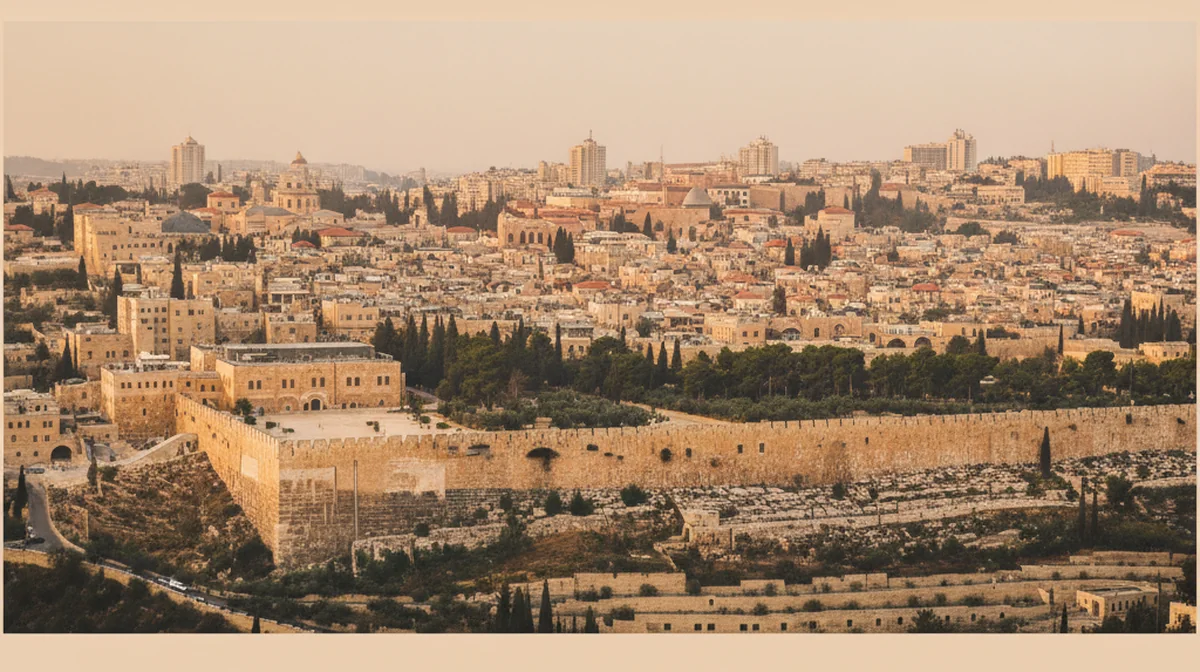
Jerusalem is one of the world's oldest continuously inhabited cities and a heritage-tourism destination without parallel — its stone Old City walls draw visitors from every corner of the globe year-round. Beyond the Old City, the German Colony's restored Templar-era houses now hold Jerusalem's best café strip, Mamilla's open-air promenade runs straight to the Jaffa Gate, and Mahane Yehuda's covered market turns into a lively bar scene after dark. The city's museums, restored stone architecture, and walkable neighborhoods give it a boutique-stay culture distinct from anywhere else in the region.
Jerusalem's STR demand is driven by heritage and cultural tourism, academic visitors tied to the city's universities, and a steady flow of return travelers who come specifically for the Old City and its surrounding neighborhoods. Demand holds fairly steady year-round with spring and fall shoulder seasons drawing the largest volume. Restored stone buildings in the German Colony and Talbiya command the premium tier; Mamilla-adjacent apartments lead on walkability.
Cavmir builds the Jerusalem listing around what guests are already searching for — proximity to the Old City, restored stone architecture, neighborhood character — with careful, accurate photography and copy, and multilingual reach to the heritage and cultural travelers who make up the bulk of Jerusalem's visitor base.
Jerusalem is one of the oldest continuously inhabited cities on earth, and it is a holy city for Judaism, Christianity and Islam at the same time. That single sentence explains almost everything about how short-term rentals behave here. People have travelled to this city for religious reasons for thousands of years, long before anyone called it tourism, and that habit of coming — to pray, to study, to mark a life event, to walk where a faith began — is the deepest and most durable demand any rental market can be built on.
The walled Old City, a UNESCO World Heritage Site, holds the sites that draw much of that travel: the Western Wall, the Church of the Holy Sepulchre, and the Temple Mount, also known as the Haram al-Sharif, with the Dome of the Rock and Al-Aqsa Mosque. Its four quarters — Jewish, Christian, Muslim and Armenian — sit inside walls that are themselves centuries old. Just outside them run the Via Dolorosa, the Mount of Olives, and the newer nineteenth- and twentieth-century neighbourhoods that most guests actually stay in.
Modern Jerusalem is not only a pilgrimage city. It is the seat of Israel's national government, a diplomatic and NGO centre, a university city, and a place of religious study with a large yeshiva and seminary population. It has a serious cultural side too — the Israel Museum and Yad Vashem, the Mahane Yehuda market that has turned from a produce shuk into a night-life destination, the cafés and restaurants of the German Colony along Emek Refaim, the shops of Mamilla by the Old City walls, and the village calm of Ein Kerem on the western edge. For an owner, the takeaway is that Jerusalem carries several distinct kinds of guest at once, and the calendar that fills your unit is a religious one first and a business one second.
Jerusalem prices on the religious calendar, and if you learn to read that calendar you are already ahead of most owners in the city. The great peaks are not random summer weekends — they are the holidays, and their dates are known years in advance. The Jewish holidays of Passover in spring and the autumn cluster of the High Holidays and Sukkot fill the city with observant and diaspora families. Christian Christmas and Easter draw pilgrims to the Old City. Ramadan reshapes the rhythm of the Muslim Quarter and the eastern parts of the city. When any of these lands, demand is deep and price sensitivity drops, because the guest has come for the date rather than for a bargain.
Because those dates are fixed on the Hebrew and liturgical calendars, they move around the Gregorian year — Passover is somewhere in spring, the High Holidays somewhere in early autumn, and Easter and the Orthodox Easter do not always coincide with each other or with Passover. Your job is to sit down once a year with the coming calendar, mark every holiday against real dates, and load those windows at holiday pricing the moment your calendar opens. Owners who leave a Passover week or a Sukkot week sitting at an ordinary nightly rate are giving away the most reliable money the city offers.
Between the peaks, price for who the midweek guest actually is: government and diplomatic visitors, NGO and academic travellers, students and study visitors, and a steady flow of family visits. That is a calmer, more even demand than the holiday spikes, and it rewards a fair rate and a short minimum stay rather than a resort-style three-night rule. Save the longer minimums for the holiday weeks, when the demand will still clear them easily.
Spring and autumn are the pleasant peak seasons in Jerusalem — mild weather laid on top of the biggest holidays, which is why April-May and September-October are the strongest, most crowded stretches of the year. Summer is hot and dry but still busy, carried by diaspora families visiting over the school break and by pilgrims who travel regardless of the heat. Winter is cold, with occasional snow, and is the genuine quiet outside of the Christmas weeks, which stay strong through late December and into early January for the churches that mark Christmas then. November tends to be the quietest month of all: pleasant weather, but sitting in the gap between the autumn holidays and Christmas. Treat the true low weeks as your maintenance and re-shoot season rather than discounting into a market that is simply between holidays.
Israel does not run a US-style municipal short-term-rental permit that you buy off a city website, but that does not mean the activity is unregulated, and a lot of confident advice online skips the parts that matter. There are really three layers to get right in Jerusalem: your building, your business licensing, and your tax.
Start with the building. Your condominium's bylaws and the house committee — the va'ad bayit — can constrain what you do with the unit, and neighbours in a shared residential building have standing to object to a flat that runs like a hotel. Read your building's rules before you commit to a rental thesis, not after a complaint. Beyond the building, Jerusalem, like Tel Aviv, has moved toward treating recurring short-term letting in a residential building as a commercial use, which can pull it into the municipal business-licensing regime and raise questions about zoning, fire safety and permitted use. Where that applies, a business licence — a rishayon esek — and the safety approvals behind it are part of doing this properly.
Then there is tax, and this is where Jerusalem differs sharply from the long-term rental market. Israel does have a favourable residential-rental tax track for ordinary long lets, but the Tax Authority generally treats short-term, hotel-style letting as business income rather than passive residential rent — which means the long-term exemption and reduced-rate options typically do not apply, and income tax, national insurance (Bituach Leumi) and, above the statutory turnover threshold, VAT can all come into play. VAT in Israel rose to 18% in 2025, with a zero-rate treatment that can apply to genuine foreign-tourist accommodation under specific conditions. Separately, municipal property tax — Arnona — is set by each city with no national rate, and Jerusalem is among the cities that have moved to treat short-term rentals as commercial for Arnona purposes, which can mean a higher charge than a residential flat pays.
None of that is settled once and forever. As of 2026 there is active national discussion about a short-term-rental registry and clearer rules, so the posture can change under you. Treat every figure and category here as general information, confirm your building position and licensing with an Israeli lawyer, and confirm your tax classification, VAT status and Arnona treatment with an Israeli accountant before you list.
Lead with the exact location and the walk to what the guest came for. "Jerusalem" tells a pilgrim nothing; "a ten-minute walk to the Western Wall through the Jewish Quarter" or "five minutes to Mahane Yehuda, walkable to the German Colony" tells the right guest they have found the right base. In this city the reason for the trip is usually specific and religious, so name the proximity that matters to that reason — the Old City and the Kotel for one guest, the centre and the shuk for another, Ein Kerem's quiet for a third.
Take Shabbat seriously in your listing, because in Jerusalem it is central in a way it is not in Tel Aviv. From Friday evening to Saturday evening much of the city slows or closes, public transport stops, and observant guests plan around it. If your unit and building can support an observant stay — and many guests here need that — say so plainly and specifically. This is the single most useful, most Jerusalem-specific thing you can get right, and it is covered in detail in the amenities below.
Book the airport logic into the listing. Ben Gurion International, TLV, is roughly fifty minutes away by road and is served by a fast train up to Jerusalem, so tell the guest which option suits them and roughly how long it really takes with their luggage and arrival time. Guests flying in for a holiday often land tired and jet-lagged, and clear arrival directions prevent the most common avoidable bad review.
Photograph and describe for the real guest. A pilgrim or a diaspora family wants to see the number of real beds, a proper kitchen, heating for a cold winter night and air conditioning for a hot summer one, and the honest walk to the sites. A government or NGO visitor wants a desk, quiet and reliable wifi. Show the thing each of your likely guests is actually checking for, rather than a generic set of pretty rooms.
Price the holidays first, then everything else. Passover, the High Holidays and Sukkot, Christmas and Easter are the known dates that owners routinely leave at ordinary rates. Mark them against real calendar dates once a year and load them the day your calendar opens.
The first challenge is Shabbat itself as an operational fact. Check-ins, key handovers, cleaning turnovers and guest communication all have to work around a day when much of the city is closed and observant guests will not use a phone, a car or an electronic lock. If your turnover plan assumes a normal Saturday, it will break here. Build a workflow that respects it — earlier or later handovers, non-electronic access, and cleaners who can work the schedule.
The second is the sensitivity of the place. Jerusalem is a holy city for three faiths and a place people care deeply about, so describe the sites and communities respectfully and by their commonly used names, keep your copy neutral, and let the city speak for itself. Guests choose Jerusalem for reasons that run deep; honest, plain, respectful description serves them and you.
The third is that tourism here is sensitive to the wider regional security situation, which has affected visitor numbers in some recent years. Plan for that as a practical reality rather than a reason to panic: keep your pricing flexible, build a direct relationship with past guests, and lean on the fundamentals that endure through the swings — pilgrimage and religious travel, diaspora and family visits, government, NGO and academic demand, and the domestic Israeli market.
A standard residential policy is unlikely to respond correctly to paying guests coming and going, and in a shared residential building the exposures are specific: liability for a guest in a common area, water damage that travels between units, and theft or damage during a stay. Ask your insurer directly how the policy treats short-term paying guests, whether guest liability is covered inside the unit and in the building's common areas, and how the building's own insurance interacts with yours. Get the answer in writing before your first booking rather than after a claim.
Israel offers a favourable residential-rental tax track for ordinary long lets, but short-term hotel-style letting is generally treated as business income instead, so the long-term exemption and reduced-rate options typically do not apply. Income tax, national insurance (Bituach Leumi) and, above the turnover threshold, VAT at 18% can all come into play, with a zero-rate that may apply to genuine foreign-tourist accommodation under specific conditions. Municipal Arnona is set by each city, and Jerusalem may treat a short-term rental as commercial. Platforms do not settle your Israeli tax for you, and direct bookings are entirely your responsibility. Confirm the current thresholds and your classification with an Israeli accountant — this is general information, not tax advice.
Financing conditions in Israel differ from North American norms, and foreign buyers in particular should take local advice before assuming a mortgage structure they know from home applies here. The Jerusalem-specific point is the same one that governs everything else: a lender or co-investor underwriting projected short-term rental income needs that income to be legally achievable, which depends on your building's bylaws, your licensing position and your tax classification. Settle those questions before the financing question. Talk to a local advisor who has actually closed short-term rental purchases in the city, and treat this as general information rather than financial advice.

Jerusalem's underlying demand is about as structural as demand gets. People have travelled to this city for religious reasons for millennia, and that is not a trend that fades with a season. Pilgrimage and religious tourism, diaspora and family visits, government, diplomatic, NGO and academic travel, the yeshiva and seminary population, and a domestic Israeli market that comes for the holidays are durable segments that do not depend on a single fashion holding. That mix is what makes the fundamentals here resilient even when the headlines are not calm.
The honest caveat is the one worth stating plainly and without commentary: tourism to Jerusalem is sensitive to the regional security situation, and visitor numbers have swung with it in recent years. The right response is not prediction, it is preparation — flexible pricing, a direct-booking relationship you actually own, and a business that can breathe in and out with demand rather than one that needs every month to be a peak.
The regulatory direction to watch is the national one. As of 2026 there is active discussion of a short-term-rental registry and clearer rules for the sector, alongside the way cities like Jerusalem treat these units for licensing and Arnona. The owners who come out ahead over the next few years will be the ones who are already clean — correctly licensed where required, correctly classified for tax, and comfortable in a building that has settled its position — rather than the ones hoping the rules never arrive. On the demand side, the enduring draw of the sites and the study, family and government travel that surrounds them keeps pointing the same way. As supply grows the market splits, as it does everywhere, between well-presented properties with a clear, honest story and a long tail that competes only on price. Presentation, a direct relationship and respectful local positioning are what keep you out of the discount tier.
Jerusalem is a market that rewards care, and that is exactly the kind of market we like. There is no way to fake your way through it. The guest is usually here for something that matters to them deeply, and the listing that respects that — that names the real walk to the Kotel or the Church of the Holy Sepulchre, that tells the truth about the neighbourhood, that treats the holy sites and the communities around them with plain respect — is the one that earns the booking and the good review.
We like that the demand is a calendar you can read a year ahead. When you can see Passover, the High Holidays, Sukkot, Christmas and Easter laid out against real dates, marketing stops being a guess and becomes a matter of showing up early and pricing with confidence. That suits the way we work, and it is a genuine edge over owners who never sit down and map the year.
And we like that Jerusalem hands you a piece of insight most cities never do: Shabbat. Getting the Shabbat-observant details right — and saying so honestly — is the clearest way to speak directly to a large share of the guests who come to this city, and it is the kind of specific, real, useful thing that separates a listing that understands its market from one that just posts photos. Properties here that tell the truth clearly — the exact location, the walk to the sites, the airport logic, the Shabbat details — outperform the ones that reach for grand adjectives, every time. That is a market we are glad to work in.
Jerusalem runs on the religious calendar. The great peaks are the holidays — Passover in spring, the High Holidays and Sukkot in autumn, Christmas and Easter for the churches — and because those dates move each year, the exact shape shifts too. Here is the typical pattern, and what to do with each stretch.
Mild weather sits on top of the biggest holidays, which is why spring around Passover and Easter and autumn around the High Holidays and Sukkot are the strongest, most crowded stretches of the year. Demand is deep and price sensitivity is low. Map these against real dates each year and load them the day your calendar opens — this is where the money is.
Summer is hot and dry but still busy, carried by diaspora families visiting over the school break and by pilgrims who travel regardless of the heat. Air conditioning stops being a nice-to-have and becomes a booking requirement. Hold a fair rate and keep minimums short to catch the family and pilgrim traffic.
Winter is cold, with occasional snow, and November sits in the gap between the autumn holidays and Christmas — often the quietest weeks of the year. December is the exception, strong for the Christmas pilgrimage. Use the true low weeks for reshoots and maintenance, and make sure your heating is honestly shown for the cold nights.
Holiday dates book furthest ahead — Passover, the High Holidays, Sukkot, Christmas and Easter reward being visible early, sometimes many months out. Government, NGO and academic travel books on a shorter, steadier midweek window. Being instantly bookable and easy to reach from the airport matters most for the shorter-window guest.
Pilgrim and family holiday stays skew longer and are weighted to the holiday weeks, and they clear long minimums easily during a peak. Government and study visits run steadier and value a fair midweek rate. A short minimum in the quiet weeks opens up demand a rigid rule would hand to a hotel.
Well-located units win here — an honest walk to the Old City and the Kotel, or to the centre near Mahane Yehuda, Mamilla or the German Colony — in a building that suits the guest who is coming. Family-sized space matters for the holidays. But the real differentiator in Jerusalem is Shabbat-observant features, which speak directly to a large share of guests. Say the exact location, and say what your unit can do for an observant stay, in the first line.
Yes. Cavmir works with short-term rental owners and boutique hotels in Jerusalem and across Israel — property branding, listing optimization, photography direction, direct-booking websites, SEO, and paid campaigns. Properties near Old City of Jerusalem, Mahane Yehuda Market and German Colony are exactly the kind of stays we market.
The market snapshot on this page shows average nightly rates around $175 with occupancy near 62% for Jerusalem. Treat those as directional market averages, not guarantees — the spread between a well-marketed property and a poorly marketed one in the same market is wide.
Jerusalem sees moderate seasonality — clear peaks, but respectable demand through the rest of the year. That shoulder-season demand is exactly where marketing earns its keep, because travelers have more choices and pick the property that looks the part.
Jerusalem sits in the middle of the regulatory spectrum — some registration or permit requirements typically apply. Rules change often in this industry, so confirm the current requirements with local authorities before you list. Cavmir handles the marketing side; we don't provide legal or permitting advice.
Give guests a way to book you without a platform in the middle: a fast direct-booking website, a complete Google Business Profile, and follow-up that brings past guests back. Cavmir builds that stack — see vacation rental SEO — so your repeat Jerusalem guests stop paying platform fees to find you.
It depends on scope. Current plans and one-time project pricing are on the pricing page — most owners start with a listing overhaul or the 12-step system. A conversation about your property costs nothing: contact Cavmir.
Send us the listing and we'll tell you what we'd change. Not a pitch deck — a straight read on your photos, your title, your rates against the Jerusalem comp set, and whether a direct-booking site would pay for itself.
You'll hear back from a person, usually inside one business day. If we don't think we can move your numbers, we'll say so. Cavmir is a short-term rental marketing agency — we position and market properties, we don't manage them.
Demand in Jerusalem peaks around April and October and runs quietest around January through February. Here is how the year actually books — and what to do about each stretch of the calendar.
The two hardest weeks of the year sit in spring and autumn, when the holidays land. Passover and the Christian Holy Week fill the city in spring, and the autumn cluster of the High Holidays and Sukkot fills it again, with pilgrims, families and diaspora visitors all arriving at once. Treat these as premium blocks: set firm pricing well ahead, expect longer minimum stays, and have the listing fully dialed by late winter, because Jerusalem's holiday weeks book far out.
Late spring and summer hold steady on classic tourism and pilgrimage, with warm, dry days and a full calendar of sights. May, June and July keep the Old City and the center busy without the holiday crush, and the Jerusalem Festival of Light gives June a bright, walkable draw. Market walkability to the Old City and the museums, and keep pricing sensible through the summer tourist flow.
January and February are the genuine lull, cool and sometimes rainy, occasionally with a rare dusting of snow. It is the honest window for maintenance, a photography refresh and longer stays from students, researchers and pilgrims who come off-peak. December bucks the trend, lifted by Christmas travel and the Old City's Christian calendar, so price the holiday itself higher than the winter around it.
The holiday blocks book the furthest out, with diaspora and pilgrimage regulars securing Passover, Holy Week and the autumn holidays many months ahead. Summer tourism fills through the spring, and long-stay academic bookings are often arranged well in advance. Set the holiday weeks early and firm, and keep summer and shoulder pricing responsive.
The holiday weeks run on longer family and pilgrimage stays, while the rest of the year mixes two-to-four-night tourist trips with a real long-stay layer of students, researchers and faith travelers. That academic and pilgrimage base gives Jerusalem a steadier off-peak floor than most tourist cities, which rewards hosts who market beyond the holiday rush.
The listing that wins is a characterful, well-kept flat within walking distance of the Old City or a major holy site, ideally in Jerusalem stone with a balcony or terrace that catches the famous light. Space matters here, because holiday and pilgrimage groups travel large and gather for meals. A quiet, kosher-friendly kitchen and a calm setting for early starts and Shabbat close the deal for the core guest.
Lead with walkable proximity to the Old City and the holy sites, because that is the fact that drives the city's demand, and let photography sell the stone, the light and the calm. Price the holidays deliberately: Passover, Holy Week and the autumn cluster book far ahead and behave nothing like ordinary weeks, and the dates move each year. Add a Google Business Profile for map searches and a direct-booking site for the diaspora families and pilgrimage groups who return, with listing copy that speaks to faith travelers and history tourists alike. That is the marketing layer Cavmir builds for Jerusalem hosts, and this city's repeat pilgrimage pattern makes it compound.
Spring and autumn deliver the highest demand, driven by Passover and Christian Holy Week in spring and the High Holidays and Sukkot in autumn. Summer stays busy on general tourism and pilgrimage, December lifts around Christmas, and January and February are the quiet, cooler stretch.
The holiday blocks book the furthest out, with diaspora and pilgrimage regulars securing Passover, Holy Week and the autumn holidays many months ahead. Summer tourism fills through the spring, and long-stay academic bookings are arranged well in advance. Lock the holiday weeks early, then stay responsive through the shoulders.
Domestic weekend travel comes from Tel Aviv and the surrounding towns, but the city's real volume is fly-in through Ben Gurion airport. The diaspora and pilgrimage hubs of New York, London, Paris and Los Angeles lead, especially around the spring and autumn holidays.
Walkable proximity to the Old City and the holy sites is the single most important feature, followed by an equipped kitchen for the large holiday and pilgrimage groups that gather for meals. Air conditioning, fast wifi and a quiet setting for early starts and Shabbat round out what the core guest looks for.
Talk to Cavmir today. We'll show you exactly what your Jerusalem property is leaving on the table — and how fast we can change that.
Book a Free Strategy Call