$115
Avg. Nightly Rate
72%
Avg. Occupancy Rate
$2,480
Avg. Monthly Revenue
12–18%
Est. Cash-on-Cash ROI
MEDIUM
Seasonality
MEDIUM
Regulatory Burden

* Market averages. Cavmir-managed properties typically exceed these figures by 25–45%. Data sourced from AirDNA, STR market reports, and Cavmir internal analytics.

The Market

Why Bali is One of the World's Premier STR Markets

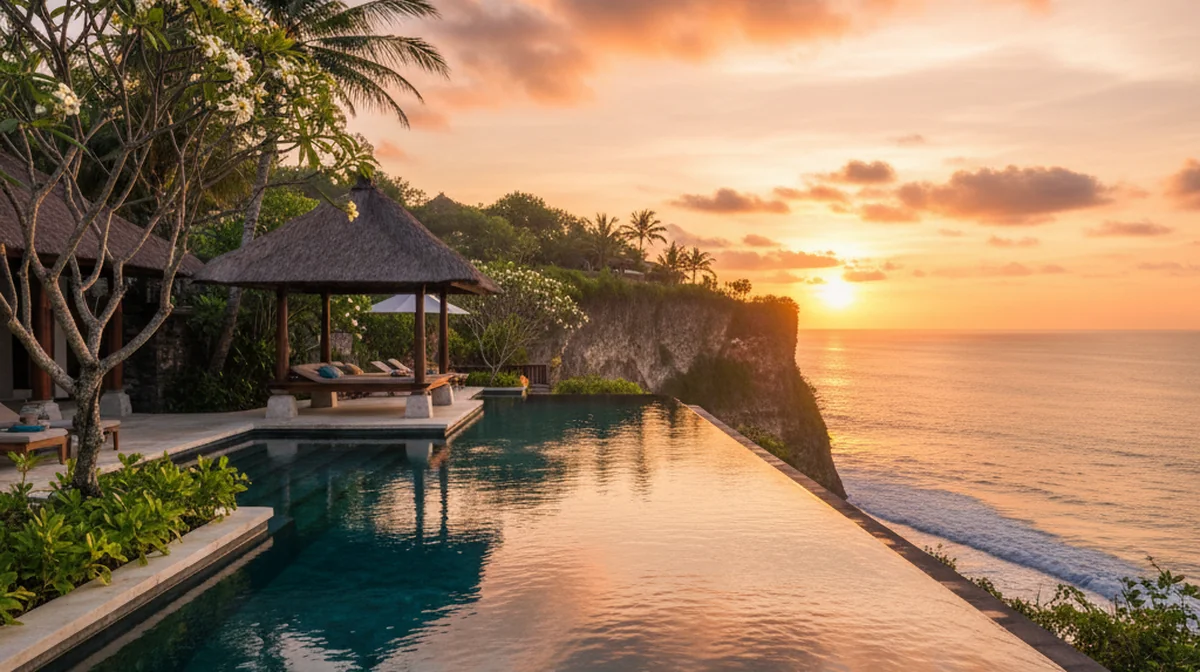
Bali is Southeast Asia's most established international STR market — and one of the highest-ROI vacation rental destinations in the world when marketing is done well. Seminyak's beach clubs and fashion, Canggu's surf-and-coworking culture, Ubud's rice-terrace wellness scene, and Uluwatu's clifftop luxury each attract distinct guest segments. Bali's combination of low cost basis, strong nightly rates, and high occupancy produces cash-on-cash returns most American markets can't match.

Bali's STR market is driven by a mix of digital nomads (Canggu), wellness travelers (Ubud), luxury couples (Uluwatu), and family vacations (Seminyak, Nusa Dua). Bali operates under Indonesia's Pondok Wisata and villa classification licensing systems — villas need to be zoned correctly and registered with local banjar and regency authorities. Australian, European, and American visitors account for the largest share of premium-rate bookings.

Top Attractions & Landmarks

  • Seminyak Beach
  • Canggu
  • Ubud Rice Terraces
  • Uluwatu Temple
  • Mount Batur
  • Nusa Dua
  • Tegalalang
  • Monkey Forest

Nearby Markets: Cape Town  |  Dubai

Airbnb marketing services in Bali, Indonesia, Asia
Why Cavmir

The Cavmir Advantage
in Bali

Cavmir positions Bali villas for the international traveler who specifically chose Bali over Thailand, Vietnam, or the Maldives. We market in English, Bahasa Indonesia, and Mandarin, build direct-booking websites that reduce platform fee exposure, and pair editorial photography with the wellness, surf, or nightlife narrative that matches your specific property's location and design.

State of the Industry · History

The Bali STR Market — Past & Present

Bali's visitor economy is older than most people assume. Dutch colonial administrators were already steering European tourists to the island in the 1920s, and the Bali Hotel opened in Denpasar in 1928. A wave of artists — Walter Spies in Ubud, Rudolf Bonnet, Miguel Covarrubias — built a mythology around the island in the 1930s that shaped how the West has read Bali ever since. Kuta became a surf-tourism outpost in the late 1960s and 70s, Ubud reopened to cultural travelers, and Seminyak gentrified through the 1990s into the beach-club-and-boutique strip it is today.

The villa-rental market predates Airbnb by a long stretch. Private villa rentals through concierge agents were already a staple of the Australian and European holiday market by the early 2000s. Platform-era Bali arrived around 2012 and accelerated after 2015, when the digital-nomad wave discovered Canggu. What's different about Bali compared to most Asian STR markets is how bifurcated the inventory is — the international long-stay nomad on a six-week booking and the Australian family on a two-week holiday want almost entirely different products, and most villas end up marketed to whichever one their owner understands better.

Pricing Strategy & Seasonality

Pricing, Seasonality & When to Capture ROI

Pricing Strategy

Bali pricing splits hard by zone. A three-bedroom private-pool villa in Seminyak or Canggu clears $250–$550 per night in peak dry season; the same villa in Uluwatu with a cliff view can push $450–$900. Ubud wellness villas hold $200–$450 year-round because they're not weather-dependent. Nusa Dua operates on a resort logic — individual villas compete with five-star hotels on amenity parity. Amed, Lovina, and the north coast sit in the $80–$200 range and book mostly shoulder-stay couples and diving travelers.

The pricing mistake most new Bali owners make is flat-rating across the year and ignoring the length-of-stay curve. Bali's nomad segment books 28+ nights and expects a monthly discount of 25–40% off nightly rate; that's not a concession, it's the market. Event-based pricing still matters — Australian school holidays (June/July, September, December), Chinese New Year, Indian wedding season — but the bigger win is configuring weekly and monthly rates that capture long-stay yield without cannibalising peak nightly.

Seasonality & ROI Windows

Dry season (May through September) is the primary peak, with a second peak in December and early January. The monsoon months — November through March, excluding the December holiday window — soften rates but sustain 55–70% occupancy on well-marketed villas because the rain comes in short afternoon bursts, not all-day washouts. The genuine quiet stretch is late January through late February. That's the window where direct-booking loyalty and long-stay nomad marketing do the real work.

Regulation & Licensing · 2026

What the Law Requires in Bali

Bali STR rules live across several layers and a lot of owners misread them. The two licenses that matter are the Pondok Wisata, a small-accommodation license for properties of up to five rooms with expected owner or family involvement, and the TDUP (Tanda Daftar Usaha Pariwisata), the tourism-business registration required for larger villa operations classified under Indonesia's villa-star system (three, four, or five-star tiers). Operating a full commercial villa on a Pondok Wisata is a common shortcut and a common enforcement target.

Zoning sits on top of licensing. Bali's 2011 spatial plan designates green zones (agricultural and sacred temple land, not tourism-developable), yellow zones (residential with conditional tourism use), and red zones (full tourism development). Most of the coastal strip and central Ubud sits in red or yellow. The enforcement wave that began in 2023 against green-zone villas has reshaped several submarkets — assume zoning gets checked before you buy, not after you list.

Foreign ownership is the other structural question. Foreigners cannot directly hold Indonesian freehold (Hak Milik) land. The legitimate routes are long-term leasehold (Hak Sewa), typically 25–80 years, or ownership through a PMA — a foreign-owned Indonesian company — which can hold Hak Pakai right-to-use title. Nominee arrangements, where a local name holds the land on a foreigner's behalf, remain legally fragile and are not a path we'd point clients toward. Ask your lawyer and accountant before you sign anything.

Market-Specific Tips & Challenges

Local Tips & Unique Market Challenges

Tips That Actually Move Revenue in Bali

The Bali-specific tip most new owners miss: get the banjar on your side early. Every village has its customary council, and a villa that contributes to the village — ceremony offerings, a fair neighbour-relations posture, a local staff roster — runs smoother than a villa that treats the community as a backdrop. The banjar letter is paperwork; the banjar relationship is operations.

Second — build Nyepi into your guest communications, not as a disclaimer buried at checkout. Balinese New Year shuts the entire island for 24 hours once a year (usually March) — airport closed, lights off, no movement outside the villa. Guests who know in advance experience it as a highlight; guests who learn at check-in experience it as a complaint letter. Third — market to Australia as the core, then add layers. Australians are the #1 inbound market and the single most loyal repeat-guest segment. A booking system that speaks Australian school-holiday calendars and handles AUD expectations fluently is worth more than a generic global strategy.

Unique Bali Challenges

Bali's signature challenges: zoning enforcement volatility, infrastructure strain (traffic in Canggu and Seminyak is genuinely difficult), natural-disaster exposure (Mount Agung remains active, and the island sits on a seismic and tsunami risk belt), and currency-FX friction for foreign owners repatriating revenue. Staff recruitment and retention became a real constraint post-2022 as demand recovered faster than the local hospitality workforce.

A Curious Bali Fact
On Nyepi — Balinese New Year — the entire island observes complete silence for 24 hours. Denpasar airport shuts, no flights in or out, no lights after dark, no outdoor activity. It's the only airport in the world that closes annually for a religious observance, and it's a quietly spectacular night for anyone staying in a villa with a view.
Finance Essentials — Bali
🛡️

Insurance

Indonesian STR insurance is less mature than Western equivalents. Cover earthquake, volcanic activity, tsunami, flooding, and standard property perils. International carriers writing through Jakarta brokers (AIG Indonesia, Chubb, Allianz) are the common path. Budget roughly $1,500–$6,000 per year for a mid-tier villa, higher for cliffside or beachfront. Liability cover for guest injury is worth the line item.

🧾

Property & Income Tax

Indonesia applies a 10% VAT/PB1 lodging tax, collected from guests. Village (banjar) contributions are customary and modest. Property tax (PBB) varies by zone and assessed value. PMA-held villas are subject to corporate income tax; individual-leasehold structures have different treatment. Ask your accountant about your specific structure.

🏦

Mortgages & Financing

Conventional mortgages for foreign buyers are limited in Indonesia. Most Bali acquisitions are cash, seller-financed, or funded through home-country refinancing. A handful of Jakarta-based lenders write PMA-structured loans at 60–65% LTV with local-rate premiums. Ask your lawyer about structuring before you assume any financing path works.

Future Outlook · 2027 & Beyond

Where Bali is Headed Next

Looking past 2026, Bali's regulatory direction is formalisation, not liberalisation. Expect stricter green-zone enforcement, more consistent Pondok Wisata vs TDUP classification, and growing pressure on villas that skirt zoning through creative paperwork. The provincial government has signalled interest in a tourism-quality standard that could effectively tier the villa market more formally by 2028.

Demand fundamentals stay strong. The digital-nomad KITAS and B211a visa pathways continue to draw long-stay professionals, wellness tourism compounds in Ubud, and Australian and European repeat-visit rates are among the highest in Asia. Supply is tightening where it matters — true beachfront and true cliff-view inventory is effectively capped — so the owners who win past 2027 are the ones with defensible location, compliant paperwork, a strong brand, and direct-booking relationships that reduce platform-fee exposure.

From the Desk of Sofie Sinag

Why We Love Marketing in Bali

Bali is a marketing puzzle because it's not one island — it's five or six places pretending to share a name. Canggu at 7am is a surf break with a line of espresso bars behind it; Ubud at 7am is a rice terrace with mist sitting three feet above the water and a gamelan rehearsing in the next compound. Uluwatu is cliff drama and end-of-the-world sunsets. Seminyak is fashion. Sanur is quietly retired. Amed is divers and black sand. The villa listings that fail in Bali are the ones that pretend all of that is interchangeable — "tropical paradise, infinity pool, close to beach." That framing could be anywhere from Phuket to Tulum.

What we love about marketing in Bali is how specific the guest actually is when they book. The Australian family wants a safe, walkable Seminyak compound with a pool the kids can swim before breakfast. The European honeymooner wants a cliffside Uluwatu villa with a day-bed that frames the Indian Ocean. The nomad wants a Canggu villa with 200Mbps fibre and a co-working cafe within scooter range. Those are three different brands, three different shot lists, three different rate ladders. The villas that win in Bali are the ones that pick one of those guests and build everything — photography, copy, welcome book, revenue calendar — around them. Specificity wins. Generic "Bali paradise" branding loses.

Cavmir's Bali Cheat Sheet

The Picks We Recommend for Your Welcome Book

The picks we recommend our Bali clients include in their welcome book — the details that make a guest feel oriented instead of overwhelmed.

Morning

Balinese coffee at Seniman in Ubud or Crate in Canggu

A single-origin Kintamani-grown coffee is Bali's unsung export. Seniman in Ubud is where the coffee community started; Crate in Canggu is where the nomad crowd still gathers. Either one sets the day's tone.

Golden Hour

Uluwatu cliffs at sunset — Single Fin or Karma Beach

West-facing cliff drama that photographs itself. Single Fin on a Sunday is an institution; Karma Beach is the lower-key version. Every Bali welcome book should flag at least one Uluwatu sunset.

Neighborhood Walk

Ubud's Campuhan Ridge at sunrise

A paved 45-minute ridge walk between two river valleys. No traffic, no scooters, rice terraces on both sides. It reads like a meditation and photographs like a travel editorial.

Dinner That Photographs

Locavore NXT in Ubud or La Brisa in Canggu

Locavore's tasting-menu reinvention is Indonesia's most-awarded restaurant. La Brisa is the sunset beach-club dinner that Canggu guests have already seen on their feed and want to recreate.

Local Obsession

Babi guling at Warung Ibu Oka, Ubud

Balinese suckling pig. Cash only, service from late morning until they run out, usually by 3pm. The kind of detail that turns a villa stay into a travel story guests tell back home.

Cultural Must

A Kecak fire dance at Uluwatu Temple

Sunset performance with the temple and ocean behind the dancers. It's unmistakably Balinese Hindu, unmistakably theatrical, and unmistakably the shot most guests come to Bali for without realising it.

Shoulder Season Secret

Nusa Penida day trip in monsoon season

Kelingking Beach and the surrounding cliffs photograph better on overcast days than in harsh dry-season sun. A shoulder-month guest with a good boat captain gets the shot without the crowds.

What Guests Ask For

Scooter rental versus private driver etiquette

Scooters are cheap but the accident rate for inexperienced riders is serious. A host who pre-books a trusted private driver for the arrival day — and who explains when to scooter and when not to — saves guests from a bad decision and earns a five-star review.

Local Work · Composite Case Vignettes

What Cavmir Has Done for Bali Properties

A few representative engagements — villa types Cavmir has worked with in Bali, with identifying details removed. Figures are composites drawn from our internal analytics and cross-referenced against AirDNA and regional villa-market ranges.

4BR Cliffside Villa · Uluwatu
The Brief

Stunning ocean-view villa in the Bingin-Uluwatu corridor booking at $420 ADR when comparable cliffside inventory was clearing $700-plus. Original photography was mid-day harsh light, no drone coverage, no framing of the cliff drop. Listing copy described the pool but not the view.

What We Did

We rebuilt the villa around its single defining asset — the cliff. Golden-hour architectural photography, drone coverage that established the villa's relationship to the Indian Ocean, a short-form video showing the sunset progression from the main terrace. Copy was rewritten around the honeymoon and small-group luxury traveller archetype. We built a direct-booking site with a seven-night peak-season rate ladder and ran paid campaigns targeting Australian and European luxury-travel interest audiences.

The Result

ADR moved from $420 to $780 across two quarters. Peak-season calendar now books 10–14 weeks out. Direct-booking share reached 24% of revenue, softening platform-fee exposure and giving the owner repeat-guest relationships that compound year over year.

3BR Nomad Villa · Canggu
The Brief

Well-built Canggu villa underperforming against the neighbourhood — 61% occupancy against a Canggu nomad-segment average closer to 78%. Marketed as a short-stay holiday rental in a market that had moved decisively toward the 28-plus-night nomad booking.

What We Did

Cavmir repositioned the villa as a monthly-stay nomad residence. Photography emphasised the workspace, fibre speed test, coffee setup, and the walkability to Canggu's co-working scene. Copy was rewritten for the remote-worker and creative-industry audience. We built a tiered rate ladder with transparent monthly discounts and distributed through nomad-specific channels (NomadList partners, remote-work newsletters, a small Instagram paid campaign targeted at the nomad-interest cluster).

The Result

Occupancy moved from 61% to 84% within two quarters. Average stay length shifted from 4.8 nights to 26 nights, cutting turnover cleaning costs by roughly 70%. Blended ADR dropped slightly by design, but net revenue per available night climbed materially because of occupancy and operational savings.

5BR Family Compound · Seminyak
The Brief

Beautiful Seminyak compound leaking bookings to newer Canggu competition. Photography read as generic tropical. Copy made no distinction between this villa and the dozen similar listings within a five-minute walk. Australian school-holiday weeks were under-priced and filling three months out instead of six.

What We Did

We rebuilt the editorial around the family-holiday-in-Seminyak identity specifically — walk-to-Seminyak-Square orientation, kid-safe pool configuration, Balinese-staffed breakfast service, a welcome book framed around Bali with children (safe beaches, which day-trips travel well, where to go in the afternoon rain). We pitched two Australian family-travel publications and landed coverage in one. A small influencer placement with an Australian family-travel creator drove a booking surge for the following July holiday window.

The Result

ADR climbed 31%. Australian school-holiday weeks now book six-plus months in advance at premium rates. Repeat-guest share from Australia reached 19% — which for a villa that had effectively zero repeat bookings 12 months earlier is the most durable compounding asset in the strategy.

Ready to Grow in Bali?

Let's Put Your Bali
Property on the Map

Talk to Cavmir today. We'll show you exactly what your Bali property is leaving on the table — and how fast we can change that.

Book a Free Strategy Call