
Morning
Coffee at Truth or breakfast at The Test Kitchen Fledgelings
Truth in Cape Town's oldest coffee-roastery tradition; Fledgelings for the Luke-Dale-Roberts-affiliated breakfast that's less famous than the parent restaurant.

Expert short-term rental marketing to grow your bookings and nightly rate in Cape Town, South Africa, Africa.
Sixteen services, one team. Everything below is built in-house and scoped to your property and market. Most owners start with the 12-Step System.
Every engagement is quoted to your portfolio. These are the ready-made scopes owners pick most — our Fall Special (55% off list or more) is already applied to the website, King Broker, Hotels and à la carte scopes. A clear proposal within 48 hours.
The work is public. Selected engagements and what changed — and reviews from the owners and managers behind them.
* Market averages from AirDNA and STR market reports. A single home's numbers depend on its size, its location and how it is marketed.
Cavmir is an Airbnb marketing agency. We build the brand, the direct-booking website and the marketing for short-term rentals in Cape Town.
Cape Town is widely regarded as one of the world's most beautiful cities — a place where Table Mountain frames an urban landscape of extraordinary diversity. The Atlantic Seaboard's Camps Bay and Clifton beaches rival the Mediterranean at a fraction of the cost; the V&A Waterfront is a world-class food and retail destination; the Cape Winelands of Stellenbosch and Franschhoek are among the finest wine regions on earth. Cape Town's combination of natural drama, cultural richness, and relative value make it one of Africa's most compelling travel destinations.
Cape Town's STR market peaks in the Southern Hemisphere summer (December–February), when the Atlantic Seaboard comes alive with international visitors. The Atlantic Seaboard — Camps Bay, Clifton, Bantry Bay — commands the highest rates. The Cape Winelands attract a growing wine tourism segment year-round.
Nearby Markets: Mauritius | Seychelles | Nairobi
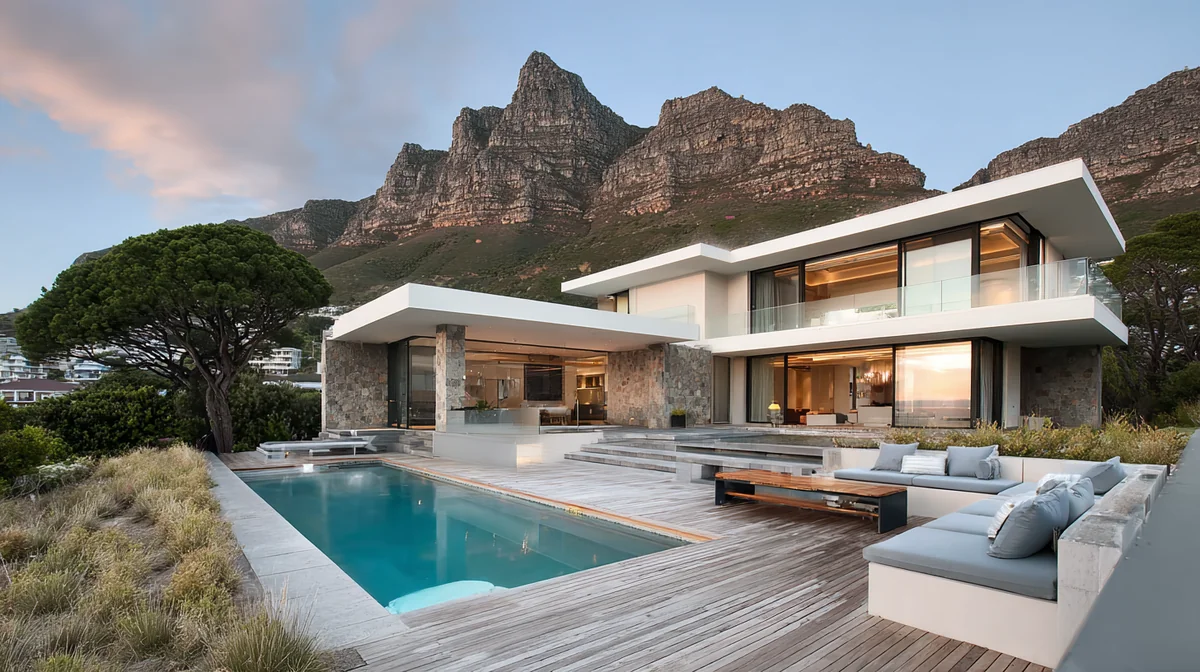
Cavmir's cinematic photography approach — capturing the drama of Table Mountain, the turquoise Atlantic, and Cape Town's extraordinary light — creates listings that stand out globally, not just locally. We build a Cape Town brand that reaches the European, American, and Middle Eastern traveler who is ready to discover Africa's finest city.
Cape Town is among Africa's oldest European-influenced cities — the Dutch East India Company established the Cape Colony in 1652 as a ship-provisioning station between Europe and Asia, and the city's earliest architecture (Castle of Good Hope, 1666) predates most of urban North America. The Bo-Kaap's color-painted Malay Quarter, the winelands of Stellenbosch and Franschhoek established by French Huguenot refugees in the 1680s, and Table Mountain's dominating presence have made Cape Town a tourism destination for 300+ years. Contemporary Cape Town emerged from its post-apartheid 1990s transformation as a global travel destination, with tourism becoming one of the Western Cape's largest economic drivers.
The Cape Town STR market has grown strongly through the 2010s–2020s, driven by remote-work migration (the 'Zoomtown' effect), the country's exceptional Rand-to-USD exchange-rate dynamics making Cape Town luxury accessible to international guests, and the city's genuinely world-class offerings (Atlantic Seaboard beaches, Cape Winelands, V&A Waterfront, Cape Point, and Table Mountain National Park). South African regulatory culture has remained notably permissive compared to most Western markets — Cape Town does not currently have restrictive STR-specific regulations, though municipal discussion continues.
Cape Town pricing is concentrated in the Atlantic Seaboard (Camps Bay, Clifton, Bantry Bay, Sea Point). Clifton's four beaches and their cliff-perched villa communities command the market premium — oceanfront Clifton can clear ZAR 15,000–45,000/night (roughly USD $800–$2,400) for the highest-tier properties. Camps Bay anchors the luxury family market. The V&A Waterfront commands corporate and shopping-tourism premium. City Bowl (Gardens, Oranjezicht, Tamboerskloof) offers urban character at relative value. The Winelands (Stellenbosch, Franschhoek) trade as wine-tourism-specific premium. Southern Suburbs (Constantia) serve a quieter affluent segment.
High seasonality tied to Southern Hemisphere seasons. Peak: mid-December through late February (Southern Hemisphere summer, Christmas, New Year). Super-peak: December 26–January 7. Strong secondary: March–April and October–November shoulders (excellent weather, fewer crowds). Weakest: June–August (winter, rainy season — though whale watching and winelands still draw visitors). The missed revenue window is the shoulder months (March, April, October, November) when weather remains excellent but most operators have dropped to post-peak pricing.
South Africa does not currently have a national or municipal short-term rental licensing regime comparable to heavily regulated European or North American markets. Cape Town is debating expanded STR regulation but as of 2026 has not implemented a formal permit system. Standard business registration (CIPC registration for companies), SARS tax registration, VAT (if above threshold), and compliance with municipal by-laws (noise, waste, occupancy) apply. This makes Cape Town one of the more investor-friendly STR regulatory environments globally.
HOA and sectional-title body-corporate rules are the most common practical restriction. Many Atlantic Seaboard buildings have adopted rules limiting short-term letting; older free-standing villas face fewer restrictions. Residency-and-work-related visa considerations apply to foreign owners managing properties on-site. 2026 discussions include registration-scheme proposals, tourism-levy expansion, and potential city-level licensing — worth monitoring for changes.
Cape Town's most valuable tip: market in USD/EUR/GBP and emphasize the exchange-rate value. European and North American guests booking Cape Town are specifically making a value comparison — USD $500/night buys a genuinely luxury villa experience that would cost $2,000–$3,000 in Mediterranean or Caribbean equivalents. Listings that communicate this value clearly (without discounting) convert exceptionally well.
Second — invest in cinematography. Cape Town's landscape — Table Mountain, the Atlantic, Clifton beaches, vineyard vistas — is among the most photogenic on earth. Drone footage and golden-hour video convert at materially higher rates than static photography. Third — safety perception management is essential. International guests book Cape Town with security concerns; clear communication about driver services, trusted taxi apps, neighborhood context, and property security features (gates, alarms, private guard services) materially affects conversion and review scores. Fourth — winelands day-trip packaging is a revenue opportunity — partnerships with specific estates, pre-arranged transport, and curated itineraries differentiate listings.
Cape Town's challenges: security perception (occasional incidents affect broad market sentiment), load-shedding (rolling power cuts — though dramatically improved 2024–2026), water scarcity (the 2018 'Day Zero' drought remains a cautionary reference), and infrastructure variability across neighborhoods. Political and policy uncertainty occasionally affects visitor sentiment. Seasonal concentration (Dec–Feb) requires strong revenue management through the quieter months.
South African property insurance (Sanlam, Santam, OUTsurance, Hollard) with short-term letting endorsement. Specialty products available. Security features (alarm, response, armed response agreement) affect premium significantly. Budget ZAR 15,000–ZAR 60,000 annually depending on property value and coverage. USD-denominated liability policies available for international owners seeking protection against rand volatility.
South African income tax on rental income — progressive 18–45%. Non-resident sellers face a 7.5% withholding on property sales above R2 million. VAT 15% applies above threshold. Capital gains tax on disposal. The 1% TOMSA tourism levy is voluntary. Property rates (municipal tax) vary by municipality, Cape Town moderate. No wealth tax.
South African mortgages for non-residents typically limited to 50–65% LTV. Major banks (Standard Bank, Absa, FNB, Nedbank) have non-resident programs. Rates tied to prime + margin. International currency-hedged financing complicates underwriting. Many foreign buyers use cash or international financing arrangements.
Cape Town Tourism's 2025 Economic Value of Tourism report counted 1.44 million foreign overnight visitors, and the average one stayed 9.5 nights and spent about R1,390 a day. A trip that long gets researched for weeks, across a dozen browser tabs, by people who've never stood on the Atlantic Seaboard. Your Airbnb listing covers the basics. Your own direct-booking website has to cover everything else: the guest's language, a rand price they can trust, the disclosures South African law asks for, and pages that feed AI search as well as Google.
The arrival figures decide your languages. The same report ranks the United Kingdom first with 210,932 arrivals, then the United States at 167,053, Germany at 161,271, the Netherlands at 70,818, France at 68,348 and Australia at 51,971. Three of those six read English, so English is the base site, written for a British reader first (flat, holiday, self-catering, motorway) because the UK sends the most people. Germany, the Netherlands and France justify full German, Dutch and French versions of your key pages, each on its own URL with hreflang tags linking the versions, which is basic SEO and far better than a translate widget that search engines can't index and guests don't trust. Quote the booking price in rand, since that's what you'll charge, and show an indicative figure in pounds, US dollars and euros beside it so a guest in Leeds or Utrecht doesn't reach for a converter. Keep the home market in view too: there were 1.42 million domestic overnight trips into the city in 2025, and a family driving down from Johannesburg wants a rand total, a card or EFT option and a clear answer on secure parking for two cars.
Cape Town has no short-term rental licence or registration number to print on your adverts, which surprises owners arriving from Europe. The rules that bite are e-commerce and consumer law. Section 43 of the Electronic Communications and Transactions Act lists what a site selling online must display: your full name and legal status, a physical address and phone number, an email address, a company registration number if you trade through a company, a description of the stay, the full price including taxes and fees, how payment works, your refund policy, and your security and privacy policies. Leave those out and the guest may cancel within 14 days of receiving the service. The Act's seven-day cooling-off right in section 44 doesn't cover accommodation, because section 42(2) carves it out, but the Consumer Protection Act still lets any guest cancel an advance booking under section 17. You may take a reasonable deposit and charge a reasonable cancellation fee, judged on the notice you got and your chance to re-let the dates, and you can't charge one at all when the cancellation follows the death or hospitalisation of the guest the booking was for. So publish a tiered cancellation scale on the booking page. If you're VAT-registered (compulsory once taxable supplies pass R2.3 million a year, up from R1 million since 1 April 2026), the rand total includes it. The TOMSA tourism levy of 1% is voluntary; if you opt in, show it as its own line before payment. The cookie banner answers to POPIA, the Protection of Personal Information Act, enforced by the Information Regulator, whose guidance on direct marketing counts cookies as electronic marketing: hold ad and remarketing tags until the guest consents, and leave any newsletter box under section 69 unticked. You'll also register an Information Officer with the Regulator. Have a South African attorney check the final wording.
Guests search this city by area name, so build the site that way: one page each for the pockets your guests reach on foot or by a short drive, such as Sea Point and its promenade, Bantry Bay, Clifton's beaches, Camps Bay, De Waterkant, Gardens and Tamboerskloof in the City Bowl, and Constantia's wine farms. Add a getting-here page from Cape Town International, which handled a record 11.1 million two-way passengers in 2025, 3.3 million of them international, with the drive to your door at different times of day, where e-hailing drivers pick up, and how the gate or key safe works on arrival. Then answer what Cape Town guests check before they pay: what keeps running in a power outage (inverter, battery, which plugs, whether the wifi stays up), where the pool deck sits out of the summer south-easter, whether parking is off-street and behind a gate, how the house saves water, and the walking minutes to the nearest beach, the promenade or the MyCiTi bus stop. Shoot the view from the room it's actually seen from, name the peak in the caption (Lion's Head, Table Mountain, the Twelve Apostles), and photograph the west-facing coast at sunset, the hour guests picture themselves on the terrace.
Your biggest feeder market already plans with chatbots. MMGY Travel Intelligence's 2026 Portrait of European Travellers found that 52% of British travellers now use AI tools to help plan trips, up from 40% in 2025, and that ChatGPT is the most used platform among them at 35%. With the UK sending Cape Town more visitors than any other country, a fair share of your next bookings will begin as a typed question to an assistant. Being the rental that the answer names is the work of GEO (generative engine optimization): making your pages easy for answer engines to find, quote and cross-check against other sources.
Travellers describe the trip to an assistant instead of typing keywords. A London couple asks whether Sea Point or De Waterkant suits a first visit in February if they want to walk to dinner. A family from Ohio wants a house in Camps Bay with a pool, off-street parking and backup power for two weeks over New Year. A runner asks where to stay for Two Oceans week with an easy morning to the start. A Munich traveller types in German, Ferienhaus in Kapstadt mit Pool und Meerblick, nicht weit vom Strand; a Dutch family asks for a vakantiehuis bij Kaapstad dicht bij de wijnlanden; a Parisian wants a location de vacances au Cap près de la plage. The assistant folds the area, the event, the logistics and the amenities into one answer, and it can only name your home if your pages state those same things clearly, in the languages the questions arrive in.
Write each fact as a short, complete sentence an assistant can lift without rewording, and use the same words on the site, Airbnb, Booking.com and Vrbo. Lead each house page with a line such as “a three-bedroom house in Bantry Bay that sleeps six, an eight-minute walk from the Sea Point Promenade”, then state what a Cape Town guest checks: the inverter or battery and what it powers, whether the rand price includes VAT and the TOMSA levy, the cancellation tiers in days before arrival, the check-in method, the parking (off-street, gated, how many cars) and your business name, plus your company registration number if you trade through one. With no city licence number to anchor you, that registered name is what ties your listings and your site together as one operator in an assistant's eyes. Mark the pages up with VacationRental or LodgingBusiness and FAQPage schema, in plain HTML that crawlers can read, and that's most of the technical side. The rest is consistency: an assistant that finds three bedrooms on Airbnb and four on your site has reason to trust neither.
Answer engines lean on sources that already describe the city. The official one is Cape Town Tourism, the destination marketing organisation for the City of Cape Town, whose 2026 Visitors' Guide, launched on 20 May 2026, is built around its My Cape Town series of locals' tips; Wesgro covers the wider Western Cape and South African Tourism the country. Below them sit the Cape Argus, the Cape Times, the Afrikaans daily Die Burger, News24, Daily Maverick, Getaway and Time Out Cape Town, with Tourism Update for anything aimed at travel agents. Digital PR gives those desks a reason to mention you: a useful local angle, such as where marathon runners can stay within an easy walk of the start or what a winter month costs a remote worker, pitched to the right editor. For the feeder markets, the travel pages of British, German and Dutch newspapers are the outlets worth a story. Cavmir's July 2026 study of 550 Google AI answers across 15 U.S. markets found independent and regional operators took 82% of the citations, while Airbnb or Vrbo appeared in 17% of answers. It's a U.S. reading, so take it only as a sign that small operators can be named, and test Cape Town answers yourself.
Content marketing for a Cape Town rental means writing the pages a guest needs while they're choosing dates, and the city's calendar hands you the subjects. The biggest change is the Sanlam Cape Town Marathon: after the 24 May 2026 race it was confirmed as the eighth Abbott World Marathon Major and the first on the African continent, and the next edition is set for 23 May 2027. That brings an international running crowd into late May, a month most owners write off as the start of winter. Below is the order to publish in, starting this month, so each page is indexed and cited before its guests start searching.
First, the Investec Cape Town Art Fair, whose 14th edition runs 19–21 February 2027 at the Cape Town International Convention Centre: a page for collectors and gallery-goers with the walk or drive from your door to the CTICC and the galleries near it. Second, the Cape Town Cycle Tour on Sunday 14 March 2027, a 109 km loop of the peninsula: cover secure bike storage, early breakfasts, how guests get around on race day and a late check-out on the Sunday. Third, Two Oceans Marathon event week, 31 March to 4 April 2027, with the half marathon on Saturday 3 April and the ultra on Sunday 4 April, each with capacity rising to 21,000 runners. Fourth, the marathon page for 23 May 2027, written in English and German for your two largest language groups. Each event page should carry the date, the distance, the start area, the travel time from the house and what the house offers that weekend, so an assistant can lift the answer whole.
Alongside the events, publish the evergreen pages that answer where and how. The getting-here page from Cape Town International comes first, because every booking needs it. Then an area guide for your own neighbourhood that names the beach, the promenade, the coffee and the closest supermarket in walking minutes, and a Winelands page with the drive to Stellenbosch and Franschhoek, how to book tastings and when to hire a driver. Add a power and water page that explains the backup setup and the water-saving fixtures in calm, factual terms; guests ask about both, and a clear answer reassures them more than silence does. Then a winter long-stay page for June to August with the monthly rate, the workspace, the heating and the internet speed. Finally, translate the getting-here, area and long-stay pages into German, Dutch and French, in that order of arrivals.
Open every page with a short answer (the date, the place, the time from your door), then give the detail: a brief FAQ in the words guests use, a photo taken on the route, and the date the page was last checked. Keep event pages live all year and update them when organisers confirm the next edition, so the Two Oceans page you write now carries next year's dates without losing its history. Link each one to the house page and the booking box, so a guest who arrives from an AI answer can check availability in one click. It's the publishing plan Cavmir starts from when we market a home in Cape Town.
Cape Town through 2027 and beyond: structural drivers remain favorable — climate, landscape, value positioning, English-language market access. Tourism growth expected to continue. Regulatory environment may tighten; monitor municipal proposals. Load-shedding improvement trajectory positive. Water-scarcity management remains the long-term operational question. Remote-work migration ('Zoomtown' effect) supports mid-term stays. Competition from Johannesburg and other African destinations is limited; Cape Town is structurally the premium African STR market.
Cape Town is one of the most photographable cities on earth, and the marketing opportunity is overwhelming for listings that treat the geography as the primary asset. Table Mountain is not a backdrop — it's the property's co-star. The coastline from Camps Bay around through Hout Bay and Llandudno offers lighting conditions that rival any Mediterranean market at a fraction of the rate. What most Cape Town listings miss is intentional context — showing the mountain, the ocean, the specific neighborhood character in ways that communicate exactly what the guest is buying.
We love marketing Cape Town because the guest diversity is extreme and the segmentation opportunity is real. European summer-escape travellers (November–February), American winter-escape travellers, safari-gateway travellers, wine-country travellers, conference audiences around the CTICC calendar. Each audience needs different photography, different copy, different booking-window assumptions. The neighborhoods deserve specific treatment: Sea Point's promenade-and-restaurant walkability, Camps Bay's beachfront premium, Constantia's wine-and-garden quiet, the Waterfront's business-and-tourism hub, Woodstock's creative-district emergence.
The picks Cavmir recommends for Cape Town welcome books — neighborhood-specific, security-conscious where necessary, and aware of the city's best-lit times of day.
Truth in Cape Town's oldest coffee-roastery tradition; Fledgelings for the Luke-Dale-Roberts-affiliated breakfast that's less famous than the parent restaurant.
Signal Hill for the city-bowl-and-sea panoramic sunset; Camps Bay for the oceanfront golden-hour that's become the signature Cape Town photograph.
The Cape Malay quarter's pastel-painted historic homes. A 40-minute walk with the best colour-photography subjects in the city.
La Colombe in the Constantia wine-country for the two-star fine-dining experience; Kloof Street House for the casual-but-beautiful city-bowl option.
The vineyard-braai is the Cape Winelands signature experience; the township-food-tour is the respectful way to experience authentic South African food. Both require host-knowledge to arrange properly.
Pre-peak and end-of-peak. Weather is exceptional, crowds are lighter, pricing has softened. The Cape Town value windows most platforms underweight.
Cape Point for a full-day coastal drive with the classic endpoint photograph; Stellenbosch or Franschhoek for a wine-country day. Both essential to a proper Cape Town trip.
Cape Town rewards having a pre-arranged driver for certain routes (Winelands, Cape Point). Safety awareness in specific areas at specific times is practical reality. A transparent briefing builds trust.
Representative Cavmir engagements in Cape Town. Client details removed; figures composited from internal analytics and AirDNA market ranges.
Premium beachfront home whose marketing used wrong-light photography (midday harsh sun, flat photos) for a property whose entire value was the light and the view. ADR tracking 22% below beachfront inventory.
Full re-shoot at Cape Town's signature golden-hour light. Cinematic property film treating the mountain and ocean as the property's co-stars. Copy rewrote for the European-winter-escape audience that specifically sought Cape Town.
ADR climbed 46%. Peak-season (December–January) booking pace doubled year-over-year. European repeat guests now represent a substantial share of bookings.
Walkable-promenade apartment whose marketing was generic-Cape-Town. Missing the specific Sea Point identity — the promenade, the restaurant scene, the family-friendly beach-culture alternative to Camps Bay.
Repositioned around the Sea-Point-specific character. Photography emphasised the promenade-walk lifestyle, the kid-friendly park infrastructure, the restaurant density. Copy for the repeat-travel-to-Cape-Town audience that preferred Sea Point over Camps Bay.
ADR up 31%. Occupancy moved from 67% to 84%. Repeat-guest share grew to 34% of bookings, unusually high for the submarket.
Premium estate competing with hotel suites. Missing the wedding, corporate-retreat, and private-dining audiences that represented the property's real rate ceiling.
Built three distinct product brands: weekend-rental, wedding-and-private-event, and corporate-retreat. Each with dedicated photography, tear sheets, and distribution. Chef-partnership for on-site dining across all three products.
Event and retreat bookings now represent a majority of annual revenue. A single wedding weekend cleared R1.2M. Rental-only occupancy climbed on the elevated brand halo.
Yes. Cavmir works with short-term rental owners and boutique hotels in Cape Town and across South Africa — property branding, listing optimization, photography direction, direct-booking websites, SEO, and paid campaigns. Properties near Table Mountain, Camps Bay Beach and V&A Waterfront are exactly the kind of stays we market.
The market snapshot on this page shows average nightly rates around $195 with occupancy near 68% for Cape Town. Treat those as directional market averages, not guarantees — the spread between a well-marketed property and a poorly marketed one in the same market is wide.
Demand in Cape Town is distinctly seasonal — a strong peak stretch carries much of the year, which makes pricing discipline and early-calendar marketing matter more, not less. The properties that win are the ones already visible before the peak begins.
Cape Town is comparatively light on short-term rental regulation today, but rules change quickly in this industry. Confirm current requirements with local authorities before you list. Cavmir handles the marketing side; we don't provide legal or permitting advice.
Give guests a way to book you without a platform in the middle: a fast direct-booking website, a complete Google Business Profile, and follow-up that brings past guests back. Cavmir builds that stack — see vacation rental SEO — so your repeat Cape Town guests stop paying platform fees to find you.
It depends on scope. Current plans and one-time project pricing are on the pricing page — most owners start with a listing overhaul or the 12-step system. A conversation about your property costs nothing: contact Cavmir.
Send us the listing and we'll tell you what we'd change. Not a pitch deck — a straight read on your photos, your title, your rates against the Cape Town comp set, and whether a direct-booking site would pay for itself.
You'll hear back from a person, usually inside one business day. If we don't think we can move your numbers, we'll say so. Cavmir is a short-term rental marketing agency — we position and market properties, we don't manage them.
Demand in Cape Town peaks around January, February and December and runs quietest around June through August. Here is how the year actually books — and what to do about each stretch of the calendar.
The Southern Hemisphere summer is the height, from December through February, when the long school holidays, the beaches and New Year fill the city and international visitors escape the northern winter. This is the hardest window of the year and the best Atlantic Seaboard and Camps Bay properties book far ahead. Hold firm summer pricing, set minimum stays over the festive weeks, and have the listing fully dialed by late winter, because Cape Town's summer books early.
Autumn, roughly March to April, is a gracious shoulder with warm, calmer, less windy weather and thinner crowds, and it carries the Cape Town Cycle Tour in March. Spring, from September, warms back up and the whale season along the coast draws visitors. Market the calmer weather and the wine country day trips to couples, and lean on the events to hold pricing without discounting.
June through August is the true low, the wet, cool Cape winter, well off the summer pace. It is the window for maintenance, a photography refresh and longer stays from digital nomads and off-season travelers chasing value and green landscapes. Pitch longer stays, sell the fireplace and the mountain views, and price the winter honestly rather than chasing an empty calendar.
The festive summer weeks book the furthest out, with international and domestic regulars securing December and January many months ahead and the best Atlantic Seaboard properties going first. The Cycle Tour weekend fills through the late summer, while off-season and long stays move on shorter notice. Set the summer and event blocks early and firm, and keep winter pricing responsive.
Summer runs on week-long and multi-week holiday stays, while the shoulders mix short couples trips with event weekends around the Cycle Tour. Winter brings a genuine month-plus remote-work and long-stay layer drawn by value and the time zone. It is a broad calendar that rewards hosts who market to international summer visitors, domestic families and nomads through different seasons.
The property that wins pairs a genuine view with easy access to the sea or the mountain. On the Atlantic Seaboard and in Camps Bay, an apartment or villa with an ocean or Table Mountain outlook and a pool owns the summer. In the City Bowl and southern suburbs, a stylish, walkable flat near the restaurants and the Waterfront competes year-round. Secure parking and a comfortable indoor space for the cool, wet winter round out the package.
Lead with your view and your access, whether that is the Atlantic and Camps Bay beaches or a walkable City Bowl base near the Waterfront, and let photography sell Table Mountain and the sea in their best light. Price the calendar deliberately: the festive summer weeks and the Cycle Tour behave nothing like the quiet winter, and the best summer dates book far ahead. Add a Google Business Profile for map searches and a direct-booking site for the international and domestic regulars who return each summer, with copy that also speaks to winter's remote-work long-stays. That is the marketing layer Cavmir builds for Cape Town hosts, and this city's broad seasonal demand makes it compound.
December through February, the Southern Hemisphere summer, is the clear height, driven by the school holidays, the beaches and New Year. Autumn around the Cape Town Cycle Tour in March is a strong shoulder, spring brings the whale season, and June through August is the wet, cool winter low.
The festive summer weeks book the furthest out, with international and domestic regulars securing December and January many months ahead and the best Atlantic Seaboard properties going first. The Cycle Tour weekend fills through late summer, while off-season and long stays move on shorter notice. Lock the summer and event blocks early.
Johannesburg is the major domestic feeder, especially for the festive season, while international guests fly in through Cape Town International, led by London, Amsterdam, Frankfurt and the Gulf. The Winelands and coastal towns like Stellenbosch, Hermanus and Franschhoek are the regional drive areas guests search.
A genuine view of Table Mountain or the Atlantic is the strongest single feature, followed by a pool and secure parking. Fast, reliable wifi and a proper workspace win the winter remote-work layer, and a fireplace or good heating matters through the cool, wet Cape winter.
Talk to Cavmir today. We'll show you exactly what your Cape Town property is leaving on the table — and how fast we can change that.
Book a Free Strategy Call