



Where these numbers come from
Each upgrade carries a revenue-uplift range and a typical install-cost range, shown right on the option. The revenue estimate applies that uplift to your current annual bookings; the payback window is the install cost divided by the added revenue. When you select several upgrades, the combined uplift is capped at 35%, because amenities overlap and guest demand has a ceiling — stacking ten add-ons does not multiply your revenue tenfold.
These ranges are directional, drawn from host-community reporting and market analyses — not a guarantee. What a hot tub does for a mountain cabin is not what it does for a downtown condo, and an amenity that is not well photographed and marketed barely moves the needle at all. Use this to compare options and sanity-check a spend, then ask us what actually pays off in your specific market.

The amenities, one by one
The calculator gives you a number. This gives you the reasoning behind it — what actually drives the range on each upgrade, who it pays off for, and the catch nobody mentions until after you have spent the money.
Hot tub / spa
The reliable first pick in a leisure market. Guests filter for it, it photographs beautifully steaming at dusk, and the install stays moderate. The catch is upkeep — chemicals, energy, and the service call when it fails mid-stay — so it needs a real leisure market behind it. Worth it where people come to unwind; wasted at a downtown business rental.
Private pool
The biggest lift on the list in a hot climate, and the biggest bill. In Florida, Arizona, or a Mediterranean market it can be the whole reason a family books. In a cool climate it is an expensive ornament for eight months of the year. Price the maintenance and the insurance question before the shovel goes in.
Fast wifi + a real workspace
The best return per dollar here, full stop. Remote workers filter for it, they book longer, and it costs a good router and a desk by a window. If your market sees any midweek or monthly demand, this is the first box to tick — and one of the few upgrades that can pay back in a single season.
EV charger (Level 2)
A cheap edge that grows every year as more guests arrive in an EV. It rarely wins a booking on its own, but it wins the tie against the identical listing next door, and it signals a host who thought ahead. Low cost, low drama, slowly rising demand.
Pet-friendly setup
Opens a whole segment that filters hard, because travelers with a dog have far fewer places to choose from. The upgrade is mostly durable floors, a bin, and a fenced patch — inexpensive. The trade is more cleaning and the odd claim, so set a pet fee that covers it.
Game / rec room
A strong draw for groups and families, dead weight for couples on an anniversary trip. Read who actually books your place before you build one. Where it fits — a lake house, a big-group rental — it earns its keep and photographs like fun.
Outdoor living (fire pit, grill)
Cheap, near-universal, and it adds living space a guest can see in the gallery. A fire pit at dusk is one of the most-clicked photos in a lot of listings. Low cost, low risk, steady return almost everywhere people spend time outside.
Premium beds & hotel linens
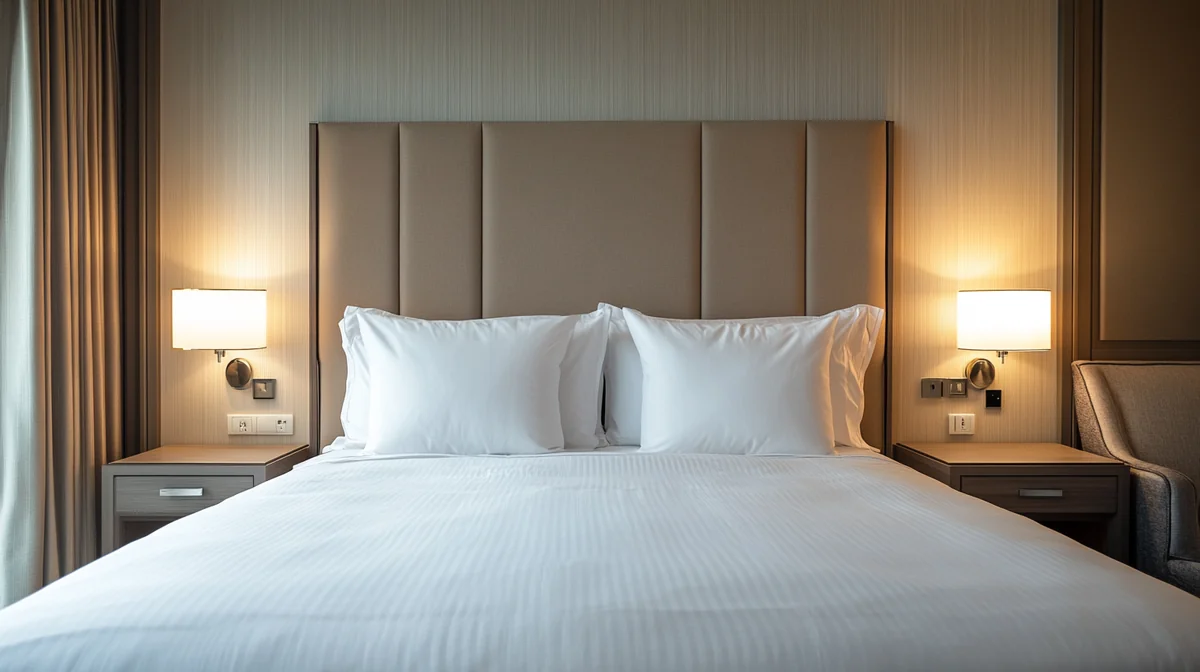
This one does not win the booking — it wins the review, and the review wins the next booking. Guests cannot feel your mattress in a photo, but they remember it, and a guest who slept well is the one who leaves five stars. Quiet, compounding return.
Smart-home & self check-in
A keypad lock and a couple of sensors barely move your nightly rate, but they cut the late-night how-do-I-get-in messages to near zero and help you catch a party before it starts. It earns its keep in convenience and protection even when it hardly shows up in revenue.
Standout design / theme refresh
The wildcard. Done well — a real point of view, not just new throw pillows — it is what makes your listing the one people screenshot and send to the group chat. Done as a spend without a vision, it is just money. The entire return lives in the execution.
What it looks like for a real property
Say you run a three-bedroom cabin an hour from a national park. It rents around $240 a night and fills roughly 190 nights a year, so it is turning over about $45,000. You are weighing three upgrades: a hot tub, a fire pit, and turning the spare nook into a proper workspace.
Tick those three and the combined uplift lands somewhere in the mid-teens to low-thirties percent before the cap — call it a rough $6,000 to $13,000 of added revenue a year, against maybe $8,000 to $20,000 to install all three. The hot tub carries most of the cost and most of the risk. The fire pit is cheap and almost pure upside. The workspace is the sleeper, because a cabin near a park quietly pulls remote-work weeks into the shoulder season.
The honest read is not "do all three." It is that the fire pit and the workspace are easy yeses — low cost, broad appeal, fast payback. The hot tub is the real decision, and it turns on the one question the calculator cannot answer for you: how many of the other cabins in your comp set already have one. If they all do, you are buying a table-stakes amenity to stop losing bookings, not to gain them. If none do, you have just found your differentiator.
Before you buy the hot tub: four sanity checks
Check the comp set first. Open the top ten listings in your market and count who already has the amenity. If nearly all of them do, it is table stakes — you may still need it to compete, but the revenue lift went to whoever added it first, and the calculator's range will flatter you. If almost none do, you have found a genuine differentiator and the upper end of the range gets plausible.
Match the amenity to the guest, not to yourself. A dedicated workspace earns nothing at a party-lake house, and a game room earns little from couples on anniversary trips. Read your own reviews and booking patterns before you spend — the amenity that pays is the one your actual guest filters for.
Price the upkeep, not just the install. The payback window here uses install cost only. A hot tub carries chemicals, energy, and service calls; a pool more so. Amenities with real running costs need a bigger revenue lift to clear the same bar, and amenities like a pool or hot tub can also change your insurance picture — worth a conversation with an STR-specific carrier from our insurance directory before you commit.
Mind the rules. Some jurisdictions treat pools, hot tubs, and even fire pits as permit or inspection triggers for rentals. Check your local requirements — our permit data hub and the licensing guide are the places to start.
Bought it? Now make it earn
1. Photograph it like it matters — because it does. An amenity that is invisible in your gallery might as well not exist. Get the hot tub steaming at dusk, the game room mid-game, the workspace with morning light. Our interior design service stages amenities to photograph properly, and the essay on listing photos that book shows what the winning shots have in common.
2. Get it into the filters, the title, and the first line. Guests find amenities by filtering, so an untagged hot tub is an unfindable hot tub. Then put it where eyes go first. That is standard work inside our Airbnb listing service, and the reason an upgrade shows up in bookings within weeks instead of quarters.
3. Reprice around it. A meaningful amenity moves what the market will pay, especially on peak nights — but only if your pricing reacts. The guide to dynamic pricing on Airbnb covers how to capture the premium without pricing yourself out of the shoulder season.
Amenities that look good but rarely pay
Not every upgrade that impresses your friends impresses the booking. These are the ones hosts most often overspend on, in roughly the order we see it happen.
A pool in a cool climate. Gorgeous for the two warm months, an expensive and chilly liability for the other ten. Unless you can heat it and your market genuinely swims, the money does more in almost any other line on the list.
The 85-inch TV and the sound system. Guests came for the place, not your home theater. A good, normal TV is table stakes; the top-end gear almost never shows up in a booking decision, and never in the nightly rate.
A pool table in a couples' market. Fantastic in a group house, pure clutter in a one-bedroom for two. The amenity that pays is the one your actual guest was already looking for — not the one you would want on your own vacation.
Over-automation. A fridge that texts you is a maintenance liability, not an amenity. Guests want the lock to work and the wifi to be fast; they do not want to learn your smart-home system on holiday. Automate the check-in, not the toaster.
Anything you cannot photograph or tag. If it does not show up in the gallery and it is not in the filters, guests never learn it exists. A top-of-the-line water filter is a lovely thing that has never once won a booking. An amenity earns its keep only when a guest can find it, see it, and actually want it — spend that fails all three tests just buys you a nicer place to stay yourself.
Amenity ROI questions, answered
Which amenity has the best ROI for a short-term rental?
It depends on your comp set, which is why the honest answer is a calculator and not a list. Among big-ticket options, a hot tub is the classic first pick — moderate install cost, strong filter demand, and it photographs well. Among cheap options, fast wifi with a real workspace is hard to beat. But if every top listing in your market already has the amenity, it is table stakes rather than an edge; the return went to whoever added it first.
Why does the calculator cap combined uplift at 35%?
Because amenity effects overlap. The guest who books you for the hot tub is often the same guest who liked the fire pit and the game room — you cannot bill demand three times for one booking. Stacking every upgrade on the list does not multiply revenue; it deepens the appeal to the same pool of guests. The cap keeps the estimate honest when several boxes are ticked.
Are these revenue ranges guaranteed?
No. They are directional ranges drawn from host-community reporting and market analyses, and your market, season, and execution decide where in the range — or outside it — you land. An amenity that is not photographed, tagged, and mentioned in the title barely moves the needle. Treat the output as a way to compare options and sanity-check a spend, not as a projection to borrow against.
Does the calculator count ongoing costs and insurance?
No — the payback math uses install cost only. Hot tubs and pools carry real ongoing costs in maintenance, chemicals, and energy, and both can change your insurance picture: liability exposure rises, and some carriers ask about them directly. Before a big amenity spend, price the upkeep and check the coverage question with an STR-specific carrier from our insurance directory.
How long before an amenity pays for itself?
It depends on the cost against the lift. A cheap upgrade like a workspace or a fire pit can pay back in a single season; a hot tub often lands in the one-to-three-year range once you count the upkeep; a pool is the long game, measured in years and justified as much by staying competitive as by a clean payback number. The calculator gives you the rough window — treat it as a way to compare options, not a promise.
Hot tub or pool — which should I add first?
For most properties, the hot tub, almost every time. It costs a fraction of a pool, it works year-round where a pool is seasonal, the upkeep is smaller, and it draws bookings across more markets. A pool earns its place when you are in a genuinely hot climate and competing against listings that already have one. Choosing one? Start with the tub.
What is the cheapest amenity that actually moves bookings?
Fast wifi with a real, photographed workspace. It is a router and a desk, it opens up remote-work and longer stays, and it is one of the few upgrades that can pay back inside a season. After that, a fire pit and matched, warm lighting cost very little and lift almost every listing.
Do amenities help my Airbnb search ranking?
Indirectly, and it is worth knowing how. Adding an amenity guests filter for makes your listing eligible for searches it was invisible in before, and it tends to lift the conversion and reviews that actually move you up the results. But an amenity you have not tagged in your listing settings is invisible to the filter — so the real win is as much about ticking the box in your listing as buying the thing.
