$295
Avg. Nightly Rate
70%
Avg. Occupancy Rate
$6,180
Avg. Monthly Revenue
6–9%
Est. Cash-on-Cash ROI
MEDIUM
Seasonality
MEDIUM
Regulatory Burden

* Market averages. Cavmir-managed properties typically exceed these figures by 25–45%. Data sourced from AirDNA, STR market reports, and Cavmir internal analytics.

The Market

Why Hobart & Tasmania is One of the World's Premier STR Markets

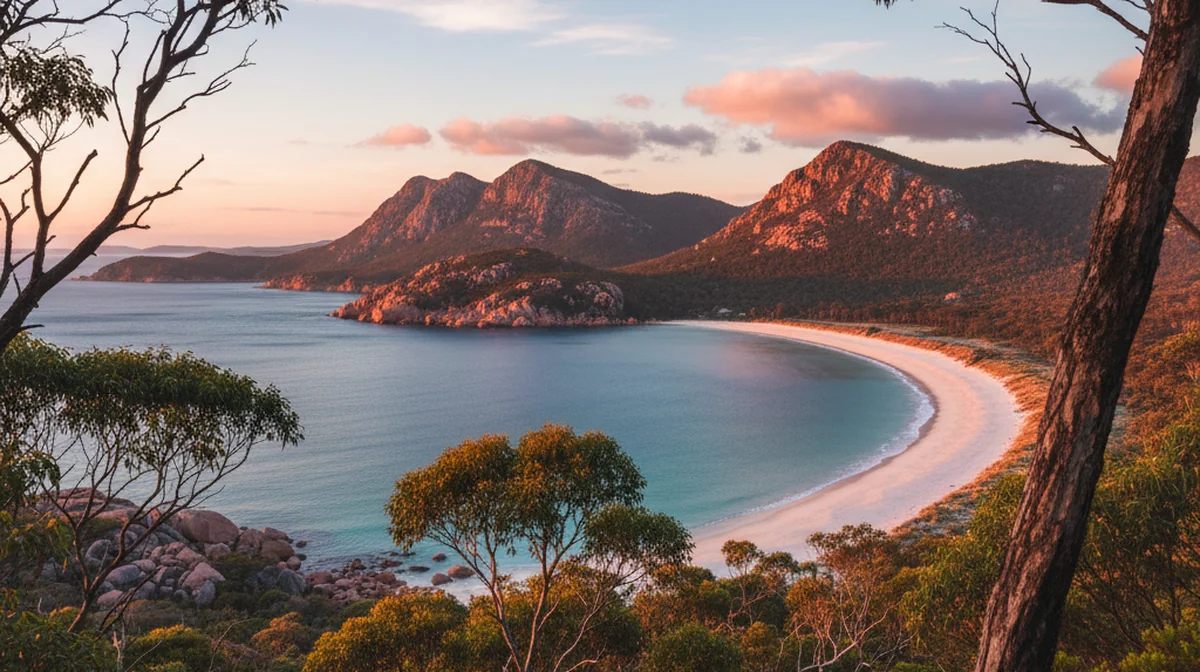
Tasmania is Australia's structurally distinct luxury short-term rental market — an island state of 540,000 across 68,000 square kilometres, with a wilderness-and-wine product mix and a visual language (cool-climate vineyards, World Heritage temperate rainforest, the dolerite columns of the Tasman Peninsula, the pink-orange granite of the Bay of Fires) that has made the island Australia's fastest-growing premium destination. Hobart — Australia's second-oldest capital, anchored by the Salamanca Place sandstone warehouses, Battery Point's village quality, the Mount Wellington/kunanyi backdrop, and the David Walsh-built MONA museum that single-handedly repositioned Tasmania as a contemporary-art-tourism destination — drives roughly half the state's STR demand. The Freycinet Peninsula (Wineglass Bay, Coles Bay, Saffire), Cradle Mountain, the Bay of Fires, the Tamar Valley wine region (Launceston-anchored), Bruny Island, and the Tasman Peninsula round out the high-yield rental geography. Tasmanian-grown wine, oysters, whisky (Lark, Sullivans Cove), and salmon underpin a food-and-drink tourism economy that operators increasingly merchandise as the trip-defining product rather than mere amenity.

Tasmanian STR regulation runs through the state Short Stay Accommodation Act framework (TasSTRA self-certification register) and overlapping local-council planning controls; some hotbeds (notably central Hobart and the Freycinet corridor) have introduced caps and primary-residence requirements in recent years, while regional councils remain broadly accommodating. The seasonal curve is genuine: peak runs December through April with the December Sydney Hobart yacht-race finish, the January-February Mona Foma and Dark Mofo's December and June twin festival pulses, and the autumn-foliage and truffle-season pulse; winter (June-August) is the structural low but increasingly productive on the Dark Mofo, aurora-australis, and wilderness-skiing-and-photography segments. ADRs run A$280-A$650 per night for premium central Hobart and Battery Point inventory; Freycinet beachfront and Cradle Mountain wilderness lodges clear A$700-A$1,800; ultra-luxury Saffire-adjacent and Bruny Island estates run A$1,500-A$3,500 in peak weeks.

Top Attractions & Landmarks

  • MONA Museum
  • Salamanca Place & Battery Point
  • Mount Wellington / kunanyi
  • Wineglass Bay (Freycinet)
  • Cradle Mountain
  • Bay of Fires
  • Port Arthur Historic Site
  • Bruny Island

Nearby Markets: Melbourne  |  Sydney  |  Auckland

Airbnb marketing services in Hobart & Tasmania, Tasmania, Australia
Why Cavmir

The Cavmir Advantage
in Hobart & Tasmania

Cavmir markets Tasmanian properties around the actual buying moment — the Sydney and Melbourne weekender booking 6-12 weeks out, the international art-tourism guest pairing MONA with Freycinet, the food-and-wine traveller building an itinerary around Lark Distillery and the cool-climate Tamar Valley, the Cradle Mountain bushwalker on a Tasmania-specific trip, the Dark Mofo cultural-event visitor — each with a distinct visual library and distribution angle. We build cinematic editorial photography that captures Tasmania's actual light (the cool-blue dawn at Wineglass Bay, the orange-lichen Bay of Fires, the dolerite cliffs at Cape Hauy, the sandstone-and-Georgian Battery Point streetscape), and direct-booking infrastructure that captures the repeat mainland-Australian household that returns annually.

State of the Industry · History

The Hobart & Tasmania STR Market — Past & Present

Tasmania is Australia's smallest state, an island of 540,000 across 68,000 square kilometres separated from the mainland by the 240-kilometre Bass Strait. The island's traditional owners are the palawa and pakana peoples of the Tasmanian Aboriginal community whose presence on the island stretches back at least 40,000 years. European settlement began with the 1803 founding of Hobart Town as Britain's second Australian colony — a strategic Antarctic-and-southern-ocean naval outpost that became Australia's most architecturally intact early-colonial city. Salamanca Place's sandstone warehouses (built 1830s as the colonial port's bonded stores), Battery Point's village-scale Georgian streetscape, the Cascades Female Factory, and Port Arthur's UNESCO-listed convict settlement on the Tasman Peninsula define the historical depth that mainland Australian destinations cannot match.

Modern Tasmanian luxury STR runs on three structural waves. The first is the David-Walsh-built Museum of Old and New Art (MONA), opened 2011 — a privately funded subterranean contemporary-art museum on the Berriedale peninsula that single-handedly repositioned Tasmania internationally as a contemporary-culture destination and drove the Mona Foma summer and Dark Mofo winter festival programmes that now anchor the island's cultural calendar. The second is the wilderness-luxury build-out: Saffire Freycinet (opened 2010, Wineglass Bay), Pumphouse Point (Lake St Clair), Crater Lake Lodge, Bay of Fires Lodge — each a million-dollar-build statement reframing Tasmania as a Lindblad-Aman-tier wilderness-luxury destination. The third is the cool-climate wine-and-whisky industry: Pipers Brook, Tamar Valley, the Coal River Valley vineyards, and the global emergence of Tasmanian whisky distilleries (Lark, Sullivans Cove, Hellyers Road, Heartwood) that now anchor a food-and-drink tourism economy mainland Australia cannot replicate.

Pricing Strategy & Seasonality

Pricing, Seasonality & When to Capture ROI

Pricing Strategy

Central Hobart and Battery Point premium rentals (3-5 bed): A$420-A$780/night standard, A$650-A$1,100 in peak weeks. Freycinet Peninsula beachfront and Coles Bay villas: A$650-A$1,400 standard, A$1,000-A$2,200 peak. Cradle Mountain wilderness lodges: A$700-A$1,800. Bruny Island and Tasman Peninsula ultra-luxury: A$1,200-A$3,500 peak. The Sydney-Hobart yacht race finish week (28 Dec-3 Jan), the Mona Foma weeks (January), and the Dark Mofo programme (June) drive the rate ceilings. Wedding and corporate-retreat buyouts at the top end clear A$25,000-A$60,000 for 3-4-day events.

Seasonality & ROI Windows

Medium seasonality with structurally distinctive winter pulse. Peak: December through April (Tasmanian summer, Sydney-Hobart finish, MONA summer programme, autumn truffle and foliage). Super-peak: late December–early January (yacht-race finish week), late January (Mona Foma), late February (Wooden Boat Festival even years). Winter pulse: June Dark Mofo programme (genuinely the highest-yielding winter weekend of any Australian destination). Strong shoulder: April-May (autumn foliage, truffle season), September-October (whale-watching, early-spring wildflower). Low: July (excluding Dark Mofo weekends), August. Missed revenue: aurora-australis tourism (May-September) is structurally underexploited and Tasmania has the southernmost regularly-accessible aurora-viewing geography on earth outside Antarctica.

Regulation & Licensing · 2026

What the Law Requires in Hobart & Tasmania

Tasmanian STR regulation runs through the state Short Stay Accommodation Act framework administered through the TasSTRA (Tasmanian Short Stay Accommodation) self-certification register. Every operator must register, comply with safety standards (smoke alarm, electrical, gas), and display the TasSTRA registration number on every platform listing. Local-council planning controls layer on top: the Hobart City Council and Glamorgan-Spring Bay (Freycinet corridor) have introduced caps and primary-residence requirements in recent years to manage tourism-density and housing-supply pressure. Regional Tasmanian councils remain broadly accommodating. Operators of consented inventory in popular corridors enjoy structural pricing protection. Foreign-ownership rules apply via the Foreign Investment Review Board (FIRB) — non-resident purchases require FIRB approval. GST applies on STR turnover above A$75,000 (10% standard rate).

Market-Specific Tips & Challenges

Local Tips & Unique Market Challenges

Tips That Actually Move Revenue in Hobart & Tasmania

The Tasmania strategic tip: build the four-product calendar, not the summer-Hobart default. Tasmania's structural advantage over mainland Australian destinations is the layered demand calendar — summer leisure, autumn truffle-and-foliage, winter Dark Mofo, spring whale-and-wildflower — and operators who merchandise each product with appropriate editorial outperform the generic Hobart-and-MONA summer framing every time. Lead with the calendar, not the geography.

Tactically: first, the wilderness-luxury product is the ceiling of the market and rewards specialist editorial — partner with Saffire-corridor relationships, named Cradle-Mountain hiking guides, and the small private-charter operators who fly the Bay of Fires and south-west wilderness. Second, the food-and-drink tourism segment is Tasmania's most underexploited premium niche — the cool-climate wine corridor, the Lark and Sullivans Cove whisky distilleries, the Bruny Island oyster-and-cheese circuit are world-class and the segment books 4-8 weeks out at premium rates. Build food-and-drink-specific welcome books, partner with named cellar-doors and distilleries, and merchandise the multi-day food-and-drink itinerary as a single experience. Third, Dark Mofo is the highest-yielding winter weekend window in Australian STR and it is structurally underexploited — operators who pre-sell the festival weeks 6-9 months out at premium rates outperform those treating winter as the structural low. Fourth, the MONA-and-art-tourism segment converts at premium rates when distributed through Tasmanian and Sydney/Melbourne art-and-design media.

Unique Hobart & Tasmania Challenges

Tasmanian challenges: the local-council planning regime in Hobart and the Freycinet corridor is tightening and operators should expect further restrictions through 2027. Wilderness-property staffing scarcity is real (cleaning, maintenance, hospitality labour) and operators rely on locally-rooted teams. Hobart Airport (HBA) capacity is good but Launceston (LST) is the better arrival hub for Tamar Valley and the north-coast markets. Tasmania's geographical isolation means flight cost and frequency from mainland Australia and internationally remain a structural friction point most operators should brief guests on.

A Curious Tasmania Fact
Tasmania has the cleanest air ever measured at any continuous monitoring station on earth. The Cape Grim Baseline Air Pollution Station on the island's north-west tip — operated by the CSIRO and the Bureau of Meteorology since 1976 — regularly records the lowest particulate-and-greenhouse-gas background concentrations of any baseline station on the planet, because the prevailing westerly Roaring Forties winds reach Cape Grim having travelled across the empty Southern Ocean directly from the mid-Atlantic without passing over significant landmass. Tasmanian-bottled rainwater from Cape Grim is exported to Asian markets at ultra-premium retail.
Finance Essentials — Hobart & Tasmania
🛡️

Insurance

Australian rural-and-wilderness STR insurance through CGU, Allianz Australia, RACT (Tasmanian regional), and Lloyd's-syndicate-backed specialist underwriters for the premium tier. Buildings, contents, public liability (A$10-20 million typical), accidental damage, loss-of-rent, bushfire-and-storm cover. Wilderness-lodge premiums materially higher given access-and-evacuation logistics. Heritage-listed-building riders for Battery Point and Salamanca inventory. Budget A$2,500-A$8,000 annually for typical rental coverage; wilderness-lodge premiums A$8,000-A$25,000.

🧾

Property & Income Tax

Australian rental income taxed at progressive marginal tax rates plus 2% Medicare Levy for residents; 32.5% withholding for foreign-resident rental income up to A$135,000, scaling to 45% above A$190,000. CGT on disposal applies at marginal rates with 50% discount for assets held over 12 months (residents only — foreign-resident CGT discount removed post-2012). Negative-gearing structures remain attractive for high-income Australian owners. Tasmanian Land Tax applies above the A$100,000 threshold (state-government scaled rate). Stamp duty on acquisition: 4-4.5% Tasmania-wide. FIRB application fees apply to foreign-resident acquisitions.

🏦

Mortgages & Financing

Australian mortgages through Commonwealth Bank, Westpac, ANZ, NAB, and specialist STR lenders (La Trobe, Pepper, Bluestone) for residents at 70-80% LTVs; foreign-resident LTVs typically 60-70% with FIRB-approval prerequisite. Rates track RBA cash rate plus material spread. Cash purchases common at the wilderness-lodge and Saffire-adjacent ultra-luxury tier.

Future Outlook · 2027 & Beyond

Where Hobart & Tasmania is Headed Next

Tasmania through 2027 and beyond: the wilderness-luxury build-out continues compounding (Cradle Mountain, Bruny Island, and Tasman Peninsula development pipelines all active), and the MONA-anchored cultural tourism economy shows no sign of saturation. The food-and-drink tourism segment — wine, whisky, oyster, cheese, truffle — is the fastest-growing premium niche on the island. Climate shift may benefit Tasmania structurally as mainland Australian summers grow extreme; the cooler southern-latitude climate is a competitive advantage. The 2026 AFL Tasmanian-team admission and the proposed Hobart stadium project will pull material event-tourism demand into the capital. Aurora-australis tourism is the structurally underexploited frontier and operators who build that product first will own a defensible niche.

From the Desk of Sofie Sinag

Why We Love Marketing in Hobart & Tasmania

Tasmania rewards hosts who understand that the island is not mainland Australia in miniature — it is a structurally different destination with a structurally different guest. The Sydney art-tourism couple booking the Mona Foma weekend needs the MONA ferry briefed and the Battery Point dinner reserved; the Melbourne weekender driving the cool-climate wine corridor wants the Tamar Valley and Coal River Valley cellar-doors mapped; the international Lindblad-Aman traveller expects the Cradle Mountain and Freycinet logistics pre-handled; the Dark Mofo cultural tourist needs the late-night Salamanca venues and the winter-fire programme scheduled. These are genuinely different welcome books and the Tasmania operators who build them out earn outsized loyalty.

What we love about marketing Tasmania is the editorial depth most listings ignore. The island's actual visual story is not the generic-Australian-beach frame — it is the cool-blue dawn at Wineglass Bay, the orange-lichen Bay of Fires granite, the dolerite columns at Cape Hauy and the Tasman Peninsula sea cliffs, the Salamanca-warehouse sandstone at Saturday-market golden hour, the fog-and-eucalypt early morning at Cradle Mountain. Operators who build that Tasmania-specific library outperform mainland-Australian-template marketing every time, and the segmentation of summer leisure, autumn truffle, winter Dark Mofo, and spring whale-watching into four distinct products unlocks a year-round revenue model most peer destinations cannot replicate.

Cavmir's Hobart & Tasmania Cheat Sheet

The Picks We Recommend for Your Welcome Book

The picks Cavmir recommends for Tasmania welcome books — the details that separate resident-hosts from the 'Apple Isle' script.

Morning

Salamanca Market Saturday before 10 a.m.

The Salamanca Place market runs every Saturday year-round and is the Hobart institution that sets the rhythm of the city's weekend. Best walked 8:30–10:00 a.m. before the cruise-passenger groups arrive. Coffee at Pigeon Whole or Daci & Daci is the right preamble.

Golden Hour

Mount Wellington / kunanyi summit at sunset

The 30-minute drive from central Hobart to the kunanyi summit (1,271 m) for a panoramic view across the city, the Derwent estuary, and Bruny Island in the distance. Particularly cinematic 30 minutes before Tasmanian sunset; bring layers (the summit is frequently 10°C colder than the city).

Neighborhood Walk

Battery Point village loop

The 90-minute walk through Battery Point's Georgian and Victorian streetscape — Arthur Circus, Hampden Road, the Shipwrights Arms — out to the Princes Park lookout above Salamanca and back via the Sandy Bay waterfront. Australia's most architecturally intact early-colonial village.

Dinner That Photographs

Templo, Fico, or Stillwater

Templo on Patrick Street for the Italian-Tasmanian small-room evening Hobart residents drive for; Fico for the contemporary tasting-menu version; Stillwater in Launceston for the Tamar Valley wine-and-river evening. Reservations 4-8 weeks out for weekend slots.

Local Obsession

Lark Distillery and the Tasmanian whisky trail

The Lark Distillery cellar door on Davey Street and the broader Tasmanian whisky trail (Sullivans Cove at Cambridge, Hellyers Road at Burnie, McHenry at the Tasman Peninsula). The structural advantage Tasmanian whisky has built over the last 30 years is one of Australian premium-spirits' most underrated stories.

Shoulder Season Secret

Late April–May (autumn) and September

Autumn truffle-and-foliage shoulder is genuinely the year's most cinematic light, the cool-climate harvest is in, and pricing has lifted off summer peak. September brings the southern-right-whale migration into the Derwent and the Tasman, and the wildflower spring opens. Both windows are structurally underpriced.

Weekend Escape

Bruny Island full-day or overnight

The 20-minute Kettering–Roberts Point ferry to Bruny Island and the circular drive past the Neck lookout, the Bruny Island Cheese Co., Get Shucked oysters, Cape Bruny lighthouse, and the Pennicott Wilderness Journeys boat-tour from Adventure Bay. The day trip that explains Tasmanian wilderness-luxury most completely.

What Guests Ask For

Dark Mofo strategy versus Mona Foma strategy

The two MONA-anchored festivals run on opposite calendars and require different briefings. Dark Mofo is winter, late-night, fire-and-darkness aesthetic, and rewards layered-clothing logistics; Mona Foma is summer, daytime-leaning, family-friendly, and rewards outdoor-venue planning. A host who briefs the right festival product prevents the most common Tasmania cultural-tourism mismatch.

Local Work · Composite Case Vignettes

What Cavmir Has Done for Hobart & Tasmania Properties

Representative Cavmir engagements across Hobart and the Tasmanian wilderness corridor. Property identifiers redacted; figures composited from internal analytics and market benchmarks.

3BR Battery Point Townhouse
The Brief

Restored Battery Point Georgian townhouse, TasSTRA-registered, commoditised against peer central-Hobart inventory. Peak ADR flat at A$420/night; off-peak occupancy soft.

What We Did

Rebuilt the brand around the four-product calendar — summer art-tourism, autumn truffle-and-wine, winter Dark Mofo, spring whale-and-wildflower. Cinematic property film framed for each season. Welcome book with named MONA ferry briefings, named whisky-and-wine cellar-door relationships, named Pennicott Wilderness tour bookings. Distribution through Sydney and Melbourne art-and-design media.

The Result

Peak ADR climbed to A$680. Dark Mofo week cleared A$750/night across 7 nights. Off-peak occupancy reached 71% on the four-product calendar. Direct-booking share reached 49%.

5BR Freycinet Beachfront Villa
The Brief

Coles Bay Freycinet beachfront villa with Wineglass Bay-walk access, underexploiting the international-luxury and corporate-retreat segments peer Saffire-corridor inventory was capturing.

What We Did

Repositioned around the wilderness-luxury guest specifically. Cinematic photography of the dolerite-and-pink-granite Freycinet geology at dawn and golden hour. Welcome book with named Pennicott boat-tour relationships, the Saffire spa-day add-on, and the named Freycinet ranger-led-walk programme. Distribution through international wilderness-luxury travel advisors and the Lindblad-Aman client universe.

The Result

Peak ADR climbed to A$1,650. Corporate-retreat 4-day buyouts now contribute material annual revenue (one A$48,000 booking). International direct-booking share reached 38%.

Architectural Cabin · Cradle Mountain area
The Brief

Designer architectural cabin near Cradle Mountain missing the international wilderness-and-photography tourist segment, and weak shoulder-season performance.

What We Did

Three-product brand build. Wilderness-photography product positioned for the Lindblad-Aman-tier international guest with named guide relationships and the dawn-and-dusk Cradle-and-Dove-Lake scheduling. Aurora-australis viewing product for the May-September window — Tasmania's southernmost geography is a structurally underexploited niche. Truffle-season and autumn-foliage product for the April-May shoulder.

The Result

Shoulder-season ADR up 47%. The aurora-australis positioning unlocked a winter-shoulder repeat-guest book that fills 6 weeks May-September. International direct-booking share reached 42%.

Ready to Grow in Hobart & Tasmania?

Let's Put Your Hobart & Tasmania
Property on the Map

Talk to Cavmir today. We'll show you exactly what your Hobart & Tasmania property is leaving on the table — and how fast we can change that.

Book a Free Strategy Call