
Morning
Bagels at Greg's or breakfast at Miss Shirley's
Greg's Bagels is the Baltimore bagel argument. Miss Shirley's is the Baltimore brunch institution. Both real, both local.

Expert short-term rental marketing to grow your bookings and nightly rate in Baltimore, Maryland, USA.
Sixteen services, one team. Everything below is built in-house and scoped to your property and market. Most owners start with the 12-Step System.
Every engagement is quoted to your portfolio. These are the ready-made scopes owners pick most — our Fall Special (55% off list or more) is already applied to the website, King Broker, Hotels and à la carte scopes. A clear proposal within 48 hours.
The work is public. Selected engagements and what changed — and reviews from the owners and managers behind them.
* Market averages from AirDNA and STR market reports. A single home's numbers depend on its size, its location and how it is marketed.
Cavmir is an Airbnb marketing agency. We build the brand, the direct-booking website and the marketing for short-term rentals in Baltimore.
Baltimore is a city of distinct character — a working waterfront, neighborhoods of remarkable architectural heritage, and a food culture anchored by the Chesapeake Bay's legendary seafood. The Inner Harbor frames one of the country's most striking urban waterscapes. Fells Point's cobblestone streets and Federal Hill's rooftop views of the harbor have made them beloved destinations for weekend visitors from Washington D.C., Philadelphia, and New York.
Baltimore's STR market benefits significantly from its proximity to Washington D.C. — a 40-minute drive — which drives weekend leisure demand and political/governmental extended stays. The Chesapeake Bay and sailing culture draw a distinct seasonal visitor segment. Johns Hopkins University and the University of Maryland Medical System generate strong mid-term academic stay demand.
Nearby Markets: Washington D.C. | Philadelphia
A few of the visual fingerprints we lean into when we shoot, brand and market a Baltimore property — courtesy of the open Wikimedia Commons archive.
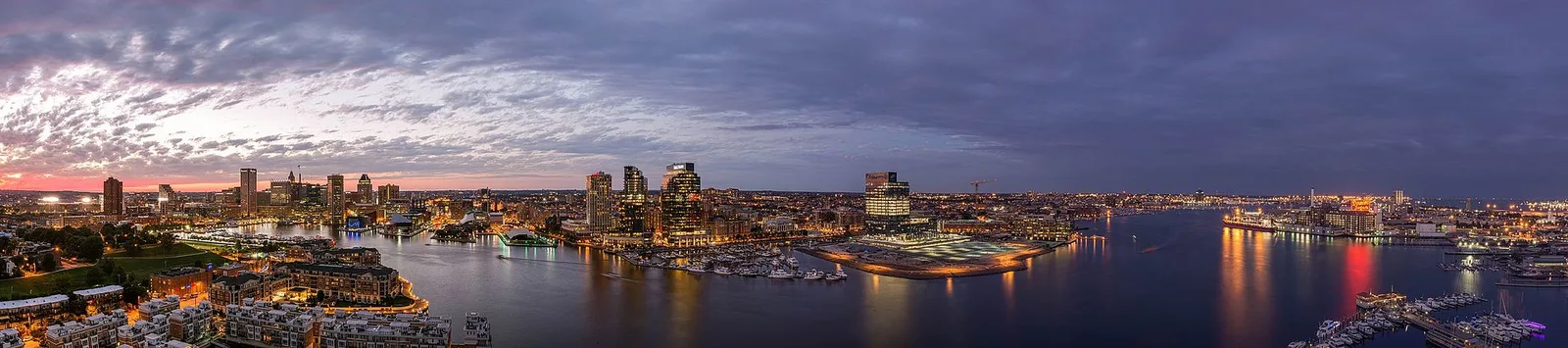
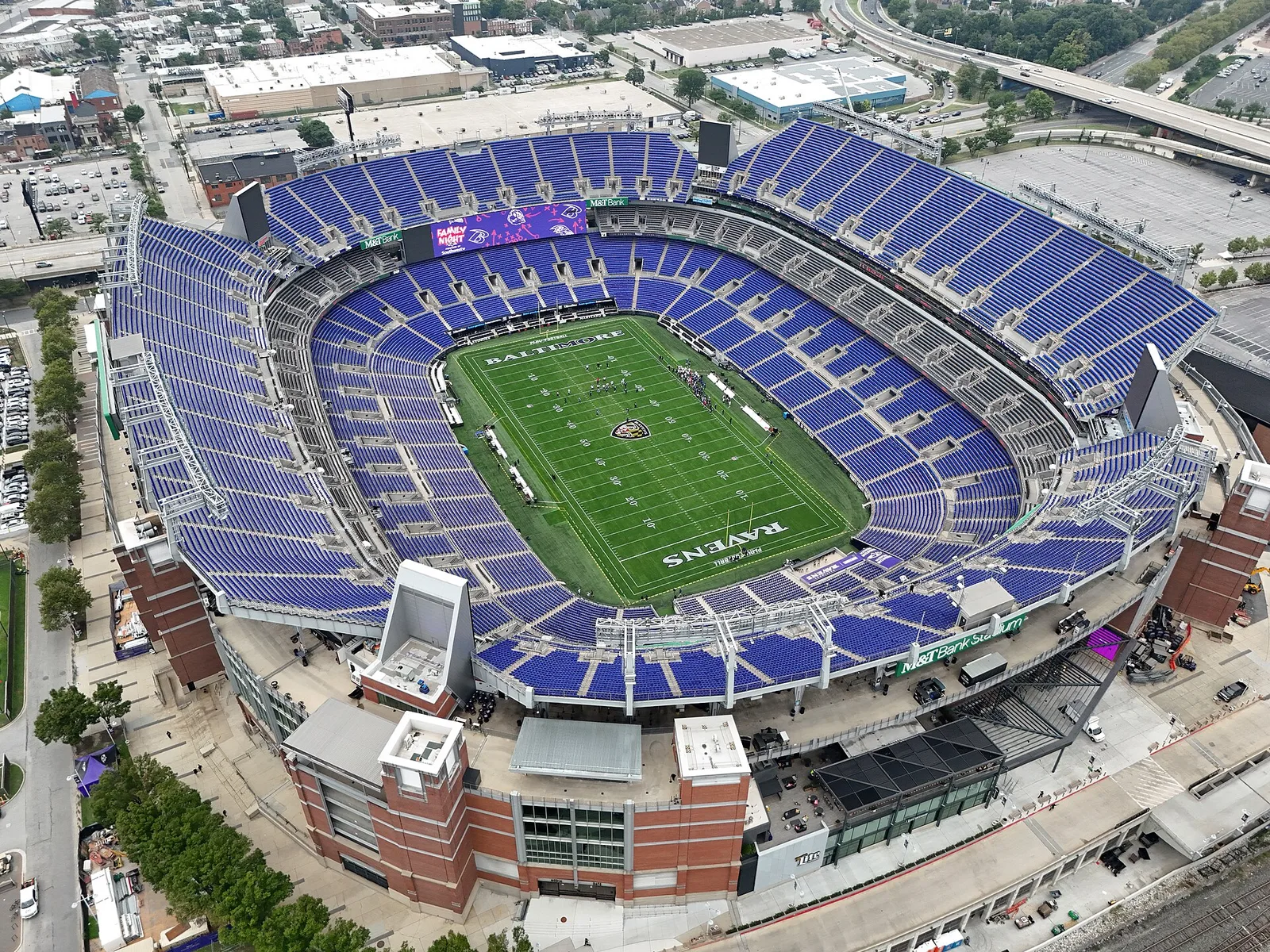
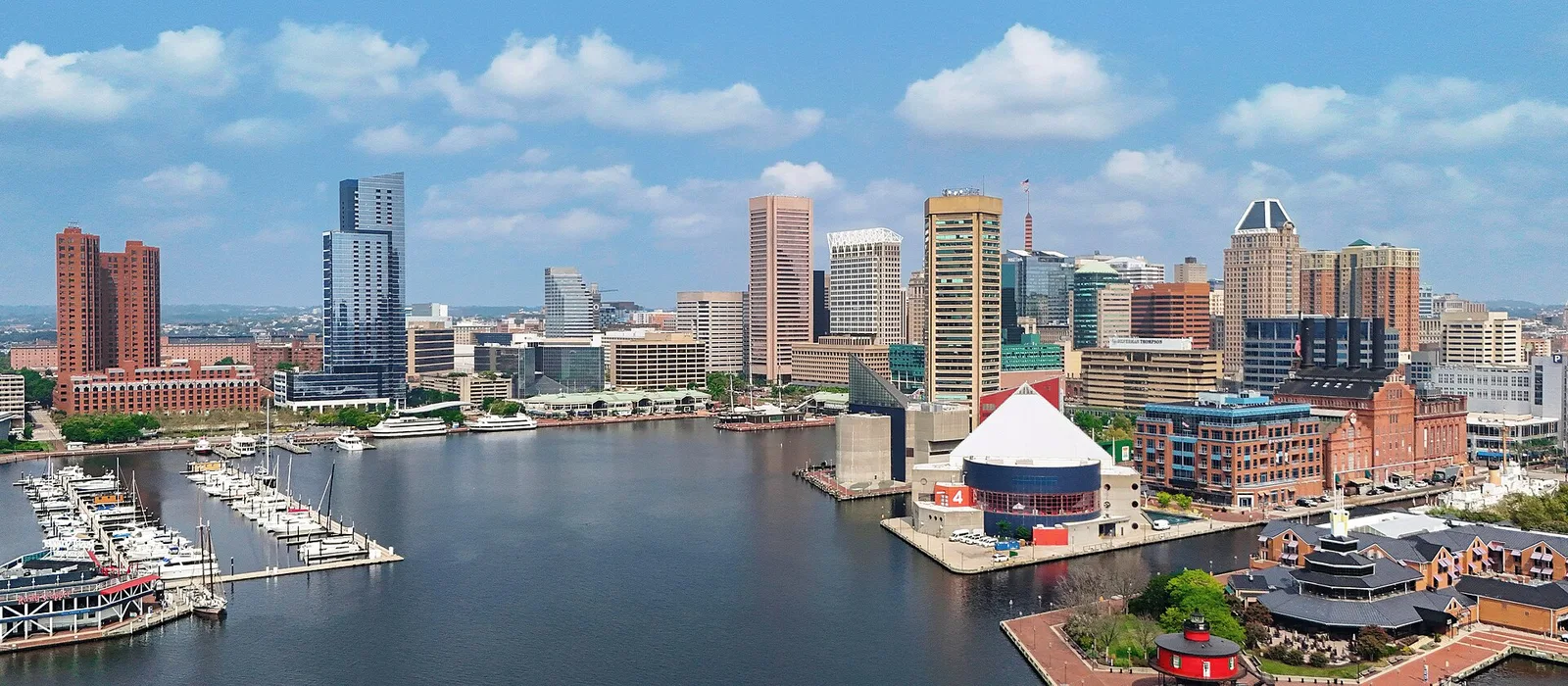
Cavmir builds Baltimore listings that leverage the city's authentic character and waterfront identity to attract travelers looking for a genuine urban experience at a fraction of D.C. prices.
Baltimore built the first common-carrier railroad in the country to bring the world to its harbor, then spent two centuries perfecting the welcome. Cavmir writes the current chapter.

Baltimore's hospitality history is older than most American cities' exist at all. Fells Point's waterfront taverns hosted sailors from the 1750s — some of the buildings still standing housed lodging before the American Revolution. Baltimore was the second-largest US port in the 19th century, and Federal Hill's rowhouses, Mount Vernon's cultural district, and Canton's industrial-converted waterfront reflect generations of layered development. The Inner Harbor's 1980 redevelopment by James Rouse (who also created Faneuil Hall in Boston) was the model for urban-waterfront tourism revitalization that dozens of other US cities later copied.
The contemporary Baltimore STR market is small relative to DC and Philadelphia, but growing. Guests increasingly choose Baltimore as a value alternative to DC (40 minutes south, meaningful price differential) or as a weekend destination for Orioles, Ravens, Johns Hopkins, and Maryland Institute College of Art-adjacent travel. Crab-season tourism (summer), Inner Harbor cruise-ship boarding, and the occasional convention-center event drive punctuated demand.
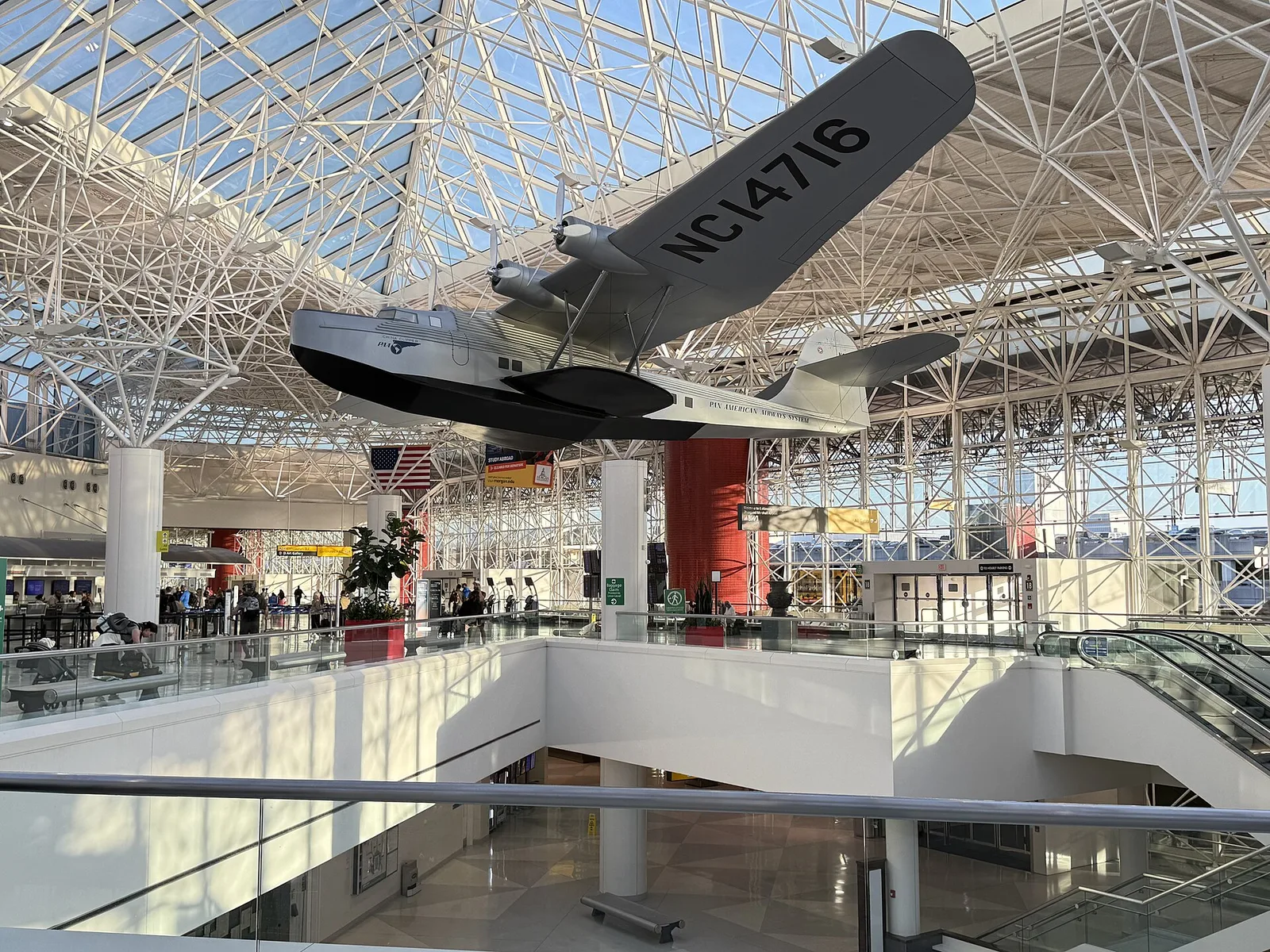
Before the platforms, the monument city put its skyline on engravings, the B&O ran the nation's first scheduled passenger trains into its depots, the Belvedere gave visiting society a reason to dress, and in 1980 Harborplace showed every American city how a working waterfront becomes a destination. The channel changed; the work is identical: presentation, positioning, and the promise of the harbor. It is the same business Cavmir is in today.
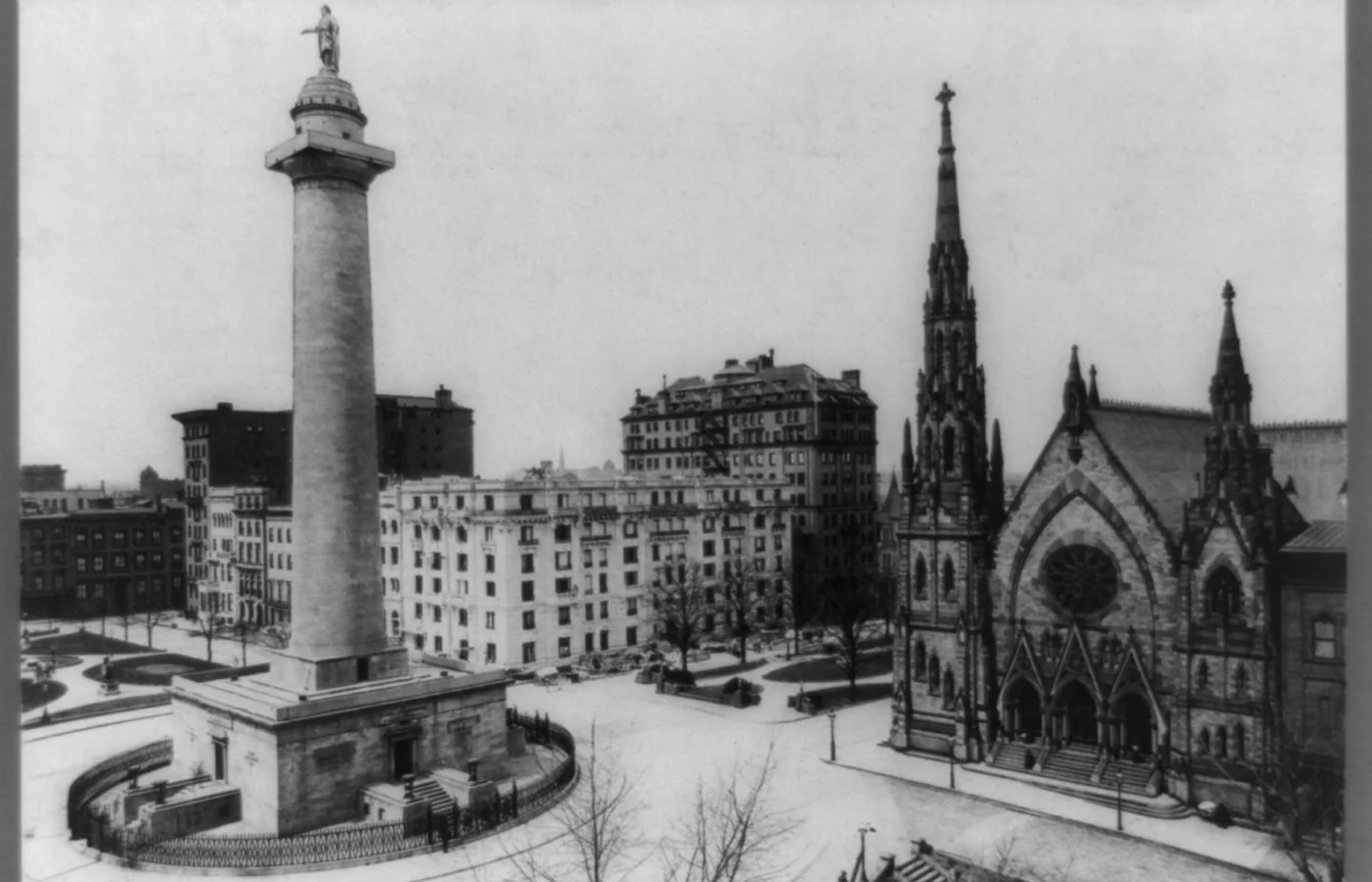
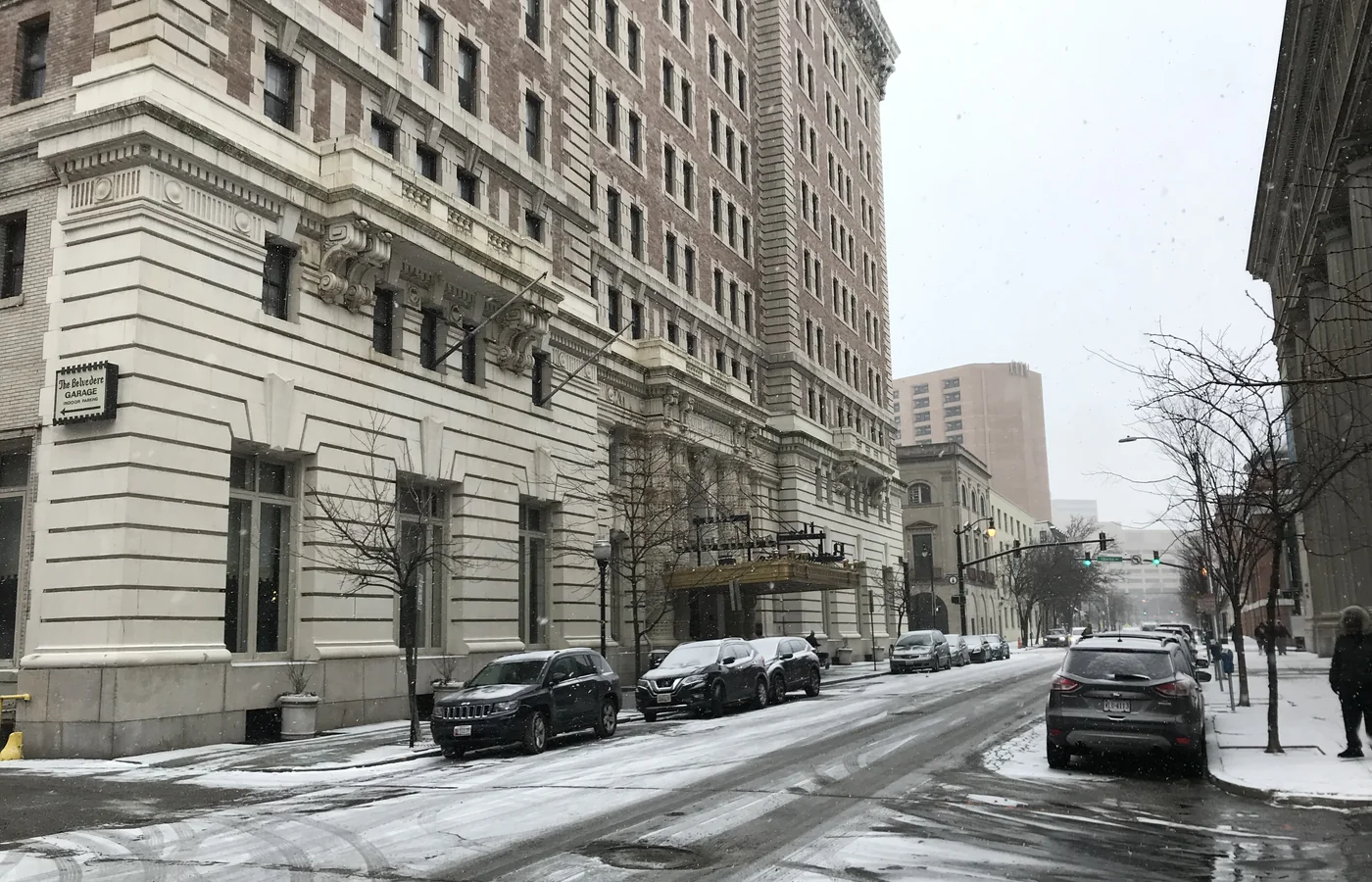
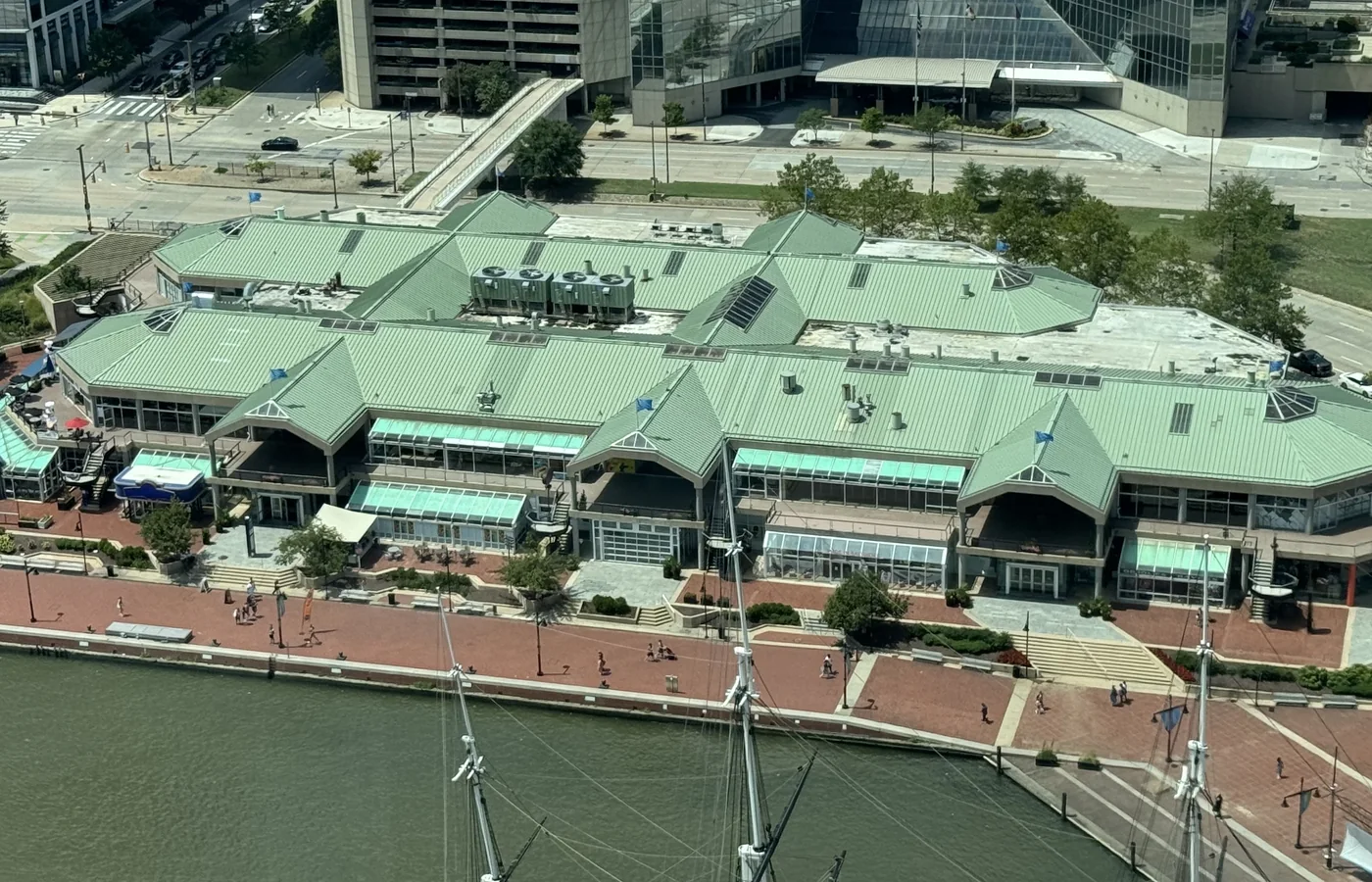
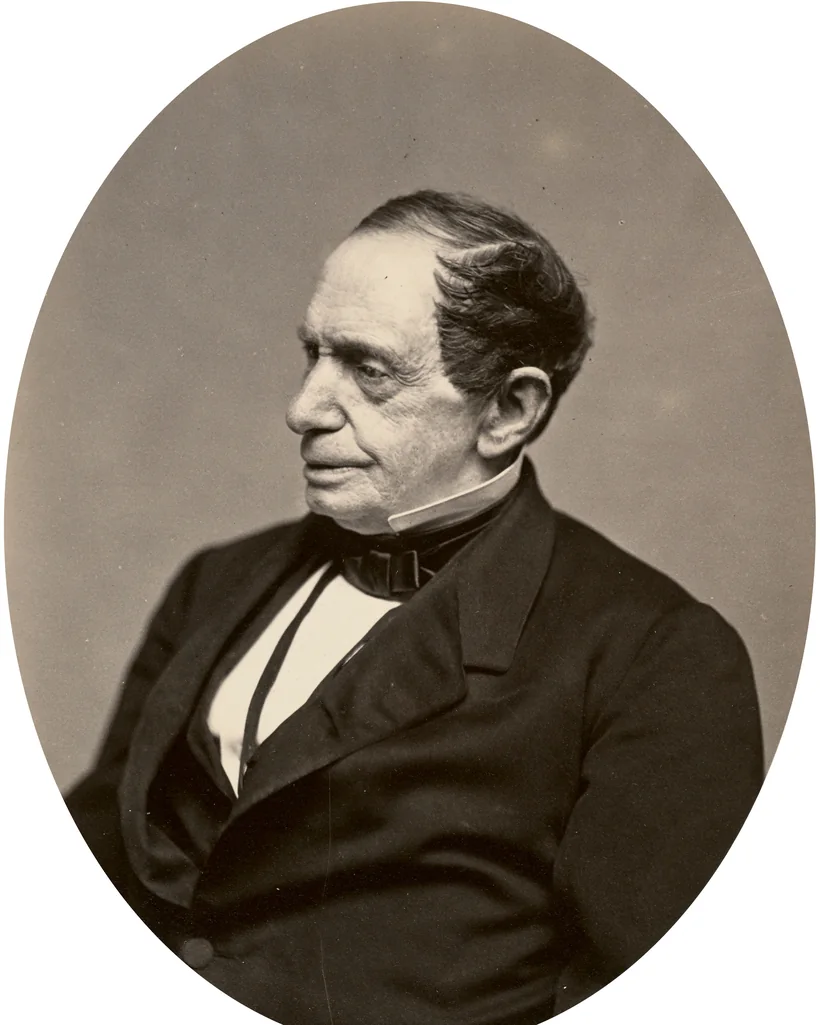
Historical images: public domain and Creative Commons via Wikimedia Commons — Chester Harding (National Gallery of Art), Bendann Brothers, Library of Congress, Baltimore Heritage, Toohool, and others.
Baltimore STR pricing reflects the neighborhood-character reality. Fells Point's cobblestone-street waterfront charm anchors premium bookings. Federal Hill's panoramic-view townhouses command solid rates. Canton's young-professional energy supports weekend and event-driven bookings. Mount Vernon's cultural/academic positioning attracts a distinct guest. Hampden and Remington serve the creative/arts segment. The DC-adjacency pricing play is underutilized — properties within easy MARC-train or BWI-proximity positioning for DC-business-travel 'sleep cheaper in Baltimore' guests are a real market.
Low seasonality. Summer is peak driven by crab-season dining culture and festival calendar. Spring and fall baseline demand strong. Winter weakest outside holiday travel and Orioles/Ravens-schedule-driven event weekends. Missed revenue: January–February conference-season weekends where DC business travelers seek value accommodation; Baltimore-based listings with clear MARC-train positioning outperform generic leisure-tourism positioning.
Baltimore requires a Short-Term Rental License with annual renewal. Licenses are available for both owner-occupied (no cap) and non-owner-occupied properties (closed — DHCD issues no new unhosted licenses, and existing holders can only renew). Registration fee is modest (~$200–$400 depending on category). Baltimore County, Anne Arundel County, and other surrounding jurisdictions each have their own frameworks. Maryland state sales tax is 6%; Baltimore City hotel tax is 9.5%. Combined guest-collected lodging tax approximately 15.5%.
HOA and condo rules are the most common practical restriction. Several Inner Harbor and Harbor East condo buildings have adopted STR bans. Enforcement of the Baltimore ordinance has been inconsistent; 2025–2026 saw increased platform data-sharing and compliance outreach. The non-owner-occupied cap is the most significant market structure feature — existing permitted properties have scarcity protection.
Baltimore's tip: position as the DC-value alternative. Properties with MARC Penn Line access, BWI Airport proximity, or quick Amtrak access to Washington should market explicitly to DC business travelers seeking accommodation value. A 30-minute MARC ride to Union Station beats most Northern Virginia hotels on price and character.
Second — Fells Point's historic-waterfront character is genuinely unique in the Mid-Atlantic. Properties should photograph the cobblestone streets, historic-building details, and Thames Street waterfront at golden hour as primary creative assets. Third — summer crab-season experience is a guest-guide opportunity; a property with recommended crab houses, Old Bay-adjacent local food guidance, and waterfront crab-pot photography attracts the food-tourism segment. Fourth — verify whether your property is in the non-owner-occupied capped category before building a business plan.
Baltimore's challenges: neighborhood-safety perception affects specific blocks, even within generally safe neighborhoods, and can affect guest reviews. Property-tax burden is high. Winter cold and occasional weather-disruption events. And the Inner Harbor's retail and food-scene transitions (cycles of decline and renewal) affect specific STR-adjacent neighborhoods. Some condo associations have become increasingly hostile to STR use.
Mid-Atlantic insurance moderate. Flood-zone exposure near Inner Harbor and Fells Point waterfront. Water-damage (frozen pipes, urban roof issues) common claims. Budget $1,800–$4,000 annually for typical rowhouse or urban STR. Flood insurance advisable for waterfront properties.
Maryland state income tax 2–5.75% graduated. Baltimore City property tax effective ~2.2% — among the highest in the country. Combined 15.5% guest-collected lodging tax. Non-resident withholding applies to out-of-state owner income.
Baltimore financing available but lenders sometimes cautious on specific neighborhood profiles. Regional banks (M&T Bank, Wells Fargo) and national DSCR products both work. Property-tax burden affects affordability math. 20–25% down typical.
The fact that decides a Baltimore plan in 2026 is on the city housing department's own page: DHCD isn't issuing new licenses for unhosted short-term rentals. An existing unhosted license can renew, but nobody new gets one, and a buyer can't step into a seller's, because the license is tied to the owner's own residence and name. New licenses go only to hosted units, which the city describes as homes where you live in the property during the guests' stays. Any rental of all or part of a home for less than 90 nights counts, so the buy-a-rowhouse-and-list-it model is closed to newcomers inside the city line. If a listing advertises a licensed rental, read that as a fact about the seller, and get the property's status from DHCD in writing before you make an offer.
Three tests decide eligibility. The home has to be your principal residence, it has to be deeded in your name as an individual rather than a company, and it has to be free of any code violations. That rules out a rowhouse held in an LLC even if you live in it, so sort out the title before you apply. The setups that fit are a basement suite with its own entrance, a top-floor bedroom with a private bath, or a full guest floor in a large townhouse you occupy. DHCD now runs licensing through a new online portal: new applications and renewals both need a fresh account there, and a renewal also needs a Claim Code the city sends to the email on your original registration, so keep that inbox alive. The page doesn't publish a fee, so confirm the current figure with the city. And no city license overrides a condo's bylaws or an HOA covenant, which can still ban short stays outright.
The biggest change this year came from the State House. HB 1221, the Jillian and Lindsay Wiener Short-Term Rental Safety Act, was signed on April 14, 2026, as Chapter 9 of the year's laws, and took effect on October 1, 2026. It requires short-term rental units to post an evacuation diagram and emergency phone numbers and to have fire extinguishers, smoke alarms and carbon monoxide alarms, and it makes hosts replace alarms in certain cases. It also orders Baltimore City and the counties to require inspections through local law and to report inspection information to the State Fire Marshal. A trade summary published in August 2026 reads the inspections as annual, with the local mandate starting July 1, 2028, local fees allowed to cover the cost, third-party inspectors permitted, and Airbnb and Vrbo expected to verify that Maryland listings comply. Put the kit in now, room by room: it's cheap, and it's what the platforms will ask you to confirm. Then budget for a yearly city inspection and its fee once the city writes its rule.
Airbnb's Maryland tax page lists what it collects for you: the state's 6% sales tax on the listing price, cleaning fees included, and the city's 9.5% Baltimore Hotel Room Tax on reservations of 89 nights or fewer, which is where the 15.5% combined figure comes from. It also charges a 3% Maryland sales tax on its own service fees, which the state treats as taxable information-technology services, so the guest's tax bill runs slightly above that headline. The same page says accepting a reservation waives any exemption you think applies to a tax it collects, so don't plan on claiming one afterward. Other channels set their own collection rules; check each one's tax page instead of assuming. On bookings through your own website nobody collects for you: you register with the Comptroller of Maryland for sales tax and with the city's finance department for the hotel tax, then charge, file and remit both yourself. A stay of 90 nights or more falls outside the city's short-term definition and is an ordinary rental, which needs the city's regular rental license and inspection instead. None of this is advice for your situation, so run your setup past DHCD, a Maryland accountant and a local attorney before you launch.
With new city licenses limited to hosted homes, the neighborhood question in Baltimore has two halves: which guest a block wins, and which of three routes the property can take. Route one is a hosted suite in a home you live in. Route two is a furnished stay of 90 nights or more, licensed as an ordinary rental, which serves the city's hospital workforce. Route three is a short-term rental over the city line in Baltimore County or Anne Arundel County, which run their own licenses and taxes. The waterfront arc and Mount Vernon are covered elsewhere on this page; the blocks below are the ones most owners overlook. It's the read Cavmir starts from when we market a home here, because in Baltimore the address settles the license question before it shapes the listing.
Butchers Hill's tall rowhouses sit a short walk south of the Johns Hopkins Hospital campus, and the streets around Patterson Park carry that walkable belt east into Highlandtown and Brewers Hill. These are the city's best blocks for a hosted setup: you live on the upper floors, and the guest takes a basement suite with its own entrance or a top-floor room with a private bath. The guest is the Hopkins one: patients in treatment and their families, visiting clinicians, and residency applicants in interview season, who pay for quiet, laundry, a kitchen and a parking pad. Farther east, Highlandtown's Eastern Avenue and Greektown sit close to Johns Hopkins Bayview and price lower, which suits families on longer treatment stays and groups watching the budget. Before you buy, check that a basement suite has proper egress and room for the state's safety kit, and ask whether the block sits in one of the city's local historic districts, where visible exterior changes, a roof deck included, go through the city's preservation commission.
Bolton Hill's big brick and brownstone townhouses border the Maryland Institute College of Art and sit a short walk from Penn Station, the Lyric and the Meyerhoff, so the hosted guest here is a MICA parent at move-in or graduation, a visiting artist or professor, or a couple in town for the symphony. The houses are big enough to give a guest a full floor while you keep the rest, which is the setup the hosted license rewards. West of downtown, Hollins Market and Union Square hold nineteenth-century rowhouses a short ride from the University of Maryland Medical Center, the University of Maryland, Baltimore's professional schools and the BioPark. That's route-two territory: furnished one- and two-bedroom units leased to travelling nurses, residents and researchers for 90 nights or more, licensed and inspected as ordinary rentals. The city's line sits at 90 nights, so a one-month nurse contract still counts as a short-term stay and needs the hosted license. Check parking first and walk the block at different hours before you commit.
Plenty of short-stay demand sits just outside the city, under different rules. Baltimore County treats a unit or room rented for less than 30 consecutive days as a short-term rental and wants it registered and licensed before you list. A 2024 summary put the county license at about $60 per unit, valid three years, with a comprehensive inspection by a state-licensed home inspector for properties of six or fewer units and a lead certificate for homes built before 1978; confirm the current figure with the county. Airbnb collects the county's 9.5% transient occupancy tax on stays of 88 nights or fewer. Towson draws Towson University and Goucher College families and patients at GBMC and St. Joseph, and Catonsville sits beside UMBC with a quick run to BWI. Around the airport, Anne Arundel County runs its own short-term rental license, and Airbnb collects its 7% hotel tax on stays of up to 120 nights; that corridor wins layovers, early flights and contractors working at Fort Meade. Before you buy near the line, confirm which jurisdiction the parcel is in, because plenty of county homes carry a Baltimore mailing address.
Baltimore through 2027 and beyond is a value-positioned secondary market. The non-owner-occupied cap protects existing license holders. Continued DC-metro growth and Amtrak/MARC improvements support the Baltimore-as-alternative positioning. Property-tax reform remains a slow political discussion. Inner Harbor and Harbor East redevelopment continues. Climate-adaptation investment in Chesapeake Bay area affects insurance long-term. The market rewards patient, compliance-focused operators more than aggressive growth plays.
Baltimore is a market that rewards marketers with actual affection for the city. The generic Baltimore listing leans on proximity to Washington DC — which insults Baltimore and leaves the city's actual character unmarketed. Fells Point's cobblestone charm, Federal Hill's harbor views, Mount Vernon's architectural density, Hampden's quirky-retail identity, Canton's waterfront walkability — these are the neighborhoods that drive real booking demand, and each has a distinct guest profile that platform-default framing ignores.
What we love about marketing Baltimore is the under-monetised uniqueness. The guest who's in town for Johns Hopkins Medical, Navy-game weekends, the Preakness, the Book Festival, or a long-weekend discovery trip is looking for a property with personality. Baltimore punishes blandness and rewards specificity. A listing that treats the neighborhood as an asset — and photographs it as such — commands premium rates against generic competitors.
The picks Cavmir recommends for Baltimore welcome books — neighborhood-specific and written for a guest who's in Baltimore intentionally, not as a DC spillover.
Greg's Bagels is the Baltimore bagel argument. Miss Shirley's is the Baltimore brunch institution. Both real, both local.
The Inner Harbor from above, skyline lighting up, walkable from most Federal Hill rentals. Free. The Baltimore photograph most visitors don't know they want.
The historic maritime neighborhood. Bars, shops, water-taxi stops. A one-hour walk that defines what's specifically Baltimore.
Woodberry is the farm-to-table Hampden institution; Charleston is the Harbor East tasting-menu classic. Both book two to three weeks out.
Faidley's at Lexington Market is the Baltimore landmark. Koco's in the northeast is the local's insider pick. A host with an opinion demonstrates real knowledge.
Flower Mart, Preakness weekend, weather arrives. Pricing often hasn't calibrated to the demand spike.
Annapolis for the harbor-and-Naval-Academy photograph; Ellicott City for the historic main-street mill-town. Both add a half-day meaningfully.
Hopkins visits are a major Baltimore booking driver. A printed logistics guide (parking garage, walking route, appointment-timing transit) is the single highest-value welcome-book addition.
Representative Cavmir engagements in Baltimore. Property details redacted; numbers composited from internal analytics and AirDNA ranges.
Historic rowhome whose marketing undersold the Federal Hill view and the harbor walkability. ADR tracking $70 below comparable Federal Hill inventory.
Rebuilt around the harbor-and-neighborhood identity. Photography emphasised the rooftop-deck view, the interior architectural character, the walk to the Inner Harbor. Copy rewritten for the discovery-traveller audience.
ADR climbed 32%. Occupancy moved from 63% to 79%. Weekend-discovery bookings from DC, Philadelphia, and New York grew to a substantial repeat-guest pattern.
Corporate-travel-heavy positioning left weekend occupancy weak and guest mix uninteresting. Missing the Hopkins-Medical long-stay audience entirely.
Split-brand: weekday corporate, weekend leisure, long-stay medical-visitor product with its own tear sheet and distribution through Hopkins-adjacent concierge services.
Long-stay medical-visitor bookings now represent a substantial revenue floor. Weekend leisure ADR climbed 28%. Total occupancy up from 61% to 83%.
Architecturally significant home marketed generically. Missing the design-tourism and architectural-traveller audience that was its natural fit.
Full architectural-editorial rebuild. Photography at publication quality, welcome-book booklet on Mount Vernon's architectural heritage. Pitched to a regional architecture publication for feature coverage.
ADR up 38%. Long-stay bookings increasingly come from design and academic travellers. Off-season revenue doubled year-over-year.
Baltimore is a rowhouse market. The unit of supply here is the two- or three-story brick house on a narrow lot, and where that house sits determines almost everything about who books it, how long they stay, and what they expect to find inside. The city's short-term rentals cluster in a handful of neighborhoods that ring the harbor and climb the hill toward Penn Station, and each of those neighborhoods has a distinct guest attached to it. An owner who understands which guest their block serves has already done the most important piece of positioning work in this market. An owner who lists a Canton rowhome with the same copy they would use for a Mount Vernon brownstone has thrown that advantage away.
Fells Point is the postcard. Its streets run down to the Thames Street waterfront over Belgian block, past buildings that were serving sailors before the Revolution, and the neighborhood's tavern density remains its defining amenity two and a half centuries later. This is where Baltimore's leisure guests want to sleep: weekenders up from Washington or down from Philadelphia, couples on anniversary trips, and, increasingly, wedding parties — the Sagamore Pendry's arrival in the old Recreation Pier building turned Fells Point into a genuine wedding destination, and the houses within walking distance of Thames Street absorb the overflow of guests, bridal parties, and visiting families every weekend from April through November. The water taxi connects the neighborhood to the rest of the harbor, which matters in listing copy more than most owners realize.
Canton, east along Boston Street, is the waterfront's younger sibling. Its rowhouses surround O'Donnell Square's bar-and-restaurant strip and the waterfront promenade, and its guest skews toward groups of friends, thirty-something reunions, and traveling professionals on multi-week assignments who want a whole house, a parking pad, and a neighborhood that feels lived-in. Federal Hill, on the south side of the basin, sells two things: the view from the hill over the Inner Harbor, and the walk to the stadiums. Oriole Park at Camden Yards and M&T Bank Stadium sit side by side just southwest of the neighborhood, and every Orioles homestand, Ravens home Sunday, and stadium concert fills Federal Hill's rentals with groups who chose a rowhouse over three hotel rooms. The convention center is a short walk beyond the ballpark, which adds a weekday business audience to the weekend one. The Inner Harbor and Harbor East themselves, meanwhile, are hotel-and-condo territory where several buildings have adopted outright short-term rental bans; the practical consequence is that Baltimore's STR supply rings the harbor rather than sitting on it, and a buyer eyeing a Harbor East condo needs to read the building's rules before reading anything else.
Mount Vernon holds the city's grandest housing stock — the brownstones and townhouses built around the Washington Monument when the square was Baltimore's best address. Tall ceilings, marble mantels, and walkable proximity to the Walters Art Museum, the Peabody Institute, and Penn Station make this the natural base for a different guest entirely: cultural travelers, visiting academics and musicians, parents of Peabody students, and medical visitors who want quiet and architecture rather than nightlife. The MARC Penn Line's presence a few blocks north also makes Mount Vernon the best-positioned neighborhood in the city for the sleep-in-Baltimore, work-in-Washington guest. Hampden, up in the middle of the city near the Johns Hopkins Homewood campus, trades on 36th Street — the Avenue — and its concentration of creative retail and restaurants. It draws food-scene weekenders, families visiting Homewood undergraduates, and guests who chose Baltimore for its personality. Charles Village and Remington serve the same Homewood-adjacent audience with quieter streets, and Station North, between Mount Vernon and the campus, puts arriving Amtrak and MARC passengers within a few blocks of their door. On the other side of town, the Johns Hopkins medical campus in East Baltimore sits closest to Fells Point and Canton, which is why those two leisure neighborhoods quietly carry a substantial share of the city's medical-stay demand as well. Southwest of the ballpark, Pigtown and Ridgely's Delight hold the city's most affordable licensed rowhouse stock within walking distance of a stadium seat, and Locust Point and Riverside extend the Federal Hill market toward Fort McHenry for guests who want the water without the weekend noise.
Four engines drive this market, and they reward different properties. First, Hopkins medical travel: patients in treatment, families keeping vigil, and visiting physicians and researchers, booking longer stays than any other segment and valuing kitchens, washers, parking, and calm above all else. This is the steadiest demand in the city, it books year-round, and most Baltimore listings never address it directly. Second, the stadium calendar: 81 Orioles home dates, Ravens Sundays, and stadium concerts produce group bookings that concentrate in Federal Hill, Pigtown, and Ridgely's Delight and book close to the event. Third, conventions and business travel around the convention center and Harbor East offices, which fill midweek nights that leisure demand leaves empty. Fourth, the weekend leisure trip — the couple in Fells Point, the group in Canton, the wedding block, the DC household taking a value weekend forty minutes north. A property marketed to the wrong engine underperforms even when the photography is excellent, which is why Cavmir writes Baltimore listings neighborhood-first: the block decides the guest, and the guest decides the copy.
Baltimore City regulates all of this through one of the stricter licensing regimes on the East Coast, and it is the single most important fact in any Baltimore underwriting decision. Under Ordinance 19-217, in force since the end of 2019, any rental of a dwelling for fewer than 90 consecutive nights requires a short-term rental license from the Department of Housing & Community Development. The license is tied to the host's principal residence: the property must be deeded in an individual's name rather than a company's, the owner must genuinely live there — the city's test is occupancy for at least 180 days a year — and the property must be free of open code violations. The ordinance allowed one exception: a host could license a single additional, non-primary-residence unit, but only if that unit had operated and taken bookings before the law passed and the owner applied during the initial window. That window closed years ago. The practical result is that the city's unhosted whole-home rentals are a closed, grandfathered pool — new entrants can be licensed only for homes they actually live in — and the license number must appear on every listing, because the platforms are required to verify it and to remove listings the city flags. For existing license holders this is scarcity protection; for buyers it means no one should model a whole-home Baltimore STR without confirming which license category the property actually holds. The state sales tax and city hotel tax covered in the regulation section above sit on top of every booking. It is a market that punishes improvisation and rewards operators who file, renew, and position their property for the guest their neighborhood already attracts.
Demand in Baltimore peaks around April through October and runs quietest around January. Here is how the year actually books — and what to do about each stretch of the calendar.
Baltimore doesn't spike so much as it hums — April through October runs steadily strong on Orioles home stands, harbor tourism, graduations and conventions, with summer the high-water mark. Have the listing sharp by March, then let event-aware pricing do the work date by date: this market pays hosts who manage the calendar, not hosts who set one rate and walk away.
November through March is softer but never empty. Ravens home dates carry fall and early-winter weekends, the CIAA tournament fills late February downtown, and the Hopkins orbit — patients' families, visiting academics, interview season — keeps a quiet base moving all year. Midweek business stays reward workspace-forward listings in this stretch.
Deep January is the low. Lean into month-plus stays for traveling nurses at the city's big hospital systems, keep weekend pricing modest, and use the lull for maintenance and a photography refresh. Demand picks back up quickly once CIAA week and Opening Day come into view.
Event dates firm up as soon as schedules drop — Ravens weekends, CIAA week and Preakness book well ahead. Ordinary weekends and business stays run a short window, often inside a few weeks. Medical long stays arrive irregularly but fill big calendar blocks when they land, so answer those inquiries fast.
The mix is broad: two-night event and weekend stays, midweek business nights, and a meaningful long-stay layer from medical travelers. Weekends cluster around home games and events, so the calendar rewards date-by-date attention more than a set-and-forget rate.
The Baltimore winner is a renovated rowhouse in Fell's Point, Federal Hill, Canton or Hampden — original brick, a rooftop deck, walkable to the water or a main street. A parking pad is worth more than an extra bedroom in these neighborhoods. Downtown high-rises compete mostly on price; rowhouses with character and outdoor space book the better guests.
Anchor the listing to a neighborhood, not the city — guests book Fell's Point or Federal Hill, and your copy, photos and title should make that identity unmistakable. Price around the event calendar: Orioles and Ravens home dates, CIAA week, Preakness. Then build the layer most Baltimore hosts skip: a Google Business Profile so hospital-orbit and business travelers find you in map searches, and a simple direct-booking site for the repeat guests those segments generate. That's the stack Cavmir builds for hosts here, and Baltimore's steady, repeat-heavy demand is exactly where it pays.
April through October is one long, steady high season rather than a single spike — Orioles home stands, harbor tourism, graduations and conventions keep it moving, with summer the strongest stretch. Fall and early winter stay lively on Ravens home weekends, late February gets a real lift from the CIAA tournament, and deep January is the quietest point.
Event-driven dates book well ahead — Ravens weekends, CIAA week and Preakness firm up as soon as schedules and dates are announced. Ordinary weekends and midweek business stays move inside a few weeks. Medical and family long stays around the hospitals arrive on their own schedule, and responding quickly to those inquiries is often what wins them.
The I-95 corridor dominates: Washington is under an hour away, and Philadelphia, New York, Harrisburg, Pittsburgh and Richmond all feed weekend traffic. Fly-in guests arrive through BWI's busy low-fare network from cities like Atlanta, Chicago, Boston and Nashville. Ads aimed at DC and Philadelphia weekenders are the efficient spend.
A parking pad or garage is the single biggest differentiator — street parking anxiety is real in the rowhouse neighborhoods guests want most. A rooftop deck is the signature Baltimore amenity and photographs beautifully. Beyond those, fast wifi and a dedicated workspace serve the business and hospital-orbit base, and laundry plus self check-in close the long-stay bookings.
Run your Airbnb, Vrbo, or website through Cavmir's free grader. It checks the things that decide whether guests book in Baltimore — photos, listing copy, page speed, local search — and shows you where bookings leak. Takes about a minute, and there's no sales call attached.
If the report says your booking engine is the weak link, that's fixable: a direct-booking website of your own means repeat guests stop paying platform fees to come back to you. That's the work Cavmir does — see Airbnb website design in Baltimore.
Send us the listing and we'll tell you what we'd change. Not a pitch deck — a straight read on your photos, your title, your rates against the Baltimore comp set, and whether a direct-booking site would pay for itself.
You'll hear back from a person, usually inside one business day. If we don't think we can move your numbers, we'll say so. Cavmir is a short-term rental marketing agency — we position and market properties, we don't manage them.
Talk to Cavmir today. We'll show you exactly what your Baltimore property is leaving on the table — and how fast we can change that.
Book a Free Strategy CallPhotography via Wikimedia Commons (images resized and cropped): Baltimore-sunset-pano by Patrick Gillespie (CC BY-SA 4.0) · M&T Bank Stadium in Baltimore by Quintin Soloviev (CC BY 4.0) · Baltimore, Maryland skyline (cropped) by Quintin Soloviev (CC BY 4.0) · Baltimore Inner Harbor Skyline Night Panorama by Joe Ravi (CC BY-SA 3.0) · Harborplace1 by Toohool (CC BY-SA 4.0).
