


Morning
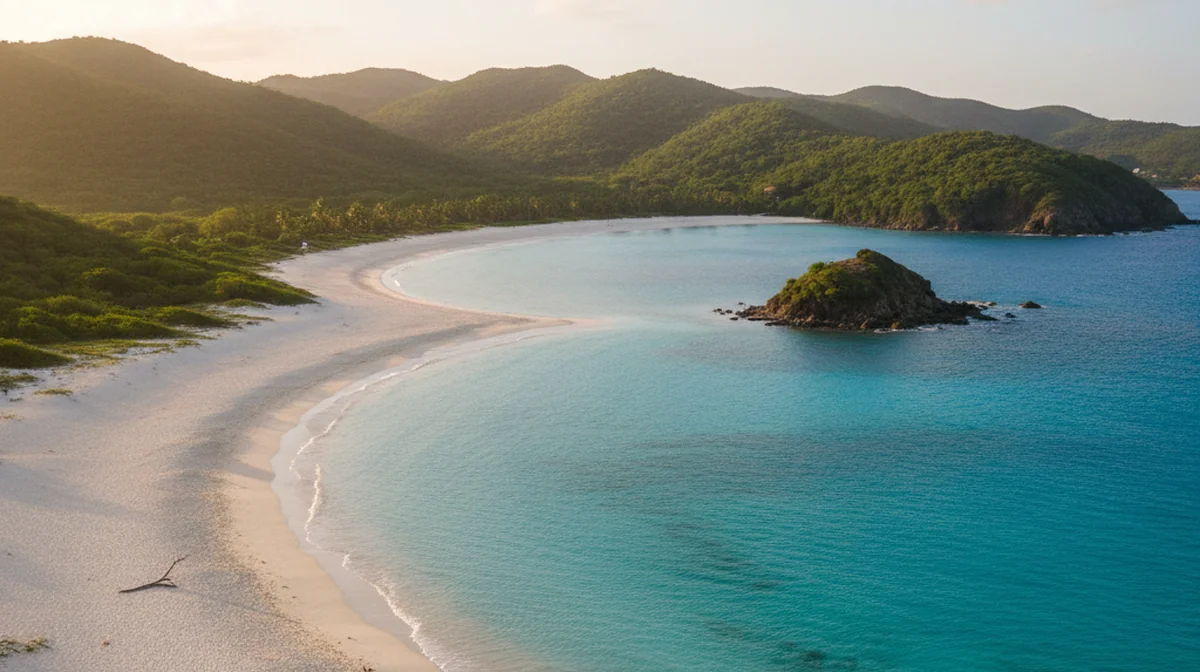
Trunk Bay before the Red Hook ferry arrives
The underwater snorkel trail empties out for the first two hours. A host who gives the guest the ferry-schedule logic turns an average morning into a private beach.

Expert short-term rental marketing to grow your bookings and nightly rate in St. John, U.S. Virgin Islands, Caribbean.
Sixteen services, one team. Everything below is built in-house and scoped to your property and market. Most owners start with the 12-Step System.
Every engagement is quoted to your portfolio. These are the ready-made scopes owners pick most — our Fall Special (55% off list or more) is already applied to the website, King Broker, Hotels and à la carte scopes. A clear proposal within 48 hours.
The work is public. Selected engagements and what changed — and reviews from the owners and managers behind them.
* Market averages from AirDNA and STR market reports. A single home's numbers depend on its size, its location and how it is marketed.
Cavmir is an Airbnb marketing agency. We build the brand, the direct-booking website and the marketing for short-term rentals in St. John.
St. John is the smallest of the three U.S. Virgin Islands and the one that hasn't been redeveloped — roughly 60% of the island is protected as Virgin Islands National Park, a land gift from Laurance Rockefeller that has defined the island's character for sixty years. Trunk Bay is one of the most photographed beaches in the Caribbean; Cinnamon Bay offers the longest swim-and-snorkel stretch; Maho Bay is a sheltered sea-turtle reliable; Salt Pond Bay is an end-of-road hike-access cove; Cruz Bay anchors the dining and ferry-arrival scene. The U.S.-passport, no-customs, direct-flight-to-STT routing makes this the most logistically simple Caribbean villa market for American travelers.
St. John's STR market is defined by villa inventory — the island has no large hotels, and the national-park protection has permanently capped supply. Peak season runs December through April, with February and March commanding the highest rates. The North Shore villas overlooking Trunk, Cinnamon, and Maho lead in premium; Cruz Bay and its surrounding hillsides command walkability premiums. Regulatory environment is light under U.S. territorial rules.
Nearby Markets: British Virgin Islands | Anguilla | St. Barts
Cavmir positions St. John villas for the American traveler who wants the Caribbean without the passport, the customs line, or the cruise-ship crowd — a guest segment that increasingly books direct once they find an operator they trust. Our direct-booking setup and cinematic photography of the national-park beach corridor serve this repeat-heavy market better than platform-only distribution.
St. John, the smallest of the three main U.S. Virgin Islands, was home to Taíno settlements until Danish colonization in 1718 established the sugar plantations whose stone ruins still dot the island's interior. The 1733 slave revolt — one of the earliest and most sustained in the New World — held the island for six months before French reinforcements from Martinique crushed the uprising. Denmark sold the Danish West Indies to the United States in 1917 for USD $25 million in gold, motivated by wartime concerns over German submarine access. St. John drifted as a quiet agricultural backwater through the first half of the 20th century.
The transformational event was Laurance Rockefeller's 1956 gift. After acquiring thousands of acres through his Jackson Hole Preserve foundation, Rockefeller donated 5,000 acres to the federal government, and Virgin Islands National Park was established in 1956 under President Eisenhower. The park expanded to cover roughly 60% of St. John's landmass plus 5,650 submerged acres. Development was forever constrained, Caneel Bay opened as the template low-density resort, and St. John became the under-the-radar alternative to St. Thomas's cruise-ship volume. Cruz Bay and Coral Bay anchor the two villa-rental zones today.
Cruz Bay, Chocolate Hole, and Great Cruz Bay anchor the accessible-luxury tier at USD $600–$2,200/night. Peter Bay and Rendezvous Bay command ultra-luxury pricing of $2,500–$8,000/night for Caneel-adjacent estates. Coral Bay on the east end offers privacy at a discount. Christmas/New Year is super-peak with 7-night minimums standard; Presidents' Week and February school break hold firm; summer (July–October) softens materially.
High seasonality. Peak: December 15–April 15. Super-peak: Christmas/New Year and Presidents' Week. Shoulder: late April, May, early December. Low: August–October (hurricane season). Missed revenue: the week after Thanksgiving, when weather is peak-quality and pricing has not fully engaged the holiday curve.
St. John operates under U.S. Virgin Islands territorial law. Short-term rental operators generally require a Hotel Room Tax account with the Bureau of Internal Revenue under Title 33, section 54 of the Virgin Islands Code, which taxes villa stays under 90 days, plus a USVI business license from the Department of Licensing and Consumer Affairs. The USVI Hotel Occupancy Tax of 12.5% is guest-collected and remitted to the Bureau of Internal Revenue. Fire-marshal inspection and certificate-of-occupancy compliance apply to transient-lodging use.
Virgin Islands National Park boundary restrictions shape what can be built, rented, or modified on or adjacent to parkland parcels — and a meaningful share of St. John's villa inventory sits on inholdings within or bordering the park. Federal environmental review can layer onto local permitting for coastal or hillside construction. Foreign ownership is permitted without residency restriction because the USVI is U.S. territory; FIRPTA withholding applies on sale by non-resident aliens. Work-authorization rules follow U.S. federal law. In March 2025 the governor proposed raising the tax on Airbnb-style rentals to 20%; Airbnb still collects 12.5%, and there is no cap.
The St. John strategic tip: understand the park-inholding status of any property before acquisition. Parcels within VINP boundaries face federal overlay on modifications, dock construction, vegetation clearing, and waterfront improvements that owners outside the park never encounter. This is not inherently bad — inholding scarcity supports values — but it is load-bearing to operations and must be priced into renovation budgets. Second — provision aggressively for ferry logistics. Every guest arrives via the Red Hook or Charlotte Amalie ferry from St. Thomas, and an operator who coordinates ferry timing, dock transfer, and a waiting vehicle captures five-star reviews that properties leaving guests to figure it out simply do not.
Third — lean into the park as the core marketing asset. Trunk Bay, Maho Bay, Cinnamon Bay, and the Reef Bay Trail are not amenities a competing Caribbean destination can replicate. Villa listings that feature specific trailheads, snorkel coves, and sea-turtle sighting spots convert measurably better than generic beach-and-pool descriptions. Fourth — the Caneel Bay reopening (long-delayed but progressing under the RIB Trust arrangement) will reset the St. John luxury benchmark when it lands; operators should position inventory now to ride that rising tide rather than compete against a reopened flagship unprepared.
St. John's challenges: hurricane exposure (Irma and Maria in 2017 devastated the island and recovery was uneven), ferry-only access with no commercial airport, limited workforce housing driving up staffing costs, high construction costs inside and adjacent to the park, and the unresolved Caneel Bay redevelopment saga that has constrained the luxury flagship segment for nearly a decade.
Caribbean hurricane insurance in the USVI is specialty and expensive. Wind, flood, and named-storm coverage required. Guardian, AIG, and Lloyd's of London specialty syndicates dominate the luxury tier. Budget USD $12,000–$40,000 annually for Peter Bay or Rendezvous Bay-tier estates. Building limits of USD $3–8 million plus liability. Business-interruption and named-storm deductibles warrant careful structuring.
The USVI operates a mirror tax system — U.S. federal income-tax rules apply but revenue flows to the USVI Bureau of Internal Revenue rather than the IRS. Qualified operators can access Economic Development Commission incentives (up to 90% income-tax reduction and 100% excise-tax exemption for certified entities). Hotel Occupancy Tax is 12.5%. Property tax is assessed at 1.25% of 60% of actual value (effective ~0.75%). FIRPTA applies on sale by non-resident aliens.
USVI mortgages for US buyers are accessible through FirstBank VI, Banco Popular VI, and Merchants Commercial Bank at rates roughly 50–100 bps premium to stateside equivalents. Typical 70–75% LTV on luxury properties. Non-US buyers face tighter LTV and documentation. Cash purchases dominate above USD $3 million.
St. John has no airport, a ferry for a front door and steep, winding roads, so a villa's own site carries a job no listing page does: it has to walk a family from the runway on St. Thomas to a steep driveway above Chocolate Hole, and convince them the number on the screen is the whole price. Joseph Boschulte, the territory's Tourism Commissioner, told a CAPA airline summit on 3 April 2025 that 90% of the source market is the continental US. The Department of Tourism counted almost 1 million airline passengers through the St. Thomas and St. Croix airports in 2025, and its first-quarter 2026 count of 303,388 arrivals was up 12% on a year earlier. A direct-booking website for a St. John home is built around that American guest, the ferry crossing and the territory's tax rules.
With an audience this American, the language and currency puzzles that shape a Mallorca or Paris build mostly disappear. Write in American English, quote in US dollars and leave out the currency switcher. Geography takes their place. A first-time guest from the mainland often doesn't know the island is reached by boat, that Cruz Bay and Coral Bay sit on opposite ends of a slow, winding drive, or that much of the shoreline belongs to the national park and has no houses on it. Airlift tells you which home airports to mention by name: the Department of Tourism reported new daily Dallas nonstops to St. Thomas in June 2025, with Chicago and Boston service due that December, and Breeze Airways starts flying from Tampa in December 2026. A Spanish version on its own URLs, tagged with hreflang, can come later for Puerto Rican and Latin American travellers; skip the translate widget, which produces pages search engines don't treat as a Spanish edition.
The tax line comes first. Title 33, section 54 of the Virgin Islands Code charges the hotel room tax on any hotel, villa, time share or other sleeping accommodation let for less than 90 days, at 12.5% for stays from 1 January 2016, and the Bureau of Internal Revenue tells operators to show it as a separate item on the guest's bill. Airbnb collects the same 12.5% of the listing price on its reservations of 89 nights and shorter, but a booking through your own site has no platform in the middle: you charge the tax, file the return and pay the Bureau by the 30th day after the month closes. Then the price display. The Federal Trade Commission's Rule on Unfair or Deceptive Fees, in force since 12 May 2025, names vacation rentals and wants the total, cleaning and every other mandatory fee included, shown more prominently than any other figure; the government's 12.5% may sit outside that total only if it appears before the guest pays. The business licence comes from the Department of Licensing and Consumer Affairs, which needs a tax clearance letter from the Bureau, zoning approval from Planning and Natural Resources, a police records check and a Fire Service inspection where one is required, so print the licence and room-tax account numbers in the footer and the rental terms. On guest data, the statute to know is the territory's breach-notice law, Title 14, sections 2209-2212, which gives guests a private right of action when card or ID numbers leak; take payments through a processor and keep passport scans out of your inbox. Run a consent banner for analytics and ad pixels too, since guests' home states set their own privacy rules. Confirm each point with the Bureau, DLCA and a Virgin Islands attorney or accountant.
Build the menu from the names guests type. Each north-shore beach earns a page measured from your door: Trunk Bay, which the Department of Tourism notes TripAdvisor placed among the Caribbean's top 10 beaches in its 2025 Travelers' Choice Best of the Best awards, then Hawksnest, Cinnamon, Maho and Francis Bay. Add the hillside neighbourhoods guests and buyers both search, from Chocolate Hole, Great Cruz Bay and Rendezvous Bay to Fish Bay and the Coral Bay valley, and a Cruz Bay page that gives the walk to the ferry dock. The getting-here page does the heaviest lifting. Public Works times the Red Hook ferry to Cruz Bay at about 20 minutes for $8.15 one way for a non-resident adult, with the last boat at 10:00 PM; the Charlotte Amalie boat runs about 45 minutes for $13, and the car barge about 30. That last-boat time decides whether an evening arrival sleeps on St. Thomas, so put it beside the flight advice. Then photograph what St. John guests filter on: the driveway's grade and whether a rental car can make it, the cistern, the generator or battery backup for hurricane season, bedroom air conditioning, cell signal on the deck, and the drive to a named beach in minutes. Careful SEO on each of those pages puts the answer in front of the person who asked.
GEO (generative engine optimization) means making sure that when someone asks ChatGPT, Gemini, Perplexity, Copilot or Google's AI Mode for a villa on St. John, your house is in the reply. American travellers are heading there fast. Longwoods International's American Travel Sentiment survey of 1,000 adults, fielded 7-9 July 2026, found 28% had used AI to plan a trip in the past six months, up from 19% in August 2024, and the most common use, at 54%, was finding attractions and activities. On St. John those attractions are the park's beaches and trails. The technical part is short: pages an assistant's crawler can reach, plus VacationRental or LodgingBusiness schema that labels each fact.
The questions start with logistics and move to scenery, and nearly all of them come in English. A family asks if Cruz Bay or Coral Bay is easier with toddlers and no car. A couple asks which north-shore bay stays quiet before the day boats arrive from St. Thomas. A group asks if they can still make the last ferry after a late landing, or if a house above Fish Bay needs four-wheel drive. Plenty are comparisons: St. John against St. Thomas for a first visit, Maho against Cinnamon for snorkelling with turtles, a villa week against a crewed charter in the British Virgin Islands. Longwoods found 44% of AI trip planners use it for ideas on places to visit and 42% to find places to eat, so a page that names the restaurants within a short drive of the house, or the trailhead closest to the gate, hands the assistant a sentence it can repeat with your property in it.
Settle each home's core facts in one block and paste identical wording into Airbnb, Vrbo, Booking.com and your site. On St. John that block covers the neighbourhood and the nearest named beach, the drive in minutes to the Cruz Bay ferry dock, bedrooms, bathrooms and sleeping capacity, the pool and which way the view faces, whether a jeep is needed or included, the power and water backup, the 12.5% room tax and whether your quote includes it, your DLCA licence and BIR account numbers, and the cancellation rule, spelling out what happens when a named storm shuts the airport. An example worth copying: "Three bedrooms, sleeps six, seven minutes by car from the Cruz Bay ferry dock, whole-house generator, pool facing Pillsbury Sound." When your site says generator and Vrbo says battery backup, an assistant holds two conflicting answers and little reason to pick yours, so recheck every listing after each edit.
Answer engines lean on the sources that already describe the island. The official voice is the U.S. Virgin Islands Department of Tourism, whose Visit USVI site carries island guides, flight and ferry details, and press releases on new routes and awards. The National Park Service's pages for Virgin Islands National Park describe the beaches and trails by name, and the Friends of Virgin Islands National Park post trail and event news; borrow their place names exactly. Local coverage comes from the St. John Source and its sister Source sites, The Virgin Islands Daily News, the Virgin Islands Consortium and the News of St. John blog, and digital PR on St. John works best with the stories those desks already run: the 8 Tuff Miles race, the St. John Celebration, park anniversaries, storm readiness and new flights. Keep the property name, phone and address identical on Airbnb, Vrbo, Booking.com and the site. Cavmir's July 2026 study of 550 Google AI answers across 15 U.S. markets found independent and regional operators took 82% of citations, with Airbnb or Vrbo appearing in 17% of answers; St. John wasn't in that sample, but the result shows a well-documented independent villa can be the one an assistant names.
Content marketing for a St. John villa means publishing the pages a mainland guest and an AI assistant both go looking for, in the order the island's calendar asks for them. Each one ties to a named place or a dated reason to come, and each carries the same quotable core: the place spelled the way the park and the Department of Tourism spell it, the minutes from your door, the price in US dollars with the room tax shown, and the date you last checked it.
Start with the three pages every guest reads before paying. The getting-here page covers the landing at Cyril E. King Airport, the taxi of about 30 minutes to Red Hook, the hourly ferry, the slower Charlotte Amalie boat, the car barge for anyone renting a jeep on St. Thomas, and a plan for a flight that lands after the last crossing. Name the newer gateways too, from the daily Dallas nonstops to Breeze's Tampa flights starting in December 2026. The price page shows the total first, then the 12.5% room tax, the deposit and the cancellation rule, which is what both the FTC rule and the Bureau's separate-line guidance point toward. The storms-and-utilities page explains the generator, the cistern, the hurricane-season refund policy and how you'll reach guests if a named storm forms. Link all three from the booking confirmation.
Next come the event guides, published early enough to rank. The 8 Tuff Miles guide goes live by early winter for the 28th running, listed for Saturday 27 February 2027: where runners park, where friends watch between Cruz Bay and Coral Bay, and which houses sit close to each end. The St. John Celebration guide covers the village nights, J'ouvert and the 4 July finale; the Department of Tourism dated the 2025 festival 29 June to 4 July, so post each year's schedule by spring. The park hands you two more hooks. Virgin Islands National Park was dedicated in Cruz Bay Park on 1 December 1956, when Laurance Rockefeller presented the deeds to 5,086 acres in front of about 900 people, which makes 1 December 2026 the 70th anniversary. And the park staged a Folklife Festival Revival on 27 March 2026 at the Cruz Bay Ball Field and on 28 March at the Annaberg Sugar Factory Ruins for the nation's 250th. A park history and culture page, updated whenever the park announces an event, gives local reporters a reason to link to you.
Round it out with the guides people put to assistants. A north-shore beach guide, one section per bay from Hawksnest to Francis, with parking, snorkelling, shade and the best hour to arrive. A Coral Bay guide for the quieter east end, covering the drive over from Cruz Bay, Salt Pond Bay, the Ram Head trail and where to eat. A Cruz Bay walking guide from the ferry dock to Mongoose Junction. A first-timer's comparison of St. John and St. Thomas, and a getting-around page on jeeps, taxis and the open-air safari taxis. A trails page built on the park's own names, Reef Bay, Ram Head and the Leinster Bay walk to Waterlemon Cay. Stamp each with the date you last checked it; guests trust a guide that shows its age, and a St. John Source writer is more likely to quote one.
St. John through 2027 and beyond: the supply ceiling imposed by Virgin Islands National Park is permanent, which structurally supports luxury villa values regardless of broader Caribbean dynamics. The Caneel Bay redevelopment trajectory is the single largest variable — a credible reopening would reset the island's luxury benchmark and lift comparable villa rates. EDC incentives remain politically durable and continue attracting capital. Hurricane-climate risk is the defining operational variable. Ferry-capacity expansion and any future airport discussion on adjacent islands bear watching. The market's conservation-anchored positioning is the most defensible in the Caribbean.
St. John is the Caribbean island whose defining feature is what was never built. Two-thirds of the island is Virgin Islands National Park, and that single conservation fact changes every marketing decision. Guests who choose St. John over St. Thomas or Tortola are self-selecting for quiet, for hiking, for Trunk Bay rather than cruise-port shopping. A listing that leans into that filter — the national-park trails, the Waterlemon Cay snorkel, the specific rhythm of Cruz Bay versus Coral Bay — outperforms listings that try to compete on generic Caribbean amenities. The audience here is smaller, but it is dramatically more loyal and willing to pay for editorial honesty.
What we love about marketing St. John is the post-Caneel rebuild moment. The island has spent years re-establishing its hospitality identity after the storms, and the properties that won are the ones that treated themselves as small independent hotels — with real point-of-view, photography that captures the hillside-villa architecture honestly, and welcome-book knowledge that separates resident-hosts from absentee owners. Guests here are quiet-money, conservation-minded, returning-family regulars. The marketing that converts them is editorial, not transactional. A listing that names the specific trails, the specific Cruz Bay dinner table, the specific morning ferry — that listing becomes the property a family books for the next ten Thanksgivings.
The picks Cavmir recommends for St. John welcome books — the details that make a stay feel like resident-knowledge rather than ferry-dock pamphlet.
The underwater snorkel trail empties out for the first two hours. A host who gives the guest the ferry-schedule logic turns an average morning into a private beach.
The new north-shore beach-bar complex replaced what was lost. Casual, local, unhurried. The pick that quietly photographs better than anything on the resort-facing side.
The ten-minute walk that gives guests the island's real scale. Gallery window-shopping, the ferry dock, the specific small-town rhythm. A proper orientation walk most guides skip.
The Terrace for the hillside-view fine-dining evening; Rhumb Lines for the Caribbean-fusion Cruz Bay courtyard. Both signal resident-host confidence rather than concierge default.
The Caribbean-dive-bar argument has a St. John answer. Skinny Legs is the locals'-lunch, yachtsmen's-pitstop, still-there institution. A host who routes guests to Coral Bay at least once looks like a resident.
Post-Easter through pre-hurricane-watch. Water is warmest, trails are quiet, Cruz Bay has breathing room. Prices soften meaningfully and the island feels the way regulars remember it.
The mile-long coastal trail into the island's best snorkel. A half-day that defines what St. John actually is, and the single experience guests most often name when they come back.
St. John's hills and unpaved roads make a four-wheel rental almost mandatory for villa guests; taxis work for Cruz Bay-only trips. A host who explains the logic prevents the most common first-day regret.
Representative Cavmir engagements on St. John. Property identifiers redacted; figures composited from internal analytics and market benchmarks.
Post-rebuild villa with a beautiful architectural reset but a marketing presence stuck in pre-storm frames. OTA-dependent, no direct-booking channel.
Rebuilt the brand around the quiet-conservation St. John guest. Architectural photography across two seasons, cinematic property film, direct-booking site with national-park itineraries in the welcome book.
Peak-season ADR up 44%. Direct-booking share grew to 39% of annual revenue. The property now holds a three-year repeat-family backbone that funds operations.
Quiet-side cottage losing to Cruz Bay inventory on search visibility. The Coral Bay location — an asset for the right guest — read as a liability in generic listings.
Repositioned the cottage around the Coral Bay identity. Welcome-book PDF anchored on Skinny Legs, the East End snorkels, the quieter-side-of-St.-John pitch. Photography re-shot to emphasise the silence the location actually offers.
Occupancy climbed from 58% to 79%. ADR up 24%. The Coral-Bay-as-feature positioning now attracts the repeat guest most owners in the area fail to capture.
Ultra-luxury estate with a Caneel-era pedigree missing the destination-wedding and family-reunion revenue streams peer properties were capturing.
Three-product brand build. Destination-wedding tear sheet distributed through Caribbean wedding planners. Multi-generational reunion product with chef-and-naturalist packages. Editorial-location availability for lifestyle shoots.
Event and reunion bookings now represent a substantial share of annual revenue. A single four-night reunion booking cleared $71K. Leisure ADR climbed on the elevated brand.
Yes. Cavmir works with short-term rental owners and boutique hotels in St. John and across USVI — property branding, listing optimization, photography direction, direct-booking websites, SEO, and paid campaigns. Properties near Trunk Bay, Cinnamon Bay and Virgin Islands National Park are exactly the kind of stays we market.
The market snapshot on this page shows average nightly rates around $495 with occupancy near 65% for St. John. Treat those as directional market averages, not guarantees — the spread between a well-marketed property and a poorly marketed one in the same market is wide.
St. John sees moderate seasonality — clear peaks, but respectable demand through the rest of the year. That shoulder-season demand is exactly where marketing earns its keep, because travelers have more choices and pick the property that looks the part.
St. John is comparatively light on short-term rental regulation today, but rules change quickly in this industry. Confirm current requirements with local authorities before you list. Cavmir handles the marketing side; we don't provide legal or permitting advice.
Give guests a way to book you without a platform in the middle: a fast direct-booking website, a complete Google Business Profile, and follow-up that brings past guests back. Cavmir builds that stack — see vacation rental SEO — so your repeat St. John guests stop paying platform fees to find you.
It depends on scope. Current plans and one-time project pricing are on the pricing page — most owners start with a listing overhaul or the 12-step system. A conversation about your property costs nothing: contact Cavmir.
Send us the listing and we'll tell you what we'd change. Not a pitch deck — a straight read on your photos, your title, your rates against the St. John comp set, and whether a direct-booking site would pay for itself.
You'll hear back from a person, usually inside one business day. If we don't think we can move your numbers, we'll say so. Cavmir is a short-term rental marketing agency — we position and market properties, we don't manage them.
Demand in St. John peaks around January, February and March and runs quietest around August through October. Here is how the year actually books — and what to do about each stretch of the calendar.
December through April is the high season, when mainland visitors escape winter for the national-park beaches and the Christmas and New Year weeks sell out first. Steady dry weather and holiday travel keep the whole winter firm, and the island's small supply of homes tightens it further. Price the holidays at the top of your range and set minimum stays a year out, because St. John's limited inventory rewards early, confident pricing.
Spring stays strong into April on warm water and thinner crowds, then June and July lift again around the St. John Celebration and summer family travel. This is the window to convert repeat guests and to court couples who want Trunk Bay and Cinnamon Bay quieter than peak. Lean on midweek angles and the festival to keep the calendar full as demand ebbs and flows.
August through October is the softest stretch and the heart of storm season, when the island goes genuinely quiet. Use the window for maintenance, a photo refresh and any storm-readiness work, and court longer stays from remote workers who want the beaches to themselves. Keep the rate honest rather than dark, and plan the autumn around a real downtime.
The Christmas and New Year weeks book the furthest out, often close to a year ahead given the scarce inventory, and the summer Celebration and 8 Tuff Miles weekend fill early. Shoulder-season couples move on shorter notice. Lock the holiday and event weeks early and firm, then keep the shoulders responsive.
St. John runs on week-long stays, with the holidays and the summer Celebration skewing longest, and the couples layer filling shorter trips across the shoulders. The island's limited supply of homes keeps the calendar tight, so full-week blocks dominate. That rhythm rewards a host who markets to loyalty and books the peak weeks early.
The property that wins is a private home with a pool and sweeping views near Cruz Bay or across the north-shore hills, close enough to the ferry and the park beaches to make a car optional but a jeep welcome. Privacy, the view and the pool carry the booking on an island where much of the shoreline is protected parkland. A comfortable, well-designed home that frames the water sells itself.
Build the listing around the view, the pool and the privacy, with photography that captures the north-shore water and the park beaches nearby. Price the holidays and the summer Celebration a year out, since St. John's scarce inventory and dry-season demand reward early, confident pricing. Add a Google Business Profile and a direct-booking site so repeat guests and families come straight back to you. That listing, imagery and local SEO work is the marketing layer Cavmir builds for St. John hosts, and this small, loyal market makes it compound quickly.
December through April is the high season, topped by the Christmas and New Year weeks and carried by national-park beach travelers. June and July lift again around the St. John Celebration and summer families, while August through October is the quiet heart of storm season.
The Christmas and New Year weeks book the furthest ahead, often close to a year out given the scarce inventory, and the summer Celebration and 8 Tuff Miles weekend fill early. Shoulder-season couples move on shorter notice, so lock the holiday and event weeks early and keep the shoulders responsive.
This is a fly-in market with no airport of its own, so guests fly into St. Thomas and finish by ferry into Cruz Bay. New York, Atlanta, Miami, Boston and Charlotte carry most of the volume, and because it is a US territory no passport is needed, which widens the mainland audience.
A private pool, sweeping water views and a location near Cruz Bay and the ferry lead the list, followed by strong air conditioning and jeep-friendly parking for the hilly roads. On St. John the setting and privacy carry the booking, so the view and the pool matter most.
Talk to Cavmir today. We'll show you exactly what your St. John property is leaving on the table — and how fast we can change that.
Book a Free Strategy Call