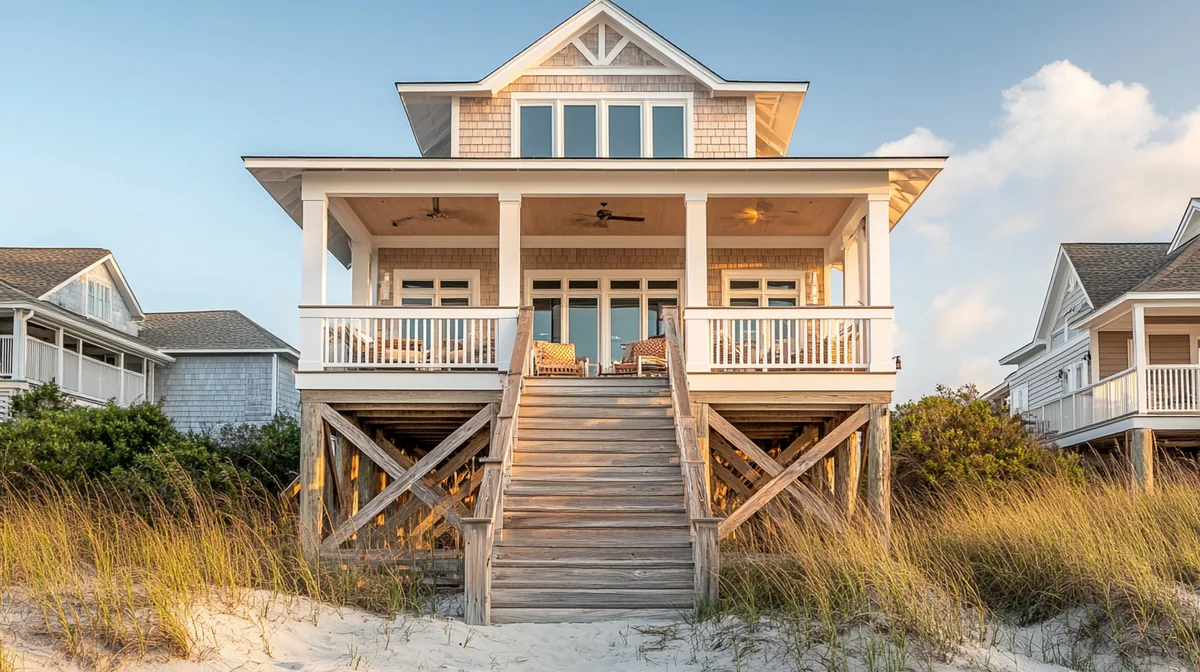



Morning
Cane Garden Bay swim before the charter boats arrive
The bay is quietest before ten. A host who points this out — and flags the beach-bar opening times — reads resident.

Expert short-term rental marketing to grow your bookings and nightly rate in British Virgin Islands, BVI, Caribbean.
Sixteen services, one team. Everything below is built in-house and scoped to your property and market. Most owners start with the 12-Step System.
Every engagement is quoted to your portfolio. These are the ready-made scopes owners pick most — our Fall Special (55% off list or more) is already applied to the website, King Broker, Hotels and à la carte scopes. A clear proposal within 48 hours.
The work is public. Selected engagements and what changed — and reviews from the owners and managers behind them.
* Market averages from AirDNA and STR market reports. A single home's numbers depend on its size, its location and how it is marketed.
Cavmir is an Airbnb marketing agency. We build the brand, the direct-booking website and the marketing for short-term rentals in British Virgin Islands.
The British Virgin Islands are the sailing capital of the Caribbean — a sixty-island archipelago whose protected waters, steady trade winds, and short inter-island passages have made it the most chartered cruising ground in the world. The Baths at Virgin Gorda are among the most recognizable beaches in the region; Jost Van Dyke's Soggy Dollar and Foxy's are Caribbean institutions; Anegada's flat coral geography and lobster shacks give it a character no other BVI island shares; Cane Garden Bay is Tortola's postcard stretch; the Bitter End Yacht Club anchors the North Sound; Norman Island is the setting Stevenson drew on for Treasure Island.
The BVI's STR market pairs traditional villa inventory with a distinctive sailing-adjacent segment — properties that serve as pre-charter, post-charter, and non-sailing-family accommodation for groups moving through the archipelago. Virgin Gorda commands the strongest rates for villa inventory; Tortola leads in volume. Peak season runs December through April; summer occupancy depends heavily on weather and hurricane-season positioning. Regulatory environment is medium, with required licensing through the BVI Tourist Board.
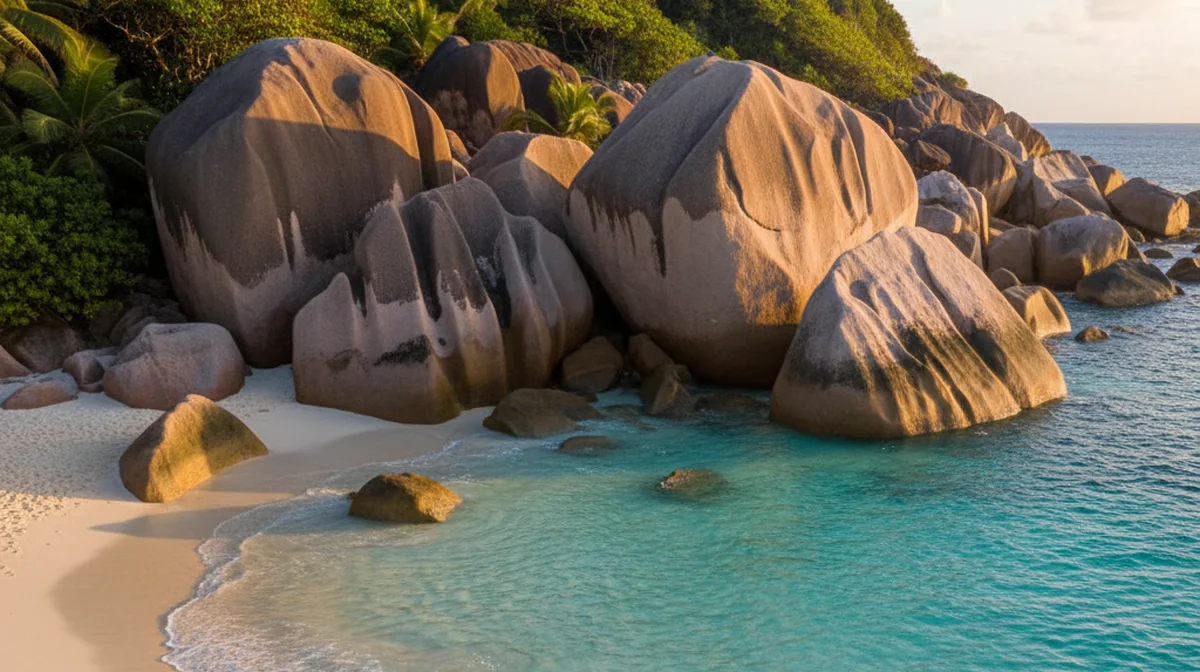
Cavmir's global distribution and Virtuoso travel-agent channel reach the advisor-booked sailing family planning a full BVI week a year ahead — the guest segment that drives BVI's highest-value villa bookings. Our cinematic photography and influencer marketing position individual villas within the broader BVI itinerary story, which is how the traveler actually plans this market.
The British Virgin Islands — roughly 60 volcanic islands and cays scattered across the Sir Francis Drake Channel — were settled by Arawak and later Carib peoples long before Columbus charted them in 1493 and named them for Saint Ursula's companions. The Dutch briefly held Tortola in the 1640s before the British annexed the territory in 1672, where it has remained a British Overseas Territory ever since. Sugar and cotton plantations defined the colonial economy, and emancipation in 1834 reshaped the islands into a smallholder society. Through the 20th century the BVI remained an agrarian backwater compared to the USVI across the channel.
Tourism arrived almost by accident. In the 1960s, Charlie and Ginny Cary launched The Moorings from a handful of boats in Road Town, inventing the bareboat charter industry and anchoring the BVI as the sailing capital of the Caribbean. The 1984 passage of the BVI Business Companies Act created a parallel offshore financial-services economy. Today charter yachting, villa tourism concentrated on Tortola's north shore and Virgin Gorda's Mahoe Bay and Mountain Trunk Bay, and a discreet ultra-luxury private-island tier (Necker, Guana, Scrub) define the visitor market.
Virgin Gorda anchors the luxury tier — Mahoe Bay and Leverick Bay villas with pools and channel views clear USD $1,400–$5,500/night in peak weeks. Tortola's Cane Garden Bay, Long Bay, and Smuggler's Cove sit mid-luxury at $700–$2,200/night. Jost Van Dyke commands a specific sailing-adjacent segment. Christmas/New Year is super-peak with 10-night minimums standard; February–April sustained premium; summer discounting from July through October is steep.
High seasonality. Peak: December 15–April 15. Super-peak: Christmas/New Year and February half-term. Shoulder: late April through early June and late November. Low: August through October (hurricane season). Missed revenue window: early December, when weather is peak-quality but pricing lags resort-season positioning.
The BVI Tourist Board administers vacation-rental oversight, and operators generally require a Trade License from the Department of Trade, Investment Promotion and Consumer Affairs plus registration with the Tourist Board. Non-Belongers (foreign owners) must secure a Non-Belonger Land Holding License from the Ministry of Natural Resources before acquiring property — a process that typically runs 6–12 months and requires a development or use commitment. Hotel Accommodation Tax is 10% collected from guests; separately, each visitor pays a US$10 Environmental and Tourism Levy at the port of entry.
Most foreign buyers structure ownership through a BVI Business Company (BVIBC), which offers confidentiality, simplified estate planning, and favorable corporate treatment — though the license framework still applies to the underlying asset. The 2018 Economic Substance Act added reporting obligations for certain BVIBCs, and 2023–2024 beneficial-ownership transparency reforms aligned the territory with OECD standards. Work permits for foreign staff remain tightly controlled; local hiring is structurally encouraged. No restrictive STR-specific ordinance exists as of 2026, but Tourist Board quality inspections have tightened.
The BVI strategic tip: budget realistically for the Land Holding License runway. First-time foreign buyers routinely underestimate the 6–12 month approval timeline, the development-commitment expectation, and the renewal implications if the property is later sold. Structure the acquisition with a BVI-resident attorney and a corporate-services provider from day one. Second — position toward the charter-adjacent market. A Virgin Gorda or Tortola villa that markets as the land-based bookend to a Moorings or Dream Yacht charter captures a specific, repeat-visiting segment willing to pay premium for turnkey provisioning and dinghy-dock access.
Third — invest in water and power resilience. Cistern capacity, reverse-osmosis backup, and properly sized generator plus solar are not luxury amenities in the BVI, they are revenue-protection infrastructure. Hurricane Irma in 2017 demonstrated that properties which restored operations fastest captured disproportionate market share for the subsequent three seasons. Fourth — cultivate the UK and Northeast-US repeat-guest channel directly. The BVI's guest base is narrower and more loyal than Turks and Caicos or the Bahamas; a well-run villa accumulates a repeat book that smooths shoulder-season bookings. Direct email and a light CRM outperform OTA dependency at the luxury tier.
BVI challenges: hurricane exposure (Irma in 2017 reshaped the market for years), limited commercial air access (most arrivals route through San Juan or St. Thomas then ferry or Cape Air puddle-jumper), high import costs on construction and FF&E, workforce-visa complexity under Belonger-priority rules, and a Land Holding License regime that slows both acquisition and exit timelines materially.
Caribbean hurricane coverage in the BVI is specialty and costly. Wind-pool, flood, and named-storm endorsements are non-negotiable. Lloyd's of London specialty syndicates plus regional carriers (NAGICO, Colonial, BVI Insurance Services) dominate. Budget USD $10,000–$35,000 annually for luxury villas, with building limits of USD $3–6 million plus liability. Per-event deductibles are substantial; business-interruption riders are worth the premium.
The BVI levies no income tax, no corporation tax, and no capital gains tax — the territorial system is a structural advantage. Stamp Duty on acquisition runs 4% for Belongers and 12% for non-Belongers, a meaningful transaction cost to underwrite at purchase. Annual property tax is nominal. Hotel Accommodation Tax of 10% is guest-collected. US owners remain subject to US tax on worldwide rental income; foreign-tax-credit planning is limited because the BVI levies no matching tax.
BVI mortgages for foreign buyers are available through Scotiabank, CIBC FirstCaribbean, and RBC Royal Bank BVI. Typical 60–65% LTV for non-Belongers with rates premium to US equivalents. Most luxury buyers use US or UK financing or pay cash given the Land Holding License timeline, which complicates traditional closing contingencies.
The territory counted 1,202,008 visitor arrivals in 2025, up from 1,091,742 the year before, and more than 875,000 of them stepped off cruise ships for the day. Your guest belongs to the far smaller group that sleeps ashore, usually after a ferry from St. Thomas or a short flight into Beef Island, and often on the nights either side of a week on a charter boat. A direct-booking website for a villa on Tortola, Virgin Gorda, Jost Van Dyke or Anegada has to win that stayover guest on three counts: the currency and the wording they use at home, the legal basics a careful booker checks, and the boat-and-taxi logistics between the arrival dock and your front door.
Recent arrival reporting ranks the United States first, Canada second and the United Kingdom third among the territory's markets, so this is an English-language site before it's anything else. Put the translation budget into wording instead. A family from Surrey plans a February half-term holiday; a family from Connecticut plans a spring-break vacation; a good page carries both phrases without sounding odd. The official currency is the US dollar, so quote and charge in US$ and print the symbol that way on every rate table, because a guest from Toronto who sees a bare dollar sign assumes Canadian money. An optional converter showing CA$ and £, labelled as an estimate, saves a round of emails. Separate hreflang versions only pay off when the content changes by market: an en-GB page that walks a London guest through the connection and lists the half-term weeks, and an en-US page built around East Coast flights into San Juan and St. Thomas. A browser translate button does neither job.
Start with the tax, because guests compare. The Hotel Accommodation Tax is 10% and covers villas, houses and cottages as well as hotels, for any stay of six months or less, and Airbnb already adds it at 10% of the listing price on every BVI reservation. On a booking your own site takes, nobody adds it for you, so show it as a separate line before the pay button and remit it yourself; a direct rate that looks cheaper only because the tax is missing comes back to bite at filing time. Then the licences. If you hold the land as a non-Belonger, Policy No. 1 of 2023 builds rental approval into the land-holding licence on condition that you hold a trade licence, and it formalised the rule, first brought in during September 2022, that the property be registered on the Ministry's website before you advertise it. Put the trade licence number on the booking page and in the footer. Watch the Virgin Islands National Tourism Policy 2026-2036 as well, approved by Cabinet on 17 June 2026 and led by the Ministry of Tourism, Culture and Sustainable Development, for any accommodation standards that follow it. Last comes the cookie banner. The Data Protection Act, 2021 generally asks for express consent and leaves out the GDPR's legitimate-interests ground, company fines reach US$250,000 on summary conviction and US$500,000 on indictment, and since 11 May 2026 the territory has its first Information Commissioner, Melissa Brewley, to enforce it. Hold analytics and ad tags until the guest opts in, and run every point here past a BVI attorney and your accountant before launch.
Guests plan this territory island by island and bay by bay, so structure the site the same way. Give Tortola's north shore its own pages (Cane Garden Bay, Brewers Bay, Long Bay, Smuggler's Cove), then Road Town and Nanny Cay for the marina crowd, Virgin Gorda's Spanish Town, Savannah Bay, Mahoe Bay and the North Sound, Jost Van Dyke's White Bay and Great Harbour, and Anegada's Loblolly Bay and Cow Wreck Beach. A getting-here page earns more trust than any gallery: the ferry from Charlotte Amalie or Red Hook to West End or Road Town, the flight into Terrance B. Lettsome International on Beef Island, the onward boat to Spanish Town or the North Sound, and who meets the guest at the dock with the bags. Then answer what this market filters on: the nearest dinghy dock or mooring field, the cistern and the backup generator, how steep the drive up is and which rental car handles it, and the walk to the sand in minutes. Photograph the pool facing the Sir Francis Drake Channel, the dock at the bottom of the hill, and the road itself, so nobody arrives surprised.
GEO (generative engine optimization) is the work of getting your villa into the answers ChatGPT, Gemini and Google's AI give when a traveller asks about these islands. The territory's biggest market is already asking. MMGY Global's summer 2026 Portrait of American Travelers, a survey of over 4,300 U.S. adults, found that 52% of active leisure travellers have used AI to help plan a trip, a 10-point rise on the previous year, with ChatGPT used by 57% of those AI users and Gemini by 42%. On how answers pick their sources, Cavmir's July 2026 study of 550 Google AI answers across 15 U.S. markets found independent and regional operators took 82% of citations, and Airbnb or Vrbo appeared in 17% of answers. It covered mainland markets only and says nothing about the BVI itself.
Most prompts about these islands are logistics puzzles. A family asks where to stay on land for a few nights before collecting a charter boat in Road Town, or after handing it back at Nanny Cay. A couple asks for a quiet villa on Virgin Gorda within reach of The Baths and Savannah Bay. Sailors ask which Tortola rental sits closest to Nanny Cay for the 2027 BVI Spring Regatta, March 29 to April 4. Others want to know whether to fly into Beef Island or take the ferry from St. Thomas, whether Anegada deserves an overnight, where to sleep ashore on Jost Van Dyke after Foxy's on New Year's Eve, and whether a car is worth it on Tortola's hills. Given where guests come from, nearly all of it arrives in English, phrased the British way and the American way, so a site whose own FAQ uses both "holiday" and "vacation", and both "half-term" and "spring break", hands the answer engine the exact wording it is trying to match.
Answer engines lift short, plain statements that agree everywhere they appear. Write one fact block per property and paste it, word for word, into the site and the Airbnb, Vrbo and Booking.com listings: the island and bay, sleeps, bedrooms and bathrooms, the trade licence number, the walk in minutes to the beach or dinghy dock you name, the drive in minutes to the Road Town or Spanish Town ferry, and whether guests need a car. State the money facts in the same words each time: rates in US$, the 10% Hotel Accommodation Tax, the US$10 Environmental and Tourism Levy each visitor pays at the port of entry, and your cancellation and named-storm policy in a single sentence. Mark the page up with rental and FAQ schema and keep every fact in crawlable text, never inside a photo or a PDF. A page that times the walk to the Leverick Bay dinghy dock gets quoted; a page that says "close to everything" gets skipped.
Answers about the territory draw on a short list of sources, so be present in them. The BVI Tourist Board's bvitourism.com runs a Stays page for each of Tortola, Virgin Gorda, Jost Van Dyke and Anegada, plus an events calendar carrying the Anegada Lobster Festival and the Emancipation Festival; ask the board how a villa gets onto those island pages. Government notices on gov.vg cover tax and tourism policy. The local press is read by residents and repeat visitors alike: the BVI Beacon, BVI News, Virgin Islands News Online and The Island Sun all cover festivals, regattas and new openings, and Caribbean Journal has written about Anegada for American readers. For sailors, the Spring Regatta organisers at Nanny Cay, the charter companies' guest guides and the sailing press are the digital PR route that carries weight. Keep your name, island, bay and phone number identical on Airbnb, Vrbo, Booking.com and the site, so every mention points at one place.
Content marketing in this territory means writing the guides that a Google searcher and an answer engine both reach for when a trip is built around boats, ferries and festivals. Each page below ties to a dated or recurring reason to travel, carries its facts in plain sentences a machine can lift, and links straight to your booking page. Publish them in the order given, starting this autumn, so each one is indexed before the demand it serves arrives.
Begin with a charter shore-base guide: the nights before and after a week on the water, the drive to the Road Town and Nanny Cay charter bases, where to provision, and what to do with luggage on changeover day. Next, a 2027 BVI Spring Regatta page live by December, with the March 29 to April 4 window, the Scrub Island Race on March 30, the Nanny Cay Cup Round Tortola Race on March 31, the three racing days from April 2 to 4, and the best spots to watch from shore. Then a New Year's page for Jost Van Dyke and the North Sound, covering Foxy's, the anchorages and where to sleep within a short boat ride, written a full year ahead because those weeks go first. Each guide should give the distance from your villa in minutes and name the docks and mooring fields nearby, so an AI can place you on its map of the week.
The most urgent page is Anegada: this year's Anegada Lobster Festival runs November 27 to 29, 2026, and a guide to reaching the island that weekend, where to sleep and how to spend the hours between meals at Loblolly Bay and Cow Wreck Beach should go up now. The 72nd BVI Emancipation Festival ran from July 23 to August 8, 2026, and it returns every summer around the August holidays, so a family-and-homecoming page written this winter is ready when next year's dates are announced. Add a storm-season page that states your named-storm cancellation rule, your generator and cistern, and how you communicate when a system forms, since late-summer bookers will put that question to an AI before they put it to you.
The evergreen layer comes last and lasts longest: one page per island with the bays guests name, a getting-here page covering St. Thomas, San Juan and Beef Island, a car-or-no-car page for Tortola's ridge roads, a guide to The Baths with the best time to arrive ahead of the day boats, and a money page that sets out US$ pricing, the 10% Hotel Accommodation Tax and the US$10 levy at the port. Refresh each one every year with the new dates and keep its facts word for word with your listings.
The BVI through 2027 and beyond: the charter industry remains the demand engine, and post-Irma rebuilding has largely normalized capacity. Expect continued tightening of beneficial-ownership transparency as the territory defends its financial-services sector against EU and OECD listings. The Land Holding License regime is politically durable and limits speculative supply growth, which structurally supports yields for existing owners. Air access remains the capacity ceiling — any Beef Island runway extension or expanded St. Thomas ferry capacity would materially reprice the market. Hurricane-climate risk is the defining operational variable. The ultra-luxury private-island tier (Necker, Guana, Oil Nut Bay) will continue to anchor brand visibility above the villa market.
The British Virgin Islands are the Caribbean's sailing capital, and that single fact reshapes everything about how a listing should be marketed. Guests who book here are not resort-shoppers — they are boat-curious, itinerary-minded, and they measure a property partly by how easily it plugs into the water. A villa on Tortola or Virgin Gorda that reads like a standard Caribbean rental leaves money on the table; a villa that reads like the beautiful shore-side anchor of a sailing week — proximity to The Baths, dinghy-distance from Saba Rock, a host who knows which captain runs the cleanest day charter to Jost Van Dyke — commands materially higher rates from a materially more loyal guest.
What we love about marketing the BVI is how specific the reference points are. The Painkiller at Soggy Dollar Bar, Willy T's, Foxy's New Year's party, the Bitter End Yacht Club, Hog Heaven's Tortola ridge view — these are not generic Caribbean tropes, they are shorthand that serious guests already know. A listing that deploys that shorthand signals insider access; a listing that avoids it reads interchangeable. The BVI guest is also a repeat guest — families who find the right villa come back in the same week every year for a decade. Editorial-quality marketing here compounds in a way it does almost nowhere else in the Caribbean.
The picks Cavmir recommends for BVI welcome books — the details that separate sailing-literate hosts from generic-Caribbean listings.
The bay is quietest before ten. A host who points this out — and flags the beach-bar opening times — reads resident.
The panoramic down-island view from the Ridge Road perch. Unfussy ribs, sunset that photographs itself. The pick that consistently outperforms any beach-bar sunset for first-time BVI guests.
The working-harbor walk most guests skip. Pusser's Road Town for the painter-of-boats lunch, the customs-house architecture, the non-resort BVI that repeat guests come back for.
Saba Rock's re-opened dockside dining for the yachting-set photograph; Bitter End for the legacy North Sound evening. Both require a boat, which is exactly the point.
The original. The bar that invented the drink, the swim-up beach that gave it the name. A host who routes guests here (and warns them about the ferry timing) signals actual BVI fluency.
Post-spring-charter, pre-hurricane-watch. The trade winds are still reliable, the anchorages empty out, prices settle. The window sophisticated repeat guests already know about.
Arrive by eight, beat the charter fleet. The granite-boulder grotto swim is a different experience at opening than at noon. A host who explains the timing saves the day.
The BVI answer is almost always a captained day-charter unless the guest is an actual sailor. A host with two trusted captain contacts on speed-dial converts more five-star reviews than any amenity.
Representative Cavmir engagements in the BVI. Property identifiers redacted; figures composited from internal analytics and market benchmarks.
Architecturally significant villa above North Sound with a weak digital presence. OTA-only distribution, no narrative connecting the property to the sailing culture that actually fills the calendar.
Rebuilt the brand around the North Sound context. Cinematic property film shot across a full sailing week, direct-booking site with itineraries tied to Bitter End and Saba Rock, welcome-book PDF authored for the sailing-literate guest.
Peak-winter ADR up 38%. Direct-booking share climbed to 41% of annual revenue. Repeat-family bookings now fill the two highest-value weeks of the year twelve months ahead.
Mid-market cottage competing on price against generic Cane Garden Bay inventory. No differentiation, flat shoulder-season demand.
Differentiated on the Tortola-resident angle. Welcome-book PDF with a full first-morning itinerary (Cane Garden Bay swim, Bomba-shack lunch, Hog Heaven sunset). Photography re-shot to emphasise the north-shore context rather than the interiors.
Occupancy climbed from 61% to 82%. Shoulder-season ADR up 29%. Review velocity accelerated; platform ranking compounded the gains.
Ultra-luxury estate missing the private-charter and family-reunion revenue streams that peer properties were capturing. Pure leisure-rental positioning.
Three-product brand build. Private-charter-base tear sheet distributed through Caribbean yacht brokers. Multi-generational family-reunion product with integrated chef and captain packages. Editorial-location availability for lifestyle-brand shoots.
Charter-base and event bookings now represent a meaningful share of annual revenue. A single multi-generational family booking cleared $78K across nine nights. Leisure ADR climbed on the elevated brand.
Yes. Cavmir works with short-term rental owners and boutique hotels in the British Virgin Islands — property branding, listing optimization, photography direction, direct-booking websites, SEO, and paid campaigns. Properties near The Baths at Virgin Gorda, Anegada and Jost Van Dyke are exactly the kind of stays we market.
The market snapshot on this page shows average nightly rates around $625 with occupancy near 63% for the British Virgin Islands. Treat those as directional market averages, not guarantees — the spread between a well-marketed property and a poorly marketed one in the same market is wide.
Demand in the British Virgin Islands is distinctly seasonal — a strong peak stretch carries much of the year, which makes pricing discipline and early-calendar marketing matter more, not less. The properties that win are the ones already visible before the peak begins.
the British Virgin Islands sits in the middle of the regulatory spectrum — some registration or permit requirements typically apply. Rules change often in this industry, so confirm the current requirements with local authorities before you list. Cavmir handles the marketing side; we don't provide legal or permitting advice.
Give guests a way to book you without a platform in the middle: a fast direct-booking website, a complete Google Business Profile, and follow-up that brings past guests back. Cavmir builds that stack — see vacation rental SEO — so your repeat the British Virgin Islands guests stop paying platform fees to find you.
It depends on scope. Current plans and one-time project pricing are on the pricing page — most owners start with a listing overhaul or the 12-step system. A conversation about your property costs nothing: contact Cavmir.
Send us the listing and we'll tell you what we'd change. Not a pitch deck — a straight read on your photos, your title, your rates against the British Virgin Islands comp set, and whether a direct-booking site would pay for itself.
You'll hear back from a person, usually inside one business day. If we don't think we can move your numbers, we'll say so. Cavmir is a short-term rental marketing agency — we position and market properties, we don't manage them.
Demand in British Virgin Islands peaks around January, February and March and runs quietest around September through October. Here is how the year actually books — and what to do about each stretch of the calendar.
December through April is the charter and villa high season, when the trade winds are steady, the sailing is at its best and the Christmas and New Year weeks sell out first. The Spring Regatta caps the run in late March with a rush of sailors. Price the holidays and regatta week at the top of your range and set them a year out, because the yachting crowd plans early and pays for the calm-weather window.
May and June are gracious shoulder months with warm water and thinner crowds, good for couples and honeymooners who want the islands quieter. The sailing stays excellent and prices ease, which draws a value-minded charter guest. Lean on midweek deals and multi-island itineraries to keep the calendar moving before summer softens.
September and October are the true lulls, the heart of storm season, when many businesses slow and the islands go quiet. Use the window for maintenance, a photo refresh and any storm-readiness work, and court the occasional long stay. The August Emancipation Festival gives late summer a brief lift, but plan the autumn around a genuine downtime.
The Christmas and New Year weeks and Spring Regatta book the furthest out, often close to a year ahead, and villa groups lock peak weeks early. Shoulder-season couples move on shorter notice. Set the holiday and regatta dates early and firm, then keep spring and summer pricing flexible for the short-fuse layer.
The islands run on week-long stays, whether that is a villa takeover or a shore base bracketing a charter, with the holidays skewing longest. Couples fill in shorter trips across the shoulder months. It is a week-driven calendar that rewards hosts who market to both the sailing crowd and the villa groups.
The property that wins is a private villa with a pool and commanding water views on Tortola or Virgin Gorda, or a well-placed base near a marina and ferry dock for the sailing crowd. Space, privacy and the view carry the booking, and easy access to provisioning and a boat matters more than being on a particular beach. Guests are buying the islands and the water, and the home should frame both.
Build the listing around the water, whether that is a private villa with a pool and views or a base near a marina and ferry for the sailing crowd, with photography that sells the setting and the privacy. Price the holidays and Spring Regatta a year out, since the yachting calendar plans early, and lean on repeat charter guests and villa groups. Add a Google Business Profile and a direct-booking site so returning sailors come straight back. That listing, imagery and local SEO work is the marketing layer Cavmir builds for BVI hosts.
December through April is the charter high season, with the Christmas and New Year weeks at the top and the Spring Regatta capping it in late March. May and June are pleasant shoulders, while September and October are the quiet heart of storm season, briefly lifted by the August Emancipation Festival.
The holiday weeks and Spring Regatta book the furthest ahead, often close to a year out, and villa groups lock their peak weeks early. Shoulder-season couples move on shorter notice, so set the holiday and regatta dates early and firm and keep spring and summer pricing flexible.
This is a fly-in market with no direct long-haul service, so guests route through San Juan or St. Thomas and finish by small plane or ferry. New York, Miami, Atlanta and Boston drive the volume, with Toronto adding a Canadian layer. Marketing to the US East Coast sailing and villa audiences covers most of the calendar.
A private pool, commanding water views and easy access to a marina or ferry lead the list, followed by strong air conditioning and reliable backup power. Guests are buying the islands and the sailing, so the setting and easy access to the water matter more than being on any single beach.
Talk to Cavmir today. We'll show you exactly what your British Virgin Islands property is leaving on the table — and how fast we can change that.
Book a Free Strategy Call