


Morning
Sunrise at the Airport Mesa vortex
Short uphill walk, panoramic three-sixty view, fewer crowds than Cathedral Rock before 7am. The golden-hour light on the red rocks is what guests came for whether they know it yet or not.

Expert short-term rental marketing to grow your bookings and nightly rate in Sedona, Arizona, USA.
Sixteen services, one team. Everything below is built in-house and scoped to your property and market. Most owners start with the 12-Step System.
Every engagement is quoted to your portfolio. These are the ready-made scopes owners pick most — our Fall Special (55% off list or more) is already applied to the website, King Broker, Hotels and à la carte scopes. A clear proposal within 48 hours.
The work is public. Selected engagements and what changed — and reviews from the owners and managers behind them.
* Market averages from AirDNA and STR market reports. A single home's numbers depend on its size, its location and how it is marketed.
Cavmir is an Airbnb marketing agency. We build the brand, the direct-booking website and the marketing for short-term rentals in Sedona.
Sedona's red-rock landscape is one of the most distinctive natural settings in North America. Cathedral Rock at sunset, Bell Rock, the vortex sites at Airport Mesa, and the slot canyons of Oak Creek give the market a visual identity that no other American destination can replicate. Sedona also draws a specific kind of traveler — one seeking wellness, hiking, stargazing, or a spiritual reset — who books premium properties for four- and seven-night stays.
Sedona's STR market is shielded by Arizona state law (preempting local STR bans since 2016) and by a visitor base that is older, higher-income, and more willing to pay for design-forward properties with private hot tubs and red-rock views. Uptown and West Sedona command the highest rates; Village of Oak Creek offers better value for families. Seasonality is milder than most mountain markets — even summer holds strong occupancy thanks to elevation.
Nearby Markets: Phoenix | Scottsdale
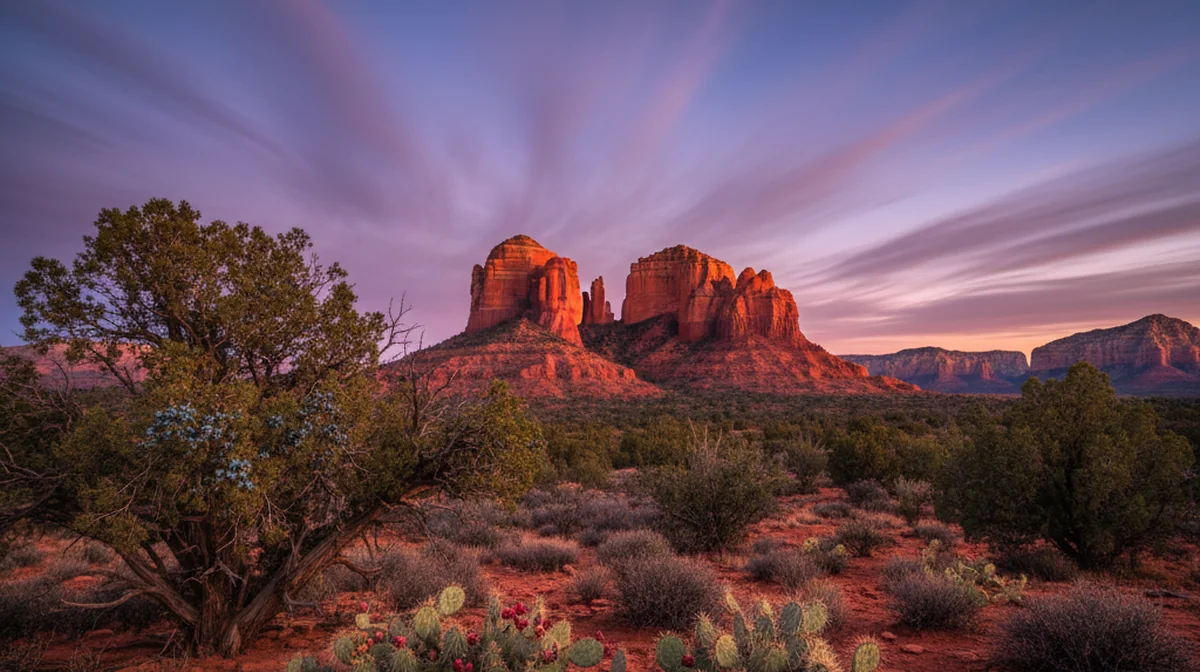
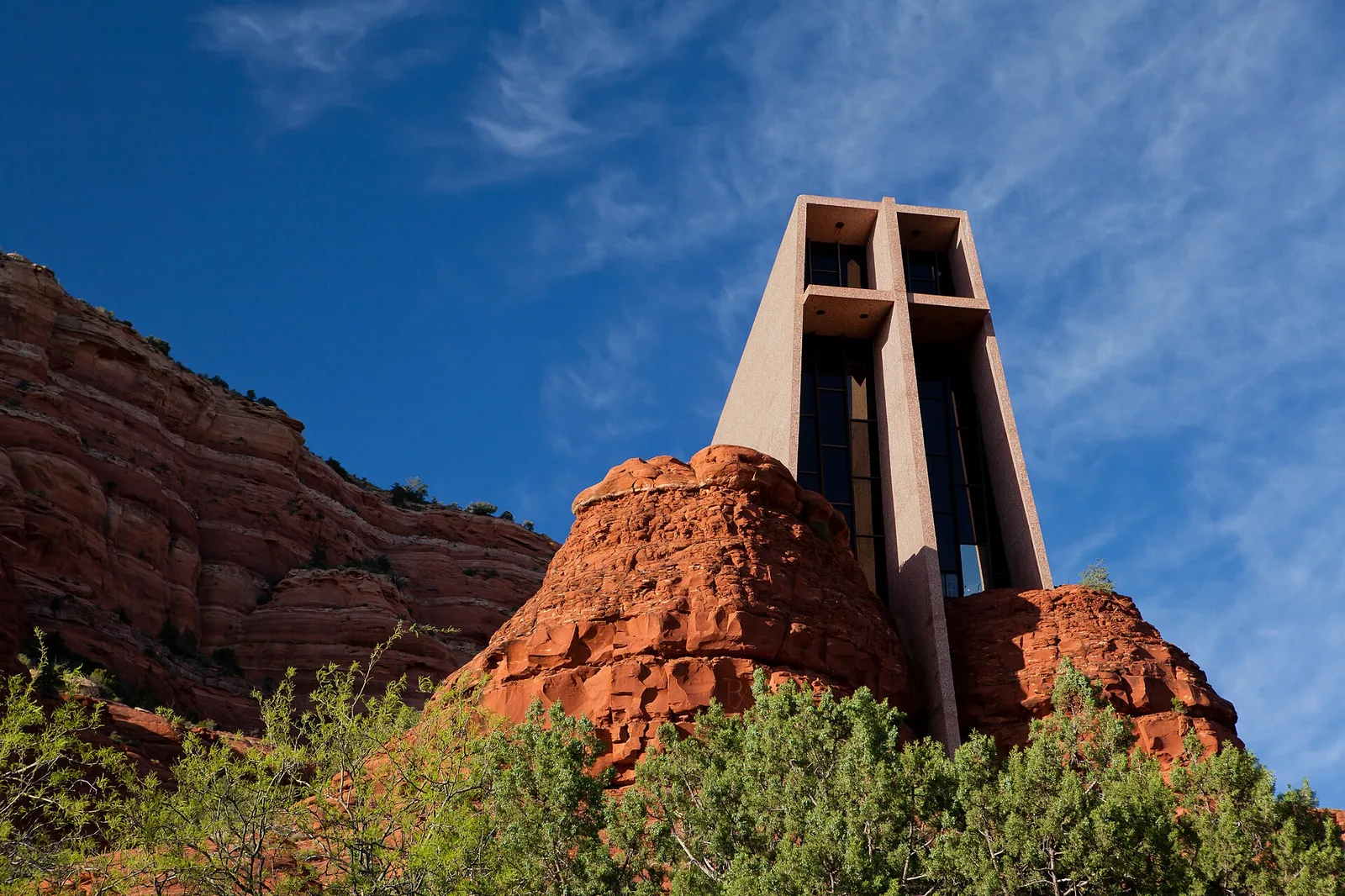
A few of the visual fingerprints we lean into when we shoot, brand and market a Sedona property — courtesy of the open Wikimedia Commons archive.
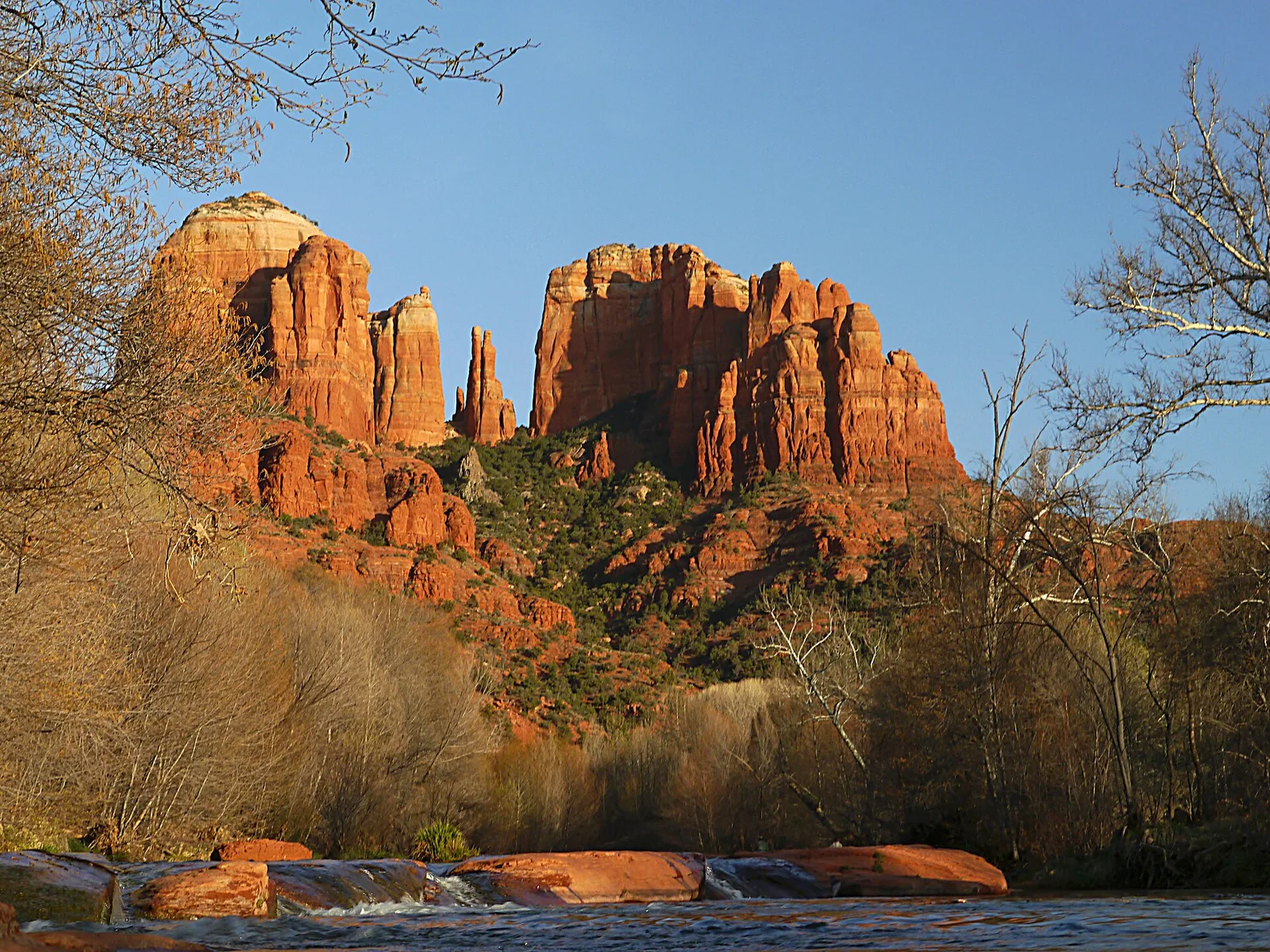
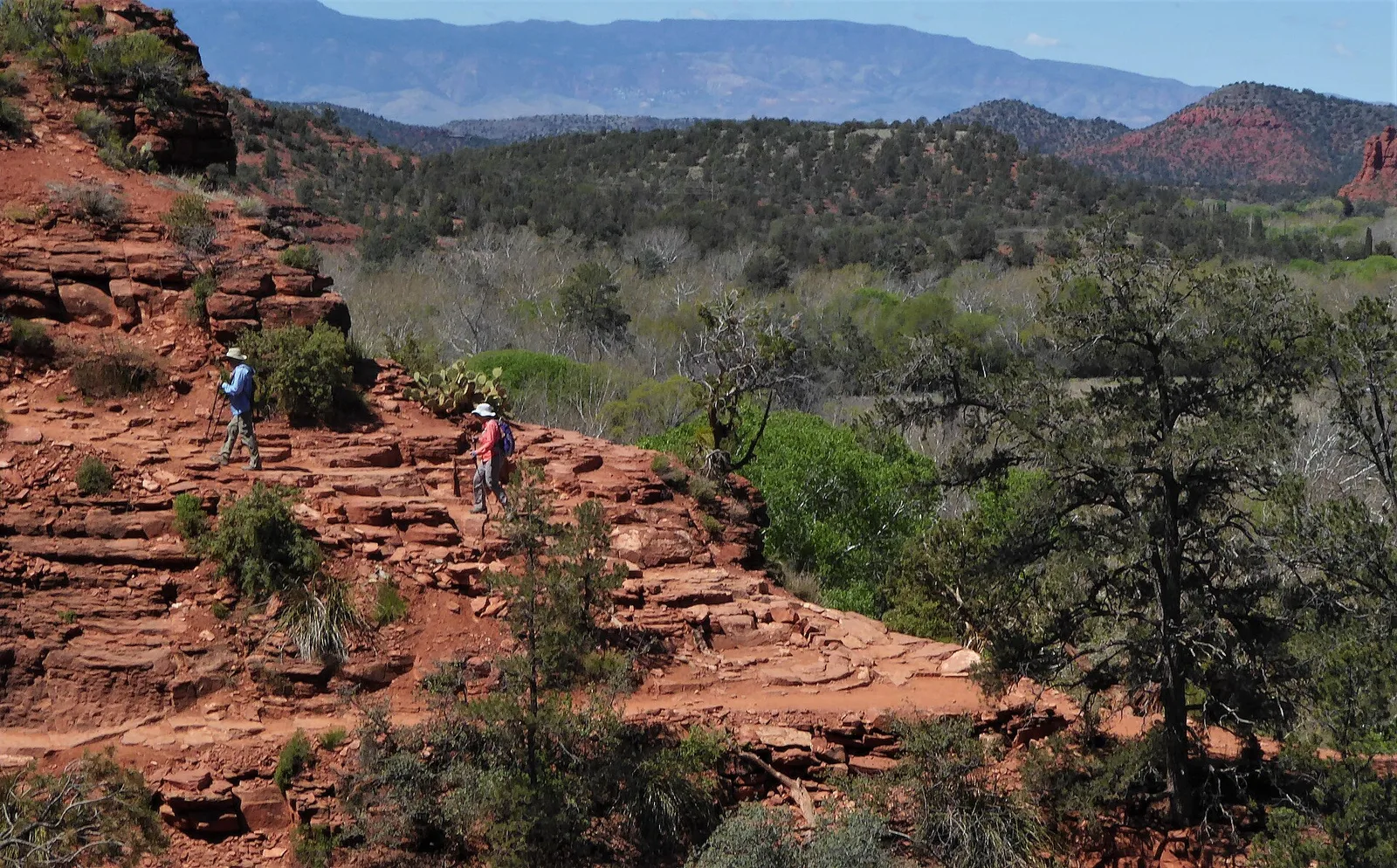
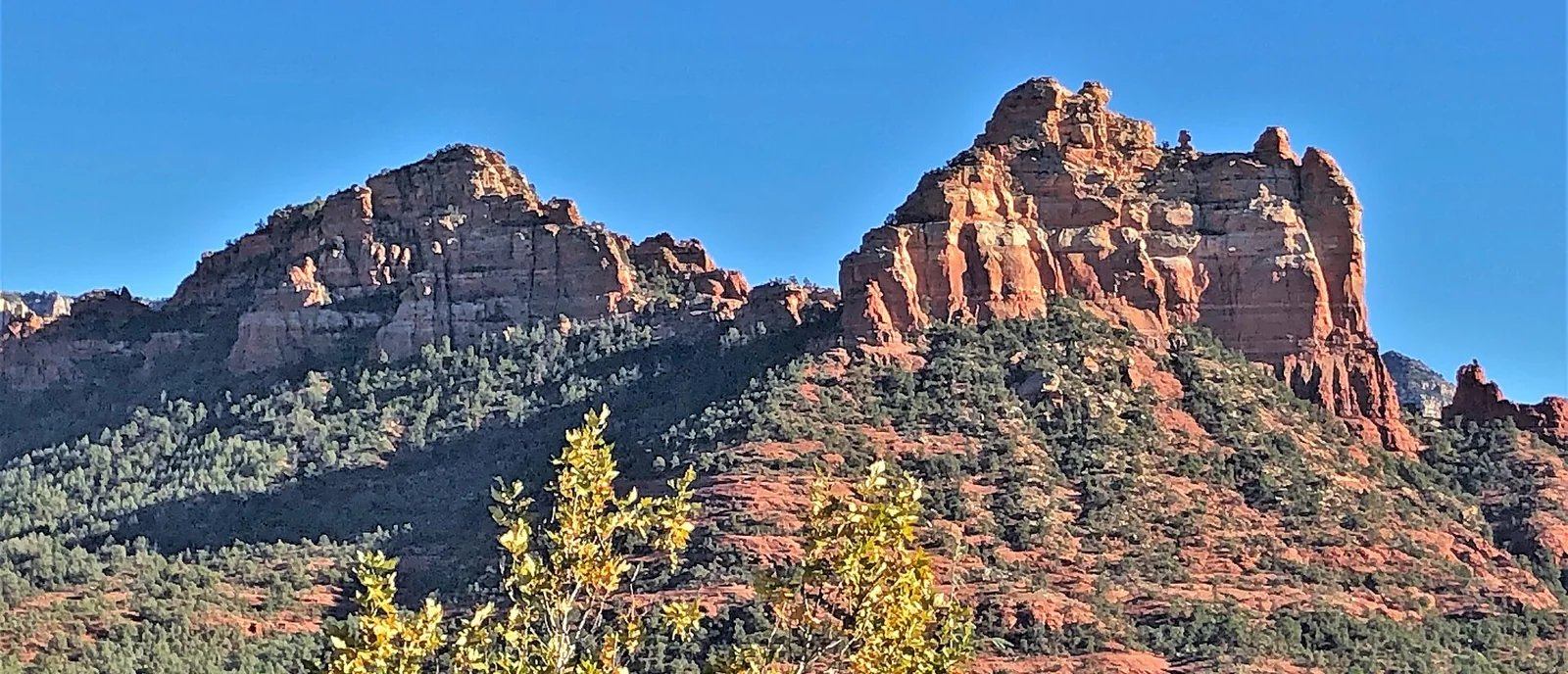
Cavmir's cinematic photography approach is built for Sedona's signature light — the red sandstone at golden hour, the star-dense night sky, the private patio framed against Cathedral Rock. We position your property for the wellness-minded traveler booking four to seven nights, not the weekend-only guest, which protects your ADR and lowers turnover costs.
Sedona's visitor economy is older than most people realise. Long before the red rocks became a wellness-tourism brand, the area was a working cattle and apple-orchard community — Sedona Schnebly, for whom the town is named, ran a boarding house out of her home in the 1900s because the trip up Oak Creek Canyon was too punishing to do in a day. Hollywood discovered the scenery in the 1940s and 50s, filming over sixty westerns among the buttes, and the town's first motor courts grew up to serve film crews and the post-war road-tripping family.
The modern short-term rental layer arrived in two waves. The first was the timeshare and condo-resort boom of the 1980s and 90s, which established Sedona as a branded destination. The second was the platform era, which collided with Arizona's 2016 SB 1350 — a state law that preempted Sedona's earlier STR restrictions and effectively forced the town to accept whole-home vacation rentals in residential zones. Inventory exploded. By the time HB 2672 restored some local tools in 2022, Sedona's market had already matured into one of Arizona's most competitive leisure-STR submarkets, with a distinct wellness-and-adventure guest profile that very few other Southwest towns share.
Sedona rewards owners who understand that the view is the product. A Uptown or West Sedona property with a genuine red-rock sightline clears $350–$650 per night in spring and fall, while a similar floor plan two streets back with no view tops out closer to $220–$320. Village of Oak Creek sits roughly 15–25% below Uptown rates on comparable square footage, which is a real opportunity for owners willing to market the shorter drive to Bell Rock and the quieter evenings. Oak Creek Canyon cabins command a different premium entirely — they're selling the creek, not the views — and peak at $400–$800 per night in summer when Phoenix wants to escape the heat.
The pricing mistake we see most often is flat monthly rates that ignore Sedona's dual peak structure. Spring break through Memorial Day and then mid-September through early November are both peaks, with a softer summer tourist layer and a genuinely slow late-January through February window. Owners who set one "high season" and one "low season" rate leave 20–35% on the table compared to event-anchored dynamic pricing built around the Sedona Marathon, Yoga Festival, and fall foliage weekends.
Sedona is a classic dual-peak market. Spring (March through May) and fall (mid-September through early November) both clear 80%+ occupancy on well-marketed properties. Summer is stronger than most visitors realise — Sedona sits at roughly 4,300 feet, so July afternoons are 15–20 degrees cooler than Phoenix, and the Valley snowbird-in-reverse trade keeps rates firm. Late January and February are the low season, which is also where a wellness-and-retreat positioning can materially lift occupancy.
Sedona's regulatory picture is the product of two state laws pulling in opposite directions. Arizona SB 1350, passed in 2016, preempted municipal STR bans and forced every city in the state — Sedona included — to allow whole-home vacation rentals in residential zones. HB 2672, passed in 2022, gave local governments some tools back: mandatory licensing, emergency-contact requirements, safety inspections, noise and trash ordinances, and the ability to require proof of insurance. Sedona used that authority quickly. The city now requires every STR to hold a current city permit, register with Arizona Department of Revenue for Transaction Privilege Tax (TPT), and post a 24-hour local contact who can respond on-site.
Beyond licensing, Sedona has a layer of rules other Arizona markets don't. The city is an International Dark Sky Community, which means outdoor lighting has to comply with the dark-sky ordinance — shielded fixtures, warm color temperatures, no uplighting. Noise rules are enforced strictly in residential zones, and repeat violations can pull your permit. On the tax side, STRs owe state TPT, Sedona city TPT, and a county bed tax (Coconino or Yavapai depending on exactly where the property sits — Sedona straddles the county line). Platforms collect and remit most of these automatically, but the permit holder is still the person on the hook for correct registration and annual renewal.
The Sedona-specific tip we give every new owner: photograph the red rocks from inside the house. A window framing Cathedral Rock or Bell Rock is worth more in conversion than any amount of exterior drone footage, because it shows the guest what they're actually buying — the view from the morning coffee. Listings that lead with an interior-to-landscape shot consistently outperform listings that lead with a pool or a hot tub, even when the pool is beautiful.
Second, lean into the dual audience. Sedona gets the wellness guest (yoga retreats, vortex tours, spa weekends) and the adventure guest (hiking, jeep tours, Oak Creek Canyon). You don't have to pick one — a welcome book that offers both a sunrise-meditation suggestion and a Devil's Bridge trailhead route does better than one that commits to a single archetype. Third, take stargazing seriously as a marketing angle. The Dark Sky designation is an honest differentiator from every other Southwest STR market, and a property with a decent telescope, star-chart app links, and a Perseid-weekend calendar gets five-star reviews you can't manufacture any other way.
Sedona's signature challenge is wildfire exposure, which has tightened insurer appetite sharply in the last two seasons. Properties on the wildland-urban interface — especially Oak Creek Canyon and the forested edges of West Sedona — have seen renewal quotes jump or policies non-renewed entirely. The second challenge is density: permit caps aren't formally in place, but inventory saturation in Uptown means marketing discipline now matters more than location alone. The third is seasonality whiplash — late January is genuinely slow, and owners who don't plan cash flow around it get caught.
Wildfire is the story. Standard homeowners policies either exclude STR use outright or cap it, and several national carriers have pulled back from Coconino County since the 2024–2025 seasons. Owners typically pivot to an STR-specialist carrier (Proper, Steadfast, CBIZ) or a surplus-lines policy. Budget $2,800–$6,500 per year for a typical 3-bedroom, more if the property sits in a mapped wildland-urban interface zone. Hail is the secondary peril, mostly affecting roof-replacement economics.
Arizona's state income tax is now a flat rate near 2.5%, which is a structural advantage versus California or Colorado alternatives. Property tax rates are low — typically under 1% of assessed value — and assessments are based on Limited Property Value rather than full market value. Lodging taxes (state TPT, Sedona city TPT, county bed tax) stack up to a meaningful rate layer the guest pays on top of nightly rent. Ask your accountant about the right TPT classification.
Most lenders underwrite Sedona STRs as second homes (10–15% down) or investment properties (20–25% down with a rate premium of roughly 0.5–0.875%). DSCR loans — written against projected rental income rather than personal W-2 — are increasingly common and a good fit for out-of-state buyers. Expect rates roughly 0.5–1.25% above primary-residence pricing, and budget higher escrow to cover the tightening insurance premiums.
Sedona's short-term rental rules are the product of two state laws pulling against each other, and the local mood has shifted hard in the last two years. Arizona's SB 1350, passed in 2016, stripped cities of the power to ban vacation rentals outright. SB 1168, in 2022, handed some tools back — licensing, emergency contacts, insurance, and nuisance enforcement. Sedona took those tools and, in early 2025, replaced its old emergency-contact registration with a full annual permit program. If you operated here a couple of years ago on a simple contact filing, that's no longer enough. Every unit now needs its own city permit, and the city is watching the count closely for reasons that are as much political as regulatory.
Each Sedona short-term rental needs its own annual city permit, and you can't legally advertise or operate without a valid one. The permit fee was $210 for 2025, though fees move, so confirm the current figure with the city before you renew. Late renewals now carry an automatic penalty, and since late 2025 the city rejects applications submitted with missing or invalid information rather than chasing you to fix them. You'll file a 24/7 local contact who can respond to guests and neighbors, and Sedona backs that with its own around-the-clock hotline (928-203-5110) and an online form neighbors use to report problems. Quiet hours run roughly 10 p.m. to 7 a.m., occupancy is limited by the size and layout of the home, and because Sedona is a dark-sky community, outdoor lighting has to be shielded and warm-toned. None of it is onerous, but all of it is checked.
Sedona's lodging taxes come in layers, and the guest pays them on top of your nightly rate. At the state level, Arizona applies its transient-lodging tax (about 5.5%). Then there's a county share, and here Sedona is unusual: the city straddles the Yavapai–Coconino line, so which county rate applies depends on exactly where your parcel sits. On top of that, Sedona itself takes 7% on lodging — a 3.5% city transaction privilege tax plus a 3.5% bed tax. Airbnb and Vrbo collect and remit most of this automatically, but that convenience doesn't erase your obligations. You still need your own Arizona TPT license, you still file returns (reporting the income and then deducting what the platform already paid), and you remain the party ultimately on the hook. Confirm your tax classification and the combined rate for your address with your accountant.
The reason to expect more enforcement, not less, is Sedona's housing fight. By the city's own count, short-term rentals roughly tripled from about 400 in 2020 to more than 1,200 by the end of 2024, in a town of under 10,000 people. Close to one in five homes is now a short-term rental, and by the city's figures about two-thirds are owned by people who live elsewhere. In December 2024 the council declared a housing-shortage emergency and began lobbying the state to let it cap or zone rentals — something it legally can't do today, because SB 1350 still preempts caps. Meanwhile the city's Rent Local program pays owners who house Sedona workers instead of tourists. For an operator, the read is simple: play the rules straight, because the city will keep pushing enforcement as far as the law allows.
Here's the thing that changes how you price Sedona: it doesn't run on events the way Scottsdale or Phoenix do. There's no spring training, no marquee convention, no city-built festival machine filling a slow week on command. The draw is the red rock itself and getting out into it, which means your calendar answers to weather, weekends, and the two-hour drive from Phoenix far more than to any date on a poster. Understand that and you price the right things. Miss it and you'll keep waiting on festivals that were never coming, and discounting the weekends that actually carry your year.
Sedona is, first, a drive market. Phoenix and its metro of well over four million people sit about two hours south, and that's the engine: Friday-through-Sunday and holiday weekends spike, and midweek softens because there's almost no business or convention base to fill it. Three-day weekends, school breaks, and holidays move your occupancy more than any calendar of named events could. It also means booking windows are shorter than in fly-in markets — a lot of Sedona trips get decided a week or two out, when the Valley suddenly wants an escape. Price your weekends and holidays with conviction, keep midweek flexible enough to catch late deciders, and don't discount a Saturday in April as if it were a Tuesday in February.
Sedona is a genuine dual-peak market, and the peaks are seasonal, not scheduled. Spring, roughly March through May, brings mild weather and wildflowers; fall, mid-September into early November, brings gold cottonwoods in Oak Creek Canyon. Summer is stronger than outsiders expect, because Sedona sits around 4,300 feet and runs fifteen to twenty degrees cooler than Phoenix, so July and August pull a heat-escape crowd — tempered by monsoon afternoon storms that bring real downpours and flash-flood risk in the canyon. Late January into February is the slowest stretch. Build your rate seasons around this shape rather than a flat high-and-low split, and you'll stop leaving money on the shoulders where most owners do.
Even without festivals, Sedona gives guests plenty of reasons to come, and they're experiences rather than dates: the trailheads at Cathedral Rock, Bell Rock, and Devil's Bridge; pink-jeep and vortex tours; yoga and wellness retreats; weddings; and dark-sky stargazing nights. Some of the busiest trails now run timed shuttles or managed parking on peak days, which is exactly the kind of detail a good welcome book flags before a guest wastes a morning circling for a spot. The marketing job here isn't to sell the idea of a vacation, it's to prove yours is the property where a specific experience actually happens. Price on season, weekends, and holidays, and market the experience, because in Sedona the landscape is the event.
In a market this scenic and this politically charged, the property that wins isn't the cheapest, and it definitely isn't the party house. It's the calm, well-run home that sells the landscape and stays invisible to the neighbors. High-end nature guests are paying for a feeling, and everything about how you operate either protects that feeling or breaks it. Here's what actually earns in Sedona, and every piece of it ties back to something specific about this town — the terrain, the weather, and the political heat around rentals.
Frame the red rock from inside the house. The window that puts Cathedral Rock over the morning coffee sells better than any drone shot, because it shows the guest what they're actually buying. But selling the view is only half the job; protecting the quiet is the other half, and in Sedona it's existential. Neighbors have a 24/7 hotline and an incident form, and a city that's actively looking for reasons to tighten the rules. A strict no-party, quiet-hours-respected policy isn't just good manners here, it protects the permit the whole business depends on. Position for couples, families, and small wellness or retreat groups, price the blowout crowd out with minimums and clear house rules, and you'll dodge the one complaint pattern that costs operators their license.
Sedona's climate is gentler than the desert floor, but it isn't hands-off. Monsoon season, roughly July into September, means guests headed for Oak Creek or Slide Rock need a plain-language flash-flood briefing and a washed-out-trail backup plan in the welcome book. Summer heat is mild, but afternoons still want shade and working air conditioning. And wildfire is the peril that reshaped this market: keep defensible space around the house, leave an evacuation-info sheet, and talk to an agent who writes short-term-rental coverage early, because carrier appetite on the wildland edge has tightened and you don't want to learn that at renewal. Guests forgive the weather; they don't forgive being unprepared for it in your home.
Sedona guests arrive intentional; nobody ends up here by accident. They've planned a retreat, a milestone, a wedding, a dark-sky trip, and they'll reward a host who plans it with them. A welcome book that routes them to a sunrise trailhead, names a stargazing pullout, and offers a rainy-monsoon-afternoon alternative earns the reviews that carry a listing. Cavmir helps Sedona hosts market that experience and shoot the property so the canyon is part of the story — it doesn't manage the home for you. And lean into direct booking, because in a market openly debating caps and platform rules, a guest list and a brand you own are worth more every year than a calendar that lives entirely on someone else's platform.
Looking past 2026, Sedona's STR trajectory is clearly toward tighter enforcement within the framework state law allows. Expect more aggressive permit audits, stricter occupancy-limit enforcement, and continued refinement of the dark-sky and noise ordinances. Full caps or bans aren't on the table — SB 1350 still preempts that — but the city has signalled it will keep pushing the envelope on what HB 2672 permits. Owners who treat compliance as a marketing asset rather than a cost will be the ones who keep their permits through an enforcement wave.
On the demand side, the wellness-tourism and dark-sky tourism segments are both growing faster than the general Arizona leisure market. Wildfire and insurance pressure will probably keep pushing inventory toward the better-capitalised owners, which over time thins the competitive field. The owners who win past 2027 are the ones who build a direct-booking brand, invest in the view-frame photography that distinguishes a Sedona property from a generic Arizona rental, and anchor their calendars around the event windows instead of hoping for flat demand.
Sedona is the rare American destination where the landscape is so overwhelming it rewrites the marketing brief for you. The red rocks don't photograph like other canyons — they shift color through the day, from a clay rose at sunrise to a deep rust at golden hour to an almost-violet silhouette against the last light. A property that knows how to sit inside that palette wins guests before they've read a single line of copy. The mistake most listings make is shooting the house as if it were in any suburb — flat interior light, no window reveals, no relationship to the canyon three hundred yards out the back door. That framing leaves the actual Sedona out of the Sedona listing.
What we love about marketing in Sedona is how intentional the guest already is. Nobody ends up in Sedona by accident. They've planned a wedding, a yoga retreat, a milestone birthday, a vortex weekend, a dark-sky meteor trip. They arrive with a clear picture of the experience they want, which means the listing's job isn't to sell the idea of a vacation — it's to convince them you're the property where that specific experience will actually happen. That's a storytelling problem, not a price-optimisation problem, and it's exactly the kind of brief we like. The best Sedona properties we work on aren't listings — they're small hospitality brands with a point of view, a visual grammar, and a welcome book a guest actually wants to read.
The picks we recommend Sedona clients put in their welcome book — the details that turn a good trip into the kind of trip guests text their friends about.
Short uphill walk, panoramic three-sixty view, fewer crowds than Cathedral Rock before 7am. The golden-hour light on the red rocks is what guests came for whether they know it yet or not.
The flat approach trail reads dramatic without demanding a real hike. Families and first-time visitors can do it in sandals, and the light on Bell Rock at sunset photographs better than almost any paid tour.
A Spanish-colonial courtyard complex with working studios and sycamore shade. It reads more like a film set than a shopping district, and it survives the heat when the canyon itself is too bright to enjoy.
West-facing patio over the red rocks, latin-grill menu, the kind of light that makes every phone camera look like it was shot on film. Book weeks ahead and note the dress code in the welcome book.
A Sedona institution since the 1950s with a menu of a hundred-plus omelettes. It's the kind of unpretentious local detail that balances out the spa-resort tone of the rest of the itinerary.
Oak Creek Canyon's foliage window is narrow — ten days at best. A welcome book that flags the peak color weekend is the kind of specific recommendation guests remember and repeat back home.
An hour up, pine-forest air, Lowell Observatory at the top. Sells itself as a reason to add a night to a shorter booking and pairs well with a stargazing evening back at the property.
Most trailheads require a Red Rock Pass, and guests without one get ticketed. A host who leaves a multi-day pass in the welcome drawer saves a morning and buys a five-star review.
A few representative Cavmir engagements in Sedona. Property identifiers removed, numbers are composites anchored to our internal analytics and public AirDNA ranges for the submarket.
Occupancy stuck at 58% against a West Sedona market clearing closer to 76%. ADR was tracking 15% below comparable view properties. Original photography treated the red rocks as background scenery, not the product — no interior-to-window shots, no golden-hour exterior coverage.
Cavmir rebuilt the listing around the view-frame thesis. New photography led with three interior shots looking out at Capitol Butte through different rooms at different times of day, followed by a golden-hour drone pass and a dark-sky night shot. Copy was rewritten around the wellness-retreat guest archetype and the dark-sky designation. We built a direct-booking page anchored to the Yoga Festival and fall-foliage calendar and ran a 45-day paid campaign against wellness and stargazing interest audiences.
Occupancy climbed from 58% to 81% over two quarters. ADR lifted 19%. Fall foliage 2025 cleared a full calendar at a 3.2x multiplier over baseline. Direct bookings now 24% of revenue, meaningfully insulated from platform-fee compression.
Seasonal cabin booking only through summer, sitting mostly dark from November through March. Owner was on a single platform, no direct channel, and the listing read generic — "cozy cabin" framing that could have been anywhere in Colorado.
We repositioned the cabin around Oak Creek as the hero — the sound of the water, the sycamore canopy in fall, the snow on the deck in January. Short-form video captured the creek in four different seasons and became the lead asset on the new direct-booking site. Winter was marketed specifically to Phoenix snowbird-in-reverse guests looking for pine air and a fireplace weekend. We added stargazing as a winter angle and partnered with a regional lifestyle publication on a quiet-season feature.
Calendar filled out across all four seasons for the first time. Winter occupancy moved from under 20% to 62%. Blended annual ADR lifted 14%, with the winter Phoenix-drive market now representing roughly a third of annual revenue.
A larger property marketed as a generic group rental, losing to better-branded wedding and retreat-focused competitors. Owner wanted to lift ADR without adding cleaning turnover, which pointed to longer minimum stays and a group-event positioning.
Cavmir rebuilt the property as a small retreat brand with a focused wedding-weekend and private-retreat positioning. New photography emphasised the courtyard, the long dining table, and the bridal-suite window framing Cathedral Rock. Copy led with "intimate weddings under 30" rather than a headcount. We built a preferred-vendor list of local wedding planners, photographers, and caterers, and pitched two regional wedding publications who featured the property in shoulder-season editorials.
ADR climbed from $485 to $780 on minimum 4-night bookings. Turnover volume fell roughly 40%, which cut operational cost meaningfully. Wedding-weekend inquiries now arrive 8–10 months out, letting the calendar be built intentionally rather than defensively.
Demand in Sedona peaks around March, April and October and runs quietest around January, July and August. Here is how the year actually books — and what to do about each stretch of the calendar.
Sedona peaks twice: March through May and again September through October, when trail weather is perfect and red rock country is at its best. Spring layers wildflowers and spring-break road trips on top of steady couples travel; fall brings crisp mornings and Oak Creek Canyon color. Have the listing dialed by February and again by August, and hold firm weekend rates — this market rewards patience over discounting in peak.
June performs respectably before the real heat sets in, and November stays strong on mild weather with holiday traffic building behind it. Winter weekends around the holidays hold up, and late February wakes the town up with the film festival. The shoulder play is couples: midweek getaway angles, hot-tub-under-the-stars photography and fast replies to short-window inquiries.
January and the hottest weeks of July and August are the soft spots — post-holiday quiet on one end, high-desert heat and monsoon afternoons on the other. Summer guests still come to swim Oak Creek and hike at sunrise, so lean into early trail access and shaded patios, offer longer-stay pricing, and use January for maintenance and a photo refresh before the March wave.
Spring and fall weekends fill one to three months out, and view properties with hot tubs go first. Summer and winter run much shorter — Phoenix weekenders often book inside two weeks. The practical rhythm: be fully dialed by February for spring and by August for fall, then stay priced to catch the short-window traffic in between.
The core stay is a two-to-three-night couples trip built around a weekend, with road-trippers passing through for a night or two and retreat guests staying longer. Spring and fall skew longer as travelers build full itineraries around the trails.
The Sedona winner is a view: a southwest-styled home or casita in West Sedona, the Chapel area or the Village of Oak Creek with a deck, hot tub or fire pit pointed at the rocks. Privacy and stargazing beat square footage — Sedona is a designated dark-sky community and guests plan around it. If the property has no view, win on trail proximity, a beautiful patio and flawless couple-scale comfort.
Sell the view and the experience, not the floor plan: golden-hour photography of the rocks from your deck, listing copy that names the trails and landmarks nearby — Cathedral Rock, Bell Rock, Oak Creek — and a guidebook that reads like a local friend wrote it. Sedona guests plan around sunrise hikes and stargazing, so show both. A direct-booking site earns its keep here because milestone-trip couples rebook for anniversaries, and local SEO captures the enormous volume of trip-planning searches. That's the stack Cavmir builds for Sedona hosts.
Sedona peaks twice — March through May and September through October — when trail weather is ideal and the canyon shows color. Late February's film festival kicks off the spring ramp, and mid-October around the Arts Festival is one of the strongest weekends of the year. January and the hottest weeks of July and August are the quiet stretches.
Spring and fall weekends book one to three months ahead, with view-and-hot-tub properties filling first. Summer and winter demand runs shorter — Phoenix weekenders frequently book inside two weeks, and road-trippers even later. Be fully polished by February and August, then keep rates responsive for the short-window seasons in between.
Phoenix dominates — it's the arrival airport for fly-in guests from Chicago, New York, Dallas and Seattle, and its residents drive up year-round for weekends and summer heat escapes. Las Vegas, Southern California and Albuquerque feed the road-trip current, often on Grand Canyon itineraries. Marketing aimed at travelers planning Arizona itineraries reaches this market best.
A hot tub with a red rock view is the single biggest bookings lever in Sedona, followed by a fire pit and outdoor space set up for stargazing in a dark-sky town. An EV charger matters more here than in most markets given the Phoenix and California drive traffic, and painless self check-in serves late-arriving road-trippers. Inside, fast wifi and a calm, quality interior hold up the review score.
Run your Airbnb, Vrbo, or website through Cavmir's free grader. It checks the things that decide whether guests book in Sedona — photos, listing copy, page speed, local search — and shows you where bookings leak. Takes about a minute, and there's no sales call attached.
If the report says your booking engine is the weak link, that's fixable: a direct-booking website of your own means repeat guests stop paying platform fees to come back to you. That's the work Cavmir does — see Airbnb website design in Sedona.
Send us the listing and we'll tell you what we'd change. Not a pitch deck — a straight read on your photos, your title, your rates against the Sedona comp set, and whether a direct-booking site would pay for itself.
You'll hear back from a person, usually inside one business day. If we don't think we can move your numbers, we'll say so. Cavmir is a short-term rental marketing agency — we position and market properties, we don't manage them.
Talk to Cavmir today. We'll show you exactly what your Sedona property is leaving on the table — and how fast we can change that.
Book a Free Strategy CallPhotography via Wikimedia Commons (images resized and cropped): Chapel of the Holy Cross, Sedona, AZ by Matthew P. Del Buono (CC BY-SA 3.0) · Cathedral Rock - Sedona AZ-1 by Terrydarc (CC BY-SA 3.0) · Sedona - Hiking above Oak Creek by Scotwriter21 (CC BY-SA 4.0) · 2021 View from Sedona 4 by Beyond My Ken (CC BY-SA 4.0).
