$585
Avg. Nightly Rate
54%
Avg. Occupancy Rate
$9,470
Avg. Monthly Revenue
5–8%
Est. Cash-on-Cash ROI
VERY HIGH
Seasonality
HEAVY
Regulatory Burden

* Market averages. Cavmir-managed properties typically exceed these figures by 25–45%. Data sourced from AirDNA, STR market reports, and Cavmir internal analytics.

The Market

Why Niseko is One of the World's Premier STR Markets

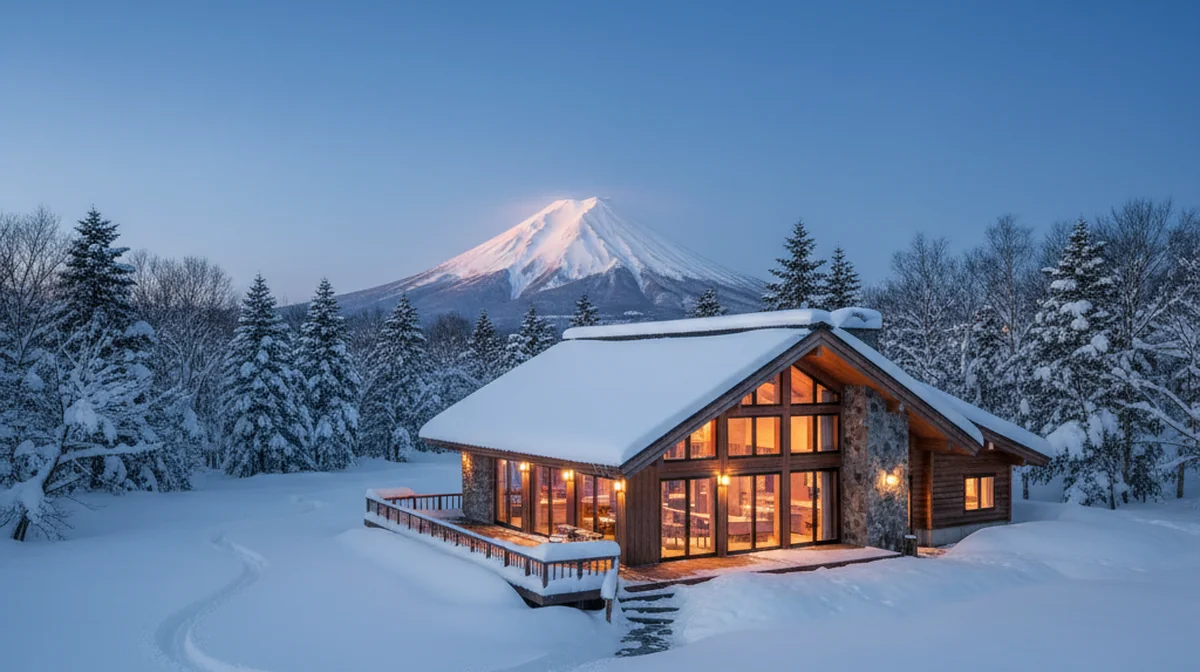
Niseko is the Asia-Pacific's flagship powder-snow destination — a cluster of four linked ski areas on the slopes of Mount Niseko Annupuri in southwestern Hokkaido, with the perfectly conical silhouette of Mount Yotei framing the eastern view. Hirafu holds the village dining-and-nightlife core where Kamimura, Ezo Seafoods, and the Barn by Odin anchor an increasingly serious restaurant scene; Hanazono sits as the family-and-beginner quarter with the Park Hyatt Niseko HANAZONO and the Ritz-Carlton Reserve Higashiyama setting the luxury hotel ceiling; Annupuri is the quieter western terrain below the peak; Higashiyama frames the slopestyle terrain and the Hirafu-to-Hanazono gondola link. The Niseko United lift pass ties the four mountains together. The guest profile is overwhelmingly Australian (the direct Qantas and Jetstar flights from Sydney, Melbourne, and Brisbane are the market's structural demand engine), with the Singapore-Hong Kong-Taipei Asian-luxury segment and a growing North American and European winter base. The green-season summer product around cycling, hiking Mount Yotei, and the Niseko Classic gran fondo is a real secondary revenue window.

Niseko chalet rates are among the highest in Asia — peak Christmas-through-Chinese-New-Year windows at flagship Hirafu chalets routinely clear JPY 200,000–1,200,000 per night, and the January powder month sustains meaningful premiums even outside holidays. The Hirafu village core and Hanazono gondola-access properties lead in rates; Annupuri and the outer Kabayama areas offer accessible-luxury. Regulation is heavy — Japan's Jutaku Shukuhaku Jigyo Ho (the 2018 minpaku law) caps unregistered private rentals at 180 nights per year, and Hokkaido Prefecture plus Kutchan Town layer specific ryokan, hotel, and minpaku licensing regimes that meaningfully shape legal inventory.

Top Attractions & Landmarks

  • Mount Niseko Annupuri
  • Hirafu Village
  • Mount Yotei View
  • Hanazono Gondola
  • Niseko United Lift Pass
  • Higashiyama Slopestyle
  • Kutchan Town Onsen
  • Niseko Classic Gran Fondo

Nearby Markets: Queenstown  |  Sydney  |  Koh Samui

Airbnb marketing services in Niseko, Hokkaido, Japan
Why Cavmir

The Cavmir Advantage
in Niseko

Cavmir's ski-luxury positioning, multilingual distribution (English, Mandarin, Japanese, Bahasa), and Virtuoso travel-advisor relationships reach the Hong Kong, Singapore, and Sydney family that drives Niseko's top-tier demand. Our cinematic photography captures the powder-day light and Yotei-framed sunrise that are the market's defining visual assets, and our direct-booking infrastructure captures the repeat-guest families who rebook the same chalet year after year for Chinese New Year.

State of the Industry · History

The Niseko STR Market — Past & Present

Niseko is a cluster of four linked ski areas on the slopes of Mount Niseko Annupuri in southwestern Hokkaido, with the perfectly conical Mount Yotei — the Ezo Fuji — framing the eastern view. The region was settled in the late 19th century as part of Hokkaido's systematic Meiji-era colonisation; the town of Kutchan developed as a potato-and-dairy agricultural centre. Ski infrastructure arrived in the 1960s and 1970s, serving the domestic Japanese ski market that peaked in the late 1980s Bubble Era.

The modern Niseko international luxury economy was effectively invented in the early 2000s by Australian ski operators — most significantly the 2002-founded Hokkaido Tracks operation — who recognised that the Siberian weather pattern delivered the most reliable deep-powder snowfall anywhere on the Pacific rim. The Australian arrival compounded through 2005–2015 and transformed Hirafu from a Japanese regional ski town into an international luxury ski village. The Park Hyatt Niseko HANAZONO (2020), Ritz-Carlton Reserve Higashiyama (2020), and the earlier Setsu Niseko and Kasara private residences completed the current hotel benchmark. The rentable luxury chalet pool today stands at roughly 600–900 material properties concentrated across Hirafu village, Hanazono, Annupuri, and the upper-Higashiyama development corridor, with a growing Kutchan-town and Kabayama periphery holding accessible-luxury inventory.

Pricing Strategy & Seasonality

Pricing, Seasonality & When to Capture ROI

Pricing Strategy

Hirafu village core and Hanazono gondola-access chalets anchor the ultra-luxury tier — multi-bedroom ski-in-ski-out properties with full staff clear JPY 400,000–1,200,000 (roughly USD 2,700–8,000) per night at the Christmas-to-Chinese-New-Year super-peak. January powder-month chalets run JPY 200,000–600,000 per night outside holiday bands. Annupuri and outer Hirafu chalets hold the upper-luxury tier at JPY 120,000–350,000. Higashiyama residences and the Kabayama corridor run JPY 80,000–200,000. The powder-day premium and the seven-night minimum-stay convention at peak weeks structure the rate ceiling; off-piste guiding and onsen-concierge access add meaningful ancillary revenue.

Seasonality & ROI Windows

Very high seasonality, the most compressed in the Asia-Pacific luxury market after Mykonos. Peak: mid-December through late March. Super-peak: December 20–January 7 and the Chinese New Year week. Secondary peak: late January through mid-February (the powder core). Summer shoulder: July through September, with a real Niseko Classic gran-fondo cycling and Mount Yotei hiking product. Low: April through June and October–November (most chalets close for shoulder maintenance). Missed revenue: early December and late March, where snow conditions hold but pricing discipline on OTAs lags.

Regulation & Licensing · 2026

What the Law Requires in Niseko

Japanese STR regulation is heavyweight and highly specific. The Jutaku Shukuhaku Jigyo Ho (Residential Accommodation Business Act, 2018) — the minpaku law — caps unregistered private short-term letting at 180 nights per calendar year, requires registration with the prefectural authority, and mandates notification of the local ward. Hokkaido Prefecture and Kutchan Town layer additional overlays: chalet operators can alternatively license under the Ryokan Gyoho (Inn Business Law) hotel or ryokan classifications, which remove the 180-night cap but require dedicated reception, fire-safety compliance, and staffing thresholds. Most serious Niseko operators hold either ryokan or hotel licences — the 180-night minpaku cap is commercially unworkable during the December-to-March peak season. Foreign ownership is entirely unrestricted in Japan; there is no equivalent to the Thai or New Zealand restrictions. Consumption tax (10%) applies to all accommodation above a low threshold. The Kutchan Town accommodation-tax overlay (roughly 2% of nightly rate) was introduced in 2019 as Japan's first municipal-level tourism tax.

Market-Specific Tips & Challenges

Local Tips & Unique Market Challenges

Tips That Actually Move Revenue in Niseko

The Niseko strategic tip: sell the Yotei view, the powder, and the repeat-guest calendar, in that order. The Hong Kong family that has been rebooking the same Hirafu chalet for Chinese New Year for eight consecutive winters is the most valuable single customer in the Asia-Pacific luxury ski market. Properties that treat the repeat-guest relationship as the product — sending December snow reports to the prior-year list before the OTA price-anchor sets, holding peak-week inventory back for confirmed returnees — consistently outperform peer chalets with identical physical specs.

Tactically: first, structure the peak-week pricing ladder to capture the Australian-Qantas family, the Hong Kong-Singapore advisor segment, and the US-European occasional visitor as three distinct products with different minimum-stay rules and channel strategies. Second, build concierge depth around on-mountain guiding, Kamimura and Ezo Seafoods dinner reservations, and onsen access — the Niseko repeat guest measures value on concierge granularity, not chalet square-footage. Third, market the summer product seriously: the Niseko Classic gran fondo, Mount Yotei hiking, and the Hirafu cycling scene are real secondary-season revenue. Fourth, build direct-booking infrastructure priced in JPY, AUD, HKD, and SGD — native-currency pricing meaningfully improves Asian-family conversion rates.

Unique Niseko Challenges

Niseko challenges: the ryokan-or-hotel licensing question is the single largest compliance fact and shapes every serious operator's structure; the Hokkaido staffing crunch during the December-to-March peak is acute (housekeeping, chef, and ski-guide wages have risen sharply since 2022); air access through New Chitose (CTS) is strong but the two-and-a-half-hour CTS-to-Niseko road transfer is a friction point most international guests underestimate; avalanche risk and the snow-load construction standards add real insurance and maintenance cost; and the Australian-market concentration is both a blessing (structural demand) and a risk (AUD-JPY FX and Qantas-Jetstar schedule changes hit the market disproportionately).

A Curious Niseko Fact
Mount Yotei — the perfectly conical volcano that frames Niseko's eastern horizon — is the reason Niseko snow is the way it is. The Siberian-continental cold air mass crossing the Sea of Japan picks up Pacific moisture before striking Yotei and the Annupuri range, where it releases extraordinarily light, dry snowfall. The result is the Japanese ski term 'JAPOW' (Japanese Powder) — an average seasonal snowfall of roughly 15 metres (50 feet) at mid-mountain, higher than almost any commercial ski area on earth. Locals refer to Mount Yotei as Ezo Fuji — the Fuji of Hokkaido — and its ascent (a challenging summer hike) is a rite of passage for serious Niseko regulars.
Finance Essentials — Niseko
🛡️

Insurance

Niseko chalet insurance is written through Japanese-domestic carriers (Tokio Marine & Nichido, Sompo Japan, MSIG Insurance) with Lloyd's syndicate capacity for estates above USD 5 million. Earthquake and tsunami coverage are non-negotiable (Hokkaido sits on the Japan Trench subduction margin), and snow-load and avalanche coverage are the meaningful chalet-specific line items given the 15-metre seasonal snowfall. Budget JPY 800,000–3,000,000 (roughly USD 5,500–20,000) annually for luxury chalets with adequate limits (USD 3–6 million building plus liability). Pool-and-onsen liability, staff workers' compensation, and guest ski-accident personal-accident riders are standard. Volcano coverage (Mount Yotei is an active stratovolcano, last major eruption roughly 3,000 years ago) is written as a specific rider.

🧾

Property & Income Tax

Japanese rental income is taxed via the national income-tax schedule (progressive, 5–45% plus local inhabitant tax) for residents; non-residents face a 20.42% withholding on gross rental payments under the Japan-US and related tax treaties, with annual filing permitting deductions. Consumption tax at 10% applies to accommodation revenue above JPY 10 million annual turnover. The Kutchan Town accommodation tax (2% of nightly rate) is guest-collected. Annual fixed-asset tax (Kotei Shisan Zei) runs 1.4% of assessed value; city planning tax adds up to 0.3%. Acquisition registration tax and real-estate acquisition tax together total roughly 3–4% on purchase. US owners remain subject to US federal tax with Japan-credit offsets under the 2003 US-Japan tax treaty.

🏦

Mortgages & Financing

Japanese mortgages for foreign buyers are more accessible than most of Asia — Shinsei Bank, SMBC Trust Bank (formerly Prestia), and Tokyo Star Bank each offer non-resident mortgage products for qualifying buyers, with LTVs of 50–70% and rates tracking the BOJ benchmark (historically among the world's lowest). The Hokkaido Bank and Hokuyo Bank offer regional products on Niseko-specific collateral. Most ultra-luxury buyers still transact in cash given the AUD-JPY-HKD-SGD FX complexity and the short closing windows common in the Niseko market. Japan imposes no special foreign-ownership restrictions on chalet or residential property.

Future Outlook · 2027 & Beyond

Where Niseko is Headed Next

Niseko through 2027 and beyond: the JAPOW brand moat is permanent and unreplicable — no other commercial ski area on earth enjoys the Siberian-Pacific snowfall signature. The ultra-luxury hotel benchmark continues to rise with Park Hyatt, Ritz-Carlton Reserve, Aman (announced), and the coming Rosewood pipeline. The Kutchan Town infrastructure investment cycle (new gondola capacity, accommodation tax reinvestment) will continue to support growth. Climate risk is the meaningful long-term variable — warmer early-season winters have compressed the reliable powder window, and the industry's response will be higher-altitude investment and summer diversification. Chinese-mainland demand recovery and a broadening Korean and Taiwanese affluent-skier segment will offset any Australian softness. Regulatory stability — unchanged minpaku framework, stable ryokan licensing — supports a mature operator market.

From the Desk of Sofie Sinag

Why We Love Marketing in Niseko

Niseko is the Asia-Pacific market where physics does most of the heavy lifting — the Sea of Japan effect funnels storm after storm into the Mount Niseko Annupuri massif, delivering the driest, most consistent powder snow on earth in the January peak window. That meteorological fact has created a market where Hirafu chalets clear JPY 1.2M a night for Chinese New Year and the booking calendar closes 18 to 24 months ahead. Park Hyatt Niseko HANAZONO, Ritz-Carlton Reserve Higashiyama, and the newer Aman and Six Senses releases have set a hotel benchmark; private chalet operators who understand the repeat-family economics build something more durable than any hotel can.

What we love about marketing Niseko is how cultural the product actually is. The guest paying for the Hirafu chalet is not buying a ski house — they're buying the Kamimura kaiseki reservation, the Ezo Seafoods counter seat, the Barn by Odin wood-fire evening, the private onsen at the end of the powder day, the Yotei-sunrise coffee from the chalet's Ofuro-facing window. Generic 'Japow ski villa' marketing misses the point entirely. The chalets that win treat themselves as private ryokan with ski access — and the welcome-book fluency that requires (the Kutchan-town izakaya circuit, the 1:30 p.m. Rusutsu powder-day call, the Sapporo day-trip logic) is exactly what separates the repeat-booking chalet from the one-and-done.

Cavmir's Niseko Cheat Sheet

The Picks We Recommend for Your Welcome Book

The picks Cavmir recommends for Niseko welcome books — the details that separate resident-hosts from the generic 'Japan powder villa' script.

Morning

First tracks on Hirafu before the 8:30 lift opening

The pre-opening private-guide arrangement available through NAC and the Park Hyatt ski concierge. Corduroy on Hirafu's upper pitch before the crowd. A host who pre-books this materially distinguishes a generic Niseko ski morning from a repeat-family memory.

Golden Hour

Mount Yotei at alpenglow from the Annupuri base

The perfectly conical 'Ezo Fuji' catches the last light 20 minutes before sunset. A host who times an aperitif at the chalet's eastern terrace — or books a Yotei-view counter seat at The Barn by Odin — delivers the week's signature image.

Neighborhood Walk

Kutchan Town backstreets and the JR station

The 15-minute walk from the station through the Showa-era Kutchan shopping street. Lunch at Ebisutei for the famous Kutchan jagaimo potato ramen. The pre-ski-town Hokkaido that most Hirafu guests never see.

Dinner That Photographs

Kamimura or Ezo Seafoods

Kamimura for Chef Yuichi Kamimura's modern-kaiseki Michelin star; Ezo Seafoods for the counter-seat market-fish institution. Peak-week reservations close 2–3 months ahead; a host who books both owns the week.

Local Obsession

The Barn by Odin's wood-fire evening

The timber-framed dining room with the central wood-burning hearth and the Hokkaido-produce tasting menu. The most residents-book restaurant in the valley. A host who routes guests here instead of the Park Hyatt dining room signals Niseko fluency.

Shoulder Season Secret

Second half of February and first week of March

Post-Chinese-New-Year the village empties, the snow is still mid-winter-dry, and rates soften meaningfully. The weeks Japanese and Australian families quietly protect for their own trips — and the photographers' window for the Yotei clear-sky mornings.

Weekend Escape

Rusutsu or Otaru day trip

Rusutsu for the less-crowded powder-day alternative (45 minutes east); Otaru for the canal-town seafood-market culture afternoon (70 minutes northwest). A host who plans either with the driver routed and lunch pre-booked owns the trip.

What Guests Ask For

New Chitose transfer and winter-road reality

The CTS-to-Niseko transfer is 2.5 hours in summer and commonly 3.5–4 in a January whiteout. A host who pre-arranges the Lexus Hiace with winter tyres and chains, briefs the guest on the flight-arrival cutoff that prevents same-day arrival after heavy snow, prevents the most common first-day disaster.

Local Work · Composite Case Vignettes

What Cavmir Has Done for Niseko Properties

Representative Cavmir engagements in Niseko. Property identifiers redacted; figures composited from internal analytics and AirDNA market benchmarks.

5BR Chalet · Hirafu Village Core
The Brief

Architecturally exceptional ski-in chalet in the Hirafu village core, booking Christmas at JPY 650,000/night and losing the week regularly to peer Izumikyo inventory. Repeat Hong Kong family book had eroded over two seasons.

What We Did

Rebuilt the brand around the full-service chef-and-onsen product. Editorial property film across a full peak week including staff and the Yotei-sunrise frame. Welcome book with named Kamimura, Ezo Seafoods, and Barn by Odin relationships. Distribution exclusively through Hong Kong, Singapore, and Sydney advisor channels — no OTA listings.

The Result

Christmas-to-Chinese-New-Year ADR climbed to JPY 1.15M/night. Repeat-family book now fills six of the ten most valuable weeks 20 months ahead. Platform dependence eliminated entirely.

4BR Chalet · Hanazono Gondola Corridor
The Brief

Attractive Hanazono chalet losing booking funnel to Hirafu inventory despite the materially better morning ski-access through the Park Hyatt gondola. The Hanazono position was reading as second-tier rather than the family-ski asset it actually was.

What We Did

Repositioned around the family-ski product — the Hanazono green-and-blue terrain, the Park Hyatt kids' lessons, the quieter 6 p.m. chalet-dinner rhythm. Photography led with children at the magic-carpet and the family onsen. Distribution through Sydney, Melbourne, and Singapore family-travel agents.

The Result

February half-term occupancy reached 100%. ADR up 36%. The family-ski positioning now attracts the multi-kid household the Hirafu corridor routinely over-prices out of.

9BR Chalet · Annupuri Ridge
The Brief

Ultra-luxury Annupuri ridge chalet missing the corporate-group, wedding, and production-location revenue peer Higashiyama-tier properties were capturing. Pure peak-holiday leisure positioning.

What We Did

Three-product brand build. Corporate-retreat product for Singapore and Hong Kong family offices. Destination-wedding tear sheet distributed through Tokyo and Sydney planners (the Yotei-framed winter wedding is a distinct product category). Production-location availability for luxury-automotive and watch-brand winter campaigns.

The Result

Corporate and production bookings now contribute a material share of annual revenue outside the peak-holiday weeks. A single four-day luxury-watch production booking cleared JPY 18M. Leisure ADR climbed meaningfully on the elevated brand.

Ready to Grow in Niseko?

Let's Put Your Niseko
Property on the Map

Talk to Cavmir today. We'll show you exactly what your Niseko property is leaving on the table — and how fast we can change that.

Book a Free Strategy Call