$325
Avg. Nightly Rate
62%
Avg. Occupancy Rate
$6,040
Avg. Monthly Revenue
6–9%
Est. Cash-on-Cash ROI
HIGH
Seasonality
MEDIUM
Regulatory Burden

* Market averages. Cavmir-managed properties typically exceed these figures by 25–45%. Data sourced from AirDNA, STR market reports, and Cavmir internal analytics.

The Market

Why Koh Samui is One of the World's Premier STR Markets

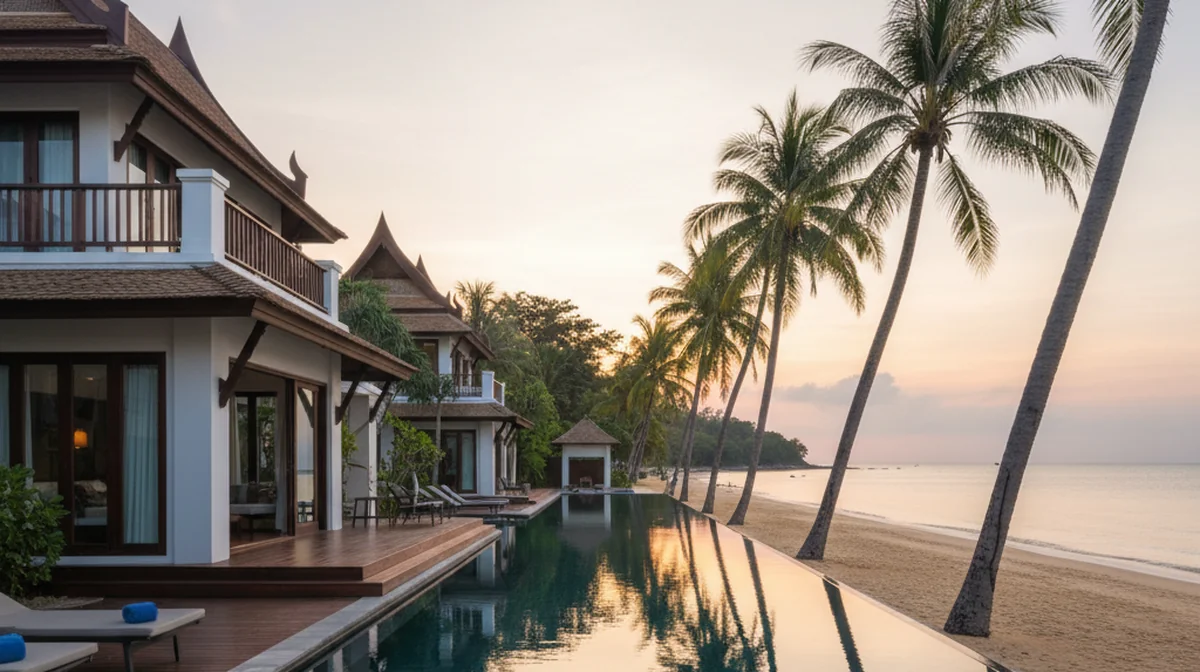
Koh Samui is Thailand's second luxury island — the Gulf of Thailand counterpart to Phuket, with a different season, a softer pace, and an increasingly sophisticated villa product. The Four Seasons at Laem Yai, Six Senses Samui at Samrong Bay, Conrad Koh Samui above Taling Ngam, and the Banyan Tree at Lamai define the hotel benchmark; private villa compounds above Choeng Mon, Plai Laem, Chaweng Noi, and the northwest Ban Tai and Maenam stretches now clear rates that rival the hotel ceiling. Bophut's Fisherman's Village carries the design-dining scene, Silver Beach and Crystal Bay anchor the eastern swim-and-snorkel corridor, and the Angthong Marine Park day-trip remains the iconic Gulf excursion. The guest profile is European-heavier than Phuket, with a particularly strong German, French, and Scandinavian winter base, plus the Singapore and Hong Kong short-haul traveler. The island's compact size — roughly 25 kilometers across — makes the single-driver concierge a genuine marketing asset.

Samui's villa market commands slightly lower peak rates than Phuket but holds occupancy better in the shoulders thanks to the inverted seasonal calendar (the Gulf's peak runs roughly opposite the Andaman's green season). Laem Yai, Choeng Mon, and Plai Laem lead in luxury villa rates; Chaweng Noi and Lamai offer the accessible-luxury tier; Maenam is the design-villa growth corridor. Regulation is medium under the same Thailand Hotel Act framework; Koh Samui district enforcement has been measured and operator-friendly for properly-structured inventory.

Top Attractions & Landmarks

  • Chaweng Beach
  • Choeng Mon Beach
  • Bophut Fisherman's Village
  • Silver Beach
  • Angthong Marine Park
  • Big Buddha (Wat Phra Yai)
  • Lamai Beach
  • Namuang Waterfall

Nearby Markets: Phuket  |  Bali  |  Niseko

Airbnb marketing services in Koh Samui, Thailand, Asia
Why Cavmir

The Cavmir Advantage
in Koh Samui

Cavmir's positioning reaches the European winter traveler who chose Samui over Phuket for the quieter rhythm — and reaches them in the language and channel they book through. Our cinematic photography captures the Gulf's specific turquoise at the eastern beaches, our Virtuoso and Airbnb Luxe distribution serves the advisor-booked family, and our direct-booking infrastructure respects the repeat-guest relationships that define the top of this market.

State of the Industry · History

The Koh Samui STR Market — Past & Present

Koh Samui is Thailand's second-largest island — a 90-square-mile coconut-plantation economy in the Gulf of Thailand's Chumphon Archipelago that, until the first commercial ferry services in the 1970s, remained effectively unreachable except by Chinese-junk trading vessels. The island's Hainanese and southern-Thai mixed heritage produced the coconut-and-fisheries economy that defined Samui until the late 20th century. The Samui International Airport opened in 1989 — privately developed by Bangkok Airways and remaining one of the few privately operated international airports in Asia — which was the single inflection point that made international luxury tourism possible on the island.

Modern luxury tourism compounded through three distinct properties: Santiburi Beach Resort (1989, the founding luxury hotel), the Four Seasons at Laem Yai (2007, which reset the benchmark), and the Six Senses Samui at Samrong Bay (2005). Conrad Koh Samui above Taling Ngam (2011) and the Banyan Tree at Lamai (2010) completed the current luxury-hotel benchmark. The rentable private villa pool today stands at roughly 1,200–1,800 material properties concentrated along the northern and northeastern coasts — Laem Yai, Plai Laem, Choeng Mon, Bophut, Maenam, and the Ban Tai corridor — with the Lamai and Taling Ngam estates holding the southern premium pockets.

Pricing Strategy & Seasonality

Pricing, Seasonality & When to Capture ROI

Pricing Strategy

Laem Yai, Plai Laem, and Choeng Mon clifftop and beachfront estates anchor the ultra-luxury tier — multi-bedroom staffed villas clear THB 35,000–140,000 (roughly USD 1,000–3,900) per night in peak. Bophut, Maenam, and the Chaweng Noi headland hold the upper-luxury tier at THB 15,000–45,000 per night. Lamai and the southern Taling Ngam corridor run THB 10,000–28,000 per night. Chaweng centre and the Bophut village core compete in the volume tier. The Christmas-to-New-Year super-peak and Chinese New Year drive rate ceilings at Laem Yai; the July-August European summer window is a secondary peak that distinguishes Samui's demand calendar from Phuket's.

Seasonality & ROI Windows

High seasonality with the Gulf's inverted calendar relative to the Andaman. Peak: December through March, plus July and August as a secondary European summer peak. Super-peak: Christmas week and Chinese New Year. Shoulder: April–June, September. Low: October and November — the Gulf monsoon that delivers Samui's genuine low season, roughly opposite Phuket's green-season window. Missed revenue: late March and early December, where weather has cleared and pricing discipline on the OTAs lags returning demand.

Regulation & Licensing · 2026

What the Law Requires in Koh Samui

Koh Samui operates under the same Thai national regulatory framework as Phuket but with measurably more operator-friendly enforcement. The Hotel Act B.E. 2547 (2004) 30-night minimum for non-licensed residential letting applies in full; the TM30 reporting obligation for foreign-guest arrivals is enforced through the Koh Samui Immigration Office. The Surat Thani Provincial Office issues hotel licences for properties meeting the physical and safety requirements (dedicated reception, fire egress, proper zoning classification). Foreign ownership follows the Thai national rules: 49% condominium quota or 30-year registered lease for land, or Thai-company and Thai-spouse structures. The Ko Samui Municipality has historically taken a measured posture on STR enforcement — the island's economy is fundamentally tourism-dependent — but has tightened signage and noise enforcement since 2023. Bophut's Fisherman's Village and the Chaweng commercial corridor operate under specific tambon-level ordinances that operators should verify.

Market-Specific Tips & Challenges

Local Tips & Unique Market Challenges

Tips That Actually Move Revenue in Koh Samui

The Koh Samui strategic tip: position against Phuket rather than alongside it. The European traveller who chose Samui did so deliberately — the ferry-or-flight arrival friction is a feature, not a bug, and the resulting calmer rhythm is the product. Properties marketed with the Laem Yai-to-Choeng Mon quieter-coast narrative, with genuine single-driver concierge on a 25-kilometre island, consistently out-convert peer inventory sold as generic Thailand luxury.

Tactically: first, cultivate the German, French, and Scandinavian travel-advisor channels specifically — these European markets overindex on Samui relative to broader Asian luxury destinations, and the German long-stay winter segment is the market's most loyal repeat-guest pool. Second, build product around the inverted seasonality: when Phuket is in green-season low, Samui is already in peak recovery, and vice versa. Operators who own both sides of the Thai calendar win the full year. Third, lean into the Bophut Fisherman's Village dining-and-bar scene as a concrete, walkable amenity — it is genuinely differentiated and undermarketed. Fourth, structure direct-booking infrastructure to capture the repeat European winter traveller — this segment rebooks the same villa year after year, and the advisor-and-OTA commissions compound aggressively at Samui's ADRs.

Unique Koh Samui Challenges

Koh Samui challenges: air access is both an asset (Bangkok Airways' privately operated USM airport is the only commercially viable connection) and a constraint (it caps peak-week capacity, and fares from Bangkok routinely exceed Bangkok-Phuket alternatives); Gulf monsoon risk in October and November is genuine and occasionally severe; same Hotel Act complexity as Phuket; staffing scarcity on a smaller island labour pool is acute in peak weeks; and the broader Gulf-of-Thailand reputation risk from Koh Phangan's Full Moon Party economy is something Samui luxury operators actively manage against.

A Curious Koh Samui Fact
The Samui International Airport (USM) is one of the world's few privately owned and operated international airports — developed and still operated by Bangkok Airways, which founded the airport in 1989 specifically to make its Samui route viable. The airport's deliberately low-rise, thatched-pavilion architecture (open-air departure gates, no jet-bridge infrastructure) has been cited as the aesthetic benchmark for a wave of later tropical boutique airports across Southeast Asia. Bangkok Airways' effective monopoly on USM remains one of the most consequential single facts in the island's tourism economics.
Finance Essentials — Koh Samui
🛡️

Insurance

Koh Samui villa insurance is written through Thai-domestic carriers (Dhipaya Insurance, Muang Thai Insurance, Bangkok Insurance) with Lloyd's syndicate capacity for estates above USD 3 million. Monsoon-flood coverage is the meaningful line item given the October–November Gulf storm pattern; tsunami coverage is less material than on the Andaman coast but is written as standard. Budget THB 120,000–500,000 (roughly USD 3,300–14,000) annually for luxury villas with adequate limits (USD 1.5–4 million building plus liability). Pool-liability, staff-workers'-compensation, and guest-personal-accident riders are standard; tropical-storm-surge coverage on low-lying beachfront estates warrants explicit review.

🧾

Property & Income Tax

Thai rental income taxation applies uniformly: 15% withholding on gross rental payments to non-resident landlords (or the 30% non-resident rate on net income under specific structures); Thai-company or Thai-spouse ownership elects into progressive personal income tax (0–35%) or 20% corporate rate. VAT at 7% above the THB 1.8 million turnover threshold. Annual Land and Building Tax 0.02–0.1% of assessed value. Transfer fees and specific business tax on acquisition total roughly 6.3%. US owners remain subject to US federal tax with Thai-credit offsets. Thailand Privilege Card long-stay visa holders benefit from simplified residency status but not special rental-income treatment.

🏦

Mortgages & Financing

Mortgage financing for foreign buyers on Koh Samui is as restricted as on Phuket — Thai domestic banks do not lend to non-resident foreigners on domestic property. The practical financing routes are Bangkok Bank's Singapore or Hong Kong branches (foreign-currency lending against Samui collateral), Singapore-based private-banking facilities secured against offshore assets, or seller financing. LTVs rarely exceed 50%. Most ultra-luxury Samui transactions complete in cash. The Thailand Privilege Card long-stay visa categories continue to feed a steady retiree and second-home pipeline that supports Laem Yai, Plai Laem, and Maenam luxury absorption.

Future Outlook · 2027 & Beyond

Where Koh Samui is Headed Next

Koh Samui through 2027 and beyond: the island is in a structural upgrade cycle. New Aman (announced) and expanded Six Senses inventory will reset the ultra-luxury hotel benchmark villas must meet. The Bophut-Fisherman's-Village dining-and-design cluster continues to strengthen and is now a genuine Condé Nast-tier draw. The Maenam northwest coast remains the growth corridor for the next five years, with accessible-luxury villa development compounding. Bangkok Airways' USM capacity remains the binding constraint on peak demand; any expansion of that capacity would materially lift market ceilings. The inverted seasonality relative to Phuket is a durable strategic asset for operators with the sophistication to market it. Climate resilience in the October-November Gulf-monsoon window is the meaningful long-term variable.

From the Desk of Sofie Sinag

Why We Love Marketing in Koh Samui

Koh Samui is the Gulf of Thailand market that rewards hosts who resist the temptation to market it as Phuket's quieter cousin. The guest who chose Samui specifically — the German winter household taking a Choeng Mon villa for three weeks in January, the French couple flying Bangkok Airways into USM instead of HKT, the Singapore-Hong Kong weekender routing around Samui's inverted seasonal calendar — has made the choice deliberately. Four Seasons Laem Yai, Six Senses Samui at Samrong, Conrad Koh Samui at Taling Ngam, and Banyan Tree Lamai have done the luxury-brand work; the private villa category inherits it only when the marketing understands the deliberately-chosen guest.

What we love about marketing Samui is how naturally the compact-island geography writes the welcome book. A single trusted driver takes the guest from the Plai Laem villa to Bophut's Fisherman's Village for dinner at Barracuda, to Silver Beach for the morning swim, to the Tuesday Lamai Night Market, to the Angthong boat at Nathon pier. The island is 25 kilometres across and every corner is an hour or less from every other corner — which means a resident-host welcome book with the right named relationships (the Dining on the Rocks reservation at Six Senses, the H Bistro lunch at Hansar, the Tongsai Bay afternoon-tea slot) converts the booking into a trip the family rebooks. The top of this market is loyalty-driven in a way Phuket's top is not.

Cavmir's Koh Samui Cheat Sheet

The Picks We Recommend for Your Welcome Book

The picks Cavmir recommends for Koh Samui welcome books — the details that separate resident-hosts from the generic 'Gulf beach villa' script.

Morning

Silver Beach swim before the speedboats arrive

The tiny granite-framed cove between Chaweng Noi and Lamai, empty before 9:30 a.m. The swim that defines a Samui morning for repeat guests. A host who flags the free beach access and the Crystal Bay coffee stop owns the first day.

Golden Hour

Lad Koh viewpoint between Chaweng and Lamai

The rocky headland pullout on route 4169. The southern-facing frame across the Gulf at dusk, minus the Big Buddha tourist density. A host who times the car to arrive 40 minutes before sunset turns it into a signature Samui image.

Neighborhood Walk

Bophut Fisherman's Village teak-shophouse stretch

The 600-metre lantern-lit stretch of 19th-century Chinese-fisherman shophouses. Walk before 6 p.m. when the Friday Walking Street vendors set up. Dinner at Coco Tam's Beach Bar or Barracuda. The most resident-recommended evening on the island.

Dinner That Photographs

Dining on the Rocks at Six Senses or H Bistro at Hansar

Six Senses Samrong for the cantilevered-over-the-Gulf tasting menu; Hansar Samui's H Bistro for the design-forward alternative. Both require 2–3 weeks' lead time; a host who pre-books them owns the review.

Local Obsession

Lamai Night Market on a Sunday

The weekly street-food market residents return to — grilled river prawns, som tam mixed to order, mango sticky rice from the same vendor three generations have operated. A host who routes guests here, not to the Chaweng Hotel-night-market circuit, signals Samui fluency.

Shoulder Season Secret

First three weeks of February

Post-Chinese-New-Year rates soften materially; the Gulf is still at its dry-season clarity; and the island quiets to its most residential rhythm. The window German and French repeat-households have been protecting for years.

Weekend Escape

Angthong Marine Park by private long-tail, not tour boat

The 90-minute private charter from Nathon pier through the 42-island limestone archipelago. Stop at Koh Mae Ko for the emerald inner lagoon hike. A host with a named captain saves the guest the 60-passenger tour-boat experience.

What Guests Ask For

Airport-side or non-airport-side base decision

Guests torn between Plai Laem / Choeng Mon (5 minutes from USM, flight-path noise in peak) and the quieter Laem Yai / Taling Ngam (40 minutes across the island). A host who explains the actual trade-off prevents the common first-day base-location regret.

Local Work · Composite Case Vignettes

What Cavmir Has Done for Koh Samui Properties

Representative Cavmir engagements in Koh Samui. Property identifiers redacted; figures composited from internal analytics and market benchmarks.

5BR Villa · Choeng Mon Beachfront
The Brief

Beachfront Choeng Mon villa with strong architecture booking at THB 42,000/night peak and losing to larger peer Plai Laem inventory. The quieter-beach positioning wasn't being marketed as the asset it was.

What We Did

Repositioned around the Tongsai-Bay-adjacent quieter-alternative narrative. Cinematic film across the January dry-season light. Welcome book with named Tongsai afternoon-tea, Barracuda dinner, and private long-tail relationships. Distribution through German, Swiss, and French advisor channels.

The Result

Peak-week ADR up from THB 42,000 to THB 68,500. European direct-booking share climbed to 41% of annual revenue. The quieter-beach positioning now attracts the three-week winter household the busier Chaweng Noi corridor routinely fails to capture.

4BR Villa · Bophut Hillside
The Brief

Hillside villa above Bophut with Gulf views, losing booking funnel to beachfront inventory despite better architecture and the Fisherman's Village walkability advantage. No shoulder-season strategy.

What We Did

Repositioned around the Fisherman's-Village-walkable design-traveller brand. Photography led with the terrace-sunset frame across Koh Phangan. Welcome book with named Friday Walking Street itinerary. Long-stay rates published for the German and French October-through-February winter window.

The Result

Occupancy climbed from 57% to 78%. Shoulder-season ADR up 32%. The winter long-stay segment now fills three consecutive months that were previously vacant.

8BR Estate · Laem Yai Headland
The Brief

Ultra-luxury Laem Yai estate (Four Seasons-corridor) missing destination-wedding and multi-generational reunion revenue. Pure leisure-rental positioning, peak ADR capped despite a product genuinely in the Four Seasons tier.

What We Did

Three-product brand build. Destination-wedding tear sheet distributed through Bangkok, Singapore, and London planners. Multi-gen reunion product for Hong Kong and Sydney family offices. Editorial-location availability for luxury-resort and fashion shoots.

The Result

Wedding and reunion bookings contribute a meaningful share of annual revenue. A single three-day Singapore wedding buyout cleared THB 1.8M. Leisure ADR climbed on the elevated brand.

Ready to Grow in Koh Samui?

Let's Put Your Koh Samui
Property on the Map

Talk to Cavmir today. We'll show you exactly what your Koh Samui property is leaving on the table — and how fast we can change that.

Book a Free Strategy Call