Start here Work with Cavmir in Barcelona
Get a Proposal (786) 751-3426
$210
Avg. Nightly Rate
74%
Avg. Occupancy Rate
$4,660
Avg. Monthly Revenue
4–7%
Est. Cash-on-Cash ROI
MEDIUM
Seasonality
HEAVY
Regulatory Burden

* Market averages. Properties marketed by Cavmir typically exceed these figures by 25–45%. Data sourced from AirDNA, STR market reports, and Cavmir internal analytics.

The Market

Why Barcelona is One of the World's Premier STR Markets

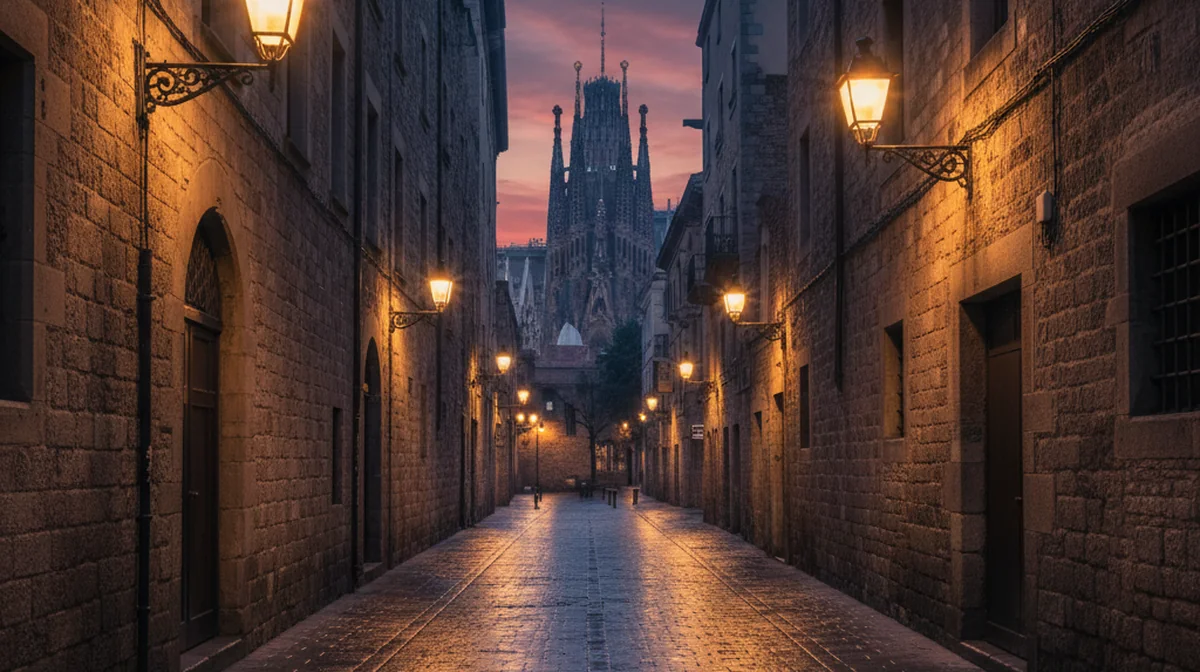
Barcelona is one of the most visually distinctive cities in Europe — Gaudí's Sagrada Família and Park Güell, the medieval lanes of the Gothic Quarter, the beach-and-boulevard rhythm of Barceloneta, the grid of Eixample with its chamfered corners, and the village feel of Gràcia. Barcelona's tourist-apartment sector is one of the most closely watched in the world, and the properties that hold HUT (Habitatge d'Ús Turístic) licenses are now operating in an increasingly scarce and valuable category.

Barcelona's STR market is defined by its regulatory trajectory — the city's mayor announced plans in 2024 to phase out tourist-apartment licenses by 2028. Active HUT-licensed properties have become meaningfully more valuable as new licenses are effectively unavailable. Eixample and the Gothic Quarter lead on rate and occupancy; Barceloneta and Gràcia offer distinct guest personalities. For licensed operators, the near-term outlook is strong.

Top Attractions & Landmarks

  • Sagrada Família
  • Park Güell
  • Gothic Quarter
  • La Rambla
  • Barceloneta Beach
  • Passeig de Gràcia
  • Casa Batlló
  • Montjuïc

Nearby Markets: Ibiza  |  Lisbon  |  Paris

Airbnb marketing services in Barcelona, Spain, Europe
Why Cavmir

The Cavmir Advantage
in Barcelona

Cavmir specializes in positioning scarce-supply European properties for the international traveler. We market Barcelona apartments in English, Spanish, French, German, and Portuguese — the languages that actually drive the booking — and we build direct-booking websites that protect your revenue through whatever regulatory evolution arrives next. For HUT-licensed properties, this is the moment to build a direct guest relationship, not depend on platforms.

State of the Industry · History

The Barcelona STR Market — Past & Present

Barcelona's short-term lodging story runs longer than most travelers realize. The city has hosted paying guests since the 19th-century Grand Tour era, when the Eixample's new grid was being laid out and Gaudi was still a student. The 1888 Universal Exposition and the 1929 International Exposition anchored Barcelona's identity as a destination that hosted the world on its own terms. For most of the 20th century, tourist lodging here meant pensiones in the Gothic Quarter and family-run hotels along the Ramblas — quiet, local, word-of-mouth.

The real inflection point was the 1992 Olympics. The city rebuilt its waterfront, opened the Port Vell, and decided — deliberately — to become a global tourist capital. Twenty years later, Airbnb poured into the same neighborhoods the Olympics had reshaped. By 2014, Barcelona was saturating, and the city imposed a moratorium on new HUT (Habitatge d'Us Turistic) licenses under the PEUAT plan. That 2014 freeze is the single most important fact about Barcelona's STR market today: license supply has been fixed for over a decade, which made existing HUT inventory a tradeable asset class and set the stage for the 2024 political announcement that now dominates every conversation about Barcelona hosting.

Pricing Strategy & Seasonality

Pricing, Seasonality & When to Capture ROI

Pricing Strategy

Barcelona pricing is event-layered on top of a strong year-round baseline. A two-bedroom HUT in the Eixample clears $220-$340 per night across most of the calendar, lifting to $450-$650 during Mobile World Congress (late February), Primavera Sound (late May into June), Sonar (June), and the shoulder of the FC Barcelona Champions League calendar. The Gothic Quarter and El Born premium on character; Barceloneta premiums on beach access and summer heat; Gracia and Poble-sec premium on neighborhood feel for longer stays.

The pricing mistake most Barcelona owners make is treating the summer as the only peak. Mobile World Congress alone can clear $2,400-$3,600 on a four-night minimum for a well-positioned 2BR — and it happens when the rest of Europe is still grey. Dynamic pricing tied to MWC, Primavera, Sonar, Smart City Expo, and major FC Barcelona fixtures outperforms flat seasonal rates by 25-45% over a year. Minimum-stay strategy matters too — a three-night minimum during event weeks protects the full window from weekend-only bookings that strand Sunday and Monday.

Seasonality & ROI Windows

Barcelona is medium-seasonal and one of the more forgiving calendars in Europe. June through September is peak, with July and August running hot enough that some guest segments actively shift to May and October. The real shoulder opportunity is March through May and late September through early November — rates dip 15-25% from peak but occupancy holds above 70% on well-marketed HUTs, especially those tuned to event travelers, longer-stay remote workers, and European short-break weekenders.

Regulation & Licensing · 2026

What the Law Requires in Barcelona

Barcelona is the most regulated STR market in Europe and arguably on earth, and 2024 changed the calculus permanently. The baseline rule is that every tourist apartment must hold a HUT license (Habitatge d'Us Turistic), which has been capped since 2014 under the PEUAT (Pla Especial Urbanistic d'Allotjaments Turistics). New HUT licenses are effectively unavailable, which turned existing licenses into transferable assets that trade with the property. Enforcement is aggressive — the city fields a dedicated inspection unit and runs platform-data crawls. Operating without a HUT draws fines starting around $32,000 and ramping higher for repeat violations.

In June 2024, Mayor Jaume Collboni announced the city's intention to end all tourist-apartment licenses by November 2028, converting the entire legal HUT inventory back to residential use. Legal challenges from owners' associations and platform operators are ongoing, and the final outcome is not settled — but every Barcelona STR owner should be operating under the assumption that the HUT regime may wind down on that timeline. On top of city rules, Spain's 2025 Organic Law 1/2025 lets HOAs (comunidades de propietarios) block tourist use with a 3/5 majority vote, and the national NRU registration number must appear on every listing. Catalonia layers the IEET tourist tax (roughly $4-$7 per guest per night depending on property category), and stays carry 10% Spanish IVA. Ask your accountant before you finalize a purchase — license status and community bylaws are where deals actually live or die.

Market-Specific Tips & Challenges

Local Tips & Unique Market Challenges

Tips That Actually Move Revenue in Barcelona

The Barcelona-specific tip that matters more than any other: the HUT license is the asset, not the apartment. Verify HUT status in writing with the Generalitat de Catalunya, not just with the seller, before you close. Ask for the license number, confirm it's current, and confirm no suspension or complaint is pending. A beautiful Eixample flat without a valid HUT is a long-term rental with expensive finishes — it cannot legally operate as a tourist apartment, and under the moratorium you cannot add one.

Second — read the community bylaws before you offer. Many Eixample and Gothic Quarter buildings have passed 3/5 votes under the 2025 law prohibiting tourist use, and a valid HUT doesn't override a compliant community ban. Third — market in English, Spanish, Catalan, and French at minimum. Barcelona's guest mix is one of the most European in Europe; listings that only speak English leave serious conversion on the table. Fourth — design for old-building realities. Eixample and Gothic properties have old plumbing, thin floors, and neighbors who call the city when noise spills. Soundproofing, quiet-hours messaging, and a visible house-rules card reduce complaints that can threaten your HUT.

Unique Barcelona Challenges

The signature Barcelona challenge is the 2028 question — no other European capital has a city government actively planning to eliminate tourist apartments outright. Litigation could soften the outcome, but any owner buying today should model a scenario where the HUT doesn't survive the decade. Other live challenges: aggressive city enforcement, community-level bans that can appear after purchase, rising anti-tourism sentiment in specific neighborhoods, and old-building insurance exposure from water damage in aged plumbing stacks.

A Curious Barcelona Fact
Barcelona's Eixample grid — the chamfered-corner octagonal blocks that define the city center — was designed by Ildefons Cerda in 1859 and is one of the earliest examples of evidence-based urban planning on earth. Cerda literally invented the word 'urbanism.' The chamfered corners were originally intended to give horse-drawn trams turning radius — today they give every Eixample apartment a disproportionate amount of light and corner air that guests immediately notice but rarely name.
Finance Essentials — Barcelona
🛡️

Insurance

Spanish seguro de hogar with tourist-rental endorsement is standard; HUT renewal often requires proof. Water-damage coverage is the line that matters most in Eixample and Gothic buildings — old stacks fail, and claims from downstairs neighbors are the most common incident. Liability coverage scaled to guest capacity, theft endorsement for Gothic-Quarter ground floors. Budget roughly $850-$2,800 per year for a typical 2-bedroom.

🧾

Property & Income Tax

Non-resident owners pay Spanish income tax on rental income at a flat 19% (EU/EEA residents) or 24% (non-EU, including US), generally without expense deductions for non-EU owners. Spanish IVA is 10% on short-term stays. The Catalan IEET tourist tax is guest-collected and remitted. Non-resident Model 210 filings apply. Ask your accountant — the US-Spain tax treaty matters.

🏦

Mortgages & Financing

Spanish mortgages for foreign buyers are available through the major Spanish banks — Santander, BBVA, Sabadell, CaixaBank — typically capped at 60-70% LTV for non-residents, with rates running roughly 0.5-1.5% above primary-residence lending. A Barcelona specialist broker is worth the introduction fee. Cash transactions are common at higher price points, especially where HUT-licensed inventory is concerned.

Future Outlook · 2027 & Beyond

Where Barcelona is Headed Next

Looking past 2026, Barcelona's trajectory points toward the tightest STR regime in a major European capital. The November 2028 phase-out proposal is the headline, but even if courts soften the outcome, the direction of travel is clear — fewer licenses, stricter enforcement, more community-level vetoes. Owners who win the next three years are the ones who front-load compliance, invest in direct-booking channels that survive a platform pull-back, and build brands that justify repeat bookings at premium rates while the window is open.

A secondary scenario worth modeling: a softened final rule that keeps HUTs alive but shrinks the total pool further. In that world, licensed Barcelona inventory consolidates dramatic value because supply is permanently capped against a tourism demand curve that isn't going anywhere. Either way, the owners who invested early in brand, international distribution, and clean compliance records will come out ahead of generic listings that rode the platform wave without building anything underneath it.

From the Desk of Sofie Sinag

Why We Love Marketing in Barcelona

Barcelona is a city where the light changes three times between breakfast and lunch. The Mediterranean morning comes in flat and pale through Eixample windows; by noon the Gothic Quarter alleys are cut into hard shadow against biscuit-gold stone; by late afternoon the Born terraces catch a rose-pink light that Instagram can't fake. Every neighborhood is its own visual language — Gaudi's vertical wrought-iron in the Eixample, the medieval compression of the Barri Gotic, the beach clarity of Barceloneta, the village hum of Gracia, the industrial-loft geometry of Poblenou's 22@. The mistake most listings make is flattening all of that into one generic 'central Barcelona' photograph that could be any European capital.

What we love about marketing in Barcelona is how event-driven the guest calendar actually is. Mobile World Congress in February, Primavera Sound in May, Sonar in June, La Merce in September, plus the constant drumbeat of FC Barcelona matches and cruise-ship drop-ins — the city never really sleeps on the calendar. A listing tuned to the right event audience wins rate premiums that flat-seasonal listings can't touch. Our work is to identify which Barcelona your property actually lives in — Eixample-architectural, Gothic-historical, Born-culinary, Barceloneta-beach, Gracia-residential, Poblenou-design-tech — then photograph and position it with the point of view that audience actually wants. That's the difference between a HUT that rents at market and a HUT that rents at brand.

Cavmir's Barcelona Cheat Sheet

The Picks We Recommend for Your Welcome Book

The picks Cavmir recommends for Barcelona welcome books — calibrated to the Barcelona the property actually serves, not generic city positioning.

Morning

Cafe con leche and pa amb tomaquet at Granja Dulcinea

The proper Catalan breakfast — toasted bread rubbed with tomato and olive oil, a short flat coffee. Granja Dulcinea in the Gothic Quarter is the tourist-friendly version; any corner bar in Gracia is the local one.

Golden Hour

Bunkers del Carmel at sunset

Old civil-war anti-aircraft bunkers on a hill above Gracia with a 360 view of the whole city. Fifteen-minute uphill walk from the metro. The photograph guests don't know about until their host flags it.

Neighborhood Walk

Passeig del Born into Ribera

A one-hour loop from the Born Cultural Center through the medieval Ribera streets to Santa Maria del Mar. Tapas bars, slow-food shops, and the gothic basilica at the end. Reads more like a film set than a walk.

Dinner That Photographs

Bar Cañete or Cal Pep

Cañete in the Raval for the classic bar-counter tapas theater; Cal Pep in the Born for the chef-counter seafood show. Both photograph beautifully and both take walk-ins if your guest arrives before 8pm sharp.

Local Obsession

Vermut hour (pre-lunch Saturday)

Sweet red vermouth with an olive and an orange slice, around 1pm on a Saturday before the long lunch. Bodega Quimet in Poble-sec is the institutional version. A welcome-book note turns guests into locals.

Shoulder Season Secret

La Merce (late September)

Barcelona's biggest festival — castellers (human towers), correfocs (fire runs), free concerts across the city. Most non-European guests don't know it exists. A shoulder-season gold window.

Weekend Escape

Train to Girona or Sitges

Girona is 40 minutes by high-speed train — medieval walls, the Game of Thrones cathedral, a cleaner old city than Barcelona's. Sitges is 35 minutes south — beach town with a gay-friendly reputation and a gorgeous church on the sea.

What Guests Ask For

Restaurant reservation lead time

Disfrutar, Dos Palillos, and the tasting-menu tier want 2-3 months out. A host who flags this in the welcome book — and ideally who'll book one reservation on request — wins a five-star review before the guest arrives.

Local Work · Composite Case Vignettes

What Cavmir Has Done for Barcelona Properties

Representative Cavmir engagements in Barcelona. Client details removed; figures composited from internal analytics and cross-referenced against AirDNA Barcelona benchmarks.

2BR HUT · Eixample Dret near Passeig de Gracia
The Brief

Well-located licensed HUT converting at 58% occupancy against a submarket running 74%. ADR was tracking $40 below the Eixample median. Original photography was shot flat, daytime, with the Gaudi corridor never referenced in copy or image.

What We Did

Rebuilt the listing around the Eixample architectural identity. Reshot at golden hour with the wrought-iron balconies framed against the Sagrada Familia sightline. Copy was rewritten for the design-conscious and architecture-tourism audience. Event-ladder pricing layered across Mobile World Congress, Primavera, Sonar, and FC Barcelona home fixtures. Direct-booking micro-site launched with a Mobile World Congress four-night rate window.

The Result

Occupancy moved from 58% to 81% over two quarters. ADR climbed 26%. Mobile World Congress 2026 cleared at a 2.7x multiplier over baseline. Direct-booking share now 22% of revenue, insulating the property from platform fee compression.

1BR HUT · Gothic Quarter near Cathedral
The Brief

Charming medieval flat whose marketing attempted to appeal to the generic tourist, converting at low rates against hundreds of similar Gothic listings. Reviews flagged noise from the street below — a structural neighborhood issue the listing hadn't addressed.

What We Did

Committed entirely to the short-stay culture and history audience — the couple doing a 3-4 night Barcelona trip around the Cathedral, the MACBA, and the Born museums. Honest disclosure about the medieval-street character, paired with upgraded soundproofing and a visible quiet-hours contract. Copy leaned into the 2,000-year history of the street. Photography at blue-hour with the cathedral framed in the window.

The Result

Review score climbed from 4.3 to 4.82 over six months. ADR up 19%. Guest-property match sharpened — complaint volume dropped to near-zero. Repeat bookings from European cultural-tourism travelers now 14% of annual revenue.

3BR HUT · Born / Ribera
The Brief

Design-forward Born apartment with the wrong audience. Original positioning was generic luxury-rental; the property was actually a culinary and design destination sitting three minutes from the Picasso Museum and two of the city's best restaurants. Losing to less-interesting competitors on ADR.

What We Did

Rebuilt the editorial entirely around the Born's culinary and design identity. Architectural photography at the right hour, a short video of the morning walk to the Santa Caterina market, a welcome book built around restaurant pairings and design-shop picks. Pitched a regional design publication and landed placement. Added an influencer partnership with a food-and-travel creator whose audience skewed European and Latin American.

The Result

ADR climbed from $310 to $498. Peak calendar booked out three months ahead. A meaningful share of bookings now come from direct repeat guests from Paris, Milan, and Mexico City who return annually.

Straight Answers

Barcelona Airbnb Marketing:
Questions, Answered

Does Cavmir offer Airbnb marketing services in Barcelona?

Yes. Cavmir works with short-term rental owners and boutique hotels in Barcelona and across Spain — property branding, listing optimization, photography direction, direct-booking websites, SEO, and paid campaigns. Properties near Sagrada Família, Park Güell and Gothic Quarter are exactly the kind of stays we market.

What do short-term rentals earn in Barcelona?

The market snapshot on this page shows average nightly rates around $210 with occupancy near 74% for Barcelona. Treat those as directional market averages, not guarantees — the spread between a well-marketed property and a poorly marketed one in the same market is wide.

When is demand highest for Barcelona rentals?

Barcelona sees moderate seasonality — clear peaks, but respectable demand through the rest of the year. That shoulder-season demand is exactly where marketing earns its keep, because travelers have more choices and pick the property that looks the part.

Are short-term rentals regulated in Barcelona?

Yes — Barcelona is a heavily regulated short-term rental market. Expect permit or registration requirements and zoning restrictions, and confirm the current rules with local authorities before you list. Cavmir handles the marketing side; we don't provide legal or permitting advice.

How do I get more direct bookings in Barcelona?

Give guests a way to book you without a platform in the middle: a fast direct-booking website, a complete Google Business Profile, and follow-up that brings past guests back. Cavmir builds that stack — see vacation rental SEO — so your repeat Barcelona guests stop paying platform fees to find you.

How much does Airbnb marketing cost for a Barcelona property?

It depends on scope. Current plans and one-time project pricing are on the pricing page — most owners start with a listing overhaul or the 12-step system. A conversation about your property costs nothing: contact Cavmir.

Free Property Review

What is your Barcelona property actually worth per night?

Send us the listing and we'll tell you what we'd change. Not a pitch deck — a straight read on your photos, your title, your rates against the Barcelona comp set, and whether a direct-booking site would pay for itself.

You'll hear back from a person, usually inside one business day. If we don't think we can move your numbers, we'll say so. Cavmir is a short-term rental marketing agency — we position and market properties, we don't manage them.

  • No obligation, and no automated call sequence
  • We market and position — we never manage your property or hold keys
  • Works whether you're on Airbnb, Vrbo, or direct

Market Intelligence · Seasonality

Airbnb seasonality in Barcelona, month by month

Demand in Barcelona peaks around May, June and October and runs quietest around January. Here is how the year actually books — and what to do about each stretch of the calendar.

Peak demandSteadyQuiet

Peak season

Late spring and early autumn are the height, with May, June and October running strongest on warm weather, the festival and conference calendar and a full slate of city tourism. The beach and the events overlap in early summer to keep demand deep. Set firmer pricing through these months and have the listing polished by spring, because the marquee weeks fill early and reward it.

The shoulders

April and September are strong shoulders, warm and busy without the peak crush, and July and August stay solid with beach-and-city tourists even in the heat. These months reward mid-week angles and event-timed pricing, from Sant Jordi in April to La Merce in September. It is the easiest stretch to keep a Barcelona calendar full without discounting.

The quiet stretch

January and February are the true low, cooler and post-holiday, though the Mobile World Congress in late February or March throws a sharp demand spike into the middle of it. December is livelier on holiday visitors. Use the deep-winter lull for longer stays, maintenance and a refreshed photo set, and price the quiet weeks honestly.

Dates that fill first

Mobile World Congresslate February to March
The world's biggest mobile industry event fills the city and sends rates soaring for a week in an otherwise soft stretch. Central listings with a good workspace and fast wifi win the business crowd; price it at the top.
Primavera Soundlate May and June
The major music festival draws an international crowd for its run at the start of the peak. It reliably lifts demand across the city, not just near the site.
SonarJune
The electronic music and creativity festival adds another wave of international visitors in June. It stacks with Primavera to make early summer especially busy.
La MerceSeptember
Barcelona's biggest street festival takes over the city for several days around the twenty-fourth with concerts, castellers and fireworks. It anchors the strong autumn shoulder.
Sant JordiApril
The city's beloved day of books and roses on the twenty-third fills the streets and lifts a spring weekend. It adds a distinctly local reason to visit in April.
Market Intelligence · Guests

Who books Barcelona Airbnbs — and how far ahead

City-break tourists
Couples and small groups in for Gaudi, the food, the museums and the beach, the steady core of Barcelona demand. They shop hard on location and photos, and neighborhood walkability sells them.
Conference and business travelers
Guests in for Mobile World Congress and the city's busy convention calendar who want a central, reliable base with a workspace and fast wifi. They book around fixed dates and value a smooth, professional stay.
Festival and music travelers
International visitors in for Primavera, Sonar or La Merce, often younger groups who plan around the lineup. They want an easy, well-located base and respond to a quick, mobile-friendly booking experience.
Longer-stay visitors
Remote workers and slow travelers who take an apartment for a week or more, drawn by the climate and the lifestyle. An equipped kitchen, laundry and a comfortable workspace win them, especially off-season.

The booking window

The peak spring and autumn weeks and the marquee events, especially Mobile World Congress, book the furthest out, often months ahead. Ordinary city breaks fill inside a few weeks, and the shoulder months carry real short-notice demand. Lock the event dates early, then keep everyday pricing responsive to how the calendar is filling.

Typical stays

Barcelona runs mostly on short city breaks of two to four nights, weighted to weekends but strong midweek on business and conference travel. A longer-stay layer of week-plus apartment bookings runs through the shoulder and winter. It is a deep, year-round market that rewards hosts who market to both the short break and the longer stay.

Where guests drive from

GironaTarragonaZaragozaValenciaAndorra

Where guests fly from

LondonParisMilanAmsterdamNew York
Barcelona pulls a broad international fly-in audience led by London, Paris and the major European cities plus North America, which is where paid marketing scales. The nearer Spanish and Catalan cities above feed drive trips and are worth naming in your listing and local SEO.
Market Intelligence · What Wins

The Airbnb that wins in Barcelona

The apartment that wins is central and walkable, in a neighborhood guests know like the Eixample, the Gothic Quarter or near the beach, with character and a comfortable, well-designed interior. Location is the first filter almost every guest applies. A working setup for remote days, air conditioning for the summer and a smart photo set are what separate a booked listing from an ignored one.

Amenities that move bookings here

central walkable locationair conditioningfast wifiequipped kitchenbalcony or terracewasherworkspaceelevator
Location storytelling is the lever in Barcelona. A listing that shows the exact walkable neighborhood, the nearest Metro and the character of the street will out-convert a nicer flat that only shows its rooms, because this market shops on where as much as what.
Straight Answers

Barcelona Airbnb marketing questions, answered

How do I market my Airbnb in Barcelona?

Sell the neighborhood as hard as the apartment, with photography that captures the street, the nearest Metro and the character of the address alongside the rooms. Price around the calendar deliberately, because Mobile World Congress, Primavera and La Merce behave nothing like an ordinary January weekend. Add a Google Business Profile so you surface in map searches by neighborhood, and stand up a direct-booking site for the culture and business regulars who return to the city often. That is the marketing layer Cavmir builds for Barcelona hosts, and this city's deep, year-round demand makes it pay off.

When is peak season for Barcelona Airbnbs?

May, June and October are the height on warm weather and a full events calendar, with April and September strong shoulders and summer solid on beach-and-city tourism. January and February are the low, though Mobile World Congress spikes demand hard in late February or March and December lifts on the holidays.

How far in advance do guests book Barcelona Airbnbs?

The peak weeks and marquee events, especially Mobile World Congress, book months ahead, while ordinary city breaks fill inside a few weeks and the shoulder months carry real short-notice demand. Lock the event dates early, then keep everyday pricing responsive to how the calendar fills.

Where do most Barcelona Airbnb guests come from?

Barcelona pulls a broad international fly-in audience led by London, Paris, Milan, Amsterdam and North America, which is where paid marketing scales best. Nearer Spanish and Catalan cities like Girona, Tarragona, Zaragoza, Valencia and Andorra feed drive trips, worth naming in your listing and local SEO.

What amenities matter most for a Barcelona Airbnb?

A central, walkable location is the headline amenity, followed by air conditioning for the summer heat and fast wifi. A proper equipped kitchen, a balcony or terrace and a washer matter to the longer stays, and a workspace and elevator smooth the experience for business and older-building guests.

Ready to Grow in Barcelona?

Let's Put Your Barcelona
Property on the Map

Talk to Cavmir today. We'll show you exactly what your Barcelona property is leaving on the table — and how fast we can change that.

Book a Free Strategy Call