Exclusive-use safari is its own market. Published 2026 rates for a private villa within a lodge, sleeping four to eight, run $4,500 to $12,000 a night all-inclusive of meals, drinks, guiding and game drives. Stand-alone exclusive-use camps for six to twelve guests run $9,000 to $25,000 and more a night with dedicated staff, and the flagship villas reach $25,000 to $37,000. Sole-use is priced either as a whole-villa nightly rate or as a per-person rate with a minimum occupancy, and for a family of six or more the villa often works out better than it first appears.
Cavmir markets sole-use villas, private camps and lodges on private reserves and conservancies. The buyer is a safari specialist, a luxury travel advisor or a family office planning a year ahead, and the marketing has to work for them: a complete presentation of the villa, the guiding and the reserve, the conservation story told honestly, and a direct site and enquiry process that answers their checklist the same day.
How safari lodge marketing is different
Almost nobody books a sole-use safari villa directly from a listing. The safari specialists and the luxury travel advisors plan the trip, choose the reserves, sequence the camps and book the villa as part of an itinerary that may cover three countries. The lodge's marketing has to be built for those planners: the information pack, the rate sheet with the inclusions, the guiding and vehicle arrangement, the transfers and airstrips, the seasonal wildlife calendar, and a person who answers the same day.
The product is the reserve as much as the villa. Guests compare the game viewing, the exclusivity of the concession, the guide-to-guest ratio, the private vehicle, the walking and night-drive permissions, and the conservation and community work behind the lodge. A villa that only shows its rooms has left the reason people come out of the picture.
Honesty is the brand. The lodges that last tell the truth about the wildlife calendar, the weather, the malaria status and the flying, and they describe their conservation work as it is rather than as a slogan. Advisors know the difference, and so do the guests who have been on safari before.
Where marketing money goes furthest for a lodge
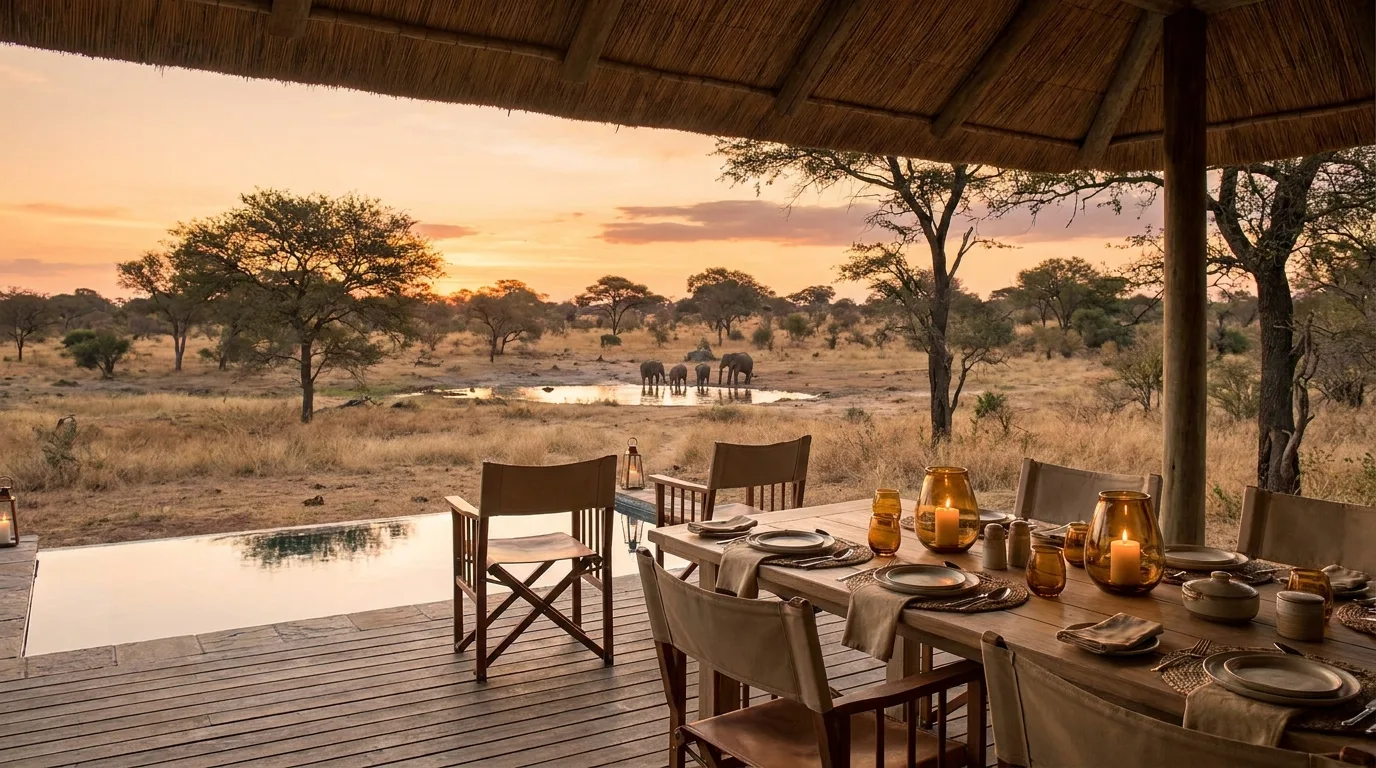
The film of a day at the villa: the wake-up, the private vehicle leaving at dawn, the sighting, breakfast in the bush, the villa in the heat of the day, the sundowner, dinner by lantern light, the night sky. Shot in the dry season with the guides and the staff, it is the single asset that sells a sole-use villa to a family who has never been, and it runs on the site, in the specialist portals and in the advisor presentations for years.
The specialist and advisor pack. A designed document with the villa, the floor plan, the staff and guiding arrangement, the reserve and its wildlife calendar, the rates and the inclusions, the transfers and airstrips, and the conservation and community story, in the form specialists forward to their clients. Familiarization visits for the specialists who send the most are the safari equivalent of a trade show.
A direct site and enquiry process that answers the checklist. Even bookings that arrive through a specialist start with the specialist reading the site. The lodge that publishes everything, with a same-day reply from a named person, gets sequenced into the itinerary.
Who books sole-use safari villas
Multi-generational families. The core of sole-use demand: six to twelve people across three generations, taking the villa for four to seven nights as part of a longer itinerary, booked a year ahead through a specialist. They want a private guide and vehicle, flexible mealtimes, a pool and a child-friendly program, and privacy from the main lodge.
Celebrations. Milestone birthdays, anniversaries and honeymoons that take a private camp for the exclusivity, booked through advisors with specific requests for dinners, surprises and photography.
Photographers and repeat safari-goers. Guests who have been many times and choose a lodge for its guiding, its concession and its access to walking, night drives and off-road viewing. They book for the reserve, and they judge the guide before the villa.
Corporate and donor groups. Foundations, boards and companies taking an exclusive-use camp for a retreat or a conservation visit, booked by agencies with a fixed budget and a program.
Safari seasonality
The dry season is the peak. In Southern Africa, from Sabi Sand and the Greater Kruger to the Okavango Delta and the Linyanti, that means roughly June to October, when the bush thins and the game concentrates at the water. In Kenya's Masai Mara conservancies and Tanzania's Serengeti, the migration months from July to October carry the highest demand. Christmas and New Year are a second peak across the continent.
The green season, from November to April in much of the region, brings rain, long grass, newborn animals, birdlife and lower rates. Lodges that market it honestly, as a different safari rather than a lesser one, fill weeks the peak-season buyer never considers. The Okavango's flood, which arrives in the dry months, is its own calendar and its own marketing.
Because the buyers plan a year ahead, the marketing calendar runs a year ahead too: the peak weeks of next year are being sequenced by specialists now.
Exclusive-use safari economics
Sole-use villas are priced all-inclusive: the published $4,500 to $12,000 a night for a private villa within a lodge, and $9,000 to $37,000 and more for stand-alone camps and flagship villas, cover meals, drinks, guiding, the private vehicle and the game drives. Conservation and community levies, park fees, transfers and premium wines are the usual extras, and the rate sheet has to state them.
The costs are the staff, the guides, the vehicles, the aircraft or the road transfers, the concession fees to the reserve or the community, and the cost of running a camp far from anywhere. Most of it runs whether or not the villa is booked, which is why the green season and the shoulder weeks matter.
Cavmir doesn't set your rates or run the camp. The work is to present the villa and the reserve so that specialists can sell it, and to keep the lodge in front of them when next year's itineraries are being built.
Top markets for sole-use safari
Exclusive-use demand concentrates in the private reserves and conservancies where the guiding is best and the vehicles are few.
- Sabi Sand and the Greater Kruger, South Africa
- The Okavango Delta and the Linyanti, Botswana
- The Masai Mara conservancies, Kenya
- The Serengeti and the Ngorongoro highlands, Tanzania
- Laikipia, Kenya
- The Lower Zambezi and South Luangwa, Zambia
- Namibia's private reserves
- Rwanda's gorilla lodges
How Cavmir works with safari lodges
Cavmir markets the lodge. We brand the villa and the camp, direct the film and the photography in the right season, build the direct-booking website with the wildlife calendar and the rate sheet, produce the specialist and advisor pack, and write the listings for the safari collections and the platforms where they help. Then we run the distribution: the safari specialists, the advisor networks, the conservation press and the creators who cover the reserves.
Safari work runs a year ahead of the season it sells. The build happens in the green season, the pack goes to the specialists before they sequence next year, and the retainer keeps the lodge in front of them.
What it takes to earn 5-star reviews on safari
Safari reviews go to the specialist first, and the specialist decides whether to sell the lodge again.
- The guide. The single biggest factor. A sole-use villa needs a senior private guide and a dedicated vehicle for the whole stay, and the marketing should name what that means.
- The villa as shown. Every bedroom, the pool, the private dining and the staff as photographed and described.
- Flexibility. Mealtimes, drive times, a late start with children, a long day out with photographers. Sole-use means the schedule is the guests'.
- Honesty about the bush. The wildlife calendar, the weather, the flying and the malaria status told plainly before booking.
- Conservation that is real. Guests ask, and they can tell. Describe the work as it is.
The shot list for a safari villa
A safari villa is bought from the film and the photographs of a day, and they have to be shot in the dry season with the staff in place.
- The villa from the outside at dawn and at dusk, in its setting.
- Every bedroom and bathroom, including the outdoor showers and the private decks.
- The deck and the pool with the view, in the heat of the day and at sundown.
- The private vehicle and the guide leaving at dawn, and a sighting from the vehicle.
- Bush breakfast, the sundowner and dinner by lantern light.
- The staff at work: the chef, the butler, the trackers.
- The reserve: the water, the plains, the sky, the game.
- The arrival: the airstrip, the aircraft, the welcome.
The photography direction service plans the shoot around the season, the guides and the light.
Writing the villa for specialists and advisors
Lead with the reserve, the exclusivity and the scale: "Sole-use villa on a private concession in the Okavango Delta, 4 suites, private guide and vehicle, sleeps 8." Specialists search the reserve and the capacity, and the guiding arrangement tells them what level they are looking at.
Then the villa in order: the suites and their bathrooms, the living and dining spaces, the pool and the deck, the staff and the guiding, the activities the concession permits, the wildlife calendar, the transfers and the airstrip, the malaria status and the medical arrangements, and the rate sheet with inclusions and extras. Then the conservation and community story, described as it is.
Our listing optimization service writes the villa for the specialist portals, the safari collections and the direct site, each in the form that channel rewards.
Where a direct-booking site earns its keep for a lodge
Even a booking that arrives through a specialist starts on the lodge's site. The specialist reads it, checks the rate sheet and the calendar, and forwards it to the client. Repeat guests, who no longer need a specialist, book direct. A site that publishes everything, with an enquiry form that reaches a named person the same day, is sequenced into more itineraries and keeps the margin on the repeat bookings.
The pages that matter: the villa and the reserve; each suite with the floor plan; the guiding and the vehicle; the wildlife calendar by month; food and drink; getting there, with airstrips and flight times; rates, inclusions and extras; conservation and community; and a press page. A Google Business Profile puts the lodge on the map under its own name, and search work around the reserve and the words private villa and exclusive use reaches the advisor who is still choosing.
Beyond the direct site, a lodge belongs with the safari specialists, on the advisor consortia and the luxury villa collections, and in the conservation and travel press. Creator stays work only when the creator's audience books safaris, and we run them through the influencer marketing service with the lodge's rules about wildlife and guests in hand.
Frequently Asked Questions
What owners, estate managers, advisors and family offices ask us about safari lodges and private reserves.
How much does a sole-use safari villa cost?
Published 2026 rates for a private villa within a lodge, sleeping four to eight, run $4,500 to $12,000 a night all-inclusive of meals, drinks, guiding and game drives. Stand-alone exclusive-use camps for six to twelve guests run $9,000 to $25,000 and more a night, and flagship villas reach $25,000 to $37,000.
How is exclusive use priced?
Either as a whole-villa nightly rate, paid regardless of how many travel, or as a per-person rate with a minimum occupancy or an exclusive-use supplement. For a family of six or more the villa rate divided across the group often works out better than it first appears.
Who books safari lodges?
Safari specialists and luxury travel advisors planning itineraries a year ahead, family offices, and repeat safari-goers who book direct. Almost nobody books a sole-use villa from a listing without a conversation.
When is the peak season?
The dry season: roughly June to October in Southern Africa, and the migration months from July to October in the Masai Mara and the Serengeti. Christmas and New Year are a second peak. The green season brings rain, newborn animals, birdlife and lower rates.
How far ahead do safari villas book?
Often a year or more for dry-season and migration weeks, because specialists sequence camps across an itinerary and the private villas are few. The marketing has to be ready when next year's itineraries are being built.
What matters most to a sole-use guest?
The guide and the private vehicle, then the exclusivity of the concession, then the villa. Flexibility over mealtimes and drive times, privacy from the main lodge, and honesty about the bush decide the review.
Does a lodge need to be on Airbnb?
Rarely for sole-use villas. The bookings come through specialists, advisors and the lodge's own site. A listing on the safari collections and the advisor consortia matters more than any consumer platform.
How should the conservation story be told?
As it is. Describe the concession, the community arrangement, the levies and where they go, and the work the lodge actually does. Advisors and experienced guests know the difference between a program and a slogan.
What photographs does a safari villa need?
The villa at dawn and dusk, every suite and bathroom including the outdoor showers, the deck and pool with the view, the private vehicle and guide at dawn, a sighting, bush breakfast and the sundowner, dinner by lantern light, the staff at work, and the arrival at the airstrip. Shoot in the dry season.
What does Cavmir do for a lodge?
Brand the villa and the camp, direct the film and photography, build the direct-booking site with the wildlife calendar and rate sheet, produce the specialist pack, write the listings, and run the distribution to specialists, advisors and press. Cavmir doesn't run the camp or the guiding.
Which reserves does Cavmir work in?
The private reserves and conservancies where sole-use demand concentrates: Sabi Sand and the Greater Kruger, the Okavango and the Linyanti, the Masai Mara conservancies and Laikipia, the Serengeti, the Zambezi and Luangwa valleys, Namibia's reserves and Rwanda's gorilla lodges.
Can a lodge be marketed without publicity?
Yes. Many owners want no press and no public case study. The distribution goes to specialists and advisors, and the site answers their questions without turning the lodge into a public feed.