Start here Work with Cavmir in Bruce Peninsula
Get a Proposal (786) 751-3426
C$355
Avg. Nightly Rate
43%
Avg. Occupancy Rate
C$3,350
Avg. Monthly Revenue
3–7%
Est. Cash-on-Cash ROI
HIGH
Seasonality
HIGH
Regulatory Burden

* Market averages in Canadian dollars from AirROI data for the Municipality of Northern Bruce Peninsula, October 2025 to September 2026, converted from US dollars at 1.39. ROI is Cavmir's estimate. A single home's numbers depend on its size, its location and how it is marketed.

The Market

Why the Bruce Peninsula Is a Strong Rental Market

Cavmir is an Airbnb marketing agency. We build the brand, the direct-booking website and the marketing for short-term rentals in Bruce Peninsula.

The Bruce Peninsula is the narrow run of Niagara Escarpment rock that divides Georgian Bay from the main body of Lake Huron. The Canadian Encyclopedia measures it at 100 kilometers from its base near Owen Sound to Tobermory at the tip and 38 kilometers across at the base, with cliffs along Georgian Bay and a gentle slope down to sand and clay plains on the Lake Huron side. For a rental owner that strip of land holds two municipalities and two national parks. The Municipality of Northern Bruce Peninsula covers Tobermory, Lion's Head, Dyer's Bay, Miller Lake and Stokes Bay, and wraps around Bruce Peninsula National Park and Fathom Five National Marine Park; the Town of South Bruce Peninsula covers Wiarton, Oliphant and Sauble Beach. In AirROI's data for the northern municipality, Toronto sends about 23% of guests, more than any other city, and nearly a quarter of all guests come from outside Canada.

The earnings sit well above the provincial average. AirROI's figures for the Municipality of Northern Bruce Peninsula from October 2025 to September 2026, which AirROI measures in US dollars and this page shows in Canadian dollars at about 1.39, give the average listing about C$355 a night, 43% occupancy and C$40,200 a year, against an Ontario average of about C$270 a night and C$29,200 a year, and with 323 active listings the municipality is the 23rd-largest of the 282 Ontario markets AirROI tracks. Those are the figures in the box above. A quarter of the municipality's listings charge C$435 or more a night and a tenth C$580 or more. The southern town earns less per listing: AirROI's South Bruce Peninsula market averaged about C$328 a night, 38% occupancy and C$29,800 a year, and its Sauble Beach market C$335, 38.5% and C$24,100. Against those earnings, Wahi Realty's market snapshot puts the median detached sale in September 2026 at C$567,000 in Northern Bruce Peninsula and C$600,000 in South Bruce Peninsula, medians drawn from only eight and 13 sales that month.

The rules set the peninsula apart as much as the numbers, and they change at the town line. Northern Bruce Peninsula licenses short-term rentals under By-law 2025-34 only in the six zones the by-law lists, allows no more than 400 licences at a time and keeps a waiting list, and every new licence it issues is Class A or B, which the by-law's schedule limits to eight occupants and 180 rented days a year. South Bruce Peninsula licenses rentals of up to 30 consecutive days under By-law 11-2026, at two people per bedroom with a parking space for every two guest rooms. Each municipality charges a 4% accommodation tax, and Airbnb collects neither. On public land Parks Canada adds its own layer: from May 1 to October 31, nobody parks for the Grotto without a reservation, so the peninsula's best-known outing has to be planned before the guest arrives.

Those limits change what a good listing does. With 180 rented days to sell, the work is picking the nights that earn most and pricing each one well, because chasing every empty date only runs into the ceiling sooner. With a parking reservation for the Grotto, a ferry ticket for Manitoulin or paid summer parking at Sauble Beach standing between the guest and the day they came for, the listing that explains each step before booking saves them a wasted drive and earns the review. And because the licence number, the occupancy limit and the house rules are public, posted by the municipality and inside the cottage, a listing that matches them line for line is one the guest and the by-law office can both trust.

On the peninsula Cavmir handles the marketing. We shape the brand, write the listing, plan each photograph with the photographer, build the direct-booking website, do the search work that gets a cottage named by Google and by AI assistants, and run the campaigns that fill the nights a licence allows. Licences, inspections, septic pump-outs, tax filings and keys stay with the owner and the people they hire for them. The sections below cover AirROI's figures town by town, the rules in each municipality and in the national parks, how the season and the 180-day limit shape prices and the calendar, and three plans: a licensed cottage near Lion's Head, a beach house at Sauble Beach and a small home in Tobermory for park and ferry guests.

Top Attractions & Landmarks

  • The Grotto and Indian Head Cove, Bruce Peninsula National Park
  • Flowerpot Island in Fathom Five National Marine Park
  • Big Tub Lighthouse at Tobermory, built in 1885
  • The MS Chi-Cheemaun ferry from Tobermory to Manitoulin Island
  • Sauble Beach on Lake Huron
  • Lion's Head and the Bruce Trail on the Georgian Bay cliffs
  • Halfway Log Dump and Singing Sands
  • Bluewater Park and the Wiarton Willie Festival, Wiarton

Nearby Markets: The Blue Mountains  |  Parry Sound  |  Grand Bend & Bayfield

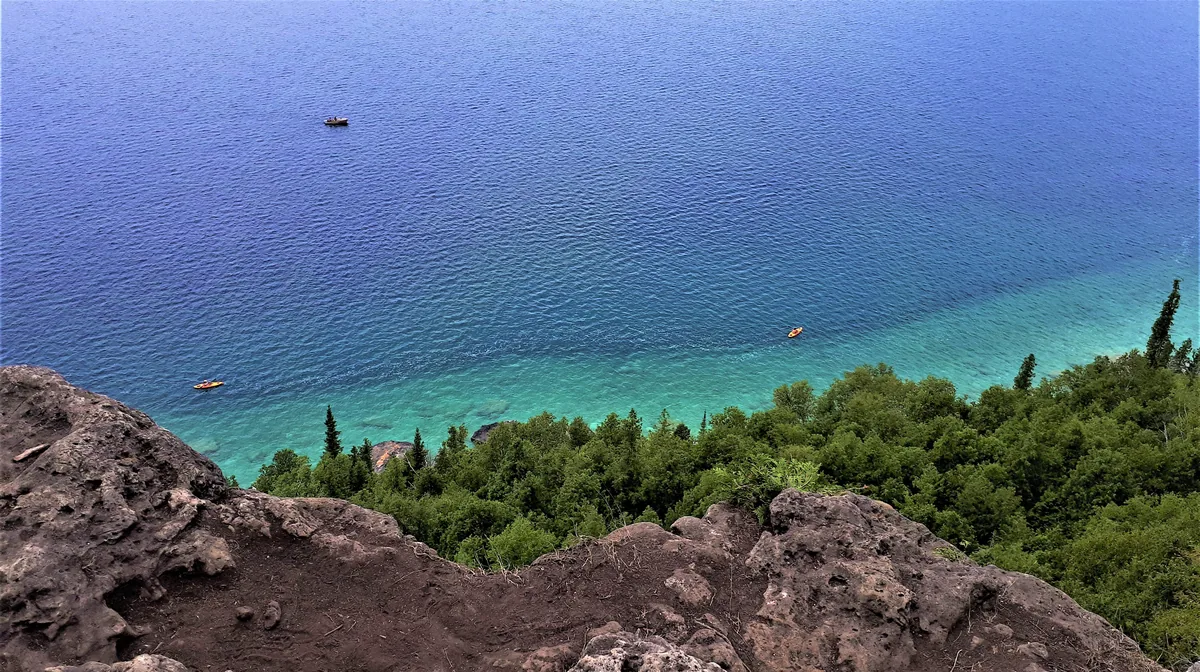
Kayakers on the clear turquoise water of Georgian Bay below the cliffs at the Lion's Head lookout, Bruce Peninsula, Ontario

Photo: Mhsheikholeslami · CC BY-SA 4.0 · via Wikimedia Commons

Why Cavmir

The Cavmir Advantage
in Bruce Peninsula

On the Bruce Peninsula we market each property for what it is and within the licence it holds: a cottage near Lion's Head that spends its 180 days on the guests who value them most, a Sauble Beach house that sells summer weeks with the parking and the beach rules explained, a small home in Tobermory that turns a Grotto slot and a ferry sailing into a planned two-night stay. From there we make sure people planning a peninsula trip find it: in Google, in the answers AI assistants give, on Instagram, and in the owner's own newsletter to the families who stayed last August. Cavmir does marketing only. We don't hold keys, register campfire permits or answer guest messages, and bookings and inquiries that come through a site we build go to the owner, or to whoever the owner hires to run the property.

State of the Industry · History

The Bruce Peninsula STR Market — Past & Present

Long before the cottages, the peninsula had keepers, and it still does. Parks Canada names the Chippewas of Saugeen and the Chippewas of Nawash, together the Saugeen Ojibway Nation, as the traditional keepers of this land, within the Anishinabek Nation, the People of the Three Fires: the Ojibway, Odawa and Pottawatomie. The Canadian Encyclopedia describes Cape Croker, which reaches 10 kilometers into Georgian Bay, as an Ojibwa reserve, and the Town of South Bruce Peninsula notes that its beach by-laws aren't enforced on the part of Sauble Beach owned by Saugeen First Nation. The same encyclopedia calls the peninsula 'the North American rendezvous of plants', for the northern, transitional and southern tree species found together here and for about 49 kinds of orchids and 30 ferns.

Tobermory grew up on the water. Parks Canada's history of Fathom Five says shipping around the village began in earnest in the 1850s, when schooners carried supplies to the lumber towns of Georgian Bay and came back loaded with lumber for the growing cities. Shipwrecks led to lighthouses: Cove Island got its light in 1858, Big Tub in 1885 and Flowerpot in 1897. Captain J.G. Boulton completed the first full survey of Georgian Bay in 1888, wrecks grew less frequent after it, and by 1890 propeller-driven steamers were quickly taking over from the schooners. The wrecks that remain are now a draw of their own, since Fathom Five offers scuba diving on 24 of them, and Flowerpot Island, 6.5 kilometers from the Tobermory harbor, is still reached only by boat.

Two traditions mark the two ends of the peninsula. At the north end, the Owen Sound Transportation Company's MS Chi-Cheemaun has carried cars and passengers between Tobermory and South Baymouth on Manitoulin Island since 1974, on twin 16-cylinder diesel engines that Parks Canada puts at 7,000 horsepower, and Tobermory's Chi-Cheemaun Festival, named for the ferry and held every June, reached its 52nd year on June 12 to 14, 2026, with cardboard boat races in the harbor and fireworks at dusk. At the south end, a Groundhog Day gathering that Mac McKenzie started in Wiarton became the Wiarton Willie Festival, whose 70th annual official prediction came at 8:07 a.m. on February 2, 2026, after fireworks in Bluewater Park at 7.

The land itself is protected in layers. The encyclopedia counts Fathom Five National Marine Park, Bruce Peninsula National Park, four provincial parks and seven other protected areas on the tip and the Georgian Bay side, and notes that the Niagara Escarpment, which runs the full length of the peninsula, is a UN biosphere reserve. The Bruce Trail follows the escarpment along that shore, and Lion's Head takes its name from a rock formation 51 meters high. To manage the crowds on the most popular shoreline, parking for the Grotto and Halfway Log Dump is now booked through Parks Canada in fixed time slots each season, and Little Cove's through the municipality, which runs that lot; when those lots are full there is no other way in.

The rental market is big for a rural municipality and moving in two directions. Northern Bruce Peninsula has 323 active listings in AirROI's count, down 4% on the year even as each listing's revenue climbed 12.4%. Whole homes make up 94% of them; by type, 63% are houses and 30% cabins, three bedrooms is the most common layout at 40% of the homes, and just over half, 54%, describe themselves as waterfront. Few hosts run many homes here: professional managers account for about 12% of listings, a co-host helps on 37%, and the ten biggest hosts together list a quarter of the supply. Nearly half are open to guests for less than about nine months of the year, so the box's monthly figure, the annual revenue divided by twelve, averages the quiet and closed months in with the busy ones. To the south, AirROI's South Bruce Peninsula market shrank 13% in a year, to 138 listings, while its Sauble Beach market grew 26%, to 137, and in Tobermory itself 36% of the 91 listings are hotel or boutique rooms and stays average 3.6 nights.

Pricing Strategy & Seasonality

Pricing, Seasonality & When to Capture ROI

Pricing Strategy

AirROI's northern figures, converted from US dollars at about 1.39 like every AirROI number on this page, describe a market that holds its rate and earns most of its money in summer. Across the year ending September 2026, a northern night averaged about C$355 and listings sold 43% of the nights they offered; the middle listing's rate was nearer C$320. A quarter of listings charged C$435 or more and a tenth C$580 or more, and in AirROI's occupancy tiers the busiest tenth of listings were booked on 74% or more of their nights. Gross revenue averaged about C$40,200 a listing, about C$36,300 of it from nightly rates and C$3,900 from cleaning fees. AirROI's top-quarter listing grossed about C$71,100, and the best earner it tracks, a five-bedroom home, about C$163,700.

Bedrooms matter, and the licence decides how many beds a house can sell. Three-bedroom homes are the largest group, 40% of the entire homes AirROI tracks in the north, and the strongest earners at the median: about C$50,700 a year, with an average of C$54,600, at C$398 a night and 46% occupancy. Four-bedroom homes charge more, about C$488 a night, but are booked less often, 41% of nights, and their median of about C$40,600 sits below the three-bedrooms'. Two-bedroom homes average about C$31,400 at C$296 a night, and one-bedrooms about C$13,900. Because the by-law's schedule caps a new northern licence at eight occupants, a five-bedroom house may sell no more places than a four-bedroom one, so describe the beds against the number printed on your licence and let the extra room sell space and privacy instead.

Summer carries the calendar. In August 2026 the average northern listing earned about C$10,900 at 71.5% occupancy and C$430 a night, July about C$10,800 at 67% and C$436, and January about C$2,280 at 21.5%. Averaged over two years, an August listing takes in about C$10,400 and a January one C$2,340, a ratio of roughly 4.4 to 1, and the June-to-August stretch accounts for 47% of annual revenue in AirROI's calendar. Rates swing far less than occupancy: AirROI's seasonal averages run from about C$319 a night between October and May to C$337 in September and C$403 from June to August, so the off-season task is selling more nights near the usual rate; cutting October's price deeply hands back money that October guests were already paying. Summed, the monthly figures overshoot the annual average, so lean on the months to see when demand comes and on the yearly number to plan the budget.

The southern half prices a little lower and leans harder on July. AirROI's South Bruce Peninsula market averaged C$328 a night at 38% occupancy and about C$29,800 a year, up 7.8%, with July its strongest month (about C$9,370 at 65% occupancy in 2026) and January its weakest, and its top quarter charging C$395 or more. Sauble Beach averaged C$335 a night but only about C$24,100 a year, down 7.2% while its listing count grew by a quarter, and its winter is the thinnest in AirROI's tables for the peninsula: February 2026 averaged about C$1,120 at 16% occupancy, against July's C$9,170 at 67%. Tobermory sits between, at C$341 a night, 42.5% occupancy and about C$34,700 a year, up 13.6%, and its July and August rates, about C$452 and C$444, are the highest summer rates in any AirROI monthly table used here. AirROI's Lion's Head market, 30 listings, averaged about C$385 a night and C$35,700 a year, and Wiarton's 54 listings about C$285 and C$28,000.

Booking rules on the peninsula are short and firm. In the northern municipality 51% of listings set a two-night minimum and 21% three nights, only 15% accept a single night, 53% use a firm cancellation policy and 22% allow Instant Book; the average stay runs about four nights, and the average listing takes about 24 bookings a year. Cleaning fees appear on 80% of listings; the median fee is C$147, and the fees make up nearly a tenth of what a listing grosses. AirROI's cost model takes about C$13,500 a year off the average listing's gross for cleaning and laundry, the platform's fee, power and internet, repairs, guest supplies, insurance and permits, which leaves about C$26,700 to cover the mortgage, property tax and the owner's return. Its permit line is C$200; in Northern Bruce Peninsula the licence alone is C$500 a year, plus C$500 for the inspection the application requires, so budget the real figure, and add the 4% accommodation tax to the guest's price instead of absorbing it.

Seasonality & ROI Windows

The season opens in May and peaks in July and August. Parks Canada requires Grotto parking reservations from May 1, the Tobermory Visitor Centre opened on May 16 in 2026, and the Chi-Cheemaun sailed from May 1 to October 18, with three round trips a day from June 19 to September 7. Guests plan summer early: northern listings were booked about 89 days ahead for July stays and 94 days for August, and Sauble Beach's July bookings came about 122 days out, for stays that averaged almost eight nights. With 180 rented days on a Class A or B licence in the north, use that long lead time: price and photograph summer by early spring, give last year's guests first choice of their week, and decide before the season which shoulder weekends will take up the rest of the allowance.

After Labour Day the peninsula slows down rather than shutting. September 2025 still averaged about C$4,800 a northern listing at 44% occupancy, and October about C$3,860 at 36%, with stays booked six to eight weeks ahead; the ferry kept two round trips a day into October, with extra sailings on Thanksgiving Monday, and Grotto reservations stay in force until October 31. Winter is the hard stretch: January 2026 averaged 21.5% occupancy and February 27%, booked only about 25 days ahead, and Sauble Beach's February dropped to 16%. The winter guests who do come want a warm house, which is where an indoor fireplace or wood stove pays its way: AirROI measures a revenue gap of about 95% between northern listings with an indoor fireplace and those without, and about half have one. Wiarton's Groundhog Day festival at the start of February (check the town's Wiarton Willie page for the program) and Ontario's Family Day weekend give a winter listing something to offer beyond the stove.

Each day on the peninsula runs to a timetable as well. Grotto parking is sold in four-hour windows that start at 8 a.m., 9 a.m., noon, 1 p.m., 4 p.m. and 5 p.m., Halfway Log Dump in two six-hour windows, and the ferry's summer departures leave Tobermory at 8:45 a.m., 1:15 p.m. and 5:45 p.m. Nearly seven in ten northern listings set a 4 p.m. check-in and most an 11 a.m. check-out, so a guest holding a 9 a.m. Grotto slot on departure day has to pack and check out before the hike or drive back in the middle of it. Say in the listing which slots and sailings work with your check-in and check-out times, and offer a later check-out to guests who book a morning slot on their last day.

Regulation & Licensing · 2026

What the Law Requires in Bruce Peninsula

In the Municipality of Northern Bruce Peninsula, which takes in Tobermory, Lion's Head, Dyer's Bay, Miller Lake and Stokes Bay, renting out a whole house for less than 30 days takes a short-term accommodation licence under By-law 2025-34, passed on May 26, 2025. Only the registered owner can hold one, each property gets one rental, and no accessory building or additional residential unit may be rented, which keeps a bunkie or a garage suite out of the stay; ask the municipality if you're unsure how it treats a building on your lot. Licences go only to properties in the R1, R2, RU1, RU2, DC and C1-a zones listed in the by-law, whose maps are marked illustrative only, so check your lot against the zoning by-law, and no more than 400 can exist at once. Once they're all taken, applicants join a waiting list on Cloudpermit and are offered licences in the order they applied, with a lottery to break ties. A licence lasts 365 days, can't be transferred, and keeps its number only when the renewal goes in within a month of expiry.

The class of licence sets the size of the business. The municipality stopped issuing new Class C licences on May 26, 2025; existing ones stay valid until the property is sold or the owner stops renting, and the holding zone placed on a Class C property lifts when ownership changes, which ends the rental. Every new licence is therefore Class A or B, which the by-law's schedule limits to eight occupants and 180 rented days a year, and renting past the day limit carries a C$700 set fine. The by-law's own definition of the occupancy limit, two people per bedroom plus up to two children aged 12 and under, to a maximum of ten where beds and parking allow, doesn't match that schedule, so confirm the number the municipality will print on your licence before you advertise one. An application needs proof of ownership, C$2 million in liability insurance, a site plan that marks the parking, garbage area, septic tank, tile bed, well and fire pit, floor plans with the bedrooms identified, a fire safety and exit plan, a WETT certificate where a wood-burning appliance makes one applicable, proof the septic tank was pumped out and inspected within the last three years, and an inspection assigned to the chief building official and the fire chief. The 2026 fees by-law, in force since January 1, 2026, keeps the charges at C$500 to register and C$500 a year to renew a Class A or B licence, C$500 for the inspection and C$250 for a re-inspection, and the licence has to be in hand within two months of applying.

Once licensed, a northern rental runs on posted rules. Every advertisement has to show the licence number and match the licence, and advertising without the number is a C$900 set fine, the same as renting without a licence; AirROI finds a number on only a quarter of the municipality's listings. Inside the house the owner keeps an operations manual with the renter code of conduct, the fire exit plan and emergency contacts, and posts the occupancy limit and the owner's contact details, while the property manager's contact goes on a sign at the end of the laneway. That manager must be at least 18, live within an hour of the property and be reachable around the clock while guests are there. Parties, outdoor speakers and fireworks are prohibited, the renter code of conduct bars disturbing the neighbors at any hour of the day or night, and garbage stays in an enclosed area except on collection day. A by-law officer follows up on a complaint within 24 hours; three registered complaints in a year revoke the licence, the address can't be licensed again for 365 days, and an appeal to council costs C$1,000. Court fines under the by-law go as high as C$100,000 for each offense. Campfires need a free open-air burning permit from the beginning of May to the end of October, registered online and active as soon as it's issued. And since January 1, 2025, By-law 2024-23 has set a 4% municipal accommodation tax on the full accommodation price of stays under 30 days, whether booked directly or through a platform. Meals, parking and other extras are left out, the municipality asks for the tax as a separate line on every invoice and receipt, and it's remitted every quarter; half the net goes to the Tobermory and Northern Bruce Peninsula Chamber of Commerce.

The Town of South Bruce Peninsula, which covers Wiarton, Oliphant and Sauble Beach, runs its own system under the Short-Term Rental Accommodation Licence By-law 11-2026. Every provider needs a licence before renting a dwelling for up to 30 consecutive days, properties in the Niagara Escarpment Commission's regulated area included; hotels, motels and tourist cottages that pay commercial property tax fall outside it. Licences run to December 31, so the 2026 licences expire on January 1, 2027 and need renewing for the new year; applications are taken online, and the town publishes lists of approved licences. The January 2026 licensing guide sets a first-year fee of C$800 and a C$350 renewal. Occupancy is two people per bedroom, or three where children under 12 are part of the group, and the septic system can set a lower number; parking means at least one space, 2.5 by 6 meters, for every two guest rooms. A garden suite, a shed or a guest cabin (the by-law's word for a bunkie) can't be rented. The application asks for C$2 million in liability insurance confirmed to cover short-term rental use, a site plan, floor plans showing every room along with the alarms and extinguishers, and proof that the septic, heating and electrical systems comply, and it is subject to zoning and fire prevention approval. Inside, the licence hangs in plain view, with the noise by-law, the site plan, the approved floor plans and the renter's code of conduct kept where guests can read them. A responsible person has to answer within 30 minutes and be at the property within an hour, and failing to is a C$700 set fine; renting without a licence and exceeding the occupancy limit are C$600 each, and three or more orders, charges, fines or penalties within two years mean revocation.

Inside Bruce Peninsula National Park and Fathom Five National Marine Park, Parks Canada's rules apply rather than the municipality's. A car needs a confirmed reservation to park for the Grotto from May 1 to October 31 and for Halfway Log Dump from June 19 to September 7, and Little Cove, whose lot the municipality runs, takes reservations from May 15 to September 15; when a lot is full there's no other access, walking along Cyprus Lake Road isn't allowed and drivers can't drop passengers off. Reservations can't be changed or resold, only canceled and booked again. In Fathom Five, drones may not take off or land, pets stay on a leash, and Flowerpot Island has no garbage facilities and no tap water.

South Bruce Peninsula has charged its own 4% municipal accommodation tax since January 1, 2022, under By-law 30-2021, on the accommodation price of stays of 30 days or less. Each quarter's report is due on April 30, July 31, October 31 or January 31, with payment due within 15 days, and a quarter with no report on file is billed by the town on the assumption that every night was sold. A licence is approved only after the operator registers for the tax and renewed only when every remittance is paid. Neither municipality appears on Airbnb's list of Ontario places where it collects an accommodation tax, so both taxes are yours to charge and send in, on platform and direct bookings alike. For a host without a GST/HST number, Airbnb charges that tax on stays of up to 30 nights and remits it; once you register, you charge Ontario's 13% HST yourself. The federal government adds one more rule, in force since the 2024 tax year: for any day a rental of under 90 consecutive days runs without the licence its municipality requires, or where rentals aren't allowed at all, the matching share of its expenses can't be deducted, prorated by those non-compliant days. Use this section to orient your own checks; it isn't legal advice, so confirm each point with the municipality, a lawyer who knows Bruce County property and your accountant. Cavmir's role is the marketing.

Market-Specific Tips & Challenges

Local Tips & Unique Market Challenges

Tips That Actually Move Revenue in Bruce Peninsula

Plan the year around the licence. A Class A or B licence in Northern Bruce Peninsula allows 180 rented days, and AirROI's calendar data shows only about one northern listing in nine was booked or blocked for more than 180 days of the year, so few owners hit the ceiling by accident; the ones who reach it are selling their most valuable nights. Ask the municipality how it counts a rented day, then decide in winter how many days go to July and August weeks and how many to June, September and October weekends, and set minimum stays and rates to match. Longer minimums in summer don't use the allowance any faster, and every night they add to a stay saves a changeover and a cleaning.

Write the park into the listing. Parks Canada calls the Grotto, Halfway Log Dump and the trails around them a popular area that needs planning, and from May 1 to October 31 it lets no car park for the Grotto without a reservation sold in four-hour slots. Put the booking link and phone number, the slot times and the costs on your arrival page: Parks Canada's regular 2026 fees were C$17.50 a day to park a car, C$3.50 to reserve online or C$5.50 by phone, and C$10 admission for an adult, with youth 17 and under free, though the Canada Strong Pass made admission free for part of the summer, through September 7. Then ask guests to book their slot when they book the cottage, and say which slots fit your check-in and check-out times. A guest who arrives holding a slot has a planned day; one who arrives without may find no way into that part of the park.

Put the licence to work in the listing. In the north the licence number has to appear in every ad, so add it to the platform listings, the direct-booking site and any social post that advertises dates; in the south the town suggests showing it too, in the platform's licence field or, where there isn't one, in the ad itself. State the licensed occupancy once and use the same number on every channel, and describe the bedrooms room by room so the count adds up. Present the posted rules, no parties, no outdoor speakers and no fireworks in the north, as house rules guests accept before they book, so nobody is surprised at check-in and the by-law office has nothing to hear about.

Make the outdoor rules part of the welcome. Nine in ten northern listings advertise a fire pit, and from May through October each fire there needs a free permit registered online; ask the fire department whether the owner's permit covers renters, and put the answer and the posted fire danger rating on the first page. Keep garbage in an enclosed place until collection day, as the north's by-law requires, and tell guests why: bear activity closed the national park's Cyprus Lake Campground for the end of the 2026 season. At Sauble Beach, list the beach rules that catch visitors out: no alcohol, no fires, no dogs between June 1 and Labour Day, no four-sided tents, and paid parking from 8 a.m. to 5 p.m. through the summer at C$7 an hour or C$30 a day.

Give returning guests a direct way to book, in their own language. AirROI counts 23% of the north's guests from outside Canada, about 12% of them from the United States and roughly 2% each from the United Kingdom, Germany and France, and its language data shows 12.7% French speakers and about 4% German speakers. A direct-booking website that carries the licence number, the park plan, the ferry times and a total price with the 4% accommodation tax already in it gives a family that loved its week a way back without a platform fee, and arrival pages in French and German cost little to add. Back it with search work aimed at what park visitors type, such as a cottage near the Grotto, a place to stay before the Tobermory ferry or a Lion's Head cottage with a wood stove.

Unique Bruce Peninsula Challenges

Supply in the north is capped, and that cuts both ways. With at most 400 licences in Northern Bruce Peninsula, no new Class C licences and rentals allowed only in listed zones, a buyer can't assume a cottage can be rented: the licence belongs to the owner and can't be transferred, and a Class C property loses its rental on sale. Check the zoning and the public registry before you buy, allow for a wait if the cap has been reached, and treat an existing northern licence as something that ends with the sale. For owners who already hold one, the same cap limits how many new competitors can arrive.

The busiest places on the peninsula run out of room. Grotto parking is sold by the time slot and turns away cars without one, Little Cove allows no roadside parking once its lot is full, Sauble Beach charges for summer parking, and a licence in the south needs a parking space for every two guest rooms. A house that sleeps eight but parks two cars, or a listing that leaves guests to discover the reservation system at the park gate, sets up the hardest part of the trip to go wrong. Count the parking you have, tell guests how many cars to bring, and make the park reservations part of the booking conversation.

Guests notice value. The north's listings average 4.82 stars, with check-in at 4.92 and communication at 4.90, but value is the weakest category at 4.67 and cleanliness next at 4.75; Tobermory's value score is 4.61 and Sauble Beach's 4.64. On a peninsula where a day out can add park admission, parking, a reservation fee, ferry tickets or beach parking to the bill, a listing that shows the full price, explains those extra costs up front and keeps the sand out of the bedrooms protects the two scores that slip first.

A Curious Bruce Peninsula Fact
The peninsula's best-known forecaster has a monument. A white limestone statue of Wiarton Willie called 'Willie Emerging', carved by local artist Dave Robinson from stone donated by Adair Quarry and weighing about 4.5 metric tons, was unveiled in Wiarton's Bluewater Park on February 3, 1996, to mark 40 years of the predictions, and on February 2, 2026 the town's Groundhog Day festival opened prediction morning with fireworks in the same park.
Finance Essentials — Bruce Peninsula
🛡️

Insurance

Insurance is part of the licence on both halves of the peninsula: each municipality requires at least C$2 million in liability coverage, and the south asks for confirmation that the policy covers short-term rental use. Ask your broker the questions the property raises as well: whether guests may use the fire pit, the kayaks, a dock or a wood stove, how the policy treats a year with up to 180 rented days, and what it expects of a rural house on a well and a septic system. Keep the alarm tests, the septic pump-out receipt and any WETT report in one file, since the northern licence asks for the last two and an insurer may want all three.

🧾

Property & Income Tax

Three taxes touch a Bruce Peninsula booking. Ontario's HST is 13% for a registered operator, and Airbnb charges GST/HST on stays of up to 30 nights for hosts who haven't registered. Both municipalities charge a 4% accommodation tax that Airbnb doesn't collect here, remitted quarterly to the north under By-law 2024-23 or to the south under By-law 30-2021. And since the 2024 tax year the federal government has denied the expense deductions of a rental for the days it runs without a required licence, which ties the licence to the tax return. An hour with an Ontario accountant on HST registration, the quarterly tax filings and rental income is worth booking before the season opens.

🏦

Mortgages & Financing

Wahi Realty's market snapshot gives a September 2026 median detached sale price of C$567,000 in Northern Bruce Peninsula, up 2.1% on a year earlier, from eight sales that month with 174 homes listed, and C$600,000 in South Bruce Peninsula, up 10.4%, from 13 sales with 195 listed; homes in both spent about 65 days on the market. A month with so few sales is a rough marker that mixes waterfront and inland houses. Talk to a lender early about two things specific to the peninsula: whether the cottage is winterized and runs on a well and septic, and how much rental income it will credit when a northern licence stops at 180 rented days. And before buying to rent, check how the licence passes with the house: in the north it can't be transferred, and in the south a transfer needs the town's approval and a C$50 fee.

Future Outlook · 2027 & Beyond

Where Bruce Peninsula is Headed Next

The rules are still settling. Northern Bruce Peninsula passed its current licensing by-law in May 2025 and closed Class C to new licences the same day. Its accommodation tax by-law, in force since January 2025, reaches hotels, motels and bed and breakfasts as well as short-term rentals, and its current noise by-law, 2026-22, dates from 2026. South Bruce Peninsula now licenses under By-law 11-2026, and its tax page points operators to new reporting software. Further changes will come through council, so read each municipality's licensing pages before every season, the way you'd check the fire danger rating before lighting the fire pit in July.

Demand looks steady and broad. Revenue per listing in the north rose 12.4% in a year while the number of listings fell 4%, Tobermory's rose 13.6%, and the ferry, the Grotto and Flowerpot Island give every summer guest a reason to come that has nothing to do with a platform's search ranking. Sauble Beach shows the other side, more listings sharing a short season, which favors the beach houses that sell a full week, explain the parking and show the total price. The town's 2026 strategy for destination marketing, branding and economic positioning, which produced a new Sauble Beach brand, is worth watching, since it will shape how the beach is presented to visitors.

Guests are also changing how they plan. A couple can now type a request into an AI assistant for a licensed cottage near the Grotto that sleeps six, has a fire pit and leaves time for the morning ferry, and the assistant can only recommend what it can read. The listings and direct sites that publish the licence number, the occupancy, the parking plan, the park and ferry timing and a total price with the accommodation tax are the ones it can name with confidence. How an assistant decides what to name is covered in Cavmir's generative engine optimization for vacation rentals guide, and it's also why a peninsula owner gets the direct site and the AI-search work from us as a single build.

From the Desk of Sofie Sinag

Why We Love Marketing in Bruce Peninsula

What I love about marketing on the Bruce Peninsula is how much of a guest's trip runs on a timetable the owner can publish. A four-hour Grotto slot, a ferry that leaves Tobermory at 8:45, beach parking that charges from 8 to 5: write those down clearly and the listing does the guest's planning for them, and that kind of help is what people mention when they write a review.

I like that the rules give the work a clear shape. A licence that allows 180 days and a set number of guests in the north, or two guests per bedroom and a parking space for every two rooms in the south, tells us exactly what we're selling, and building a calendar and a price around those limits is more satisfying than chasing occupancy for its own sake.

And there's a story at nearly every turn of the road: lighthouses built after the schooner wrecks, a ferry that has sailed to Manitoulin since 1974, a groundhog with a limestone statue in Wiarton, about 49 kinds of orchids. Each fact can be checked, so a listing built on them describes the real place, and a guest who finds the place as described is the guest who books again.

Cavmir's Bruce Peninsula Cheat Sheet

The Picks We Recommend for Your Welcome Book

The welcome-book picks for a Bruce Peninsula stay: the park, the island, the ferry and the beach first, then two pages every guest should read before arriving.

Park Day

The Grotto and Indian Head Cove

Bruce Peninsula National Park's best-known shoreline needs a confirmed parking reservation from May 1 to October 31, booked in four-hour slots starting at 8 a.m., 9 a.m., noon, 1 p.m., 4 p.m. or 5 p.m. through parks.canada.ca or 1-877-737-3783. The walk to the Grotto, Indian Head Cove and the shoreline takes roughly an hour there and back, and the first-come lots at the Visitor Centre and Singing Sands don't connect to it.

Island Trip

Flowerpot Island

The island sits 6.5 kilometers from the Tobermory harbor and is reached only by water: Blue Heron and Bruce Anchor Cruises run return trips from mid-May to mid-October, weather permitting, and their fares include park admission. The Flowerpot trail is 1.3 kilometers, about 30 minutes, and there's no tap water or garbage service on the island, so guests pack water and carry everything back.

First Stop

Parks Canada Visitor Centre, Tobermory

At 120 Chi sin tib dek Road, the Visitor Centre for both parks kept 9-to-5 hours every day of its 2026 season, May 16 to October 31. Construction at the entrance made it temporarily not wheelchair accessible, so check before sending a guest who needs step-free access, and note that its first-come lot doesn't connect to the Grotto trails.

Second Shoreline

Halfway Log Dump

Reached by Emmett Lake Road, this stretch of Georgian Bay shore needs a parking reservation from June 19 to September 7, in a 7 a.m. to 1 p.m. or 2 p.m. to 8 p.m. slot; the rest of the year it's first come, first served, with self-registration. Suggest it to guests whose preferred Grotto slots are gone.

Day on the Water

The MS Chi-Cheemaun to Manitoulin

The Owen Sound Transportation Company's ferry has sailed between Tobermory and South Baymouth since 1974. In 2026 it ran from May 1 to October 18, with summer departures from Tobermory at 8:45 a.m., 1:15 p.m. and 5:45 p.m.; the 8:45 sailing was due in South Baymouth at 10:30. Book directly through ontarioferries.com, which warns about fraudulent booking sites, buy the parking pass at the terminal office, and look for 2027 reservations to open in March.

Beach Day

Sauble Beach

The town-owned beach runs from north of 7th Street to Groves Point. From June 1 to Labour Day parking costs C$7 an hour or C$30 a day between 8 a.m. and 5 p.m., paid at the machines on Lakeshore Boulevard North or through the Passport Parking app. The beach allows no alcohol and no fires, and no dogs from June 1 to Labour Day. Town by-laws aren't enforced on the part of the beach owned by Saugeen First Nation.

Lighthouse

Big Tub Lighthouse

Built in 1885, between Cove Island's light of 1858 and Flowerpot's of 1897, it's one of the three lights Parks Canada ties to Tobermory's shipwreck era. Divers come for the reason the lights went up: Fathom Five offers scuba diving on 24 shipwrecks.

Winter Weekend

Wiarton Willie Festival

Wiarton's Groundhog Day festival ran from January 30 to February 2 in 2026, with fireworks at 7 a.m. in Bluewater Park, the official prediction at 8:07 a.m. at 370 William Street, a hockey tournament, a pancake breakfast and a curling bonspiel. The 'Willie Emerging' statue stands in Bluewater Park the rest of the year.

Quiet Cove

Little Cove

Reached by Little Cove Road, this cove on the park's Georgian Bay shore needs a parking reservation from May 15 to September 15, in four-hour slots booked through the municipality, which runs the lot. Once it's full there's no access to the site or the shore and no roadside parking, and it offers no safe route to the Grotto, so it suits guests who book ahead for a shorter outing.

First Page

The house rules and the fire permit

In the north, list the licence number, the occupancy limit, the bans on parties, outdoor speakers and fireworks, and garbage kept enclosed until collection day. From May to October a campfire needs a free permit registered online, active as soon as it's issued; add the fire danger rating and the fire department's line for permits, 1-833-793-3537 extension 347.

Arrival Day

The parking plan

Say how many cars the property can take, where each reservation is booked (Parks Canada for the Grotto and Halfway Log Dump, the municipality's ParkPass page for Little Cove), what Parks Canada charged in 2026 (C$17.50 a car a day plus C$3.50 to reserve online), and how beach parking works at Sauble. A licence in the south needs one 2.5-by-6-meter space for every two guest rooms, so ask guests to bring no more cars than the house can park.

Local Playbook · Three Property Types

How Cavmir Markets Bruce Peninsula Properties

Three property types that do well in Bruce Peninsula, a common starting point for each, and the plan Cavmir builds for it.

Licensed Cottage · Lion's Head / Miller Lake
The Situation

A four-bedroom cottage near Lion's Head with a Class A licence, a wood stove and a bunkie. Its listing advertises ten guests with the bunkie counted, shows no licence number, takes one-night stays all summer and says nothing about the Grotto reservations, and the owner has no plan for how the year's 180 rented days will be used.

The Plan

Cavmir starts with what the licence allows: the occupancy the municipality sets on it, beds in the main house only, the licence number in every ad and the house rules from the by-law. We rebuild the calendar around the 180 days, with July and August sold in longer stays to families who book in spring and the remaining days placed on June, September and October weekends and on winter weeks for a wood-heated cottage with its WETT certificate on file. The listing gains a park-day page with the Grotto slots and costs, photos of the stove and the fire pit with the permit rules beside them, and a direct-booking site that quotes the full price with the 4% accommodation tax.

What It Targets

Aims at a rental year that spends its day allowance on the nights guests value most, inside the licence and its guest limit. Track the rate per rented day, the days used against the limit, review scores for accuracy and value, and the share of bookings made direct.

Beach House · Sauble Beach
The Situation

A three-bedroom house a short walk from Sauble Beach that rents from late June to Labour Day on two-night minimums. Guests arrive surprised by the paid beach parking and the summer dog ban, the 4% accommodation tax isn't in the price, and the house sits empty from Thanksgiving to June.

The Plan

Cavmir has the owner confirm the licence details with the town, then rewrites the listing around a Sauble Beach summer: weekly July and August stays opened early, since the beach's July guests book about four months ahead and stay about a week, a parking section that covers the licence's space for every two guest rooms and the beach's summer parking rates, a clear pet policy for the June-to-Labour-Day dog ban, and the accommodation tax built into the quoted price. The months around summer get an offer of their own, aimed at couples and remote workers who want the beach in its quiet season and shown in May and October photographs, and the direct-booking site keeps a mailing list of past guests that hears about next July before the platforms do.

What It Targets

Built to sell summer by the week to guests who arrive knowing the beach rules, and to give the off-season an offer of its own. Measure how early the summer weeks book, average stay length, review scores for value and the share of repeat and direct bookings.

Small Home · Tobermory
The Situation

A licensed two-bedroom house in Tobermory that sells one-night stays with Instant Book to visitors heading for the Grotto, Flowerpot Island or the Manitoulin ferry. Its title says 'close to everything', its listing never mentions the parking reservations or the ferry times, and many of its guests come from outside Canada.

The Plan

Cavmir repositions the house as a base for the park and the ferry: a two-night minimum through the summer, a park-and-island page that links the Grotto reservations, explains the Flowerpot boats and lists the summer sailings, and check-out times written around the morning Grotto slots and the 8:45 ferry. We add German and French versions of the arrival page for international guests, photograph the house for a short stay, and target search phrases such as a place to stay near the Grotto or before the Tobermory ferry.

What It Targets

Targets planned two-night stays from park and ferry visitors who hold their reservations before they arrive. Track average stay length, check-in and communication scores, bookings from international guests and how many nights come through the direct site.

FAQ

Bruce Peninsula Airbnb Marketing:
Questions, Answered

Does Cavmir offer Airbnb marketing services on the Bruce Peninsula?

Yes. Cavmir markets cottages, beach houses, Georgian Bay homes and small houses in town across the Bruce Peninsula: in Northern Bruce Peninsula, which includes Tobermory, Lion's Head, Dyer's Bay, Miller Lake and Stokes Bay, and in South Bruce Peninsula, which includes Wiarton, Oliphant and Sauble Beach. In practice that's the listing text and the brand, a photographer briefed shot by shot, a direct-booking website, search work so that Google and the AI assistants mention your cottage when someone asks, and ads aimed at the cities that send peninsula guests. The peninsula's top waterfront homes belong in our estates and private collections tier. Cavmir's part ends at the marketing, so the licence, the inspections, the keys and every guest message remain the owner's job, or the job of the manager they hire.

How much does a Bruce Peninsula rental earn?

In AirROI's year to September 2026, which it publishes in US dollars and this page converts at about 1.39, the average listing in Northern Bruce Peninsula earned about C$40,200, or C$3,350 a month, at roughly C$355 a night and 43% occupancy, and a top-quarter listing about C$71,100. South Bruce Peninsula's average was about C$29,800, Sauble Beach's C$24,100 and Tobermory's C$34,700. Treat those as a guide for planning rather than a forecast for your property. The box's 3–7% return range is our own estimate, worked out like this: the northern average is about 7% of the C$567,000 median detached sale price for September 2026, or about 4.7% after AirROI's running costs, and the southern average is about 5% of C$600,000, or about 3.3% after costs, all before mortgage, property tax and licence fees. Those medians come from only eight northern and 13 southern sales in one month, so read the range as rough. A waterfront home bought above the median pulls the figure toward the bottom of that range.

When is the busy season on the Bruce Peninsula?

July and August. In AirROI's northern data August 2026 averaged about C$10,900 a listing at 71.5% occupancy and July about C$10,800 at 67%, with guests booking about three months ahead, and June, July and August together bring in 47% of the year's revenue. The season follows the park and the ferry, from May, when Grotto reservations begin, to October, when the ferry's sailings end and the reservations run out on the 31st. Winter is quiet, with January near 22% occupancy and bookings made only three or four weeks ahead.

Do I need a licence to rent my cottage on the Bruce Peninsula?

Yes, in both municipalities. In the north, By-law 2025-34 covers whole-home stays under 30 days; licences go only to listed zones, top out at 400 in total and fall back to a waiting list when none are free, anything newly issued is Class A or B (eight occupants and 180 rented days a year under the by-law's schedule), and the number must be printed in each advertisement. South Bruce Peninsula licenses rentals of up to 30 consecutive days under By-law 11-2026, at two guests per bedroom with a parking space for every two guest rooms and a C$800 first-year fee. Both charge a 4% accommodation tax. Rules change, so confirm yours with the municipality and a lawyer before you list or buy; Cavmir's part is the marketing.

What does the 180-day limit mean for marketing a northern cottage?

It turns the calendar into a budget. A Class A or B licence in Northern Bruce Peninsula allows 180 rented days a year, and renting past it carries a C$700 set fine, so the aim is to place those days where they earn most: summer weeks booked in spring, fall weekends, and the winter stays a warm house can sell. Longer minimum stays in July and August use the allowance with fewer changeovers. Ask the municipality how it counts a rented day, and keep a running total through the season so that nothing is sold past the limit.

How should a listing handle the Grotto parking reservations?

Make them part of the booking. Parks Canada requires a confirmed reservation to park for the Grotto from May 1 to October 31, in four-hour slots, and when the lot is full there's no other access, no walking on Cyprus Lake Road and no dropping passengers off. Put the booking link, the phone line, 1-877-737-3783, the slot times and Parks Canada's regular 2026 fees on your arrival page: C$17.50 a car a day to park, C$3.50 to reserve online and C$10 for adult admission, which the Canada Strong Pass waived through September 7. Ask guests to book a slot when they book the cottage, and warn them that reservations can't be changed, only canceled and booked again.

Do I charge the 4% accommodation tax, and does Airbnb collect it?

You charge it. Both municipalities tax short stays at 4% of the accommodation price, the north under By-law 2024-23 and the south under By-law 30-2021, and the operator sends the money in every quarter; neither municipality is on Airbnb's list of Ontario places where it collects an accommodation tax. Build the tax into your direct-booking checkout as its own line, and ask the municipality how it expects the tax to be shown on platform bookings. GST/HST works differently: Airbnb charges it on stays of up to 30 nights for hosts who aren't registered, and a registered host adds Ontario's 13% rate to the guest's bill.

How much does Airbnb marketing cost for a Bruce Peninsula property?

Pricing follows the work your property needs. Cavmir's monthly plans and one-off projects, with what each includes, sit on the pricing page; a peninsula owner usually starts either by having us rebuild the listing or with the 12-step system. A first call about your cottage costs nothing: contact Cavmir.

Free Property Review

What is your Bruce Peninsula property actually worth per night?

Send us the listing and we'll tell you what we'd change. Not a pitch deck — a straight read on your photos, your title, your rates against the Bruce Peninsula comp set, and whether a direct-booking site would pay for itself.

You'll hear back from a person, usually inside one business day. If we don't think we can move your numbers, we'll say so. Cavmir is a short-term rental marketing agency — we position and market properties, we don't manage them.

  • No obligation, and no automated call sequence
  • We market and position — we never manage your property or hold keys
  • Works whether you're on Airbnb, Vrbo, or direct

Market Intelligence · Seasonality

Airbnb seasonality in Bruce Peninsula, month by month

Demand in Bruce Peninsula peaks around July through August and runs quietest around January through March. Here is how the year actually books — and what to do about each stretch of the calendar.

Peak demandSteadyQuiet

Peak season

Summer is the peak on the Bruce Peninsula. July and August carry the year at both ends of the peninsula, with August the strongest month in Northern Bruce Peninsula, around Tobermory and Lion's Head, and July the best month in South Bruce Peninsula, around Wiarton and Sauble Beach, while the Grotto, Flowerpot Island, the Manitoulin ferry and the beach all run their summer schedules. Sell those weeks early and in longer stays, hold the rate, and have the park reservation notes, the parking plan and the summer photos ready by early spring.

The shoulders

June and September are the shoulder months, with May and October just outside them, while the national park and the ferry are still operating. Use them for couples, hikers and photographers on two- and three-night stays, and sell the Victoria Day, Labour Day and Thanksgiving long weekends as products of their own rather than discounting summer nights to fill the calendar.

The quiet stretch

November through April is the quiet stretch: the ferry stops in mid-October, the park's busiest shorelines no longer need reservations after October, and occupancy falls to its lowest in January and February. Use those months for septic and stove servicing and a photography refresh, and give a warm house with a fireplace or wood stove a winter weekend offer for guests who book only a few weeks out, around Wiarton's Groundhog Day festival and the Family Day long weekend.

Dates that fill first

Wiarton Willie Festivalearly February
Wiarton's Groundhog Day festival, whose 2026 prediction was the 70th, brought morning fireworks in Bluewater Park, a hockey tournament and a curling bonspiel around the February 2 prediction; check the town's page for the next program and use it as a reason for a winter weekend booking at the south end of the peninsula.
Victoria Day long weekendMay
The first long weekend of the season: in 2026 the Tobermory Visitor Centre opened two days before it and the ferry added holiday sailings, so open the summer with a long-weekend offer and remind guests that Grotto parking already needs a reservation.
Chi-Cheemaun Festivalmid-June
Tobermory's annual festival named for the Manitoulin ferry, held for the 52nd time on June 12-14, 2026, with cardboard boat races in the harbor, a slo-pitch tournament and fireworks at dusk, draws visitors to the north end; check each year's dates and feature them in June listing copy.
Labour Day weekendearly September
The end of Sauble Beach's paid-parking and summer dog-ban season and of the ferry's peak timetable; sell it as the last summer weekend and open the fall calendar the same week.
Thanksgiving weekendOctober
The ferry's last long weekend of the season and one of the final weekends that need Grotto reservations, which suits hikers and families planning fall walks on the Bruce Trail.
Market Intelligence · Guests

Who books Bruce Peninsula Airbnbs — and how far ahead

Toronto-area summer families
Families from Toronto, Mississauga, Hamilton and London who book a summer week or a long weekend, plan months ahead, and want a beach or a swim, a fire pit, kayaks and room for everyone.
National park hikers and sightseers
Visitors who come for the Grotto, Flowerpot Island and the Bruce Trail, often on short stays in or near Tobermory. They need the park reservations explained and check-in and check-out times that fit their time slot.
International visitors
Guests from the United States, the United Kingdom, Germany and France, many on a wider Ontario trip or crossing to Manitoulin by ferry. They read the listing closely, value clear directions, and notice arrival pages in French or German.
Sauble Beach summer groups
Families and groups of friends who book beach houses for a week in July or August. They care about the walk to the sand, parking, the beach rules on dogs and alcohol, and an easy changeover day.
Off-season couples
Couples and small groups booking fall and winter weekends for walks, quiet and a fireplace. They book a few weeks out and choose the warm, well-photographed house over a summer-only cottage.

The booking window

Summer books furthest ahead, roughly three months out for July and August in the north and longer still for Sauble Beach in July. Fall stays are booked six to eight weeks ahead and winter stays only a few weeks ahead, so keep winter pricing open for late planners.

Typical stays

Stays average around four nights in the north, and most listings ask for a two-night minimum; park and ferry visitors in Tobermory stay shorter, while Sauble Beach's July guests often stay about a week. Summer weeks and holiday weekends run longest, and winter stays are mostly weekends.

Where guests drive from

TorontoLondonMississaugaHamiltonKitchener

Where guests fly from

MontrealNew YorkChicagoFrankfurtParis
Toronto and the cities west of it carry the market, so geo-target the Greater Toronto Area, Hamilton, London and Kitchener-Waterloo for summer weeks from late winter. Visitors from farther away, including the United States and Europe, usually fly into Toronto and drive north, so give them clear directions, park and ferry timing, and key pages in French and German.
Market Intelligence · What Wins

The Airbnb that wins in Bruce Peninsula

The winner is a three-bedroom cottage or house on the water or a short walk from it, with a fire pit, kayaks and a warm interior with a fireplace or wood stove, sleeping six to eight without stretching the bed count. Near Tobermory and Lion's Head, homes that make park visits easy do best; around Sauble Beach, houses within walking distance of the sand that sell a full summer week come out ahead.

Amenities that move bookings here

waterfront or water accessfire pitindoor fireplace or wood stovekayaksself check-infast wifiev chargersmoke and carbon monoxide alarms
If you do one thing here, write the park and parking page: how to reserve Grotto parking, which time slots fit your check-in and check-out, where the cars go at the house, and how beach parking works at Sauble. Guests who know the plan before they book choose the listing that saved them the guesswork.
FAQ

Bruce Peninsula Airbnb marketing questions, answered

How do I market my Airbnb on the Bruce Peninsula?

Start with what guests come for and what they have to plan: the Grotto and Flowerpot Island in the north, the beach at Sauble in the south, and the park reservations, parking and ferry times that go with them. Lead with a photo of the water or the fire pit, give the sleeping plan room by room, and sell July and August in longer stays to families who book in spring. Add a direct-booking website with an arrival page, the house rules and the full price on one screen, plus local search work for guests looking for cottages near Tobermory, Lion's Head or Sauble Beach. That is the marketing layer Cavmir builds for owners here: photography direction, listing copy, a direct-booking site and search.

When is peak season for Bruce Peninsula Airbnbs?

Summer. July and August carry the year, with August the strongest month in Northern Bruce Peninsula, around Tobermory and Lion's Head, and July in South Bruce Peninsula, around Wiarton and Sauble Beach. The season follows the national park and the ferry from May to October, and winter is quiet apart from holiday weekends and Wiarton's Groundhog Day festival in early February.

How far in advance do guests book Bruce Peninsula Airbnbs?

Summer books furthest out, roughly three months ahead in the north and longer for Sauble Beach in July. Fall stays are booked six to eight weeks ahead and winter stays only a few weeks ahead, so have summer rates, photos and the arrival page ready by early spring.

Where do most Bruce Peninsula Airbnb guests come from?

Toronto leads by a wide margin, followed by London, Montreal, Mississauga and Hamilton, and Kitchener-Waterloo is within driving range too. The north end also draws a large share of visitors from outside Canada, mainly from the United States, the United Kingdom, Germany and France, so clear directions and key pages in French and German help.

What amenities matter most for a Bruce Peninsula Airbnb?

Waterfront or easy water access leads, followed by a fire pit, kayaks, self check-in and fast wifi. An indoor fireplace or wood stove helps in the shoulder and winter months, an EV charger helps guests who drive up from the city, and listed smoke and carbon monoxide alarms matter in a rural house far from town.

Free Tools · Websites That Book

See what your listing on the Bruce Peninsula is leaving on the table

Run your Airbnb, Vrbo, or website through Cavmir's free grader. It checks the things that decide whether guests book on the Bruce Peninsula — photos, listing copy, page speed, local search — and shows you where bookings leak. Takes about a minute, and there's no sales call attached.

If the report says your booking engine is the weak link, that's fixable: a direct-booking website of your own means repeat guests stop paying platform fees to come back to you. That's the work Cavmir does — see Airbnb website design on the Bruce Peninsula.

What the grader measures

  • ✓Photos and the first-impression frame
  • ✓Listing title and copy
  • ✓Your direct-booking website (or the lack of one)
  • ✓Page speed and mobile experience
  • ✓Local search and Google visibility
Grade My Listing — Free
Ready to Grow in Bruce Peninsula?

Let's Put Your Bruce Peninsula
Property on the Map

Talk to Cavmir today. We'll show you exactly what your Bruce Peninsula property is leaving on the table — and how fast we can change that.

Book a Free Strategy Call