





Morning
Biscuit Love in The Gulch or Frothy Monkey on 12th
Biscuit Love runs a line, but the bonuts are worth it. Frothy Monkey is the lower-key alternative — a neighborhood bakery-cafe that locals actually use.

North America · Airbnb Marketing
Expert short-term rental marketing to grow your bookings and nightly rate in Nashville, Tennessee, USA.
Sixteen services, one team. Everything below is built in-house and scoped to your property and market. Most owners start with the 12-Step System.
Every engagement is quoted to your portfolio. These are the ready-made scopes owners pick most — our Fall Special (55% off list or more) is already applied to the website, King Broker, Hotels and à la carte scopes. A clear proposal within 48 hours.
The work is public. Selected engagements and what changed — and reviews from the owners and managers behind them.
* Market averages from AirDNA and STR market reports. A single home's numbers depend on its size, its location and how it is marketed.
Cavmir is an Airbnb marketing agency. We build the brand, the direct-booking website and the marketing for short-term rentals in Nashville.
Nashville has gone from country-music capital to one of the most sought-after travel destinations in America — and the STR market has moved with it. Downtown's honky-tonks on Lower Broadway, The Gulch's cocktail bars and murals, East Nashville's indie coffee culture, the farmhouse-chic of 12 South, and Germantown's restaurant row all draw distinct guest segments. Nashville isn't a single destination. It's a dozen overlapping ones, and the STR that clearly signals which Nashville it belongs to wins the booking.
Nashville's STR market is fueled by bachelorette groups, country-music tourism, SEC football weekends, and a steady pulse of conventions at Music City Center. Downtown and The Gulch lead on rate; East Nashville and 12 South command loyalty from the design-aware traveler. Metro's Type 2 non-owner-occupied permit cap has tightened supply in residentially zoned areas, which rewards operators who are legally permitted.
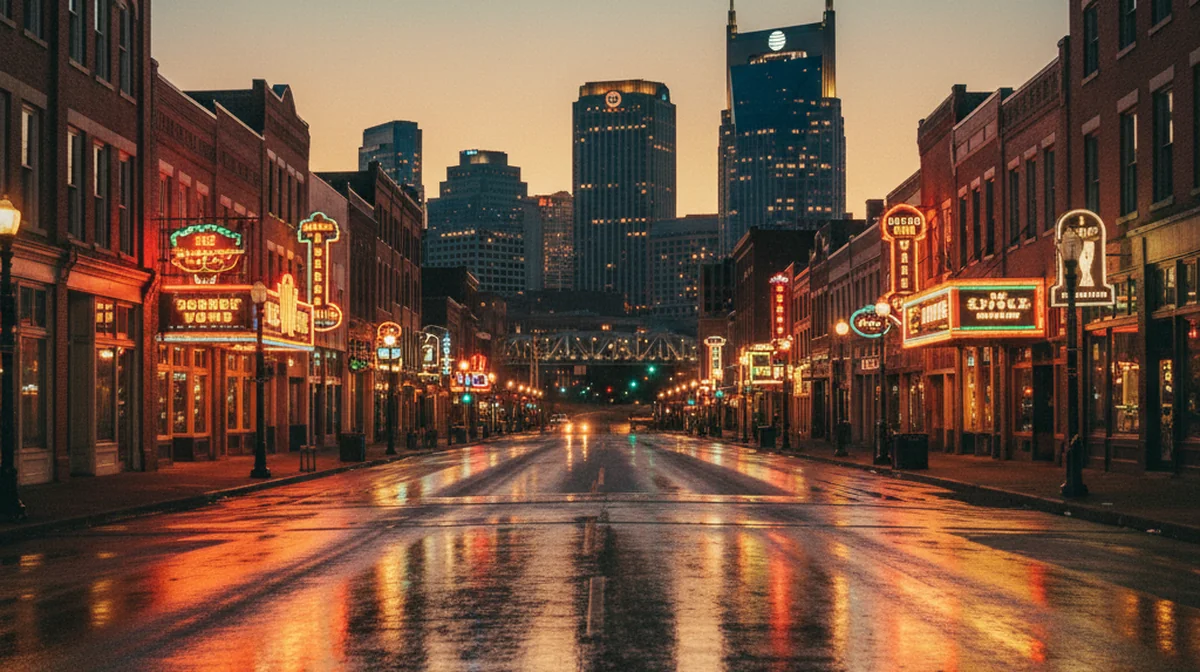
A few of the visual fingerprints we lean into when we shoot, brand and market a Nashville property — courtesy of the open Wikimedia Commons archive.
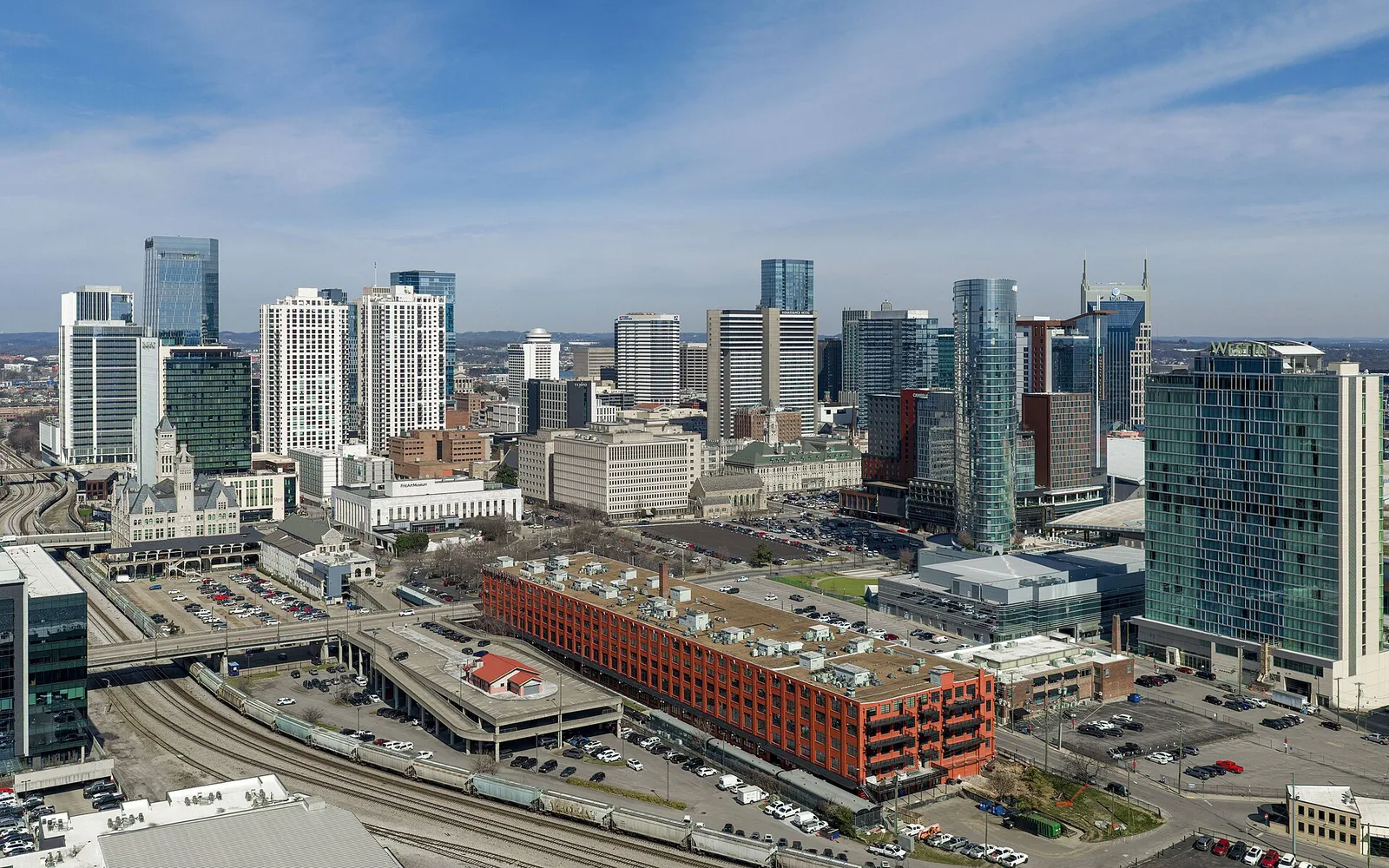
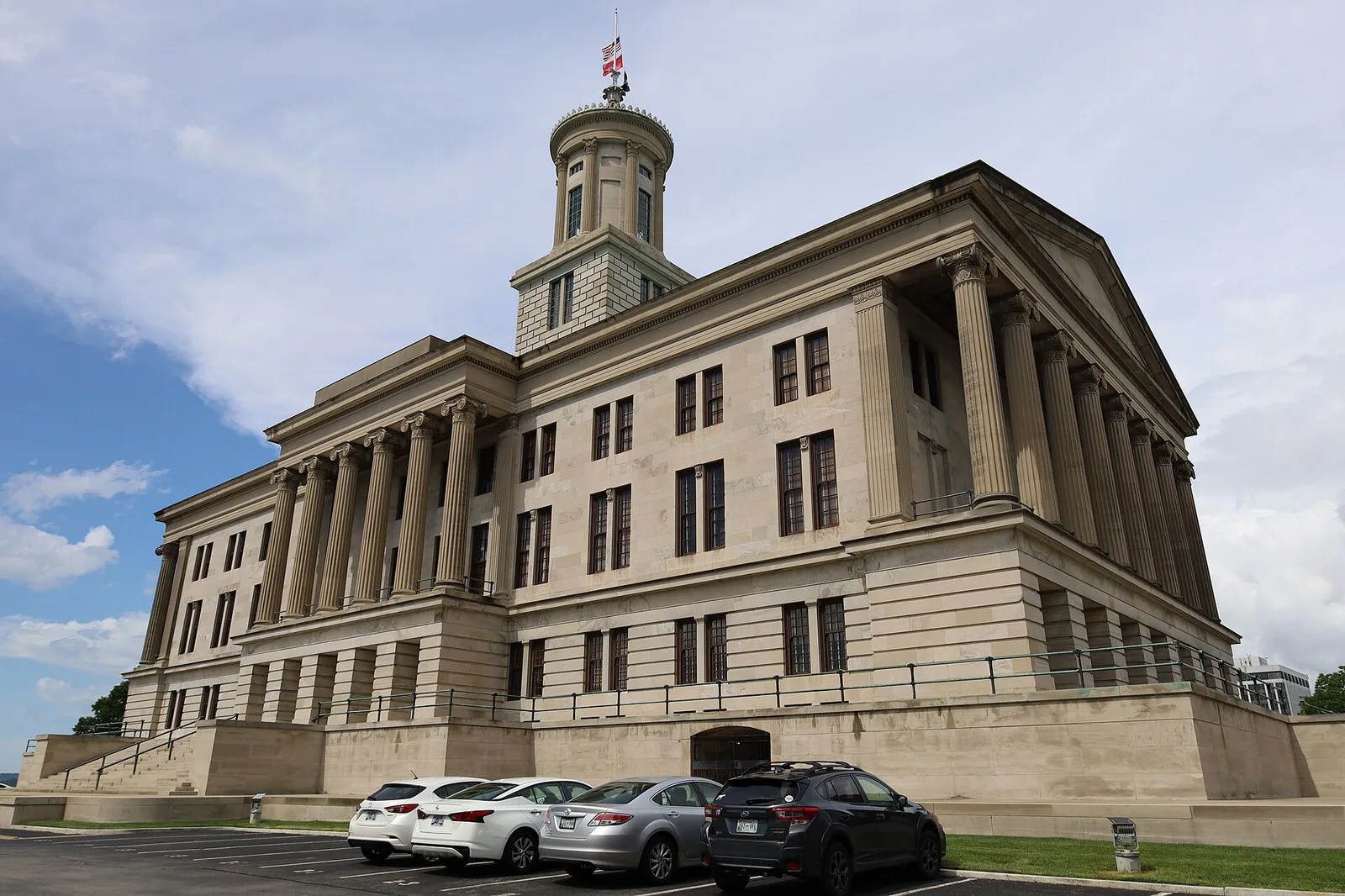
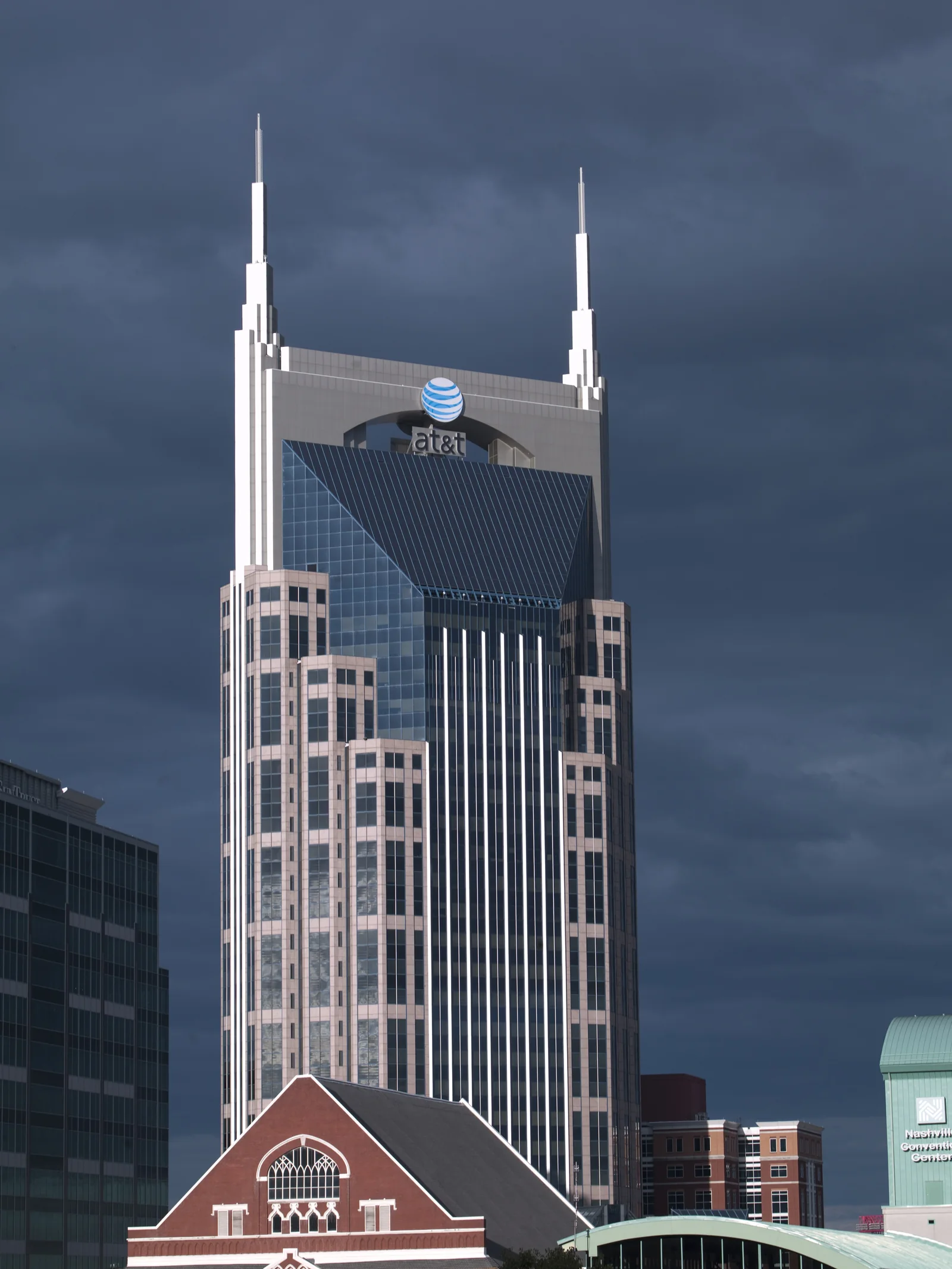
Cavmir positions Nashville properties for the guest who books a weekend around a show, a game, or a party weekend — and pays premium rates for a listing that matches the city's character. Our cinematic photography captures each neighborhood's identity, and our direct-booking setup protects you from platform fee compression as Nashville's market matures.
Nashville's short-term rental story is younger than most people assume, but the tourism infrastructure underneath it goes back more than a century. The Ryman Auditorium opened in 1892, the Grand Ole Opry began broadcasting in 1925, and by the 1950s Music Row had pulled the country-music industry into a few square blocks south of downtown. For decades, visitor lodging meant hotels on West End, motels along Dickerson Pike, and the occasional bed-and-breakfast in East Nashville's Victorian pockets. Private-home rental was rare enough that it didn't register as a category.
Airbnb arrived around 2011, and the bachelorette economy arrived not long after. Lower Broadway's honky-tonk revival, a wave of new music venues, and a national press narrative that turned Nashville into a weekend-party destination pushed STR demand from a trickle to a flood between 2014 and 2019. Metro Nashville responded with the Type 1 and Type 2 permit framework, and the regulatory conversation has barely paused since. What's distinctive about Nashville compared to peer markets is how event-driven the calendar is — CMA Fest, SEC football Saturdays, conventions at Music City Center, and a near-permanent bachelorette pipeline create a revenue shape that looks less like a smooth curve and more like a row of sharp peaks.
Nashville pricing lives and dies by event calendars and neighborhood identity. A well-positioned 2-bedroom in The Gulch during CMA Fest week will clear several multiples of its baseline nightly rate; the same property on a random February Tuesday sits in the low mid-range. Lower Broadway and SoBro run hot on weekends year-round thanks to bachelorette density, but softer Monday through Thursday. East Nashville attracts a design-conscious guest willing to pay a premium for character — bungalows with mid-century interiors outperform generic new-builds on both occupancy and ADR.
The pricing mistake most Nashville owners make is pricing for the bachelorette crowd only. Overcorrecting toward party-weekend guests can hurt review velocity and discourage the higher-margin business traveler and couple-weekend guest. Dynamic pricing tied to event windows — CMA Fest, NYE on Broadway, Titans home games, SEC weekends, Bonnaroo spillover — plus tight minimum-stay rules around those windows typically lift annual revenue meaningfully versus a flat seasonal approach. Ask your pricing tool to treat Thursday through Sunday as a distinct product from Monday through Wednesday, because in Nashville, they really are.
Nashville sits in the medium-to-high seasonal band. Demand peaks twice — spring (April through May) and fall (September through October) — with a strong summer bachelorette layer and a sharp New Year's Eve spike on Broadway. Winter softens meaningfully outside event weeks, which is where most underperforming listings lose money. The shoulder months (late January, February, early March) are where strong marketing makes the biggest revenue difference. Owners who chase mid-week business travel, music-industry visitors, and healthcare-corridor relocations can hold occupancy through the softer weeks instead of discounting into the floor.
Nashville is one of the most carefully-watched STR regulatory environments in the Southeast, and it pays to understand why. Metro Nashville operates a two-tier permit system: Type 1 permits are for owner-occupied properties (the owner lives on-site), and Type 2 permits are for non-owner-occupied whole-home rentals. Type 2 permits in residentially-zoned areas are capped at 3% of single-family units per census tract, and many tracts have sat at or above that cap for years — meaning new Type 2 permits in those areas have been effectively unavailable. Commercial-zoned Type 2 permits remain a separate category and are generally obtainable for properties in MUL, MUG, CS, and similar zones.
In 2018 the Tennessee legislature passed a state preemption bill that limited how far local governments could go in banning STRs, but it did not erase Metro's zoning-based rules — the cap system survived the preemption. Separately, Metro collects an Hotel Occupancy Privilege Tax plus a local option component, and the state sales tax applies to STR bookings. Platforms like Airbnb and Vrbo collect and remit a portion of these automatically, but the permit holder remains responsible for compliance. HOAs and condo associations are the third regulator: many downtown and Midtown buildings restrict or prohibit STR use in their declarations, and enforcement has tightened post-2022. Always ask your lawyer to read the HOA declaration before you close.
The Nashville-specific tip most new owners miss: check the census-tract cap status before you buy. Metro publishes Type 2 cap data, and a property in a residential tract already at cap can't be Type 2 permitted no matter how attractive the rest of the deal looks. Commercial-zoned parcels in The Gulch, SoBro, Germantown, and parts of East Nashville sidestep the cap entirely and often make stronger STR targets for exactly that reason.
Second — position past the bachelorette stereotype. Yes, bach parties are a real segment, but listings that lean hard into party-house branding trade away the couple-weekend, music-industry, and corporate-travel guest entirely. A property that reads as design-led, quiet-hours-respectful, and neighborhood-integrated usually clears a better blended rate. Third — invest in SEC and country-music event content. Guests booking a Vanderbilt game weekend or a CMA Fest trip want a property that signals it understands why they're coming. A welcome book with honky-tonk recommendations, a pedal-tavern note, and a Printer's Alley shortcut converts repeat bookings at a rate generic copy never will.
The signature Nashville challenge is permit scarcity colliding with growth. Metro's Type 2 cap creates a two-tier market where commercial-zoned properties hold regulatory value and residential properties risk losing permits on transfer or lapse. Add the bachelorette-versus-neighbor tension: noise complaints, block petitions, and increasingly aggressive enforcement on nuisance properties mean a single bad weekend can threaten a permit. Tornado exposure is real in Middle Tennessee, and insurance premiums for STR-use properties have moved upward since 2020. Saturation in Downtown and SoBro is the quieter challenge — discovery depends on professional photography and direct-booking channels more every year.
Standard homeowners policies typically exclude STR use. Nashville owners need an STR-specific policy (Proper, Steadfast, CBIZ) or a commercial landlord policy with a rental endorsement. Tornado and hail coverage are the biggest line items in Middle Tennessee, and premiums have risen meaningfully since the 2020 tornado outbreak. Flood exposure is lower than coastal markets but still relevant near the Cumberland River. Budget for a higher-than-national-average premium and ask your broker about named-storm deductibles.
Tennessee has no state income tax on wages, which is a structural advantage for owner-operators. Property tax in Davidson County is moderate by national standards. Metro collects a hotel occupancy privilege tax plus a local option component, and state sales tax applies on bookings. Platforms collect and remit some of this automatically — confirm with your accountant which pieces you still need to file yourself.
Most US lenders treat Nashville STR-purpose properties as second homes (slightly higher rates, 10% down minimum) or investment properties (20–25% down, a rate premium typically in the 0.5–0.875% range). DSCR loans — underwritten against the property's projected rental income — are common for Nashville investors, especially on commercial-zoned parcels. Ask your lender about permit-dependent underwriting, since some portfolio lenders now ask for permit documentation at close.
Metro moved its entire short-term rental permit application online on March 11, 2026, and the switch is a good moment to understand the thing that really governs a Nashville deal: the hard line between an owner-occupied permit and a non-owner-occupied one. They aren't two tiers of the same product. They're two different businesses with two different maps of where you're even allowed to operate, and buying the wrong property for the permit you need is the most expensive mistake owners make here. Everything Tennessee's 2018 Short-Term Rental Unit Act protects for existing operators still runs underneath Metro's system, but the state law left zoning and permitting in Metro's hands, and Metro has used them.
This is the part that reshapes the whole investment map. Metro no longer issues new non-owner-occupied permits in its residential zoning districts — AR2A, R, RS and RM parcels are off the table for a fresh whole-home permit. New non-owner-occupied permits are granted only as a use permitted with conditions in mixed-use, office, commercial and downtown districts: the MUN, MUL, MUG and MUI families, CN, CL and CS, the several DTC downtown codes, and a handful of similar zones. In practice that means a full-time whole-home rental has to sit on commercially-zoned ground, and some eligible zones cap non-owner-occupied density as a share of units, issuing first-come until they fill. Verify a specific parcel's zoning with Metro Planning before you write an offer — the address alone tells you nothing.
Type 1, the owner-occupied permit, is the broadly available route, and it's the one that keeps neighborhoods in play — but it's narrow in its own way. The permit has to go to a natural person who permanently lives at the property, so an LLC, a trust or a partnership can't hold one. If you're looking at one of Nashville's tall-skinny duplexes built under a horizontal property regime — two homes on one lot, each separately owned — owner-occupancy is judged unit by unit, so living on one side doesn't make the other side owner-occupied. Plan on the full sequence: confirm zoning, gather ownership and residency proof, apply to Codes, pass the inspection, register for the lodging taxes, then renew every year. Issuance typically runs thirty to sixty days, and Metro Codes is the office to confirm the current requirements with.
Nashville stacks two separate taxes on every booking. First, sales tax: Tennessee's 7% state rate plus Davidson County's 2.25% local option, so 9.25% on the room itself. On top of that sits Metro's Hotel Occupancy Privilege Tax, which the Council raised to 7% effective July 1, 2023, along with a flat $2.50 per night. Airbnb and Vrbo collect and remit much of this for you, but the permit holder stays responsible for what the platforms don't cover and for every dollar of a direct booking — and you still register for a Metro occupancy tax account. Rates and the pieces platforms handle both shift, so confirm the current combined figure with your accountant before you set a nightly price.
Nashville doesn't have a season so much as a calendar of spikes, and the gap between a good year and an average one is whether you priced the spikes or slept through them. The music, the sports and the convention floor each fill the city on their own schedule, and most of those dates are published a year out. A flat nightly rate quietly hands every one of those premiums to the operator down the street who bothered to look. Here's the calendar worth building around.
The Broadway honky-tonks are the year-round draw, and two crowds ride them hardest. CMA Fest takes over downtown for four days each June and books out months ahead as country fans flood every stage from Nissan Stadium to the riverfront. The bachelorette and bachelor trade runs spring through fall and is the reason a Thursday-to-Sunday can outearn a full week — pedal taverns, group dinners, and a pre-club base near the action. New Year's Eve caps it: the Bash on Broadway drops a giant guitar and draws a national television crowd downtown, one of the single highest-rate nights of the year for anything walkable to Lower Broad.
Nashville added a full sports calendar to its music one, and each team is a rate signal. The Titans fill the NFL Sundays at Nissan Stadium. Nashville SC packs Geodis Park across the MLS season, a genuinely international crowd that surprises out-of-town owners. The Predators run home dates at Bridgestone Arena from fall into spring, dozens of nights that lift the downtown core. Vanderbilt's SEC football Saturdays bring visiting-team fans by the thousand, and the St. Jude Rock 'n' Roll Marathon each spring books rooms near the route. None of these are secrets — they're just dates most listings never priced separately.
Under the weekend noise sits a steadier engine: the Music City Center convention calendar and Nashville's corporate and healthcare travel, the HCA and hospital-corridor kind that fills Tuesdays and Wednesdays the leisure crowd leaves empty. Add the industry weeks — the CMA Awards, Americana Fest, Tin Pan South — and you have a midweek base most owners underuse. The move is to price the announced events the day the dates drop, set minimum stays around the marquee weekends, and treat the convention calendar as your midweek floor. Cavmir helps hosts read that calendar into a pricing plan instead of a fixed number.
Nashville is a permit-tight city with a complaint-driven enforcement culture, and that changes the order of operations. Here, how you run the property is part of your compliance strategy, not just your guest experience — because the same features that draw the wrong booking are the ones that draw the neighbor petition, and a cluster of complaints is how a permit gets threatened. The operators who compound in this market are the ones who decided early that they were building a durable, quiet asset, not chasing the loudest weekend on the block.
Bachelorette groups are real revenue, and there's nothing wrong with hosting them. But a listing that brands itself as a party house trades away the couple getaway, the music-industry stay and the corporate traveler entirely — usually the better blended rate — and it self-selects for exactly the guest who generates the noise complaint. A property that photographs as design-led, adult and neighborhood-respecting pulls a wider, calmer demand pool and defends its own permit at the same time. In Nashville, taste isn't just aesthetics; it's risk management, and it's the single positioning choice that most changes who books you.
Treat the neighbors as stakeholders in the business, because in this enforcement climate they effectively are. Decibel-monitoring sensors that flag noise without recording audio, clearly posted quiet hours, a hard occupancy cap and no-event rules aren't fine print — they're the difference between a renewable permit and a fight at the next Codes hearing. Introduce yourself to the block, give an immediate local contact, and answer a complaint fast. One bad Saturday won't usually sink you, but a pattern will, and Metro has gotten steadily more responsive to the households that live next to a rental that treats the street like an afterthought.
The city really is two products. Downtown, SoBro and the Gulch are the walkable, event-priced core — largely commercially zoned, which is also where the non-owner-occupied permits live, so the regulatory and demand maps happen to line up. East Nashville, Germantown and 12South are the design-led, couple-and-creative market where editorial photography and real neighborhood detail out-convert generic copy. Either way, in a market this saturated, discovery increasingly runs through professional imagery and a direct-booking channel you own. Cavmir markets Nashville properties to the guest each pocket actually attracts, and helps hosts build the direct channel that keeps a repeat guest off the platform's meter.
Looking past 2026, Nashville's regulatory direction is not loosening. Metro is expected to keep tightening enforcement on nuisance properties, and the Type 2 cap is likely to hold or be refined rather than lifted. State preemption limits how far Metro can go in restricting STR use outright, but zoning, permitting, and enforcement are the tools Metro will keep using. Expect clearer platform data-sharing requirements and continued emphasis on permit number display on every active listing.
On the demand side, Nashville's growth story is intact. Corporate relocations, the healthcare corridor, tech migration, and a near-permanent position on national travel lists keep the guest pipeline full. Convention bookings at Music City Center are healthy into 2028, and SEC and Titans calendars drive predictable weekend spikes. The owners who win past 2027 are the ones who invested early in commercial-zoned properties, built direct-booking channels, and positioned past the bachelorette monoculture — because permit-cap constraints mean the winners get to keep compounding while the cap locks late entrants out.
Nashville looks like one city from the tour bus and a completely different city from the sidewalk. Broadway after dark is neon and pedal taverns and the bass line of three different cover bands bleeding into the same intersection. Four blocks east, across the river, it's porch swings on bungalows and murals on coffee-shop walls and the smell of hot chicken drifting out of a corner kitchen. Germantown's redbrick row houses photograph differently at noon than at six, and 12 South's farmhouse-chic corridor was designed for Instagram before Instagram existed. The mistake most STR listings make is picking one Nashville and ignoring the other four.
What we love about marketing in Nashville is how willing the city is to help you tell a story. Music Row still has the studios where songs you know were cut. Printer's Alley still smells faintly of ink and bourbon. Hatch Show Print still pulls posters by hand. A property that connects itself to that material — not as a theme but as a point of view — out-earns a generic new-build every time. Our job at Cavmir is to figure out which Nashville your property actually belongs to, and then document it honestly. That's the difference between a listing that competes on price and a listing that competes on desire.
The picks we recommend our Nashville clients include in their welcome books — the small specifics that turn a guest into a repeat guest and a five-star review.
Biscuit Love runs a line, but the bonuts are worth it. Frothy Monkey is the lower-key alternative — a neighborhood bakery-cafe that locals actually use.
West-facing view of the Nashville skyline with the Cumberland River in the foreground. Every Nashville welcome book should name a golden-hour pick — guests expect one.
A flat half-hour loop with farmhouse-chic boutiques, the Draper James porch, Five Daughters doughnuts, and more mural moments than any other Nashville block.
Hot chicken at Hattie B's is the Nashville ritual. Husk's seasonal Southern menu reads editorial in photos. The Continental offers a skyline view that flatters any camera.
Prince's invented hot chicken. The newer locations are fine; the original is the pilgrimage. A welcome book that names the right heat level saves a guest from regret.
A 55-acre botanical garden and art museum that locals actually visit. Works as a grounded shoulder-season activity when Broadway feels like too much.
Thirty minutes south on one of the prettiest drives in Tennessee. A tiny arts village with live music, a general store, and the kind of Saturday afternoon guests tell friends about.
Pedal taverns look fun and they are — but they also jam Broadway and cost more per person than most guests expect. A host who explains when to use which wins a review before check-in.
A few representative engagements — property types Cavmir has worked with in Nashville, with identifying details removed. Numbers are composite ranges drawn from internal Cavmir analytics cross-referenced against AirDNA market data.
Occupancy sitting below the East Nashville submarket average, with ADR tracking under the neighborhood median. Original photography was generic new-build product and copy read suburban — nothing anchored the property to its neighborhood context.
We rebuilt the listing around the neighborhood, not the unit. New photography placed the property inside East Nashville — mural walls as context, a porch shot at golden hour, interior styling that echoed the area's design-forward palette. Copy was rewritten for the music-industry visitor, the design-conscious couple, and the weekend-getaway guest from Atlanta or Louisville. We launched a direct-booking micro-site, added a CMA Fest rate ladder, and ran a targeted paid campaign against music-and-design interest audiences.
Occupancy moved meaningfully above the submarket average across two quarters. Blended ADR lifted into the mid-premium band for the neighborhood. Direct-booking share grew into a double-digit percentage of revenue, insulating the property from platform-fee compression.
A commercially-zoned Type 2 property competing in a saturated downtown submarket where dozens of similar lofts use near-identical photography. Owner was winning bachelorette bookings but losing the higher-margin couple-weekend and corporate segments.
Cavmir treated the project as a brand repositioning. We identified the couple-weekend and Music City Center corporate traveler as the target audience and rebuilt the listing around those guests specifically. Photography emphasised skyline views, curated interior design, and the walkable proximity to The Gulch rather than Broadway. Copy was rewritten to signal quiet-hours expectations up front. We built LinkedIn and corporate-housing-platform distribution and partnered with two relocation agencies serving the healthcare corridor.
Midweek occupancy improved markedly as corporate and couple bookings filled gaps the bachelorette calendar had left. Review velocity improved once the guest mix shifted. Repeat-guest share from corporate channels became a meaningful portion of annual revenue.
A beautifully-restored 1890s home with the wrong marketing. Previous photos flattened the architecture. Listing copy read like a real-estate brochure. The property was losing to generic new-builds 30% its price.
We rebuilt the entire editorial around Germantown's redbrick-and-restaurant identity. Architectural photography at golden hour, a short-form video of the front-parlour fireplace and the upstairs reading nook, a welcome book framed around Germantown's restaurant row and walking access to the Farmers' Market. We pitched a regional lifestyle outlet and earned a feature. An influencer placement with a Southern-design creator rounded out the relaunch.
ADR climbed from the low end of the neighborhood range into the upper band. Booking pace for peak fall weekends roughly doubled year-over-year. A growing share of bookings now come as direct repeat stays from guests who followed the property on social after their first visit.
Demand in Nashville peaks around May through June and runs quietest around January. Here is how the year actually books — and what to do about each stretch of the calendar.
Late spring through early summer is Nashville at full throttle. Bachelorette season hits its stride from April, CMA Fest takes over downtown for four days in June, and warm-weather weekenders stack on top of both. Have your photography, group-friendly setup and weekend minimums locked by March, because the groups booking those May and June weekends are shopping months earlier and they compare hard.
September and October are strong in their own right, with AmericanaFest, Titans home dates and fall weather pulling steady weekend traffic, while conference and music-industry travel keeps midweek dates honest. Early spring works the same way around Tin Pan South and the first bachelorette wave. The play is event-aware pricing date by date rather than one flat seasonal rate.
January and February are the lull, once New Year's crowds clear and before spring groups arrive. Lean on longer stays for traveling professionals, songwriters in town for co-writes, and relocation scouts, and use the slow weeks for the maintenance and photo refresh you can't do in June. December is softer midweek but the holiday and New Year's Eve dates themselves book well.
Bachelorette groups plan far out, so prime spring and early-summer weekends fill months ahead, and CMA Fest books earlier still. Ordinary weekends and midweek business stays move on a much shorter fuse, often inside a few weeks. Your calendar needs to look its best in winter, when next spring's groups are comparing options.
The core booking is a two-to-three-night weekend, heavily Thursday-to-Sunday, with bachelorette groups often adding a night on either side. Midweek runs shorter and more business-flavored, and there's a steady long-stay undercurrent from relocators and industry visitors that rewards listings set up for a week or more.
The Nashville winner is a three-plus-bedroom house or townhome in East Nashville, Germantown, 12South or The Gulch that sleeps a group comfortably and photographs like the trip guests are imagining. Bunk rooms, a long dining table and one bold, post-worthy design moment do more than square footage. Downtown condos compete on price against hotels; character homes in walkable neighborhoods compete on feel, and feel wins groups.
Start with what Nashville guests actually filter for: group capacity stated plainly in your title, photography that shows the sleeping arrangements and the one moment guests will post, and pricing that moves with the event calendar instead of sitting flat through CMA Fest. From there, a Google Business Profile gets you into map searches, and a simple direct-booking site captures the repeat groups and planners who organize these trips. That's the stack Cavmir builds for Nashville hosts, and it compounds because every piece feeds the others.
May and June are the clear peak, when bachelorette season is in full swing and CMA Fest books the metro solid for four days. Demand stays strong through summer and fall, with September's AmericanaFest, Titans home weekends and October weather holding rates up, and New Year's Eve is one of the best single nights of the year. January and February are the quiet stretch.
Group trips drive a long booking window here: prime spring and summer weekends fill months out, and CMA Fest regulars book as soon as they have dates. Ordinary weekends and business stays book inside a few weeks. Practically, your listing needs to be polished by mid-winter, because that's when next season's bachelorette parties are comparing houses.
The drive market covers the mid-South, with Atlanta, Memphis, Louisville, Birmingham and Huntsville all within an easy road trip. The fly-in market is national because the bachelorette economy is national, with New York, Chicago, Los Angeles and Dallas heavily represented. If you run ads, split the message: weekend getaways for drive cities, group trips for fly-in metros.
Group capacity comes first: real beds for eight or more, a dining table that seats the whole party, and clear photos of both. After that, off-street parking, fast wifi, self check-in for late arrivals after a night out, and outdoor space. A coffee setup that can handle a slow group morning earns disproportionate review mentions.
Run your Airbnb, Vrbo, or website through Cavmir's free grader. It checks the things that decide whether guests book in Nashville — photos, listing copy, page speed, local search — and shows you where bookings leak. Takes about a minute, and there's no sales call attached.
If the report says your booking engine is the weak link, that's fixable: a direct-booking website of your own means repeat guests stop paying platform fees to come back to you. That's the work Cavmir does — see Airbnb website design in Nashville.
Counted from Metro Nashville Open Data — residential STR permits, deduplicated by permit number — real registry data, not an estimate. See the full Tennessee permit data →
As of July 2026, Metro Nashville Open Data — residential STR permits shows 1,265 license records on file in Nashville. A license is not always one listing — some licenses cover multiple units — so treat this as a verified floor for the size of the legal market.
Nashville ranks number 1 of Tennessee's tracked markets by records on file, holding about 100% of the 1,265 records we compiled for Tennessee. Every one of those operators shows up in the same searches your guests use — which is why presentation, photography, and a direct-booking path decide who gets seen.
The number above comes from Metro Nashville Open Data — residential STR permits, an official public source, pulled and deduplicated in July 2026. Rules and requirements change — always confirm current licensing requirements with the program directly before you buy or list.
Send us the listing and we'll tell you what we'd change. Not a pitch deck — a straight read on your photos, your title, your rates against the Nashville comp set, and whether a direct-booking site would pay for itself.
You'll hear back from a person, usually inside one business day. If we don't think we can move your numbers, we'll say so. Cavmir is a short-term rental marketing agency — we position and market properties, we don't manage them.
Talk to Cavmir today. We'll show you exactly what your Nashville property is leaving on the table — and how fast we can change that.
Book a Free Strategy CallPhotography via Wikimedia Commons (images resized and cropped): Nashville, TN skyline by Quintin Soloviev (CC BY 4.0) · Skyline from Mansion Outside Nashville, TN by Moearthistory (CC BY-SA 4.0).
