Website Design · Edinburgh
Building a direct-booking website for an Edinburgh let
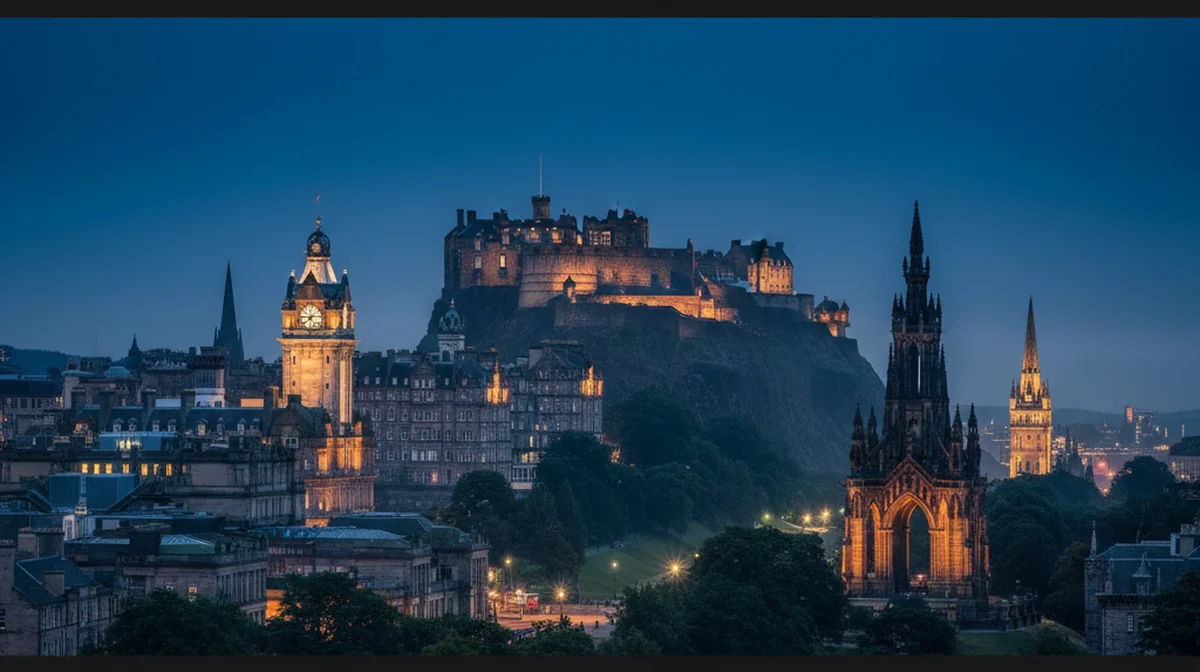
An Edinburgh booking page now carries two things a guest in most British cities never sees. Since 24 July 2026 the city's 5% visitor levy has applied to stays booked on or after 1 October 2025, and Scottish licensing makes every advert, your own site included, show the licence number, the guest limit and the EPC rating where one is needed. The guests themselves split almost evenly: VisitScotland counts 2,559,000 international visits to the City of Edinburgh in 2024 against 2,489,000 from Great Britain. So a direct-booking website for a flat off the Royal Mile or a house in the Stockbridge Colonies has to read naturally to a family from Ohio, a couple from Utrecht and a weekender from Glasgow, show a lawful total, and prove the let is licensed before anyone has to ask.
Languages and currencies from Scotland's visitor figures
VisitScotland's 2024 table of overseas markets puts the United States far ahead with 964,339 visits and £1,441 million of spending, followed by Germany at 507,665 visits, Ireland at 327,456, the Netherlands at 297,131, France at 244,101 and Italy at 189,156. Those are Scotland-wide counts; for the city itself, 64% of leisure visitors in VisitScotland's 2023 survey came from abroad. Write the English pages for Americans as much as for Britons: say that a UK first floor is one flight up, call it an apartment as well as a flat, and explain what a main-door flat or a common stair is. Then publish German and Dutch, the two largest markets that don't read English as a first language, followed by French and Italian, each a written page with its own address and hreflang tag rather than a pop-up translator. Take payment in pounds, and show an indicative US$ figure on the American pages and a euro figure for guests from Dublin, Amsterdam and Munich. Australians made 184,644 visits yet spent £298 million, the third-largest total after the Americans and the Germans, so the English pages should also answer long-stay questions about laundry, luggage storage and day trips north to the Highlands.
What Scottish law puts on an Edinburgh listing
The levy changes the price box first. It's 5% of the accommodation charge before VAT, on no more than five consecutive nights, and Airbnb's own FAQ says it applies to every fee you charge, cleaning included, and that Airbnb has no system to pay it for you. You collect it, keep records for five years and file quarterly with the council; the first return, for 24 July to 30 September 2026, falls due in October 2026. Law firm DWF reads UK price-transparency rules as requiring the levy inside the final advertised price, so the first total a guest sees on your site should include it, with a line showing the sum. The licence comes next. Scottish Government guidance published on 25 March 2026 says any listing or advert must carry the licence number, the maximum number of guests and a valid EPC rating if the building needs one, so put all three in the footer of every page and beside the booking button. For fixed-date stays your own cancellation policy sets the refund terms, so show it before payment. The council's licensing and levy teams enforce their parts, Trading Standards and the Competition and Markets Authority police price display, and the Information Commissioner's Office enforces UK GDPR and PECR, which keep advertising pixels off until a visitor opts in. This is a summary; confirm the detail with the council, a Scottish solicitor or an accountant.
Pages and photos that sell an Edinburgh stay
Guests choose Edinburgh by district, so give each one within a walk of the flat its own page under the name people type: the Old Town, the New Town, Stockbridge, Leith and the Shore, Marchmont and Bruntsfield by the Meadows, Haymarket for Murrayfield. The getting-here page should start at Edinburgh Airport with the tram along Princes Street and the Airlink bus to Waverley, cover trains into Waverley and Haymarket, and tell drivers whether there's a parking permit, a residents' zone outside or a Low Emission Zone rule that bars an older car. Photograph what a tenement hides: the common stair, the number of flights, the entry phone and the landing, since many stairs have no lift and a guest with two suitcases wants to know before booking. Show the radiators and the draught-proofing for a February break and the blackout blinds for June, when the sky barely darkens. Edinburgh's licensed lets averaged 2.0 bedrooms in the statistics to 30 June 2025, the lowest of any Scottish council, so a third bedroom or a second bathroom deserves its own photo and its own line. Pair those pages with SEO on the district names and GEO on the questions below.