Fornillo Beach before the Positano crowd arrives
The quieter second beach, 10 minutes' walk along the cliffside from the main Spiaggia Grande. Empty before 10 a.m. A host who flags this saves the guest the disappointing first-morning pilgrimage.
Expert short-term rental marketing to grow your bookings and nightly rate in Amalfi Coast, Campania, Italy, Europe.
Sixteen services, one team. Everything below is built in-house and scoped to your property and market. Most owners start with the 12-Step System.
Every engagement is quoted to your portfolio. These are the ready-made scopes owners pick most — our Fall Special (55% off list or more) is already applied to the website, King Broker, Hotels and à la carte scopes. A clear proposal within 48 hours.
The work is public. Selected engagements and what changed — and reviews from the owners and managers behind them.
* Market averages from AirDNA and STR market reports. A single home's numbers depend on its size, its location and how it is marketed.
Cavmir is an Airbnb marketing agency. We build the brand, the direct-booking website and the marketing for short-term rentals in Amalfi Coast.
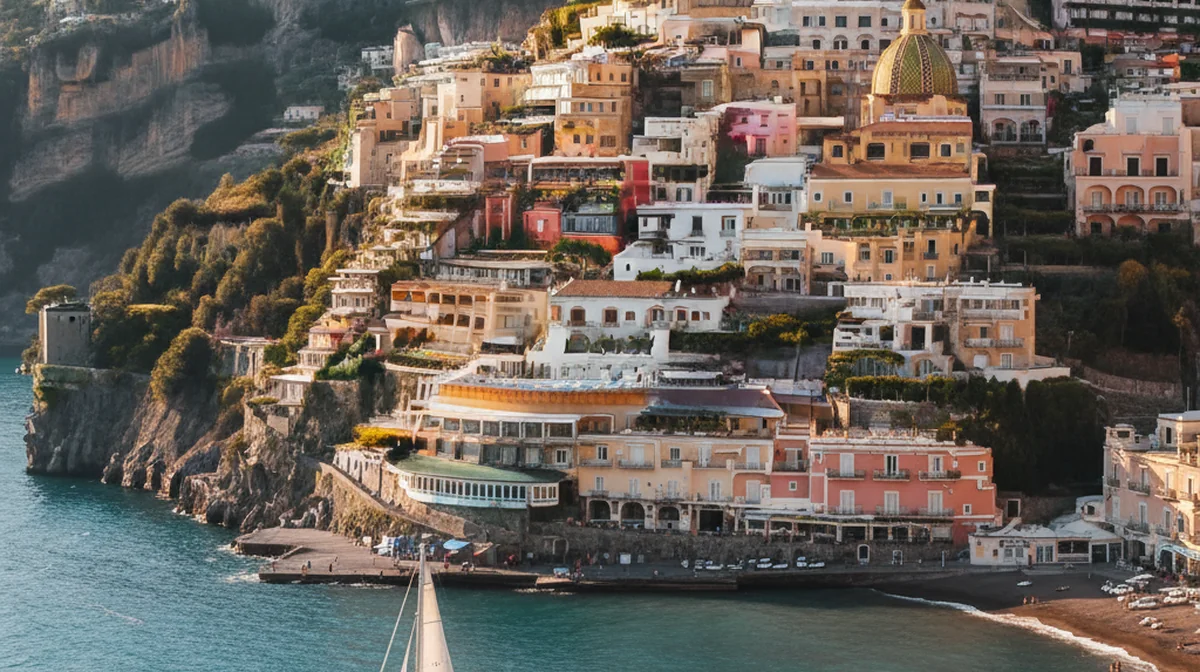
The Amalfi Coast is a 31-mile UNESCO-protected shoreline where lemon-terraced cliffs drop into the Tyrrhenian Sea and a dozen villages — Positano, Praiano, Amalfi, Ravello, Atrani, Minori — hold some of the most photographed real estate on earth. Le Sirenuse, Il San Pietro di Positano, Belmond Hotel Caruso in Ravello, and Santa Caterina in Amalfi set the luxury hospitality ceiling; cliffside villa rentals compete on view, terrace, and sea-access rather than square footage. The market concentrates ferociously into June through September with a secondary wedding-season premium through early October.
Amalfi Coast STR regulation is medium — Campania's CUSR code and the national CIN required, a municipal imposta di soggiorno of about €2–€4 per guest-night on holiday rentals, and Positano in particular enforces conservative residential zoning that keeps legitimate rentable inventory scarce. Peak villa rates at Positano clifftop and Ravello estate level routinely clear €2,500–€10,000 per night. The access constraint (single two-lane SS163 road, ferry-dependent arrivals) makes private-transfer logistics a real part of the guest experience rather than a footnote.
Nearby Markets: Lake Como | Saint-Tropez | Mykonos
Cavmir markets Amalfi Coast villas around the view-and-terrace narrative that actually converts — sunrise from the Ravello garden, sunset from the Positano balcony, the private-boat transfer from Sorrento — not generic Italian-villa copy. We shoot the cinematic library, distribute through the advisor channels that drive luxury Amalfi arrivals (US East Coast, UK, Middle East), and architect the direct-booking site that captures the repeat wedding, anniversary, and milestone traveler.
The Amalfi Coast — the 31-mile UNESCO-protected shoreline between Positano and Vietri sul Mare on the southern face of the Sorrentine Peninsula — was settled by Greek colonists, fortified by Romans, and briefly a powerful maritime republic in the 9th and 10th centuries, when Amalfi itself competed with Venice, Genoa, and Pisa for Mediterranean trade dominance. The Tavole Amalfitane (Amalfi Maritime Code) were the basis of medieval sea law across the Mediterranean for three centuries. A tsunami in 1343 and Norman reconquests ended the maritime era; for the next 500 years the coast lived on fishing, lemon-terrace agriculture, and ceramics.
Tourism arrived with the Grand Tour — Goethe, Ibsen, and Wagner all worked from Ravello — but the modern luxury economy was built in the 1950s and 1960s around the John Steinbeck-era Positano, Gore Vidal's Ravello residency at La Rondinaia, and the Le Sirenuse hotel opening in 1951. Today the rentable villa pool is smaller than any comparable European luxury market — an estimated 250–400 material properties — because Positano's hillside geometry and the UNESCO overlay make new construction effectively impossible. Scarcity is the market's structural feature.
Positano clifftop villas with private pool and sea view anchor the ultra-luxury tier at €3,000–€10,000 per night. Ravello estate-level inventory (Villa Cimbrone-adjacent, the Rondinaia-corridor properties) clears €2,500–€8,000 per night with garden and panorama premium. Praiano, Conca dei Marini, and the Furore valley hold the mid-luxury tier at €1,200–€3,500 per night. Amalfi town and Atrani apartments (smaller, historic-center) run €500–€1,500 per night. Ferragosto, the Ravello Festival (summer), and wedding weekends drive the rate ceiling.
High seasonality. Peak: June through September plus wedding season (late April–early October). Super-peak: August 10–25. Shoulder: April–mid-May, late September–mid-October. Low: November–March (many villas close; the SS163 road winter rains create access friction). Missed revenue window: the first two weeks of June, where weather is excellent and the season hasn't yet priced itself to peak.
Italian STR regulation with Campania-specific overlay. Operators require Campania's CUSR (Codice Unico identificativo delle Strutture Ricettive), issued through the comune, and the national CIN (Codice Identificativo Nazionale), with sanctions in force since 2 January 2025. Rental income taxed via cedolare secca (21% on first property, 26% on subsequent) or progressive IRPEF. Municipal imposta di soggiorno on holiday rentals — Positano €2.50 per guest-night (April–October), Amalfi €3 (half rate from the fifth night), Praiano €2–€4 by price band from April 2026; Ravello collects its own at check-out. UNESCO overlay enforces strict external-modification controls across the coast; any visible facade or roof work requires Belle Arti (heritage-authority) approval and comune permitting that can take 6–18 months. Foreign ownership is unrestricted; EU buyers benefit from simpler documentation.
The Amalfi Coast strategic tip: merchandise the access ritual, not just the villa. The guest arriving from the US is coming off an 11-hour flight into Naples or Rome, a 90-minute drive to Sorrento, a hydrofoil to Positano, and a porter-assisted walk up stairs to the villa. A host who pre-arranges the Mercedes transfer, the private hydrofoil, or — better — the helicopter to Salerno or the private Positano boat transfer, turns a logistical chore into a five-star memory. Properties with curated arrival logistics consistently clear premium above peer inventory.
Tactically: first, build a boat relationship. Nearly every Amalfi guest wants a private day charter to Capri or Li Galli; hosts with a named skipper relationship convert it. Second, staff the villa for the stair count — the housekeeper working the vertical circulation is the most overworked and under-retained role on the coast, and properties that pay above market retain the review-generating individual. Third, cultivate the Ravello Festival calendar — villa inventory 15 minutes from Villa Rufolo prices at multiples of baseline for the concert weeks. Fourth, photograph the terrace at sunrise, not just sunset; Amalfi mornings are what the repeat guest remembers, and most listings ignore them.
Amalfi Coast challenges: the SS163 coast road is a single two-lane artery that becomes a parking lot in peak weeks; arrivals and departures should be logistically engineered. Staircase-heavy properties (Positano in particular) screen out mobility-limited guests entirely, which operators often discover only after booking. UNESCO overlay slows renovation. Water pressure at peak stresses older villas. Wedding-planner relationships matter more than villa specs in the highest-yielding category.
Villa insurance is Italian-domestic with Lloyd's syndicate capacity for estates above €5 million. Earthquake and landslide coverage are non-negotiable; the Sorrentine Peninsula is geologically active and hillside stability is a real risk. Budget €5,000–€25,000 annually for luxury villas with adequate limits (€3–8 million building plus liability). Pool-liability, stair-liability, and staff-workers'-comp riders standard.
Cedolare secca flat rental-income tax: 21% first property, 26% subsequent. Municipal IMU varies — Positano, Ravello, and Amalfi each set rates. Acquisition registration tax 9% on second homes. Wedding and large-event bookings may trigger commercial-activity reclassification if repeated; structure carefully with Italian counsel. Non-resident owners require Codice Fiscale and tax representative.
Italian mortgages for foreign buyers via Intesa Sanpaolo, UniCredit, and Banco BPM at 50–60% LTVs for non-residents, rates tracking ECB plus spread. Most Amalfi luxury buyers purchase cash given the acquisition timeline and competitive nature of coastal inventory. Transaction costs (notary, registration, agent) stack to roughly 10–12% above purchase price — budget conservatively.
A guest choosing a week in Praiano or Ravello is buying a hillside address, a road with its own traffic rules and a tourist tax set by one comune, and your website has to settle all three before the deposit. Start with who that guest is. Research the Salerno Chamber of Commerce presented at BIT 2024 put Italians at 55% of tourists to the province of Salerno and North America at 19%, its largest Western market, and across Campania North Americans made up about 30% of summer tourism. So the site serves two readers at once: an American couple pricing a June week from New Jersey, and a family from Naples or Milan booking a long August weekend by the sea. Here's what each of them needs to see, and what Italian and Campanian rules make the page show.
Write English first, for the North American market that carries the summer, then a full Italian version, because domestic guests are more than half of the province's tourists and they search for a casa vacanze con parcheggio or a villa vista mare in their own words. German and French follow for the Europeans who land at Capodichino. Publish each language as its own pages (/en/, /it/, /de/, /fr/) linked with hreflang; a machine-translation plug-in leaves Google and AI models no Italian page worth reading. Quote and charge in euros, and label any US-dollar figure as a guide. Americans want the full total in one number, the step count from the road and whether a driver can reach the gate. Italians look first at parking, the nearest lido and whether the comune's tax is already inside the price. Spell places the way the road signs do, Spiaggia Grande, Marina di Praia, Conca dei Marini, Vietri sul Mare, and add an English name only where one is in common use.
Two codes go on every advert, and your own website counts as one. The national CIN has to appear in every listing and outside the building, with sanctions in force since 2 January 2025. Campania adds its own CUSR (Codice Unico identificativo delle Strutture Ricettive), requested through your comune, which must be used in all promotion of the property; leaving it off or getting it wrong carries a fine of €1,000 for each activity promoted. Put both codes in the footer of every property page, on the booking summary and in the confirmation email. From 20 May 2026, Regulation (EU) 2024/1028 also makes Airbnb, Booking.com and Vrbo check that hosts display their registration number, so the codes on your site and your listings must match character for character. The imposta di soggiorno then sits in the total as its own line, and it changes from village to village: Positano charges €2.50 per guest per night on holiday homes and short lets from 1 April to 31 October; Amalfi lists €3, halved from the fifth night; Praiano's 2026 rate runs from €2.00 to €4.00 for up to 7 nights, depending on the highest nightly price you reported to the Region; Ravello collects its tax at check-out. On a direct booking nobody collects it for you, so confirm the current figure with your comune. The cookie banner answers to the GDPR and Italy's data regulator, the Garante, whose guidelines of 10 June 2021 want an X in the top-right corner that closes the banner with no tracking, refuse to treat scrolling as consent, and bar showing the banner again for 6 months after a refusal. Italian consumer law, policed by the competition authority AGCM, expects the full price before payment, and a dated holiday booking carries no general right of withdrawal, so your written cancellation terms decide everything: show them beside the price in every language, and have an Italian lawyer or commercialista check them.
Guests search this coast one village at a time, so give each its own page: Positano split into Spiaggia Grande, Fornillo and the hamlets of Montepertuso and Nocelle above; Praiano with Marina di Praia; Amalfi and Atrani; Ravello and Scala on the ridge; Minori and Maiori with the longer beaches; Conca dei Marini and Furore; Cetara and Vietri sul Mare at the Salerno end. Each page gives the walk in minutes to the nearest beach, ferry pier and SITA bus stop, and says whether the house sits above or below the SS163. A getting-here page covers Naples airport, Salerno Costa d'Amalfi airport, the ferries, and the alternate-plate days on the SS163, which in 2026 ran from 30 March to 6 April and from 24 April to 2 May, 10:00 to 18:00. Guests with an accommodation booking were exempt, so your confirmation email should carry the address and both codes in a form they can show at a checkpoint. Then photograph what people filter on here: the steps from the road, with the count in the caption; the parking space or the nearest garage; air conditioning in each bedroom for July and August; the terrace, captioned with the bay or headland it faces; and any lift, porter or luggage service. A direct-booking website built on these pages also carries the facts that GEO depends on, which the next section covers.

GEO (generative engine optimization) is the work of getting ChatGPT, Gemini, Perplexity and Google's AI Overviews to name your house when a traveller asks about this coast. The American guests who fill the summer already plan this way. Phocuswright research reported by Travel Weekly on 27 March 2026 found 56% of US leisure travellers had used AI for at least one trip in the past 12 months, up from 43% in late 2025, and 33% used ChatGPT or Gemini for trip research. Only 8% said the AI answer alone was enough; 51% typically clicked through to the sources. That click is the opening for an Amalfi Coast owner, because the source an answer engine cites can be your own property page.
Questions to an assistant run long and specific here. Guests ask whether Positano or Praiano suits a first trip with teenagers, how to reach Ravello from Naples airport on a day when their rental car's plate is barred, where to sleep for the Ravello Festival's dawn concert, which Atrani apartments have no stairs, whether a Conca dei Marini villa has a pool and a path to the sea, and what the tourist tax adds to a week in Amalfi. Italians ask the same things in Italian (casa vacanze a Positano con parcheggio, villa a Ravello con piscina), Germans and French in theirs. A model can only answer with your house if a page states those facts in plain sentences in the language of the question, which is why the Italian pages need a native writer and not a plug-in.
Write each property's core facts once, as short declarative lines, and repeat them word for word on the site and on Airbnb, Booking.com and Vrbo: the CIN and CUSR; how many it sleeps and in how many bedrooms; the number of steps from the nearest road; the walk in minutes to Spiaggia Grande, the Duomo steps in Amalfi or Piazza Duomo in Ravello; whether there's parking; the comune's tax per guest per night; and the cancellation terms. A line such as “Villa in Praiano, sleeps eight in four bedrooms, sixty steps below the SS163, ten minutes on foot to Marina di Praia” gives a model something to lift, while “a dream above the sea” gives it nothing. Date-stamp the event facts, the Ravello Festival dates or the plate-day calendar, with the year, so an answer about next summer doesn't quote last summer. Keep the pages crawlable and mark the same facts up with VacationRental schema; that's all the general mechanics this coast needs.
Answer engines lean on sources they already trust for this coast: the Costiera Amalfitana pages on Italia.it, each comune's own site and event notices, the Fondazione Ravello's festival programme, and the press, Il Mattino and Corriere del Mezzogiorno in Naples, Il Vescovado and Positanonews on the coast itself. Digital PR here means giving those outlets something they'll print: a lemon-terrace house in Minori restored with its original majolica floors, a Ravello villa hosting festival musicians, a Cetara owner who still fishes for anchovies. Italian-language coverage in Il Vescovado or Positanonews carries weight with Italian queries and is within reach of a well-told local story. Keep the property name, address, phone and codes identical across Airbnb, Booking.com, Vrbo and your site so every mention points to one place. Cavmir's July 2026 study of 550 Google AI answers across 15 U.S. markets found independent and regional operators took 82% of citations, with Airbnb or Vrbo appearing in 17% of answers; it's a U.S. study, but it shows answer engines will cite an owner's own site when that site carries the facts.
Content marketing on this coast works when each page answers a question a guest is about to type, with a date or a place in it. The plan below follows the year's demand: access questions in spring, the festival and the villages in summer, the tax and the shoulder weeks in autumn. Each page carries the year in its title, the key facts in its first paragraph, and a link to the house that fits.
Publish the getting-here guide before Easter. In 2026 the alternate-plate rule on the SS163 ran from 30 March to 6 April and from 24 April to 2 May, between 10:00 and 18:00, keeping odd plates off the road on odd dates and even plates on even dates, and Amalfi ran its own traffic checks from 9:00 to 19:00 from 1 April. A page that lays out next year's calendar the week it's announced, with the routes that need no car (the ferry from Salerno, the SITA bus, a driver from Naples airport), answers the question every first-time guest asks. Pair it with a page on stairs: what a Positano or Atrani house means for luggage, porters and guests who can't manage steep steps, so the right guests book and the wrong ones don't.
The 74th Ravello Festival ran from 4 July to 5 September 2026 on the Belvedere of Villa Rufolo, and its dawn concert on 11 August started at 5:15 and sold out. A festival page that names the venue, the walk or drive from your house and how guests get home after an evening concert pulls in culture travellers who stay longer; update it the day the next programme appears. Through the same months the village guides do the heavy lifting: Positano's beaches compared, Marina di Praia for a quieter swim, Amalfi and Atrani on foot, the fjord at Furore, the anchovy boats and colatura shops of Cetara. Each guide needs walking times, ferry piers, the comune's tax line and photos you took yourself, never stock.
Write one short page per comune on the imposta di soggiorno, because guests ask what it adds and you need the same table: Positano €2.50 per guest-night from April to October; Amalfi €3 with half rate from the fifth night; Praiano's four bands from €2.00 to €4.00, charged for up to 7 nights and not due from 1 November to 31 March, with a flat €200 on tourist lets longer than 30 days. Confirm the current figures with each comune before you publish. Then cover the quieter weeks: the Path of the Gods in cooler weather, the lemon and grape harvests, and Sant'Andrea in Amalfi, with dates checked against the comune's notices each year. Publish the tax and access pages in Italian as well. It's the order Cavmir follows when we plan content for an Amalfi Coast site, and the order matters more than the page count.
Amalfi Coast through 2027 and beyond: the UNESCO overlay and hillside geography permanently cap supply, which structurally supports pricing power. Access remains the capacity ceiling — any serious expansion of Salerno airport commercial routes or the Positano helicopter pad regime would materially reprice the market. Wedding-destination positioning is durable and getting stronger. The Ravello Festival's continued international reach and the 2026 Grand Tour revival narrative keep the destination's editorial visibility high. Climate risk (coastal erosion, extreme rainfall) is the defining operational variable over a 10-year horizon.
The Amalfi Coast rewards hosts who understand that the real product is the view, not the square footage. A Positano clifftop villa is, first and last, a terrace facing the Tyrrhenian — everything else is supporting infrastructure. Listings that merchandise the bedroom count and the kitchen appliances miss entirely. The repeat guest paying €6,000 a night is buying the sunrise on the terrace, the lemon-tree framed afternoon light, the sunset over Li Galli. The villa's job is to disappear into the view, and the marketing's job is to let the view do its work uninterrupted.
What we love about marketing Amalfi is how unforgiving the geography makes the operations. The staircase count, the ferry logistics, the single-road access, the summer water pressure — all of that is the tax the coast charges in exchange for the view. Properties that absorb it gracefully — private boat transfers from Sorrento, porter service on the stairs, generator backup, multilingual villa-manager staffing — earn five-star reviews at rates the generic Italian-villa category cannot touch. Properties that ignore the operational demand generate the reviews that end the repeat booking. The coast's brutal honesty about what luxury actually costs to deliver is exactly what makes it a rewarding market to operate in.
The picks Cavmir recommends for Amalfi Coast welcome books — the details that separate resident-hosts from the generic 'Italy-coast' script.
The quieter second beach, 10 minutes' walk along the cliffside from the main Spiaggia Grande. Empty before 10 a.m. A host who flags this saves the guest the disappointing first-morning pilgrimage.
The Terrazza dell'Infinito at sunset — the coast's single most photographed frame, and the one that still holds up after you've seen it in a hundred search results.
The two-hour cliffside hike most guests hear about and don't take. A host who explains the Agerola bus schedule and the Nocelle descent stairs turns this into the trip's defining memory.
The boat-shuttle-from-Positano seafood lunch where the menu is grilled fish and house wine and the shuttle is part of the experience. The pick residents actually return for.
The coast's best pasticceria, and the origin of the house-made limoncello worth exporting. A host who directs guests here instead of the generic gift-shop version knows the coast.
Post-Ferragosto crowds have thinned, the sea remains warm, and the light is at its most cinematic. Rates soften meaningfully. The window residents protect for their own trips.
The 90-minute private boat from Positano to Capri (roughly €800–€1,500) is a different experience entirely than the crowded ferry. A host with a named captain makes the guest look like a local.
Every Positano villa has a stair story. A host who explains honestly — 'there are 82 steps from the parking to the villa, a porter is included' — prevents the single largest source of first-day disappointment on the coast.
Representative Cavmir engagements on the Amalfi Coast. Property identifiers redacted; figures composited from internal analytics and market benchmarks.
Architecturally strong villa on the Positano cliff losing booking funnel to hotel inventory because the marketing didn't merchandise the view-and-terrace advantage against the Le Sirenuse benchmark.
Rebuilt the brand around the specific terrace experience. Cinematic sunrise-to-sunset property film. Welcome book with pre-arranged private-boat charter, stair-porter service, and Da Adolfo reservation. Direct-booking site in English, Italian, French, German.
Peak-week ADR up from €3,800 to €5,600. Direct-booking share climbed to 41%. A four-year repeat-couple book emerged, filling two anniversary weeks annually.
Garden estate on the Ravello ridge competing against Villa Cimbrone-adjacent inventory. The property's Ravello Festival positioning wasn't being marketed; the festival-week premium was leaving the property entirely.
Repositioned for the Ravello Festival calendar. Photography led with the garden and the valley view toward the coast. Distribution through classical-music and cultural-tourism advisor channels. Festival-week rate structure published 18 months ahead.
Festival-week bookings now fill six of the summer's most valuable weeks. Peak-week ADR up 37%. The cultural-tourism positioning attracts a different, higher-spending guest mix than the generic Amalfi-view brand.
Large villa between Positano and Amalfi with a private cove descent, missing the destination-wedding revenue. Pure leisure positioning ceiling.
Three-product brand build. Destination-wedding tear sheet distributed through Naples, Rome, and New York planners. Multi-generational reunion product. Editorial-location availability for Italian and US fashion shoots.
Wedding buyouts now contribute a meaningful share of annual revenue. A single three-day wedding buyout cleared €140,000. The private-cove access became the single most-merchandised feature, commanding premium across all three product categories.
Yes. Cavmir works with short-term rental owners and boutique hotels on the Amalfi Coast and across Italy — property branding, listing optimization, photography direction, direct-booking websites, SEO, and paid campaigns. Properties near Positano Village, Ravello & Villa Cimbrone and Amalfi Cathedral are exactly the kind of stays we market.
The market snapshot on this page shows average nightly rates around $485 with occupancy near 64% for the Amalfi Coast. Treat those as directional market averages, not guarantees — the spread between a well-marketed property and a poorly marketed one in the same market is wide.
The Amalfi Coast is distinctly seasonal — a strong peak stretch carries much of the year, which makes pricing discipline and early-calendar marketing matter more, not less. The properties that win are the ones already visible before the peak begins.
The Amalfi Coast sits in the middle of the regulatory spectrum — some registration or permit requirements typically apply. Rules change often in this industry, so confirm the current requirements with local authorities before you list. Cavmir handles the marketing side; we don't provide legal or permitting advice.
Give guests a way to book you without a platform in the middle: a fast direct-booking website, a complete Google Business Profile, and follow-up that brings past guests back. Cavmir builds that stack — see vacation rental SEO — so your repeat Amalfi Coast guests stop paying platform fees to find you.
It depends on scope. Current plans and one-time project pricing are on the pricing page — most owners start with a listing overhaul or the 12-step system. A conversation about your property costs nothing: contact Cavmir.
Send us the listing and we'll tell you what we'd change. Not a pitch deck — a straight read on your photos, your title, your rates against the Amalfi Coast comp set, and whether a direct-booking site would pay for itself.
You'll hear back from a person, usually inside one business day. If we don't think we can move your numbers, we'll say so. Cavmir is a short-term rental marketing agency — we position and market properties, we don't manage them.
Demand in the Amalfi Coast peaks around June through September and runs quietest around January, February and December. Here is how the year actually books — and what to do about each stretch of the calendar.
The warm season carries everything here, roughly late May through September, with July and August the height of demand and Ferragosto in mid-August the single busiest stretch. Have the listing dialed and priced up by spring, hold firm minimum stays through high summer, and expect the best-located places to book months ahead. This is a short, intense season, so the peak is where a coastal listing makes most of its year.
May, June and September are the gracious shoulders, with kind weather, thinner crowds and the Ravello Festival running its concerts through summer into early September. These months reward couples, walkers and travelers who want the coast without the August crush. Mid-week rates and a strong location story keep the calendar full on either side of the peak.
The coast largely shuts down from November through March, when many restaurants and hotels close and the weather turns. This is a genuinely seasonal market, so treat the winter as a real off-season: use it for maintenance, refurbishment and a photography refresh, and set expectations rather than chasing bookings that mostly are not there.
High summer, and Ferragosto in particular, books the furthest out, with the best-located places secured months in advance. Shoulder-season stays in May, June and September fill on a shorter fuse. Set the peak weeks early and firm, then keep the shoulder pricing nimble for the slightly later-planning traveler.
The peak runs on week-long summer stays, while the shoulders mix shorter couples trips of a few nights with longer slow-travel visits. This is a place people plan around, so bookings skew to full weeks in July and August. Marketing to couples and to villa groups alike keeps a coastal listing full across the warm season.
The winner is a place with a genuine sea-view terrace, walkable to one of the coast towns, with air conditioning and a route to the water that does not defeat guests. Larger villas with a pool and outdoor dining own the group market. The terrace is close to mandatory; long lunches and evenings over the water are the product, and that is what the photography must sell.
Build the listing around your sea view and your village, with photography that sells the terrace, the evening light and the walk into town. Price the short summer deliberately, because July, August and Ferragosto behave nothing like the shoulder months and the best places book far ahead. Be honest and clear about parking and the route to the water, and add a direct-booking site and a Google Business Profile so international guests planning the coast can find and rebook you. That's the marketing layer Cavmir builds for Amalfi hosts, where a strong listing earns its keep in a compressed, high-value season.
The warm season from late May through September is the peak, with July and August the height and Ferragosto in mid-August the busiest stretch. May, June and September are gracious shoulders with the Ravello Festival running through summer. From November through March much of the coast closes for a genuine off-season.
High summer, and Ferragosto especially, books the furthest out, with the best-located places secured months ahead. Shoulder stays in May, June and September fill on a shorter fuse. Lock the peak weeks early and firm, then stay responsive for the slightly later-planning shoulder traveler.
The volume flies in from London, Paris, New York and the European hubs through Naples, then transfers down to the coast by car, ferry or driver. Guests searching by village name, Positano, Amalfi, Ravello, are the arrive-and-explore layer. Naming the Naples gateway in your listing helps the international planner.
A genuine sea-view terrace leads everything, followed by air conditioning for the summer heat and a walk into a coast town. Reliable wifi matters, and above all a solution for parking, whether a spot or a clear driver-and-ferry plan, because that is the single biggest concern for a guest coming to this coast.
Talk to Cavmir today. We'll show you exactly what your Amalfi Coast property is leaving on the table — and how fast we can change that.
Book a Free Strategy Call