The Corso at seven
The passeggiata along Corso Italia — aperitivo, boutiques, the town dressed for itself against the Tofane's evening pink — is Cortina's true main event. Teach the hour and the rhythm; it is the stay's Italian lesson.
Expert short-term rental marketing for the Queen of the Dolomites — Cortina's amphitheater valley in the first years of its second Olympic era.
Sixteen services, one team. Everything below is built in-house and scoped to your property and market. Most owners start with the 12-Step System.
Every engagement is quoted to your portfolio. These are the ready-made scopes owners pick most — Summer Promo pricing shown, discount already applied. A clear proposal within 48 hours.
The work is public. Selected engagements and what changed — and reviews from the owners and managers behind them.
* Market averages. Properties marketed by Cavmir typically exceed these figures by 25–45%. Data sourced from AirDNA, STR market reports, and Cavmir internal analytics.
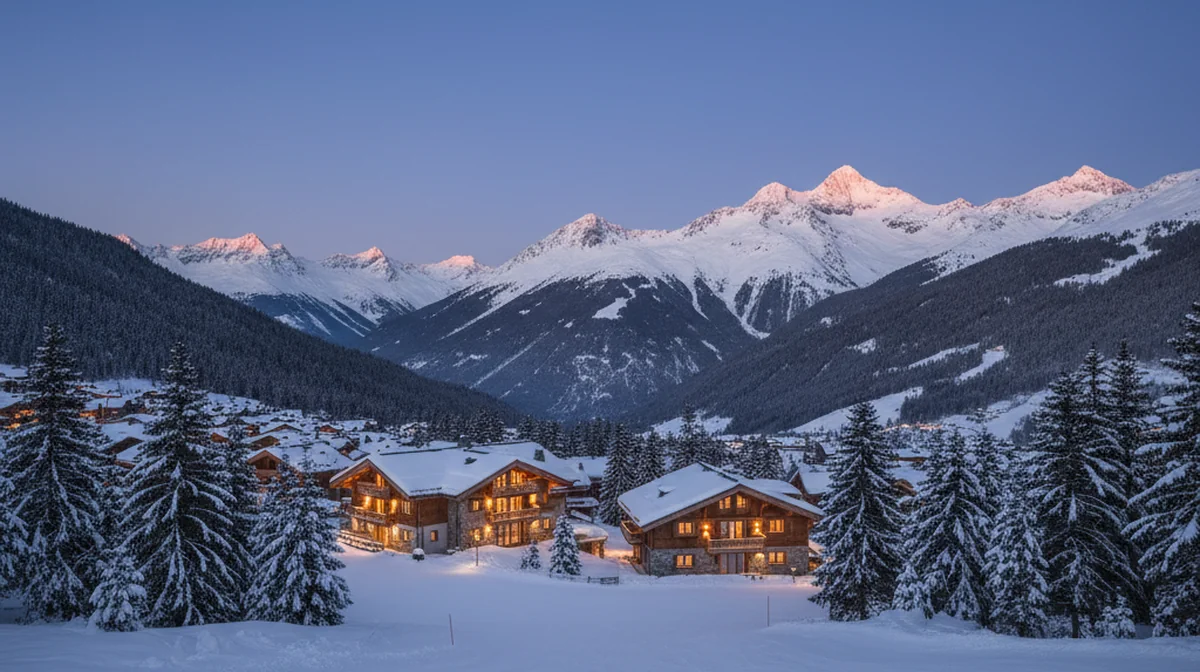
Cortina d'Ampezzo has been crowned twice. The town the Italians call the Queen of the Dolomites sits in a natural amphitheater ringed by the most theatrical mountains in Europe — the Tofane's walls, Cristallo's towers, the Cinque Torri standing like chess pieces above the treeline — and in February 2026 it hosted the Winter Olympics for the second time, seventy years after the 1956 Games that first put it on the world's screens. The Olympic year did what Olympic years do: rebuilt infrastructure, renewed the hotel stock, and put the valley's name back in front of a global audience measured in billions. For rental owners, the moment is precise — the spotlight has passed, the upgrades remain, and the demand tail of a televised Games historically runs for years. The owners who professionalize now are annexing that tail while the valley's marketing is still catching up to its own new era.
The town's rental geography radiates from the Corso Italia — the pedestrian spine where the evening passeggiata is the town's true main event. Center-adjacent apartments walkable to the Corso carry the classic premium; the sunny balcony hamlets up the valley sides — toward the Tofane lifts on one flank and Faloria's cable car on the other — trade view and ski access; and the outlying Ampezzo hamlets offer the value tier with the valley's beauty at gentler rates. Cortina is a town of apartments more than grand chalets — Italian alpine style runs to wood-lined flats in chalet buildings — and the market rewards the renovated, the styled and the precisely positioned.
The guest is Italy's own aristocracy of leisure, joined by an international audience the Olympics just refreshed. Milanese and Venetian families have wintered here for generations — the Christmas-to-Epiphany stretch is effectively a national institution — and the après culture is aperitivo on the Corso rather than table-dancing in ski boots. Summer, crucially, is not a shoulder here: the Dolomites are a UNESCO World Heritage site and Italy's beloved summer mountains, and July–August fills the valley with hikers, via-ferrata climbers and cyclists chasing the passes of the Giro. Two genuine peaks, Italian rhythm, global recognition — the marketing that speaks all three languages runs the full calendar.
Access improved with the Games and will keep improving: Venice's airport is roughly two hours, Innsbruck similar from the north, and the Olympic investment cycle upgraded the roads and services that had lagged the town's fame. Cortina remains deliberately unlinked in spirit — no through-autostrada, no airport of its own — and the arrival through the Dolomite passes is part of the product. As at every destination whose journey is scenic, the listing that choreographs the arrival converts the logistics into anticipation.
Nearby Markets: Lake Como | St. Moritz | Lake Bled

Cavmir markets Cortina apartments and chalets as the small hospitality brands they are — Italian in rhythm, Olympic in moment. We position your property in front of the exact guest who books this valley: the Milanese Christmas family, the Dolomites summer hiker, the post-Olympic international discoverer — wherever they search.
Cortina's resort history begins with the English alpinists who came for the Dolomites' towers in the late 1800s and stayed for the valley's light, and it accelerates through the early twentieth century as the town became the Italian aristocracy's winter address. The 1956 Winter Olympics — the first ever televised — broadcast the amphitheater to the world and fixed the town's international image; Hollywood kept it there, filming everything from Hemingway adaptations to The Pink Panther and Cliffhanger against the Tofane's walls.
The mid-century decades built the market's enduring structure: Milanese and Venetian families bought the wood-lined apartments that still form the rental stock's core, the Christmas-to-Epiphany season became a national institution, and the town's social economy — the Corso's passeggiata, the mountain rifugi, the aperitivo hour — matured into a rhythm distinctly Italian among the Alps' resorts. Summer grew alongside as the Dolomites became Italy's summer mountains, giving the valley the dual calendar most alpine markets lack.
An underappreciated structural fact shapes supply: much of the valley's land has been governed for centuries by the Regole d'Ampezzo, the ancient commons institution through which Ampezzo families collectively steward the forests and pastures — a system that predates Italy itself and constrains development the way Swiss referendums do elsewhere. Between the Regole, the UNESCO listing and the amphitheater's geography, Cortina cannot sprawl; the stock that exists is the stock there will be.
The 2026 Olympics closed the market's modern chapter and opened its next: the Games rebuilt infrastructure and hotel stock, re-broadcast the valley to a global audience, and left behind both a demand tail and a professionalization wave the rental market is still absorbing. The current gap is the familiar one — much of the stock is marketed generically, in one language, for one season — and the owners who close it now are positioned in front of the strongest visibility cycle the valley has had since 1956.
Cortina prices on position, renovation and season. Corso-walkable apartments anchor the premium — the passeggiata is the town's true amenity — with the sunny hamlet balconies toward the Tofane and Faloria lifts pricing their views and access next, and the outlying hamlets offering the value tier. Renovation standard moves rates as much as position: the market's wood-lined stock spans decades of interiors, and the styled, renovated apartment visibly outprices its dated twin across every season. State position, renovation year and view axis plainly — the Italian guest compares with a connoisseur's eye.
The winter calendar runs on Italian rhythm: Christmas-to-Epiphany is the super-peak — the national institution, booked among returning families months ahead — with the February weeks (now carrying the Olympic anniversary's glow) and March's spring skiing behind it. Summer is the equal peak most alpine markets envy: July–August fills the valley with the Dolomites' summer faithful at rates that reward owners who treat the season seriously rather than discounting it as shoulder. June and September are genuine shoulders for hikers and cyclists; the inter-seasons rest.
The plays that work are calendar-literate and bilingual: Epiphany-structured winter pricing with seven-night patterns in the super-peak, summer positioning built on the hiking-and-passes product, event awareness (World Cup weeks on the Tofane, the Giro's passes, the Olympic-anniversary calendar), and listings that speak to both the Italian loyalist and the post-Games international discoverer. The valley's visibility just changed tiers; pricing and presentation should follow it.
High seasonality with two real peaks: winter (Christmas-to-Epiphany as the national super-peak, February and March behind it) and summer (July–August, when the UNESCO Dolomites are Italy's summer mountains). June and September are hiking-cycling shoulders; the inter-seasons genuinely rest.
The revenue most owners miss is the international tail: the 2026 Games re-broadcast the valley to a global audience that books differently from the Milanese loyalists — in English, further ahead, for both seasons. Listings that address that audience while the visibility cycle runs are annexing demand their single-language neighbors never see.
Italy's national framework now governs the market's paperwork: short-term rentals require the national identification code (CIN) displayed on every listing, guest registration with the state's alloggiati system, and tourist tax collection for the commune — with the Veneto region's rules layered beneath and the commune's own administration handling the local particulars. The framework professionalized quickly in the mid-2020s; operating exactly is now table stakes.
The tax side is standard Italian practice: rental income taxed either at ordinary rates or via the cedolare secca flat regime where applicable, with the structure's choice — private letting versus business operation — carrying real consequences at scale. The deeper local layer is the valley's own: condominium rules govern letting in much of the apartment stock, renovation work runs through heritage-sensitive permitting in a UNESCO landscape, and the Regole's commons frame shapes what the valley around the town may ever become.
Treat this section as orientation rather than legal advice: the CIN regime's details, regional rules and tax treatment evolve, and individual situations vary. Confirm current requirements with the commune and an Italian commercialista before you list. Cavmir handles the marketing; compliance sits with you and your local professionals.
First, market both crowns. Cortina's winter is Italian institution; its summer is UNESCO spectacle — and the post-Olympic international audience is discovering both at once. Dual-season photography (the amphitheater in powder and in July green), bilingual-friendly copy and a calendar that never goes dark are the baseline for capturing the valley's new visibility tier.
Second, sell the passeggiata. The Corso Italia evening stroll — aperitivo, boutiques, the town dressed for itself — is Cortina's defining ritual and the amenity Italian guests actually price. State the walk-minutes to the Corso the way ski markets state lift distance, and photograph the evening hour; for the international guest, it is the discovery that turns a ski trip into an Italian one.
Third, teach the rifugi. The valley's mountain huts — lunch on the Cinque Torri terraces, sunset at Passo Giau, the Faloria decks — are where Cortina actually happens, winter and summer, and a welcome book that maps them with honest logistics converts first-timers into loyalists. The rifugio lunch is to Cortina what cookie time is to Beaver Creek: the ritual that is the brand.
Fourth, ride the Olympic tail deliberately. The Games' legacy is infrastructure, imagery and a global audience with the valley freshly in mind — reference the Olympic pistes by name, position February around the anniversary glow, and address the English-speaking discoverer directly. Visibility cycles like this arrive twice a century in a valley; the marketing that meets it is the marketing that compounds from it.
The market's Italian rhythm is a discipline: the super-peak is short and nationally synchronized, the loyalist base books through relationships and rebooks by habit, and a newcomer listing must earn its way into calendars that have run on the same families for decades. The answer is the international audience the Games just delivered — but serving both crowds means bilingual presentation and operations at hotel exactness, which much of the valley's stock has never attempted.
The operational texture is Italian alpine: renovation and maintenance run through heritage-sensitive permitting at valley pace, the service economy is excellent but finite in peak weeks, and the CIN-era compliance stack punishes the casual. Costs have risen with the Olympic tide — service, materials, taxes — and pricing must respect the new baseline rather than the nostalgic one.
And the post-Games moment carries its own risk: visibility tails fade for owners who treat them passively, and the valley's supply of professionalized competitors is rising as investors follow the Olympic cycle in. The window in which an early-professionalizing owner can establish rate tier, review base and direct channel ahead of the wave is open now — and it is a window, not a permanent condition.
Italian alpine coverage is orderly: building and contents at Dolomite rebuild costs, letting-use liability declared, snow-load and water particulars at altitude, and condominium master policies defining the owner's share in apartment stock. Post-Olympic values argue for coverage reviews; a broker who knows the Belluno province's resort communes earns the mandate.
Rental income runs through Italy's framework — cedolare secca's flat regime where applicable, ordinary rates otherwise, with the private-vs-business structural choice consequential at scale. Tourist tax is collected per stay for the commune; IMU property tax applies to second homes. A commercialista who works the resort valleys keeps it exact.
Italian lending to foreign buyers is workable but deliberate: meaningful equity, documentation-heavy underwriting, and notarial process at Italian pace. Post-Games values have repriced the valley's collateral upward; model the carry conservatively and let the dual-season calendar make the revenue case.
Cortina's next decade is the 2026 legacy compounding: upgraded infrastructure, renewed hotel stock, a global audience refreshed by the Games, and the World Cup calendar returning annually to the Olympic pistes. The valley's supply, meanwhile, stays locked by the Regole, the UNESCO frame and the amphitheater itself. Rising visibility against fixed supply is the owner's equation, and it rarely reads this cleanly.
The watch items are the tail's management and the climate's line: post-Olympic demand rewards the owners who market to it actively and fades past those who coast; and the valley's skiing, mid-altitude by Alpine standards, will lean harder on snowmaking and the high sectors over time — which strengthens the case for the summer season Cortina already owns as Italy's summer mountains. The dual calendar is the hedge, and it is already built.
Discovery's shift favors the moment: the Games put the valley into a billion searches, and the travelers now asking AI assistants about Olympic pistes, rifugio lunches and Dolomites summers will surface the listings that publish precise, structured, bilingual answers. The valley's fame just renewed for a generation; its visibility layer is being redistributed right now, to the owners who move while the tail is fresh.
Cortina is the market where the mountains do the advertising and the town does the seduction. The Tofane at sunset needs no copywriter — but the passeggiata, the rifugio lunch, the Epiphany rhythm of the Italian winter are the products that convert a visitor into a loyalist, and telling them well is the most enjoyable cultural translation in the Alps. Marketing Cortina is explaining Italy to the world and the world to Cortina, in the same listing.
What I love about this valley is its doubled crown: a national institution and a global spectacle sharing one amphitheater. The Milanese family's fortieth Epiphany and the American hiker's first via ferrata are both Cortina at full value, and a property positioned to serve both runs a calendar — and a resilience — most alpine markets cannot structurally reach.
And the moment is real: twice a century, a valley gets rebuilt, re-broadcast and re-discovered at once. Working owner-side through an Olympic tail — establishing brands, rate tiers and direct channels while the visibility runs — is the rare marketing work where timing itself is the asset. The Queen has been recrowned; the court is still being seated.
The picks Cavmir puts in a Cortina welcome book — the details that make a stay feel like resident knowledge instead of a printed concierge script, and that quietly earn the five-star reviews.
The passeggiata along Corso Italia — aperitivo, boutiques, the town dressed for itself against the Tofane's evening pink — is Cortina's true main event. Teach the hour and the rhythm; it is the stay's Italian lesson.
Lunch on the terraces beneath the five towers — Scoiattoli or Averau — is the valley's signature table, ski-in come winter, hike-in come July. Book the view side and be the hero.
The Giau's amphitheater is the Dolomites' great theatrical drive — sunset turns the walls to embers. The excursion to time deliberately, with the photograph as the trip's thesis.
The Dolomites' most famous towers stand an hour away — the loop walk beneath them is the range's essential day. Send summer guests early for parking and light; it is the UNESCO card in the valley's hand.
SanBrite's alpine-farm fine dining carries the town's Michelin story; the historic tables along the Corso carry its memory. Map both registers — the celebration and the tradition — and let guests choose their evening.
The Faloria cable car lifts straight from town to the Cristallo-facing balconies — first cabins for empty pistes in winter, morning light on the amphitheater in summer. The town-to-sky ritual in twenty minutes.
The Olympia delle Tofane ran the Games' racing twice — ski the named pistes or ride up to watch the World Cup weeks. The welcome book that names them speaks to the valley's new audience.
The Dolomites invented the via ferrata, and the valley's guides run first-timers up the classic routes all summer. Pre-arranging the guide turns a hiking trip into the story guests retell for years.
State the walk-minutes to the passeggiata the way ski towns state lift distance — it is the Italian guest's first question and the international guest's best discovery. Position precision is the town's own language.
Before the lifts open, the Ampezzo hamlets catch the amphitheater's first pink — the photograph and the silence that explain why the families never left. Name the viewpoint nearest the property.
Cortina's delis and bakeries are excellent and priced like the address; the Cooperativa covers the serious shop. One honest note on which is which — and the pasticceria worth the queue — reads as genuine care.
Representative Cavmir engagements in Cortina d'Ampezzo. Property identifiers redacted; figures composited from internal analytics and market benchmarks.
A renovated wood-lined apartment three minutes from the passeggiata, marketed in Italian only with interior photos and no position story.
Rebuilt the brand bilingually around position — Corso walk-minutes, evening-hour photography, Epiphany-structured pricing — and addressed the post-Games international audience directly with English-first search visibility.
International bookings arrived within a season alongside the loyal Italian base, the super-peak repriced upward, and summer filled for the first time in the owner's records.
A view-tier apartment beneath the Olympic pistes renting at valley-average rates, its sightline and ski access unnamed.
Led with the Olympic-piste story and the view axis — named-piste copy, amphitheater photography at first light, World Cup week terms — plus summer via-ferrata positioning with guide partnerships.
Winter rates moved to the view tier, event weeks became the year's premium bookings, and the summer calendar carried the apartment through what had been dark months.
A value-tier hamlet apartment competing incoherently against town listings, its quiet and views unsold.
Positioned it as the amphitheater's quiet balcony — hamlet-light photography, honest drive-and-bus logistics, cyclist-and-hiker summer packaging around the Giro passes.
Summer became the apartment's strongest season on the passes product, winter stabilized at honest rates, and the discounting against town addresses ended.
Yes. Cavmir works with owners across the valley — Corso-walkable apartments, Tofane- and Faloria-side view properties and the Ampezzo hamlets — on bilingual branding, listing optimization, photography direction, direct-booking websites, SEO and paid campaigns. Properties near the Olympic pistes, the Corso and the rifugi country are exactly what we market.
The snapshot on this page shows average nightly rates around $480 with occupancy near 55%, but the spreads follow position and renovation — Corso-walkable and view-tier properties in the super-peak weeks transact far above the averages, and the post-Olympic repricing is still running. Treat these as directional figures.
Christmas-to-Epiphany is the Italian super-peak — a national institution booked months ahead — with February and March behind it. July–August is the equal summer peak, when the UNESCO Dolomites are Italy's summer mountains; June and September carry hikers and cyclists. Two real peaks, not one.
Italy's national framework applies: the CIN identification code on every listing, alloggiati guest registration, tourist tax for the commune, and the cedolare secca vs ordinary taxation choice — with condominium rules governing much of the apartment stock. Confirm current requirements with the commune and a commercialista. Cavmir handles marketing; we don't provide legal advice.
It rebuilt infrastructure, renewed the hotel stock and re-broadcast the valley to a global audience — and Olympic demand tails historically run for years. The owners who professionalize now — bilingual presentation, named-piste positioning, international search visibility — are annexing that tail while the valley's marketing catches up. It is the strongest visibility cycle since 1956.
Both, deliberately. The Milanese and Venetian loyalists carry the super-peak by habit; the post-Games international audience books further ahead, in English, for both seasons. Bilingual-friendly presentation and dual positioning capture the two markets — single-language listings serve half the valley's demand at most.
Genuinely — July and August fill the valley with the Dolomites' summer faithful, and the UNESCO landscape makes Cortina Italy's summer mountains as much as its winter queen. Rifugio lunches, via ferrata, the Giro's passes: a listing that markets the summer product runs a dual-peak calendar most alpine markets envy.
It depends on scope. Current plans and one-time project pricing are on the pricing page — most owners start with a listing overhaul or the 12-step system. A conversation about your property costs nothing: contact Cavmir.
Send us the listing and we'll tell you what we'd change. Not a pitch deck — a straight read on your photos, your title, your rates against the Cortina d'Ampezzo comp set, and whether a direct-booking site would pay for itself.
You'll hear back from a person, usually inside one business day. If we don't think we can move your numbers, we'll say so. Cavmir is a short-term rental marketing agency — we position and market properties, we don't manage them.
Talk to Cavmir today. We'll show you exactly what your Cortina d'Ampezzo property is leaving on the table — and how fast we can change that.
Book a Free Strategy Call