
Hosts spend money on amenities constantly — and most of it is misallocated. A Nespresso machine and a Google Nest thermostat get mentioned in five reviews combined. A hot tub generates 30% higher nightly rates, 40+ mentions per year, and often determines whether a group books at all. The data is clear on which investments pay back. Here's how to spend like it.
Tier 1: The Amenities That Directly Drive Rate and Occupancy
Source: AirDNA amenity impact analysis, 2024; Cavmir client audits
Private pool (+40%): In warm markets — Florida, Arizona, Caribbean, Southern California — a private pool isn't a luxury, it's a prerequisite for the top tier. Listings with pools rank higher in search when guests filter for this feature, which is the majority of high-value warm-weather bookings. The capital cost ($30,000–80,000 to install, $3,000–5,000/year to maintain) sounds steep until you calculate the incremental revenue over five to seven years. For most warm-market properties, it's the highest-ROI capital investment available.
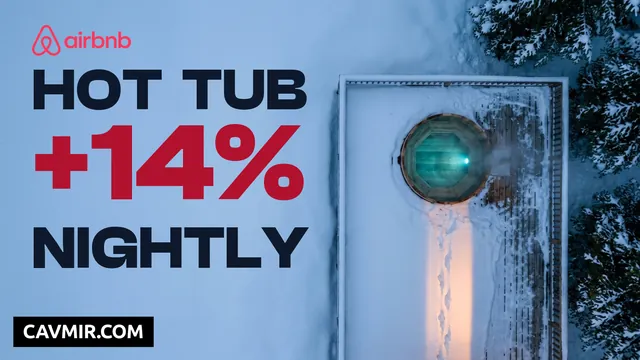
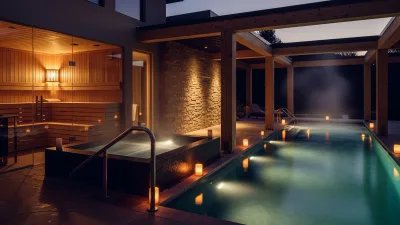
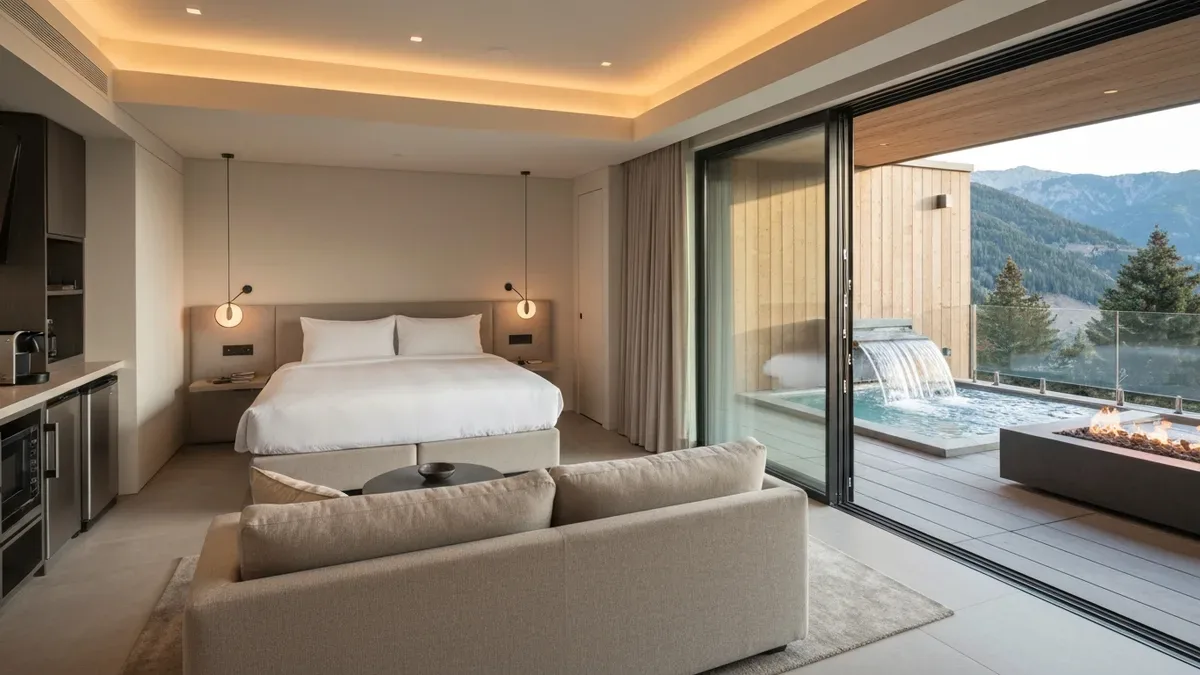
Hot tub (+30%): Hot tubs are the most cost-effective Tier 1 amenity. Installation runs $5,000–15,000. The nightly rate premium is 25–35% in most markets, and the demand driver is year-round — couples seeking a romantic escape, groups wanting a social focal point, and mountain markets where guests want warmth after a day in the cold. Hot tubs are also frequently the search filter that delivers a booking that would otherwise go to a competitor.
Dedicated workspace (+28%): Post-2020, "remote worker friendly" isn't a niche — it's a significant segment of the booking market. A real desk with an ergonomic chair, reliable fiber WiFi, and good lighting commands a premium and extends the average stay length. Workation guests book for 7–14 nights versus 2–3 for leisure guests. The setup cost is minimal — $500–1,500 — compared to what it returns in longer stays and higher rates.
EV charger (+15%): The adoption curve for EVs means this is now a meaningful filter in markets like California, Florida, and urban/suburban areas. Installation runs $500–1,500 for a Level 2 charger. The 15% premium is partly rate and partly a booking decision: EV owners on a road trip will actively choose the property that has a charger over one that doesn't.
Properties in Jackson Hole and other mountain markets that combine hot tubs with ski access see some of the strongest amenity premiums in the country — sometimes +50% against comparable properties without either.
Tier 2: Table Stakes That Protect Your Rate
A dedicated workspace isn't just an amenity — it's a booking filter for the remote worker segment, which tends to book longer stays.
These amenities don't generate a premium on their own, but their absence costs you bookings. Think of them as baseline requirements for any property trying to compete above the budget tier.
Fast WiFi (+12%): This shows up as a meaningful signal in the data not because guests pay a premium for it, but because poor WiFi destroys reviews. A property with slow or unreliable internet will earn 4.0-4.2 stars on the WiFi subcategory, which drags down overall ratings. Fiber internet with a mesh system runs $100–200 in setup costs. It's non-negotiable in 2025.
Central AC (+8%): In warm markets, AC isn't a differentiator — it's a requirement. But in markets where it's not universal (older properties in mountain towns, coastal regions with mild summers), having reliable climate control commands a real premium and eliminates a major guest complaint category. Window units don't count; guests expect central or ductless mini-splits at the premium tier.
In-unit washer/dryer (+7%): For stays of four nights or more, this moves from "nice to have" to "deal-maker." Families and longer-stay guests specifically filter for this. It also drives five-star reviews because it makes guests feel at home in a way hotels can't match.
Before buying any new amenity, search your market on Airbnb and filter for properties with that amenity. Look at their pricing. Then search without the filter and see what's left. If adding the amenity would put you in a noticeably more expensive category with fewer competitors, it's probably worth it. If the market is already saturated with that feature, you're buying parity, not an edge.
Tier 3: Nice Details That Won't Move the Needle
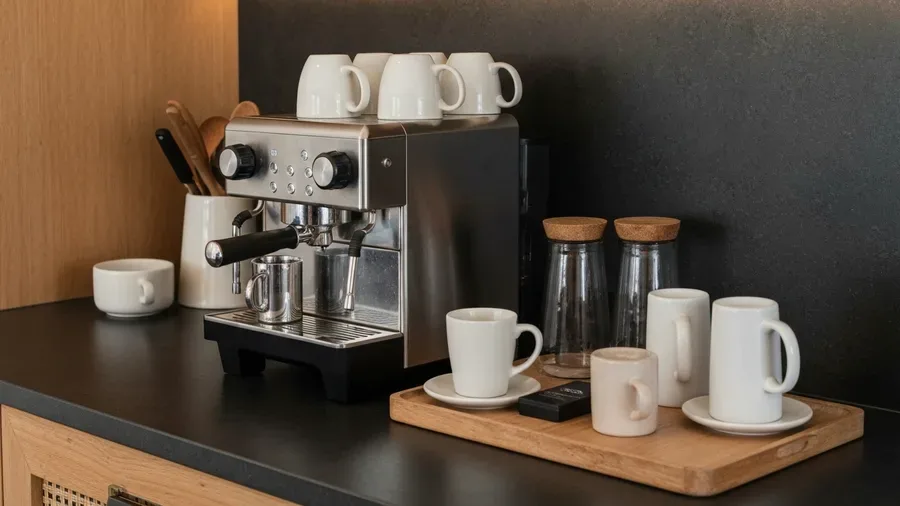
This is the category where most hosts over-invest. Nespresso machines. Smart speakers. Ring doorbells. Oversized bathtubs. These are delightful details that get mentioned in reviews — occasionally — but don't change what guests are willing to pay or whether they choose your property over a competitor's.
The rule for Tier 3 is: only add these after your Tier 1 and Tier 2 are covered. A beautiful kitchen with a $3,000 espresso machine and no hot tub is an allocation error. The hot tub would have returned 15× more revenue.
is the average nightly rate impact of adding a premium coffee machine to a listing — one of the most common over-investments hosts make. Put that money in a hot tub, not a Breville.
The Property Type Matrix: What to Prioritize by Property
Context matters significantly. An EV charger in a rural mountain cabin is a lower priority than one in a suburban market. A hot tub in Miami is less critical than one in Aspen. Match your investments to the use case your guests actually have — not to a generic "best amenities" list.
The Bottom Line
Amenity investments should be treated like any other capital decision: ranked by ROI, evaluated against your specific market and guest profile, and sequenced from highest-return first. Pools and hot tubs earn back their investment in most markets. Workspaces and EV chargers earn back theirs in specific markets with the right guest profile. Everything else is incremental.
Before your next amenity purchase, ask the question: does this change which guests book my property, or does it just make the experience slightly nicer for guests who were already booking it? The first type of investment returns 10–30%. The second might return 1–2%.
For properties undergoing a full renovation or interior design refresh, amenity strategy should be planned alongside the design work — not as an afterthought. Read more about which design upgrades double your rate to see how amenity and design decisions intersect.